Crushing Equipment: Types, Workflows, and Selection Guide
This article explains the different types of core crushing equipment, their workflows, and key selection criteria to help improve operational efficiency.
Crushing equipment is an indispensable piece of machinery in the aggregates, construction materials and mining industries, encompassing various categories such as aggregate crushing equipment, mining crushing equipment, and stone crusher equipment. Different types of equipment are suitable for different operating scenarios and can complete the crushing and processing of various stones and ores. Among the related equipment, the crusher, as the core component, plays a central role due to its practical structural design and high crushing capacity. This article will focus on a detailed introduction to crushers.
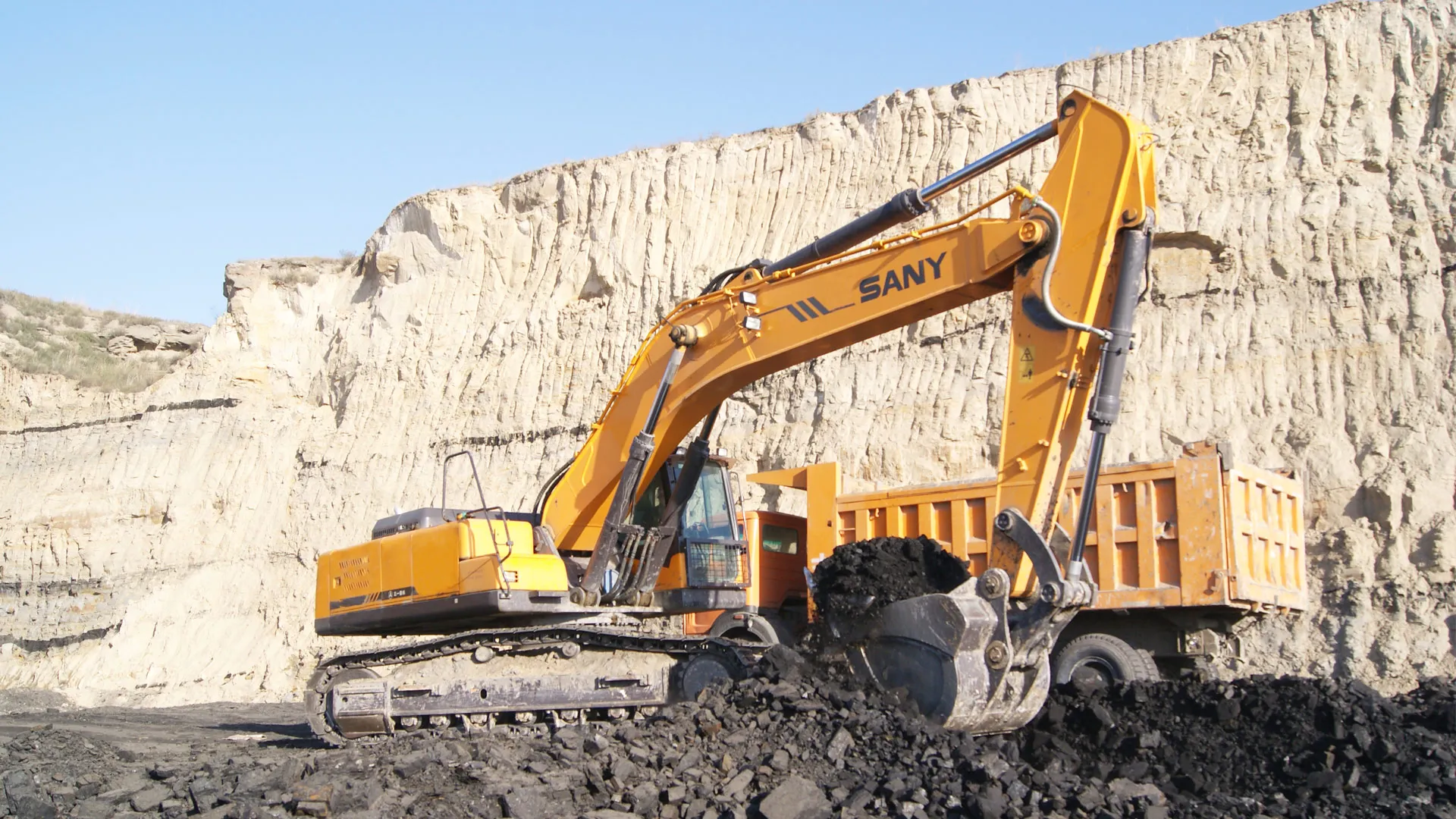
What is a Crusher?
A crusher is an industrial machine that uses mechanical force to process large, hard materials into smaller pieces of stone, gravel, sand, or stone powder. The equipment primarily operates within a crushing chamber, using mechanical methods such as compression, impact, and grinding to break down the internal structure of the material, causing large pieces to break apart and reduce their particle size. Key wear parts of the crusher are mostly made of manganese steel, which has high wear resistance and strength, enabling it to process high-hardness ores and rocks for extended periods.
Besides producing building aggregates, crushers can also break down mixed minerals into smaller particles, facilitating subsequent sorting, purification, and recycling. From early simple stone crushing tools to the present day, crushers have become core equipment in mining, infrastructure construction, and construction waste recycling, and are an indispensable basic mechanical device in aggregate production and mineral processing.
Different Types of Crushers
There are many types of crushers, which can be mainly classified in two ways: one is according to the type of material being processed, and the other is according to the mechanical structure. Different types of crushers are suitable for different operating scenarios and material requirements. The specific classifications and detailed introductions are as follows:
Classification by Material Type:
- Rock Crusher Machine: Primarily used for crushing various rock materials, suitable for mines, quarries, and other similar applications. It can process granite, basalt, limestone, and other rocks, meeting different particle size crushing requirements.
- Construction Waste Crusher: Specifically designed for processing construction waste generated from demolition, such as concrete blocks, bricks, and mortar. It can crush and recycle construction waste, achieving resource recycling.
- Ore Crusher: Designed for various ores, such as iron ore, copper ore, and gold ore. It can efficiently crush large pieces of ore, providing qualified particle sizes for subsequent mineral processing.
- Concrete Crusher: Focused on crushing concrete materials, including waste concrete components and concrete pavements. The crushed material can be used as recycled aggregate for road base courses and building backfill.
Classification by Mechanical Structure
- Jaw Crusher: Crushes materials using the compressive force of fixed and movable jaw plates. The V-shaped cavity allows for stable material control. Available in single and double toggle plate structures. Suitable for primary crushing of rocks and construction waste. The equipment is robust, easy to maintain, has durable wear parts, and stable output.
- Gyratory Crusher: Crushes materials by applying continuous compressive force through a conical crushing head and concave liner, with the main shaft rotating. Suitable for large open-pit mines and aggregate processing plants, it can work in conjunction with mining equipment to handle primary crushing of hard rock, etc.
- Cone Crusher: Relies on rotating liners within a fixed concave cavity to compress materials, resulting in repeated crushing. The closed side setting can be adjusted for precise particle size control. Suitable for medium to high hardness ores, used for processing aggregates, roadbed stones, etc.
- Impact Crusher: An impact crusher uses a high-speed rotor to throw materials against impact plates for crushing. It is available in horizontal (hammer impact) and vertical (high-speed impact shaping) types. Suitable for construction waste recycling, manufactured sand production, and building aggregate processing.
- Hammer Crusher: A hammer crusher uses high-speed rotating internal hammers to continuously impact and crush materials through centrifugal force. The material is crushed from top to bottom and discharged from the bottom. It is suitable for soft rock quarries, coal processing, and other industries.
- Roll Crusher: A roll crusher uses two parallel rollers rotating in opposite directions to compress materials. The roller spacing is adjustable to control the output particle size, and the surface is made of manganese steel for enhanced wear resistance. It is suitable for medium-soft and brittle materials such as limestone and is often used for fine crushing in mineral processing.
Main Working Process of Crushers
To fully understand “how does a rock crusher work?”, or how other crushers operate, it's essential to grasp the complete crushing process. In actual operations, crushing operations typically consist of multiple stages: primary crushing, secondary crushing, and tertiary crushing. Furthermore, the type of crusher used differs at each stage.
Primary Crushing
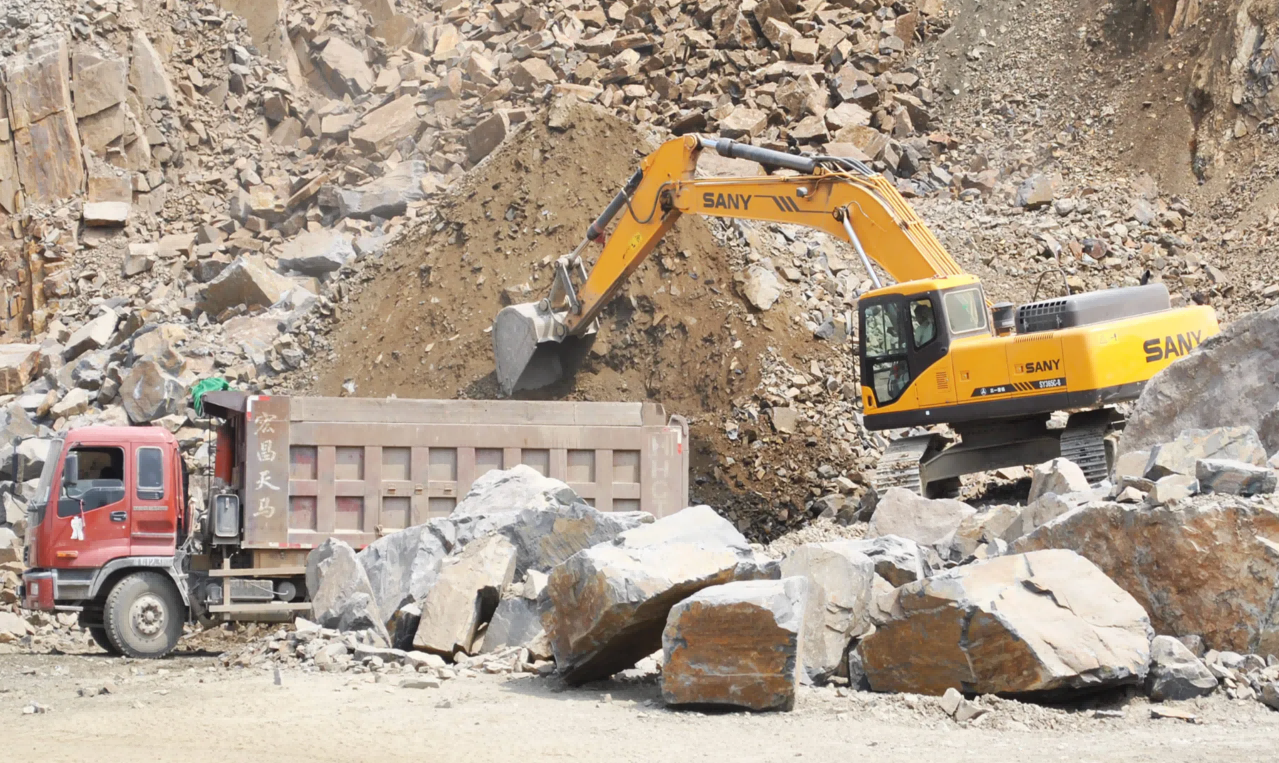
Primary crushing is the first procedure of material processing, which mainly deals with large raw materials. At this stage, raw materials of various sizes are transported to the hopper of the primary crusher by dump trucks, excavators or wheel excavators. For mining operations, many enterprises adopt high-quality equipment such as SANY mining excavators for material transportation.
- Processing Objectives: Initially crush massive raw materials generated by blasting, excavation and demolition. The raw stones are processed into intermediate materials suitable for belt conveying and secondary treatment, instead of producing finished aggregates.
- Common Equipment: Jaw crushers and gyratory crushers are the main applicable machines.
- Processing Characteristics: The equipment must be sturdy and durable with a high crushing ratio to handle heavy-load operation of large hard raw stones.
Secondary Crushing
Secondary crushing is used to further refine the materials after primary crushing and optimize aggregate quality.
- Processing Objectives: Reduce material particle size, improve particle shape and aggregate gradation, and provide qualified feeding materials for subsequent tertiary crushing.
- Common Equipment: Cone crushers are the primary equipment, cooperating with impact crushers, hammer crushers and roll crushers for combined operation.
- Processing Characteristics: The crushing ratio is the core control index. Parameters need to be adjusted according to finished product requirements and the feeding standards of tertiary crushing.
Tertiary Crushing
Tertiary crushing belongs to the fine processing stage and completes the final crushing work.
- Processing Objectives: Produce high-quality fine aggregates, optimize particle shaping, and produce finished stones that meet the industry standards of concrete and asphalt.
- Common Equipment: Cone crushers and vertical shaft impact crushers (VSI) are commonly used for fine sand making and particle shaping.
- Processing Characteristics: Strict quality standards are implemented to control powder content, particle size and cubic particle shape. Screens and conveyors serve as essential auxiliary equipment for material classification and transportation to ensure continuous production.
How to Choose the Right Crusher?
In crushing projects, selecting the appropriate crusher is crucial for ensuring production efficiency, finished product quality, and controlling production costs. For example, types of crushers in mining may differ from those used in infrastructure construction. So how do you choose the right crusher? The main criteria are as follows:
Material Properties
- Material Hardness: Hardness is the primary reference condition for equipment selection. High-hardness ores such as quartzite and iron ore are suitable for jaw crushers combined with cone crushers. Hammer crushers or impact crushers can be used for soft and brittle materials.
- Material Humidity: Materials with high water content tend to agglomerate and cause blockage in ordinary crushers. Therefore, roll crushers or hammer crushers with good anti-blocking and moisture-resistant performance are recommended.
- Material Abrasiveness: For silicate ores with strong abrasiveness, hydraulic cone crushers equipped with wear-resistant accessories are preferred to reduce equipment loss and extend service life.
Material Specifications and Particle Size Requirements
- Feeding Size: Large raw stones are processed by jaw crushers and gyratory crushers in the primary crushing stage. Smaller stones can be directly sent to secondary crushing equipment or processed by combined crushing and screening equipment.
- Discharge Particle Size: Jaw crushers and gyratory crushers are applied for coarse processing. Cone crushers and impact crushers are preferred for medium particle processing. Vertical shaft impact crushers and roll crushers are used for fine processing, such as fine sand and powder production.
Production Capacity
- Output Demand: The production scale determines the equipment model. Large-scale production lines with high throughput are matched with gyratory crushers and large cone crushers. For small and medium-sized production lines, jaw crushers can basically meet the production standards.
Construction Site and Application Conditions
- Working Site: Fixed crushers with stable structure and large processing capacity are suitable for large-scale mining projects with fixed sites. Mobile crushers with high flexibility and rapid deployment are commonly preferred for frequently changed construction sites and on-site processing projects.
Equipment Operation and Maintenance Costs
- Initial Investment: Cone crushers have a high procurement cost and require a large initial capital investment. Hammer crushers and impact crushers have lower equipment prices and lower entry thresholds.
- Subsequent Maintenance: Impact crushers have fast consumption and high replacement frequency of wearing parts, which are suitable for low-abrasive materials. Cone crushers have excellent wear resistance and long maintenance cycles, making them more suitable for long-term continuous operation with lower long-term operating costs.
Conclusion
As a core type of crushing equipment, crushers play a vital role in many fields. Different types of crushers differ significantly in their structural principles, applicable materials, and production stages. Selecting crushing equipment based on material characteristics, production scale, and construction conditions can reduce equipment wear, optimize the production process, improve crushing efficiency, and further ensure the quality of the finished product.
FAQs
What Machine is Used to Crush Stones?
Equipment used for crushing stone mainly consists of typical impact crushers and other types of stone crushers. These machines rely on the impact force generated by machinery to crush rocks and reduce the size of the stones, without using chemical or laser methods. In most scenarios, primary crushers are often an important component of large-scale material handling systems, suitable for the crushing and processing needs of large stones in mining and other similar settings.
What are the Common Problems with Crusher Machines?
The common problems of crusher machines mainly include the following types:
- Excessive Vibration: Mostly caused by uneven feeding, bearing wear and loose bolts.
- Equipment Overheating: Mainly resulted from equipment overload, insufficient lubrication and cooling system blockage.
- Crushing Chamber Blockage: Caused by oversized stones, wet materials and abnormal feeding.
- Uneven Product Size: Generated by abnormal crushing gaps, worn accessories and unstable feeding specifications.
- Abnormal Noise: Strange sounds are produced by loose and worn parts or foreign matter mixed in the crushing chamber.
- Low Production Output: Caused by improper parameters, aging parts and poor material quality.
- Electrical Faults: Including aging circuits, blown fuses and failure of the control panel.
Are there Portable Crushing Machines?
Mobile crushing equipment, also known as mobile crushing plants, exists. These machines are commonly equipped with wheels and are primarily used for processing rocks and various hard materials. They can operate independently or in conjunction with larger crushing equipment units. Many models can also integrate feeders and screening machines on the same frame, adapting to flexible crushing operation scenarios.
Featured Products
Recommend Blogs
Underground Mining Equipment: Categories and Selection Methods
This article introduces underground mining equipment categories, compares them with open-pit equipment, and summarizes selection criteria for mining reference.
Mining Dump Trucks: A Practical Guide
This article explains the features, classification and selection considerations of mining dump trucks, helping practitioners better understand this equipment.
Mining Equipment: Common Types, Selection Guide, and Application
This article introduces common types of mining equipment, their applicable scenarios, selection guidelines to help you easily launch your mining operations.