What Are Concrete Batching Plant Components? A Complete Guide for 2026
This article outlines the concrete batching plant components and explains how to determine whether your project requires the installation of such a facility.
In the execution of various infrastructure, road, and general construction projects, the concrete batching plant components directly determine the efficiency of concrete production and the consistency of its quality, serving as critical equipment for ensuring the smooth progress of a project. This article will introduce its core components and practical application scenarios across various engineering projects, helping relevant construction teams gain a comprehensive understanding of the equipment's value. It aims to facilitate a systematic assessment of whether to establish a dedicated, integrated concrete mixing system, thereby providing a valuable reference for project planning and cost control.
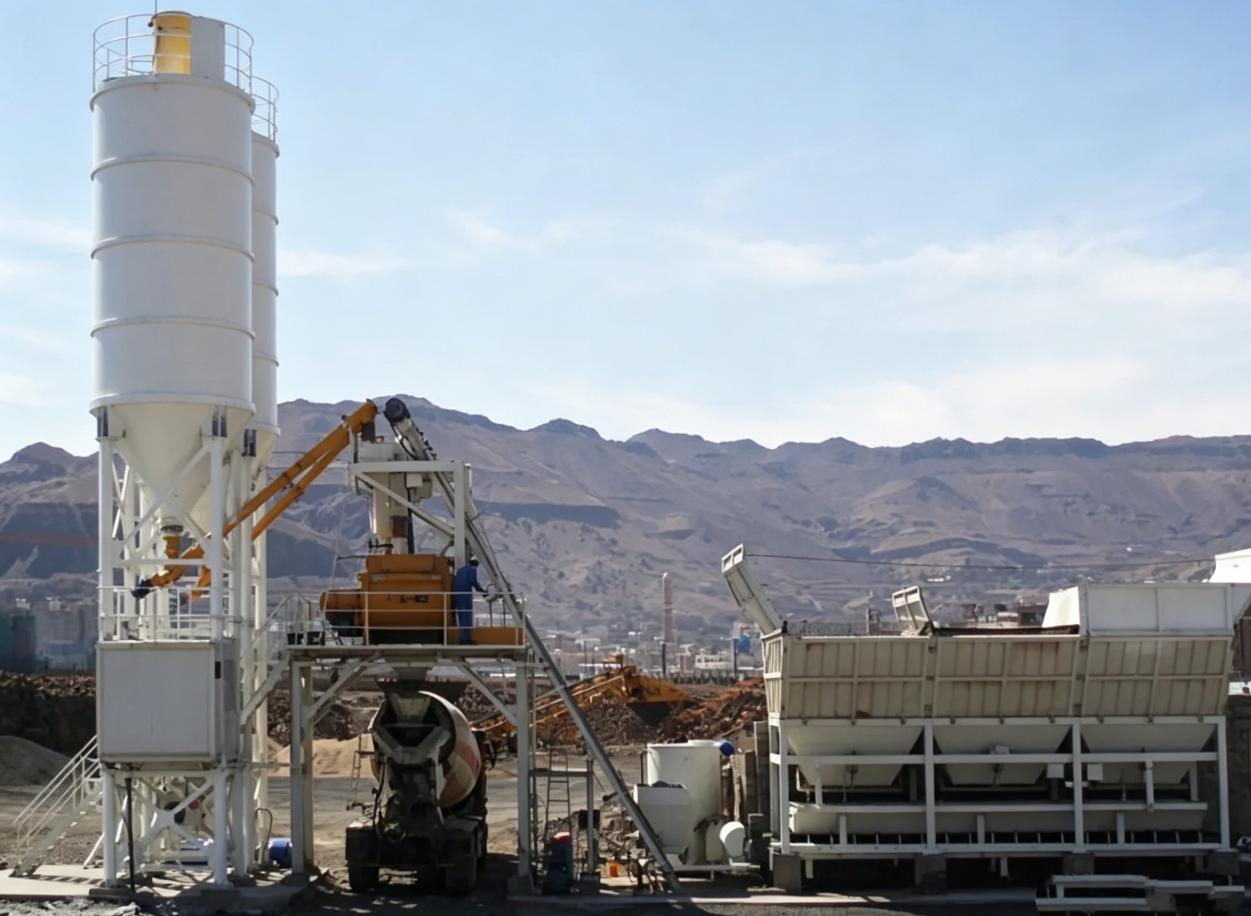
What are Concrete Batching Plants?
A concrete batching plant, also known as a batching plant or batch plant, refers to the core machinery and ancillary components used to produce concrete. This equipment is a standard industrial tool used to blend various raw materials, such as cement, sand, water, and chemical admixtures, to produce concrete. These batching plants enable the large-scale, continuous production of concrete, making them indispensable for a wide range of construction projects that require a stable and reliable supply of the material.
The equipment offers flexible diversity in terms of specifications and configurations, ranging from lightweight and agile small-scale mobile units to large-scale, stationary plants characterized by high production efficiency and comprehensive functionality, thereby catering to the specific construction requirements of diverse engineering scenarios.
The Importance of Concrete Batching Plant Components
The components of a concrete batching plant directly determine the quality, efficiency, and safety of concrete production. Their significance is primarily reflected in three key aspects:
1. Ensuring precise raw material proportioning and minimizing human operational errors, thereby guaranteeing the consistent performance of every batch of concrete;
2. Enhancing production efficiency to facilitate large-scale, standardized manufacturing, thereby meeting the continuous concrete supply demands of major engineering projects;
3. Through proper configuration, enabling enterprises to precisely control concrete quality and mitigate construction risks, while simultaneously providing support for project evaluation and cost management. These components serve as an indispensable core safeguard for the efficient advancement of construction projects and the attainment of quality standards, and also constitute a crucial basis for enterprises when deciding whether to establish a batching plant or optimize project planning.
What are the Concrete Batching Plant Components?
A complete concrete batching plant relies on the collaborative operation of various core components; the proper configuration of each part directly determines the plant's operational efficiency and the quality of the concrete produced. The following text provides a detailed introduction to the nine major core components, helping you gain a clear understanding of the function and role of each element.
Control System
The control system is a computer-based system that operates through specialized software. Its core function is to monitor and control the entire concrete production process, acting as the command center of the batching plant.
It enables precise control over material proportions, real-time monitoring, and dynamic adjustments to ensure the raw material mix remains consistently stable. Simultaneously, it monitors the entire mixing cycle to guarantee that all components are thoroughly blended and uniformly distributed. This not only boosts production efficiency but also ensures strict adherence to safety standards and maintains production consistency, thereby providing robust support for the reliable output of high-quality concrete.
The control systems integrated into SANY concrete batching plants are specifically designed to enhance operational efficiency. SANY Compacted Skip Batching Plants, for instance, are equipped with the SYMC controller. The machine's comprehensive control system features a multi-language user interface and employs a distributed network architecture to facilitate fully digitized data transmission. Communication between the upper-level host computer and the lower-level control units is conducted via Ethernet, achieving transmission speeds of up to 100,000 kbps—a capability that ensures the equipment operates and enhances operational efficiency.
Cement Silos
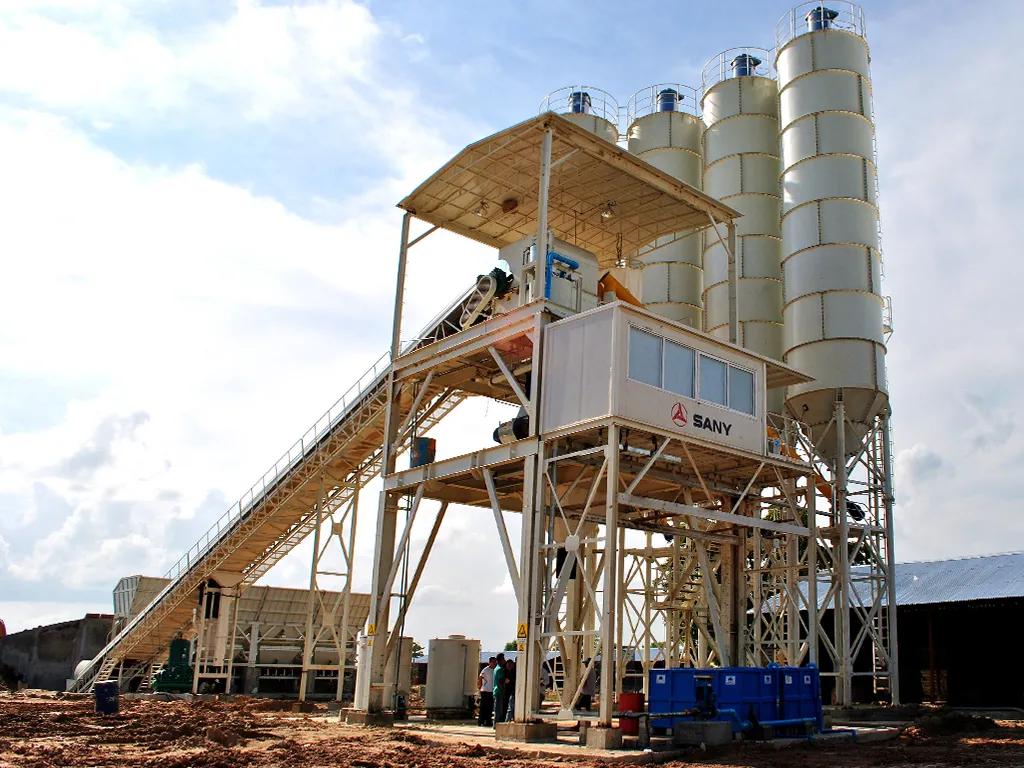
As a specialized storage vessel for bulk cement, the primary function of a cement silo is to ensure the stability and dryness of the cement supply, thereby providing reliable support for concrete production.
This facility features a cylindrical structure with excellent sealing properties, effectively isolating the stored cement from external disruptive factors such as moisture and dust. This ensures that the cement remains consistently dry and uncontaminated, preventing any performance degradation caused by dampness. Furthermore, the silo operates in conjunction with conveying systems and weighing equipment; through automated control mechanisms, it precisely regulates the cement output to guarantee the accuracy of raw material proportions. By providing a stable supply of high-quality cement, it plays a key role in achieving large-scale, standardized concrete production.
Material Conveying Systems
The material conveying system is the key component enabling the automated production of concrete. The system is mainly composed of belt and screw conveyors, and its core function is to transport raw materials such as aggregates and cement to designated locations, ensuring they reach the mixer accurately and efficiently.
Through automated transport, the material conveying system not only boosts concrete production efficiency but also ensures the accuracy of raw material proportions; this, in turn, ensures consistent concrete quality, providing robust support for the smooth and successful advancement of construction projects.
Mixing Systems
The mixing system constitutes the core of concrete production, primarily serving to precisely blend aggregates, cement, water, and admixtures to ultimately produce concrete that meets specific requirements. Depending on the specific design of the batching plant, the mixing system may adopt various configurations; common examples include drum mixers, twin-shaft mixers, and other specialized mixing equipment.
For instance, the SANY Compacted Inclined Belt Batching Plant utilizes a high-performance mixer. By incorporating a patented core shaft-end sealing technology, the system achieves automatic compensation; this not only ensures reliable sealing but also offers the advantages of simplified maintenance and reduced operating costs. Furthermore, the mixer features a discontinuous spiral blade arrangement design. By combining large-scale axial circulation and small-scale radial circulation with a central vortex mixing action, it achieves a “three-dimensional” and “boiling-style”: mixing effect, thereby boosting improved mixing efficiency
Material Storage Systems
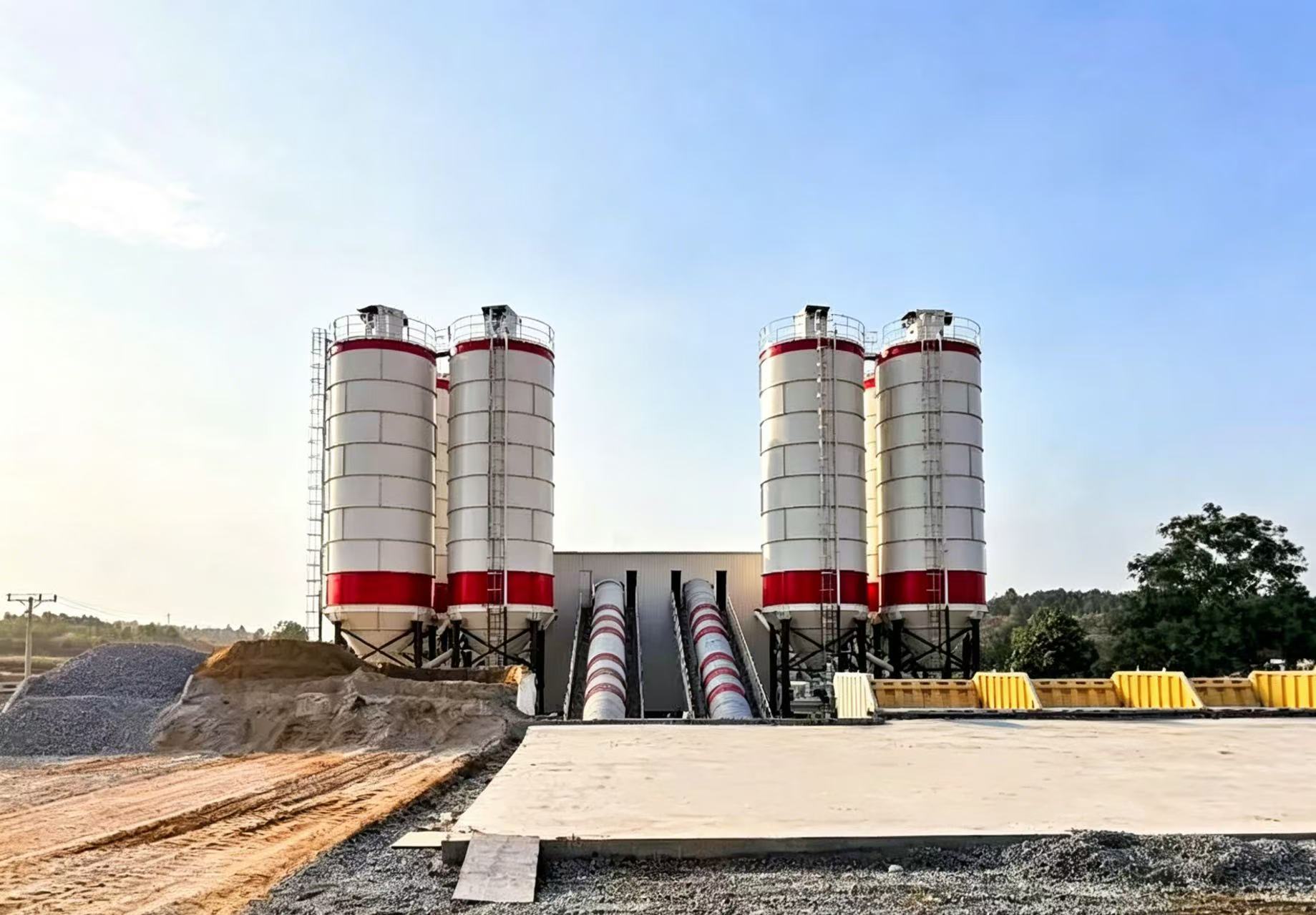
The material storage system constitutes a critical component of concrete production; its core function is to manage the storage and precise dispensing of various chemical admixtures, thereby enhancing the overall performance of the concrete mixture.
This system can store a wide range of admixtures, such as plasticizers, accelerators, retarders, and water reducers, and precisely meters them into the mixture during the concrete mixing process. By regulating the dosage of these admixtures, the system effectively improves the workability, setting time, and durability of the concrete, thereby ensuring consistent quality.
Water Storage and Metering Systems
The Water Storage and Metering System constitutes a vital component of concrete production. Primarily equipped with precision pumps and metering devices, its core function is to accurately measure and control the volume of water delivered into the concrete mixture. This system incorporates dedicated storage tanks or reservoirs to ensure the precise accuracy of water input, thereby achieving the predetermined mixture consistency and product quality. By scientifically regulating water content, the mixing plant can precisely fine-tune various concrete properties, ensuring they meet the specific requirements of diverse engineering projects and guaranteeing the production of high-quality concrete.
Aggregate Batching Machines
The Aggregate Batching Machine is a core piece of equipment utilized in the concrete production process for the storage of aggregates. It is primarily used to hold aggregates, such as sand, gravel, and crushed stone, which are essential for concrete manufacturing, serving as a critical facility for ensuring a stable supply of raw materials.
Its core function involves receiving, storing, and organizing various types of aggregates. Through segregated storage, it ensures that different aggregate types remain unmixed while simultaneously providing a continuous and stable supply of raw materials to the concrete mixing stage, thereby preventing production delays caused by material shortages.
Weighing Systems
Weighing Systems serve as the core equipment for ensuring precise mix proportions in concrete production. They primarily comprise weighing hoppers, scales, and load cells, and their fundamental function is to accurately measure various raw materials such as sand, gravel, and cement before they are fed into the concrete mixer.
Specifically, the weighing hoppers are responsible for receiving the various raw materials and performing preliminary measurements, while the weighing scales and load cells handle the precise detection of material weights. Furthermore, independent weighing mechanisms are deployed for different types of raw materials to strictly control the dosage of each component in accordance with preset mix designs. By precisely regulating the raw material proportions, these systems ensure that the resulting concrete meets established strength and performance specifications, thereby providing a critical guarantee for overall concrete quality.
Heaters and Chillers
Heaters and chillers constitute key auxiliary equipment in the concrete production process, primarily utilized to control the temperature of the concrete mix. By heating or cooling the various components required for concrete production, these systems ensure that the temperature of the concrete mix complies with specific production and curing requirements, designed to support proper curing. This is crucial for enhancing both the strength and durability of the concrete; particularly under variable environmental conditions, these systems effectively mitigate the adverse effects that improper temperatures can have on concrete quality, thereby providing a vital safeguard for overall project quality.
How Do You Determine If Concrete Batching Plant Components Are Suitable for Your Project?
Assessing the suitability of concrete batching plant components requires a comprehensive evaluation that takes into account project requirements, cost-effectiveness, and the specific construction environment. By weighing its core advantages against its practical application value, the following multi-dimensional analysis is designed to help you determine whether establishing a dedicated batching facility is the right choice for your needs. The details are as follows:
Consider Project Scale and Requirements
If a project requires a large, stable supply of concrete and entails a long-term, continuous production demand, establishing a mixing plant fully equipped with all necessary concrete batching plant components is a suitable and recommended approach, as it enhances efficiency and reduces long-term costs. Conversely, for short-term or small-batch requirements, outsourcing should be considered, thereby eliminating the need to set up dedicated equipment.
Consider Costs and Returns
For large-scale projects with extended construction timelines, the high-efficiency production capabilities of a dedicated mixing plant can yield substantial savings in both time and cost, offering exceptional cost-effectiveness. However, for smaller projects with shorter durations, outsourcing the supply of ready-mixed concrete proves to be the more economically viable option.
Consider Environmental and Regulatory Compliance
If a project requires strict control over concrete quality, adherence to environmental standards, and a stable, long-term demand for concrete, establishing a batching plant equipped with specialized components can ensure product quality while mitigating compliance risks.
Consider Construction Flexibility
If a project requires flexible adjustment of concrete mix ratios and properties to suit different construction scenarios and structural requirements, establishing a dedicated batching plant with specialized components enables precise control of mix designs. This capability meets diverse construction demands, comprehensively enhances the quality and efficiency of project execution, and stands as the optimal choice for achieving a tailored solution.
Conclusion
In summary, as core facilities for concrete production, concrete batching plant components directly impact project quality, construction efficiency, and cost control when they are properly configured and utilized. Construction teams should evaluate the suitability of these concrete batching plant components based on key factors such as project scale and cost-benefit analysis to fully leverage their advantages. By doing so, they establish a robust equipment foundation that facilitates the efficient advancement of projects and ensures compliance with quality standards, thereby achieving a dual enhancement of both engineering efficiency and quality.
FAQs
What are the Components of a Concrete Batch Plant?
The main components of a concrete batching and mixing plant (concrete batch plant) include an aggregate batcher, screw conveyors, a weighing system, a mixer, cement silos, and a control room. These components work in synergy to produce concrete of varying strengths based on the characteristics of different raw materials, thereby meeting a wide range of construction requirements.
What is the 4-2-1 Rule for Concrete?
The "4-2-1" mixing ratio is a commonly used formula for producing durable concrete; it involves proportioning the materials in a ratio of four parts crushed stone, two parts sand, and one part cement. This ratio ensures that the concrete possesses sufficient strength and excellent workability during construction, while also guaranteeing optimal bonding strength between the various materials. It stands as a classic mixing scheme that effectively balances both structural performance and ease of construction.
What are the Five Major Components of Concrete?
The five major components of concrete are: cement (or binder), aggregates, admixtures, additives and supplementary cementitious materials (SCMs), and water. Cement serves as the binding and solidifying agent; aggregates form the structural framework; admixtures enhance workability and hardening properties; supplementary cementitious materials optimize specific characteristics; and water participates in the hydration reaction while ensuring compliance with various standards.
Featured Products


Recommend Blogs
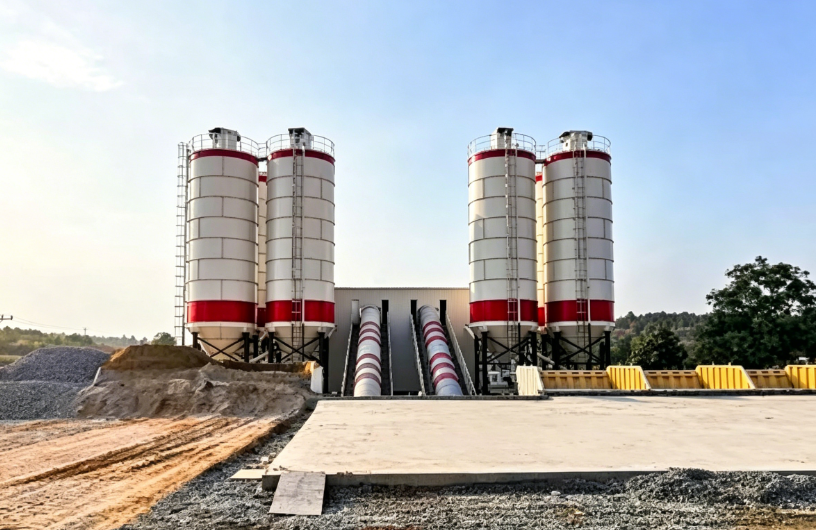
Mobile Concrete Batching Plant: A Comprehensive Introduction
This article introduces what a mobile concrete batching plant is, applicable projects, and key operational considerations, to help you build efficiently.
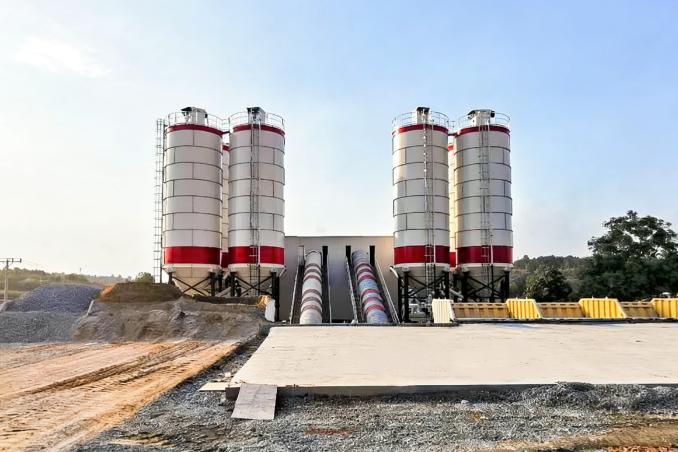
Stationary Concrete Batching Plant:Definition, Classification and Construction Guide
This article introduces categories, applications and construction considerations of stationary concrete batching plants, makinge construction more efficient.

What Is Concrete Batching Plant? Everything You Should Know
Discover what is concrete batching plant, its types, how it works, and tips to choose the right one for your construction projects.