Mobile Concrete Batching Plant: A Comprehensive Introduction
This article introduces what a mobile concrete batching plant is, applicable projects, and key operational considerations, to help you build efficiently.
In the construction industry, with the increasing diversification of project scenarios and the growing demand for flexible construction, mobile concrete batching plants have gradually become indispensable core equipment. As a portable and efficient concrete production device, it breaks through the limitations of traditional fixed mixing plants, allowing construction companies to obtain the ready-mixed concrete they need anytime, anywhere. This article will introduce mobile concrete batching plants in detail, helping those in need to fully understand this practical equipment and its application value in various construction scenarios.
What is a Mobile Concrete Batching Plant?
Equipment Definition
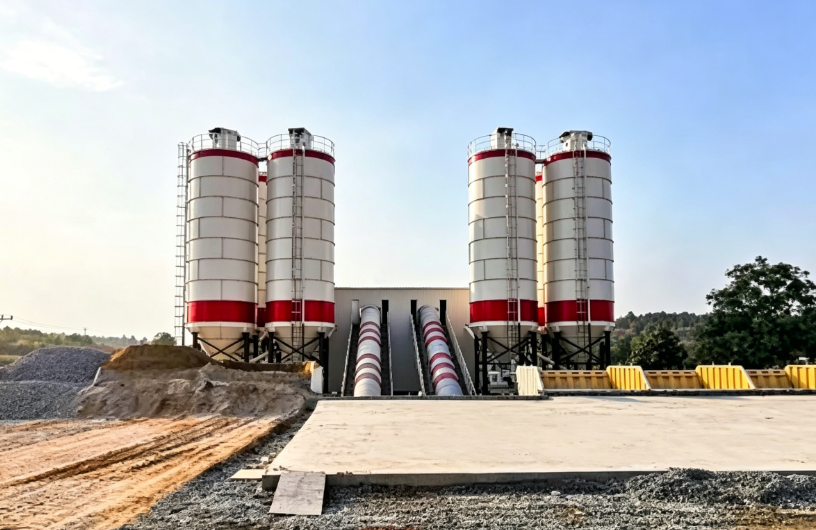
A mobile concrete batching plant (also known as a portable concrete batching plant) is a dedicated concrete production equipment that integrates all core components required for concrete production into one unit. It features a compact structure and is easy to transport and relocate. With cement, aggregates (sand, gravel, crushed stone, etc.), water, and admixtures as raw materials, it produces concrete through precise batching and mixing.
Core Components
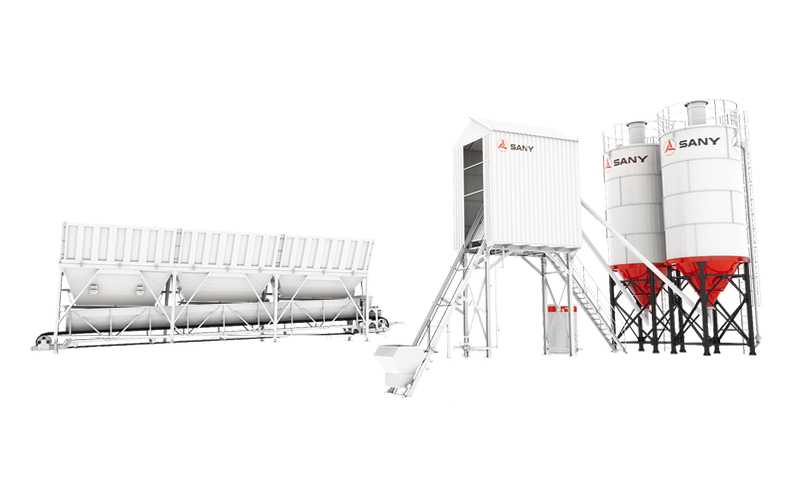
- Aggregate Storage Silo: Used to store aggregates of different sizes, such as sand, gravel, and crushed stone. Some models are equipped with multiple aggregate bins, which can hold multiple types of aggregates at the same time to meet the needs of different mixture proportions.
- Cement Silo (or Cement Storage System): A special container for storing cement powder. As a bonding raw material in concrete production, it ensures a stable cement supply.
- Weighing/Hopper System: It can accurately measure the dosage of each raw material according to the design requirements of the project mixture, ensuring the accuracy of concrete proportioning and guaranteeing product quality.
- Control System: Integrating monitoring and adjustment functions, it can real-time control key parameters such as mixing time and water content during the batching process, ensuring the stability and efficiency of the concrete production process. For example, the SANY batch plants are equipped with an entire control system with a distributed network architecture or fully digital transmission, which is safe, reliable, and very easy to operate.
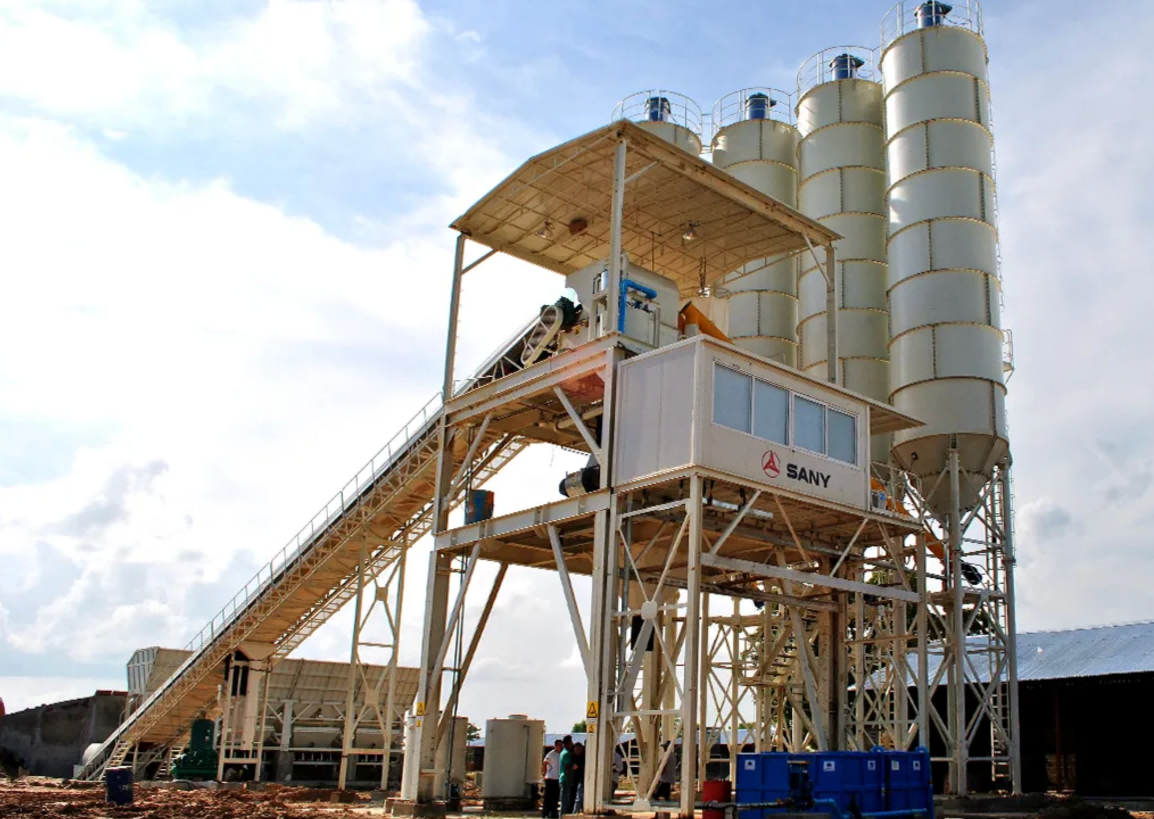
- Conveying System: It mostly adopts conveyor belts or screw conveyors, whose core function is to transport raw materials such as aggregates from the storage silo to the mixer. Some models are equipped with two types of conveyor belts, which are used for aggregate weighing and aggregate transportation to the mixer, respectively, improving operation efficiency.
- Mixer: As the core component of the equipment, it is mainly a twin-shaft mixer, which can fully mix aggregates, cement, water, and admixtures to form a uniform concrete mixture.
Features and Advantages of Mobile Concrete Batching Plants
High Flexibility, High Mobility and Convenient Transportation
Most mobile concrete plants are installed on trucks or trailers and adopt a modular design, requiring no permanent foundation. For example, the SANY compacted inclined belt batching plant adopts a modular design, which can be quickly installed and disassembled. Mobile concrete plants with this feature can be transported and flexibly moved to different construction sites, and can be moved into or out of the construction site at any time according to construction needs. They are especially suitable for projects with changing construction site locations, temporary or short-term projects, and have outstanding mobility advantages.
Efficient Installation and Compact Space Occupancy
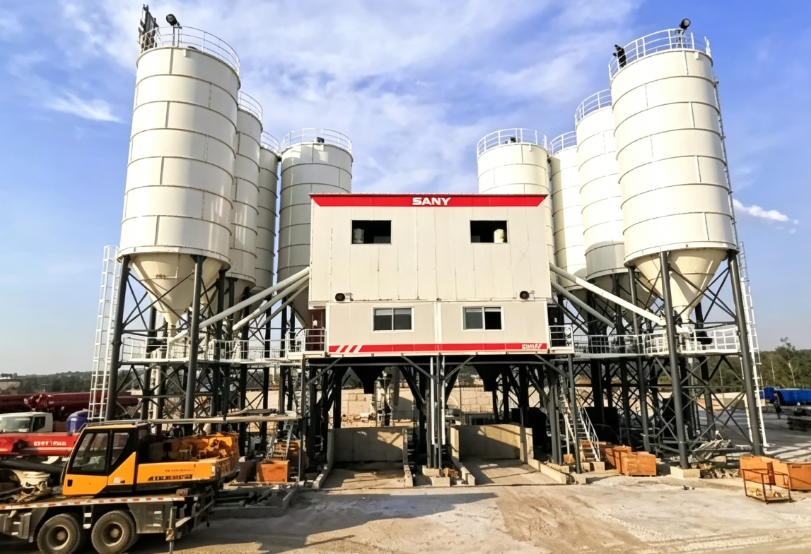
Mobile batch plants have short installation and commissioning time, simple operation, compact structure and small space occupation. They can be directly installed in the project area or on a flat concrete floor without large-scale installation work, making them suitable for construction scenarios with limited space.
Scalable Production Capacity and Wide Application Range
Portable concrete batch plants have flexible production capacity coverage. They can not only meet the different concrete demands of small and medium-sized projects, but also adapt to small projects, temporary projects, projects requiring frequent equipment mobilization, as well as various scenarios such as remote areas and infrastructure projects.
Easy Operation and Stable Concrete Quality
Most portable concrete plants adopt a fully automatic operation mode and are equipped with batching, weighing and mixing systems consistent with fixed batching plants, which can ensure accurate batching and stable and consistent mixing quality. They can realize continuous concrete supply, can work continuously even in large-scale projects, and can produce any type of concrete required for the operation, effectively ensuring the mixing quality.
Economical and Efficient, Reducing Dependence and Costs
Mobile batching plants can produce concrete directly at or around the construction site, avoiding delays caused by long-distance transportation, reducing logistics costs, and minimizing material waste and saving construction time through on-demand production. They can also provide a self-sufficient solution, reducing dependence on external fixed batching plants and supply chains, avoiding logistics restrictions, and at the same time avoiding traffic congestion problems caused by fixed batching plants.
Which Projects Should Choose a Mobile Concrete Batching Plant?
Mobile concrete batching plants offer distinct advantages—including flexible relocation, rapid installation, and minimal site requirements—enabling on-site concrete mixing and supply. By effectively minimizing transportation losses and costs, they demonstrate outstanding superiority across a wide range of engineering scenarios. Mobile batching plant applications mainly include the following types:
Infrastructure and road-related projects
Including transportation infrastructure projects such as road construction and road maintenance. This applies especially to road sections far from central facilities, with long spans, or areas where ready-mixed concrete is difficult to obtain.
Temporary, short-term and phased construction projects
Examples include temporary construction sites, short-term road repairs, rural development, small-scale infrastructure works and seasonal projects. Such projects feature short construction periods with no need for long-term fixed equipment. Mobile batching plants are easy to install and dismantle, enabling rapid commissioning and shortening the overall construction cycle.
Remote and hard-to-access projects
Sites with restricted access for fixed equipment, such as remote residential development zones, industrial parks and rural areas, as well as isolated construction sites with limited access to ready-mixed concrete. On-site concrete production eliminates the inconveniences of long-distance transportation.
Projects requiring frequent relocation and multi-site operations
Projects that demand frequent equipment transfer, such as bridge engineering, pipeline laying and military base construction, as well as multi-location construction works. Their high mobility enables flexible adaptation to frequent site transitions.
Projects with variable concrete demands and tight construction schedules
For projects requiring flexible adjustment of concrete mix ratios, variable output volumes or fluctuating concrete consumption, on-site production allows immediate adjustments to respond to dynamic demands. Meanwhile, for time-sensitive projects, on-site production prevents delays caused by long-haul transportation, ensures timely concrete supply and keeps construction on schedule.
Projects where stationary batching plants are uneconomical with strict quality requirements
Projects where constructing a stationary batching plant involves high costs and poor economic efficiency, yet require high standards for concrete production quality and mixing control. It also covers scenarios involving rental services or temporary concrete supply for contractors.
Precautions for Using a Mobile Concrete Batching Plant
While mobile concrete batching plants offer numerous advantages, the following precautions must be taken during their use to ensure proper equipment operation and smooth construction progress:
Compliance and On-site Preparation
- The rainwater discharge permit of the construction site shall cover the on-site concrete batching plant.
- Clean water sources (such as wells and municipal water) shall be available on site to meet production demands.
- Complete logistics coordination before equipment installation and relocation; ensure the site is level with dedicated equipment access, and complete all necessary permits and formalities.
Concrete Pouring Timeliness
To guarantee concrete performance, freshly mixed concrete shall be poured immediately. Especially for ready-mixed concrete processes, strict time control is required to maintain concrete workability and the integrity of mixed materials.
Upfront Investment Consideration
The initial purchase cost of a mobile concrete batching plant, especially models with advanced functions and flexible mobility, may be higher than that of stationary batching plants. Enterprises with limited budgets need to make careful evaluation, while its long-term cost performance is comparable to stationary units. For a batching plant for temporary projects, equipment rental is highly recommended.
Transportation and Site Adaptability
The equipment is transported between job sites by trucks or trailers. Logistical difficulties may occur in areas with poor traffic conditions and rugged terrain, so transportation routes and plans must be arranged in advance.
Installation, Dismantling and Manpower Arrangement
Though the equipment is designed for easy installation and dismantling, these procedures still require time and labor. The construction team shall allocate manpower and resources reasonably to avoid delays to project progress and overall construction schedules.
Maintenance and Management
The mobility and portability of the equipment increase maintenance complexity. In particular, a mobile concrete batching plant for remote job sites requires regular inspection and maintenance of key components, including wheels, axles and traction mechanisms, to keep the equipment in optimal operating condition at all times.
Conclusion
In summary, the mobile concrete batching plant is an innovative concrete production solution that integrates mobility, efficiency, and practicality. It not only possesses the basic functions of a stationary batching plant but also demonstrates significant advantages in flexibility, site adaptability, and cost control. Understanding its core information and key usage points allows it to better serve various construction projects, effectively solving problems such as inconvenient concrete transportation and limited site conditions, and providing strong support for improving construction efficiency and ensuring project quality.
FAQs
What is the 90 Minute Rule for Concrete?
The 90-minute rule for concrete is a core time management standard in concrete construction, requiring that concrete be unloaded from the mixer truck and poured within 90 minutes of being mixed at the batching plant. Concrete undergoes continuous hydration and chemical reactions upon contact with water; exceeding this timeframe significantly reduces the workability of the mixture and accelerates setting, which is detrimental to on-site pouring and finishing operations. Strictly adhering to this time standard ensures proper setting and hardening of the concrete, effectively improving the strength and surface smoothness of the finished structure and reducing rework and repair costs.
What is the Lifespan of a Batching Plant?
Under normal operating conditions, most concrete mixing plants are designed for a service life of 10 to 15 years; if routine preventive maintenance is implemented, the equipment can operate stably and reliably for more than 20 years.
What are Common Concrete Pouring Mistakes?
Common errors in concrete pouring include improper water-cement ratio, insufficient site preparation, misalignment of reinforcing bars, uneven mixing, excessively slow pouring, incorrect polishing techniques, inadequate curing, ignoring weather conditions, lack of quality inspection, and failure to conduct timely repairs. These errors can lead to insufficient concrete strength, cracking, spalling, and reinforcing bar corrosion, severely impacting its durability and structural integrity, and must be carefully avoided during construction.
Featured Products

Recommend Blogs
Concrete Batching Plant Maintenance: A Practical Guide
This article details the importance and core content of concrete batching plant maintenance, providing guidance for daily operation and maintenance.
Stationary Concrete Batching Plant:Definition, Classification and Construction Guide
This article introduces categories, applications and construction considerations of stationary concrete batching plants, makinge construction more efficient.

What Is Concrete Batching Plant? Everything You Should Know
Discover what is concrete batching plant, its types, how it works, and tips to choose the right one for your construction projects.