Stationary Concrete Batching Plant:Definition, Classification and Construction Guide
This article introduces categories, applications and construction considerations of stationary concrete batching plants, makinge construction more efficient.
On booming urban construction sites, behind every inch of reinforced concrete lies a core piece of equipment working silently: the concrete batching plant. These heavy-duty machines are the lifeblood, determining construction progress and quality. However, amid complex construction environments and diverse production demands, many project managers often face a dilemma: should they choose a stationary concrete batching plant with a higher upfront one-time investment, or a mobile unit with greater flexibility? How to select suitable equipment to balance production efficiency and cost control? Today, we conduct an in-depth analysis of all aspects of concrete batching plants to provide references and suggestions for efficient project execution.
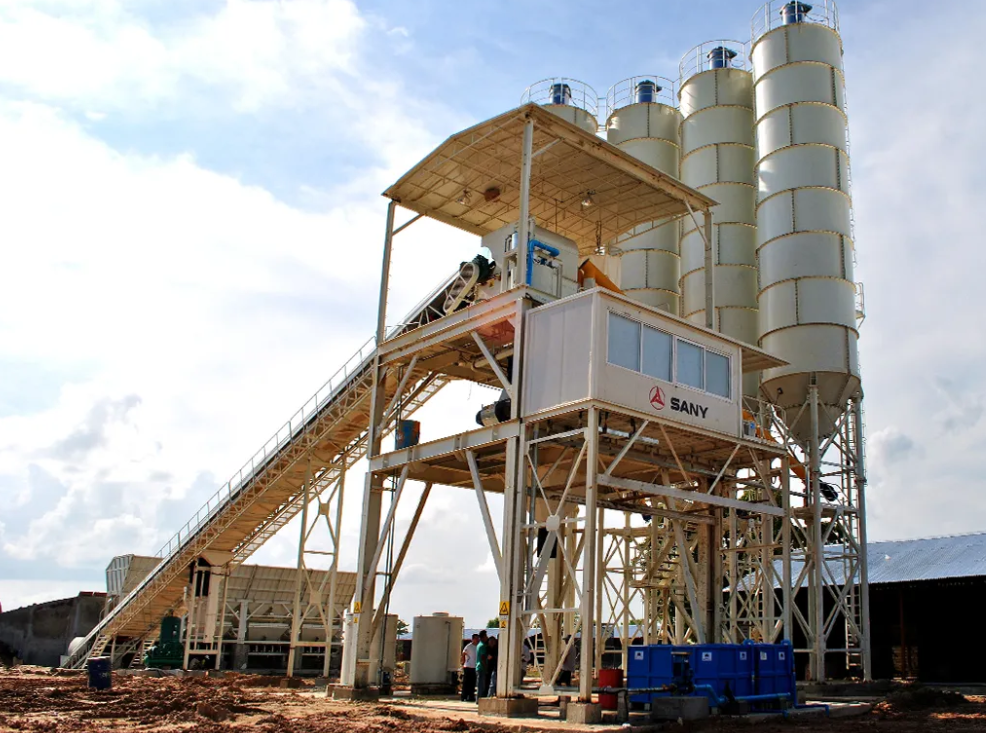
What is a Concrete Plant?
A concrete batching plant is an integrated unit for centralized concrete batching and mixing, also known as a ready-mixed concrete plant. It mainly consists of material feeding, storage, weighing, mixing, and control systems, capable of completing the entire process of concrete raw material conveying, batching, weighing, mixing and discharge. Featuring high automation and production efficiency, it is widely used in various construction projects.
Based on structural form, production process, and operation mode, concrete batching plants are mainly divided into four categories, among which the stationary concrete batching plant is one of the most widely applied types.
1. Stationary Concrete Batching Plant
A stationary concrete batching plant is installed fixedly at a designated site and operates stably on a poured foundation. Its core features are high productivity, strong stability, and complete configurations, with customizable equipment combinations to meet project requirements. It is suitable for large and medium-sized projects with long-term fixed operation and is the most mainstream type in current construction.
It generally comes in two types:
•Hopper type: compact layout and lower investment cost, ideal for projects with limited space and moderate demand.
•Belt type: fast feeding and stable performance, suitable for medium and large projects with high productivity requirements.
2. Mobile Concrete Batching Plant
In contrast to stationary plants, mobile concrete batching plants require no fixed foundation, enabling flexible movement and rapid deployment. Adopting a modular structure, they are easy to install and dismantle, making them suitable for temporary sites, remote areas, or small-scale or geographically dispersed scattered projects. They effectively reduce land occupation and relocation costs, though with relatively lower productivity, fitting short-term and decentralized concrete supply needs.
3. Dry-Mix Concrete Batching Plant
Dry-mix concrete batching plants are mainly used to produce dry-mix mortar and concrete. Raw materials are dried, weighed, and mixed into dry blends, which are transported to the site and mixed with water on demand. Boasting environmental protection, energy conservation, and precise metering, they are suitable for residential, municipal, and other projects requiring consistent high-concrete material quality requirements, and reducing on-site dust pollution and material waste.
4. Wet-Mix Concrete Batching Plant
Wet-mix concrete batching plants mix raw materials in proportion to produce fresh concrete, which is directly transported to the site via mixer trucks without secondary on-site mixing. This saves construction time, making it ideal for large-scale projects with tight schedules, high concrete demand, and continuous supply needs, effectively improving construction efficiency and ensuring uninterrupted concrete pouring.
Application Scenarios and Uses of Stationary Concrete Plants
With advantages of high productivity, stability, and precise metering, stationary concrete batching plants cover almost all large and medium-sized construction projects. Their core applications focus on the following areas to meet key project demands:
1. Large-Scale Building Construction
This is the core application scenario, including high-rise buildings, commercial complexes, office buildings, and other real estate projects. Such projects feature great concrete demand, long construction cycles, concentrated work sites, and extremely high requirements for concrete quality stability.
2. Infrastructure Construction
Stationary concrete batching plants also play a critical role in infrastructure projects such as bridges, tunnels, subways, highways, and airport runways. These projects have strict demands for concrete strength, durability, and impermeability, requiring a long-term continuous concrete supply.
3. Precast Component Production
In precast component manufacturing, stationary concrete batching plants are the cornerstone of standardized production. Whether for precast wall panels, pipe piles, stairs, or bridge components, consistent, high-quality concrete is essential. With automated control systems, stationary plants ensure precise raw material proportioning and uniform concrete quality across batches, supporting mass production and improving both efficiency and product quality.
4. Ready-Mixed Concrete Industry
Stationary concrete batching plants serve as core production equipment for ready-mixed concrete enterprises. Many concrete suppliers set up stationary plants for centralized production, serving multiple surrounding construction sites simultaneously. Their high productivity meets concurrent demand, while enclosed designs reduce dust and noise pollution, complying with environmental regulations for long-term, large-scale operation.
They are also widely used in mega-projects such as water conservancy, hydropower, and new urban development, delivering large-scale, stable concrete supply.
Key Considerations for Constructing a Stationary Concrete Batching Plant
When constructing a stationary concrete batching plant, a comprehensive evaluation is required based on project scale, construction needs and environmental requirements to avoid equipment idleness or insufficient capacity from blind selection. The following core points will help you make an accurate construction selection; in addition, referring to the advantages of high-quality industry products can also improve the cost-performance ratio of the equipment.
1. Clarify Productivity Requirements
The theoretical productivity of stationary concrete batching plants ranges from 30m³/h to 240m³/h. Selection should be based on daily concrete demand and the construction cycle. Small projects may opt for low-capacity hopper-type models, while large and medium-sized projects suit high-capacity belt-type units. This avoids cost waste from overcapacity or construction delays from insufficient output, while ensuring flexibility for different concrete mix ratios.
2. Focus on Equipment Quality and Stability
As long-term operating equipment, the quality of core components directly determines service life and operational stability, including the mixing mainframe, weighing system, and conveying system. Reliable core components and mature technology are essential.
Among them, the Compacted Inclined Belt Batching Plant under SANY boasts distinct advantages. Equipped with a high-performance mixer, it delivers exceptional performance, easy maintenance, and lower operating costs. It is considered one of the best stationary concrete batching plants. The belt-type model allows a flexible layout tailored to the customer’s site size, while the hopper-type model, which occupies less space, is easier to install.
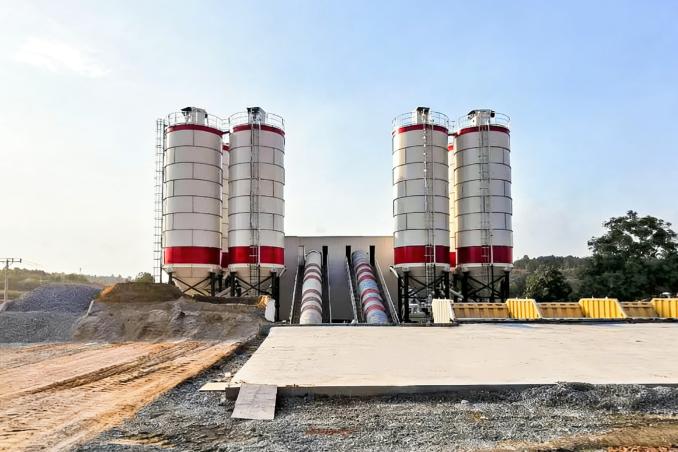
3. Evaluate Installation and After-Sales Service
Stationary concrete batching plants involve complex installation, requiring professional teams and complete plans. Modular designs shorten installation cycles and lower costs. Comprehensive after-sales service resolves malfunctions promptly and minimizes downtime.
Take SANY as an example. As a world-renowned manufacturer of concrete machinery, its stationary concrete batching plants feature a modular design, making installation and disassembly extremely convenient and greatly reducing workload for customers. In addition, the company has a comprehensive after-sales service network that provides users with professional support to ensure the normal operation of equipment.
Conclusion
As the construction industry evolves, demands for concrete supply efficiency and quality continue to rise. As core equipment ensuring a stable concrete supply, concrete batching plants have become increasingly vital. Stationary concrete batching plants, in particular, are closely linked to project efficiency and quality. Rational construction and standardized operation maximize their advantages and drive efficient project execution. We hope this article provides valuable guidance for your equipment purchasing, allowing this “steel heart” to deliver steady power to your grand construction projects.
FAQs
What is a Stationary Concrete Plant?
Stationary concrete batch plants are modern production facilities that produce concrete used in almost all construction projects with precise weighing and homogeneous mixing technology. When first designed, concrete plants were of a stationary type.
What is the 20/30/40 Rule In Concrete?
The "10/20/30/40 Rule" for concrete production is an empirical mix design based on volume estimation, indicating that the approximate volumetric proportions of the various components in ordinary concrete are: cement (10%), water and air (20%), fine aggregates such as sand (30%), and coarse aggregates such as gravel (40%).
What is the 90 Minute Rule For Concrete?
The 90-minute rule for concrete is a core quality control standard in the ready-mixed concrete industry, stipulating that unloading and placing must be completed within 90 minutes from the start of mixing with water. Concrete exceeding this time limit is generally deemed expired and prohibited from use.
Recommend Blogs
2026 Construction Equipment Selection and Application Analysis
This article introduces main types, and functions of construction equipment, and provides a selection guide to help you with efficient construction.
Road Construction Equipment and Its Uses: A Practical Guide for 2026
What equipment is needed for road construction? This article introduces the types and uses of road construction equipment to help you better conduct road construction.
7 Major Telehandler Uses and Practical Construction Guide
Telehandlers have a wide range of uses. This article introduces seven telehandler uses and provides solutions to improve material handling efficiency.