The Difference Between Backhoe Loader and Excavator: Efficient Construction
This article details the difference between backhoe loader and excavator, and provides specific selection recommendations.
On construction sites, excavators swing their arms to break rocks and dig deep pits, while backhoe loaders flexibly scoop and transport materials and quickly level the ground; both are core equipment for engineering teams. However, many people are unaware of the difference between backhoe loader and excavator, and some even equate backhoe loaders with excavators, ignoring their functional differences. This article will start by defining their essential differences, breaking down the core distinctions between the two in terms of suitable scenarios, work efficiency, and operation methods. Based on different engineering needs, it will provide precise selection advice to help you avoid selection pitfalls and maximize the effectiveness of your equipment.
Definitions of Excavator and Backhoe Loader
What Is an Excavator?
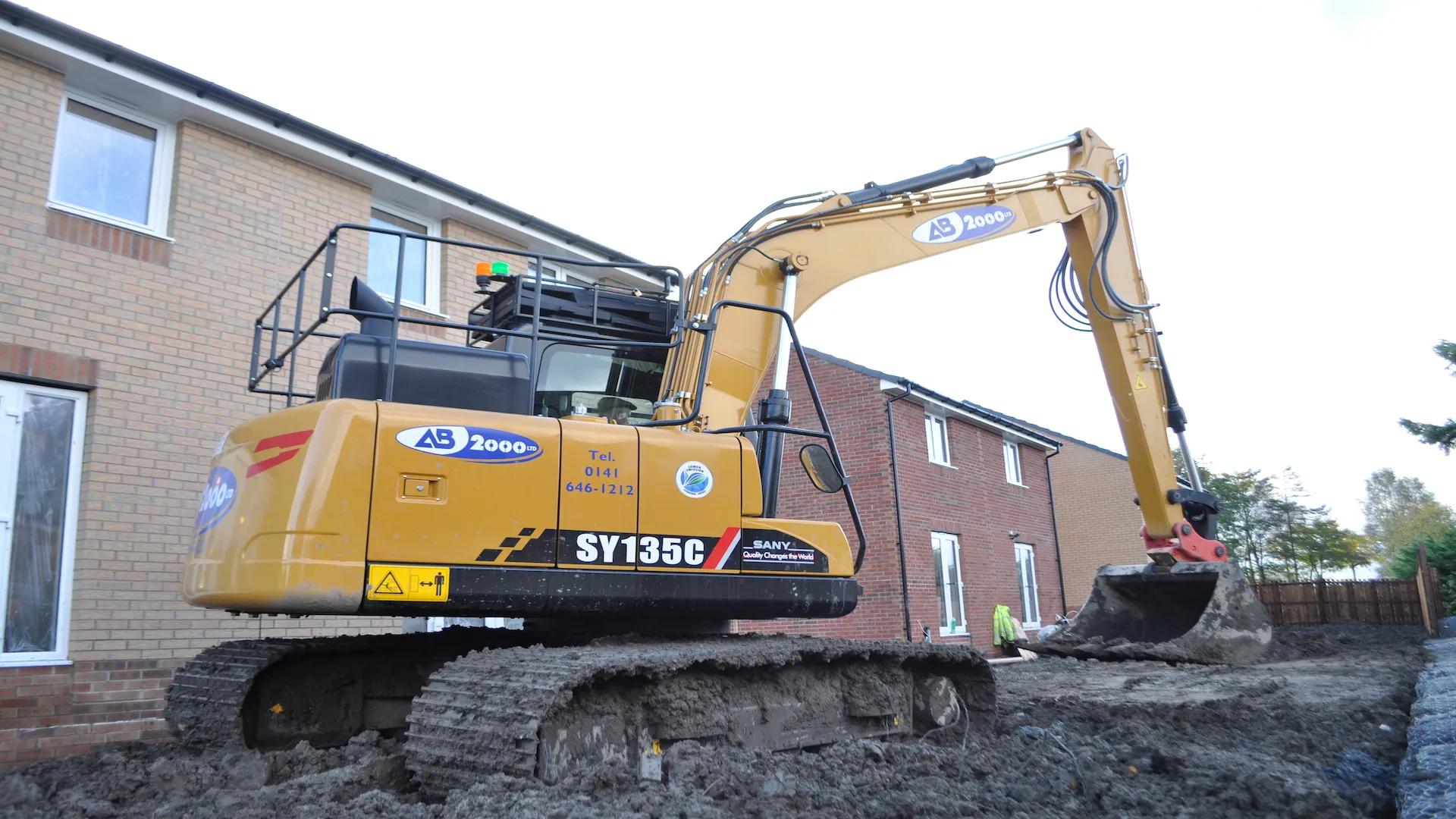
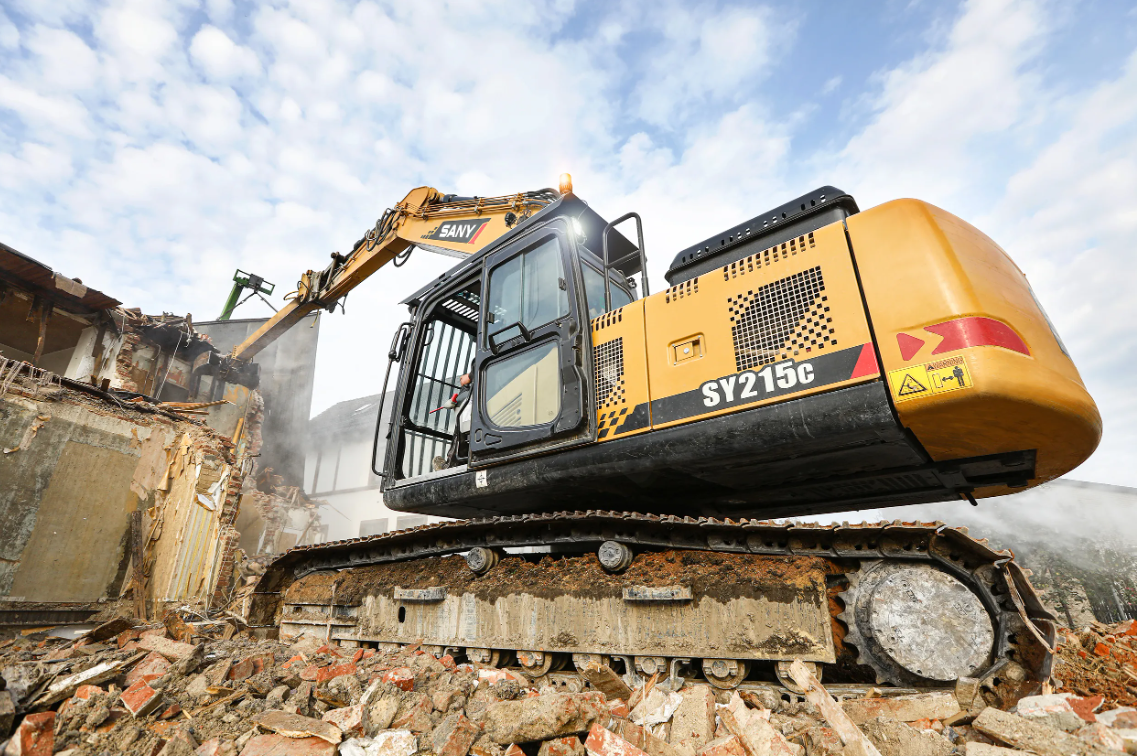
An excavator is a heavy-duty construction machine used for digging, earthmoving, and lifting. It is equipped with a boom, stick, and bucket, mounted at the end of a rotating cab, which can be mounted on tracks or wheels. These powerful and versatile machines are essential for a variety of operations, including foundation excavation, trenching, demolition, and site preparation.
1. Main Features
- Powerful Performance & Digging Force: Equipped with a high-performance hydraulic system, it can easily excavate hard materials such as soil and rock.
- Versatility: By replacing different attachments (e.g., grapples, hydraulic breakers, clamshell buckets), it can perform multiple tasks including excavation, lifting, demolition, crushing and handling.
- Strong Adaptability: Available in various models such as crawler-type and wheel-type, suitable for operations on different terrains including soft, uneven or narrow spaces.
- Precise & Comfortable Operation: Modern excavators are usually equipped with ergonomic cabs and intuitive control systems, enabling precise operation and reducing operator fatigue.
- Durability: Manufactured with durable materials like reinforced steel, it can work stably for a long time under harsh working conditions.
2. Main Applications
- Construction Engineering: Used for foundation excavation, earth backfilling, site leveling and demolition.
- Mining Operations: Stripping ore layers and extracting minerals.
- Hydraulic Engineering: River dredging, dike construction and water environment improvement.
- Road Construction: Subgrade excavation, slope reinforcement and other works.
- Municipal & Civil Projects: Operations in narrow spaces during urban construction, as well as small-scale projects like backyard landscaping and pool digging.
- Material Handling: Loading, unloading and transporting materials in yards and construction sites.
What Is a Backhoe Loader?
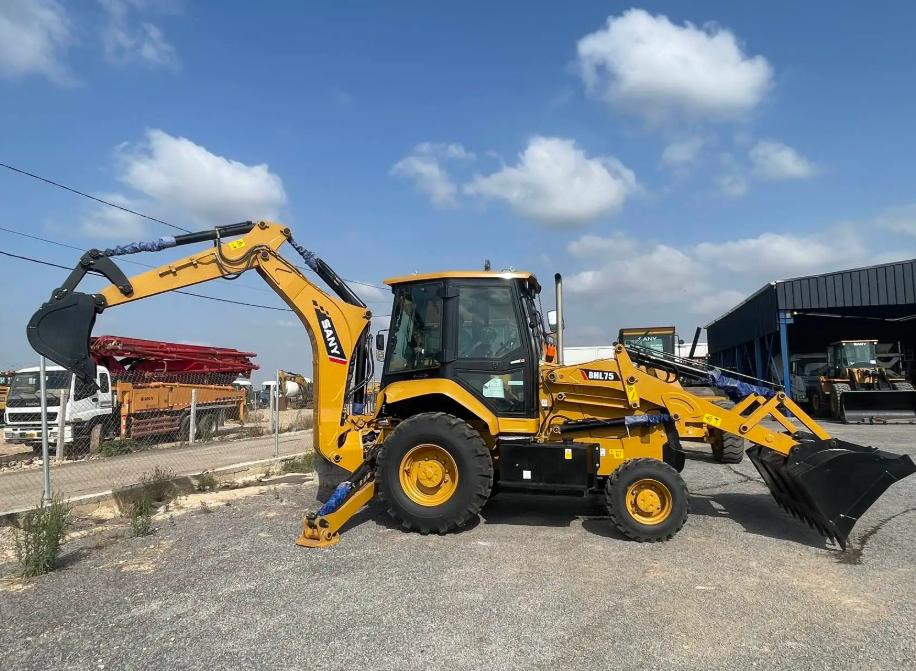
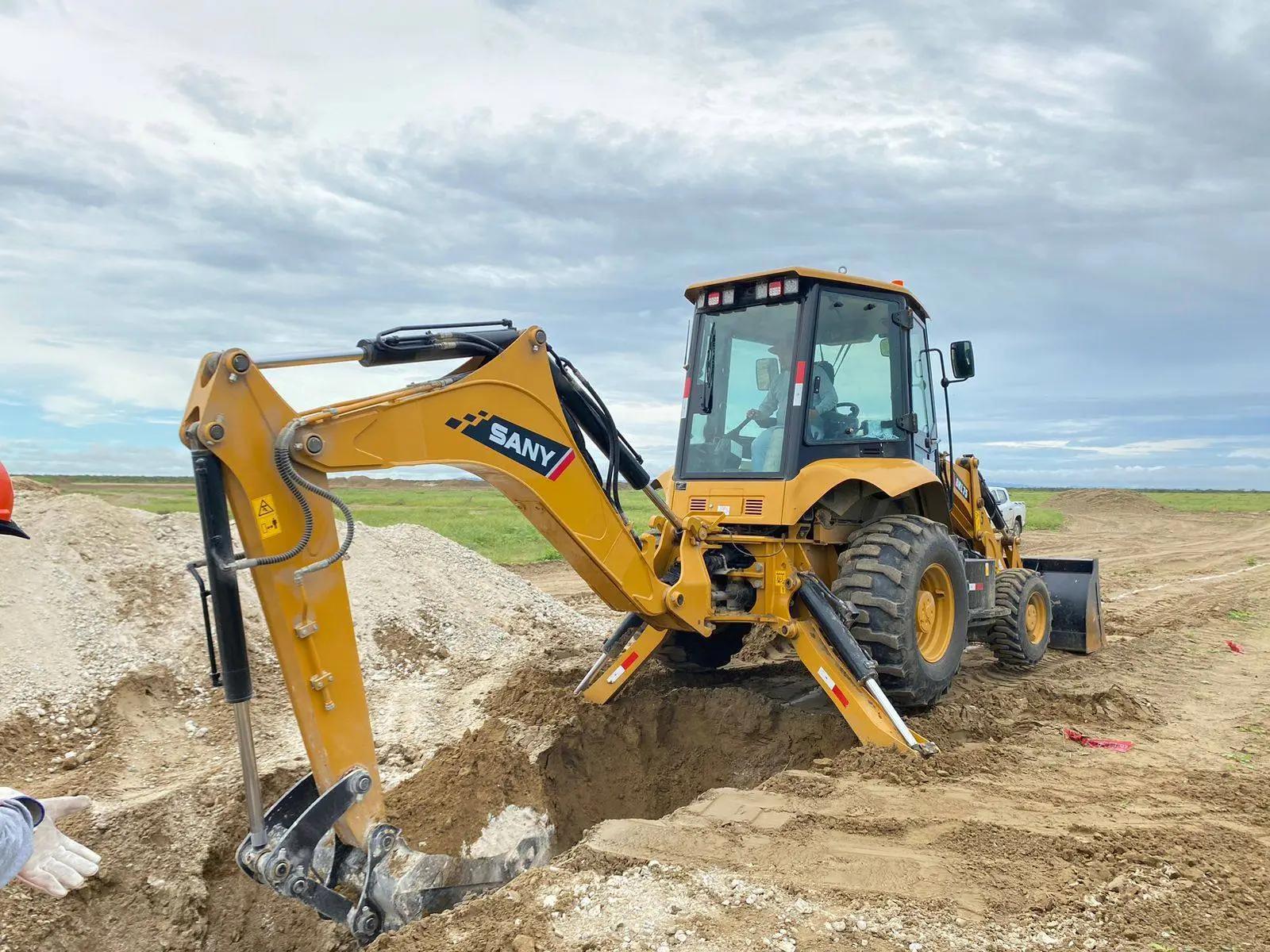
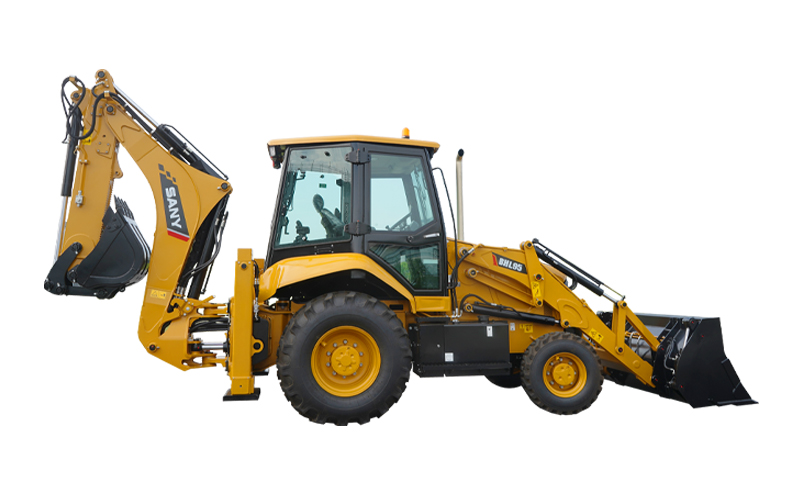
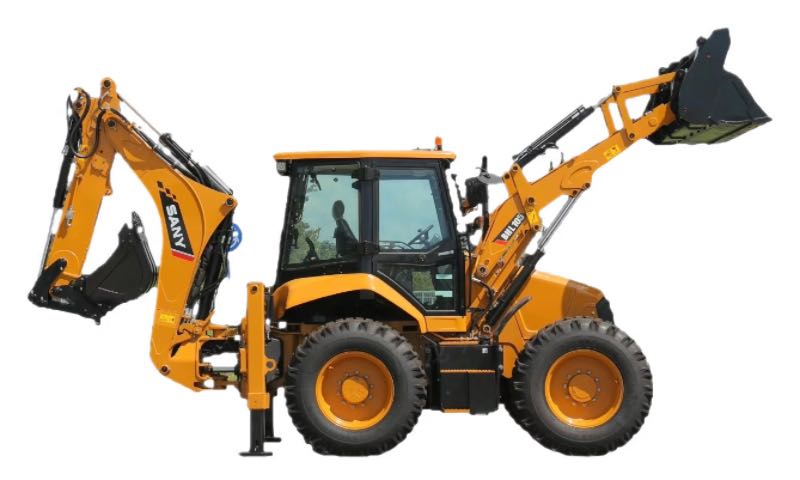
A backhoe loader is a versatile construction vehicle that combines a front-end loader and a rear-mounted excavator. This enables it to perform multiple tasks such as digging, trenching, and material handling. Essentially, it features a tractor-like chassis with a large bucket at the front for loading and an excavating arm (backhoe) at the rear. These machines are commonly used in the construction, agriculture, and landscaping industries.
1. Main Features
- Integrated & Efficient Functions: Combines two core functions—excavation and loading—eliminating the need for two separate pieces of equipment and significantly improving work efficiency.
- Stable Digging Performance: The backhoe arm can accurately complete digging tasks such as trenches, post holes, and foundations, with digging depths of different models ranging from 12 to 20 feet.
- Convenient Material Handling: Equipped with a front-end loader, it can stably lift and transport heavy materials like soil, gravel, and debris.
- Wide Adaptability: Supports various attachments such as augers, hydraulic breakers, and forks, flexibly expanding application scenarios and functional boundaries.
2. Main Applications
- Digging & Excavation Work: Focuses on scenarios such as utility trench digging, pipeline laying, and underground cable installation.
- Loading & Material Handling: Uses the front loader bucket to efficiently move large quantities of materials like soil, gravel, and snow.
- Landscaping & Agricultural Work: Benefits from its compact and flexible design, suitable for landscaping tasks such as tree planting, land clearing, and agricultural-related work.
- Small-Scale Construction & Demolition Projects: Excels in urban small-scale construction and minor demolition work with its dual functions and high mobility.
For example, SANY Backhoe loader combines digging and loading, making it easy and comfortable to operate, versatile, and equipped with a powerful engine for strong power and lower fuel consumption, thus reducing operating costs.
Backhoe Loader and Excavator Difference
On construction sites, both backhoe loaders and excavators are core equipment used frequently. The former integrates dual capabilities of excavation and loading, while the latter excels in powerful digging force. Though their functions may seem overlapping, they differ significantly in core positioning and application scenarios.
Size and Design
Backhoe loaders feature a compact design, with relatively small size and lightweight flexibility. Their smaller build allows easy maneuvering in narrow spaces, enabling operations without requiring large work areas, which fits the space constraints of small to medium-sized projects.
Excavators are bulky and heavy, with more substantial overall dimensions. Even Small Excavator weigh more than backhoe loaders. Their large body structure is designed to support stronger hydraulic systems and digging mechanisms, meeting the stability and power demands of heavy-duty operations.
Rotational Capacity
Backhoe loaders have obvious limitations in rotational capacity: the boom can only achieve a limited rotation of approximately 200 degrees, and the chassis cannot rotate synchronously. This restricted rotation range directly affects the operational coverage, requiring frequent adjustments of the machine's position to complete full-range operations.
Excavators feature 360-degree full-range rotational capacity, with the chassis and boom rotating synchronously, offering no restrictions on operating angles. Operators can flexibly adjust the working direction and cover all surrounding operation areas without moving the entire machine, ensuring extremely high operational freedom.
Power, Digging Depth, and Operating Radius
There are significant differences between excavators and backhoe loaders in terms of power, digging depth, and operating radius:
Excavators boast stronger power, greater digging depth, and a wider operating radius, making them suitable for heavy-duty excavation and engineering projects.
Backhoe loaders have relatively weaker power, smaller digging depth, and a narrower operating radius. However, their body integrates both excavation and loading functions, with superior mobility and flexibility.
Characteristic | Excavator | Backhoe Loader |
Power | More powerful, typically with higher power, suitable for heavy-duty work | Relatively weaker, with lower power |
Digging Depth | Deeper, reaching several meters or even deeper | Shallow, usually within a few meters |
Working Radius | It has a wider range and can easily complete large-scale excavation and loading operations | Narrower, thus more restrictive in terms of excavation and loading areas |
Mobility and Driving Capabilities
Excavators (especially crawler-type ones) are less mobile than backhoe loaders. They rely on crawler tracks or trailers for movement within construction sites, featuring slow speed but strong off-road performance.
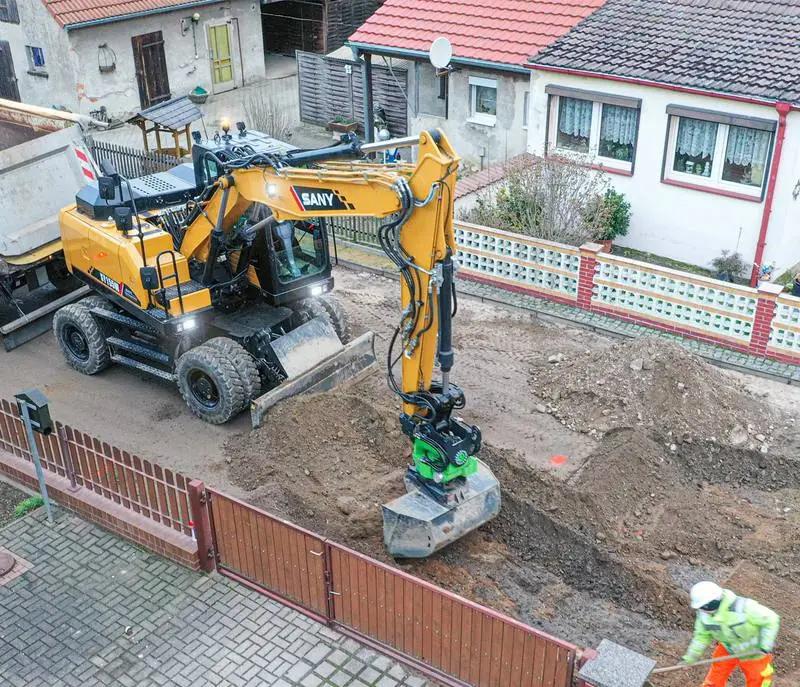
Backhoe loaders are wheeled machinery with superior road driving capability and speed. Their wheeled design enhances mobility: they are easy to transport, can navigate narrow or crowded spaces, and require no additional transportation equipment. For example, SANY Wheel Excavator has an operating weight of 13.5 - 16 tons. It is equipped with a travel shift protection system that converts output shaft speed into pressure signals to confirm the current speed, along with a reverse alarm system that alerts surrounding personnel, effectively improving safety during reversing.
Attachment Configuration and Versatility
Excavators focus primarily on excavation, so their attachment configuration prioritizes digging performance with relatively single functions. In contrast, backhoe loaders integrate both excavation and loading capabilities, featuring more diverse attachment options. They can switch between excavator bucket arms and front-end loader arms to achieve more comprehensive operational capabilities.
Feature | Excavator | Backhoe Loader |
Design focus | Focused on excavation operations, possessing powerful excavation depth and force | A multi-functional vehicle that integrates excavation, loading, and transportation functions |
Attachment Configuration | Buckets, grabs, augers, breakers, rippers, and connectors, etc | Backhoe excavators can be equipped with a variety of attachments, such as drilling rigs, hydraulic breakers, rippers, rakes, and more |
Versatility | Its function is relatively simple, mainly used for earthwork excavation, material handling, etc | With more comprehensive functions, it can complete both excavation and loading tasks on the same machine, resulting in higher efficiency and wider applicability |
Excavator vs Backhoe Loader: Which Equipment Fits Your Job Site?
Now that you understand the difference between excavator and backhoe loader, how do you choose between them for large-scale projects versus small-to-medium-sized ones? How to match narrow-space operations and heavy-duty excavation tasks? Below, we provide targeted selection suggestions based on core needs and site characteristics to help you avoid mistakes accurately.
Match Project Scale
Choose an excavator for large-scale construction, heavy-duty excavation, deep foundation pit operations, etc.
Choose a backhoe loader for small-to-medium-sized projects and scenarios requiring multi-task handling.
Adapt to Working Environment
Choose an excavator for rough terrain and operations requiring stable performance.
Choose a backhoe loader for narrow urban spaces and scenarios with high flexibility requirements.
Consider Mobility Needs
Choose a backhoe loader if frequent transportation across job sites or road travel (up to 25 mph) is needed.
Choose an excavator for heavy-duty operations at fixed sites.
Calculate Cost Budget
Combine initial purchase/lease costs and operating costs. Choose an excavator if the budget is sufficient and long-term heavy-duty operations are required.
Choose a backhoe loader for cost-effective small-to-medium-sized projects.
Clarify Task and Attachment Requirements
Choose a backhoe loader if dual functions (excavation + loading) or diverse attachments for multi-tasks are needed.
Choose an excavator if specialized attachments are required for heavy lifting, large-scale earthworks, etc.
Refer to Professional Advice
If you still have doubts, consult heavy equipment experts to get accurate selection guidance based on the specific needs of your project.
Conclusion
In summary, the key difference between backhoe loader and excavator lies in their core positioning. Excavators are larger and more powerful, with 360-degree rotational capability, making them suitable for large-scale projects, heavy-duty excavation, and similar scenarios. Backhoe loaders, on the other hand, are compact and flexible, integrating both excavation and loading functions with outstanding mobility—ideal for small-to-medium-sized projects and multi-task operations. For specific project equipment selection, comprehensive judgment should be made based on project scale, working environment, mobility needs, cost budget, and task characteristics. Only by accurately matching equipment to requirements can operational efficiency be maximized.
FAQs
Backhoe vs Excavator vs Loader:What Is the Difference?
The main differences between a backhoe, an excavator, and a loader lie in their structure, functions, and application scenarios. Backhoes and excavators are primarily used for digging—backhoes are usually tractors or small excavators equipped with a loading bucket, while excavators are typically large crawler or wheeled machinery specifically designed for excavation. Loaders, by contrast, are mainly used to load materials onto trucks or other transport vehicles, featuring a bucket at the front.
Why Do People Call Excavators Backhoes?
People refer to such equipment as a "backhoe excavator" primarily due to the digging movement of its bucket, not the bucket’s position. Its operating principle is not to push soil forward, but to insert the bucket into the soil and drag materials toward the machine itself, completing excavation through a reverse "pulling back" motion rather than "pushing." This action mode, opposite to traditional bulldozing, is the origin of the term "backhoe."
Are Excavators and Loaders the Same?
No, excavators and loaders are not the same. They are two distinct types of construction machinery, with key differences in their working methods and functions. Excavators are mainly used for excavation, loading, unloading, crushing, and similar operations, while loaders are primarily used for shoveling and transporting materials.
Featured Products

Recommend Blogs
How to Operate a Mini Excavator: A Beginner’s Step by Step Safety Guide
This guide systematically breaks down the essential knowledge of how to operate a mini excavator, helping you work safely and complete tasks efficiently
Excavator vs Bulldozer: Functions, Key Differences and How to Choose
Not sure whether excavator vs bulldozer is the right choice? This article explains both machines’ functions, differences, and selection methods to help you pick the best equipment for 2025 construction projects
Backhoe vs. Excavator: Your 2025 Heavy-Equipment Buying Guide
This article introduces the differences between backhoe vs. excavator, their respective advantages, and how to choose the right heavy equipment to help work crews perform better.