What Is a Wheel Loader? From Basic Definition to Core Applications
This guide covers key aspects such as definition and working principle, and explains in detail what is a wheel loader to help you select the right model smoothly.
In numerous work scenarios such as construction, mining, and agricultural production, you can always see a flexible yet powerful heavy-duty equipment — wheel loader. With its excellent mobility and versatile operational capabilities, it efficiently completes a series of arduous tasks ranging from material loading and short-distance transportation to site leveling, making it an indispensable key equipment in modern engineering and construction. This guide will systematically introduce what is a wheel loader from basic structure to practical applications, helping you fully understand the important value and application scenarios of this equipment.

Wheel Loader Definition and How It Works?
Wheel Loader Meaning
A wheel loader is a heavy construction machine equipped with tires as its traveling mechanism, a liftable boom, and a front bucket, designed for loading, transporting, and unloading materials. Its core design revolves around "high-efficiency operation + flexible mobility," making it widely used in projects that require rapid switching of work scenarios.
The Three Main Working Systems of a Wheel loader
In terms of working principle, a wheel loader operates through the coordinated operation of three major systems:
1. Power System
The engine generates power, which is transmitted to the axles and wheels through the transmission system, driving the equipment to move flexibly. It enables quick steering and high-low speed adjustment, adapting to the mobility requirements of different work sites.
2. Hydraulic System
As the core executive system, it provides power through components such as hydraulic pumps and hydraulic cylinders to control the lifting of the boom and the flipping of the bucket. This realizes the loading, lifting, and unloading of materials with smooth and powerful movements.
3. Operation and Control System
The operator precisely controls the coordinated work of all systems through devices such as joysticks and pedals in the cab, completing the entire operation process from driving to working. Some advanced models are also equipped with intelligent control functions to reduce operational difficulty.
What Is a Wheel Loader Used For?
1. Loading
This is the most basic and core application of a wheel loader. It can quickly load bulk materials such as sand, gravel, soil, coal, and ore, then transport them to trucks, silos, or other equipment. Equipped with a wide bucket and strong lifting capacity, it can carry several cubic meters of materials in a single load, significantly improving material transfer efficiency. It is the preferred equipment for material loading at construction sites and mines.
2. Hauling
With excellent mobility, wheel loaders can directly complete short-distance material transportation on the job site. There is no need to rely on other transportation equipment to move materials from extraction points or stockpiles to work areas. They are particularly suitable for scenarios with narrow spaces and short material transportation distances, reducing equipment scheduling costs.
3. Digging
When equipped with specialized digging attachments or through flexible bucket operations, wheel loaders can perform light digging work. They are suitable for excavating shallow pits, trenches, or clearing obstacles on the site. Especially in working conditions with soft soil, their digging efficiency is comparable to that of small excavators, while being more flexible and capable of quickly switching between digging and loading tasks.
4. Grading and Leveling
By adjusting the bucket angle, wheel loaders can be used for site grading, subgrade finishing, and other operations. In scenarios such as site clearance during the early stage of construction, subgrade leveling in road construction, or land leveling in farmland renovation, they can quickly trim the ground to the required slope and flatness, laying a solid foundation for subsequent work.
5. Clearing
Wheel loaders can efficiently complete site clearing tasks, including removing construction waste, debris, tree branches, or clearing collapse debris and unblocking roads after natural disasters. Their powerful buckets can directly lift or push away obstacles, and combined with flexible mobility, they can quickly restore the accessibility of work sites or roads.
6. Other Common Tasks in Construction and Beyond
Beyond its core applications, a wheel loader can expand its functionality by changing attachments: In the agricultural sector, it can be used for straw handling and feed loading; at ports and terminals, it can assist in container loading and unloading; in snowy and icy weather, it can perform road snow removal when equipped with a snowplow attachment; and in landscape engineering, it is suitable for seedling transplantation and soil improvement works. This truly achieves "one machine for multiple uses."
Main Parts of a Wheel Loader
The stable operation of a wheel loader relies on the coordinated work of its core components, with each part performing a crucial function:
1. Frame
As the "backbone" of a wheel loader, the frame supports all components including the engine, hydraulic system, and cab, while withstanding loads and impact forces during operation. Typically welded from high-strength steel, it boasts sufficient rigidity and toughness to ensure the equipment’s structural stability under complex working conditions.
2. Axles and Wheels
Axles are responsible for transmitting power and bearing loads, divided into front and rear axles. Some models are equipped with an all-wheel drive system to enhance passability on complex terrain. The wheels use large engineering tires with wide treads and deep patterns, offering excellent grip and load-bearing capacity to adapt to various harsh surfaces such as muddy and rugged roads.
3. Cab and Operator Controls
The cab serves as the operator’s workspace, equipped with seats, joysticks, instrument panels, and displays. Modern wheel loader cabs prioritize comfort and safety, featuring air conditioning, shock-absorbing seats, and in some cases, panoramic visibility and safety protection devices. The control system is intuitive and user-friendly: operators can control boom and bucket movements via joysticks, and maneuver the equipment using the steering wheel and pedals, making it easy to master.
4. Booms and Front Bucket
The boom is a key component connecting the frame and bucket, enabling lifting and tilting actions. Usually constructed from high-strength alloy steel, it ensures sufficient strength and durability. The front bucket is the part that directly contacts materials; different types can be selected based on operational needs, such as standard buckets (for general materials), high-capacity buckets (for lightweight materials), and rock buckets (for hard materials).
5. Hydraulics and Linkages
The hydraulic system is the "power core" of a wheel loader, consisting of components such as hydraulic pumps, hydraulic cylinders, hydraulic valves, and hydraulic pipelines. It is responsible for converting engine power into hydraulic energy to drive the movement of the boom and bucket. The linkage mechanism connects the boom, bucket, and hydraulic cylinders, ensuring the bucket remains stable during lifting and lowering to achieve precise operations.
6. Engine and Transmission
The engine is the "heart" of a wheel loader, providing all the power required for the equipment’s travel and operations. Typically a high-power diesel engine, it features strong power output, fuel efficiency, and high durability. The transmission system includes components like the gearbox and drive shaft, which transmit engine power to the axles to enable the equipment’s speed adjustment and movement.
7. Interchangeable Attachments
Interchangeable attachments are the key to a wheel loader’s "versatility." In addition to the standard bucket, it can be equipped with various attachments such as digging buckets, hydraulic breakers, snowplows, log grapples, and rippers. By quickly changing attachments, the wheel loader can adapt to different working scenarios, significantly enhancing its practicality and cost-effectiveness.
How to Choose the Right Wheel Loader for Your Job?
Choosing a wheel loader requires considering core factors such as operational needs and job site conditions to avoid blind selection:
Define the Operation Scale and Material Type
For small construction sites and lightweight materials (such as soil and straw), a small wheel loader is suitable; for large mines and heavy materials (such as ore and coal), a large wheel loader with a capacity of over 10 tons should be selected, equipped with a high-strength bucket.
Consider Job Site Conditions
For hard and open job sites, a standard wheel loader is sufficient; for muddy and soft terrain, models with all-wheel drive or high ground contact pressure should be selected to enhance passability. In areas with strict noise and emission requirements, choose an Electric Wheel Loader, which operates with zero exhaust emissions and low noise.
Evaluate Operation Distance and Efficiency Needs
For short-distance transportation and high-frequency loading scenarios, prioritize models with strong power and large loading capacity; for applications requiring frequent switching of work scenes, opt for models with excellent mobility and flexible steering.
Pay Attention to Attachment Compatibility
If you need to expand operational functions (such as digging, breaking, or snow removal), select models that support quick attachment changes and have pre-reserved attachment mounting interfaces.
Balance Operational Difficulty and Maintenance Costs
Novice users can choose models equipped with intelligent operation functions to reduce the learning curve; for long-term use, consider factors such as fuel consumption, parts availability, and maintenance convenience, and select brands with a good reputation and comprehensive after-sales service.
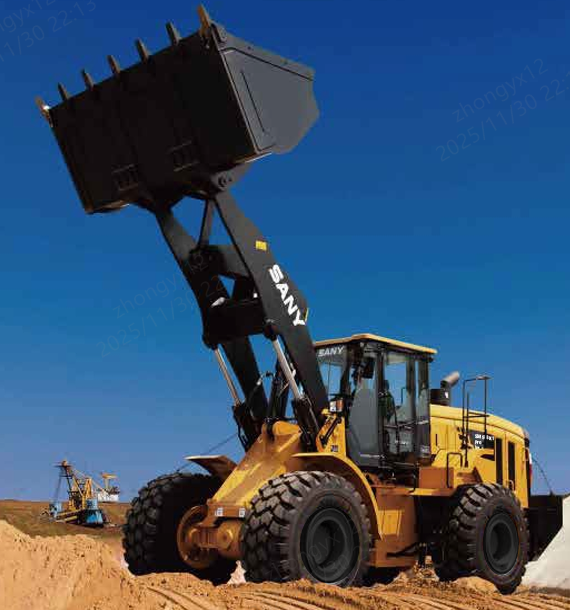
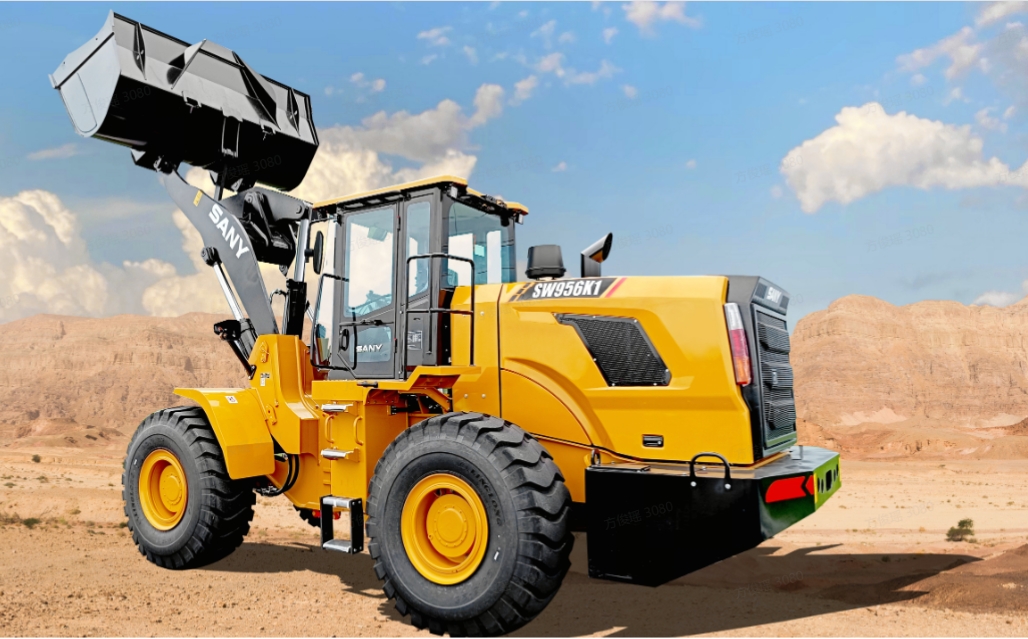
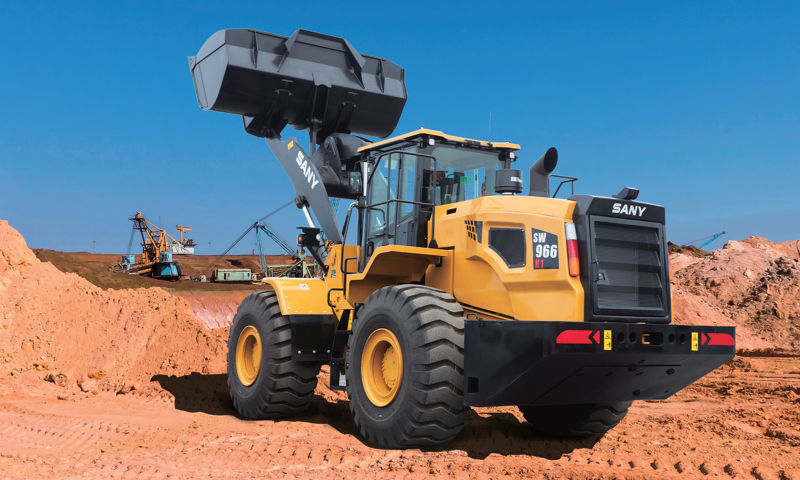
If you have high requirements for equipment quality and functionality, you may consider SANY products, which include both Wheel Loaders and Electric Wheel Loader.
For example, SANY Wheel Loader feature a more robust frame, proven key components, and advanced braking technology. Equipped with a powerful power system and leading hydraulic technology, they deliver greater capacity, faster speed, and more responsive braking performance. Additionally, they are easy to operate and provide reliable safety guarantees!

Conclusion
Based on the above wheel loader description, we believe you have gained an understanding of what is a wheel loader. With its advantages of efficient loading, flexible mobility, and wide-ranging applications, it has become an indispensable core equipment in multiple industries. Whether it is material transfer for large-scale projects or precision operations in small sites, selecting the right model and using it reasonably can significantly improve operational efficiency and reduce costs. However, in the actual selection and use process, it is recommended to consider your own operational needs and site conditions, and consult professional equipment suppliers when necessary to ensure you choose the most suitable wheel loader and maximize the equipment's value.
FAQs
What Does a Wheel Loader Do?
The core functions of a wheel loader are loading, transporting, and unloading bulk materials. Meanwhile, it can achieve multiple operations such as digging, grading, clearing, and breaking by changing attachments, making it widely used in construction, mining, agriculture, ports, and other fields.
What Is the Difference Between a Front Loader and a Wheel Loader?
A front loader is a general term referring to all loader equipment equipped with a front bucket; a wheel loader is a type of front loader, specifically referring to models with tires as the traveling mechanism. Simply put, wheel loaders fall under the category of front loaders, while front loaders also include other types such as tracked front loaders.
Wheel Loader vs Payloader?
In most scenarios, a wheel loader and a payloader are essentially the same type of equipment. A payloader is a colloquial term for a wheel loader, and both have the core functions of loading and short-distance material transportation.
The subtle differences lie only in usage scenarios and reference scope:
Wheel loader: An industry-standard term covering the entire range of models from small to large. It is suitable for formal scenarios such as technical documents and procurement, emphasizing versatility (compatible with various attachments).
Payloader: A colloquial expression mostly used for on-site communication at construction sites. In some cases, it specifically refers to small and medium-sized wheel loaders, focusing more on the core functions of "loading + transporting."
Featured Products
Recommend Blogs
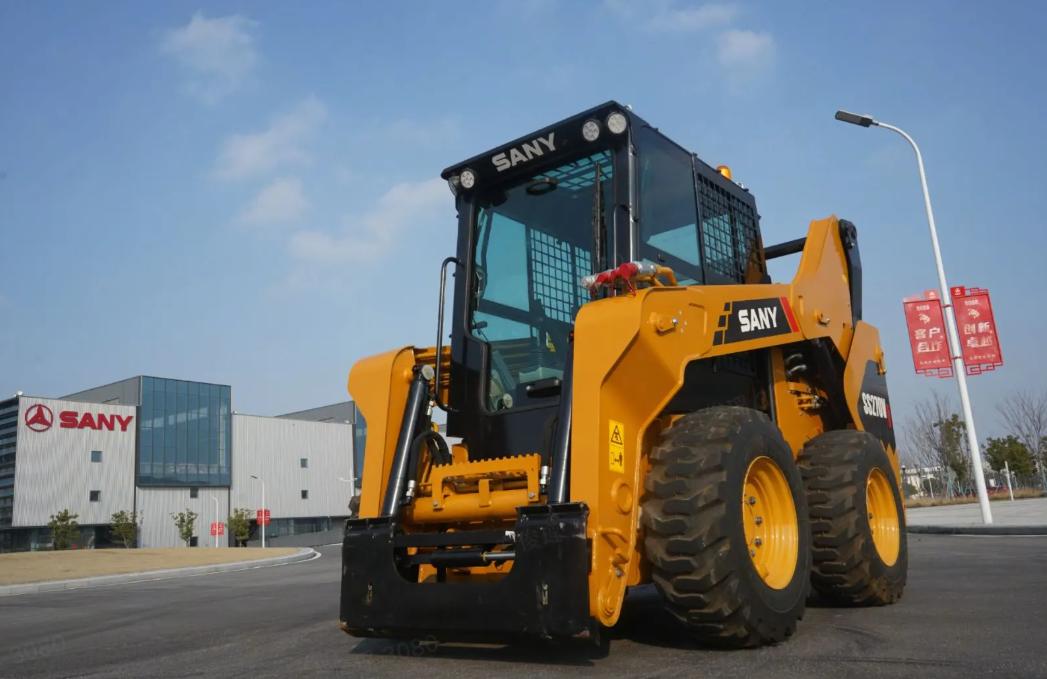
Skid Steer Loader Uses Guide: Helping You Work Efficiently
This article explains skid steer loader uses and provides specific selection recommendations.
Skid Steer Loading Guide: Key Steps, Practical Tips & Pitfall Avoidance
This guide outlines skid steer loading and transport procedures, highlighting common errors and providing practical avoidance methods.

What Is a Wheel Loader? A Practical Overview for 2025
This article explains what is a wheel loader, its working principle, applications, key components, types, sizes, and how to choose the right model to help project managers improve efficiency.