A Comprehensive Analysis of Skid Steer vs Track Loader: From Basics to Practical Advice
This article discusses the definitions, uses, differences, and applicable operating scenarios of skid steer vs track loader to help practitioners choose appropriate equipment.
On construction sites, skid steer loaders and track loaders are among the most frequently used machine. However, many workers face the dilemma of choosing between the two. This article will provide a comprehensive comparison of skid steer vs track loader, starting with basic definitions, analyzing their uses, and differences. and offering selection recommendations based on specific application scenarios. The goal is to help operators accurately match and find the right equipment.
Understanding the Basics of Skid Steer vs Track Loader
Skid-steer loaders and crawler loaders are two common types of equipment used in construction and site operations. The skid-steer loader’s flexible steering allows it to operate in confined spaces, while the crawler loader’s tracked structure enables it to adapt to complex terrain. Although both belong to the loader category, their functions and application scenarios differ significantly. This article will first clarify the core definitions of each and then detail their typical usage scenarios to help you choose the right equipment for your needs.
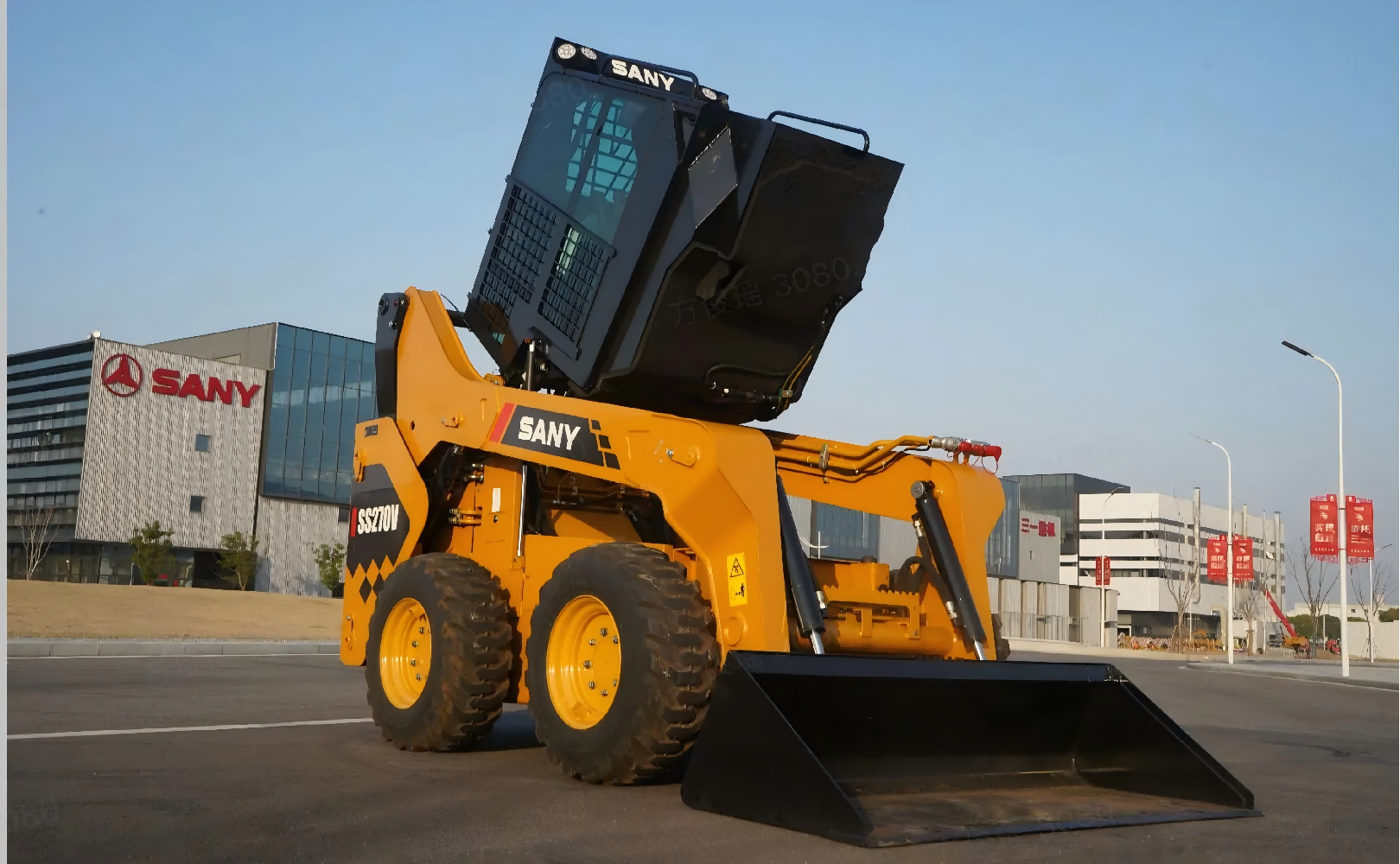
What Is a Skid Steer Loader and What Is It Used For?
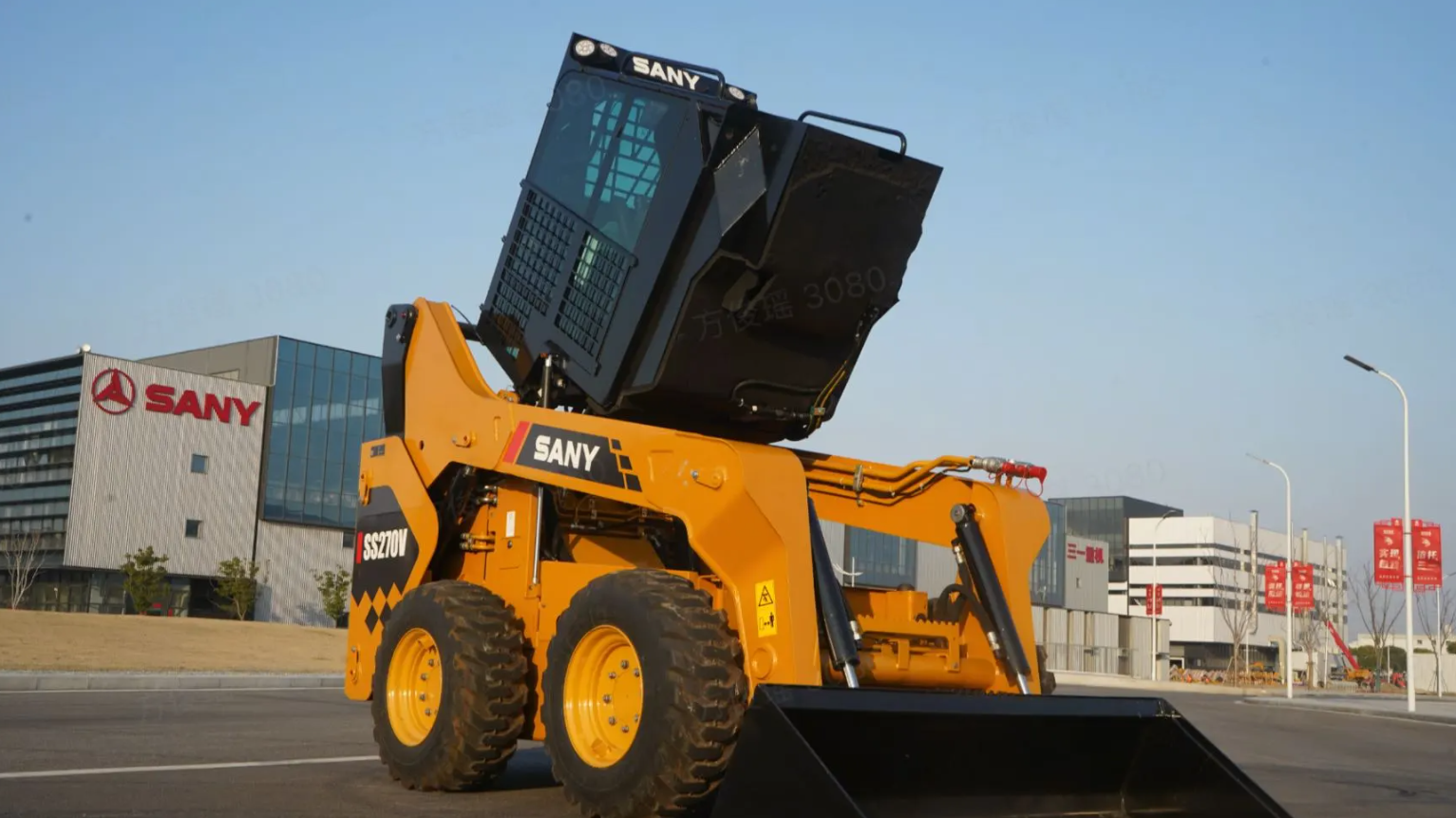
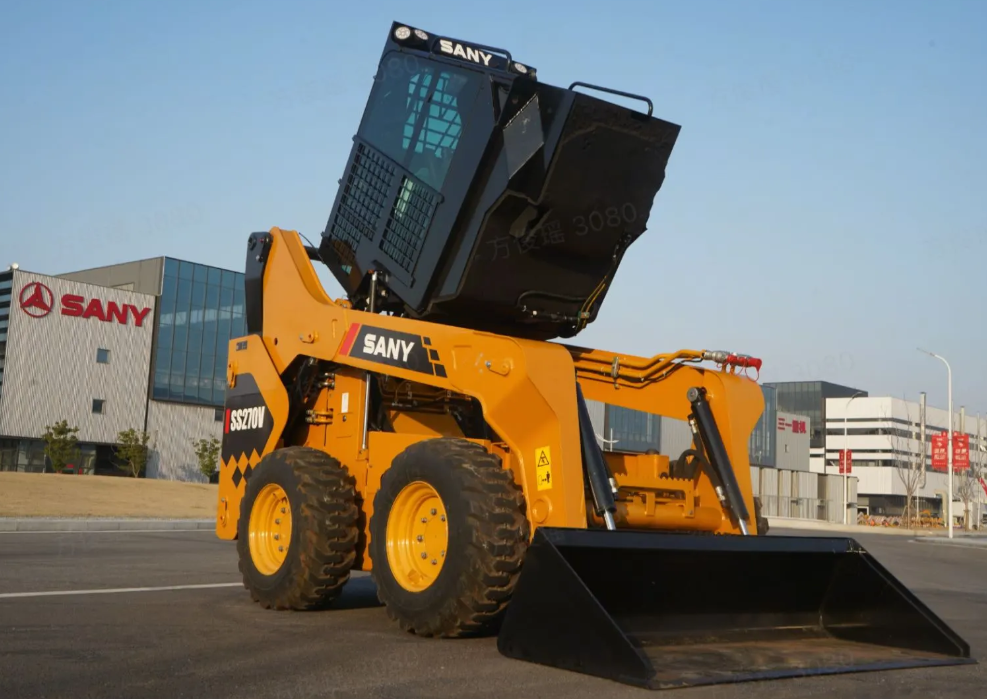
A skid steer loader is a compact construction vehicle whose core feature is steering through differential wheel rotation. By increasing the speed of one wheel, the machine rotates or “skids” on the ground, achieving tight turning capabilities. Skid steer loaders are lightweight, highly maneuverable, and suitable even in confined spaces. They are commonly used in landscaping and construction.
Common uses include:
1. Material handling: Transporting construction materials such as soil, gravel, and sand.
2. Site leveling: Clearing debris and obstacles, or performing landscaping and surface maintenance.
3. Excavation: Utilizing attachments for trenching, loosening soil, tilling, and direct excavation.
4. Snow removal: Specialized buckets or attachments like snowblowers or shovels enable quick clearing of roads and areas.
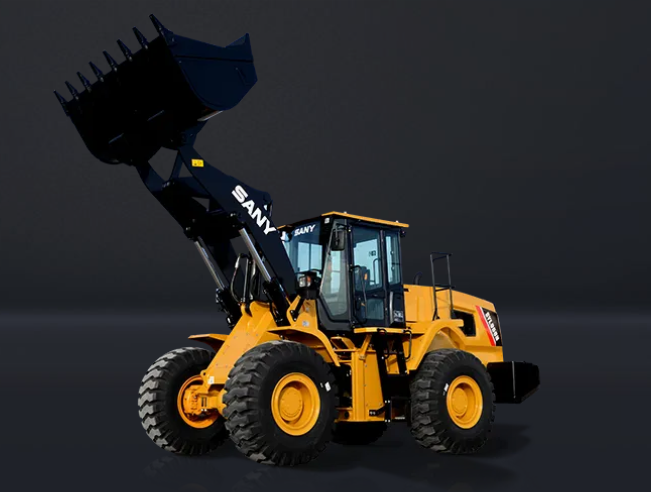
In addition to confined spaces, skid steer loaders excel in small, flexible operating scenarios. For transporting heavier loads or handling larger-scale tasks, wheel loaders—also wheeled construction machines—are a better choice. Their larger bodies and higher load capacities make them ideal for extensive or heavy-duty operations.
What Is a Compact Track Loader and What Is It Used For?
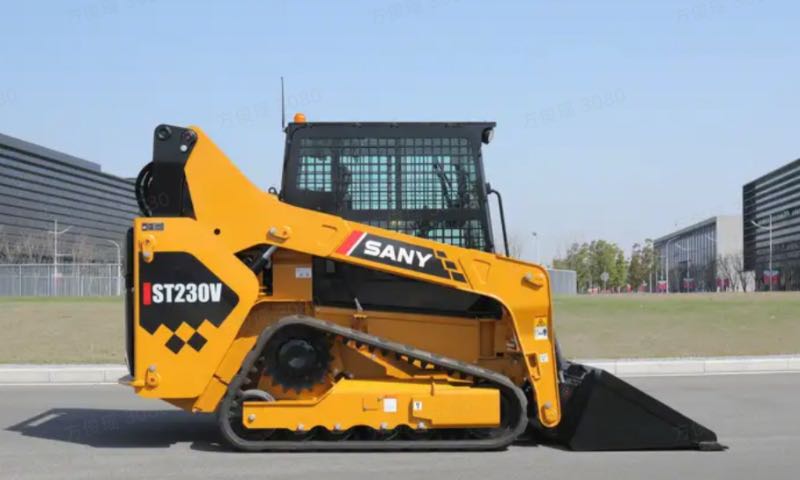
Compact track loaders are small machines that differ from skid-steer loaders mainly in their use of tracks instead of wheels. The tracked design increases ground contact, allowing smoother travel over uneven or complex terrain. However, because they lack zero-radius turning, compact track loaders are generally less maneuverable than skid-steer loaders.
Common applications include:
1. Muddy or soft surfaces: Construction sites after rain, farmland renovation, and landscaping.
2. Slope work: Grading and mountain construction.
3. Heavy-duty work: With attachments, they can excavate or move heavier materials.
4. Harsh environments: Auxiliary mining operations and landfill cleanup.
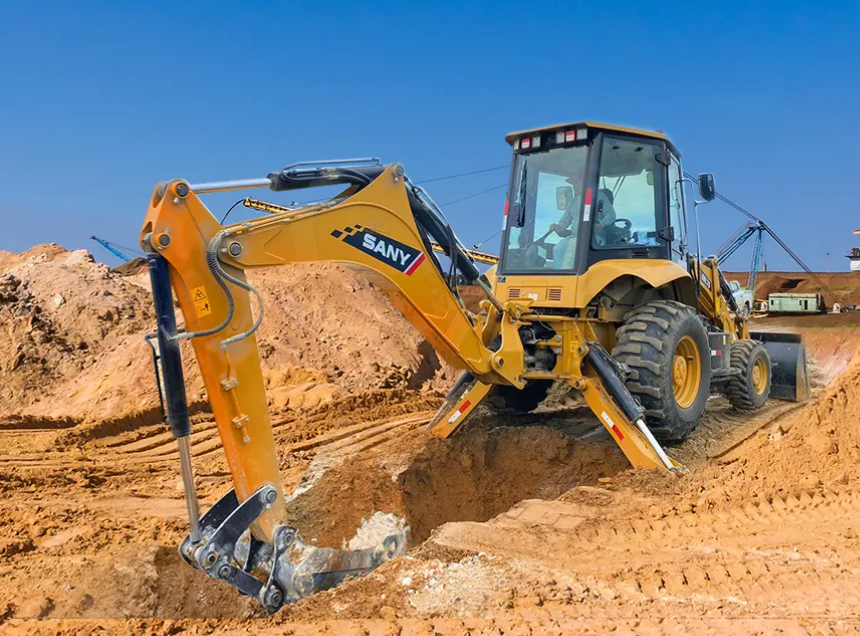
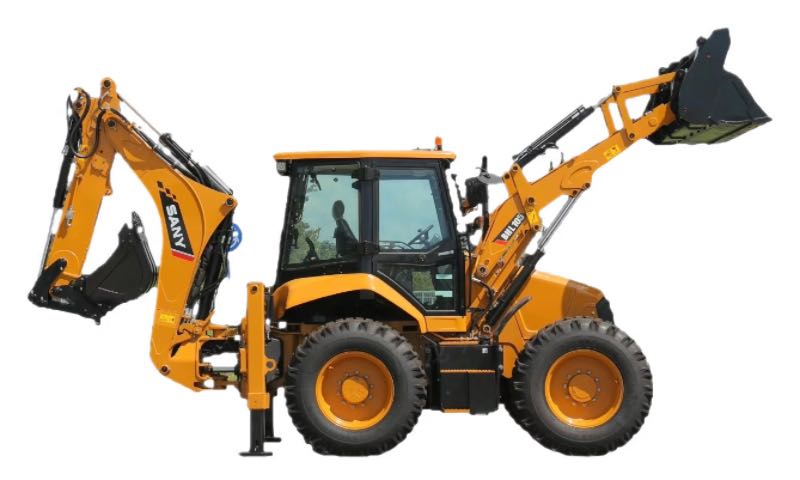
Besides skid-steer loaders and track loaders, backhoe loader can also versatile for excavation and loading, such as general construction work, landscaping, demolition, and road maintenance. All three types of small construction machinery hold a relatively important position.
Skid Steer vs Track Loader: Key Differences
After understanding the basic information, we will then compare the differences between skid steer loaders and track loaders across key dimensions to help users better select equipment suitable for the work scenario.
Traction and Ground Pressure
- Skid steer loader: It has more advantages on hard surfaces such as asphalt, concrete, roads and other developed surfaces. It can handle heavy lifting and demanding tasks efficiently, but its smaller traction makes it harder to move objects with high resistance.
- Track loader: With a larger ground contact area, it easily cope with soft or uneven terrain, providing superior traction and stability. This design allows it to carry heavier loads without the risk of slipping or demanding the ground.
Maneuverability and Turning Radius
- Skid steer loader: Known for its excellent turning ability, it can easily handle tight turns and even rotate almost in place. This makes it ideal for confined spaces or construction sites with narrow working areas.
- Track loader: It uses fixed axles and has turning capabilities similar to skid steers, but it is slower and requires a larger working space to turn smoothly. Sharp turns are more difficult to execute due to its size and track design.
Stability on Slopes and Uneven Terrain
- Skid steer loader: Wheeled vehicles have a small contact area and a relatively high center of gravity. On slopes or undulating terrain, the machine tends to tilt and slip if traction is insufficient. They are more suitable for operations on gentle slopes or slightly uneven surfaces.
- Track loader: With a larger contact area and lower center of gravity, it maintains better grip and closely follows uneven terrain. This makes it more stable and suitable for operations on steeper slopes or rough, uneven ground.
Lift Capacity and Reach
- Skid steer loader: Limited by wheel stability, its lifting capacity is relatively lower for the same size and its reach is shorter. When lifting heavy loads, the machine body may shake, requiring careful operation.
- Track loader: Tracks provide greater stability and support, allowing them to lift and transport heavier loads at once. For example, a crawler loader with the same horsepower can typically carry 300 to 500 pounds more than a skid steer loader.
Attachments
Skid steer loaders and track loaders are comparable in attachment configuration. Each machine can be equipped with similar attachments to complete a variety of jobs, including buckets, drills, backhoes, excavators, sweepers, but their strengths differ.
- Skid steer loader: It is more suitable for use with light or small to medium-sized attachments. Due to its high mobility, it excels in light-duty operations that require frequent attachment changes.
- Track loader: With stronger load-bearing capacity and better stability, it can handle heavy-duty attachments, and is ideal for long-term, high-intensity working scenarios.
Speed and Efficiency on the Job Site
- Skid steer loader: Wheeled loaders offer lower rolling resistance, faster travel speeds, and flexible steering. They are highly efficient on hard surfaces (such as asphalt and concrete roads) and ideal for frequent material transfers over short distances.
- Track loader: Although slightly slower, it maintains high overall efficiency on soft, muddy, or uneven terrain, as it is less likely to get stuck and provides smoother operation.
Costs, Maintenance, and Lifespan
- Skid steer loader: More economical in both purchase and maintenance. Parts are easy to replace, and the higher ground clearance makes cleaning and servicing simpler. However, frequent use on rough terrain can shorten its overall lifespan.
- Track loader: Has a higher initial cost and requires more time and effort for cleaning and maintenance due to its track system. Operating in harsher environments also causes faster wear, potentially reducing its service life compared to a skid steer.
Comparison table: skid steer vs track loader
Comparison Dimensions | Skid Steer Loader | Track Loader |
Traction | Smaller | Greater |
Ground Pressure | High (prone to getting stuck, damaging the ground) | Greater (protects the ground) |
Turning Radius/Maneuverability | Small, allows for on-the-spot turning, more agility | Greater, limited in tight spaces |
Lift Capacity | Smaller, higher risk of rollover | Greater, more stable |
Slope Stability | Poor, suitable for gentle slopes or slightly uneven surfaces | Good, suitable for slopes or severely uneven surfaces |
Compatible Attachments | Suitable for all, with a preference for small and medium-sized | Suitable for all, with a preference for large/heavy-duty |
Work Efficiency | Highly efficient for light-duty operations with frequent attachment changes | Highly efficient for long, intensive operations |
Initial/Maintenance Cost | More economical, easy to maintain | More expensive, complex to maintain |
Skid Steer vs Track Loader: Which Machine Fits Your Job Better?
Track loader vs skid steer—each has its own advantages, and the right choice depends on the operating environment, work frequency and budget.
1. Choose According to the Working Environment
- Track loader: Suitable for soft, muddy, uneven, or sloping terrain, such as farms and forestry.
- Skid steer loader: Ideal for hard, flat, and narrow terrain, such as construction sites and roads.
2. Select According to Operating Frequency
- Track loader: Best for high-frequency, heavy-load work, such as long-term construction on large-scale projects and seasonal, concentrated work on large-scale farms.
- Skid steer loader: More Suitable for low-frequency, small- to medium-sized jobs, such as small renovation projects and routine community maintenance.
3. Choose According to Your Budget
- Track loader: Designed for those with a tight budget who want better performance for specific work situations, such as well-funded professional construction teams and large enterprises.
- Skid steer loader: Perfect for those with limited budgets who want to minimize initial purchase and ongoing maintenance costs, such as small contractors and self-employed individuals.
Conclusion
The difference between skid steer vs track loader is that they are both efficient tools designed for different scenarios. For lightweight work in hard, confined spaces, a skid steer is preferred; for complex terrain like soft, sloping terrain, a crawler loader is more competent. Overall, operators should consider a variety of factors, including core needs, actual operating conditions, and budget, to select the right equipment to maximize operational efficiency.
FAQs
What Is the Difference Between a Skid Steer and Track Loader?
The difference between a skid steer loader and a track loader is the wheel it is equipped with.
Skid steer loader: Equipped with wheels, it is lighter and easier to transport and store;
Track loader: It is not equipped with wheels but tracks instead, which makes transportation more difficult but provides a smoother driving experience.
What Are the Disadvantages of a Skid Steer?
Insufficient lifting force: A higher center of gravity and smaller wheel contact area provide limited lifting force;
Poor adaptability to soft/complex terrain: Higher ground pressure makes it easy to get stuck in soft, muddy terrain;
Low slope stability: The vehicle is prone to tilting or even rolling over on slopes or uneven terrain, making it more suitable for operations on gentle slopes.
Which Is Better Skid Steer or Track Loader for Snow Removal?
Skid steer vs track loader: Both can perform snow removal, but a skid steer is generally easier to navigate in the snow because it can apply more ground pressure, so instead of floating on the snow, its wheels sink deeper into the snow, providing more grip and stability on slippery surfaces.
Is a Compact Track Loader Just a "Tracked Skid Steer"?
No, a compact track loader is more than just a “tracked skid steer”.Although compact track loader and tracked skid steer are similar in size and and share some basic functions, they are, in fact, two completely different machines with significant differences in structural design and application scenarios:
- Structural Design: Compact track loader use tracks for propulsion and lack the ability to turn on the spot, making them less maneuverable in confined areas. tracked skid steer on the other hand, use wheels for propulsion, allowing for near-instant turning and maneuverability in tight spaces.
- Application Scenario: Compact track loader have a larger contact area with the ground, making them more suitable for soft, muddy, uneven terrain, and slopes. tracked skid steer, with their lightweight design and higher center of gravity, are more suitable for hard surfaces and gently sloping terrain.
Featured Products
Recommend Blogs
What Is a Skid Loader? Meaning, Principle & Guide
This article provides a detailed analysis of what is a skid loader is, including its core components, working principle and application scenarios. It also compares different loaders and offer a practical selection guide.

What Is a Wheel Loader? A Practical Overview for 2025
This article explains what is a wheel loader, its working principle, applications, key components, types, sizes, and how to choose the right model to help project managers improve efficiency.
What Is a Skid Steer Loader: A Comprehensive Guide to Sizes, Uses, and Selection
What is a skid steer loader? With skid steering and quick attachment changes, it boosts efficiency and cuts costs. This guide offers an in-depth analysis with practical tips.