Power Loader Selection Guide: Working Principles and Types
This guide will help you understand what a power loader is, its types, and its application scenarios, so that you can make a more accurate purchasing decision.
As an indispensable piece of heavy equipment in modern construction, power loader, with its superior material handling capabilities and operational efficiency, play a key role in numerous fields, including construction sites, mining, and agricultural operations. From traditional diesel engines to emerging electric technologies, different types of loaders are available to meet diverse construction needs. This guide will provide an in-depth analysis of loader power systems, hydraulic operating principles, equipment classifications, and key selection factors, offering comprehensive guidance for your purchase.
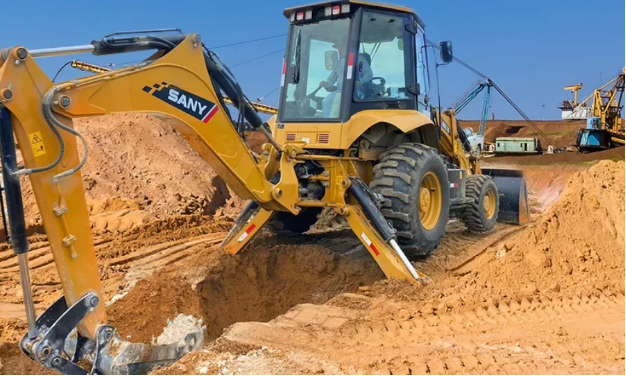
What Is a Loader?
A loader is a heavy-duty engineering machine that performs continuous operations such as material scooping, transporting, and dumping via its front-mounted bucket.
Its core functions include: loading and transferring loose materials, light excavation and site leveling, coordinated operations with other equipment, and enabling versatile applications through attachment replacements.
As essential equipment in modern construction, loaders have become a key indicator for measuring the level of mechanization in engineering projects.
How are Loaders Powered?
The power source of a loader directly affects its performance, fuel consumption, operating costs, and environmental adaptability. Loaders are mainly divided into three categories based on their power source: diesel, electric, and hybrid.
1.Diesel-Powered Loader
Diesel-powered loaders rely on diesel internal combustion engines for power, making them the most traditional and widely used type.
- Advantages: High torque output, suitable for heavy-duty operations and complex terrains; long continuous operation time; strong adaptability to harsh environments, capable of stable operation in high-temperature and dusty construction sites.
- Disadvantages: High fuel consumption and exhaust emissions, not suitable for indoor or low-emission areas; relatively high operating noise.
- Typical applications: Outdoor heavy-duty tasks, such as earthmoving in construction sites, ore transportation in mines, and material handling in large-scale farms.
2.Electric Loader
Electric loaders are powered by rechargeable lithium-ion batteries that drive electric motors, serving as a more environmentally friendly alternative.
- Advantages: Zero exhaust emissions, making them suitable for indoor scenarios such as warehouses, factories, and greenhouses; low operating noise, reducing noise pollution in the work environment; low maintenance costs, with fewer moving parts in the motor and no need for frequent oil changes.
- Disadvantages: Limited runtime, with continuous operation time usually ranging from 4 to 8 hours, requiring downtime for recharging; performance can be affected in low-temperature environments, with battery capacity potentially dropping by 20%-30% in sub-zero temperatures.
- Typical applications: Indoor material handling (e.g., warehouse pallet transportation), urban construction with strict environmental protection requirements, and indoor operations in greenhouses or farms.
3.Hybrid Power Loader
Hybrid loaders combine a diesel engine with an electric motor and battery system, integrating the advantages of both power sources.
- Advantages: A balance of performance and efficiency. They rely on the diesel engine for heavy-load operations and switch to electric motor drive for light-load tasks (such as idling or low-speed movement), resulting in better fuel efficiency compared to pure diesel models. Additionally, they produce lower emissions and less noise during low-load operations.
- Disadvantages: Higher initial purchase cost, generally 20%-40% more expensive than diesel models; complex maintenance, requiring proficiency in repair techniques for both the engine and battery system.
- Typical applications: Operations in mixed scenarios, such as urban road construction (alternating between indoor and outdoor work) and large logistics parks (with significant fluctuations in load demand throughout the day).
Different Types of Power Loaders and Their Primary Uses
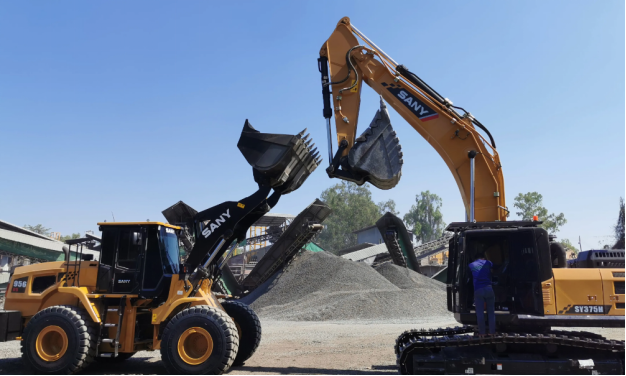
1.Wheel Loaders
Wheel loader are equipped with large, heavy-duty rubber tires (usually 4 wheels) and a front-mounted bucket, making them the most commonly used models in the construction and agricultural sectors.
- Key features: Fast travel speed, strong maneuverability (small turning radius on outdoor sites), and simple maintenance (the chassis structure is simpler than that of track loaders).
- Main uses: Loading bulk materials such as sand and soil into trucks; leveling construction sites; and handling grains, feed, or hay bales on farms.
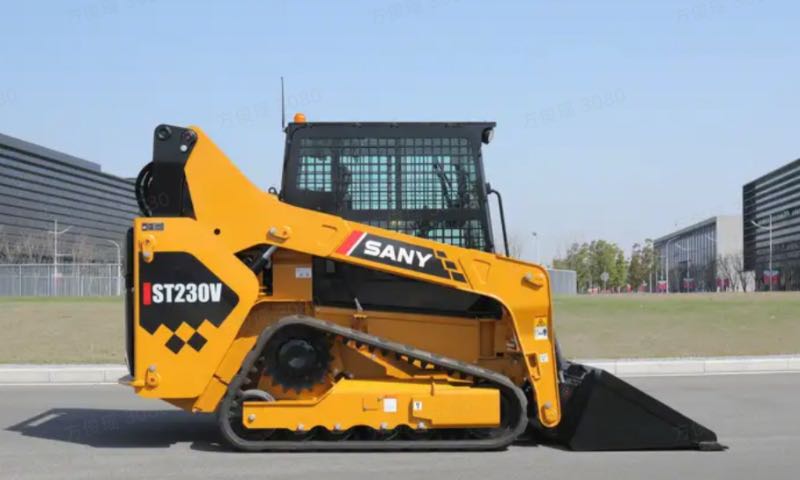
2.Track Loaders
Track loaders use metal or rubber tracks instead of tires, reducing ground pressure by increasing the contact area with the ground.
- Key features: Strong traction on soft, uneven surfaces (such as muddy fields and construction sites with loose soil); high stability during slope operations, with low risk of tipping over.
- Main uses: Heavy earthmoving in wet or rugged construction sites; site clearing (removing trees and stumps); and digging irrigation ditches on farms.
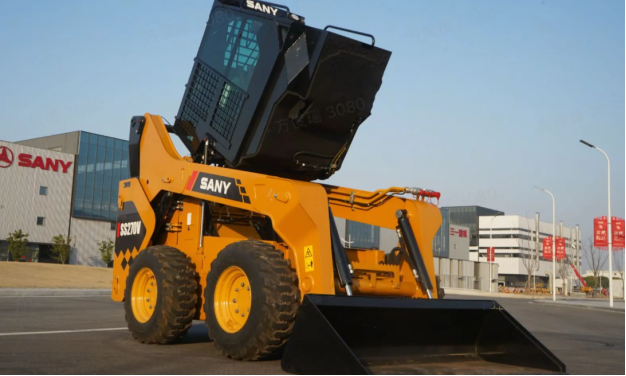
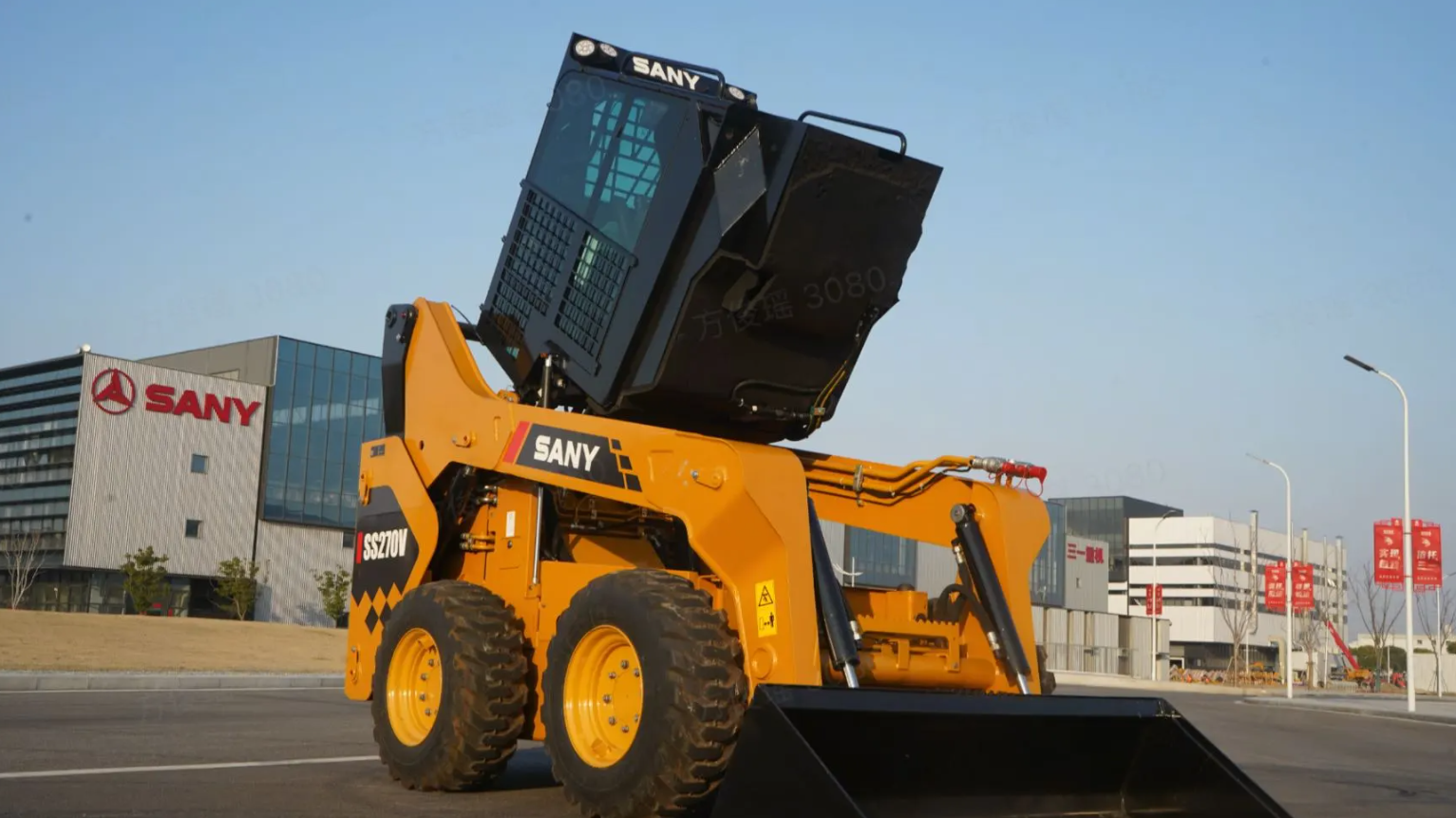
3.Skid Steer Loaders
Skid steer loader have a compact body, with wheels featuring a "skid-steer" design (turning is achieved by the left and right wheels rotating in opposite directions) and can be adapted to a variety of working attachments.
- Key features: Small in size, allowing them to pass through narrow spaces (such as doorways and narrow passages on construction sites); highly versatile, compatible with attachments like buckets, forks, augers, and breakers.
- Main uses: Indoor material handling (e.g., warehouse pallet transportation); small-scale demolition work; landscaping (site leveling, tree planting); maintenance in narrow urban areas.
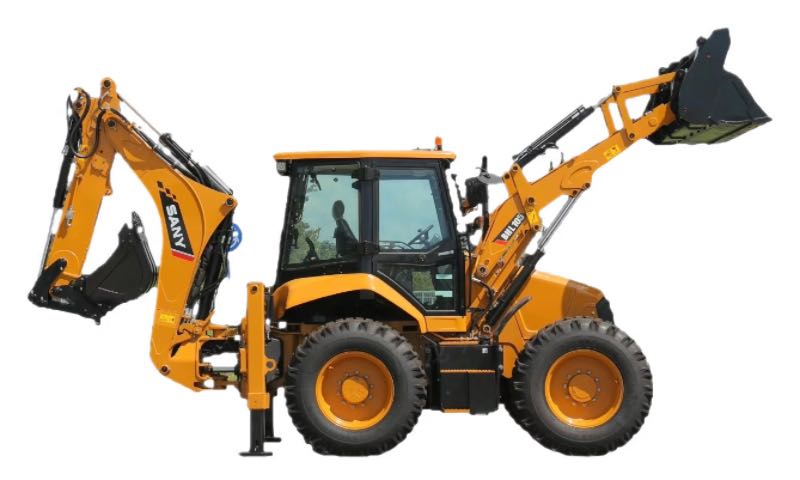
4.Backhoe Loaders
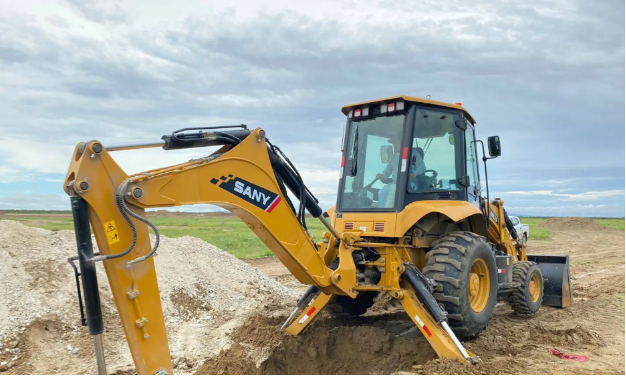
Backhoe loader are multi-functional machines with a "dual-purpose" design, featuring a front-mounted bucket (for loading) and a rear-mounted backhoe digging attachment (for excavating).
- Key features: Eliminates the need to switch between a loader and an excavator, saving equipment costs; moderate in size, suitable for small to medium-sized projects.
- Main uses: Residential construction (digging foundations, loading building materials); road maintenance (filling potholes, digging trenches for pipelines); farm work (digging wells, handling crops).
How to Choose the Right Power Loader for Your Application
Choosing a loader requires focusing on five core factors to accurately match the equipment with the job requirements, thus achieving a balanced approach to efficiency and cost:
1.Assess the Working Environment
- Outdoor rough and muddy terrain: Prioritize track loaders, as their strong traction is suitable for complex ground conditions.
- Indoor or low-emission areas (such as factories, urban areas): Choose electric loaders, which are zero-emission and noise-free.
- Narrow spaces (such as warehouses, construction sites in old urban areas): Opt for skid steer loaders, with their compact bodies that can move flexibly through tight spaces.
2.Clarify Load Requirements
- Heavy-load operations: Choose diesel wheel loaders, as their high torque can meet heavy-load demands.
- Light to medium-load operations: Electric or hybrid skid steer loaders are sufficient.
3.Consider Operational Versatility
- Single loading task: Basic wheel loaders offer the highest cost performance.
- Dual needs of loading + digging: Backhoe loaders eliminate the need for additional equipment investment.
- Multi-scenario switching (e.g., loading, crushing, drilling): Skid steer loaders combined with multiple attachments are more flexible.
4.Calculate Operating Costs
- For long-term, high-frequency outdoor operations: Diesel loaders offer low initial costs and a long battery life.
- For short-distance, high-frequency indoor operations: Electric loaders offer electricity costs that are only 1/3 to 1/2 of those of diesel models, making them more cost-effective in the long run.
- For mixed scenarios with significant load fluctuations: Hybrid loaders balance fuel consumption and environmental friendliness, reducing overall costs.
5.Preferred Big Brands
It is recommended to prioritize brands such as SANY, which feature mature technology and a comprehensive service network. Local SANY dealers offer routine maintenance services as well as customized maintenance packages and programs to meet your operational needs, ensuring both team safety and equipment efficiency.
Conclusion
Choosing the right power loader requires a comprehensive assessment of multiple factors, including equipment performance, operational requirements, operating costs, environmental considerations, and brand warranty services. Also important are equipment reliability and ease of maintenance, energy consumption and environmental performance, and accessory compatibility and upgrade potential. Choosing the right equipment not only improves operational efficiency but also significantly reduces operating costs, creating greater value for the project.
FAQs
What Is a Power Loader?
A power loader is a heavy machine that relies on an engine (diesel, electric, or hybrid) to provide power and drives a bucket and other attachments through a hydraulic system to achieve the shoveling, lifting and transportation of bulk materials. It is the core equipment for material turnover in the construction, agriculture and logistics fields, and is often referred to as a "loader".
What Are the Different Types of Loaders?
They are mainly divided into four categories:
- Wheel loaders: Equipped with rubber tires, suitable for fast outdoor loading operations;
- Track loaders: Featuring a track design, adapted to soft and rough terrain;
- Skid steer loaders: With a compact body, suitable for narrow spaces and operations with multiple attachments;
- Backhoe loaders: Equipped with a front loading bucket + a rear excavating arm, serving dual purposes in one machine.
How Does a Hydraulic Power Loader Work?
Hydraulic loaders operate via a "hydraulic power system" through the following process:
The engine or electric motor drives the hydraulic pump, which pressurizes the hydraulic oil and delivers it to the control valve;
The operator controls the valve using a joystick, directing the high-pressure oil to the corresponding hydraulic cylinder;
The hydraulic cylinder converts hydraulic energy into mechanical energy, driving actions such as lifting and tilting the bucket to achieve material loading and unloading.
What Is a Power Loader Exoskeleton?
A power loader exoskeleton is an auxiliary mechanical structure, typically installed on the loader's operator cabin or working attachments. Its core function is to reduce vibration and impact when the equipment is in operation.
For instance, it can reduce the pressure on the machine frame when the bucket lifts or lowers heavy loads, or minimize the vibration felt by the operator during operation. Meanwhile, it can improve the operating precision of the attachments and extend their service life. This structure is commonly used in loaders for high-precision loading tasks or long-term, high-frequency operations.
Featured Products

Recommend Blogs
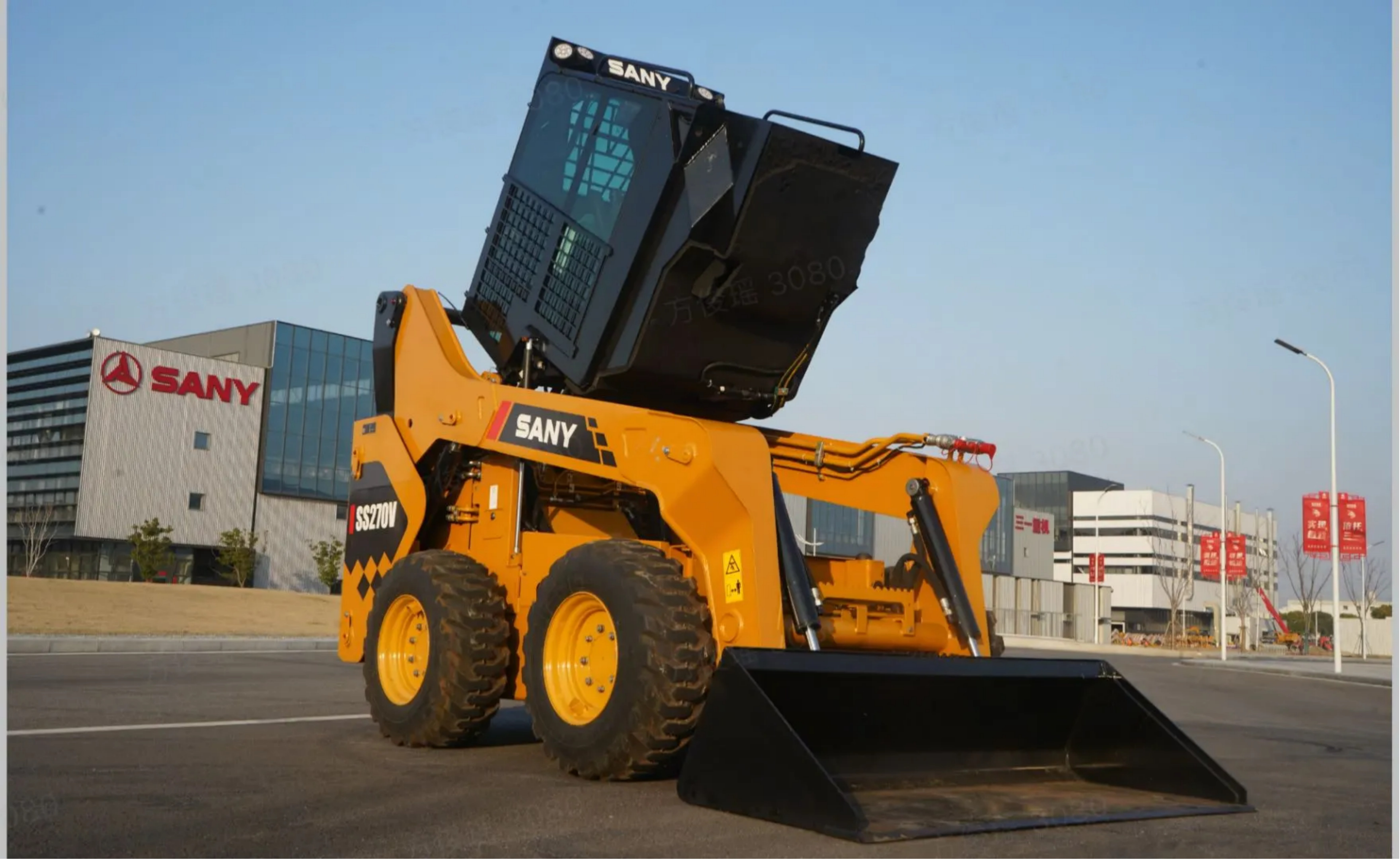
How to Operate a Skid Loader? Comprehensive Guide to Efficient and Safe Operations
This article focuses on core components of the skid loader, how to operate a skid loader, safety knowledge, and common operations, helping construction teams carry out projects efficiently and safely.
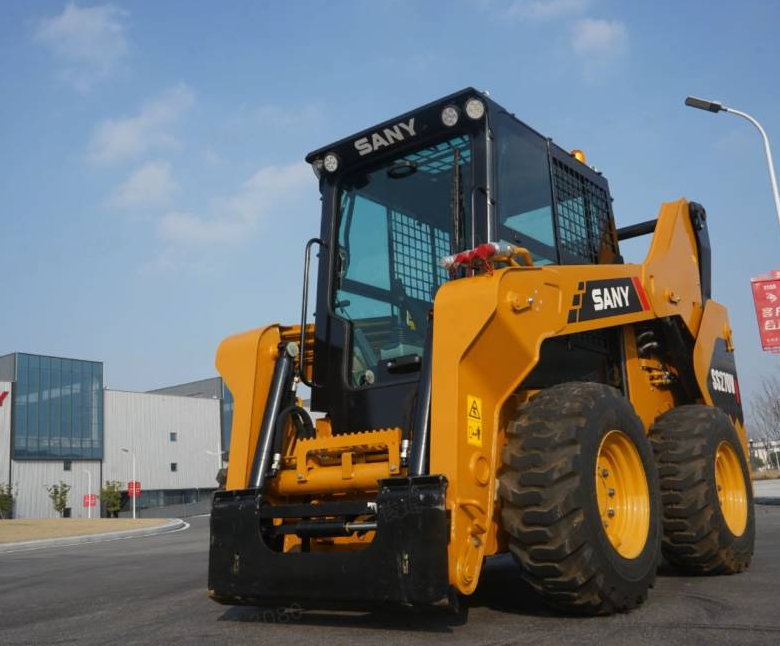
Skid Loader Weight Classification, Influencing Factors & Selection Guide
This article analyzes the importance, core indicators, model classifications, influencing factors and selection methods of skid loader weight, providing a reference for practitioners.
What Is a Skid Loader? Meaning, Principle & Guide
This article provides a detailed analysis of what is a skid loader is, including its core components, working principle and application scenarios. It also compares different loaders and offer a practical selection guide.