Industrial Material Handling Equipment: A Practical Guide to Classification And Selection
This article analyzes the core positioning and selection guidelines for industrial material handling equipment, helping companies enhance their competitiveness.
Manual material handling is inefficient, prone to warehouse overload during peak seasons, and disrupts production schedules. Handling heavy materials is labor-intensive, carries a high risk of accidents, and rising labor costs continue to squeeze profits. Meanwhile, limited storage space and disorganized material stacking significantly increase inventory management difficulties, severely hindering overall operational efficiency and becoming a constraint on development across various industries. The key to overcoming these challenges lies in the empowerment of industrial material handling equipment. Scientifically selecting efficient material handling solutions is an essential choice for enterprises to reduce costs, increase efficiency, ensure safety, and enhance competitiveness.
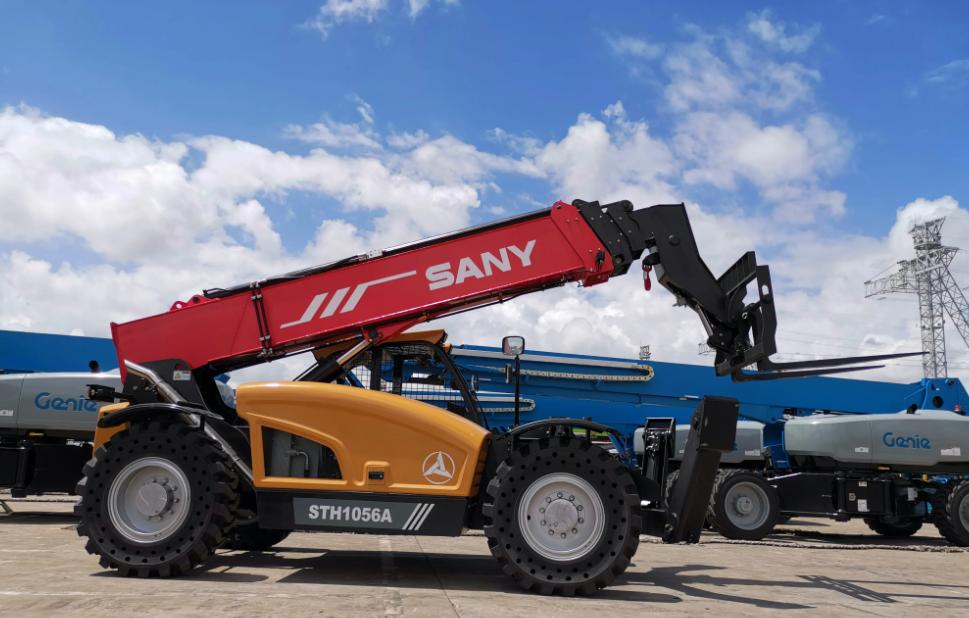
What is Industrial Material Handling Equipment?
Many people's understanding of industrial material handling equipment is limited to common types such as forklifts and cranes, yet its scope covers far more than that. Simply put, industrial material handling equipment refers to the general term for equipment capable of performing various operations including material loading and unloading, handling, storage and sorting across all operational links of an enterprise such as production, warehousing, loading and unloading, and transportation. It runs through the entire industrial production chain, connecting raw material inbound at the front end and finished product outbound at the back end. Whether it is short-distance material transfer in workshops, cargo storage and sorting in warehouses, or loading and unloading operations in handling links, none can proceed without the support of industrial material handling equipment.
Compared with manual handling, industrial material handling equipment not only greatly improves operational efficiency and reduces labor intensity, but also cuts down material loss and ensures operational safety. Its core value is even more prominent, especially in large-scale, high-intensity and high-precision operational scenarios, making it an indispensable and vital component of the modern industrial system.
What Does Industrial Material Handling Equipment Include?
Industrial material handling equipment comes in a wide variety of types, which we can divide into the following major categories for your quick understanding and selection. Each type performs its own dedicated function, together building an efficient material flow network.
Storage and Handling Equipment
This category of equipment serves as the fundamental guarantee for industrial material handling, with its core function being to store and manage materials in process gaps or as inventory, and its core objective to maximize the utilization of space, especially vertical space. Common types of such equipment include storage boxes and drawers, mezzanines, pallets, pallet stacking frames, storage containers, storage racks and the like.
1. Industrial Trucks and Machines
This category of equipment is the most common "mover" in warehouses and workshops, primarily responsible for the loading, unloading and short-distance transportation of materials. They can be either manual or electric. The most representative ones are various types of forklifts, such as telehandler, heavy duty telehandler and industrial telehandler; in addition, there are pallet trucks, order pickers and walkie stackers, among others.
2. Bulk Material Handling Equipment
This category of equipment is specially designed for handling large volumes of loose, unpackaged materials (such as grain, ore, coal, etc.) or homogeneous small items, enabling their storage, conveyance and processing. Common types of such equipment include conveyors, bucket elevators, bulk-handling cranes, dump trucks, hoppers, stackers and reclaimers, among others.
3. Engineered Systems
This is the category with the highest level of automation, referring to complex systems integrated by a variety of automated equipment and software, designed to minimize human intervention. Typical systems include: Automated Guided Vehicles (AGVs) and Autonomous Mobile Robots (AMRs) for unmanned material handling, Automated Storage and Retrieval Systems (AS/RS) for unmanned storage and retrieval, as well as palletizers and sortation systems.
Scientific Selection Tips for Industrial Material Handling Equipment
Faced with a wide variety of industrial material handling equipment, many enterprises tend to fall into the misunderstanding of blind selection—either the equipment is poorly adapted to their needs, or it offers low cost performance, which instead hinders operational efficiency. Based on the usage requirements of various scenarios, we have compiled the following purchasing considerations to help enterprises avoid such pitfalls and make precise equipment selections.
Prioritize Reliable Brands
Industrial material handling equipment is a type of durable gear used at a high frequency, and wear and tear are inevitable with long-term use, making brand and after-sales service crucial. Prioritizing well-known, reputable brands for such equipment ensures better quality assurance, along with a sufficient supply of spare parts and prompt after-sales response, which can greatly reduce equipment downtime due to malfunctions and lower long-term maintenance costs.
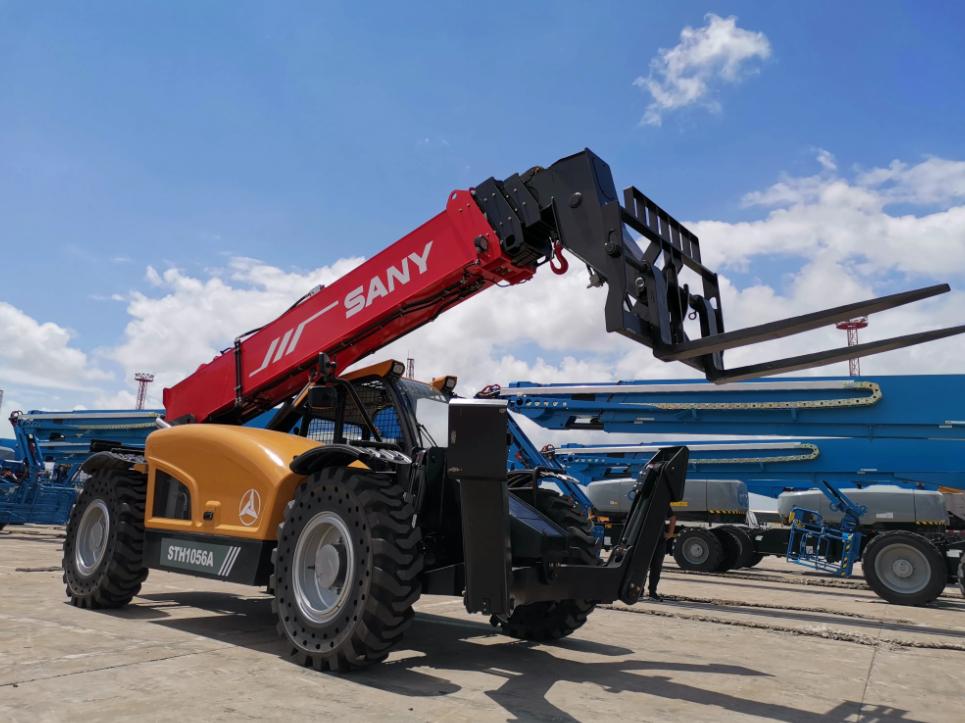
Take SANY as an example: as a world-renowned equipment manufacturing enterprise, its industrial material handling equipment such as telehandlers and cranes not only excels in load capacity, operational precision and durability, but also boasts a comprehensive after-sales service network that can timely resolve maintenance and upkeep issues arising during equipment operation. Products from top brands have stood the test of the market for a long time, offering greater assurance in terms of safety and reliability. They can effectively mitigate the risk of production disruptions caused by equipment failures and safeguard the long-term operation of enterprises.
Select the Right Dimensions for Operating Space Compatibility
The operating space directly determines the dimensions and type of industrial material handling equipment; an improper selection will not only impair operational efficiency but may even render the equipment unusable.
For example, in narrow-aisle warehousing centers, three-way forklifts and small stackers are the preferred options, as their compact size and agile maneuverability allow them to easily adapt to narrow passageways. In spacious heavy industry workshops, however, large-scale equipment such as heavy-duty telehandlers and gantry cranes can be adopted, which balance material handling efficiency with operational range.
Precisely Adapt to Material Characteristics
Material properties such as weight, shape and fragility serve as the core basis for selecting industrial material handling equipment. When handling fragile items and precision components, flexible belt conveyors and light-duty pallet trucks are the preferred options, as flexible conveyance minimizes collisions and prevents material damage. For moving heavy structural components and bulk materials, heavy-duty telehandlers and overhead cranes are more suitable, which ensure stability during the handling process and eliminate potential safety hazards.
Conclusion
In summary, industrial material handling equipment has long transcended the simple concept of material moving. As a core supporting equipment for industrial production, warehousing and logistics links, it boasts a wide variety of categories and diverse functions, runs through the entire process of material flow, and is the key to ensuring the efficient operation, cost reduction and efficiency improvement of enterprises. For enterprises, continuously focusing on and rationally introducing advanced material handling solutions is not only a panacea for solving current pain points, but also a crucial investment for building core competitiveness for the future. Choosing the right equipment is like installing the most powerful engine for the smooth operation and sustainable growth of an enterprise.
FAQs
Which Industrial Material Handling Equipment Manufacturer Is Reliable?
Among manufacturers of industrial material handling equipment, SANY is a highly reputable and reliable choice. It offers a full range of equipment, including forklifts, cranes, intelligent AGVs and port handling equipment, suitable for diverse industrial scenarios such as warehousing, workshops, mines and ports. Backed by robust core technologies, its equipment features excellent stability and energy efficiency, with an ultra-long warranty on key components. Boasting a well-established global service network, it provides rapid responses to maintenance needs, custom solutions and intelligent upgrading services. Its unmanned handling equipment is well-aligned with the development needs of smart factories, fully safeguarding the efficient operation of enterprises and making it an excellent choice for industrial material handling equipment procurement.
What Are The Types of Heavy-duty Industrial Material Handling Equipment?
Common types of heavy-duty industrial material handling equipment include cranes, loaders, mining dump trucks, forklifts, material grabbers, and reach stackers, which are well-suited for various heavy material handling scenarios such as mining, ports and engineering construction. Enterprises like SANY offer a wide range of such equipment, providing abundant options for buyers.
What Types Of Forklifts are Used in Industrial Material Handling Equipment, and How Should One Choose the Right Model?
There are many types of forklifts, which can be divided into 10 categories, including warehouse, side loaders, counterbalance, telehandler, heavy-duty, rough terrain, pallet jack, walkie stackers, order pickers and reach trucks. When selecting a model, you can first match the forklift type according to the operating scenario, then determine the core parameters based on the material weight and lifting height, then adapt to the operating space, such as aisle width to control the size details, and finally select the power type according to the operating environment.
Featured Products
_100611.png)

Recommend Blogs
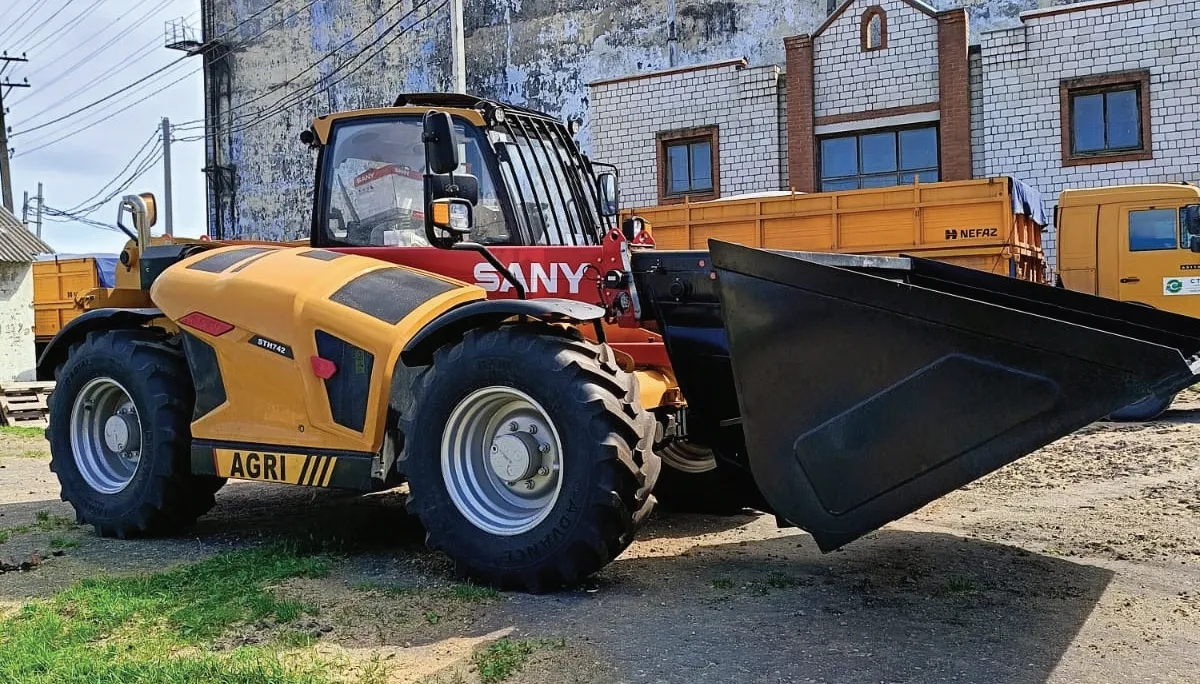
Agricultural Telehandler: Types, Applications & 2026 Buying Guide
This article introduces the composition, types, application scenarios, and key selection points of agricultural telehandlers.
Construction Telehandler: Everything You Need To Know
This article details the Construction Telehandler, covering its applications, selection, and common issues for industry reference.
How to Choose a Telehandler? Pick the Perfect Model for Your Job
How to choose a telehandler? This guide covers definitions, types, applications, and key considerations to help you select the right model.