How to Operate a Skid Loader? Comprehensive Guide to Efficient and Safe Operations
This article focuses on core components of the skid loader, how to operate a skid loader, safety knowledge, and common operations, helping construction teams carry out projects efficiently and safely.
The skid steer loader is a versatile machine used in scenarios such as construction, agricultural production, and landscaping. With the advantages of flexible steering and interchangeable attachments, it can efficiently complete operations like loading, grading, and finishing. However, safely and efficiently operating it requires more than just mastering control movements—every step, from understanding key components to following operating specifications, must not be overlooked.
This article will systematically break down the key operating points of the skid steer loader, helping you quickly master how to operate a skid loader and providing you with a safe and practical guide for the entire process from preparation to operation.
_161143.jpg)
Understanding Your Skid Loader Before Operation: Key Components
Before delving into how to operate a skid loader, it is crucial to gain an in-depth understanding of its key components, just as understanding the key structures of a car is essential for driving it better.
Frame and Body
As the basic structure of the entire machine, the frame and body are usually welded from high-strength steel, with extremely strong torsional resistance and load-bearing capacity. The interior of the body serves as a platform for installing various components, while the exterior functions as a protective casing and connection points.
Engine
The engine can be called the "heart" of the skid loader. Most modern skid loaders use diesel engines because they can provide strong torque and good fuel economy. The performance of the engine directly determines the power and operating efficiency of the entire machine.
Hydraulic Transmission System
The hydraulic transmission system can be described as the "nervous and muscular system" of the skid loader, and it is key to realizing all movements. It mainly consists of hydraulic pumps, hydraulic motors, hydraulic cylinders, control valves, filters, etc., and determines the stability of the overall machine's control performance.
Travel System
The unique travel system is like the legs of the skid loader, endowing it with unparalleled flexibility. It can go straight, turn, and rotate in place. The crawler-type travel system can also better protect the ground and handle narrow spaces and complex terrains with ease.
Quick-Change Attachments
The versatility of the skid loader is reflected in its rich range of attachments. Through quick connectors, it can quickly change attachments such as buckets and breakers, achieving "one machine for multiple uses" and greatly improving the equipment's usage efficiency and application range.
What's the difference between a skid steer loader and a backhoe loader?
In addition to skid steer loaders, there are also backhoe loaders on the market. Many people often confuse the two. However, their main differences lie in their structure, function, and operating method.
Skid Steer Loader
Structure: Frame-type, with a bucket that can be quickly replaced with various attachments.
Function: Primarily material handling and hauling, it can be used in a variety of operations by replacing attachments.
Operation: No steering required, with left and right wheel differential drive enabling on-the-spot steering, providing flexible and convenient operation.
Applicable Applications: Confined indoor and outdoor spaces, such as warehouses, basements, tunnels, and farms.
Backhoe Loader
Structure: The vehicle has an articulation point in the middle, with a loading bucket and digging arm at the front and rear.
Function: Combining digging and loading functions, it is typically used for large-scale projects such as excavation, backfilling, and bulldozing.
Operation: Loading at the front and digging at the rear, often requiring the vehicle to turn to achieve steering.
Applications: Road construction, construction sites, and large-scale earthmoving projects.
Generally speaking, a backhoe loader is a large vehicle with tires or tracks, featuring a loader arm bucket at the front, and a backhoe excavation arm at the rear. It is particularly suited for large-scale earthmoving and excavation operations. A skid-steer loader is compact and steering-free, achieving in-situ steering through differential rotation of the left and right wheels. Its bucket and various attachments can be quickly replaced, making it primarily used for short-distance material handling and operations in confined spaces.
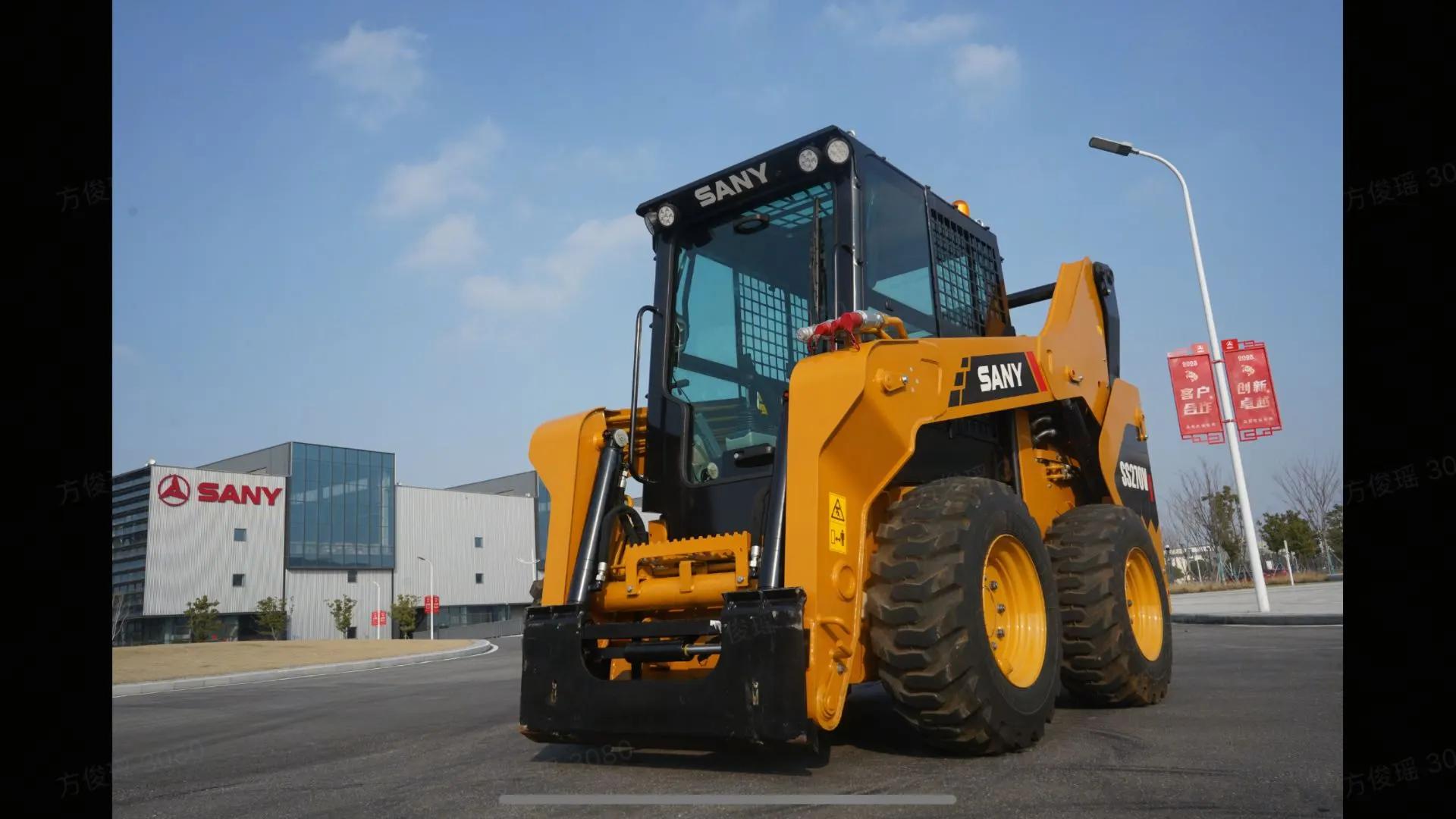
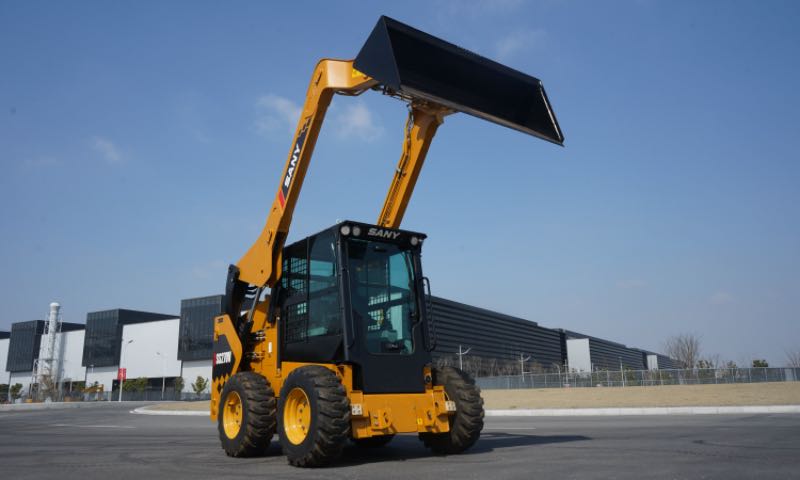
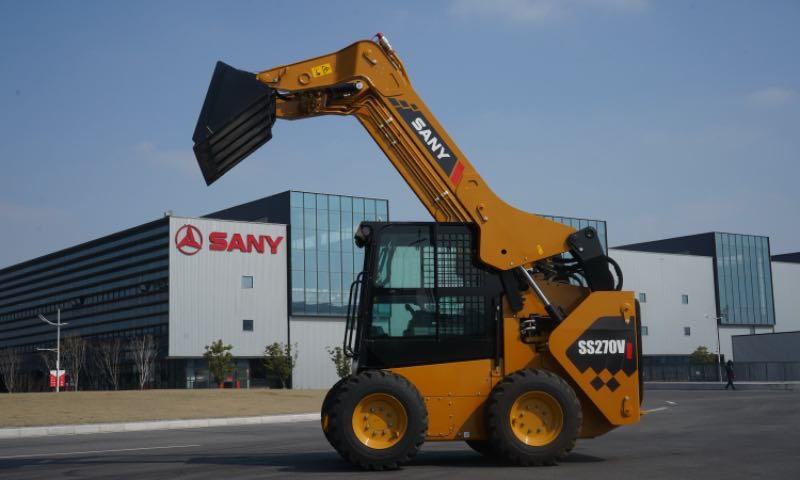
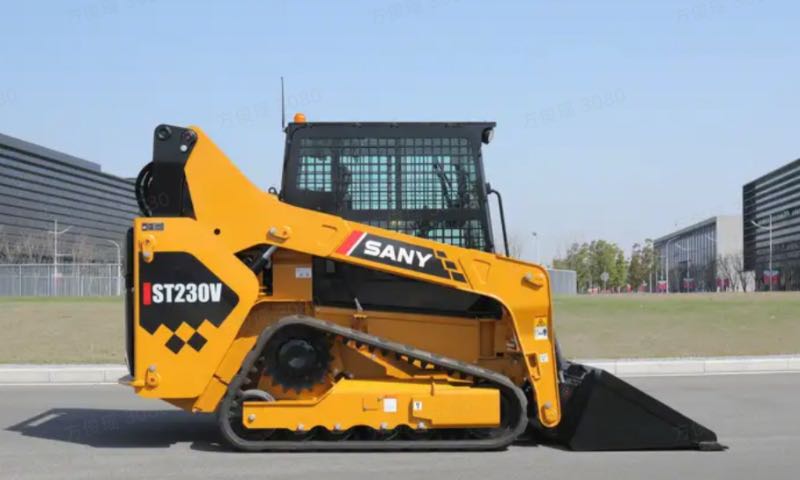
SANY offers a variety of skid steer loaders and backhoe loaders to meet diverse application scenarios. SANY skid steer loaders have an operating weight of 4-5 tons and feature a vertical lift mechanism, high discharge height, two-speed transmission, and fast changeover. Available attachments include buckets, sweepers, snowplows, milling machines, and augers to meet diverse application requirements.
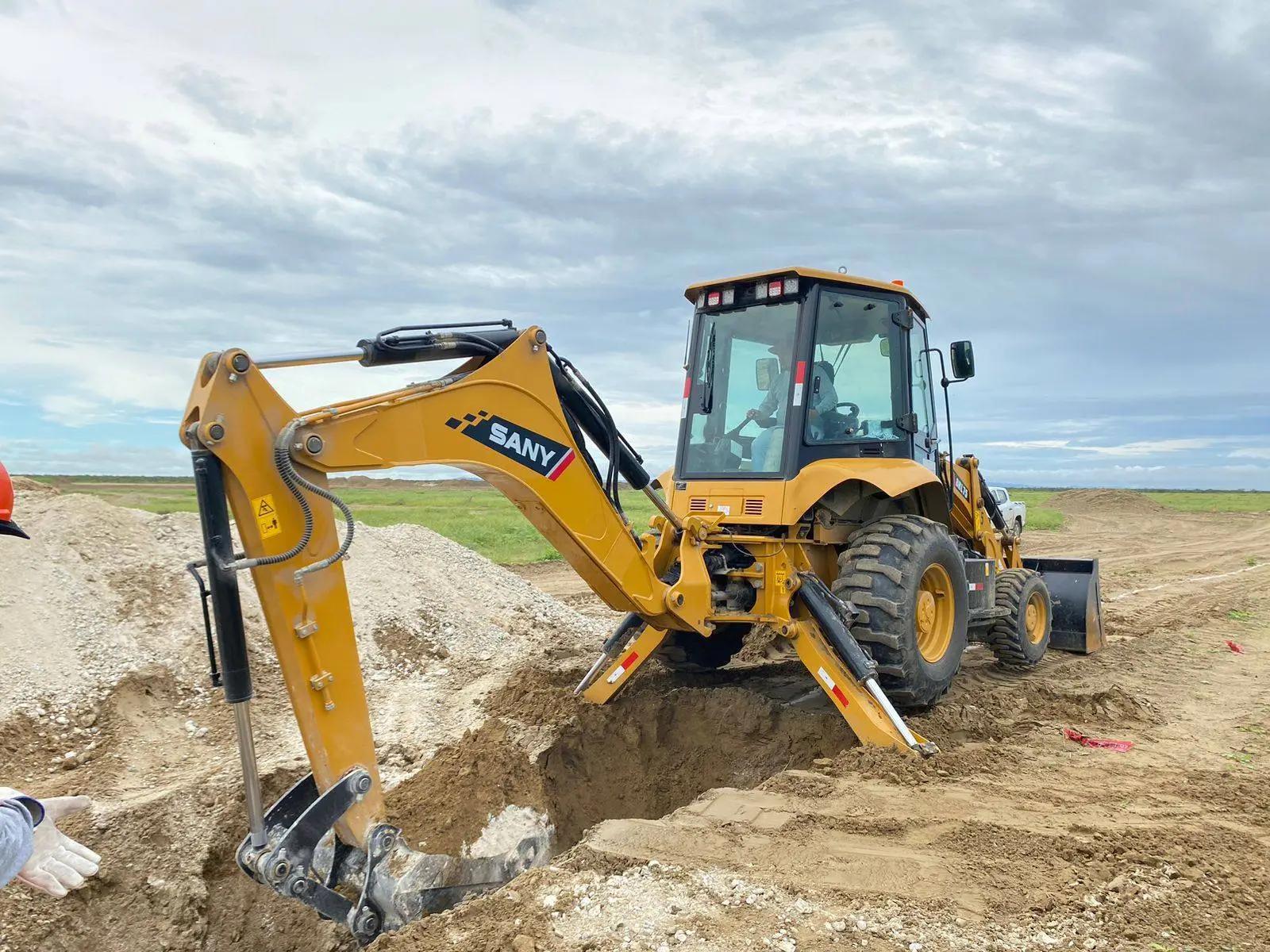
The SANY backhoe loader is a highly efficient machine for earthmoving operations. It features a 1.0 cubic meter bucket capacity, a floating boom, and bidirectional auxiliary hydraulic outputs. Its telescopic arm, four-in-one bucket, electric controls, adjustable flow rate, and load-sensing hydraulics with pilot controls and ISO/SAE mode selection make it extremely easy to operate and control.
Pre-Operation Inspection and Preparation
Before formally operating a skid steer loader, rigorous inspection and preparation are key to ensuring the safe and efficient operation of the equipment. This not only affects the smooth progress of the work but is also closely linked to the operator’s safety and the service life of the equipment.
Worksite Inspection
First, conduct a comprehensive and detailed inspection of the worksite. Carefully clear all types of obstacles in the work area, such as boulders, discarded construction materials, tree branches, and metal fragments. Meanwhile, ensure no personnel are lingering nearby, set up obvious warning signs in the work area, and measure the ground slope to confirm it is within a safe range.
Equipment
Condition Inspection accordance with the requirements of the equipment operation manual, carefully check the levels of fuel, lubricating oil, and coolant. Thoroughly test the brake system to see if the brake pedal works properly, and test the light signals—this is particularly important in nighttime or dimly lit work environments. Also, check for leaks in the hydraulic lines.
Attachment Connection Inspection
If attachments need to be replaced—such as switching a bucket to forks, augers, or grapples—after replacement, always check if the quick-change device is securely connected. Manually shake the attachments to check for looseness, and inspect the sealing of hydraulic interfaces to ensure no leaks.
Driving Preparation
Enter the cab, adjust the seat to the optimal position, fasten the seat belt, and calibrate the rearview mirrors to ensure a clear view of the area around the equipment. After starting the engine, let it idle for a few minutes to warm up. During idling, closely monitor whether the warning lights on the instrument panel are functioning normally.
Basic Driving and Control Skills
How to drive a skid loader? The driving logic of a skid loader differs significantly from that of an ordinary car, especially due to its "skid-steer" design. It requires targeted practice to master the operation rhythm, with a focus on breaking through two core skills: "travel control" and "work equipment control".
Forward, Reverse, and Steering (Skid Steering)
Forward and reverse: Push both control levers forward simultaneously, and the skid loader will move forward steadily; pull both levers backward simultaneously to reverse.
Steering: Pushing either the left or right lever alone enables single-side braking, allowing for small-radius turns, which easily handles various complex terrains and narrow spaces.
Pivot steering: To turn in place, simply operate the left and right levers in opposite directions (e.g., push the left lever forward and pull the right lever backward). At this point, the tires will skid on the ground, allowing for precise directional changes.
Tips: When operating a skid steer loader, throttle control is crucial. Generally, low gear (3-5km/h) is suitable for precision work, such as indoor cargo handling or material loading/unloading in narrow construction sites; high gear (8-12km/h) should only be used on flat roads, and operation must be cautious. Avoid sudden acceleration or braking, as this may cause loss of control and lead to a safety incident.
Use of Boom and Bucket Control Devices
Lifting and lowering: Push the lever to lift, pull the lever to lower. Operate the lever slowly to avoid material spillage, equipment tipping forward, or the bucket slamming into the ground.
Tilting and dumping: A forward tilt of 10°-15° facilitates loading, while a backward tilt of 5°-10° prevents spillage; when dumping, first lift the boom to the target height, then tilt the bucket backward.
Tips: Operation should also be coordinated with the throttle. For light loads, operate at low engine speed—this not only saves fuel but also ensures stable operation; for heavy loads, moderately increase the throttle to provide sufficient hydraulic power, ensuring the equipment can complete the work smoothly.
Performing Common Operations with a Skid Loader
A skid loader can adapt to various operating scenarios by changing attachments. The operating procedures and precautions vary significantly between different operations, so it is necessary to specifically master the core essentials:
Loading and Unloading
Loading: Tilt the bucket forward about 10° until it touches the ground, then push slowly to load materials, lift the boom to 30cm off the ground, and tilt backward to prevent spillage.
Unloading: After aligning with the target, lift the boom to 20-30cm above the target, tilt backward to empty the load, and be careful not to overload.
Grading and Slope
Finishing with the BucketGrading: Keep the bucket level with the ground, about 1-3cm off the ground, move back and forth at low speed, fine-tune the depth, and check flatness regularly.
Slope finishing: Adjust the bucket angle to match the slope gradient. Drive along the slope, working from the bottom to the top on steep slopes.
Reverse Dragging and Surface Finishing
Reverse dragging: Replace with attachments such as rake teeth, reverse at idle speed to clean up debris, and crush large clods of soil first when encountered.
Finishing: Use a smooth bucket or vibrating plate to lightly touch the ground to eliminate unevenness and gather loose soil.
Use of Attachments
Auger: Align with the target point and drill vertically downward. Control the speed to prevent jamming. After reaching the target depth, stop drilling first before lifting the auger.
Forks: Adjust the spacing to match the pallet. After insertion, lift 50cm off the ground and drive at a constant speed.
Grapple: Lift horizontally after clamping the material. When unloading, move to the target area before opening the grapple.
Note: Turn off the engine before changing attachments. Ensure the attachments are securely locked before starting operation.
Shutdown and Maintenance
Proper shutdown and maintenance after operations can extend the equipment's service life:
Shutdown
Park on a flat, solid surface. Lower the boom so that the bucket touches the ground gently, engage the parking brake, and turn off the engine to put the equipment at rest.
Daily Maintenance
Check tire or track wear, bolt tightness, and hydraulic oil level daily; clean the air filter and lubricate all hinge points (such as boom shafts and bucket pins) with lithium-based grease weekly; inspect battery charge (ensure voltage ≥ 12V) and brake pad thickness monthly; replace hydraulic oil and filters, as well as engine oil every 500 hours, and check the working condition of hydraulic pumps and motors.
Safety Best Practices for Operating a Skid Loader
Safe skid loader controls are a top priority, and the following regulations must be strictly followed:
Personal Protection
Must wear a hard hat, slip-resistant work boots, and a high-visibility vest; loose clothing is prohibited; the cab door must be closed to prevent foreign objects from entering; long hair must be tied up and covered with a hair cap.
Load Control
Strictly follow the "70-30 rule"—the load's center of gravity must not exceed 70% of the equipment's wheelbase to prevent rear tipping due to backward-shifted center of gravity; one-sided loading or uneven loading is prohibited to avoid the risk of rollover.
Environmental Safety
Confirm no personnel are nearby before operation; use rearview mirrors or an assistant to guide in blind spots; slow down and sound the horn when crossing roads; all lights must be turned on during nighttime operations; keep away from high-voltage lines to avoid electric shock.
Emergency Handling
In case of hydraulic line rupture, immediately stop and shut down the equipment; do not touch the leaking high-pressure oil. If the equipment tilts and is at risk of tipping over, the operator must not jump out; instead, hold onto the control levers, lean the body in the opposite direction of the tilt, and evacuate only after the equipment stabilizes.
Qualification Requirements
Operators must receive professional training and obtain an operation certificate; unlicensed operation, operation under the influence of alcohol, or fatigued operation is prohibited; minors are not allowed to operate the equipment.
Conclusion
Mastering how to operate a skid loader requires not only familiarity with equipment operation but also the integration of safety regulations and efficient operation skills. Every step, from detailed pre-start checks to post-shutdown maintenance, affects equipment lifespan and operational efficiency. Through continuous practice and experience accumulation, operators can fully leverage the versatile advantages of skid loaders to achieve precise operations in construction, agriculture, landscaping, and other fields.
Always remember: safety is the premise of efficiency, and standardized operation is the guarantee for the long-term operation of the equipment.
FAQS
What Is the 70-30 Rule for Skid Loaders?
It is a safety guideline to prevent rear tipping of the equipment. The center of gravity of the loaded material must be controlled within the front 70% of the equipment's wheelbase, with the front wheels as the fulcrum, and the remaining 30% serving as a safety margin area. If the center of gravity exceeds 70%, the rear of the equipment is prone to lifting, increasing the risk of rear tipping. During operation, you can judge by observing the bucket position—for heavy loads, keep the material as close to the vehicle body as possible.
Is It Difficult to Learn to Operate a Skid Loader?
It is not difficult to get started, but mastering the core logic is essential. Those with basic construction machinery experience can usually learn forward movement, steering, and basic loading/unloading in 1-2 days; new operators need 3-5 days of systematic training, focusing on mastering "skid steering" and the coordination of hydraulic controls. It is recommended to first practice steering and boom control with no load, then gradually attempt loaded operations. Once proficient, you can handle most scenarios.
How to Operate the Foot Control Devices of a Skid Loader?
In most models, the foot control devices have clear divisions: the left pedal usually controls boom lifting and lowering (press to lift, release to lower). The right pedal controls bucket tilting (press to tilt forward, release to return to position); in some models, the pedals can also assist in steering when used with the control levers. Operate with "light pressure and gradual release" to avoid sudden movements, which can cause hydraulic shock and affect equipment lifespan and operation precision.
Do You Need a Driver's License to Operate a Skid Loader?
Generally, a road vehicle driver's license is not required, but a special equipment operation certificate (such as the "Construction Machinery Operation Certificate") is needed. Specific requirements vary by region (e.g., some countries require passing occupational safety training and exams). If the equipment needs to travel on public roads, local traffic rules must be followed, and in some regions, a temporary license plate and operation by a certified person are required.
What Is Prohibited When Operating a Skid Loader?
The following behaviors are strictly prohibited:
Overloading or uneven loading;
Driving sideways or turning on ground with a slope > 30°;
Operating without fastening the seatbelt or closing the cab door;
Using the bucket to lift personnel (a specialized personnel lifting platform is required);
Protruding the body out of the cab while driving;
Inspecting the hydraulic system while the engine is running;
Staying on soft ground for a long time to prevent getting stuck.
Violating these regulations may cause equipment damage or personal injury.
Featured Products
Recommend Blogs
Tractor vs Skid Loader: Differences and Selection Guide
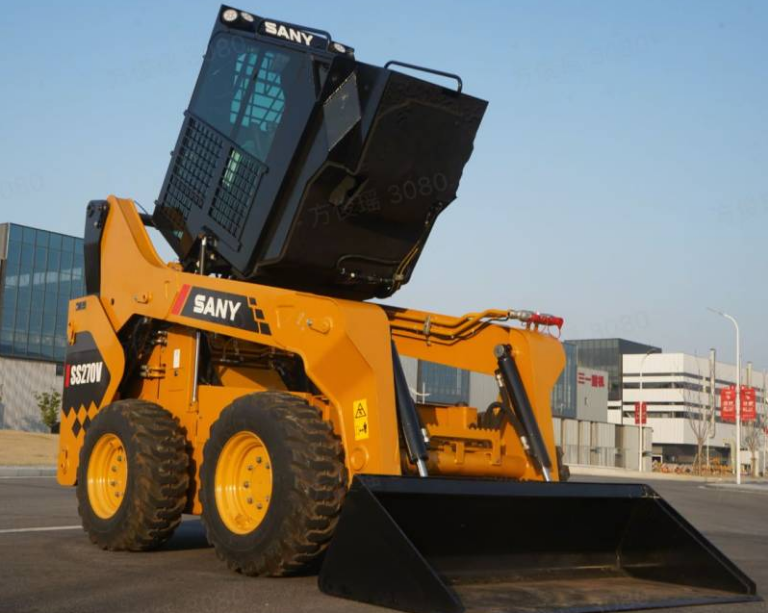
This article explains tractor vs skid loader differences, covering their functions, key features, and tips to help you choose the right equipment.
Skid Loader Weight Classification, Influencing Factors & Selection Guide
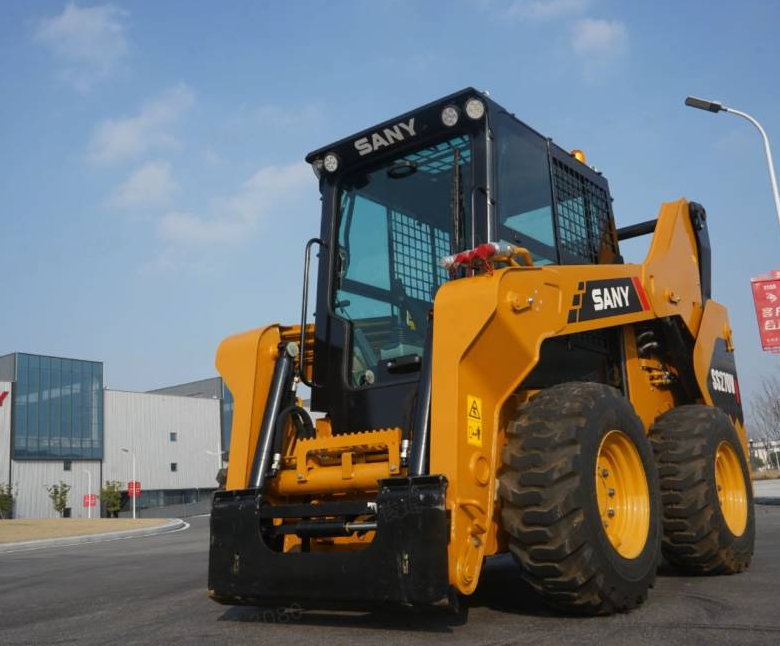
This article analyzes the importance, core indicators, model classifications, influencing factors and selection methods of skid loader weight, providing a reference for practitioners.
What Is a Skid Loader? Meaning, Principle & Guide
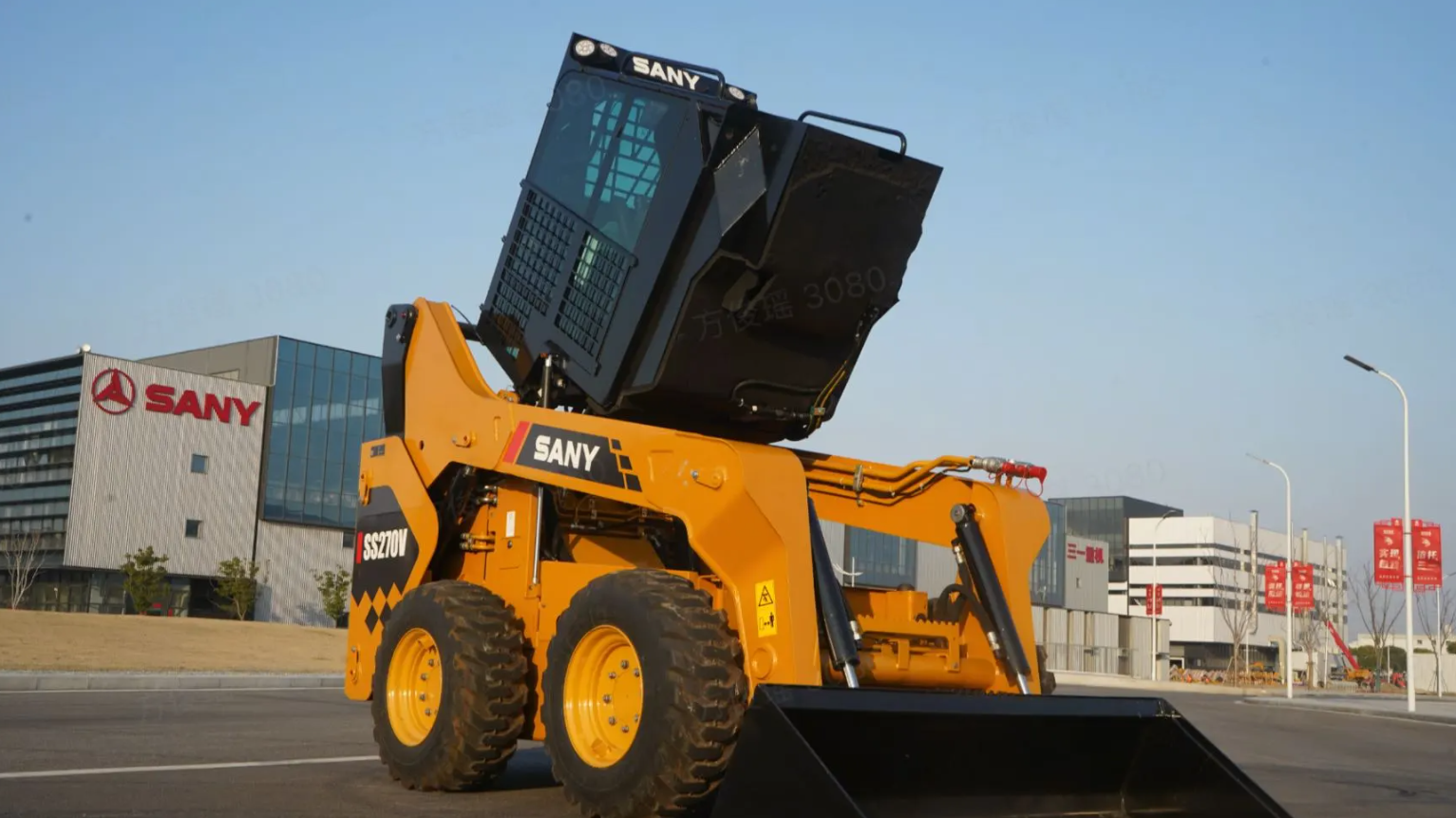
This article provides a detailed analysis of what is a skid loader is, including its core components, working principle and application scenarios. It also compares different loaders and offer a practical selection guide.