2026 Earth Moving Equipment Guide: Common Types and Selection Methods
This article outlines the core advantages, 11 common types, and key selection criteria for earth moving equipment, helping you make a precise choice.
Earth moving equipment is an indispensable core component in engineering fields such as building construction, road construction, and mining. Its powerful operational capabilities transform labor-intensive processes like excavation, transportation, and leveling into more efficient and precise operations, accelerating progress and improving efficiency. This article will detail the advantages, common types, and selection tips for earth moving equipment, providing a professional reference for practical operations.
Advantages of Earth Moving Equipment
Earth moving equipment specifically refers to heavy machinery used for excavating, transporting, loading, and leveling soil or rock. From excavating foundations for urban landmarks to repairing rural roads and extracting resources in mines, this type of equipment is ubiquitous. Its core value lies in replacing traditional manual labor with mechanized operations, achieving a dual improvement in both project quality and efficiency. Compared to manual labor, its advantages are mainly reflected in the following aspects:
Increased Production Efficiency
Earth moving equipment can easily handle large-volume material transfers, significantly shortening project timelines.
Enhanced Safety
Earth moving equipment is generally equipped with safety features such as a protective cab structure, effectively reducing safety risks for operators.
Reduced Project Costs
Although the initial cost of purchasing or leasing earth moving equipment is higher, shortening the project timeline, reducing labor input, and lowering rework rates can significantly reduce overall project operating costs.
Precise and Controllable Operation
Earth moving equipment, relying on an advanced hydraulic transmission system, enables precise digging, leveling, and material movement, significantly improving the efficiency and quality of engineering operations.
Reduced Labor Pressure
Earth moving equipment reduces reliance on skilled manual laborers and minimizes manpower losses from high-intensity operations, thus meeting the current labor needs of the engineering industry.
11 Types of Earth Moving Equipment
Different types of earth moving equipment have their own specializations. Understanding their core functions is crucial for accurately matching engineering needs. Below are eleven commonly used types of earthmoving construction equipment:
Bulldozer
Bulldozers are ideally suited for specialized operations such as heavy material transfer and backfilling; they are primarily categorized into three types: crawler, wheeled, and compact models.
Crawler bulldozers are well-suited for confined spaces and are capable of leveling irregular terrain, such as fields and plains.
Wheeled bulldozers are better suited for large-scale earthmoving projects, such as those involving sports stadiums.
Compact bulldozers are predominantly utilized for construction within confined spaces—such as residential areas—thereby meeting the diverse requirements of various operational environments.
Excavator
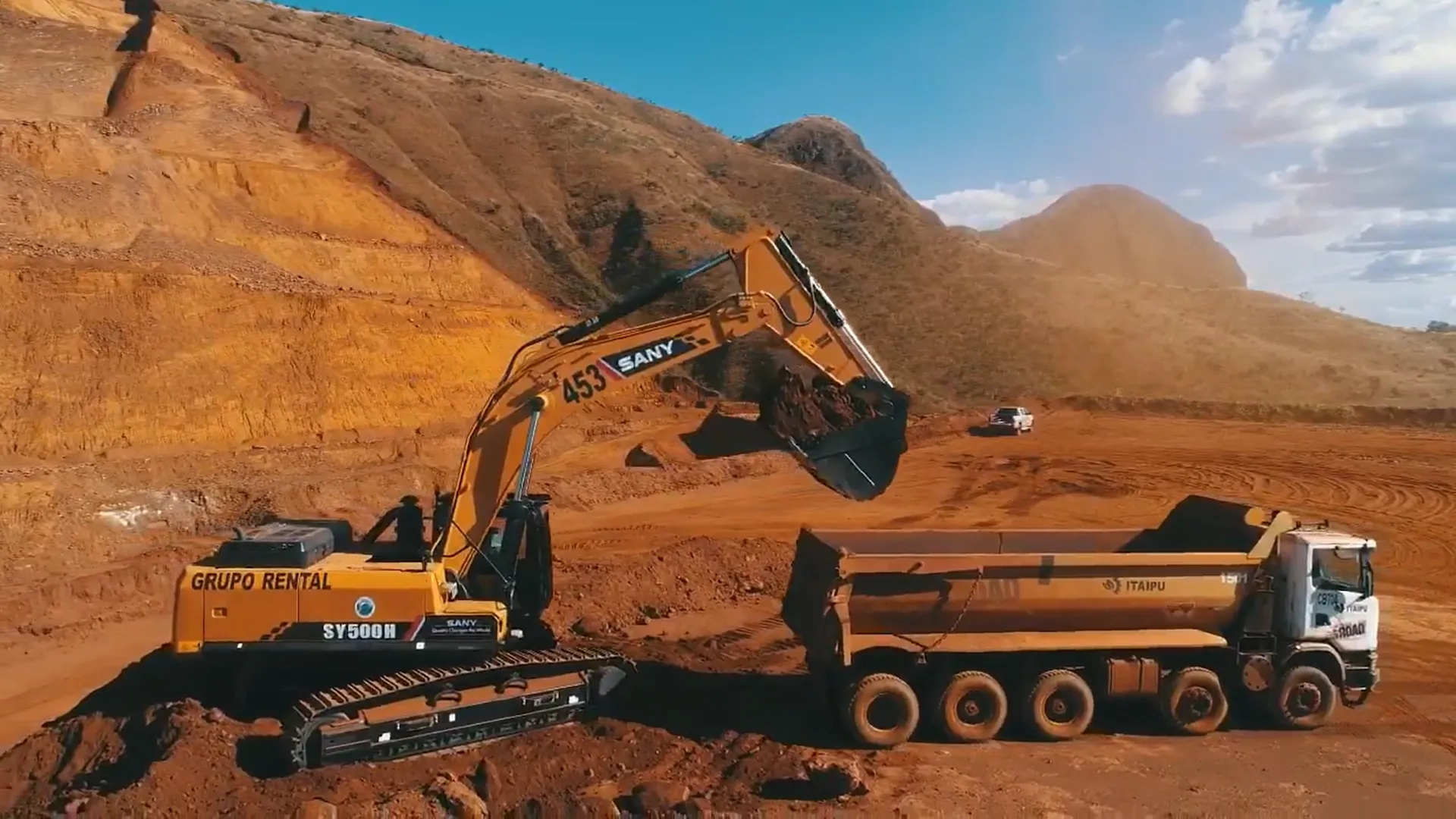
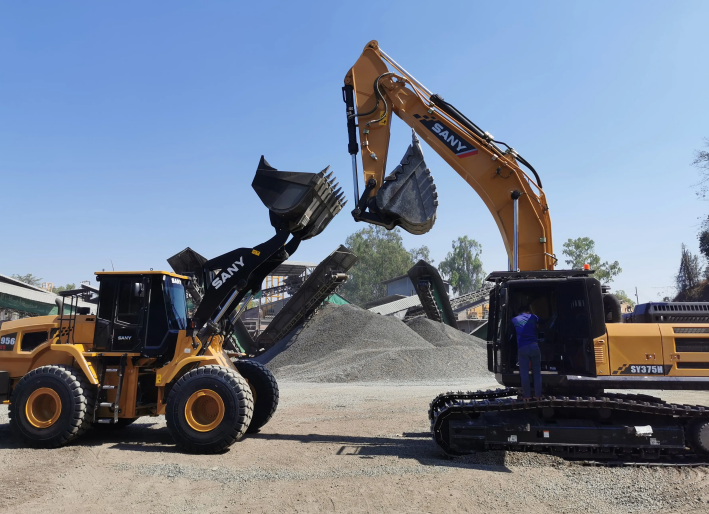
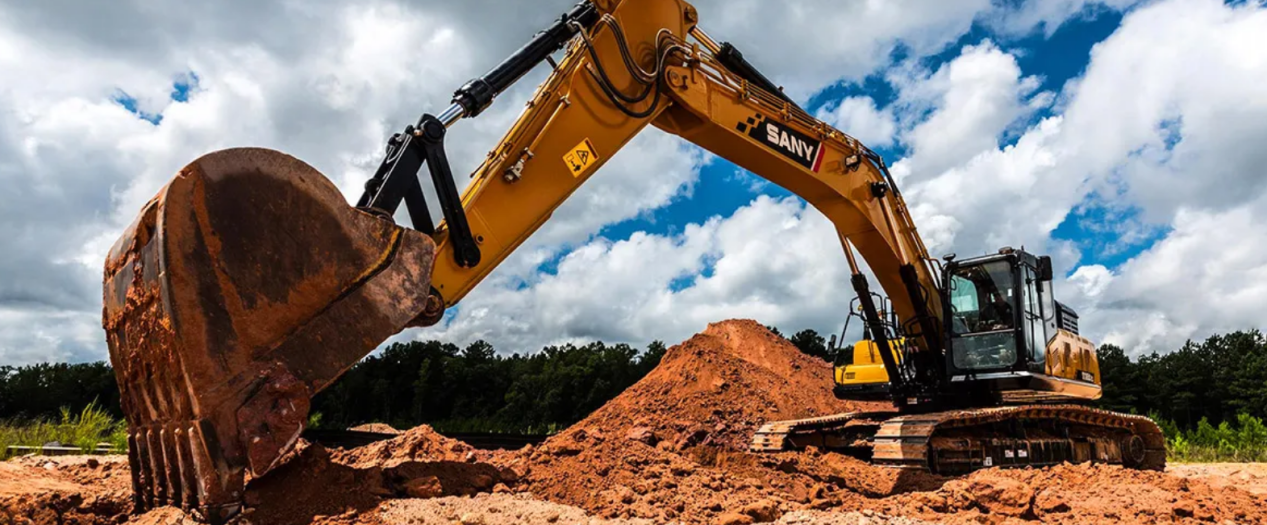
Excavators are one of the essential earth moving machines in any construction fleet. They are mainly used for excavation, trenching, demolition, material handling, and mining operations. With their rotating cab and hydraulic boom, excavators combine flexibility and precision. They come in various sizes, from compact models suitable for confined spaces to large excavators suitable for heavy industrial construction and demolition projects.
SANY large excavators, with bucket capacities of 1.5-8 cubic meters and powerful outputs of 205-567 kilowatts, are suitable for heavy mining and infrastructure operations. With over 20 optional working devices and an ultra-long design life of 25,000 hours, they combine energy saving and low maintenance costs, making them a reliable choice for challenging projects.
Wheel Loader
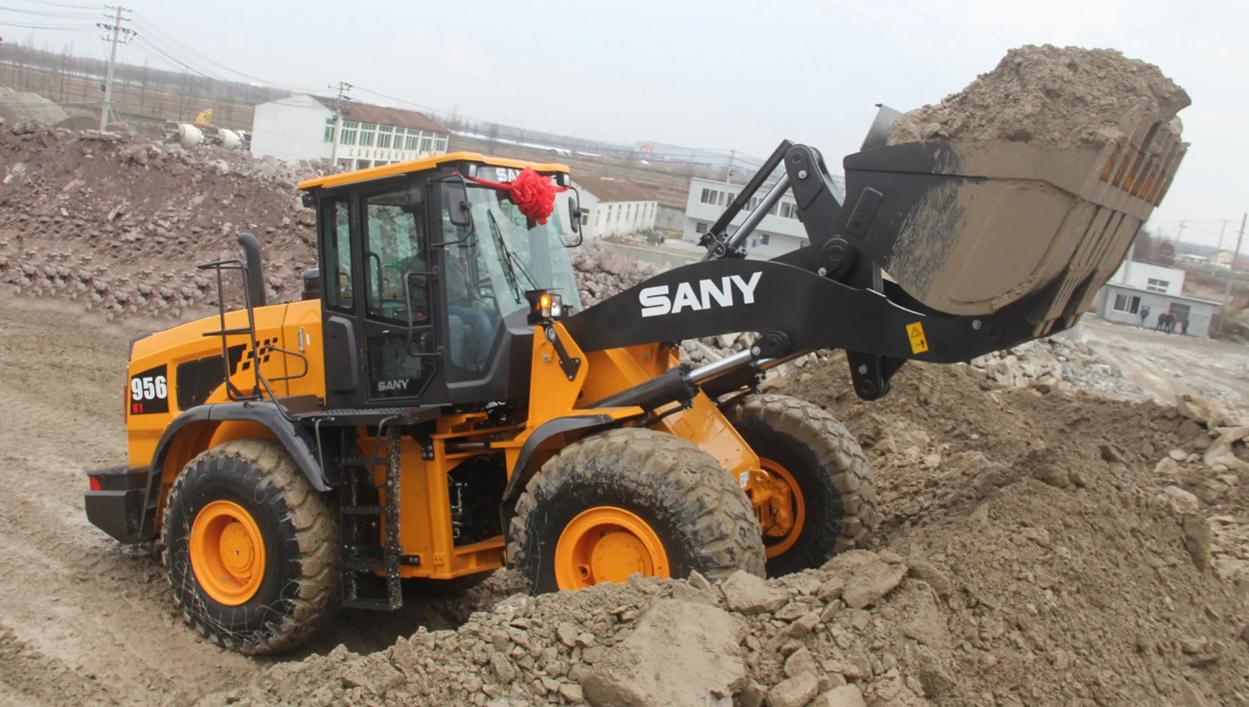
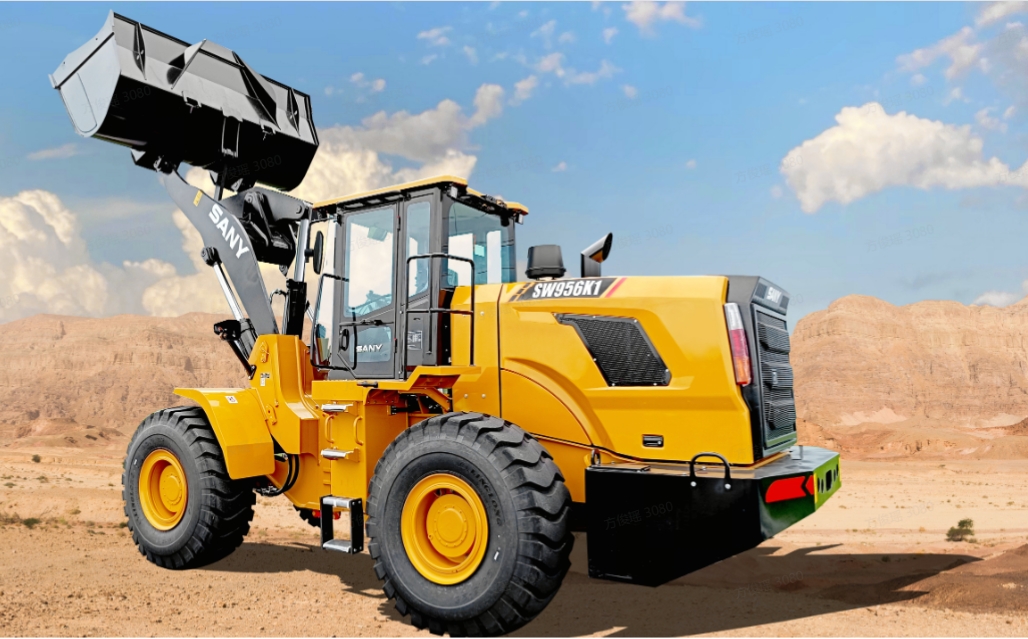
Wheel loaders rely on a front-mounted bucket to perform excavation tasks, efficiently scooping up soil, rock, and various debris materials; they are a staple piece of earthmoving machinery in construction projects. Common variants include skid steer, tracked, and backhoe loaders; these diverse models offer a wide range of functions, making them adaptable to various construction scenarios and endowing them with significant versatility and practicality.
For example, SANY wheel loaders cover the needs of projects of various sizes with operating weights ranging from 10 to 25 tons and payloads from 3 to 7 tons. Their high-performance power and hydraulic systems enable faster work cycles, higher load capacity, and more responsive braking.
Dump Truck
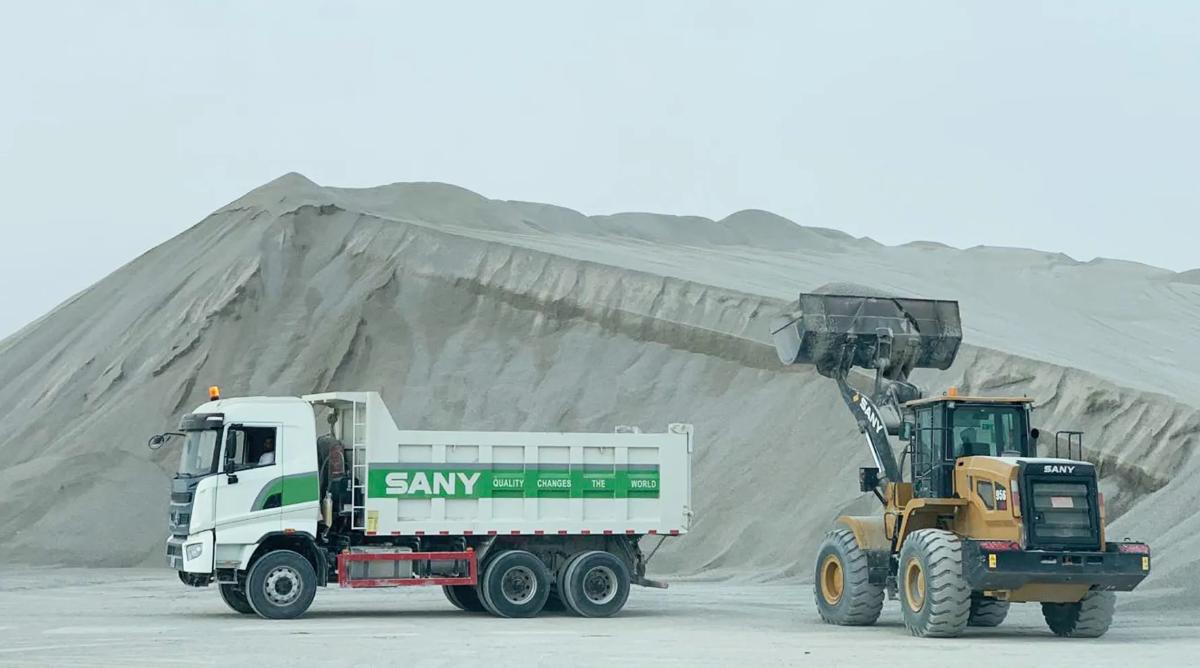
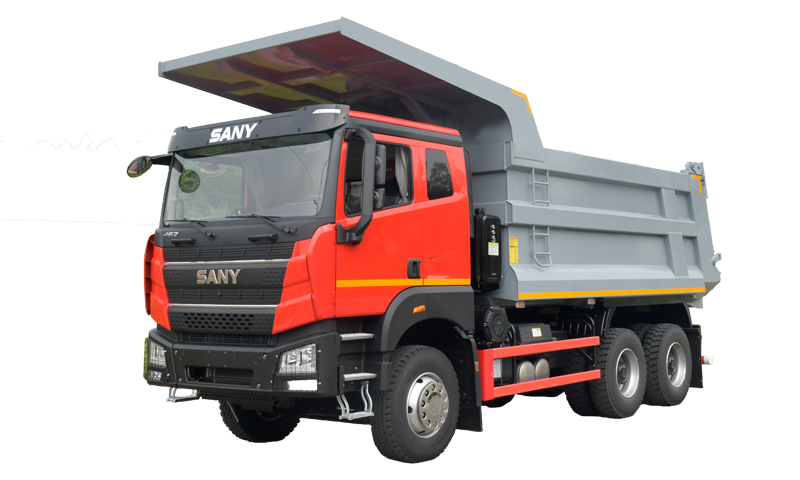
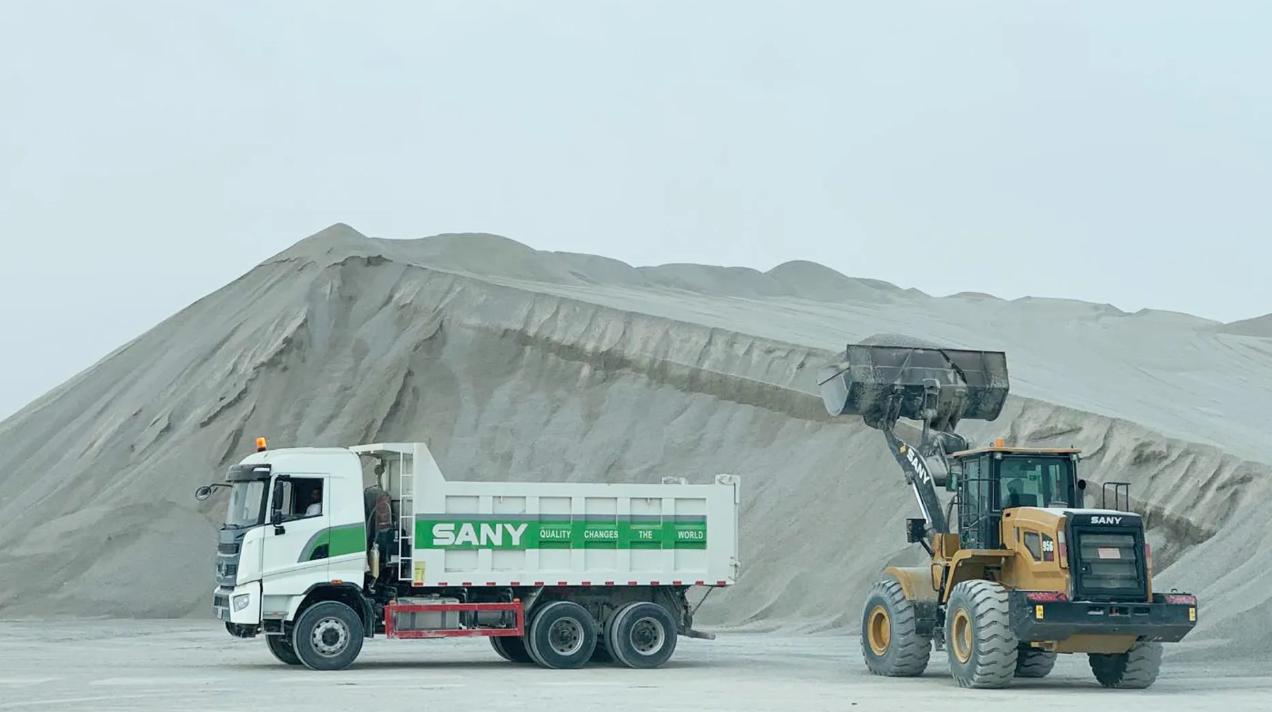
Dump trucks are primarily used for transporting earth and building materials, playing a crucial role in all construction projects. Their loading beds can tilt to an angle for unloading, allowing for rapid unloading of large quantities of material and significantly improving on-site production efficiency.
For example, SANY dump trucks, designed specifically for mining, construction, and large infrastructure projects, are available in both electric and gasoline versions, with curb weights from 16.2 tons to 42 tons, and cargo box volumes from 20 to 48 cubic meters. Their robust chassis, hydraulic systems, and intelligent control systems ensure reliable operation across all terrains.
Backhoe Loader
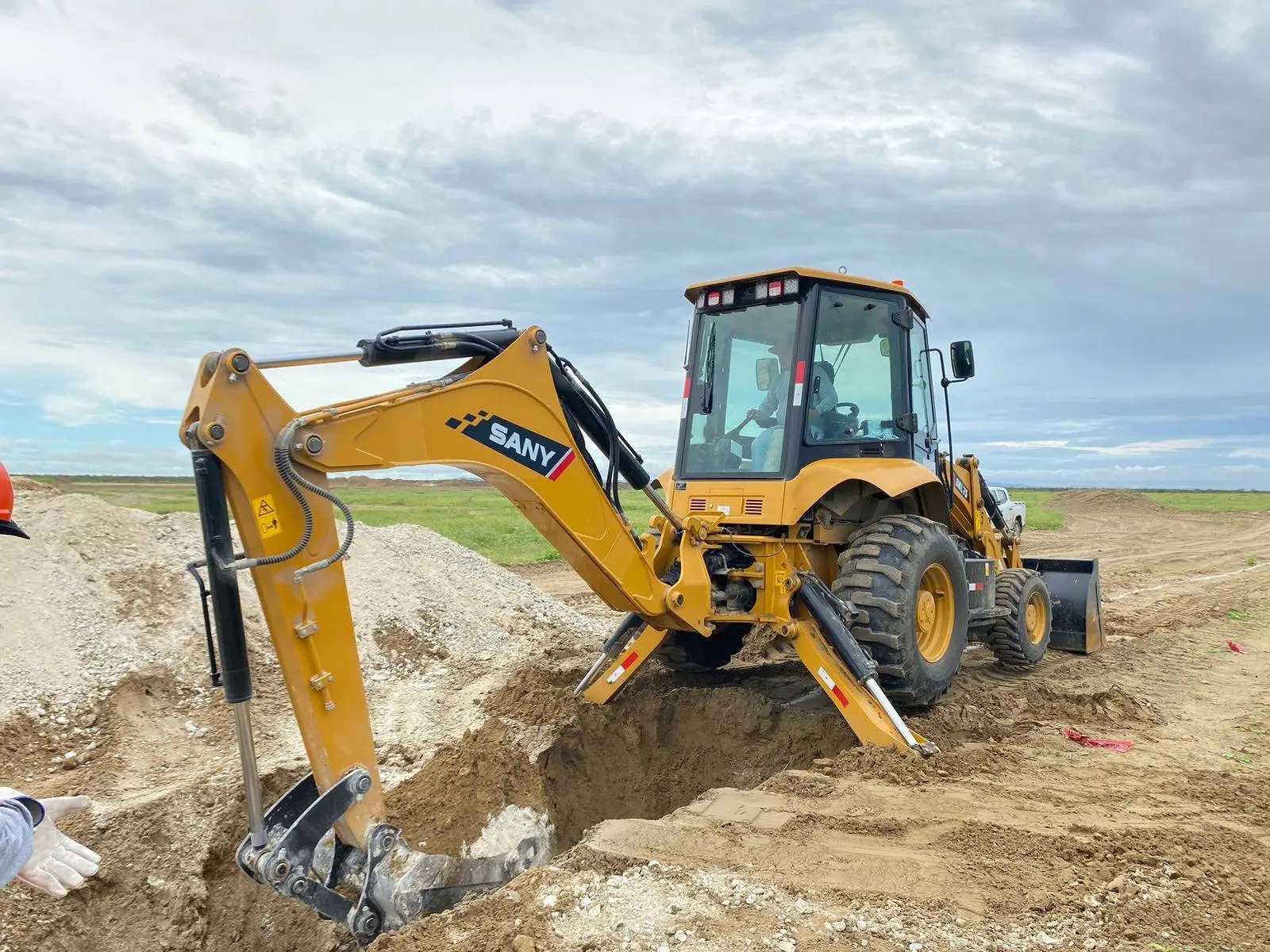
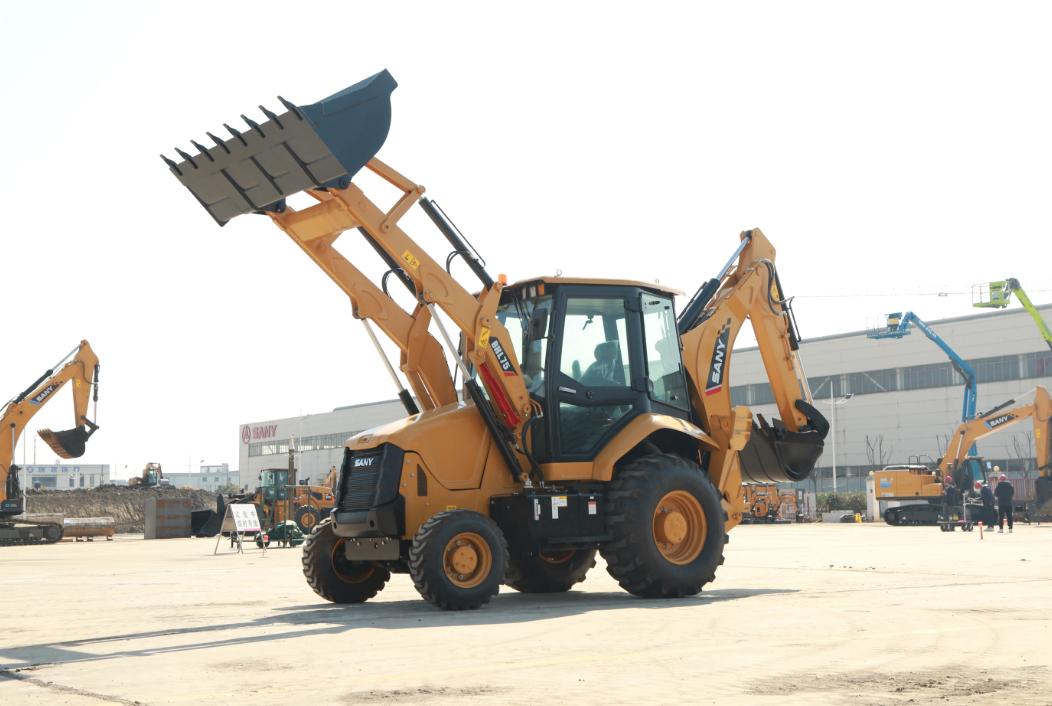
Backhoe loaders combine the functions of an excavator and a loader, equipped with a small loading bucket at the front and a backhoe digging device at the rear. They are widely used for digging, trenching, and material handling. Their compact size and high maneuverability make them suitable for small to medium-sized construction projects.
For example, the SANY backhoe loaders are equipped with a 1.1m³ loading bucket and a 0.25m³ digging bucket, with 86kW of power delivering strong and efficient operating capabilities, while also being durable and easy to operate.
Skid Steer Loader
The skid steer loader is another piece of equipment highly suitable for excavation tasks on construction sites; it is frequently utilized in demolition and digging operations and requires transport via a semi-trailer truck to reach the worksite. The machine is equipped with four wheels and two tracks and features a unique steering mechanism wherein the wheels do not rotate synchronously; instead, the operator steers by adjusting the engine speeds of the left and right wheels, allowing the machine to adapt flexibly to a wide variety of confined construction environments.
Tracked Loader
A tracked loader is a type of skid steer loader that utilizes tracks instead of wheels, making it well-suited for operation in muddy or rugged terrain. It is capable of performing tasks such as excavating, leveling, and shoveling earth; the tracks provide superior traction, enable the machine to carry heavier loads, and offer enhanced mobility on soft ground. However, it is not recommended for use on hard surfaces—such as asphalt—as this can easily lead to excessive wear and damage to the tracks.
Tractors
Tractors serve a wide range of purposes in earthmoving operations, including land clearing, cultivation, and landscaping—encompassing tasks such as land leveling, pond excavation, and lawn mowing. They come in a diverse array of types—including crawler, wheeled, industrial, and landscaping models—and feature a broad horsepower range spanning from 22.4 to 640 HP. Crawler-type tractors are well-suited for rugged terrain, while industrial models are frequently utilized for material handling in construction projects.
Motor Grader
Equipped with a long blade, the motor grader is capable of leveling hard ground and is primarily utilized for road preparation tasks prior to asphalt paving; it is also commonly referred to as a road grader. Available in a wide variety of models, these machines are selected based on factors such as engine power, operating weight, and blade traction. They are well-suited for applications involving hard terrain, steep slopes, and similar challenging environments, and can also be fitted with various attachments—such as rippers and scarifiers—to perform a broader range of operations.
Trencher
A trencher is specialized equipment designed specifically for excavating trenches. Relying on specialized mechanical movements to perform earthwork operations, it is utilized for tasks such as laying pipelines, cutting pavement, constructing drainage ditches, and severing tree roots. Trenchers are primarily categorized into three types—chain, wheel, and mini—each tailored to specific applications: deep and narrow trenches, rocky terrain, and extremely narrow trenches, respectively. Available in both walk-behind and ride-on configurations, they are capable of meeting the requirements of projects of varying scales.
Scraper
A scraper is a large-scale earthmoving machine that utilizes a rear-mounted hopper to perform ground leveling and site clearance. During operation, its sharp front blade cuts into and levels soil and other materials, facilitating their transport while simultaneously clearing the site. Depending on specific construction requirements, scrapers are categorized into various types—such as coal-bowl, elevating, and open-bowl models—to suit a wide range of operating conditions.
Five Key Points for Selecting Earth Moving Equipment
Choosing the right earth mover equipment directly affects project efficiency, cost, and safety. When selecting equipment, pay attention to the following five key points:
Assess Project Needs
Consider the project scale, site conditions, and schedule to select appropriate earth moving equipment. For example, large projects use heavy machinery such as bulldozers and excavators, while small projects are suitable for small loaders or backhoe excavators. If the site has rock or hard soil, more powerful equipment with greater digging force is needed; sandy or loose soil can be paired with lightweight equipment.
Match Equipment Type
Before making a specific selection, it is recommended to research various available types of earth moving equipment, comprehensively considering their size, capacity, power, and cost. For example, large buckets are suitable for large-volume earthmoving, while small buckets are more suitable for delicate operations; for demanding excavation operations, high-powered engines are required.
Manage Costs
In addition to considering the initial cost of purchasing or leasing earth moving machinery, it is also necessary to plan for long-term expenses such as operating and maintenance costs. Choose equipment to lease or purchase based on the actual budget.
Operator Training
Some specialized earth moving machinery requires operators to possess specialized training certificates and certifications to ensure the skills of the work team match the equipment requirements, guaranteeing the safe and efficient operation of the equipment.
Review of Safety Features
Prioritize equipment equipped with advanced safety features to comprehensively protect the personal safety of operators and on-site personnel.
Conclusion
Earth moving equipment serves as the cornerstone of efficiency in engineering construction. Selecting the right equipment can make construction twice as effective with half the effort. Whether for large-scale infrastructure projects or small renovation works, comprehensive decisions must be made based on factors such as project requirements, site condition,and budget. This ensures every piece of earth-moving construction equipment fully exerts its value across various operating scenarios, safeguarding the smooth progress of projects.
FAQs
Which Earthmoving Machine is Best?
There is no single, absolutely "best" piece of earthmoving machinery; the optimal choice depends entirely on specific working conditions. However, relatively speaking, the bulldozer stands out as a highly representative and iconic machine within this category. Distinguished by its large, front-mounted blade, it excels at site leveling, obstacle clearance, and the movement of soil and rock, proving exceptionally practical in applications such as site clearing and roadbed preparation. For tasks prioritizing the long-distance transport of earth and rock, a scraper might be the preferred choice; for deep excavation, an excavator is ideal; and for loading and handling loose materials, a wheel loader is most suitable. Yet, when considering the combined factors of versatility, operational efficiency, and adaptability to various scenarios, the bulldozer remains the core piece of machinery in construction earthworks—distinguished by its outstanding overall performance and broadest range of applicability.
Is Earthmoving a Trade?
Earthworks indeed constitute a specialized technical trade. It is a highly professionalized sector within the field of construction, requiring systematic training in equipment operation, safety protocols, and construction techniques—far beyond mere manual labor. Practitioners must possess expert command of heavy machinery and a thorough understanding of earthworks processes, while also demonstrating robust physical stamina, sound judgment, and a keen sense of safety. This trade features a clearly defined career path and established skill-level classifications; primarily conducted in outdoor construction environments, it stands as an indispensable professional occupation within the realm of engineering and construction.
What is the Difference Between Excavation and Earthmoving?
In large-scale civil engineering construction, earthwork and excavation are often confused. Distinguishing between them is crucial for project planning and construction.
Earthwork focuses on large-scale terrain modification and site leveling, relying on heavy machinery to transport large quantities of earth. It is primarily used for site preparation, embankment construction, and flood control and drainage projects. Excavation, on the other hand, involves excavating and removing earth to create space for underground structures such as foundations, ditches, and tunnels. It utilizes specialized equipment for precise operations.
Both are core components of the project. Earthwork is responsible for site foundation modification, while excavation is responsible for precisely creating construction space, ensuring efficient and smooth progress at each construction stage and ultimately leading to project success.
Featured Products

Recommend Blogs
2026 Type Dump Truck Analysis And Selection Guide
This article introduces type dump trucks and provides a selection guide to help your fleet work smoothly.
Skid Steer vs Wheel Loader: Choosing the Right Equipment for Your Job
his article provides you with basic knowledge of construction site equipment, as well as a comparison of the differences between skid steer vs wheel loader.
Excavator vs Bulldozer: Functions, Key Differences and How to Choose
Not sure whether excavator vs bulldozer is the right choice? This article explains both machines’ functions, differences, and selection methods to help you pick the best equipment for 2025 construction projects