Which Two Cranes Typically Use a Lattice Boom? A Complete Guide to Crawler vs. Truck Cranes
This article details which two cranes typically use a lattice boom, compares crawler cranes and truck cranes, and provides practical purchasing advice.
Cranes are the backbone of modern construction, but not all cranes are built the same. When projects demand heavy lifting at extreme heights, a special boom design comes into play: the lattice boom. Known for its lightweight truss structure and incredible strength, it’s the secret behind some of the world’s largest lifts. But which cranes actually use it? This guide explains which two cranes typically use a lattice boom—crawler cranes and truck-mounted cranes (truck cranes),exploring their working principles, differences, and purchasing recommendations to help you successfully carry out your project.
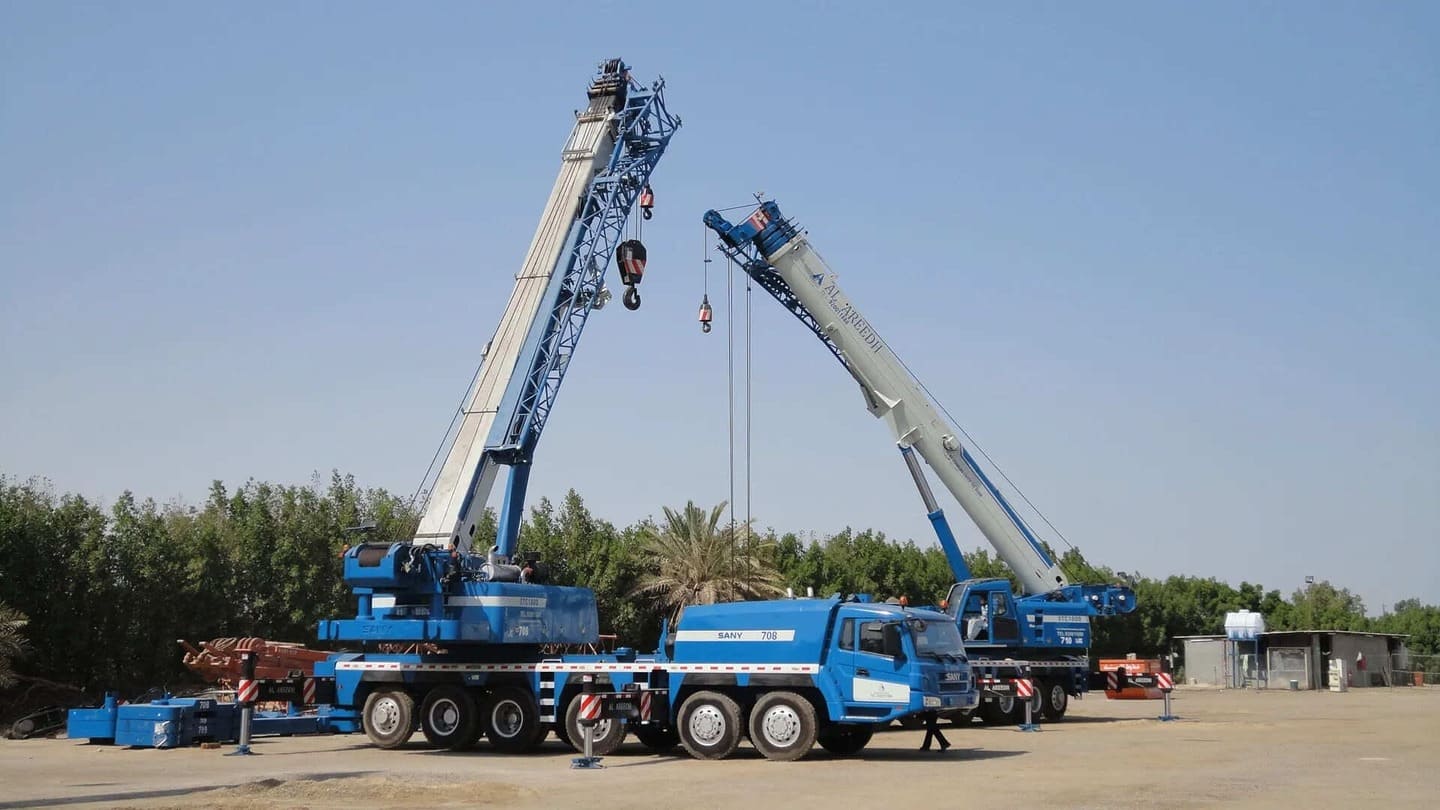
What Is a Lattice Boom? The Backbone of Heavy Lifting
Definition & Design
A lattice boom is a heavy-duty crane arm engineered from high-strength steel tubes arranged in a three-dimensional truss structure. These tubes are interconnected in repeating triangular patterns—often appearing as "W" or "V" formations—to form a rigid yet lightweight framework.This efficient design achieves an exceptional strength-to-weight ratio, enabling the crane to hoist massive loads with stability and precision.
Key Characteristics
- Triangular Lattice Structure: Composed of steel members arranged in a triangular truss pattern, delivering exceptional structural strength and rigidity.
- Modular, Configurable Length: Built from pin-connected sections, allowing the boom's length and working radius to be customized for specific project requirements.
- Optimal Strength-to-Weight Ratio: The open-web design achieves minimal dead weight without compromising load-bearing capacity, enabling the lifting of extreme loads.
Ideal Applications
- Maximum Capacity Applications: Lattice booms are specifically engineered for ultra-heavy lifting operations where exceptional load-bearing capacity is the primary requirement.
- Large-Scale Construction Projects: These booms are the preferred choice for major infrastructure development, including high-rise construction and renewable energy installations like wind farms.
- Heavy Industrial Operations: In sectors such as mining, lattice boom cranes are indispensable for handling and positioning massive equipment and machinery.
Which Two Cranes Typically Use a Lattice Boom?
Among the current crane equipment, crawler cranes and lattice boom truck cranes have sufficient power and versatility to adapt to lattice booms.
The Crawler Crane: The Site-Based Powerhouse
A crawler crane is a tracked mobile crane designed for maximum stability and lifting capacity on challenging terrain. As one of the two answers to which two cranes use a lattice boom, it leverages the lattice boom’s strength to handle extreme loads.
Core Identity & Carrier: Mounted on bulldozer-like crawler tracks, it achieves exceptional stability by distributing its weight over a large area, often eliminating the need for outriggers.
Why it Uses a Lattice Boom: The combination is synergistic. The crawler's ultra-stable base provides the foundation needed to handle the massive loads and long reaches a lattice boom is designed for. The boom's modularity allows the crane to be assembled to the exact height required for the project—making it a practical choice for the scenarios where which two cranes typically use a lattice boom is a critical question.
Key Features:
- High Road Mobility: Can travel on public highways to reach job sites under its own power (though often with travel restrictions).
- Faster Setup: Generally quicker to set up for a lift than a large crawler crane.
- Versatility: Ideal for projects requiring significant lifting power at multiple locations or sites with limited space for crane assembly.
The Lattice Boom Truck Crane (LBT): The Mobile Giant
A lattice boom truck crane is a specific type of truck crane that uses a lattice structure boom. It combines the mobility of a truck carrier with the heavy-lift capacity of a lattice boom.
Core Identity & Carrier: Consists of a lattice boom mounted on a standard truck carrier, combining road mobility with significant lifting power.
Why it Uses a Lattice Boom: It provides greater lifting capacity and reach than a telescopic boom truck crane of comparable size. The lattice design keeps the boom light enough to be carried on a truck chassis while still offering the strength needed for heavy lifts.
Key Features:
- High Road Mobility: Can travel on public highways to reach job sites under its own power (though often with travel restrictions).
- Faster Setup: Generally quicker to set up for a lift than a large crawler crane.
- Versatility: Ideal for projects requiring significant lifting power at multiple locations or sites with limited space for crane assembly.
For example, SANY truck crane series provides a variety of intelligent lifting solutions that successfully balance robust capacity with exceptional mobility, meeting rigorous global standards for modern construction challenges.
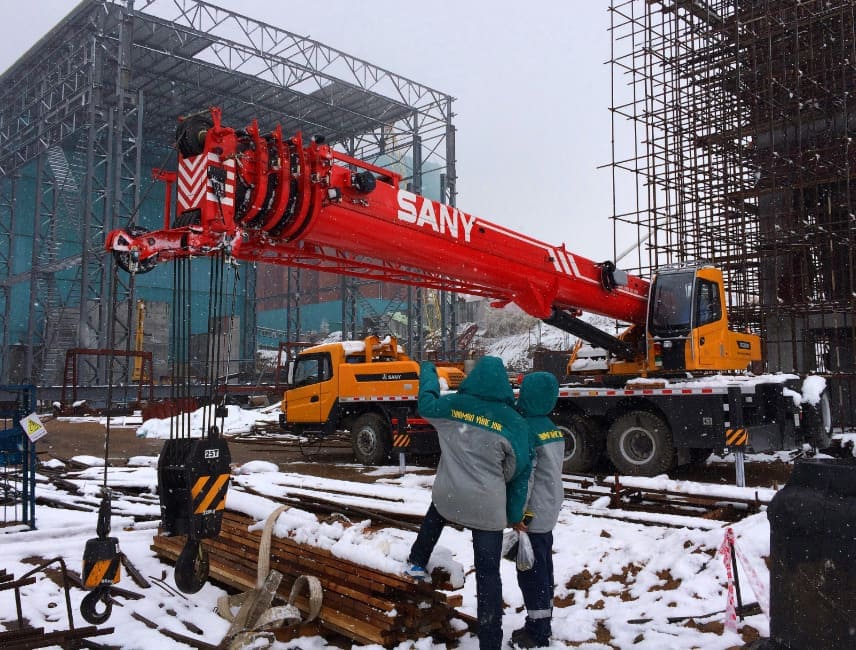
Head-to-Head: Crawler Crane vs. Lattice Boom Truck Crane
Now that we’ve identified the two answers to which two cranes typically use a lattice boom—crawler cranes and lattice boom truck cranes—it’s important to compare them to understand which fits your project best. The following table details their key differences:
Comparison Table: Crawler Crane vs. Lattice Boom Truck Crane
| Aspect | Crawler Crane | Lattice Boom Truck Crane |
| Appearance | Massive machine with wide tracked undercarriage, no separate carrier | Lattice boom mounted on a commercial truck chassis with outriggers |
| Speciality | Maximum lifting capacity and stability on unprepared terrain | Optimal balance of lifting capacity and mobility |
| Mobility | Limited to job site movement; requires disassembly and truck transport between sites | Self-propelled; can travel on public roads between job sites |
| Setup Time | Slow (requires extensive assembly of tracks and boom sections) | Moderate (faster than crawler cranes but slower than telescopic truck cranes) |
| Lifting Capacity | Extremely high (can exceed 1,000 tons) | High (greater than telescopic cranes but less than equivalent-sized crawler cranes) |
| Ideal Projects | Long-term, stationary projects: bridge building, power plants, major infrastructure | Projects requiring mobility between sites: wind farms, multiple industrial sites, regional construction |
| Cost Consideration | High transport/mobilization costs but lower cost per ton on large, long-term projects | Lower mobilization costs; more cost-effective for multiple shorter-duration projects |
Advantages and Disadvantages of Lattice Boom Cranes
Advantages
- Superior Lifting Ability: Its open triangular design provides an exceptional strength-to-weight ratio, enabling it to lift the heaviest loads
- Extreme Reach: The modular sections can be assembled to achieve far greater heights and longer horizontal reaches
- Cost-Effectiveness: For ultra-heavy and extreme-height applications, it is the most powerful and economically viable solution available.
Disadvantages
- Time-Consuming Assembly: Its modular assembly requires significant time and labor for pin-connecting sections, leading to longer mobilization times.
- Complex Transport Logistics: The entire crane must be disassembled into multiple components for transport, requiring a convoy of trucks and intricate planning.
- Fixed Operational Length: Unlike telescopic booms, the lattice boom's length cannot be adjusted during a lift, as changes require manual addition or removal of sections.
Key Considerations When Choosing Between Crawler and Lattice Boom Truck Crane
Selecting between a crawler crane and a lattice boom truck crane involves evaluating several critical project-specific factors. Here are the key considerations:
| Consideration Factor | Crawler Crane | Truck Crane | Key Supporting Facts |
| Project Timeline | Ideal for long-term projects (3+ months) | Better for projects under 3 months or requiring frequent relocation | Crawler crane mobilization costs $50,000-$100,000+ |
| Site Conditions | Operates on soil bearing capacity of 3-5 t/sf | Requires prepared surfaces with 10-15 t/sf capacity | 75% of crawler cranes operate on unprepared ground |
| Lifting Capacity | Handles lifts exceeding 1,000 tons | Typically limited to 300-500 tons maximum | World's heaviest lifts (2,000+ tons) use crawler cranes |
| Mobility | Requires 10-20 truckloads for transport | Self-transportable within legal road limits | Relocation takes 3-7 days vs. 4-12 hours for truck cranes |
| Cost Efficiency | Better for projects exceeding 6 months | More economical for projects under 3 months | Crawler cranes show 15-30% savings on long-term projects |
| Setup Time | 3-7 days for assembly | 4-12 hours for setup | Complex lattice boom assembly increases crawler setup time |
| Space Requirements | Requires large assembly area | More compact footprint | Crawler cranes need 30-50% more operating space |
| Ideal Applications | Bridge construction, power plants, major industrial facilities | Wind farms, industrial maintenance, urban construction | Truck cranes excel in projects requiring multiple locations |
Conclusions
In the world of heavy lifting, the lattice boom is a critical engineering solution for projects demanding exceptional strength, reach, and precision. So, which two cranes typically use a lattice boom? The primary platforms are the crawler crane and the lattice boom truck crane. This guide explores how each of these powerful machines offers distinct advantages tailored to specific project needs.
FAQs
Which two cranes typically use a lattice boom OSHA 30?
OSHA 30 standards emphasize that lattice boom cranes require specific safety protocols due to the risks associated with their assembly and disassembly, as well as electrical hazards. The lattice structure's conductivity makes maintaining minimum clearance distances from power lines critically important.
Are There Other Cranes That Use Lattice Booms?
Yes, besides crawler and lattice boom truck cranes, there are three other cranes including: tower cranes, ringers and gantry cranes.
What are the two different types of cranes?
From a fundamental perspective, cranes are categorized as: mobile cranes and Fixed Cranes. As its names refer, mobile cranes can be transported to sites, while fixed cranes remain in one location.
What’s the difference between crawler and truck-mounted lattice boom cranes?
Crawler Crane:Limited to site movement, suitable for unprepared surfaces, with 1000 tons lifting capacity
Truck-Mounted Crane: Self-transportable on roads, requiring stable ground, with 300-500 tons lifting capacity
Featured Products
Recommend Blogs

How Do They Get Cranes on Top of Buildings: Detailed Operation Guide
This article will revolve around the question how do they get cranes on top of buildings, common crane climbing methods, dismantling procedures, and operational safety precautions.
2025 Targeted Guide: How Often Does a Periodic Crane Inspection Occur?
This guide will provide a detailed explanation of how often does a periodic crane inspection occur,to ensure equipment safety and prevent accidents.

How Are Cranes Built? A Step-by-Step Guide to the Construction Process
Cranes help us build towering skyscrapers, yet few know how cranes are built. This guide takes you through an in-depth exploration of the process