When Were Cranes Invented: Tracing the Evolution of Lifting Technology Through the Ages
This article comprehensively explores every innovation of the crane, offering a deep understanding of when were cranes invented and how they evolved into their present form.
As historian Arnold Toynbee once said, "Technological progress often stems from humanity's breakthroughs in overcoming existing challenges." Each innovation of the crane represents humanity's effort to overcome the limitations of weight and height. It is not just an evolution of tools, but a vivid reflection of human intelligence and the progress of civilization. Let’s journey through time to explore when were cranes invented, tracing their evolution from primitive forms to modern intelligent machines.
When Were Cranes Invented?
Let’s explore the evolutionary journey of cranes, uncovering the secrets of when was the crane invented:
1. Ancient Prototype: Earliest Known “Crane” in History
Who invented the crane? In the beginning, cranes were not designed for lifting buildings. They were actually created for agricultural irrigation. Around 1250 BCE, a device called the "Shaduf" appeared in ancient Egyptian tomb murals in Thebes. This device, consisting of a long pole, a support frame, and a water bucket, used a counterweight at the back and a human pulling the bucket at the front, leveraging the principles of a lever to draw water from the Nile River for irrigation.
2. Early Form: Cranes in Ancient Greece
Between the 8th and 5th centuries BCE, the ancient Greeks discovered that a simple lever was not enough to lift heavy stones. They combined pulleys with levers to create a more efficient lifting tool. Archaeological evidence shows that by 515 BCE, lifting fixtures and lifting wedges were already visible on stones at Greek temples, proving the use of cranes for construction. The simplest "three-pulley crane" consisted of a boom, winch, and three sets of pulleys. By manually turning the winch, the crane could lift stones weighing several tons to the temple roof. This device played a key role in building structures like the Parthenon.
3. Structural Upgrade: Cranes in Ancient Rome
The Romans inherited Greek crane technology and innovated it in several dimensions, transforming it from a "small tool" to a "large engineering machine." In 10 BCE, Roman architect Vitruvius recorded in De Architectura the first details of when was the first crane invented. This crane was a "mast crane."
Regarding power and lifting capacity, Roman cranes had a clear classification system: The simplest three-pulley crane had a mechanical advantage of 3:1 and could lift 150 kg with one person. The five-pulley crane, with more pulleys, could lift over half a ton, while the Polyspastos crane, operated by four workers, could lift up to 3 tons. By replacing the winch with a treadwheel, the lifting capacity could even reach 6 tons. This "treadwheel crane" was widely used in large Roman constructions, such as lifting 60-100 ton lintels to 19-meter heights during the construction of the Temple of Jupiter at Baalbek.
Another significant contribution of Roman cranes was "standardization and scene adaptation." Craftsmen could adjust the mast height, pulley numbers, and treadwheel size to meet different building needs, offering custom solutions. By the end of the 1st century CE, a relief on the tomb of Quintus Haterius depicted the structural details of the treadwheel crane, providing valuable evidence for later studies of Roman technology.
4. Power Revolution: Cranes Technology During the Industrial Revolution
The 18th century Industrial Revolution brought disruptive changes to cranes, transitioning them from human and animal-powered to mechanically powered. This era saw technological breakthroughs in power, structure, and application:
Power Innovation
| Power Type | Technical Features | Representative Applications | Historical Significance |
| Steam Power | In the late 18th century, steam engine technology was introduced to cranes, driving winches or gear systems via steam cylinders, replacing human-powered tread wheels and winches. | In 1805, Richard Trevithick designed the first steam-powered crane; after 1830, steam cranes were widely used in British railway construction and port cargo handling. | The first realization of “non-biological power” driving cranes, increasing lifting capacity from tons to several tens of tons, and eliminating human fatigue limitations. |
| Hydraulic and Wind Power Assistance | From the late 18th century to the early 19th century, some mines and factories continued using improved hydraulic cranes, driven by water wheels and complemented with steam power. | In Cornwall, England, hydraulic cranes were used to lift ores from tin mines; in Dutch ports, wind-powered cranes were used for loading and unloading cargo. | Served as a transitional solution before the widespread use of steam power, optimizing the efficiency of traditional power sources. |
Structural Upgrades
1) Telescopic Boom: Replacing traditional fixed booms, this allowed cranes to adjust the boom’s angle via steam cylinders for horizontal movement, such as port cranes that could lift cargo directly from ships to docks.
2) 360° Rotating Base: With the addition of circular tracks and steam gear-driven systems, cranes could rotate without needing to move the entire machine, covering a broader work area. This innovation was widely used in mining pits and factory workshops.
3) Rail-mounted Systems: Cranes mounted on tracks moved along railways, powered by steam, to aid in railway construction. In the 1840s, steam cranes in the UK helped lift steel beams for bridges along the Liverpool-Manchester railway.
Expanded Applications
1) Railroad Construction: Steam rail-mounted cranes lifted 10-30 tons of steel beams, supporting early railways like the Liverpool-Manchester line.
2) Mining Operations: Fixed steam cranes at mine shafts lifted tons of ore daily, far outpacing human labor.
3) Port Handling: Rotating steam cranes boosted unloading efficiency by 10-20 times, enabling smooth international trade.
4) Steel Industry: Heat-resistant steam cranes could lift molten steel, enabling large-scale production in modern steel mills.
5. Breakthrough in Power and Precision: The Birth of the Hydraulic Crane
As industries like ports and shipbuilding grew, the limitations of steam-powered cranes became evident. Their slow response and low precision couldn't meet the demands of fine-tuned lifting. Hydraulic technology, based on Pascal's Law, became the new evolution for cranes.
Technological Origin
Hydraulic technology traces back to 1653 when French physicist Blaise Pascal formulated Pascal’s Law, which states that pressure applied to any point in a closed liquid system is transmitted equally in all directions. However, it wasn't until the 19th century that this theory was applied to lifting equipment. In 1838, British industrialist Baron William Armstrong broke through the technical barriers and designed the world's first "hydraulic crane." Using a plunger in a sealed cylindrical chamber, Armstrong’s design precisely controlled the amount of liquid in the cylinder through valves, creating stable force to drive the lifting mechanism.
Key Innovations
In 1845, Armstrong used excess water pressure from Newcastle’s public water system to drive hydraulic cranes, efficiently loading coal onto barges. This practical application proved the reliability of the technology.
In 1847, Armstrong established a factory in Elswick, focusing on the development and production of hydraulic cranes. He also introduced the revolutionary "hydraulic accumulator," which stored hydraulic energy through compressed gas, allowing cranes to operate independently without a continuous water supply. This innovation increased lifting capacities from a few tons to several dozen tons.
Historical Impact
The invention of the hydraulic crane filled the technological gap between steam cranes and modern precision cranes. Compared to steam-powered systems, hydraulic systems offered three major advantages:
1) Higher Control Precision: Hydraulic cranes could lift heavy loads smoothly with precise valve adjustments, ideal for lifting delicate components like ship parts or machine tools.
2) Compact Design: Hydraulic cylinders are much smaller than steam cylinders, allowing cranes to be more portable and flexible, such as the "hydraulic truck crane" developed in the late 19th century.
3) Greater Power Density: Hydraulic systems generate more force in the same size, laying the foundation for the development of large-tonnage cranes.
6. The Smart Era:Crane Innovations in Modern Times
Entering the 21st century, with the development of IoT, automation, and new materials technology, cranes have entered the "smart era," presenting four major trends: intelligence, super-size, modularity, and greening, becoming the "core equipment" for modern engineering construction.
As a leading global company in the construction machinery industry, SANY has profoundly interpreted the evolution of modern cranes through technological breakthroughs and business model innovations. SANY adheres to the development strategy of "globalization, digital intelligence, and low-carbon," continuously achieving breakthroughs in independent R&D, intelligent manufacturing, and market expansion.
SANY is also at the forefront of the green transformation. In 2024, the revenue from new energy products reached 4.025 billion yuan, with electric cranes holding the top market share in the industry. Its digitalized factories showcase the future of intelligent manufacturing, enhancing production efficiency while reducing carbon emissions, setting an example for low-carbon manufacturing in the industry.

Common Types of Cranes and Their Uses
1. Fixed Work Cranes
These cranes are typically rooted in fixed locations. While they cannot be moved freely, their sturdy structure allows them to lift hundreds of tons, making them the "heavy lifters" for long-term, high-intensity work. Here are some common types:
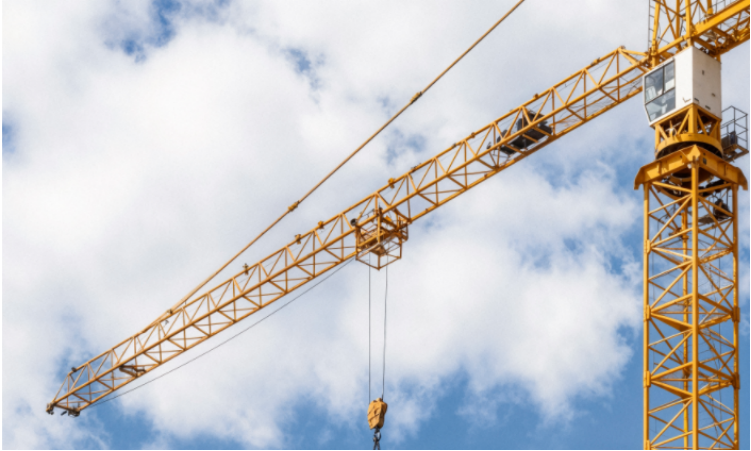
- Tower Cranes: With the ability to increase in height as the building grows, tower cranes can reach over 100 meters. Once the boom is extended, the coverage radius can easily span the entire construction site. In the construction of residential buildings, office towers, and bridges, tower cranes act like airborne workers, delivering materials to higher levels and are crucial for the construction of high-rise buildings.
- Gantry Cranes: Depending on their purpose, gantry cranes are categorized into "general-purpose" and "container-specific" types. General-purpose gantry cranes are used for handling steel and heavy equipment, while container-specific types can easily lift 40-foot containers weighing over 30 tons, efficiently stacking them in port yards and serving as core equipment in global logistics.
- Bridge Cranes: These cranes are mounted on tracks on both sides of a building and move along the main beam, with the hook able to move up and down. Available in single and double girder types, bridge cranes are used for machine tool installation, steel transport, and heavy parts assembly. The double girder bridge crane can lift hundreds of tons and is suitable for ultra-heavy operations.
2. Flexible and Mobile Cranes
Unlike fixed work cranes, these cranes are "mobile," allowing them to move between different sites. They are ideal for temporary or scattered tasks and act like a "mobile material handling station." Some common types include:
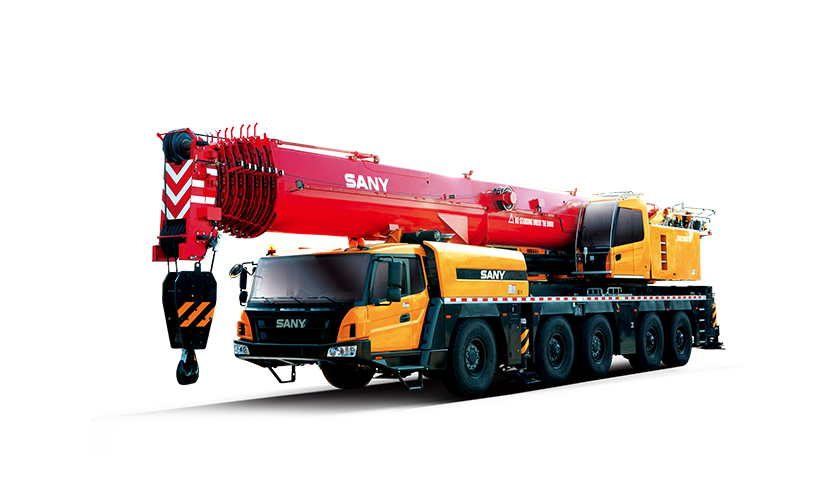
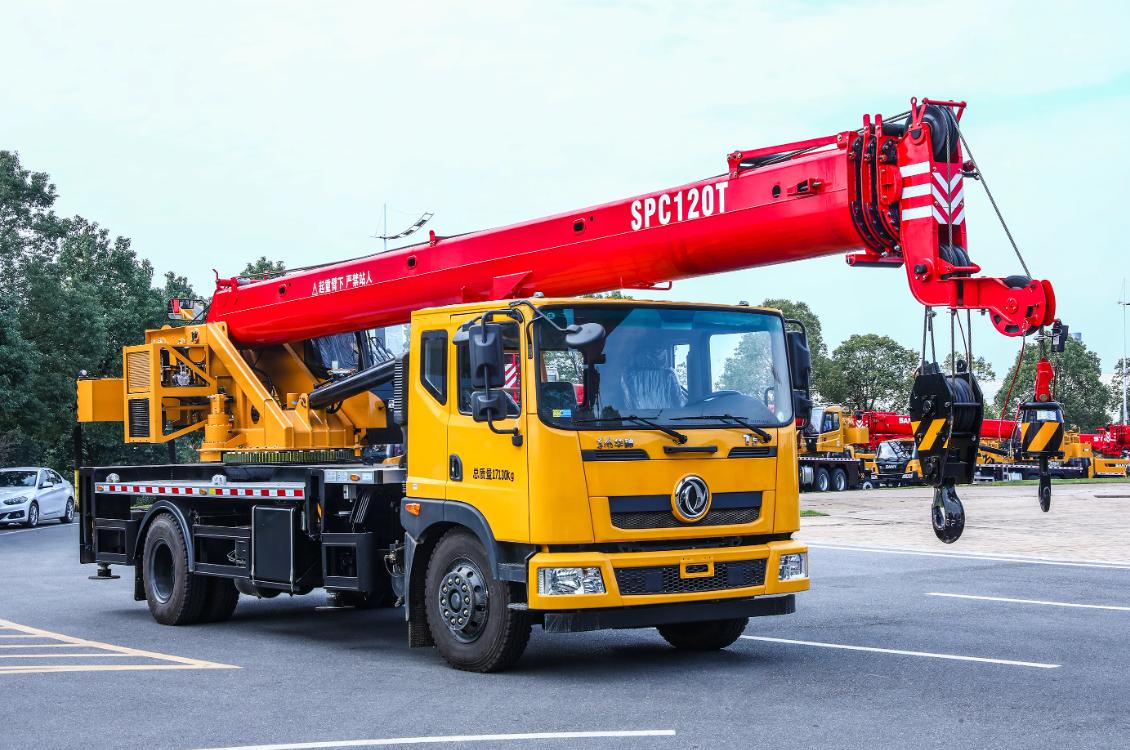
- Truck Cranes: One of the most common types, truck cranes are mounted on a truck chassis, allowing them to drive quickly on roads. Upon arrival at the work site, they deploy outriggers and extend the boom, enabling them to rotate 360° for lifting. Their advantage lies in their mobility, making them useful for both urban municipal projects and emergency rescue operations in remote areas.
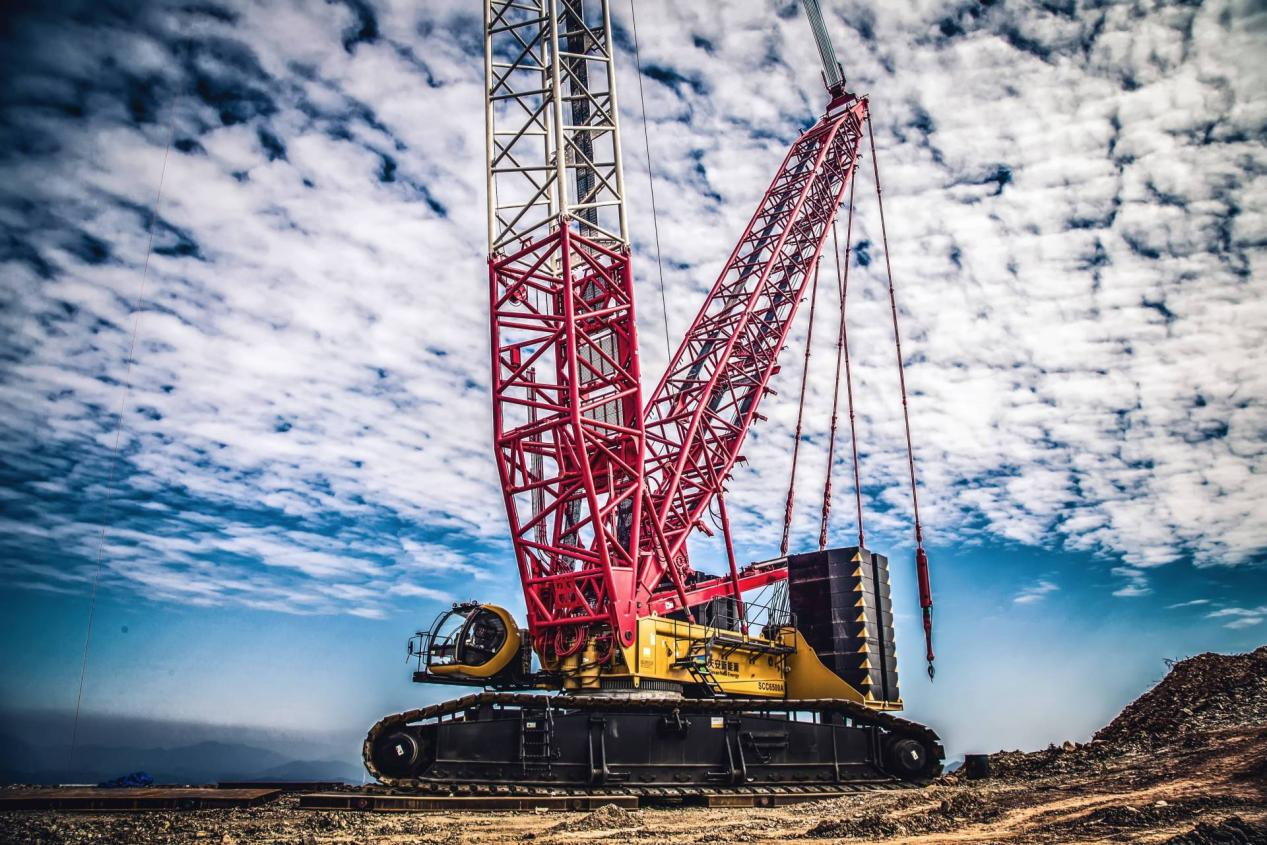
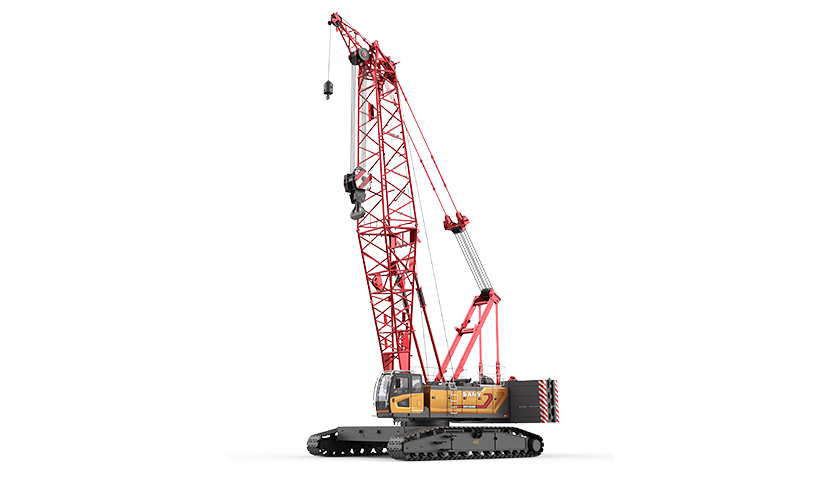
- Crawler Cranes: These cranes use a crawler chassis for increased ground contact area, allowing them to operate smoothly on muddy or rugged terrain. Even in complex environments like wind farms or mining sites, crawler cranes maintain stability. Their boom can be extended in sections, with some models capable of lifting several thousand tons. They are frequently used for lifting wind turbine towers and blades in heavy-duty projects.
- Tire Cranes: Mounted on tires, tire cranes offer more flexibility than crawler cranes and greater stability than truck cranes. After deploying their outriggers, they can lift heavier loads and maneuver easily across flat sites like ports or yards, navigating between containers efficiently.
3. Specialized Cranes for Unique Scenarios
In addition to the mainstream types, there are some specialized cranes that are uniquely evolved for specific scenarios, making them irreplaceable in certain fields.
- Truck-Mounted Cranes: These cranes can transport trees for municipal landscaping, directly lifting large trees into planting holes. In building material delivery, they can transport steel pipes and panels and lift them to specified locations. They are also used for installing air conditioning units or billboards, making them a versatile "short-range logistics + lifting machine."
- Floating Cranes: When the work site shifts from land to water, ordinary cranes are ineffective. Floating cranes come into play by mounting the lifting boom on a vessel or floating platform, allowing them to operate on rivers, lakes, or seas. Some large floating cranes are equipped with positioning systems, enabling them to perform precise lifts even in moving waters.
- Mast Cranes: Compact and cost-effective, mast cranes are like medium excavators, able to work in tight spaces. Underground in mines, they can handle mining equipment; in height-restricted factories, they can install large machinery components. In historical building restorations, to avoid damaging heritage, mast cranes are used to carefully transport materials, showcasing their irreplaceable role in special environments.
Conclusion
When were cranes invented? From the "shaduf" depicted in ancient Egyptian murals around 1250 BCE to the intelligent cranes used on construction sites around the world in the 21st century, the nearly 3,300-year development process is not only the history of crane evolution, but also a testament to humanity's ongoing struggle to break through technological boundaries and expand operational spaces. In the future, with the further integration of AI, new energy technologies, and more, cranes will continue to support the advancement of human civilization in deeper and broader fields. The story of cranes is ongoing, and it will continue to accompany human civilization, witnessing even more breakthroughs and achievements.
FAQs
When Were Modern Cranes Invented?
The invention of modern cranes was not the result of a single moment, but rather occurred gradually, primarily during the Industrial Revolution in the 19th century.
From the late 18th century to the early 19th century, the widespread adoption of steam engines provided new power for lifting devices, replacing traditional human, animal, or water power and giving rise to the early forms of modern cranes.
Around 1830, British engineers began combining steam engines with lifting machinery to create steam-powered mobile cranes, which were used for railway construction and port cargo handling.
In the mid-to-late 19th century, with the development of the steel industry, crane structures evolved from wood to steel, significantly increasing strength and lifting capacity.
After the 20th century, hydraulic technology, automation, and other innovations were integrated, driving cranes toward larger sizes and greater precision.
Did They Have Cranes in the 1700s?
In the 18th century, cranes existed, but they were not mechanical cranes in the modern sense. Instead, they were primarily driven by traditional power sources and structures, designed to meet the heavy lifting needs of construction, shipping, and other industries at the time. These cranes typically relied on human, animal, or water power, and their structures were mostly wooden frames equipped with simple mechanical components like pulleys and winches to lift heavy objects. Their load capacity and operational efficiency were limited.
What Did Cranes Look Like in the 1800s?
In the 19th century, cranes transitioned toward modern mechanical designs with the following characteristics:
- Structure: Early cranes were bridge-type cranes, while later cranes evolved into gantry cranes, offering a wider working range.
- Power: Cranes switched from traditional power sources to steam-driven power, with steam-powered cranes already in use by 1805.
- Materials: Steel replaced wood, and iron chains replaced fiber ropes, leading to a significant increase in lifting capacity.
Did Ancient Egyptians Use Cranes?
Ancient Egyptians did not use modern cranes, but they invented lifting tools based on simple mechanical principles to move the massive stones required for building pyramids and temples.
Featured Products

Recommend Blogs
2025 Targeted Guide: How Often Does a Periodic Crane Inspection Occur?
This guide will provide a detailed explanation of how often does a periodic crane inspection occur,to ensure equipment safety and prevent accidents.
Types of Cranes: Your 2025 Comprehensive Guide to Every Major Category
As 2025's latest authoritative guide to types of cranes, this article breaks down the four types' core traits and application differences, giving engineers and equipment purchasers key selection criteria
How Are Cranes Built? A Step-by-Step Guide to the Construction Process
Cranes help us build towering skyscrapers, yet few know how cranes are built. This guide takes you through an in-depth exploration of the process