What to Do If Forklift Load Is Too High? Safe Operation Guide
This paper answers what to do if forklift load is too high, clarifying forklift over-high load risks, standards, handling and prevention measures.
In industrial warehousing and logistics handling, safe forklift operation is directly related to personnel safety, equipment integrity, and corporate property efficiency. Standardized control of forklift load height is a key link to ensure operational safety. Excessively high loads not only disrupt the forklift's balance but also trigger a chain of safety risks, endangering the stability of the entire operation site. So, what to do if forklift load is too high? This article will address the risks and hazards of excessive forklift loads, safe load height standards, and preventative measures to help forklift operations be carried out more safely and efficiently.
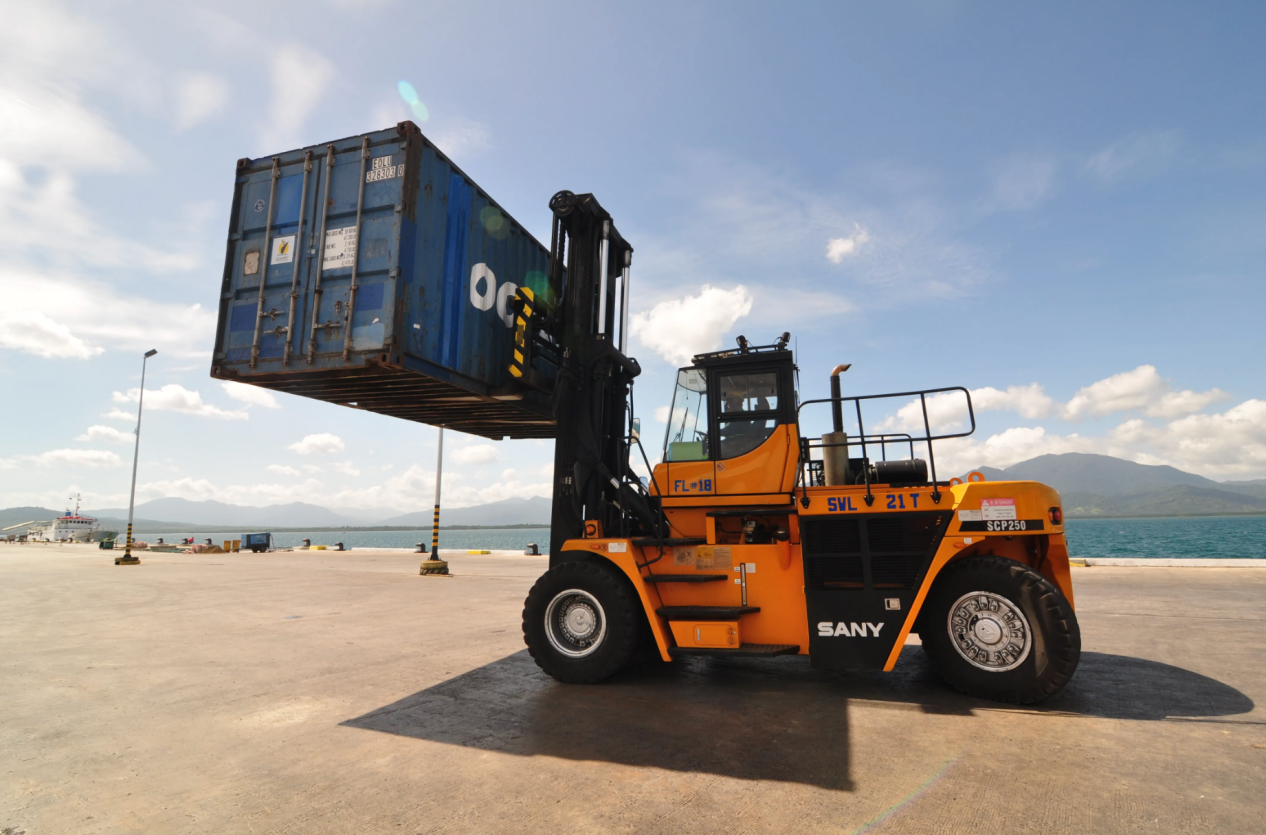
What Are the Risks of Excessively High Forklift Loads?
Excessively high or overloaded forklifts are extremely dangerous. They will not only greatly increase the risk of tipping over but also may lead to cargo falling, personnel injuries, and high costs of equipment and cargo property losses.
Tip-over Hazard
Stacking cargo high will raise the center of gravity, reducing the forklift's stability. The risk of tipping over is especially high when turning or driving on uneven ground.
Obstructed Vision
Overly high cargo will block the operator's forward view, increasing the risk of collisions with pedestrians, other vehicles, and obstacles.
Cargo Falling
Unsecured or improperly stacked cargo may collapse, causing personnel injuries or property losses.
Loss of Control
Overloaded forklifts have increased steering difficulty, further raising the probability of tipping over and collision accidents.
Equipment Wear
Exceeding the rated load increases stress on forklift components, potentially causing mechanical failures and high maintenance costs.
How High Should a Load Be Carried on a Forklift?
How high should a load be carried on forklift? When carrying cargo, forklifts should keep the load as low as possible, usually 4–6 inches (10–15 centimeters) off the ground. At the same time, the mast should be tilted slightly backward to lower the center of gravity, achieve optimal stability, and prevent the forklift from tipping over. This height can not only clear road obstacles but also avoid vehicle instability caused by excessively high cargo, which is particularly critical during driving.
Core Principles of Safe Cargo Handling
- Keep Low: The fork height should be just off the ground to clear protrusions on the driving route.
- Tilt Mast Backward: Tilt the mast slightly backward to keep the cargo tightly fixed against the carriage backrest.
- Maintain Vision: Cargo should be kept within the operator's line of sight as much as possible; if the view is blocked, the warning light must be turned on.
- Center Cargo: Place the cargo as close to the fork carriage as possible and ensure even weight distribution.
- Know Load Capacity Well: The higher the fork lifting height, the lower the forklift's effective load capacity. Therefore, always operate within the rated load range and fully consider the impact of the load center distance.
Timing of Height Adjustment
1. During Driving: Keep the load low (4–6 inches off the ground).
2. During Stacking/Picking: Lift the cargo only to the height required for loading and unloading. Lower it immediately after the operation before driving to transfer.
What to Do If Forklift Load Is Too High?
If the forklift’s load height is too high, stop immediately, tilt the mast backward to maintain stability, then lower the cargo to a safe height. If visibility is blocked, arrange a dedicated person to supervise or drive in reverse to ensure safe movement. Never drive with cargo lifted—this reduces the forklift’s stability and significantly increases the risk of tipping over. Recheck the cargo to confirm it is within the rated load range, evenly distributed, and securely fastened; split it into smaller batches for transportation if necessary.
Emergency Handling Measures
- Lower Cargo: Before moving, tilt the mast backward and lower the cargo to just a few inches off the ground to ensure vehicle stability.
- Safe Parking: Do not drive with the cargo lifted. This will cause the center of gravity to shift and increase the risk of tipping over, especially when turning or driving on uneven roads.
- Dedicated Supervision/Reverse Driving: If the cargo blocks the forward view, arrange a trained person for supervision or drive in reverse, and always keep an eye on the direction of travel during driving.
Cargo Inspection and Re-securing
- Verify Load Parameters: Confirm that the cargo weight and center of gravity position (load center distance) are both within the forklift's rated load range.
- Reinforce Cargo: Ensure the cargo is wrapped with stretch film, secured with straps, or fixed using other stable measures. Unsecured over-high cargo is extremely dangerous.
- Split Cargo: If the cargo is too high or insufficiently stable, split it into smaller, more manageable units.
Operating Guidelines for Loaded Driving
- Slow Down: Reduce driving speed, and slow down significantly when turning or driving on uneven roads.
- Drive with Low Load: Keep the cargo as low as possible throughout the driving process to maximize stability.
- Keep Mast Tilted Backward: Maintain the mast in a tilted-back position to keep the cargo stable and close to the forklift body.
How to Prevent Excessively High Forklift Loads?
Prepare Well for Loading
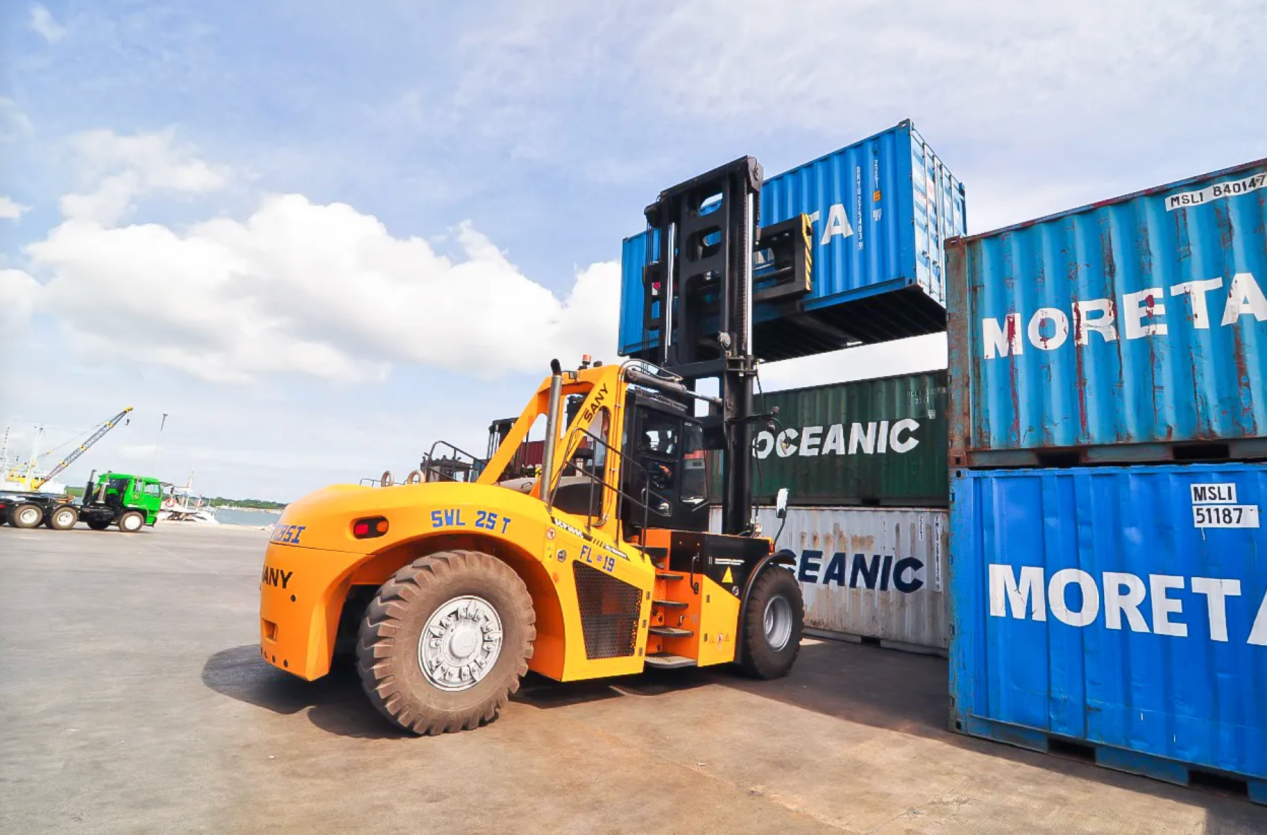
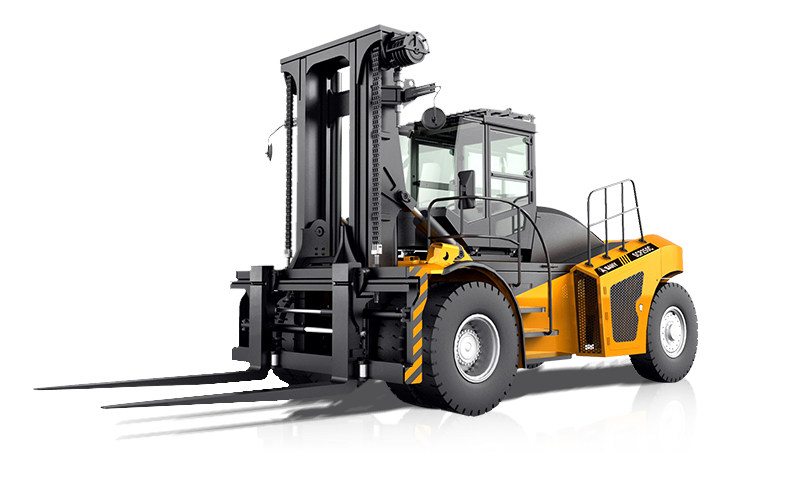
- Verify Load Capacity: Always refer to the forklift's load rating plate and never exceed the rated weight. For example, the rated load capacities of SANY Forklift Trucks range from 10–16 tons, 18–25 tons, 28–35 tons to 40–46 tons, which should be clearly confirmed before operation.
- Secure Cargo: Use stretch film, straps, or bundling belts to secure the cargo to prevent shifting. Focus on reinforcing unstable or loose cargo.
- Inspect Pallets: Do not lift damaged or improperly stacked pallets.
- Center Cargo: Place the cargo stably on the forks to ensure even weight distribution in all directions.
- Press Against Mast Backrest: Firmly press the cargo against the forklift's mast backrest to form stable support.
Master Operating Skills
- Keep Load Low: When driving, keep the cargo as close to the ground as possible (only a few inches off the ground) to lower the forklift's center of gravity.
- Tilt Mast Backward: Tilt the mast slightly backward to support the cargo and transfer the weight to the forklift body.
- Slow Down: Reduce driving speed, operate slowly when turning, and avoid sudden stops or abrupt steering.
- Drive in Reverse When Necessary: If the cargo blocks the forward view, drive in reverse to see the route clearly or arrange a dedicated person for supervision.
- Operate Cautiously on Ramps: When driving uphill, face the cargo toward the top of the ramp and the forks toward the bottom, keeping the cargo low throughout the process.
Training and Working Environment Requirements
- Comprehensive Training: Ensure operators master cargo stability control, load capacity judgment, and forklift operation skills.
- Pre-shift Inspection: Inspect forklifts and the operation area daily to remove safety hazards such as debris and protrusions.
- Improve Vision Clarity: Install safety cameras or rearview mirrors in busy operation areas to optimize the field of vision.
Conclusion
What to do if forklift load is too high? The emergency handling process for this core question is critical to minimizing accident losses and must be fully mastered and strictly followed by operators. Scientific control of forklift load height is key to risk prevention and operational efficiency. Every step—from identifying overload hazards and adhering to safe height standards to implementing preventive measures—is essential. Integrating these safety protocols into daily operations fundamentally reduces load-related accidents and safeguards on-site personnel and property.
FAQs
How to Quickly Identify Forklift Rated Capacity Overload?
Methods to quickly determine if a forklift is overloaded: First, locate the forklift's rating plate for rated load capacity, load center distance, and attachment limits. Then visually estimate the cargo's center of gravity (COG) and compare it with the requirements on the plate. Note that longer/larger cargo or higher lifting heights will drastically reduce the load capacity. If in doubt, use a scale to weigh the cargo, or adopt modern technologies such as load-sensing systems for overload alerts.
What Are the Strength Requirements for Load-securing Straps?
The core requirements for load-securing strap strength are as follows: Select straps with a Working Load Limit (WLL) matching the cargo weight, and ensure the total WLL of all straps is at least 50% of the cargo weight. Choose the appropriate strap size (1"–4") based on the cargo type. For safety, select straps that comply relevant standards. Use a higher safety factor when transporting hazardous or high-value goods.
Operation Notes: Always check the strap labels for WLL and color-coded material information. Never use hand tools to overtighten the straps; only use manual force.
What should you not do when a load is elevated?
When a forklift load is elevated, never drive with the load raised, make sharp turns, or operate on uneven ground, as this greatly increases the risk of tipping. Avoid overloading or improperly securing cargo, which can cause items to fall and injure personnel. Always keep the load stable, close to the forks, and within the forklift’s rated capacity to ensure safe operation.
Featured Products
Recommend Blogs
What Is a Forklift Truck? Definition, Types and Working Principles
This guide will provide you with a comprehensive overview of forklift knowledge, giving you a clear understanding of what is a forklift truck.
Components of a Forklift Truck Explained: A Complete Guide to Forklift Operation (2026)
This article focuses on the components of a forklift truck and forklift operation precautions, enabling you to load and transport goods more efficiently.
How to Operate a Forklift Truck? Step-by-Step Guide and Safety Tips
How to operate a forklift truck? This article helps both new and experienced operators understand forklift structure and operation steps in detail to reduce operational risks.