What Is a Telehandler? Key Functions, Principles & Application Scenarios
This article explains what a telehandler is, outlining its components, functions, uses, and types. It also compares telehandlers with forklifts and cranes to help you choose the right equipment.
On job sites across multiple industries such as construction, agriculture,, and logistics warehousing, telehandlers are always a common sight. As heavy-duty equipment with both flexible mobility and multi-functional operation capabilities, they serve as reliable machines for efficiently handling materials in complex environments. So, what is a telehandler? How does it achieve various operational functions? This article comprehensively explains the core aspects of telehandlers, including their definition, key components, working principles, uses, and classifications.
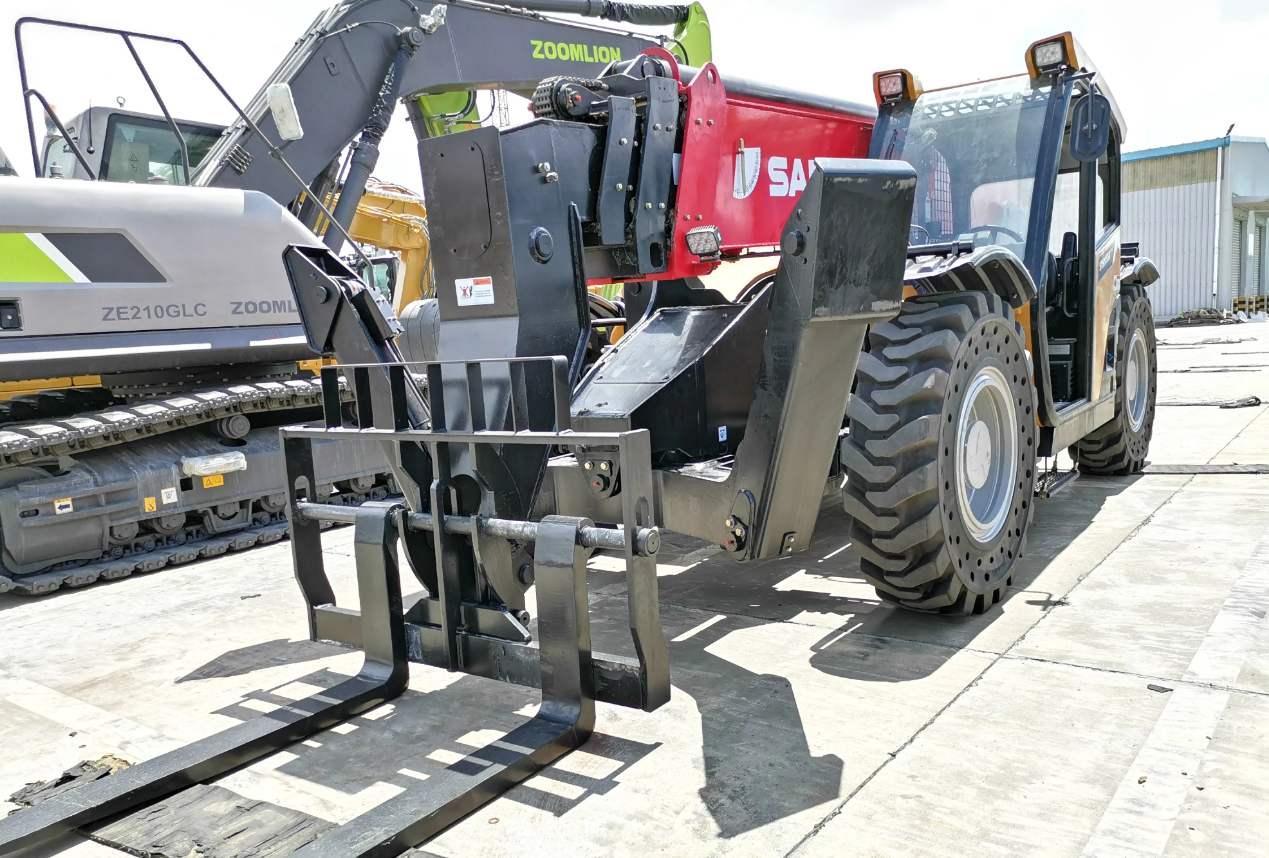
What Is a Telehandler?
A telehandler, also commonly known as a telescopic handler or boom lift, is a heavy-duty construction machinery integrating multiple functions. It combines the handling capacity of a forklift, the telescopic boom operation characteristics of a crane, and some functions of a loader.
Featuring a telescopic boom as its core component, a telehandler can horizontally extend, vertically lift, and rotate at multiple angles. Meanwhile, it can flexibly complete various operations such as loading, unloading, handling, stacking, and hoisting by matching different attachments. Therefore, telehandlers are widely used in construction, agriculture, logistics, municipal engineering and other fields, serving as versatile engineering equipment capable of efficiently handling heavy materials in complex environments.
Key Components of a Telehandler
A telehandler is mainly composed of the following key components, which collectively ensure the equipment's efficient operation and multi-functional performance:
1.Telescopic Boom
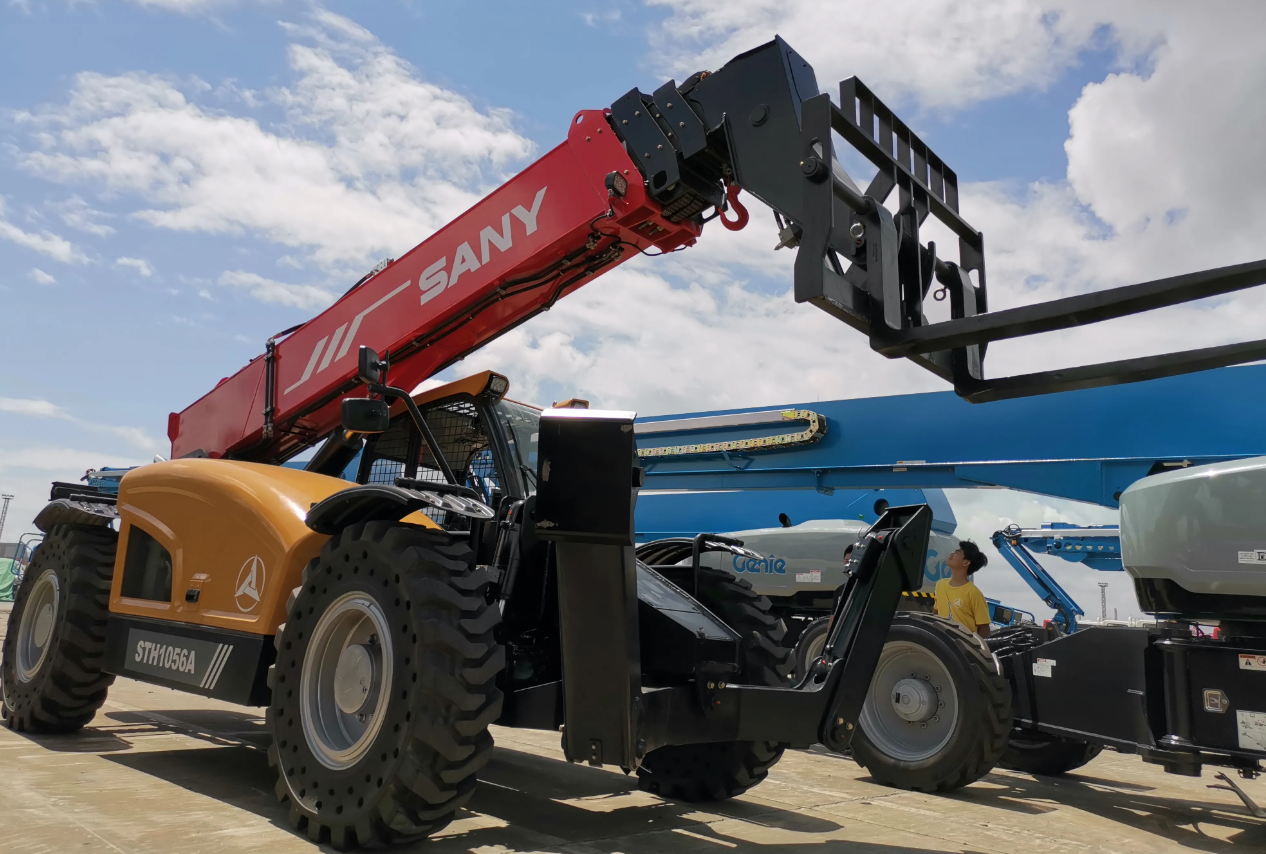
As the core component, it adopts a high-strength multi-section nested structure and achieves flexible extension and retraction through hydraulic drive. It directly determines the operating height, radius, and precision, while also influencing the overall lifting capacity and safety.
2.Hydraulic System
Including hydraulic pumps, cylinders, control valves, and other components, it provides power for the boom's extension/retraction and attachment movements. The stability of the system is directly related to the equipment's load control accuracy and operational efficiency.
3.Chassis Travel System
A telehandler typically adopts large-size tires, while a telehandler with tracks is also available. Equipped with driving and shifting functions, it ensures the equipment has excellent mobility and passability on complex road surfaces.
4.Attachments and Quick Couplers
The end of the boom is equipped with a standardized interface, allowing for quick replacement of various attachments such as forks, hooks, buckets, and work platforms to meet different operational needs including handling, hoisting, and lifting.
5.Operator Cab
Equipped with control devices, vision assistance equipment, and safety protection structures, some models feature larger tires that enhance the cab height, providing the operator with a broader field of vision.
6.Counterweight and Stabilization System
A counterweight is installed at the rear of the equipment to balance the load torque. Some models are also equipped with hydraulic outriggers, level sensors, and load-limiting devices to prevent tipping or overloading during operations, ensuring stability and safety.
How Does a Telehandler Work?
The core working principle of a telehandler is based on two key mechanisms: hydraulic transmission and torque balance, with the specific process as follows.
1.Power Transmission
After the engine starts, it transmits mechanical energy to the hydraulic pump. The hydraulic pump pressurizes the hydraulic oil and delivers it to each hydraulic cylinder through hydraulic pipelines.
2.Boom Movement Control
The operator controls the opening/closing and flow rate of the hydraulic valves via the levers or buttons on the control panel, thereby driving the telescopic boom to extend/retract, luff (swing up and down), and rotate.
3.Attachment Movement Control
Attachment movements (such as the lifting and tilting of forks, and the opening and closing of grabs) are controlled via independent hydraulic circuits to meet different operational needs.
4.Stability and Balance Control
During operations, the rear counterweight forms a torque balance with the load to prevent equipment tipping. The load limiter real-time detects the telescopic length, elevation angle, and load weight of the boom, calculates the current safe torque, and automatically restricts further extension/retraction or luffing of the boom when approaching or exceeding the limit, ensuring operational safety.
5.Travel Drive
The engine transmits power to the wheels (or tracks) through the gearbox. The operator controls the equipment's traveling direction and speed by manipulating the steering wheel, accelerator, and brakes, enabling movement and positioning within the job site.
What Is a Telehandler Used For?
Thanks to its versatility and high adaptability, telehandlers have applications across multiple industries.
1.Construction Industry
It is used for transporting construction materials such as steel bars, cement, sand, and bricks; hoisting prefabricated components like floor slabs, doors, and windows; transferring materials when erecting scaffolding; and forming aerial work platforms with man-carrying platforms for exterior wall decoration and equipment installation. At construction sites, its telescopic boom can easily cross obstacles and deliver materials directly to high-altitude work points, significantly improving construction efficiency.
2.Agricultural Production
It is used for loading, unloading, and transferring crops such as grains and fruits, handling feed, hoisting and maintaining agricultural machinery and equipment, as well as daily operations in orchards and pastures—for example, grabbing forage with grabs and leveling sites with buckets.
3.Logistics and Warehousing
It is used for stacking, storing, and retrieving goods on high shelves. Compared with traditional forklifts, it offers higher lifting height and longer horizontal extension range, covering a wider area of shelves. It can also be used for container loading/unloading and short-distance transportation of large goods such as mechanical equipment and heavy packaging. The standardized attachment interface allows for quick switching between forks and hooks, meeting both cargo handling and hoisting needs.
4.Municipal Engineering and Emergency Rescue
It is used for material transfer during road maintenance, street lamp installation and maintenance with man-carrying platforms, tree transplantation in landscaping with grabs or hooks, and obstacle removal and rescue of trapped personnel in emergency rescues with special rescue attachments. A tracked telehandler can operate on complex terrain at disaster sites, offering excellent adaptability for emergency operations
5.Industrial Manufacturing
It is used for the installation, commissioning, and handling of large equipment in factory workshops, the loading and unloading of production raw materials, and the transfer of goods between workshops and warehouses. With a compact body design, it can operate flexibly in narrow workshops without interfering with production equipment.
Types and Varieties of Telehandlers
According to different classification standards, telehandlers can be divided into various types, with the common classification methods as follows:
1.Classified by Travel Mode
- Wheeled Telehandler: The mainstream type with strong mobility, suitable for most flat and gentle slope operation scenarios. It is divided into two-wheel drive (suitable for flat sites) and four-wheel drive (suitable for complex terrain).
- Telehandler on tracks: Uses crawler travel, featuring a large ground contact area and low ground pressure. It is suitable for muddy, soft, and rugged sites (such as farmland, mountainous areas, and post-disaster scenes) but has relatively poor mobility and slower speed.
2.Classified by Lifting Height
- Low-lift type (Lifting height≤6m): Suitable for low-altitude operation scenarios such as warehousing and workshops.
- Medium-lift type (Lifting height:6-12m): A versatile type widely used in construction, logistics, and other fields.
- High-lift type (Lifting height>12m): Used for high-altitude operation scenarios such as high-rise building construction and high-shelf warehousing.
3.Classified by Lifting Capacity
- Light-duty type (Lifting capacity≤3t): Suitable for small cargo handling, agricultural operations, etc.
- Medium-duty type (Lifting capacity: 3-7t): A versatile type that meets the needs of most construction and logistics operations.
- Heavy-duty type (Lifting capacity>7t): Used for heavy-load scenarios such as heavy equipment hoisting and large component handling.
4.Classified by Operating Environment
- Standard type: Suitable for normal operating environments with room temperature, dry conditions, and flat surfaces.
- Low-temperature type: Equipped with cold protection devices, it can operate in low-temperature environments below -20℃.
- High-temperature type: Features an enhanced heat dissipation design, suitable for high-temperature environments above 40℃.
- Explosion-proof type: Adopts explosion-proof motors and hydraulic components, suitable for flammable and explosive environments such as petrochemical and coal mining industries.
Why Should You Use a Telehandler for Your Project?
Choosing a telehandler as project equipment, offers several key advantages, including:
1.Multifunctional Integration to Reduce Equipment Investment Costs
A single telehandler can replace multiple types of specialized equipment such as forklifts, cranes, and loaders. There is no need to purchase or rent multiple devices separately for different operation scenarios, which significantly reduces equipment procurement, rental, and maintenance costs. By quickly changing attachments, it achieves "one machine for multiple uses" and improves equipment utilization.
2.High Adaptability to Break Operational Limitations
The telescopic and luffing boom design can cross obstacles and extend to high or distant locations for operations, solving the problem of traditional equipment being "unreachable or inaccessible." The wheeled or tracked travel system adpapts to various environments such as flat sites, muddy roads, and rugged mountains, eliminating the need for special site leveling and reducing site preparation workload.
3.Improve Operational Efficiency and Shorten Project Cycles
Integrating functions such as handling, hoisting, and stacking, it eliminates the need for frequent equipment switching, reducing operational links and equipment scheduling time. The hydraulically driven boom and attachments offer fast action response and flexible, efficient operation, enabling quick completion of tasks like cargo transfer and heavy lifting to accelerate project progress.
4.Easy Operation and Reduced Labor Costs
With a user-friendly cab design and simple, intuitive control methods, operators can get on the job after short-term training, no need for professional technicians. Some high-end models are equipped with automated auxiliary functions such as automatic positioning and load warning, which further reduce operational difficulty and labor input.
5.Safe and Reliable to Reduce Operational Risks
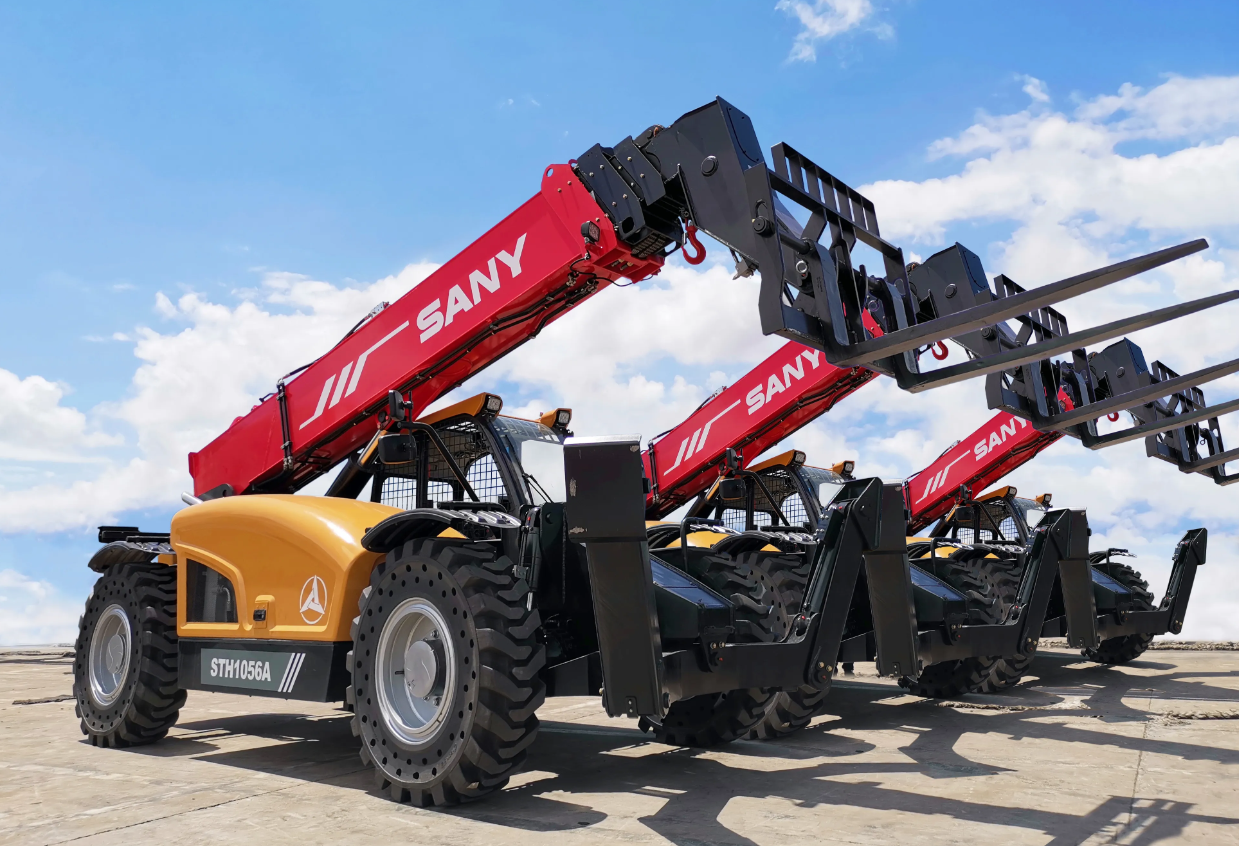
Telehandlers from reliable brands like SANY are also equipped with multiple safety devices such as counterweights and load limiters, which can effectively prevent safety accidents like tipping and overloading. They can perform operations from a distance or at height, avoiding operators' direct exposure to hazardous areas such as high-altitude and heavy-load zones, thus enhancing operational safety.
Telehandler vs Other Equipment: Forklifts, Cranes, and Lifts
Equipment Type | Core Functions | Advantages | Applicable Scenarios |
Telehandler | Handling, hoisting, stacking, aerial work (multifunctional integration) | One machine for multiple uses, strong adaptability, large operating radius | Mixed multi-scenario operations, complex terrain operations, operations requiring obstacle crossing |
Traditional Forklift | Horizontal handling, cargo stacking | High handling efficiency, flexible operation, low cost | Warehouse shelf access, workshop cargo transfer, short-distance handling on flat sites |
Crane | Heavy object hoisting | Strong lifting capacity, high hoisting height | Heavy equipment installation, large component hoisting, heavy-load operations at fixed sites |
Elevator | Aerial transportation of personnel or small cargo | Stable lifting, safe for carrying people, simple operation | Interior decoration, equipment maintenance, aerial personnel operations (scenarios without handling needs) |
Conclusion
What is a telehandler? As a versatile engineering equipment integrating multiple device functions, it can not only reduce equipment investment costs and improve operational efficiency but also break through the limitations of complex job sites and operating environments. It provides safe, efficient, and flexible solutions for projects, serving as a core piece of equipment in various fields such as construction, agriculture, logistics, and municipal engineering. When making a selection, you can choose the suitable type based on your own needs and prioritize reputable, powerful, and well-known brands like SANY.
FAQs
What Is the Difference Between a Forklift and a Telehandler?
The core difference lies in the functional scope and operational capabilities:
Traditional forklifts mainly focus on horizontal handling and low-altitude stacking, with a small operating radius and limited lifting height, suitable only for flat sites.
Equipped with a telescopic boom and various attachments, telehandlers can realize multiple functions such as handling, hoisting, and aerial work. They feature a larger operating radius and higher lifting height, capable of adapting to complex terrain and crossing obstacles, with far superior flexibility and adaptability compared to traditional forklifts.
What Is a Telehandler Used For?
It is mainly used in various scenarios such as handling, hoisting, stacking, and aerial work, including:
Material transfer and component hoisting in construction;
Crop loading/unloading and agricultural machinery maintenance in agricultural production;
High-shelf access and cargo transfer in logistics and warehousing;
Facility installation and road maintenance in municipal engineering;
As well as obstacle removal and personnel rescue in emergency rescues.
Is a Telehandler Considered a Crane?
It is not a dedicated crane in the strict sense. Although a telehandler has hoisting capabilities, its core advantage lies in "multifunctional integration," enabling it to handle tasks such as material handling and stacking simultaneously. In contrast, the design core of a dedicated crane is heavy-load hoisting, with superior lifting capacity and hoisting precision.
Do You Need to Be Certified to Operate a Telehandler?
Operating a telehandler typically requires certification. Operators must complete professional training to master equipment operation skills, safety standards, and emergency procedures. Only after passing the examinations conducted by the relevant authorities and obtaining the corresponding operation certificate can they be allowed to work.
What’s the Typical Lifting Capacity of a Telehandler?
The lifting capacity of a telehandler varies by model, with a typical range of 1–15 tons:
- Light-duty models (suitable for small-scale operations): Lifting capacity of 1–3 tons;
- Medium-duty universal models (most widely used): Lifting capacity of 3–7 tons;
- Heavy-duty models (suitable for heavy-load operations): Lifting capacity of 7–15 tons, with some specially customized models capable of reaching over 20 tons.
Featured Products

Recommend Blogs
What Is a Telehandler? How It Works and Why It’s a Must-Have Machine
Learn what a telehandler is, how it works, and how to choose the right model for your job in this practical, easy-to-follow guide.
Learn About Forklift Truck from Scratch and Master Core Points of Classification and Configuration
This guide explains what a forklift truck is, outlining its main functions, classification types and provides practical tips on how to buy forklift truck fits your needs.