What Is a Skid Loader? Meaning, Principle & Guide
This article provides a detailed analysis of what is a skid loader is, including its core components, working principle and application scenarios. It also compares different loaders and offer a practical selection guide.
In engineering construction, agricultural production, and landscape gardening, skid loaders—compact in size yet powerful in performance—play a crucial role.
Whether laying pipeline in narrow alleys, handling material on farms, or clearing snow in winter, skid loaders can easily handle these tasks with their flexible operation and versatile functions.
So, what is a skid loader? What makes its working principle special? And how to choose the right model for your needs? This article provides a comprehensive explanation.
What Is a Skid Loader?
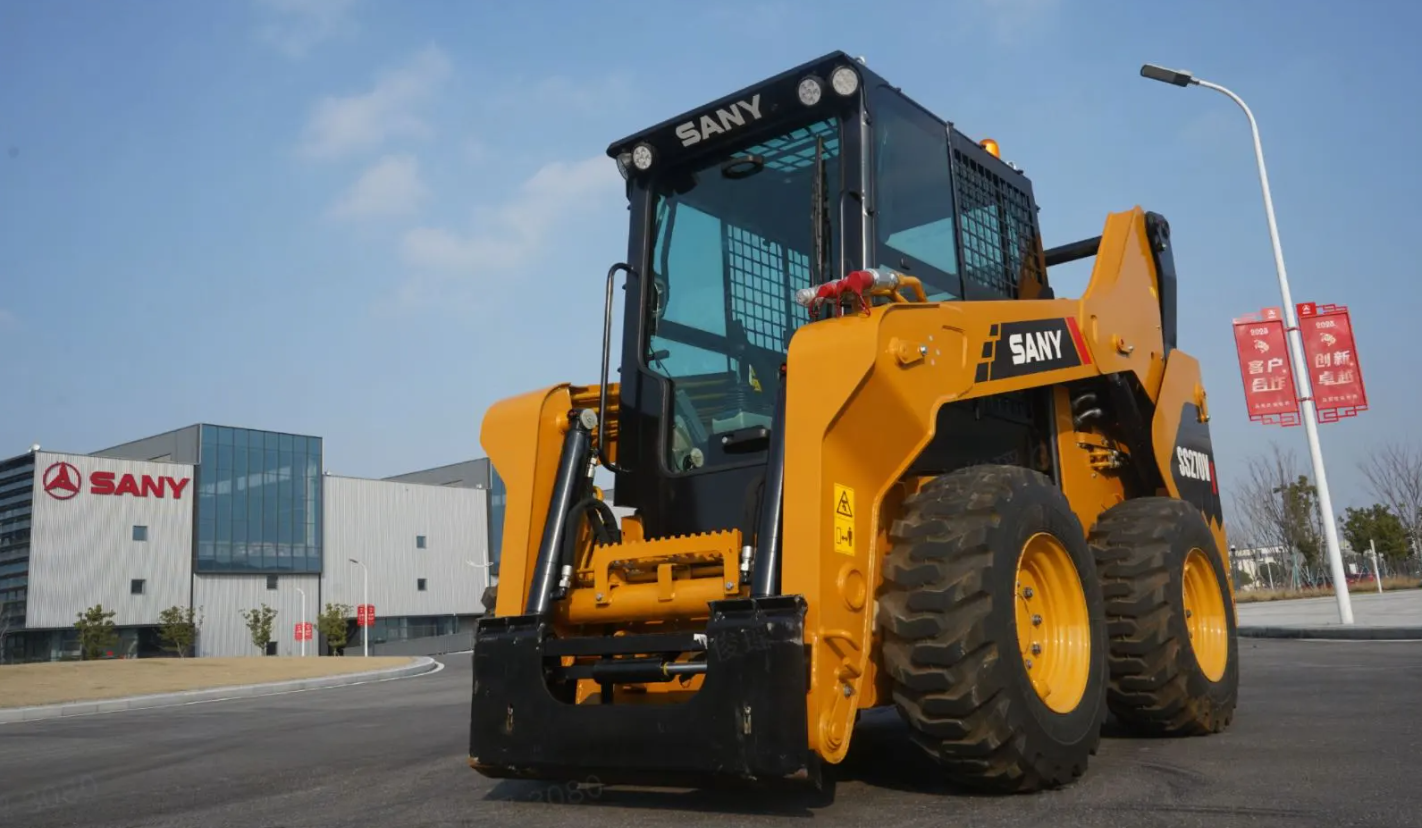
A skid loader, also known as a skid-steer loader, skid steer loader definition is a compact and versatile piece of heavy construction equipment known for its maneuverability, multifunctionality, and adaptability.
Different from common cars that rely on front-wheel steering, its steering method is quite special. Its drive structure of a skid loader can be either four-wheeled or two-tracked. The front and rear axles can move synchronously, but the operator can independently control the wheels on each side of the machine. The right-side wheels are controlled by the right-hand joystick and the left-side wheels by the left-hand joystick. During operation, pushing both joysticks forward makes the left and right tires move forward synchronously; pulling them back moves them backward.
Because its wheels are fixed and cannot pivot, the skid loader turns by varying the wheel speed between sides—accelerating one side while slowing the other.
This “dragging” motion across the ground enables differential steering, allowing in-place turning, which gives the machine exceptional flexibility on tight or uneven sites.
Core Components and How a Skid Loader Works
Engine
The "heart" of the skid loader, it provides the power source for the entire machine. Different models are equipped with engines of varying power, which can meet different workloads and intensity levels.
Hydraulic System
The "blood vessel" of the machine, converting the engine’s mechanical energy into hydraulic energy to drive various working components. This system includes hydraulic pumps, cylinders, valves, and oil pipes. The hydraulic pump draws oil from the tank and delivers it under pressure to provide power for the entire system. The hydraulic cylinder moves the piston using the pressure of hydraulic oil, enabling different operations of the working device—such as the lifting or tilting the bucket; Meanwhile, the hydraulic valve controls the oil’s flow direction, pressure, and flow rate, allowing precise control over movement, speed, and force of the working components.
Drive System
It is a key link between the engine and the wheels, responsible for transmitting the engine's power to the wheels, enabling the vehicle to move and steer.
The drive system of a skid loader usually adopts a fullly hydraulic design, which drives the wheels through hydraulic motors. This transmission method offers advantages, including fast response speed, smooth transmission, and stepless speed adjustment, allowing the skid loader to move and steer flexibly even in narrow spaces.
What Is a Skid Steer Loader Used For?
Skid loaders have a remarkably wide range of applications. Below, we elaborate from two aspects: industry scenarios and core operation types:
1. Covering Basic Operations Across Multiple Industries
- Construction: It can transport materials such as soil, sand, and gravel, load them into dump or pickup trucks, and carry out operations like trench digging, surface grading, and fence construction.
- Landscaping/Forestry: It can clear trees and shrubs, grind tree stumps, and transport greening materials.
- Agriculture: It can assist in transporting agricultural inputs and performing basic farming operations such as soil loosening when equipped with corresponding attachments.
- General Scenarios: It supports equipment transportation and street cleaning, and can handle seasonal tasks like snow pushing and snow removal, enabling year-round operation.
2. Expanding Diverse Functions with Attachments
- Standard Bucket (Toothed/Toothless): It can scoop and transport raw materials such as dirt, soil, mulch, and gravel. It can also load heavy objects like boulders and construction equipment, improving loading efficiency.
- Specialized Attachment Compatibility: When paired with an auger, it can perform drilling operations; when matched with a broom, it can carry out road cleaning. Additionally, it can handle tasks such as lifting, excavating, crushing, grabbing, pushing, raking, soil loosening, and road compaction through the use of corresponding attachments, significantly expanding its application range.
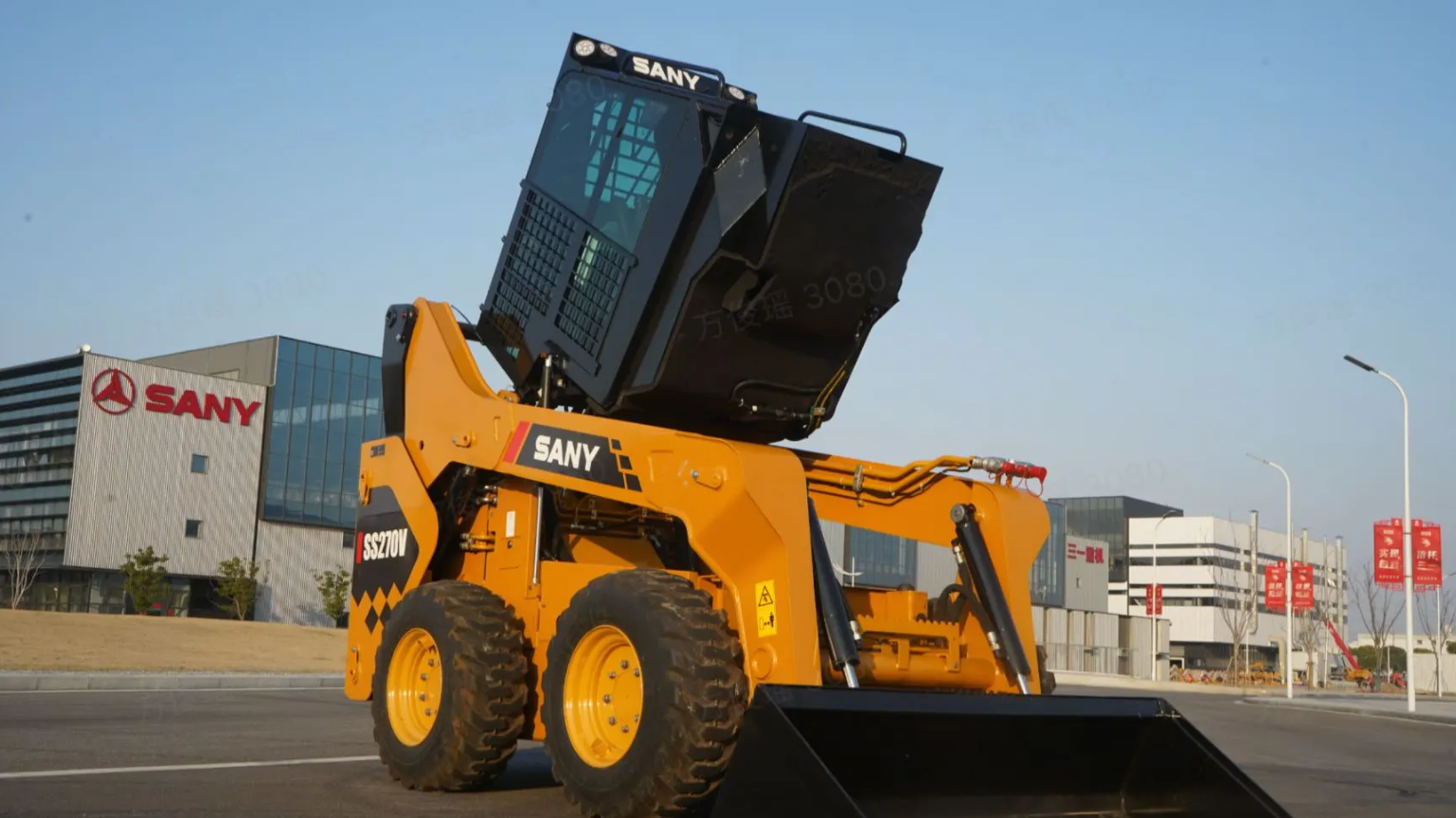
Skid Steer vs Compact Wheel vs Compact Track Loader: What's the Difference?
You can gain a clear understanding through the comparison table below:
Comparison Dimension | Skid-Steer Loader | Small Wheel Loader | Small Track Loader |
Steering Method | Steers by the linear speed difference between wheels on both sides; capable of in-place turning | Wheel deflection steering (similar to cars); front wheel angle controlled via steering wheel | Differential steering; achieved by controlling the speed difference between tracks on both sides; high friction between tracks and ground during steering |
Travel Mechanism | Wheel-type (some are track-type); focuses on flexible operation | Tire-type; high ground contact pressure | Track-type; low ground contact pressure; large contact area with the ground |
Core Advantages | Compact size, extremely small turning radius; quick work tool changeover | Fast traveling speed, strong mobility; high efficiency on hard, flat surfaces | Excellent off-road performance; less prone to slipping and sinking; adaptable to harsh terrain |
Typical Application Scenarios | Narrow spaces (e.g., alleys, old residential areas, ancient building restoration); multi-type operations (e.g., scooping & transporting, drilling, crushing, cleaning) | Hard, flat environments (e.g., urban road construction, logistics warehousing, ports & docks); long-distance material transportation, rapid loading | Harsh/complex terrain (e.g., mining, water conservancy projects, muddy swamps, snowy areas); heavy-load operations |
How to Choose the Right Skid Loader for Your Needs
Faced with numerous brands and models of skid steer loader on the market, selecting the best one requires considering several key factors.
Job Site and Working Conditions
The size of the job site and terrain conditions are the primary factors to consider.
If the job site is narrow, such as indoor warehouses or urban alleys, the compact size, flexibility and in-place turning capability of the skid steer loader become particularly important. In this case, you should prioritize models that are compact and flexible in steering.
If the job site has complex terrain with mud, sand or snow, track-type skid steer loaders can better adapt to these conditions and ensure smooth operation, thanks to low ground contact pressure and strong adhesion.
When working on flat hard surfaces, wheel-type skid steer loaders offers advantages in traveling speed and mobility.
Job Content and Intensity
Different job tasks have varying performance requirements for skid steer loaders.
For regular operations like material handling and stacking, a skid steer loader with average power and load capacity usually meet the needs.
For high-intensity operations involving excavation and crushing, it is necessary to select models with high-power engines, high-torque hydraulic systems, and durable working devicesto ensure sufficient power and reliability.
In addition, job intensity also determines the durability requirements for the equipment. Frequent and high-intensity operations require selecting a Skid steer loader with reliable quality and durability to reduce equipment failures and maintenance costs.
Brand and After-Sales Service
The reliability of the brand is crucial, whether choosing a skid steer loader, wheel loader, or other heavy construction machinery.
Well-known brands like SANY usually have advanced technology, stricter production standards, and higher product quality, ensuring stability, reliability, and performance.
Meanwhile, comprehensive after-sales service is also vital. Equipment malfunctions or maintenance needs are inevitable. SANY’s excellent after-sales service ensures timely response, provides fast maintenance support and sufficient spare parts supply, reduces equipment downtime, and guarantees the continuity of operations.
Conclusion
What is a skid loader? It is a compact, uniquely steered, flexible and efficient multi-purpose machine. It can be adapted for operations in multiple industries, such as construction, agriculture, and landscaping, continuously improving work efficiency and reducing costs. In the future, it will also play an important role in even more scenarios.
FAQs
What is a Skid Loader Used For?
Skid loaders have a wide range of uses, covering multiple industries and scenarios such as construction, agriculture, and landscaping. They can transport materials, dig trenches, clean, and remove snow. When matched with attachments like buckets, augers, and brooms, they can also perform diverse operations including scooping and transporting, drilling, and crushing, making them useful year-round.
Why is It Called a Skid Loader?
Its name originates from its unique steering method. Unlike a car, the wheels of a skid loader cannot change direction by deflection. When steering, it needs to control the speed difference between the wheels on both sides—speeding up the rotation of the wheels on one side while slowing down the wheels on the other. This causes the wheels to drag (i.e., "skid") on the ground, allowing steering and even enabling in-place turning. This "skidding" characteristic is its core control feature, so it is called a "skid loader".
Skid Loader vs Skid Steer:What's the Difference?
The core differences between the two mainly lie in size, steering method, and application scenarios.
Size: Skid loaders have a compact and small body, while ordinary loaders are larger.
Steering Method: Skid loaders can achieve in-place skid steering, while ordinary loaders have a large turning radius.
Application Scenarios: Skid loaders are suitable for narrow spaces and most light-to-moderate operations, while ordinary loaders are suitable for open areas and heavy-load operations.
Can a Skid Loader Dig a Hole?
Yes, but it requires specialized attachments. A skid loader can hardly achieve deep hole digging with only the standard bucket. With specialized attachments such as augers or small digging buckets, it can perform hole digging operations. However, the depth and diameter of the holes are limited by the equipment's power and the specifications of the attachments. Compared with professional excavators, it is more suitable for small to medium-sized hole digging needs.
Do You Need a Special License to Drive a Skid Loader?
No special license is usually required for private use, but certification is mandatory for commercial use and most construction sites. Operators must complete the training courses offered by registered training institutions. After successfully finishing the training and assessment, they will receive a competency certificate that allows the to operate the machine safely.
Featured Products

Recommend Blogs

What Is a Wheel Loader? A Practical Overview for 2025
This article explains what is a wheel loader, its working principle, applications, key components, types, sizes, and how to choose the right model to help project managers improve efficiency.
What Is a Skid Steer Loader: A Comprehensive Guide to Sizes, Uses, and Selection
What is a skid steer loader? With skid steering and quick attachment changes, it boosts efficiency and cuts costs. This guide offers an in-depth analysis with practical tips.