What Is a Forklift Truck? Definition, Types and Working Principles
This guide will provide you with a comprehensive overview of forklift knowledge, giving you a clear understanding of what is a forklift truck.
In numerous industrial scenarios such as warehousing and logistics, manufacturing, and ports and terminals, forklift trucks are indispensable "handling experts". They not only significantly improve the efficiency of cargo turnover but also become core equipment in the modern industrial production chain. Whether it is for stacking goods in small warehouses or handling heavy materials in large factories, selecting and using forklift trucks correctly is crucial. What is a forklift truck? This guide will systematically sort out all-dimensional knowledge about forklift trucks, from basic definitions to safety awareness.
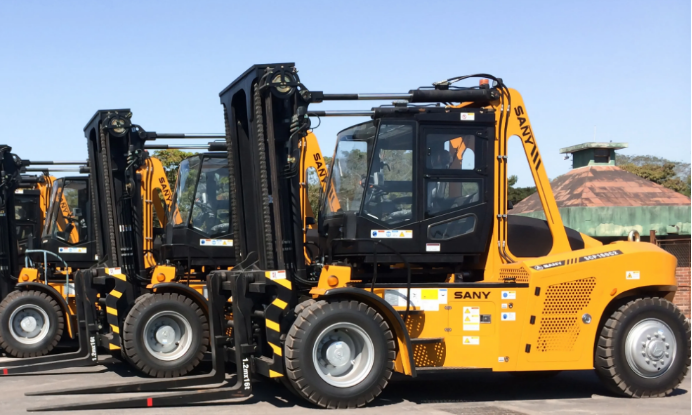
Forklift Truck Meaning?
Forklift, also known as fork truck or fork crane, is an industrial vehicle specially designed for loading, unloading, stacking and short-distance transportation of unitized pallet goods. Its core feature is that it is equipped with liftable forks at the front, which can flexibly adjust the height to meet different operation requirements.
Originally developed to solve the problem of cargo handling in ports, forklifts have evolved from simple mechanical devices to efficient equipment integrating hydraulic control and intelligent navigation after a century of development. Today, they can not only handle ordinary goods but also process special goods such as cartons, barreled materials and steel by replacing attachments (such as clamps and rotators), making them versatile "all-rounders" in the industrial field.
How a Forklift Truck Works and Its Core Components?
The efficient operation of a forklift relies on the coordinated work of various components. Its core lies in the power system providing energy, the hydraulic system enabling the lifting and tilting of goods, and the traveling system completing the movement. Understanding its component structure and working principle is the foundation for correct operation and maintenance.
Main Parts of a Forklift Truck
1. Power System
Known as the "heart" of a forklift, it provides energy for the entire vehicle's operation. Divided into two types—electric (battery pack, motor) and internal combustion (engine, fuel tank)—it directly determines the forklift’s endurance and power performance.
2. Hydraulic System
The core that controls the lifting and tilting of goods, consisting of hydraulic pumps, hydraulic cylinders, hydraulic oil pipelines, etc. It achieves precise movements of the forks through pressure transmission of hydraulic oil, such as flexible adjustment of lifting height across different ranges.
3. Working Device
Includes forks, masts, chains, and other components. Forks are the parts that directly carry goods; masts adjust height through telescoping, while chains transmit power from the hydraulic system to ensure stable lifting and lowering of goods.
4. Travel System
Composed of wheels, a frame, and a steering mechanism. The frame bears the entire vehicle’s weight, the steering mechanism enables the forklift to turn flexibly in narrow spaces, and wheel types (pneumatic tires, solid tires) need to be adapted to different operating surfaces.
5. Control System
Features a steering wheel, joysticks, pedals, instrument panels, etc., serving as the "central hub" for operators to control the forklift. Modern forklifts are also equipped with safety aids such as reverse cameras and warning lights.
Mechanical Principles of Forklifts
The core operational actions of a forklift—lifting, tilting, and moving—are supported by mature mechanical and hydraulic principles:
1. Lifting of Goods
The operator starts the hydraulic pump, which pressurizes the hydraulic oil and delivers it to the hydraulic cylinder on the mast. The hydraulic oil pushes the piston upward, driving the mast to extend and retract, and the forks rise accordingly. When lowering, the pressure is released through the hydraulic valve, and the forks descend smoothly under the action of gravity. The entire process is precisely controlled by the hydraulic system to avoid cargo shaking.
2. Tilting of Goods
The bottom of the mast is equipped with a tilting hydraulic cylinder. The pressure of the hydraulic oil pushes the mast to tilt forward or backward. Forward tilting facilitates picking up and placing goods, while backward tilting prevents goods from slipping during transportation, especially enhancing safety when turning.
3. Movement of Goods
The power system drives the transmission, which transmits power to the driving wheels. The operator controls the steering wheel to change the direction of the steering wheels, and the braking system ensures smooth stopping under load. For internal combustion forklifts, power is transmitted through the clutch and drive shaft; electric forklifts are directly driven by motors, with faster response.
Major Types of Forklift Trucks
Different operating scenarios place varying requirements on forklift structure, load capacity, and maneuverability, leading to the development of various forklift types. Below are five commonly used types, covering the vast majority of industrial needs:
1. Counterbalance Forklifts
This is the most common type of forklift, characterized by a counterweight at the rear of the vehicle. The counterweight is used to balance the weight of goods carried by the front forks, preventing the forklift from tipping over. Counterbalance forklifts are flexible to operate and have a wide load capacity range. They can handle heavy goods outdoors as well as operate in indoor warehouses, making them the most versatile model. Their drawback is that they have a relatively large turning radius, which requires a certain amount of operating space.
2. Reach Trucks
The core advantage of reach trucks lies in their ability to move the mast and forks forward as a whole. They do not rely on a rear counterweight during operation, resulting in a more compact body and a small turning radius, making them particularly suitable for warehouses with narrow aisles. Additionally, they possess excellent lifting capabilities, easily meeting the storage needs of high-rise shelves. Reach trucks are widely used in the e-commerce warehousing industry for stacking goods, maximizing the utilization of warehouse space.
3. Rough Terrain Forklifts
Designed specifically for complex outdoor terrains, they are equipped with large-diameter off-road tires (with deep treads and strong grip), a high chassis, and a powerful power system, enabling stable operation on muddy, gravelly, and steeply sloped surfaces. Rough terrain forklifts have a large load capacity and are commonly used in scenarios such as construction sites, mines, and farms. Some models can also be equipped with a four-wheel drive system to further enhance passability in complex terrains.
4. Telehandlers
Their unique feature is the inclusion of a telescopic hydraulic arm. They can not only handle goods with forks like ordinary forklifts but also, by adjusting the length and angle of the arm, perform high-altitude operations (such as loading and unloading goods from the top of trucks) or retrieve goods from a distance. Functioning similarly to small cranes, they are suitable for scenarios such as ports, construction sites, and building material markets that require "one machine with multiple uses".
5. Stand-up Forklifts
Operators drive in a standing position. With a compact body and flexible turning, they are suitable for operations in narrow spaces such as small warehouses, supermarket logistics areas, and convenience store backrooms. They are mainly used for light-load, short-distance goods handling, such as restocking supermarket shelves and organizing goods in small warehouses. The retail industry has a great demand for stand-up forklifts because they can significantly improve the efficiency of goods turnover in store backrooms.
How to Choose the Right Forklift Truck for Your Job?
1. Working Environment
For indoor use, electric forklifts are preferred (zero emissions, low noise); for complex outdoor terrains, rough terrain forklifts or internal combustion forklifts are suitable. For narrow spaces, reach trucks or stand-up forklifts are ideal, while counterbalance forklifts are recommended for open areas.
2. Cargo Parameters
Clarify the load capacity of the goods (with a safety margin reserved), dimensions (side-loader forklifts may be needed for extra-long goods), and stacking height (for high-rise shelves, choose models with matching lifting height).
3. Power Requirements
For continuous long-time operation without charging conditions, internal combustion forklifts are preferred; for indoor operations or areas with high environmental protection requirements, electric forklifts must be used, and supporting charging equipment should also be considered.
4. OSHA Compliance
Determine the OSHA-corresponding forklift category based on the working scenario. For example, indoor narrow-aisle operations require forklifts of the corresponding category to ensure compliance with local safety regulations and avoid violation fines.
5. Operating Costs
Electric forklifts have a high initial purchase cost but low maintenance and usage costs; internal combustion forklifts have a low purchase cost but high long-term fuel and maintenance expenses. A comprehensive calculation based on the long-term usage cycle is needed to make a decision.
6. Additional Needs
For handling special goods, forklifts with attachments can be selected (such as clamps for cartons, rotators for barreled materials); enterprises with high automation needs can consider forklifts equipped with intelligent systems.
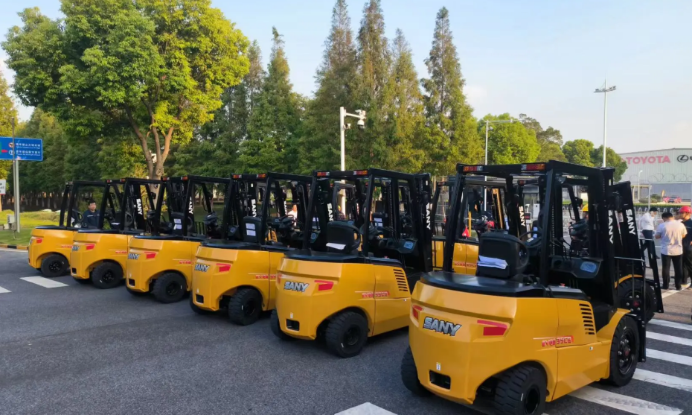
If your situation is better suited to an electric forklift, SANY High Voltage Lithium Battery Forklift is a worthwhile choice. It integrates high efficiency, intelligence and strong performance: with just 1 hour of charging, it can achieve 8 hours of runtime. Both its driving speed and lifting efficiency surpass traditional fuel-powered models, and it can adapt to harsh environments ranging from -30°C to 50°C. Additionally, it is equipped with an intelligent cloud platform, providing comprehensive active safety protection and remote management functions, achieving a perfect combination of power and intelligence.
Basic Knowledge of Forklift Safety
In workplaces involving forklift operations, safety is an inviolable principle. Building a safe environment requires addressing the following core principles, which every relevant person should memorize and strictly adhere to:
1. Standardized Training and Certification
Operators must complete systematic training in accordance with occupational safety standards (such as OSHA) and pass certification before they can work. This is not only to master operational skills, but also to cultivate a keen awareness of risks and emergency response capabilities.
2. Regular Maintenance and Pre-Operation Inspection
Strict regular professional maintenance is the foundation of equipment safety. Meanwhile, the operator's routine inspection before starting the vehicle each day is equally crucial, which can effectively eliminate most potential faults in their early stages.
3. Safe Load Management
Overloading or unstable loads are common causes of serious accidents. It is essential to strictly comply with the manufacturer's specified rated load and ensure that goods are placed evenly and stably on the forks.
4. Safety Speed Matching the Environment
There is no "absolutely safe" speed, only a safe speed that adapts to the current environment. Operators must dynamically adjust the driving speed based on factors such as load characteristics, ground conditions, pedestrian density, and visibility.
5. Wearing Seatbelts Throughout the Operation
This is the most critical life-saving measure in case of accidents such as rollovers. Seatbelts can securely hold the operator within the protective frame of the cab, and the habit of fastening the seatbelt as soon as getting on the vehicle must be formed.
6. Maintaining Continuous Alertness to Pedestrians
Operators must remain alert at all times while driving forklifts, especially in pedestrian crossing areas. They should actively communicate through clear signals such as horns and lights, and strictly follow the designated routes for separating pedestrians and vehicles.
Conclusion
Based on the analysis in this guide, it is believed that you have gained a comprehensive and in-depth understanding of what is a forklift truck. From basic definitions to working principles, from main types to key selection points, to crucial safety regulations, this knowledge will help you make informed decisions in the complex process of equipment selection.
FAQs
What Is the Difference Between a Forklift and a Forklift Truck?
There is no essential difference between the two! In fact, Forklift and Forklift Truck refer to the same piece of equipment; there is no substantial distinction between them. It can be understood as follows:
Forklift Truck is a more complete and technical term, which precisely defines it as a "truck" equipped with "forks" and a "lifting mast".
Forklift, on the other hand, is a common abbreviation of the former, and is more commonly used and concise in daily spoken language, industry communication, and marketing.
What Are the Three Types of Forklifts?
Classified by power type, the three core types of forklifts are: electric forklifts (environmentally friendly, suitable for indoor use), internal combustion forklifts (powerful, suitable for outdoor use), and warehouse forklifts (such as reach trucks, suitable for narrow spaces).
These three types of forklifts basically cover the material handling needs of various industries, meeting requirements from indoor light logistics to outdoor heavy-duty operations.
Do You Need Your CDL for a Forklift?
No, it is not required. A CDL (Commercial Driver's License) primarily applies to large trucks, buses, and other road transport vehicles, while forklifts are indoor operation vehicles. Only an OSHA-approved forklift operator certificate is needed, and a CDL is not required.
However, it should be noted that forklifts are not allowed to travel on public roads for long periods. In special cases, a temporary passage permit must be obtained.
Featured Products
Recommend Blogs
Components of a Forklift Truck Explained: A Complete Guide to Forklift Operation (2026)
This article focuses on the components of a forklift truck and forklift operation precautions, enabling you to load and transport goods more efficiently.
A Guide to the Forklift Industry: Types of Forklift Trucks, Selection Skills, and Future Trends
Starting from the system of types of forklift trucks, this article explains the scientific selection methods and provides a comprehensive insight into the past, present, and future of forklifts.
Learn About Forklift Truck from Scratch and Master Core Points of Classification and Configuration
This guide explains what a forklift truck is, outlining its main functions, classification types and provides practical tips on how to buy forklift truck fits your needs.