12 Types of Excavators: Specific Applications and Purchasing Guide
This article introduces 12 types of excavators and provides purchasing tips to help you choose the right equipment for efficient operation.
As essential equipment in the construction industry, excavators are used in various scenarios including earthwork excavation, road construction, mining, farmland renovation, and urban demolition. Different scenarios have significantly different requirements for equipment performance and specifications. This article will detail 12 mainstream types of excavators, breaking down the core features and suitable scenarios for each type. It also includes a comprehensive purchasing guide to help work teams select the right excavator, use it effectively, reduce construction costs, and improve work efficiency.
Why are Excavators so Important in Construction Engineering?
Excavators, as one of the most widely used machines on construction sites, are widely used across construction projects, including infrastructure construction, environmental remediation, and resource development, thanks to their flexible operating capabilities and powerful performance. Their common uses can be mainly categorized as follows:
Trench Excavation
Excavators are primarily utilized in applications such as foundation construction, pipeline installation, and cable laying. They perform precise excavation of trenches that meet specific requirements, thereby laying a solid foundation for subsequent construction phases.
Demolition Operations
Excavators enable the safe and efficient demolition of various types of structures. Compared to traditional demolition methods, excavators significantly boost operational efficiency while simultaneously minimizing safety risks.
Material Handling
Equipped with lifting and handling capabilities, excavators can be used to transport a wide variety of materials—including construction debris, aggregates, and logs—effectively meeting the material transfer requirements of diverse operational scenarios.
Dredging and Channel Maintenance
Excavators are utilized to clear silt and debris from rivers, lakes, and harbors, while simultaneously facilitating channel modifications to ensure smooth navigation within waterways.
Utility Excavation
Tailored to meet the requirements of cable and pipeline installation, excavators employ non-destructive excavation techniques to prevent damage to existing infrastructure, thereby ensuring safety during utility construction operations.
Forestry Operations
Excavators are well-suited for forestry applications—such as land clearing and vegetation restoration—aiding in the rehabilitation of forest environments and the sustainable utilization of natural resources.
12 Common Types of Excavators and Their Applicability
Different engineering scenarios have significantly different requirements for the performance and specifications of excavators, and various types of excavators also have their own focus areas. The following introduction to 12 different type of excavators and their applicable ranges will provide a reference for your subsequent selection and use.
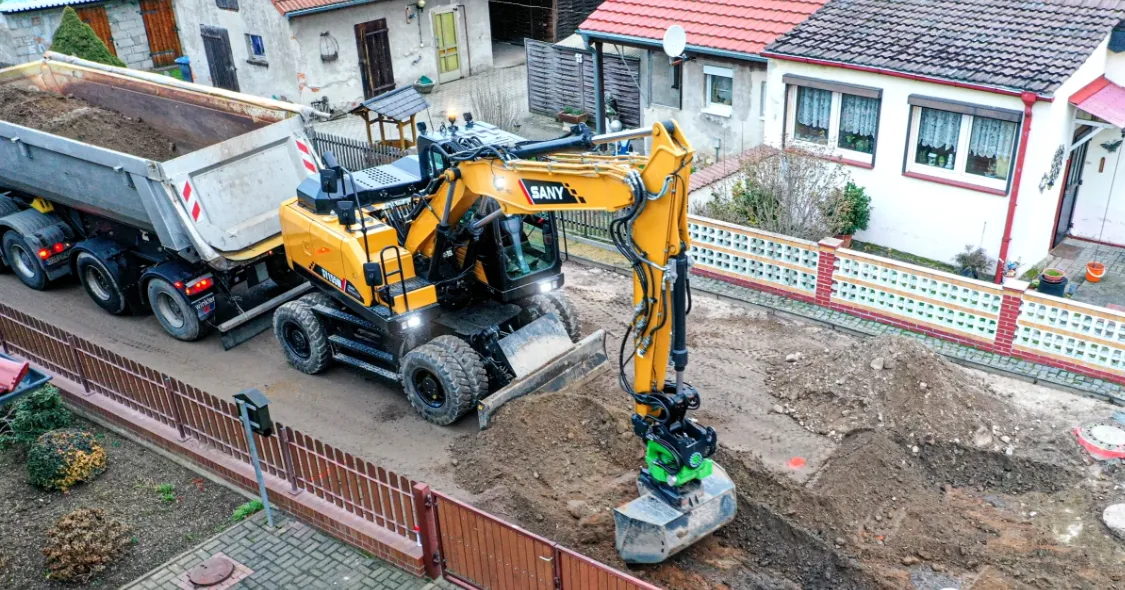
1. Wheel Excavator
Also known as a "rubber duck," the wheel excavator resembles a tracked excavator in size and appearance, but uses wheels instead of tracks as its mobility system.
- Key features: Higher travel speed, easier operation on smooth surfaces such as concrete and asphalt, and improved stability when transitioning between smooth and uneven surfaces by adding outriggers.
- Applications: Ideal for urban infrastructure projects such as road construction and municipal facility installation, especially suitable for operations requiring rapid repositioning; it can move independently between construction sites and will not damage completed road surfaces when operating on them.
SANY wheel excavator is a good choice, with an operating weight of 13.5-16 tons, making it ideal for urban, road, and bridge engineering projects.
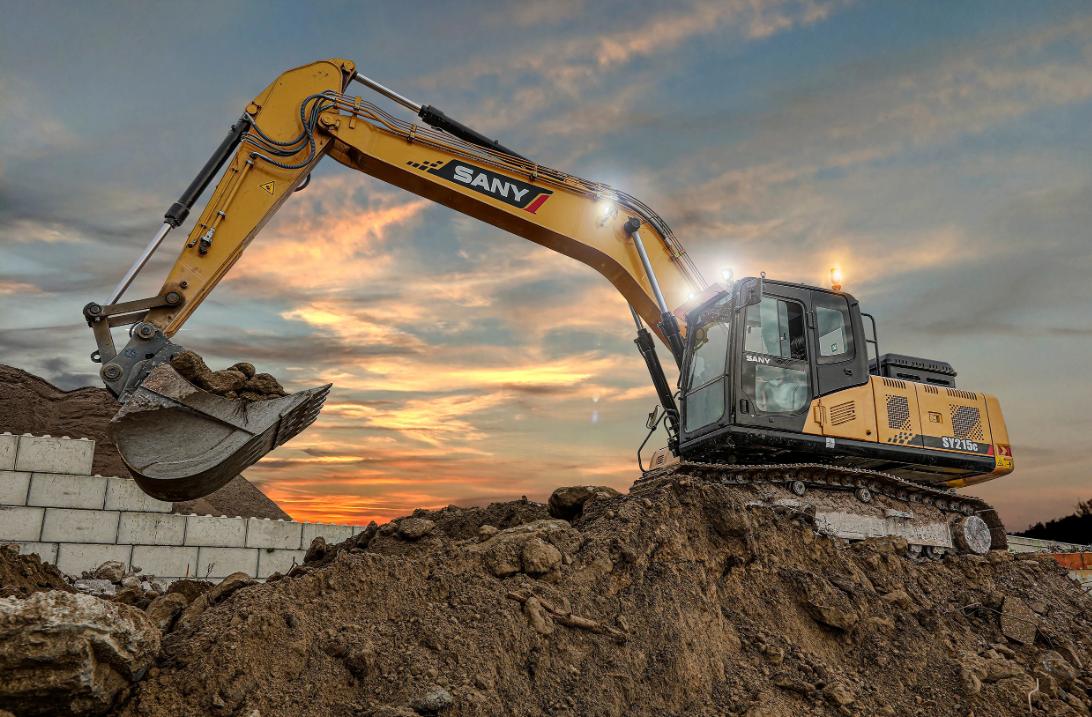
2. Crawler Excavator
The Crawler Excavator is a mainstay model in the excavator industry. Running on two large tracks, it utilizes a hydraulic power mechanism at its core, enabling efficient lifting of heavy rocks and soil. It is one of the most widely used excavator types in various engineering projects.
- Key Features: The tracked design ensures good stability on rough terrain, while the sprocket system allows for safe gliding and climbing. It boasts excellent overall balance, flexibility, and stability; its hydraulic power provides strong power. However, its travel speed is slower than other types of excavators.
- Applications: Versatile, suitable for excavation, demolition, material handling, and forestry operations, especially ideal for high-intensity work such as mining and heavy construction; it can be used for leveling hilly areas and modifying uneven terrain, adapting to various complex and rugged construction scenarios.
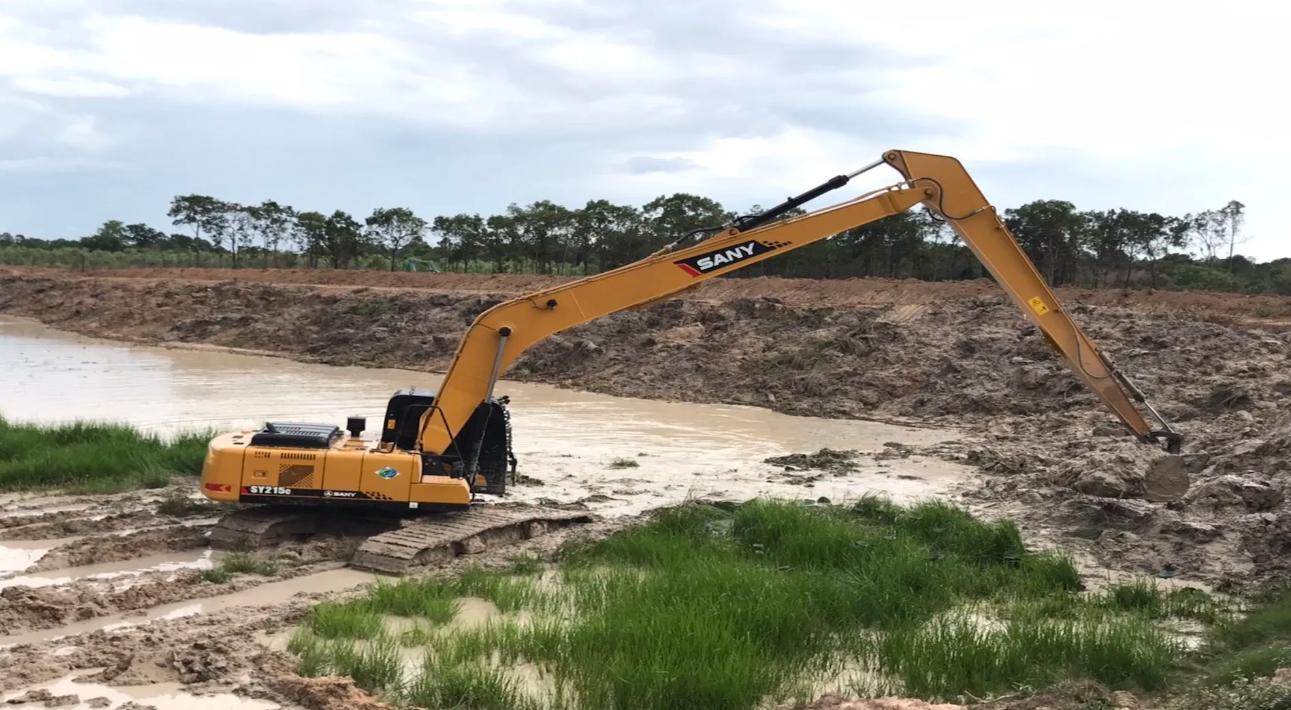
3. Long-reach Excavator
The long-reach excavator features a longer boom and jib, designed for deep, long-distance operations. It extends from the same location to a greater area, with a horizontal reach exceeding 100 feet, making it indispensable in hazardous or inaccessible work areas.
- Key Features: Longer boom and jib provide a wider working range, enabling efficient operation in hard-to-reach areas; various attachments can be mounted on the boom to perform shearing, crushing, and cutting operations; its advantage lies in its adaptability to hard-to-reach locations and various demolition projects; its disadvantage is its limited flexibility and difficulty in confined spaces.
- Applications: Best suited for demolition projects, such as building structure demolition and wall demolition above water; widely used in dredging operations, underwater excavation, and high-rise building demolition; also suitable for large-scale excavation projects near rivers, lakes, and other bodies of water, allowing operators to maintain a safe distance from the water's edge, ensuring operational safety.
The SANY Long-reach Excavator not only has an operating weight of 20-32 tons, but also uses reinforced structural components to cope with complex working conditions, making it more versatile.
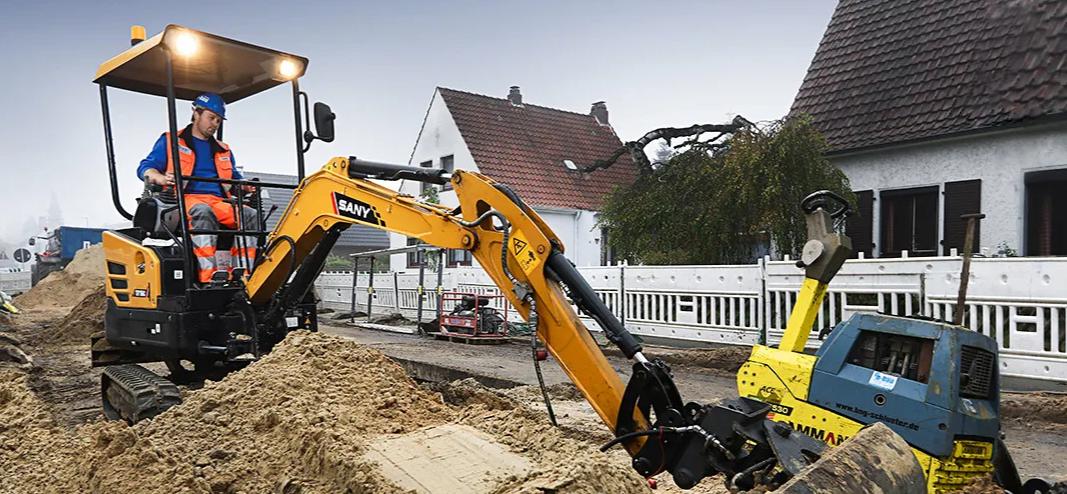
4. Mini Excavator
The mini excavator, also known as a compact excavator, has been widely used by many contractors in recent years. It is a lightweight and compact piece of construction machinery.
- Key features: Small size, light weight, minimal ground damage, and flexible movement; often employs a small tail swing radius or zero tail swing, resulting in a small turning radius and reduced risk of collisions with obstacles. It is suitable for operation in confined spaces and can be used for indoor construction. However, its load capacity is limited, handling only relatively small loads.
- Applications: Suitable for crowded and narrow sites, such as parking lots, as well as indoor construction and engineering scenarios with high ground protection requirements and limited space.
SANY also offers mini excavators in different sizes, including the Electric Mini Excavator, Below 2.5T Mini Excavator, and 2.5-5T Mini Excavator, with operating weights ranging from 1.95 tons to 5.3 tons. You can choose according to your actual construction needs.
_152507.png)
5. Medium Excavator
The medium excavator is the most commonly used type of excavator in construction engineering and a mainstay of the industry. It is typically equipped with various attachments to adapt to diverse operational needs, with a typical operating weight range of 8–40 tons.
- Key features: Moderate weight, balancing flexibility and operational capacity. More powerful, offering better visibility, and capable of handling higher loads and more demanding work cycles. Flexible configuration, usually equipped with various attachments to adapt to different operational requirements. However, high loads and demanding work cycles increase pressure and wear on the pivot point.
- Applications: Widely used in construction, infrastructure, earthmoving, quarrying, and demolition, suitable for various types of work sites, especially suitable for earthmoving operations.
The SANY medium excavator operates with a weight ranging from 20 to 35 tons, meeting the needs of various operations. It is powered by a diesel engine and features energy-saving technology, saving up to 10% on fuel costs. Furthermore, its optimized SANY positive pressure hydraulic system further improves operating efficiency by 5%, making your projects more efficient.
6. Large Excavator
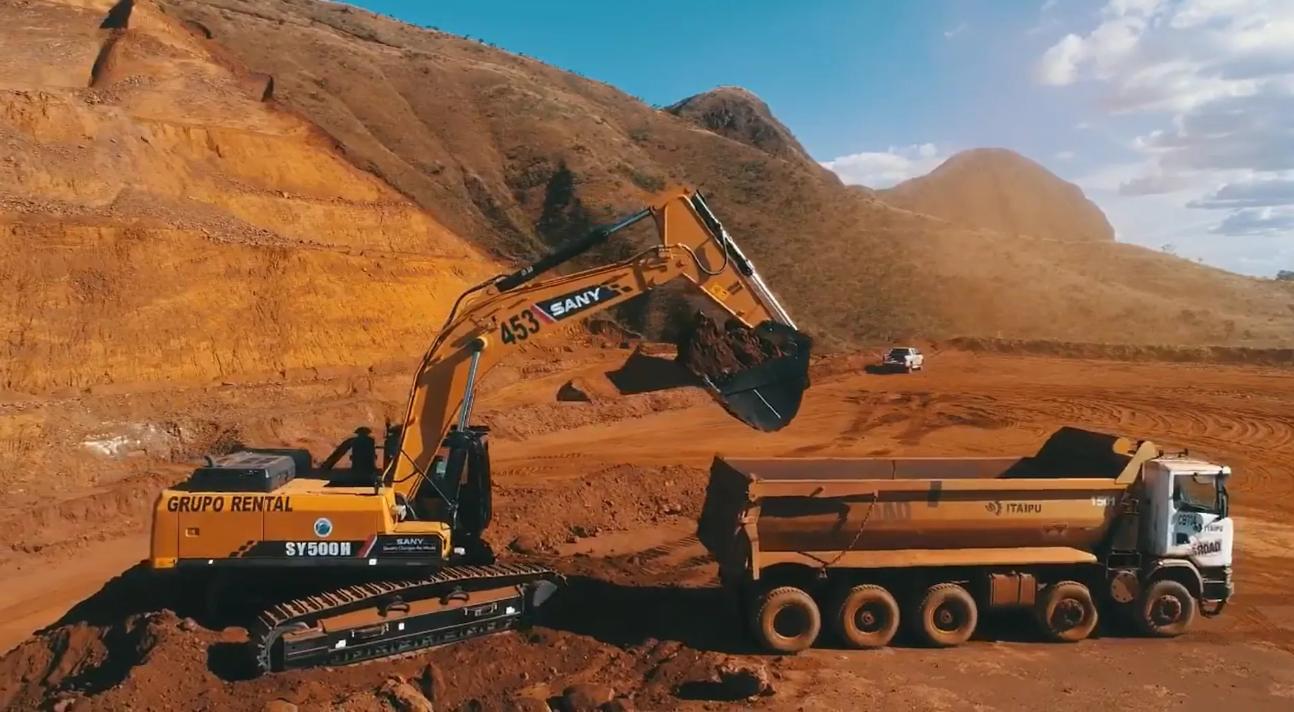
Large excavators are designed for heavy-duty operations. The giant excavator (mining grade) falls into its ultra-large category, with typical operating weights exceeding 40 tons (up to several hundred tons). These are specialized equipment suitable for heavy-duty, large-scale operations.
- Key features: Powerful engines, equipped with engines more powerful than medium-sized excavators, capable of withstanding extreme loads and continuous operation; massive weight, high durability, and the category includes some of the world's largest excavators includes ultra-large hydraulic mining and bucket wheel excavators.
- Applications: Large excavators are suitable for earthmoving, mining, quarrying, and demolition of large structures (such as buildings and bridges); giant excavators are primarily used in open-pit mining and large-scale mining scenarios.
The SANY Over 36T Large Excavator boasts an operating weight ranging from 36 to 125 tons and offers over 20 optional working attachments, making it more adaptable to various operations. It also employs optimized engine, pump, and valve matching technology to improve energy transfer efficiency, reduce fuel consumption, and achieve higher construction efficiency.
7. Skid Steer Excavator
The Skid Steer Excavator is a specialized piece of equipment designed for operation in confined spaces. Its boom and bucket face away from the operator, allowing the attachments to pass directly over the cab without needing to maneuver around it, facilitating operation in tight spaces and complex turns.
- Key Features: The boom and bucket face away from the operator, allowing the attachments to pass directly over the cab, providing agile turning and easy operation in confined spaces. This type of excavator offers strong maneuverability in tight spaces and is suitable for work scenarios with limited space. However, it performs poorly on uneven or slippery surfaces.
- Applications: Primarily suitable for operation in confined spaces, especially adept at indoor demolition, road construction, and debris removal in confined spaces. It is also commonly used in situations with limited space, such as swimming pool excavation, site cleanup, residential construction, and garbage removal.
8. Suction Excavator
Also known as a vacuum excavator, the suction excavator is mostly a vehicle-mounted device. Its core component is a suction tube, employing non-destructive excavation technology. It uses powerful suction combined with air or water flow to loosen and remove soil and debris, focusing on controlled, selective material removal.
- Key features: Equipped with a suction tube featuring sharp teeth, it can spray water to loosen the soil, creating a vacuum that removes soil and debris at speeds up to 200 miles per hour. It offers high precision with minimal environmental impact, reducing the chance of damage during delicate operations by more than 50%. However, the suction tube is relatively narrow, making it unsuitable for large-scale excavation applications.
- Applications: Primarily used in urban and public utility sectors, especially suitable for scenarios where precision and safety are critical, including underground pipeline location and maintenance, trenchless operations, repair and installation of underground pipes/cables/gas pipelines, and also for environmental cleanup and high-precision excavation of sensitive archaeological sites.
9. Amphibious Excavator
The Amphibious Excavator is a specialized piece of equipment designed for operations in wet environments. It uses pontoons instead of traditional tracks, allowing it to float on stagnant water and move flexibly through swamps, rivers, and shallow lakes without getting stuck or damaged.
- Key Features: Uses pontoons instead of traditional tracks, providing buoyancy and allowing for flexible movement in stagnant water.
- Applications: Primarily suitable for operations in wet and aquatic environments, including dredging waterways, restoring wetlands, swamps, or flood-prone areas. It is also commonly used for coastal restoration, flood control, and constructing structures in aquatic environments.
10. Hydraulic Shovel Excavator
The Hydraulic Shovel Excavator is a large, heavy-duty machine designed for mining and large-scale earthmoving projects. It features a front-mounted bucket connected to a powerful hydraulic boom, operating via a hydraulic system to quickly move large quantities of material, making it suitable for demanding work environments.
- Key Features: Front-mounted bucket with a powerful hydraulic boom; a large, heavy-duty machine designed for challenging operations. The hydraulic system provides exceptional lifting and digging power, enabling rapid movement of large quantities of material.
- Applications: Primarily used in open-pit mining and large construction projects requiring the movement of large amounts of earth, gravel, or rock; it is a key piece of equipment in these scenarios.
11. Spider Excavator
Also known as a walking excavator, the spider excavator is a uniquely designed specialized machine. Trackless and wheelless, it features adjustable outriggers, allowing it to "walk" on rugged and steep terrain, adapting to complex environments where standard excavators struggle.
- Key Features: Trackless and wheelless, equipped with adjustable outriggers for flexible movement on rugged and steep terrain. The outriggers are independently adjustable, maintaining a level cab even when operating at extreme angles.
- Applications: Primarily suitable for complex and special environments, including forestry, riverbank reinforcement, and mountainous terrain construction. It is also frequently used for emergency rescue after natural disasters such as landslides and floods, and can access remote and complex areas.
12. Backhoe Excavator
A backhoe excavator, also known as a backhoe loader, is a combination of a front-loading loader and a standard excavator. It features a bucket at the front and a small excavating arm (backhoe) at the rear, enabling it to perform a variety of tasks.
- Key Features: Combining the advantages of a front-loading loader and a standard excavator, the front bucket and rear backhoe arm offer diverse functionality.The backhoe arm can be equipped with the same attachments as a standard excavator, adapting to different operational needs. The front bucket and backhoe arm are interchangeable, allowing for efficient completion of multiple tasks on-site, making it highly practical.
- Applications: Widely applicable, primarily suitable for small construction sites and farms, including trenching, excavation, material handling, small foundation construction, drainage system installation, and light demolition. It is also suitable for various auxiliary operations in agriculture and landscaping.
How to Choose the Right Excavator Types for Your Project?
Choosing the right excavator requires considering the actual needs of the project, comprehensively weighing key factors such as the type of work, size, and terrain, while balancing performance, safety, and long-term value to avoid selection errors.
Define the Type of Work
Determine the excavation scale, project duration, and specific tasks to clarify the work scope and avoid delays and increased costs due to machine mismatch.
Determine the Excavator Size
Select an appropriate size, from mini to extra-large, based on the project scale. Use professional platforms to compare and select models to suit operational needs.
Adapt to the Operating Terrain
Tracked excavators are suitable for muddy and rugged terrain, while wheeled excavators are flexible and efficient for urban roads. Choosing the type based on the terrain reduces costs and protects road surfaces.
Choose the right engine
Prioritize diesel engines, balancing horsepower, torque, and emissions compliance. Select advanced technology models to improve efficiency and reduce downtime.
Select compatible accessories
Choose buckets and other accessories based on operational needs and the machine's lifting capacity. Seek professional guidance to maximize equipment usability.
Weigh ownership versus leasing costs
Leasing is suitable for short-term, special needs; purchasing is suitable for long-term, continuous operation. Choose rationally based on project requirements.
Conclusion
In summary, there are numerous types of excavators, each with its own focus. The 12 different types of excavators are suitable for various working conditions and needs, ranging from urban municipal projects to mining operations, from confined indoor spaces to swampy waters. By understanding the core features and suitable scenarios of these various types of excavators, and combining this with a comprehensive selection guide, you can accurately match project requirements, choose the right equipment, and use it effectively. This will significantly reduce construction costs, improve operational efficiency, and provide strong support for the efficient advancement of various engineering projects.
FAQs
What are the three types of excavation?
Excavation is mainly divided into three types: topsoil excavation, earthwork excavation, and rock excavation.
- Topsoil excavation: Removing the topsoil of the project site.
- Earthwork excavation: Removing ordinary soil beneath the topsoil and above the rock.
- Rock excavation: Removing rock beneath the soil using specialized equipment to meet engineering construction requirements.
What is the most commonly used excavator?
The most commonly used excavator is the 20-ton class (around 18–22 tons), considered the industry standard for general construction work. It offers a strong balance between digging power, fuel efficiency, and ease of transport. This size is widely used for tasks such as foundation digging, trenching, landscaping, and road construction. Its versatility and compatibility with various attachments make it the preferred choice for contractors worldwide.
What are the 5 Ps of Excavation?
The five key elements of safe excavation (5 Ps) are: Planning, Preparation, Pit, Protection, and Continuing.
- Planning: Confirm all relevant information at least one day in advance.
- Preparation: Review drawings and have a locator survey the site.
- Pit: Used to accurately determine the location of underground facilities.
- Protection: Setting up warning signs and implementing protective measures.
- Continuing: Excavation work can only proceed after the first four steps are completed, ensuring construction safety.
Featured Products


Recommend Blogs
Excavator Sizes Guide: How to Choose the Right Excavator for Your Project?
This article provides a detailed introduction to excavator sizes and related information to help with accurate model selection.
How to Operate a Mini Excavator: A Beginner’s Step by Step Safety Guide
This guide systematically breaks down the essential knowledge of how to operate a mini excavator, helping you work safely and complete tasks efficiently
How to Operate an Excavator: Essential Skills and Safety Tips
If you want to handle basic tasks like digging and backfilling with ease, mastering how to operate an excavator is essential. This guide will introduce the excavator’s key components, control methods, and common mistakes to avoid during operation.