2026 Type Dump Truck Analysis And Selection Guide
This article introduces type dump trucks and provides a selection guide to help your fleet work smoothly.
In mining yards, dump trucks roar as they transport ore to sorting areas; at construction sites, they efficiently remove slag and gravel during earthwork; and at farmland irrigation projects, they become the main transport vehicle, moving earth and building materials. As core equipment for engineering transportation, different type dump trucks, with their robust load-bearing capacity and flexible unloading efficiency, have become essential tools for various operations. This article will introduce dump truck types and provide a detailed guide to selecting the right dump truck, helping industry professionals choose the right model for better operations.
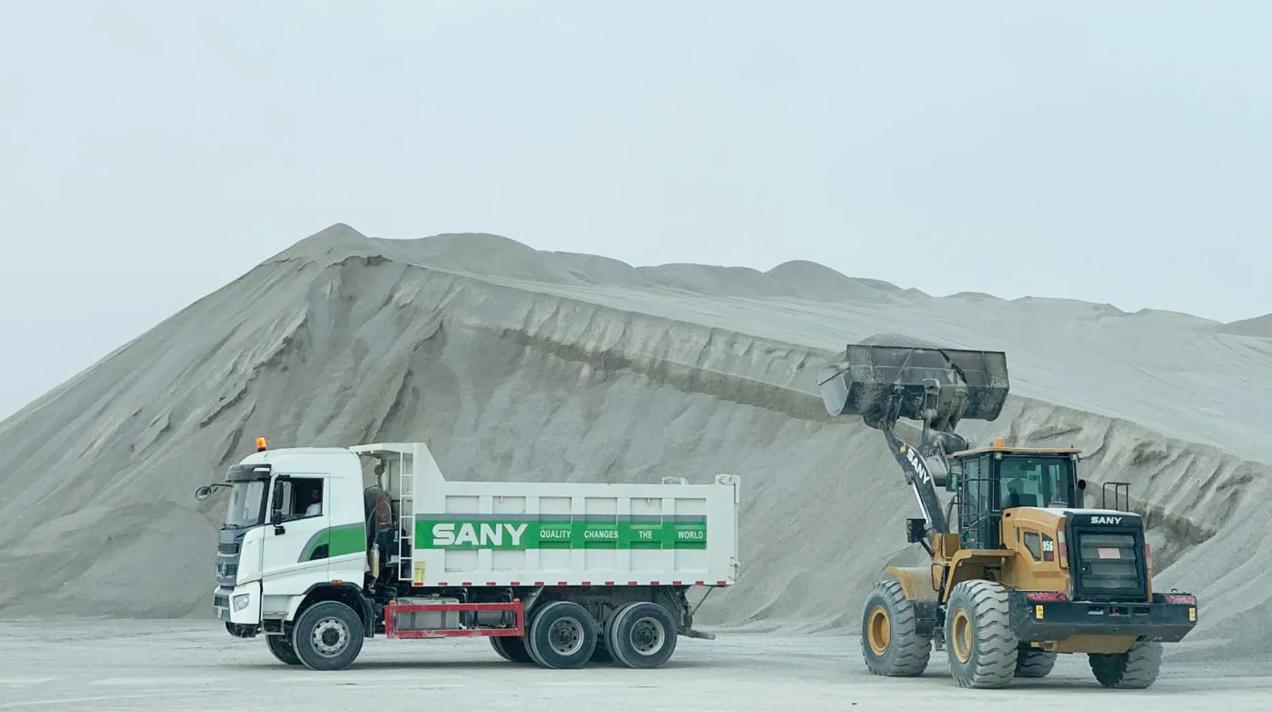
How Are Dump Trucks Classified?
Whether it's short-distance transportation of construction waste in urban infrastructure or long-distance heavy-duty transport in mining, choosing the right type of dump truck is key to improving efficiency and controlling costs. Dump trucks can be classified in various ways, but the core classifications can be based on three main dimensions: structural form, load capacity, and drive method. The following section will provide a detailed introduction to various types of dump trucks and their applicable scenarios.
By Size and Capacity
Light Duty Dump Trucks: Lightweight single-axle trucks suitable for standard road use, categorized into Classes 1 through 3, with the following weight classes:
Class 1: Weight not exceeding 6,000 lbs.
Class 2: Weight between 6,001 and 10,000 lbs.
Class 3: Weight between 10,001 and 14,000 lbs.
Suitable for: Transporting light goods or performing utility work
Medium Duty Dump Trucks: Commonly found in single-axle and dual-axle trucks, this category includes vehicles in weight classes 4 through 6, as follows:
Class 4: 14,000 to 16,000 lbs
Class 5: 16,001 to 19,500 lbs
Class 6: 19,501 to 26,000 lbs
Suitable for: Passenger/cargo vans or commercial use
Heavy Duty Dump Trucks: Suitable for vehicles equipped with two or more rear axles to improve load distribution, covering Class 7 and 8 vehicles, including large vans and other large commercial vehicles. Weight classes are as follows:
Class 7: Weight between 26,001 and 33,000 lbs.
Class 8: Weight exceeding 33,000 lbs.
Applicable scenarios: Used for garbage trucks, buses, large moving vans, small semi-trailers, and city street sweepers, etc.
By Application and Terrain
Mining Dump Trucks: Specifically designed for mining areas, these trucks have enormous load capacities and robust structures, such as off-road dump trucks and large rigid dump trucks.
Construction/Slag Dump Trucks: Used for urban construction and earthmoving transportation, these are mostly rear dual-axle (6x4, 8x4) or front four rear eight type, adaptable to complex construction sites.
Highway Dump Trucks: Used for long-distance sand, gravel, and coal transportation, prioritizing efficiency and load-bearing balance, typically 6x4 or 8x4.
Agricultural/Sanitary Dump Trucks: Specially designed for transporting specific materials, such as agricultural dump trucks, garbage dump trucks, and sludge dump trucks.
By Axle and Drive
Single-axle (4x2 drive): simple structure, low fuel consumption, suitable for short-distance transport of light materials;
Dual rear axles (6x4 drive): strong load-bearing capacity, suitable for urban construction site transport of waste soil and sand;
Three-axle/multi-axle (such as 8x4): can distribute heavy load pressure, meeting the compliant transport requirements of mines and long-distance heavy-duty transport, and is the core configuration for large-tonnage material transport.
By Dumping Mechanism
Rear-Dump Trucks: Most common, lifts from the front.
Side-Dump Trucks: Dump material to the side, commonly used in the construction industry.
Bottom-Dump Trucks: Open from the bottom for controlled unloading, suitable for paving.
Transfer Dump Trucks: A separate cargo box is towed by a main truck.
Standard Dump Trucks: Large in size, load capacity depends on truck size.
Super Dump Trucks: Extended dump truck beds, typically with lifting axles to increase volume.
By Power System
Conventional Dump Trucks: Driven by internal combustion engines such as diesel engines.
Electric Dump Trucks (New Energy): Driven by battery-powered motors, including pure electric, fuel cell, and hybrid models.
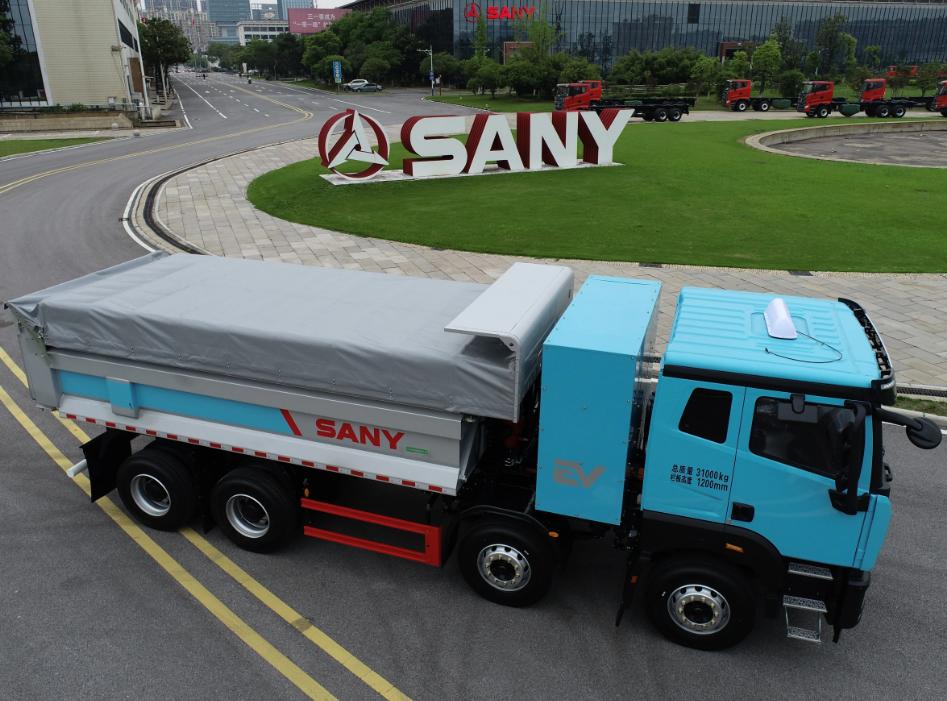
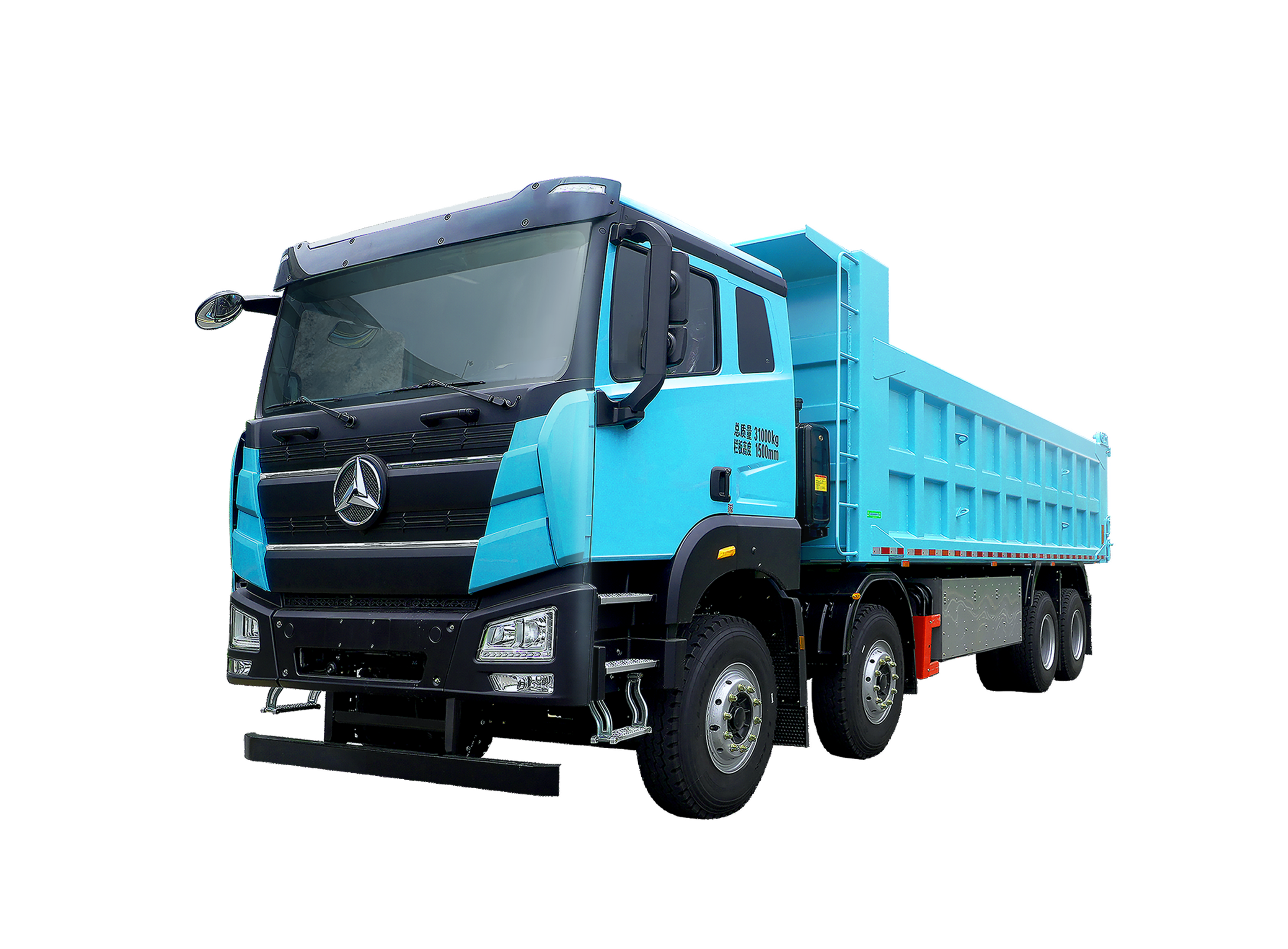
SANY offers both traditional Dump Trucks and Electric Dump Trucks. The Electric Dump Truck, in particular, uses the LVKON EM310H46-A engine, boasting a cargo capacity of 38 cubic meters and enabling more efficient loading operations.
How To Choose The Right Dump Truck For Your Fleet?
For construction fleets, choosing the right dump truck is crucial for ensuring transportation efficiency and controlling operating costs. Here are some practical purchasing suggestions to help you decide.
1. Define Your Application Scenarios
Road Transport: Prioritizing efficiency and comfort, 6x2 or 8x4 drive configurations are recommended, focusing on smooth power delivery and cab comfort.
Urban Dump Trucks/Construction Sites: Requiring high load capacity, high maneuverability, and reliability, 8x4 or three-axle (6x4) configurations are commonly chosen to adapt to harsh environments.
Short-to-Medium Distance/Rural Areas: Flexible configuration with economic considerations.
Heavy-Duty/Mining: Emphasis is placed on chassis load-bearing capacity and durability.
2. Core Configuration Selection
Number of Axles
6x2: Primarily used for highway transportation, relatively fuel-efficient, suitable for standard loads.
8x4 (four axles, dual rear drive): Strong load-bearing capacity, suitable for construction waste and short-distance heavy loads.
Multi-axle configuration: In line with compliant transportation trends, such as 6x2/6x4 three-axle setups, primarily used for urban construction waste.
Powertrain
Horsepower: 400-450PS is a common choice, depending on load and road conditions. However, there are also dump trucks with higher horsepower, such as the SANY Dump Truck SYZ425C-8S(V), with a rated power range of 360 kW, which translates to 490 Ps using the formula 1 kW ≈ 1.36 Ps.
Engine/Transmission: Focus on brand, torque, and reliability.
Superstructure: Cargo box size, material, and lifting capacity directly affect load capacity and loading/unloading efficiency.
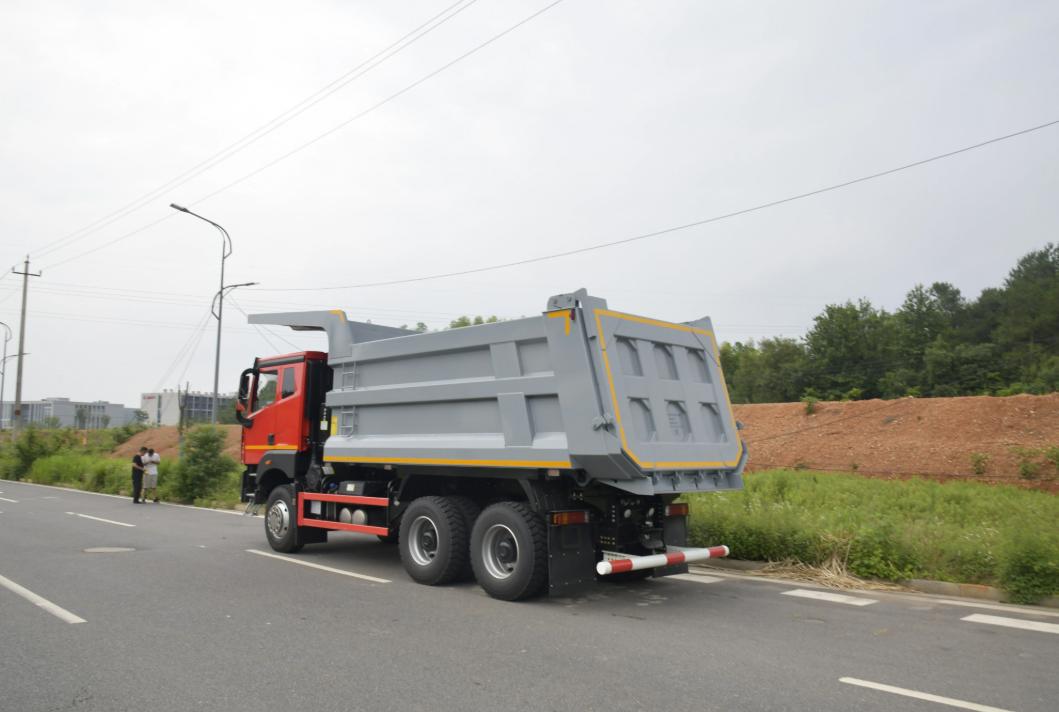
3. Focus on Key Characteristics
Reliability: Durability of the frame, chassis, and core components.
Maintenance and Upkeep: Ease of repair, parts availability, and low maintenance costs are key to reducing operating costs.
Compliance: Lightweight, multi-axle vehicles better meet regulatory requirements, maximizing profits through increased haulage.
Comfort: Cab suspension, seats, and intelligent features reduce driver fatigue.
4. Brand and Test Drive
Top-tier Brands: Choosing a renowned international brand like SANY offers a wide range of dump truck models and specifications, along with a strong market reputation.
Guaranteed After-Sales Service: Focusing on brand after-sales service makes routine maintenance more convenient. SANY local dealers provide routine maintenance and warranty repair services, ensuring the equipment always performs at its best and meets the daily operational needs of your fleet.
Test Drive Experience: Experiencing the vehicle's handling, power, and comfort firsthand, combined with feedback from your fleet's drivers, is crucial.
In short, there is no one-size-fits-all dump truck. The key to selection lies in matching vehicle performance (load capacity, power) with specific operating scenarios (road conditions, regulations), operating costs (fuel consumption, maintenance), and brand reliability. For fleets, standardized procurement and spare parts commonality are also important considerations.
What Precautions Should be Taken When Using A Dump Truck Daily?
Driving and Operation
Starting: Warm up the engine first. Once the coolant temperature is reached, confirm the lift switch is in the off (stop) position. Observe the road conditions and start driving only after it is safe.
1. Driving:
Driving in gear is prohibited: The power take-off (PTO) must be in the off position (red light not illuminated) while driving. Driving with it engaged is strictly prohibited to prevent accidental lifting of the truck bed.
Smooth driving: Avoid sudden starts, sudden braking, and forced gear shifts. Select the appropriate gear according to road conditions to avoid overloading.
Beware of blind spots: Dump trucks have blind spots; be especially careful when turning and reversing.
2. Loading:
Control Load: The load should not exceed the rated load capacity. Distribute the cargo evenly to avoid severe uneven loading.
Before Unloading: Check that there are no personnel around and behind the vehicle. Confirm that the ground is level and the vehicle body is stable.
Lifting Operation: Control the engine speed below 2000 rpm. Avoid excessive throttle.
3. After Unloading:
Must be in place: The cargo box and chassis must be fully closed and locked before driving. Otherwise, the vehicle may tip over due to a rear-heavy load.
Disengage PTO: Ensure the PTO is disengaged (switch in the off position).
4. Special Operation:
Avoid Improper Operation: Do not push the handle to the lowering position during lifting, as this will cause a significant impact on the chassis.
Large Materials: When unloading large materials, consider removing the rear cargo box to prevent damage.
Routine Inspection and Maintenance
Before starting: Inspect key components such as brakes, tires, lights, and cargo box latches.
Hydraulic System: Maintain normal hydraulic fluid levels and regularly check for leaks and prevent foreign objects from entering the system.
Chassis: Regularly check for looseness at the connection between the chassis frame and subframe.
New Vehicle: The first service is crucial; check screws, fluids, and the hydraulic system for proper functioning.
Conclusion
As core equipment in engineering transportation, the selection and maintenance of different type dump trucks directly determine the operational efficiency and profitability of a fleet. Whether it's a rigid model for heavy-duty mining or a new energy dump truck for urban infrastructure, only by combining operational requirements, brand service, and cost control can dump trucks maximize their value, solidify the transportation foundation for engineering operations, and help practitioners achieve their operational goals of cost reduction and efficiency improvement.
FAQs
What Type Of Equipment Is A Dump Truck?
Dump trucks are special-purpose heavy vehicles, specifically classified as construction machinery or transportation equipment. They are freight vehicles that unload goods themselves using a hydraulic system. Composed of a chassis, dump hopper, and hydraulic lifting system, they are mainly used in construction, mining, and civil engineering fields to transport bulk materials and are important heavy vehicles and fixed assets.
What Are Mining Dump Trucks?
Mining dump trucks are specialized engineering transport equipment categorized as off-highway dump trucks. They are primarily used in open-pit mines, water conservancy projects, and other off-highway field sites to transport bulk materials such as coal and sand. They often work in conjunction with excavators, loaders, belt conveyors, and other construction machinery to form a complete loading, transporting, and unloading production line, completing the loading, unloading, and transportation of earthwork and bulk materials. They are core equipment for large-scale field material transfer projects.
What Are the Different Types of Axles for Dump Trucks?
Dump truck axle types are mainly classified according to the number of axles and drive configuration, and can be broadly categorized into three types:
Single Axle: 4x2.
Dual Axle: Dual rear axles (6x4).
Triple/Multi-Axle: More axles to carry heavier loads (e.g., 8x4).
Featured Products
Recommend Blogs
Knowing “How Many Tons Does a Dump Truck Hold” Helps Optimize Equipment Selection
This article focuses on how many tons a dump truck holds and provides specific purchasing recommendations for dump trucks.
How Many Cubic Yards In A Dump Truck? Load Capacity & Buying Guide
This article explains how many cubic yards in a dump truck and provides specific selection guidelines.