Tractor vs Skid Loader: Differences and Selection Guide
This article explains tractor vs skid loader differences, covering their functions, key features, and tips to help you choose the right equipment.
In agricultural production, engineering construction, and site maintenance, both tractors and skid loaders are key pieces of equipment for improving efficiency and reducing labor intensity. Choosing the right equipment can not only make operations more efficient but also minimize investment costs. So, what are the differences between these two types of machinery, and how should you choose based on your specific needs? This article will provide a detailed comparison of tractor vs skid loader, covering their core definitions, applications, and differences, to help you make a informed decision.
What Is a Tractor and What Can You Use It For?
1. Concept
A tractor is a power-driven machine with a high-power engine at its core, primarily used in agricultural and engineering applications. It possesses strong traction and power output capabilities, and its anti-skid tire design allows for stable operation on loose, wet, or uneven terrain, making it an important piece of machinery for improving production efficiency and reducing labor intensity.
2. Applications
- Agriculture: When used with plows, seeders, harvesters, and other attachments, it performs basic agricultural tasks such as tilling, sowing, fertilizing, and harvesting. It also assists in animal husbandry and management, including cleaning barns, transporting feed, and handling manure.
- Construction and Engineering: With excavator attachments, it excavates foundations, drainage ditches, and deep pits to meet the needs of small-scale construction projects. When used with loaders and bulldozer attachments, it performs site leveling and earthmoving, aiding in pre-construction preparation.
- Site Maintenance and Debris Handling: Equipped with snowplows, snow blowers, and other attachments, it clears snow and ice from roads, driveways, and sites. With mowing attachments, it trims large lawns and shrubs, completing landscaping maintenance for courtyards or large sites.
- Transportation and Towing: It tows trailers to transport crops, building materials, tools, and equipment; it also drags agricultural machinery and construction attachments, increasing the flexibility of operational scenarios.
What Is a Skid Loader and What Can You Use It For?
1. Concept
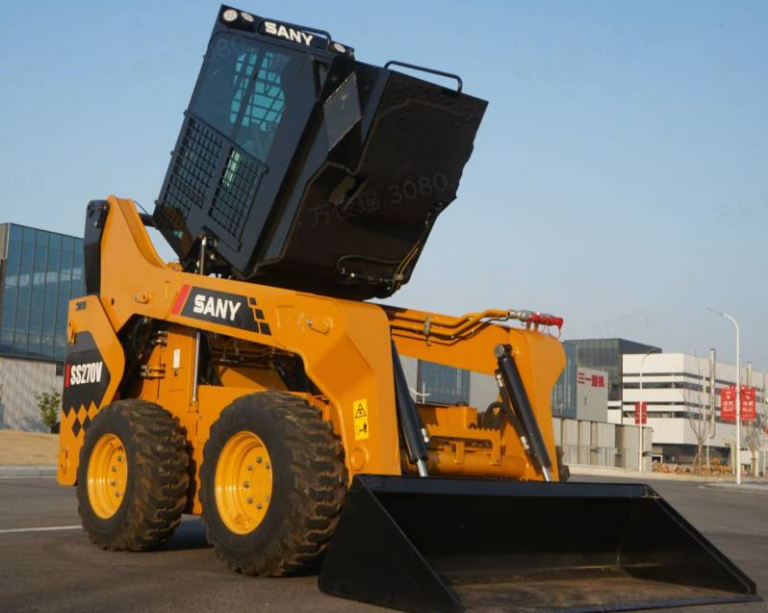
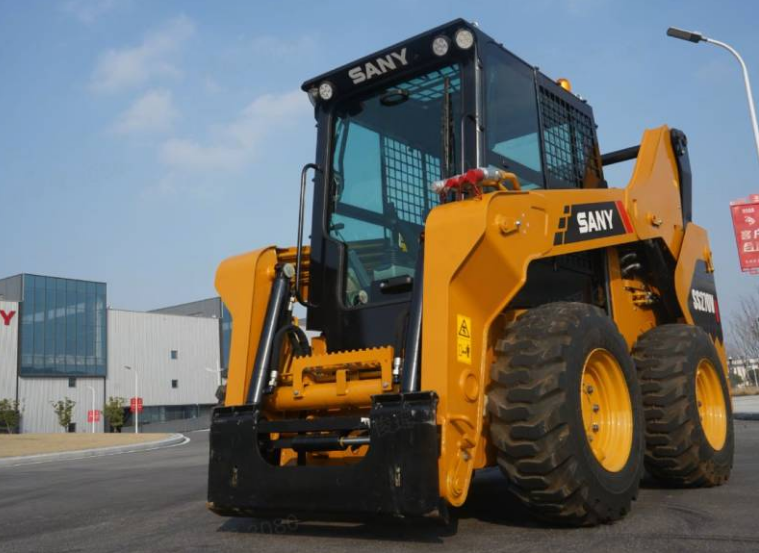
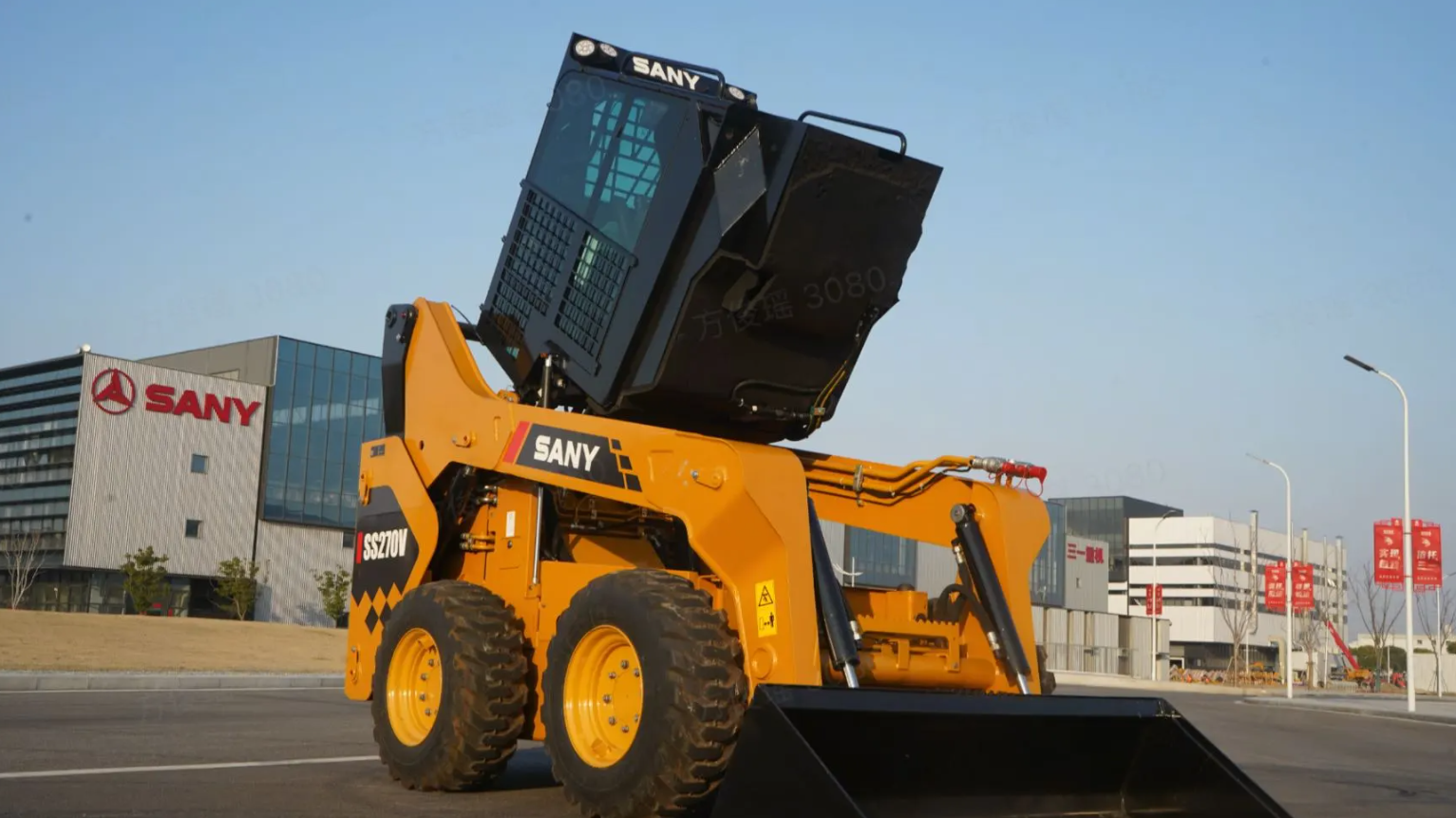
Skid loaders are compact, flexible machines used in both engineering and agricultural applications. Their key feature is that the left and right wheels can drive independently, enabling zero-radius turns, making them ideal for confined spaces. Typically equipped with an enclosed cab and advanced control systems, they have a compact body and moderate weight, can be fitted with various front-end attachments, and combine mobility, versatility, and precision operation capabilities. They are widely used in farms, construction sites, site maintenance, and other similar applications.
2. Applications
- Site Clearance and Debris Handling: Equipped with a brush cutter, it removes weeds and small trees; the bucket clears rubble, construction debris, or farm waste; and a hydraulic breaker can handle small demolition tasks.
- Excavation and Drilling: With attachments such as backhoes and augers, it can dig deep pits, drainage ditches, and foundation trenches; it can also drill holes for fence posts and tree planting; some models can be equipped with a wheel saw for grooving hard ground.
- Material Handling and Loading/Unloading: Using attachments such as the bucket and forks, it can move sand, gravel, timber, feed, palletized goods, etc., efficiently transferring materials between warehouses, farms, or construction sites; it can also assist in stacking materials.
- Snow Removal and Ice Management: Equipped with snowplows, snow blowers, or salt spreaders, it clears snow and ice from roads, yards, and parking lots, ensuring safe passage.
Skid Loader vs Tractor Loader: How Do They Compare?
1. Mobility and Turning Radius
- Tractors: Relying on front-wheel steering, they have a large turning radius and move smoothly in open areas, but struggle to maneuver flexibly in narrow alleys or densely cropped areas.
- Skidney Steer Loaders: Achieving differential steering through differential wheel speed, they can turn on the spot with a very small turning radius, allowing for flexible operation in confined spaces such as construction sites and orchards.
2. Visibility and Operator Comfort
- Tractors: Tractors offer clear, all-around visibility due to the raised seat, but require turning to observe rear attachments, which can be slightly inconvenient. Seat comfort varies depending on the model and brand.
- Skid Loaders: The cab is relatively compact, with no engine obstruction at the front, providing a wider frontal view; however, side visibility is limited by the movement of the hydraulic boom, and without a camera in the cab, side and rear visibility is relatively poor. Seat designs are often ergonomic, and the cab is typically equipped with air conditioning and Bluetooth, offering good comfort for extended work periods. However, managing the hydraulic system, lifting capacity, and using different attachments can make control slightly more complex.
3. Power and Lifting Capacity
- Tractors: Powerful output, adept at heavy-duty tasks such as hauling and excavation. Lifting capacity varies depending on the front-end loader, but is generally sufficient for material handling needs.
- Skid Loaders: Relatively weaker power, with lifting capacity generally lower than the front-end loader of a comparable tractor, making them more suitable for light to medium-load material handling and site clearing.
4. Attachment Usage and Versatility
- Tractors: Can install attachments simultaneously at the front and rear, eliminating the need for frequent disassembly when switching tasks. Tractors can be equipped with attachments such as plows, harrows, and seeders, performing excellently in the entire agricultural production process and some engineering operations, demonstrating strong versatility.
- Skid Loaders: Can only install one attachment at the front, not multiple attachments simultaneously. However, skid loaders offer a wide variety of optional attachments, making them widely used in construction, landscaping, and municipal engineering. They can quickly switch attachments to adapt to different tasks, highlighting their versatility. For example, the SANY skid steer loader can be equipped with snowplows, grinders, and auger rigs to meet diverse operational needs.
5. Ground Conditions and Traction
- Tractors: Lighter weight, less ground disturbance, strong traction on soft soil and muddy roads, less prone to getting stuck or slipping, suitable for complex terrain operations.
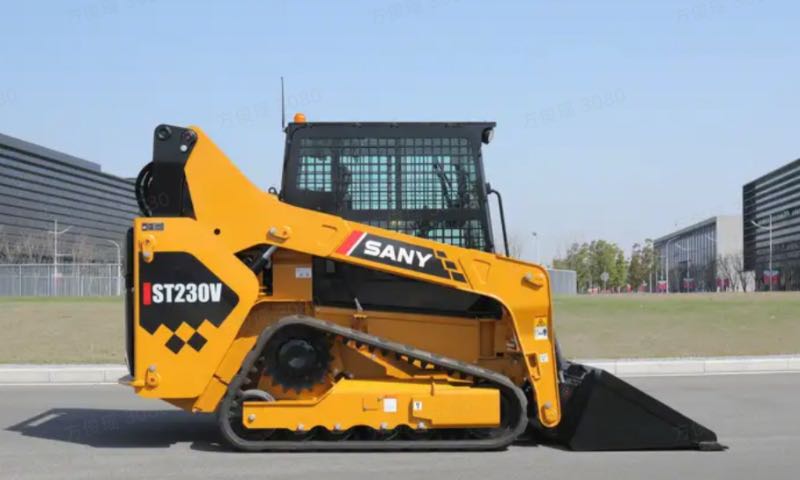
- Skid Loaders: Tracked models are suitable for muddy, wet, sandy, and other complex terrains, with strong traction and less prone to getting stuck, but still weaker than tractors, and prone to damaging grass. Wheeled models are suitable for rocky, asphalt, and other flat terrains, with fast movement speeds, but prone to slipping on wet, soft surfaces.
6. Budget
- Tractors: Their retail price is often lower than other types of machinery, so your initial investment cost may be lower if you buy a tractor. Tractor accessories are also cheaper, and although more maintenance and servicing may be required in the future, the total cost is usually lower.
- Skid Loaders: These machines have higher upfront costs, accessories are usually more expensive, and repair costs are higher if a breakdown occurs. Therefore, not fully utilizing the capabilities of a skid steer loader will result in a significant waste of money.
Tractor vs Skid Loader: Which Should You Choose?
The choice between a tractor and a skid steer loader depends mainly on the operating scenario, site conditions, and usage requirements. Combining the core differences between the two can help make a quick decision.
1. Situations Where Skid Steer Loaders Are Preferred:
- Narrow work areas requiring flexible directional adjustments to adapt to irregular work routes. Examples include indoor construction, small yards, and sites requiring frequent turning.
- Primarily used for engineering construction, landscaping, and municipal engineering projects, requiring frequent switching between different attachments. Examples include shoveling sand and gravel in the morning, breaking up ground in the afternoon, and sweeping the site at night.
- Requires continuous operation for extended periods, prioritizing high efficiency and precise forward visibility.
2. Situations Where Tractors Are Preferred:
- Relatively open work areas such as farms and large lawns, requiring simultaneous multitasking, such as bulldozing at the front and tilling at the rear.
- Long-distance, cross-site operations, such as transporting goods from one farm to another or across regions. Tractors offer long range and high stability, making them suitable for long-distance movement.
- High requirements for ground protection, such as lawn maintenance or working on soft soil, where there are concerns about equipment damaging the surface.
- Limited budget, sensitive to procurement and attachment costs, or where operators prefer simpler operation and easier maintenance.
Conclusion
Tractors and skid steer loaders each have their strengths. Through a detailed comparison of tractor vs skid loader, you should now have a clear understanding of their core differences, enabling you to quickly find the right machinery for your needs and ensure efficient and smooth operation in every task.
FAQS
Which Is Better, a Tractor or a Skid Steer?
Neither is inherently better or worse; it depends on the specific operational needs. Tractors are suitable for open environments such as tilling, sowing, and transportation, and they offer strong traction and power output. Skid steer loaders are more flexible and, when equipped with various attachments, can perform tasks such as shoveling, crushing, and sweeping, making them suitable for confined spaces and multi-tasking operations.
Can a Skid Steer Do Everything a Tractor Can Do?
No. While skid steer loaders have advantages in maneuverability in confined spaces and flexibility in attachment switching, they are far inferior to tractors in terms of heavy-duty traction in agriculture and traction on soft ground, and cannot completely replace them in completing all tasks.
What Are the Disadvantages of Skid Steers?
1. Slow travel speed, low efficiency for long-distance transfers, often requiring trailer transport.
2. Weak traction on soft, muddy ground.
3. Limited lifting and heavy-duty towing capacity, unsuitable for heavy agricultural work.
4. Some models have blind spots behind the vehicle; extra caution is required when reversing.
Featured Products

Recommend Blogs

A Comprehensive Analysis of Skid Steer vs Track Loader: From Basics to Practical Advice
This article discusses the definitions, uses, differences, and applicable operating scenarios of skid steer vs track loader to help practitioners choose appropriate equipment.
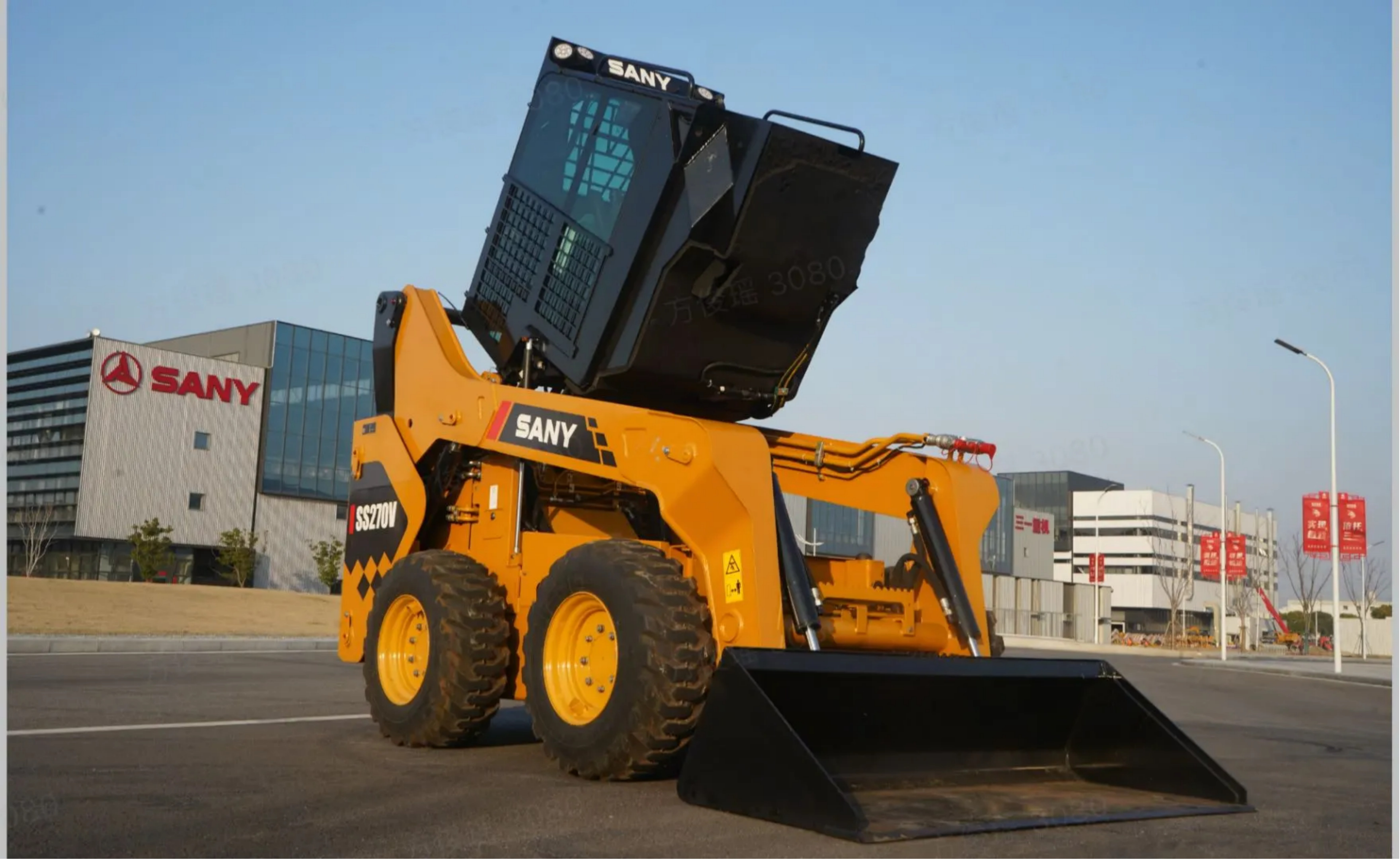
How to Operate a Skid Loader? Comprehensive Guide to Efficient and Safe Operations
This article focuses on core components of the skid loader, how to operate a skid loader, safety knowledge, and common operations, helping construction teams carry out projects efficiently and safely.
What Is a Skid Loader? Meaning, Principle & Guide
This article provides a detailed analysis of what is a skid loader is, including its core components, working principle and application scenarios. It also compares different loaders and offer a practical selection guide.