Job Analysis: How to Become a Stacker Operator?
This article analyzes the key points, operation training and career prospects of the stacker operator position for practitioners' reference.
In modern logistics, port warehousing, and multimodal transport systems, the stacker operator is a core position that ensures the efficient and safe flow of goods. From confined warehouse spaces to busy port terminals, their work involves not only the skilled operation of stacking machinery but also strict adherence to safety regulations and quality management requirements, laying a solid foundation for the efficient circulation of the industrial production chain. This article will comprehensively analyze the job content, work environment, training paths, and career prospects of stacker operators, providing practical reference for industry professionals.
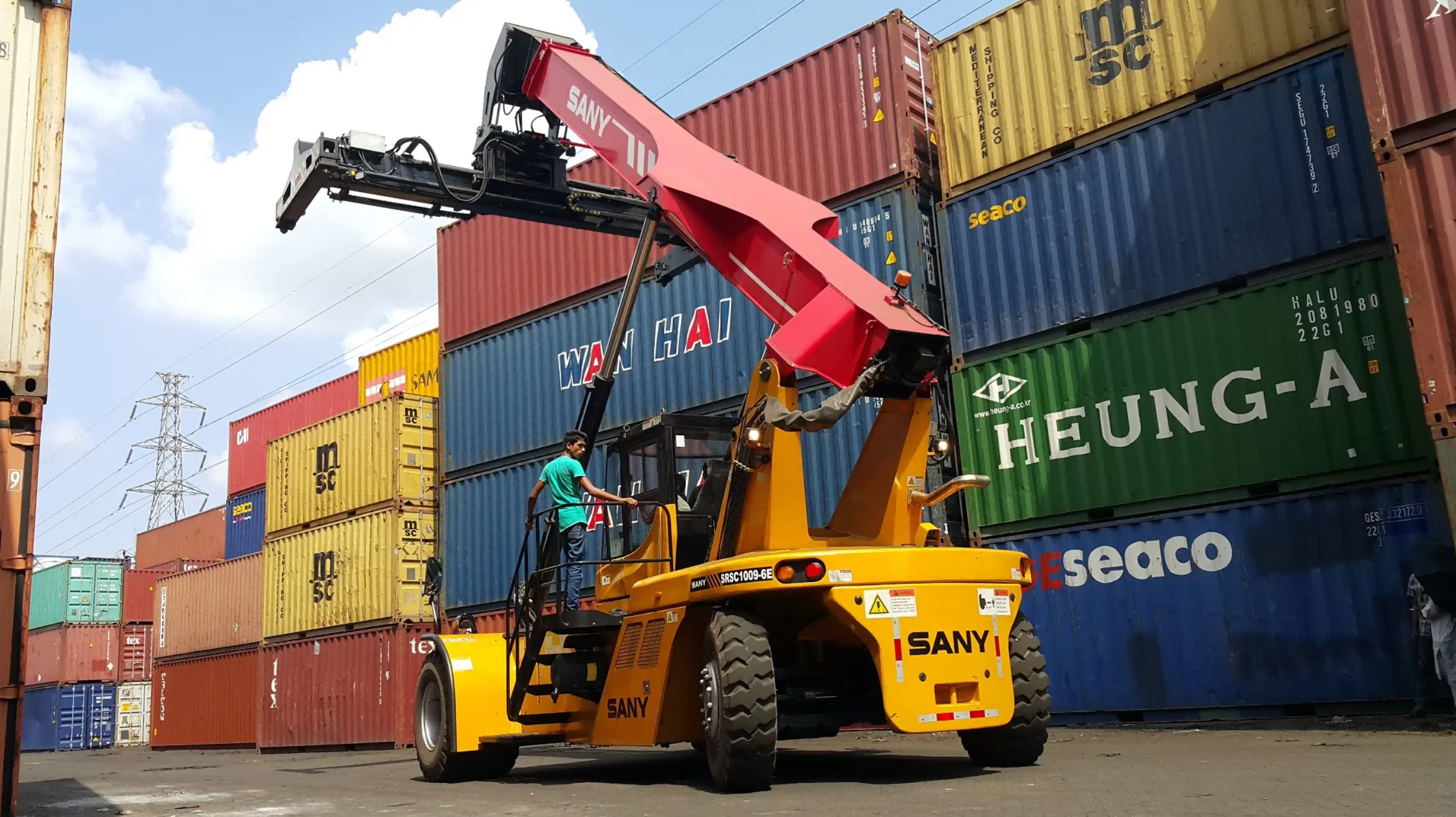
What Is a Stacker Operator?
A stacker operator is responsible for operating equipment to stack, sort, and organize materials such as paper, wood, and packaged goods within warehouses, factories, and ports. They ensure that items are arranged properly to meet storage or transportation requirements. This role typically involves using specialized stacking equipment for efficient and safe material handling, and also includes performing routine equipment maintenance and quality checks.
What Does a Stacker Operator Do?
1. Equipment Operation and Control
Operate and control automated or semi-automated stackers and lifting devices to neatly place products onto pallets or designated storage areas. Use control devices to operate relevant vehicles, while simultaneously adjusting machine speed, tension, alignment, and other parameters to ensure efficient and precise stacking.
2. Quality and Process Control
Conduct routine quality inspections of stacked products, identifying damage, misalignment, and quantity discrepancies, and reporting any anomalies; maintain continuous operations by loading empty pallets and other raw materials, safely transporting materials to designated areas, and ensuring timely and complete delivery.
3. Equipment Maintenance and Site Management
Perform daily maintenance, minor repairs, and troubleshooting (clearing blockages, replacing worn parts) on stacking equipment and auxiliary vehicles, maintain a clean and orderly work area around the equipment, and strictly adhere to safety procedures and waste disposal requirements.
4. Collaborative and Supportive Tasks
Communicate effectively with production line and warehouse personnel to coordinate product flow and resolve operational issues; weigh materials/products and record data, signal workers for tasks, operate valves and chutes to discharge materials, connect trailers and secure attachments, etc.
What Is the Working Environment Like for Stacker Operators?
1. High-intensity and fast-paced: Long working shifts, mandatory overtime (12 hours or more) may be required, and operators must keep up with production schedules at all times.
2. Noisy industrial environment: Workplaces (warehouses, ports, factories) are usually noisy, and hearing protection equipment must be worn.
3. Variable temperatures: Operators may work in high-temperature environments (such as near lead processing areas) or cold/outdoor environments (ports, construction sites).
4. High physical demands: Requires standing for long periods, operating heavy equipment, and involves some physical labor such as pallet placement.
5. Safety-oriented: Strict use of Personal Protective Equipment (PPE) is generally required, such as respirators, gloves, safety goggles, etc., which is particularly important in hazardous environments.
How to Become a Stacker Operator?
To become a stacker operator, you must first possess the necessary skills to operate a stacking machine. Many people enter this field through on-the-job training, vocational skills courses, or by starting in general labor positions in manufacturing or warehousing and then gradually advancing. For entry-level positions, it's possible to start working within a few weeks after obtaining the required certifications. However, if you have no prior experience in the industrial sector and require specialized training, it may take several months.
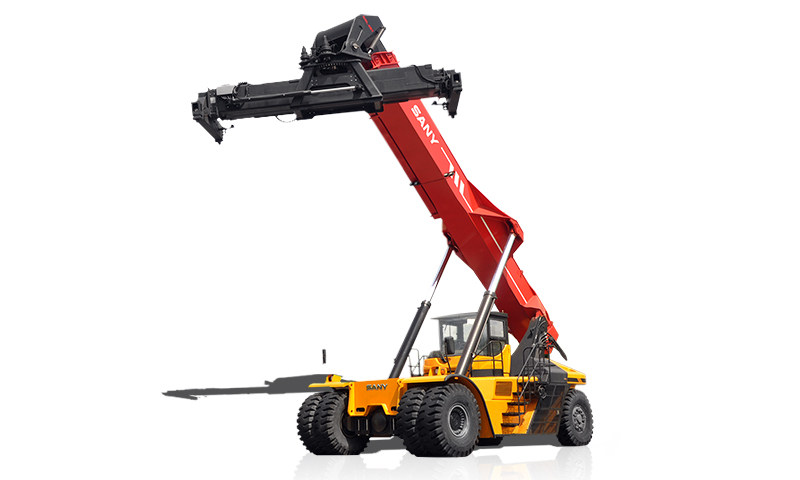
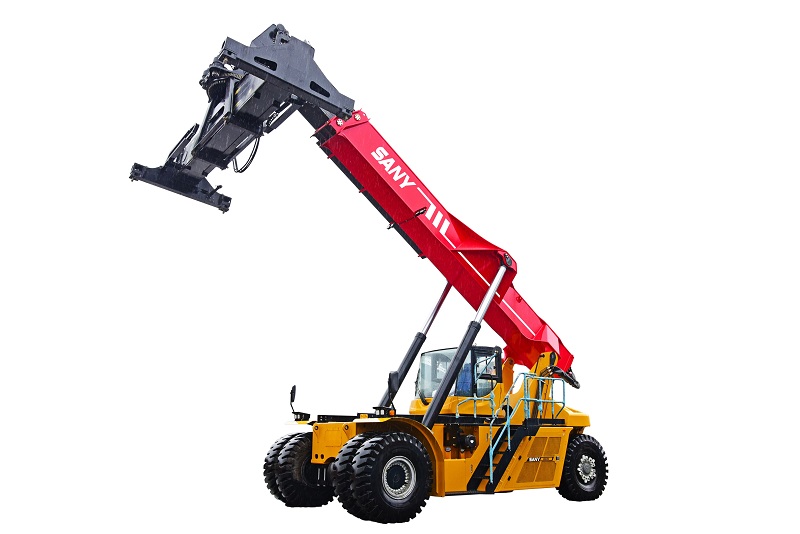
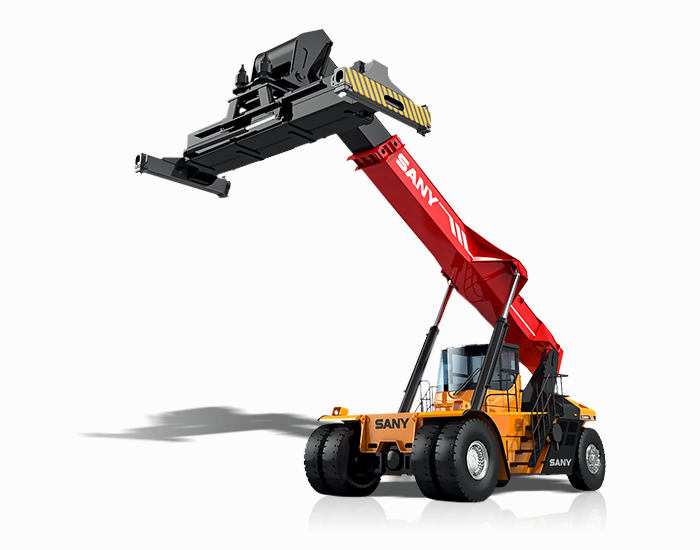
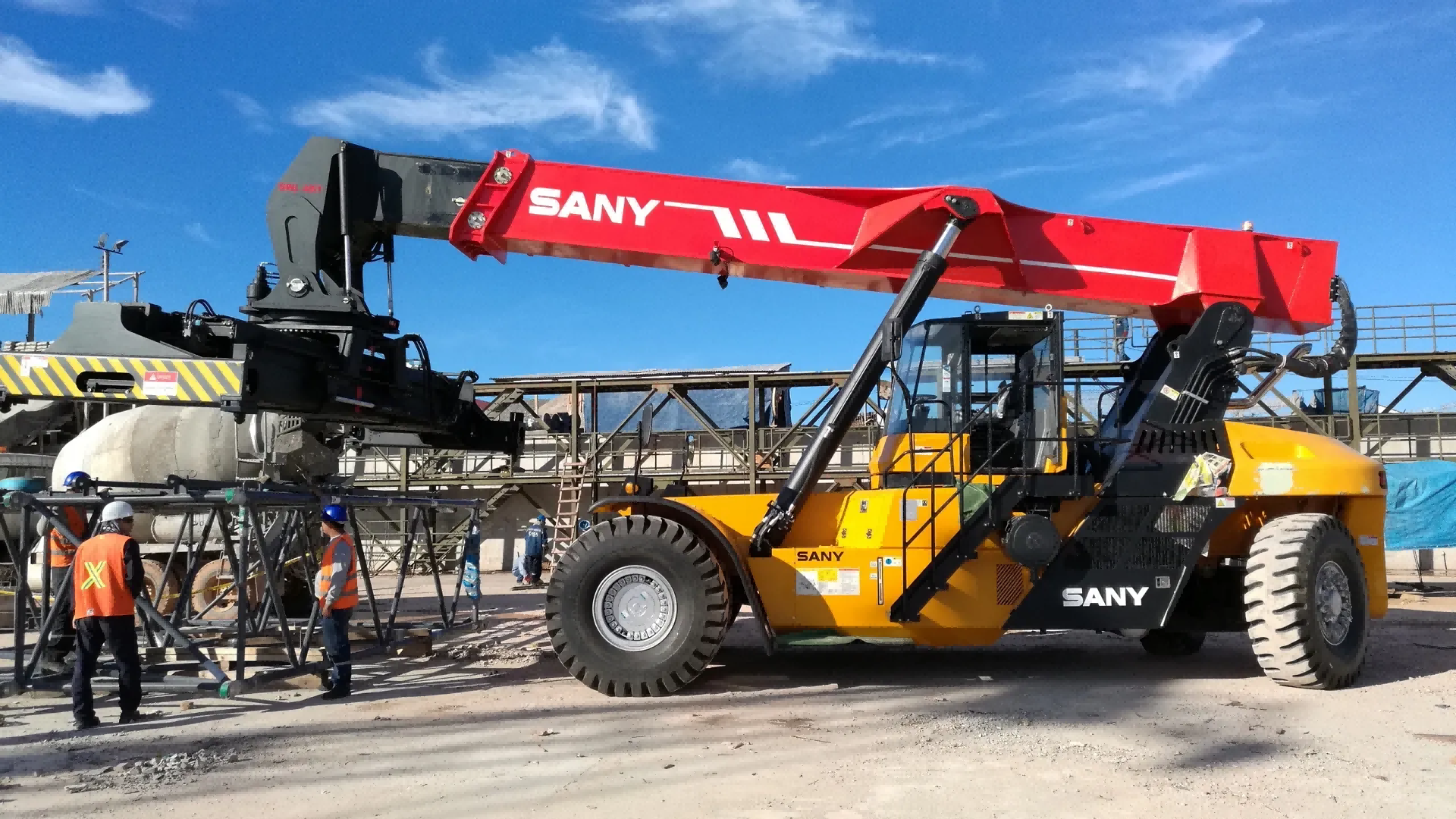
It's worth mentioning that many companies prefer to hire job applicants with experience operating heavy machinery, such as reach stackers. Below, we will use the reach stacker operator as an example to discuss the reach stacker operation process and introduce the content of reach stacker operator training.
How to Operate a Reach Stacker?
1. Pre-Operation (Safety First)
- Read the Manual: Familiarize yourself with the component structure, safety devices and operating capacity of the equipment in use.
- Daily Inspection: Conduct a comprehensive inspection of the reach stacker before use.
- Clarify Limits: Be clear about the equipment's dimensions, load capacity limits and operating range. For example, the maximum lifting height of SANY reach stackers below 40T is 13910-16200mm with a wheelbase of 5000-6000mm, while those above 40T have a maximum lifting height of 9300-15100mm and a wheelbase of 6000-8000mm.
- Smooth Communication: Agree on hand gestures or signals with ground personnel/directors.
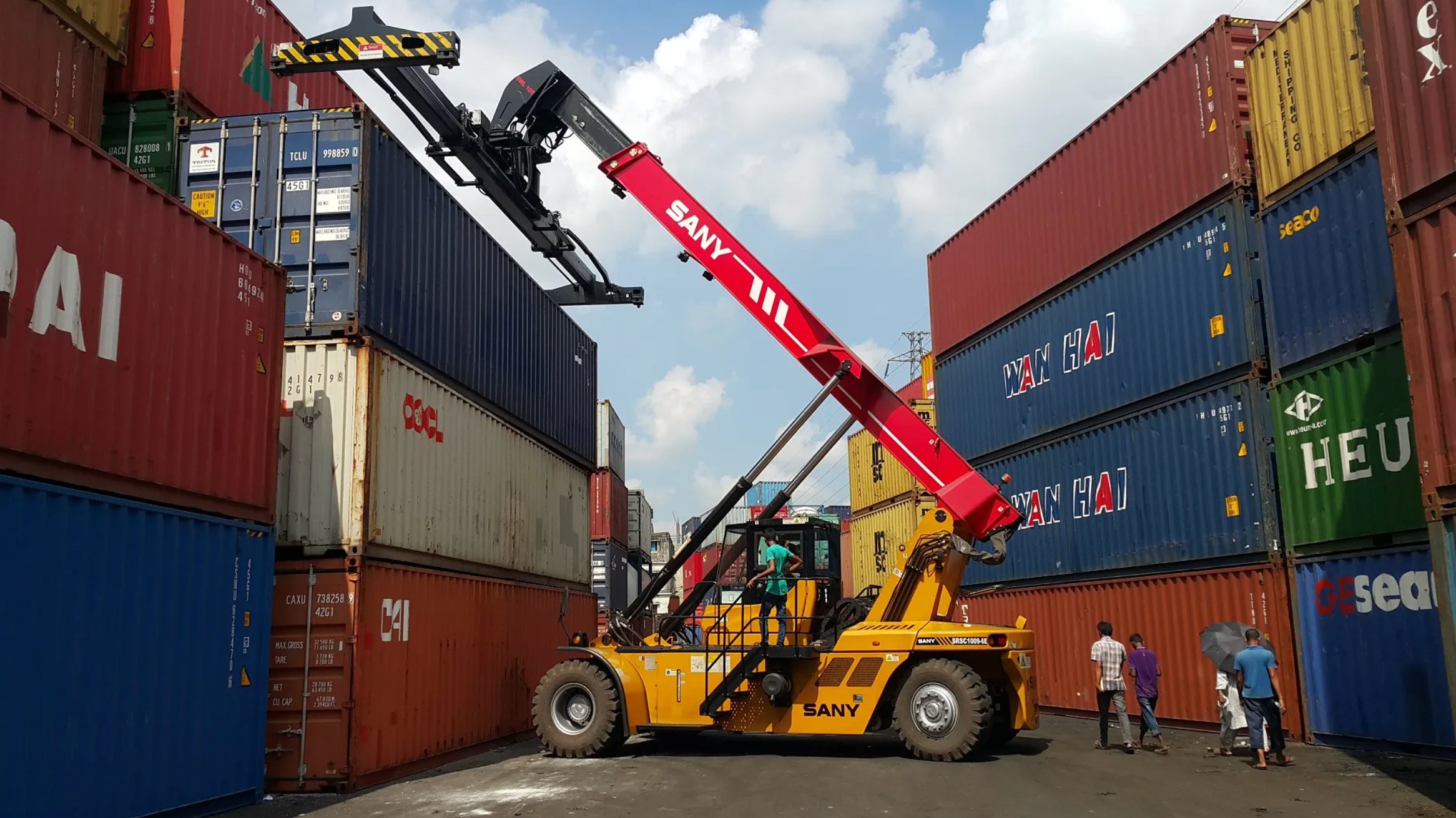
2. Control Devices (Joystick/Hydraulic System)
- Lifting (Mast): Controlled by the up and down movement of the joystick or thumb switch.
- Telescoping (Boom): Operated by toggling the thumb wheel/switch.
- Tilting (Mast): Controlled by the forward and backward movement of the joystick or side button.
- Side Shift (Forks/Spreader): Controlled by pressing the left and right buttons or trigger.
- Rotation/Spreader Functions: Some specialized models can realize spreader locking, unlocking, rotation or container door opening through the joystick/buttons.
3. Operating Procedures (Container Handling)
- Drive to the Container: Park the reach stacker near the container using the pedals and steering wheel.
- Dock the Spreader: Extend the boom, lower the spreader and align it with the twist lock device of the container.
- Lock and Fix: Activate the spreader to lock and fix it with the container.
- Lift and Avoid: Lift the container to a sufficient height to avoid other objects, then retract the boom slightly.
- Transport and Drive: Transport the container to the destination smoothly and carefully.
- Position and Place: Slowly place the container on the trailer or stack, ensuring accurate alignment with the twist lock device.
- Unlock and Retract: Release the spreader and retract the boom to its original position.
4. Core Principles
- Smooth Movements: Operate gently and controllably to avoid unstable loads.
- Pay Attention to the Environment: Constantly observe pedestrians, other vehicles and obstacles.
- Maintain Stability: Avoid sudden movements, especially when under load or with the boom fully extended.
The Main Content of Reach Stacker Operator Training
1. Safety and Regulations: General safety specifications, emergency shutdown operations, load chart interpretation, warning sign identification, workplace rules, hazard identification and accident prevention.
2. Equipment Cognition: Familiarize with the structural design, core components, control devices, instrument panel functions and equipment operation limits of reach stackers.
3. Pre-Operation Inspection: Daily patrol inspection, oil level check, tire condition, lighting system and equipment operation status confirmation.
4. Operating Processes: Processes for equipment startup, driving, positioning, picking, loaded driving, stacking and shutdown.
5. Load Handling: Weight assessment, load center cognition, stability principles and safe lifting skills.
6. Terminal Operations: Container stacking, destacking, vehicle loading/unloading and equipment operation in narrow spaces.
7. Communication and Collaboration: Use of operation signals and efficient coordination in busy terminal environments.
8. Maintenance and Troubleshooting: Basic maintenance work, refueling and fault identification methods.
9. Practical Skills: Adapt to real operation scenario requirements through hands-on practice and simulation training.
How Is the Career Prospect for Stacker Operators?
Stacker operators play a vital role in logistics and manufacturing, offering flexible entry paths, stable employment demand, and clear opportunities for career advancement. Their advantages span the entire employment cycle—from entry to promotion—and can be summarized as follows:
Low Entry Barriers
No higher education is required; completing middle school is sufficient to meet basic qualifications. Newcomers can learn the necessary skills through self-study or vocational training and obtain certification to start their careers. Even if one does not start directly as a stacker operator, entry-level positions in manufacturing or logistics companies provide a pathway to gain experience, and eventually transition to stacker operations.
Strong Employment Demand and Job Stability
The demand for stacker operators continues to grow, with employment opportunities expected to more than double by 2030. As a core role in logistics and manufacturing, the need for processing and distribution of essential goods ensures that this position remains stable, even during economic downturns.
Clear Promotion Path and Career Growth
The profession has a well-defined hierarchy, allowing operators to advance from junior to senior and chief stacker positions, with salaries increasing alongside skills and rank. Horizontal career moves are also possible, including roles such as machine operator, warehouse supervisor, or workshop manager. The more experience operators accumulate, the stronger their long-term career competitiveness.
Internal Promotion Opportunities and Smooth Transition
Many companies prioritize internal candidates for stacker operator positions. Entry-level employees can gain hands-on experience in industrial environments while observing and learning to operate stackers. This familiarity creates a natural and efficient path for promotion or role transition within the company, minimizing both time and cost.
Conclusion
In summary, the stacker operator profession, with its low entry barrier and broad development prospects, offers a reliable career option for those willing to work in the industrial and logistics sectors. Through systematic training and on-the-job practice, practitioners can continuously improve their skills and achieve career advancement. For those seeking a stable career with growth potential, becoming a qualified stacker operator and specializing in this field is undoubtedly a practical and promising choice.
FAQs
Is a Stacker the Same as a Forklift?
Stackers are compact, electric, budget-friendly machines for light-to-medium indoor tasks in tight spaces, ideal for smaller warehouses, while forklifts are powerful, versatile, higher-capacity vehicles for heavy loads, outdoor use, and faster, longer-distance transport, requiring more investment and operator licensing. The key difference: stackers are for nimble, low-cost, indoor stacking; forklifts are for heavy-duty, versatile, high-performance material handling.
What Is the Job Description of a Stacker?
Material Handling: Operate powered equipment (forklifts, pallet jacks) to move and stack incoming/outgoing goods.
Stacking & Organizing: Properly stack, palletize, and arrange products according to specifications, ensuring stability and order.
Quality Control: Inspect products for damage, ensure correct placement, and verify accuracy against orders.
Documentation: Keep accurate records of inventory levels and production data, labeling units as required.
Equipment Operation: Tend to automated stacking machines or operate machinery for packaging, cutting, or loading.
Safety & Housekeeping: Maintain clean work areas, follow all safety guidelines, and report equipment issues.
How Much Does a Stacker Make?
The salary levels for stacker operators vary, and the following are the main factors affecting their pay:
Location: Salary differences can be significant between different cities and states.
Work Experience: Entry-level positions have lower salaries, while experienced stacker operators earn more.
Industry/Company: Large retailers may offer lower salaries, while specialized manufacturing or distribution centers typically pay above average.
Job Title: Positions such as "stacker operator" or "reach stacker operator" usually command higher salaries than general warehouse stacker positions.