Skid Steer vs Wheel Loader: Choosing the Right Equipment for Your Job
his article provides you with basic knowledge of construction site equipment, as well as a comparison of the differences between skid steer vs wheel loader.
Skid steer loaders and wheel loaders are frequently used in infrastructure construction and site operations. Understanding their core differences is crucial for accurately matching operational needs. This guide will introduce you to the basics of both types of equipment and provide a detailed analysis of skid steer vs wheel loader to help you choose the right machine.

Understanding the Basics of Skid Steer and Wheel Loaders
What Is A Skid Steer Loader?
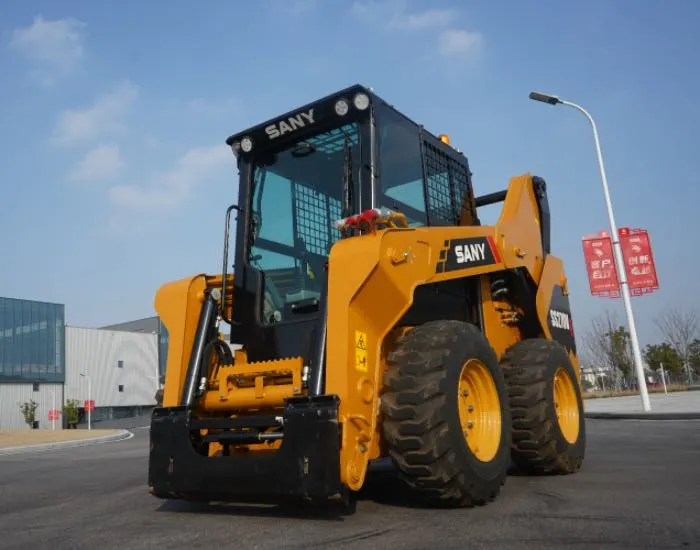
A skid steer loader is a wheeled, specialized chassis-mounted machine that uses the difference in linear speed between its two wheels to achieve steering. It is compact, flexible, and multifunctional, and widely used in engineering construction and other fields. It typically employs four-wheel drive and an articulated steering system, achieving on-the-spot steering by utilizing the different speeds of the wheels on both sides, greatly reducing operating space. Simultaneously, it relies on a hydraulic transmission system to convert the engine's mechanical energy into hydraulic energy to drive the working devices.
Skid steer loaders can quickly and randomly change or attach various working devices on-site to adapt to different working environments and tasks. These include tasks such as shoveling, stacking, lifting, digging, drilling, crushing, and grabbing. It is primarily used in situations with confined spaces, uneven terrain, and frequently changing tasks, and is suitable for infrastructure construction, industrial applications, dock loading and unloading, urban streets, residential areas, etc. It can also be used as auxiliary equipment for large-scale engineering construction machinery.
What Is A Wheel Loader?
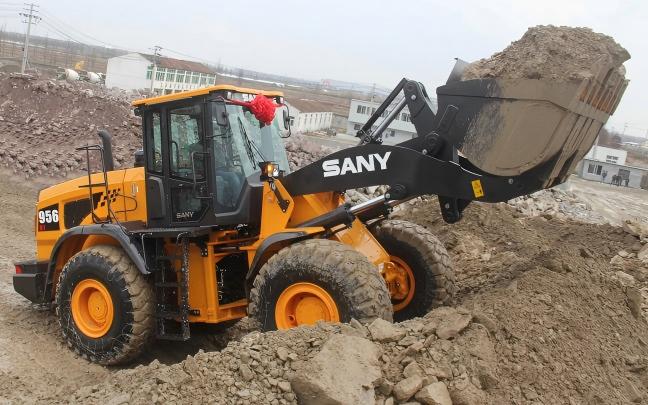
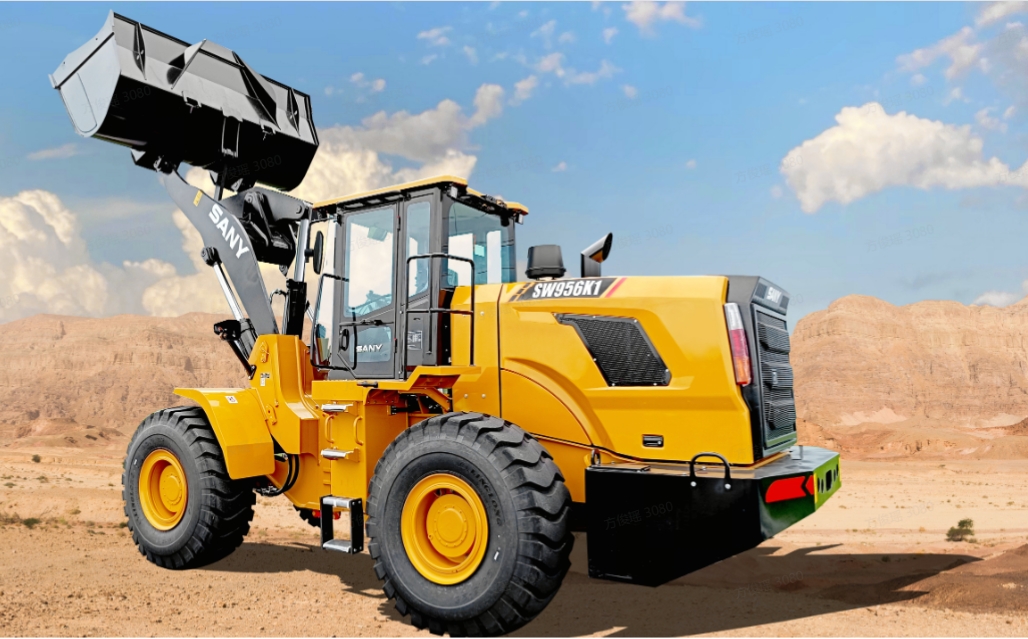
A wheel loader is a type of engineering machinery that uses tires as its walking device, employs a hydraulic transmission system, and is equipped with a lifting and tipping bucket. It is a widely used general-purpose machine in engineering construction and belongs to a subcategory of front-end loaders. It primarily relies on an engine to drive a hydraulic system, controlling the bucket to complete tasks such as shoveling, lifting, unloading, and pushing. It is characterized by its maneuverability, high speed, convenient relocation, and high operating efficiency, and can quickly switch between different work sites.
The bucket of a wheel loader can be replaced with forks, grapples, breakers, and other auxiliary devices as needed. It can be used for shoveling and transporting bulk materials such as sand, gravel, soil, and ore in mines and construction sites, as well as for material stacking, site clearing, and short-distance transportation. It can also be used in conjunction with excavators for auxiliary operations. It is commonly found in construction, road construction, mining, port loading and unloading, and agricultural irrigation projects.
Wheel Loader vs Skid Steer: What's the Difference?
1. Maneuverability
- Skid steer loaders: These achieve on-the-spot turning by the difference in speed between the two wheels, with virtually no turning radius. They can maneuver freely in confined spaces such as warehouses and indoor construction sites, and can even turn within the length of the machine itself.
- Wheel loaders: These rely on the deflection of the front wheels for steering. They have a large turning radius, typically requiring several meters of space to complete a turn, and are less maneuverable in narrow alleys or congested areas.
2. Size
- Skid steer loaders: These are relatively small, compact machines with a short body and narrow width, typically weighing between 2,800 and 11,600 pounds.
- Wheel loaders: These have operating weights ranging from 6,000 to 250,000 pounds. They are larger machines and can perform tasks at levels that skid steer loaders cannot handle.
3. Speed
- Skid steer loaders: These operate at slower speeds, with a maximum speed of approximately 12 mph. They are primarily suited for short-distance, high-frequency work within a site.
- Wheel loaders: These operate at higher speeds, typically reaching 25 mph. They do not require trailers for relocation and can move quickly over long distances between different work sites.
4. Versatility and attachments
- Skid steer loaders: Can be equipped with hundreds of attachments such as hydraulic breakers, augers, grass grabbers, snowplows, and sweepers to perform tasks like crushing, drilling, grabbing, sweeping, and snow removal, offering high versatility. For example, the SANY skid steer loader can be paired with snowplows, grinders, and augers to meet different operational needs.
- Wheel loaders: Attachments are primarily buckets, with some interchangeable with forklifts and grab buckets. However, the overall variety of attachments is less than that of skid steer loaders, and their core function focuses on loading and pushing bulk materials.
5. Terrain handling and traction
- Skid steer loaders: Wheeled skid steer loaders generally have limited off-road capability, but tracked skid steer loaders can operate stably in complex terrains such as mud, swamps, and rugged mountains. Traction is precisely distributed through independent drives on both sides. On slippery surfaces, tracked loaders can further reduce the risk of slippage by increasing the contact area.
- Wheel loaders: Wheeled designs perform well on flat, hard surfaces, but their off-road capability is poor when facing deep ditches, steep slopes, and soft dirt roads. Traction is distributed by a single drive axle, making them prone to localized slippage in complex terrain.
6. Costs
- Skid steer loaders: New models range from $25,000 to $65,000, while used models are roughly half the price of new ones. For many contractors, renting a skid steer loader is often a more affordable and cost-effective option than a wheel loader for short-term projects.
- Wheel loaders: Due to differences in model, size, and brand, wheel loaders have a wider price range, typically between $40,000 and $200,000.
7. Fuel efficiency and tire wear
- Skid steer loaders: Skid steer loaders typically operate at higher throttle levels, resulting in lower fuel efficiency. Due to frequent differential steering, wheeled skid steer loaders experience rapid tire wear, while tracked loaders show no tire wear, but their tracks are prone to wear.
- Wheel loaders: These are typically equipped with a throttle management system, adjusting the throttle to a higher level only under additional loads, resulting in better fuel economy. Tire wear is also relatively even, but tire replacement costs are high due to heavy loads and long driving distances. For example, the SANY wheel loader employs superior hydraulic technology, including a variable displacement hydraulic system and a compact design, aimed at improving fuel efficiency.
8. Operator safety and comfort
- Skid steer loaders: The cab is cramped, with a compact seat and control lever layout, which can easily lead to fatigue during prolonged operation. The engine of a skid steer loader is usually located behind the operator, resulting in slightly lower visibility to the sides and rear. However, the operating area is mostly a small, enclosed space, making the risks of collisions and rollovers relatively controllable.
- Wheel loaders: Due to their size difference, wheel loaders offer a more spacious cab than skid steer loaders, providing better operating comfort. Furthermore, their higher seating position reduces obstruction to the operator's view, resulting in higher visibility and safety.
Skid Steer vs Wheel Loader: Which Should You Choose?
1. Situations Requiring the Selection of Skid Steer Loaders
- Limited operating space: Operations must be carried out in confined areas such as indoor construction sites, alleyways, urban pipeline maintenance sites, and narrow warehouses, requiring agile maneuvering.
- Diverse job types: Frequent switching between different functions is required, such as crushing, drilling, material grabbing, road sweeping, snow removal, ditching, loosening soil, and debris clearing, relying on various specialized attachments to complete delicate tasks.
- Small-scale operations: Only small batches of materials need to be moved, with low unloading height requirements and no need for long-distance or extended relocation.
- Limited budget: Sensitive to equipment purchase or leasing costs, and low daily fuel consumption requirements.
- Complex terrain: Stable operation is required in muddy, swampy, and rugged mountainous areas; tracked skid steer loaders can be selected to improve mobility.
2. Situations Where Wheel Loaders are Selected
- For operations in open areas, such as open-pit mines, large construction sites, ports, and large material yards, where there is no need to worry about the turning radius or size of the equipment.
- For large-scale bulk material handling, such as shoveling sand, gravel, soil, ore, and bulk feed, where high load capacity and unloading height are required, and operational efficiency is paramount.
- For frequent long-distance relocations, such as traveling between multiple construction sites, where reliance on trailers is undesirable, allowing for autonomous movement using its high speed.
- For situations where long-term operating costs and operator experience are prioritized, where the equipment is used frequently and has long operating cycles, requiring a spacious and comfortable cab, and where higher initial purchase and leasing costs are acceptable.
- For operations primarily on flat, hard surfaces, such as highways, paved construction sites, and open farmland, where complex terrain is not a concern, wheeled loader offers greater stability and efficiency.
Conclusion
The above covers the basics and differences between skid steer vs wheel loader. You can choose the appropriate equipment based on your actual needs, such as workspace, material size, and terrain conditions, to reduce operating costs and make the construction process smoother and more efficient.
FAQS
What Are the Disadvantages of Skid Steer Loaders?
The disadvantages of skid steer loaders include: slower travel speed, requiring reliance on trailers for relocation; limited load capacity and unloading height, making them unsuitable for large-scale material handling and only suitable for small-scale, precision operations, thus limiting their versatility. Additionally, wheeled models experience rapid tire wear, tracked models have high maintenance costs, and the small cab leads to poor comfort during extended operation.
What Are the Disadvantages of Wheeled Loaders?
Wheeled loaders have high requirements for operating terrain, exhibiting poor passability on muddy or rugged surfaces; higher fuel consumption, resulting in higher operating costs; and a larger size, leading to insufficient maneuverability in confined spaces. Furthermore, wheeled loaders experience rapid tire wear, especially under harsh conditions, and their initial purchase cost is relatively high.
Skip Loader vs Skid Steer: What's the Difference?
A skip loader is equipped with a tipping bucket, combining loading and short-distance transport functions. It is primarily used for small-scale earthmoving and garbage transfer, unloading via tipping the bucket. It uses front-wheel steering, is relatively large, has a large turning radius, and requires ample space to operate.
A skid steer loader does not have an independent tipping bucket, relying on various quickly-changeable attachments at the front end for operation, making it more versatile. At the same time, skid steer loaders are smaller and can turn on the spot using the speed difference between their two wheels, making them suitable for operating in confined spaces.
Skid Steer vs Front Loader: What's the Difference?
Front-end loaders are a general term for equipment with the bucket located at the front, including wheeled and tracked models. Skid steer loaders are a sub-type of front-end loader, which are wheeled and achieve on-the-spot turning by the difference in speed between the two wheels. Skid steer loaders are compact, have many attachments, and are suitable for narrow spaces and various working conditions, but have limited load capacity and unloading height. Other models of front-end loaders are more focused on heavy-duty and efficient shoveling and transport, and are suitable for large-scale operations in open spaces.
Featured Products
Recommend Blogs
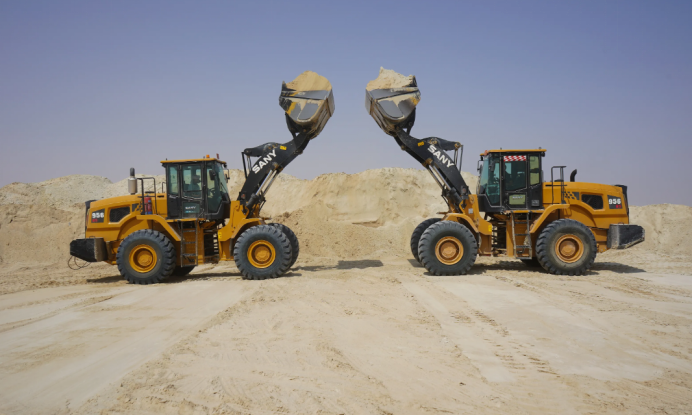
What Is a Wheel Loader? From Basic Definition to Core Applications
This guide covers key aspects such as definition and working principle, and explains in detail what is a wheel loader to help you select the right model smoothly.
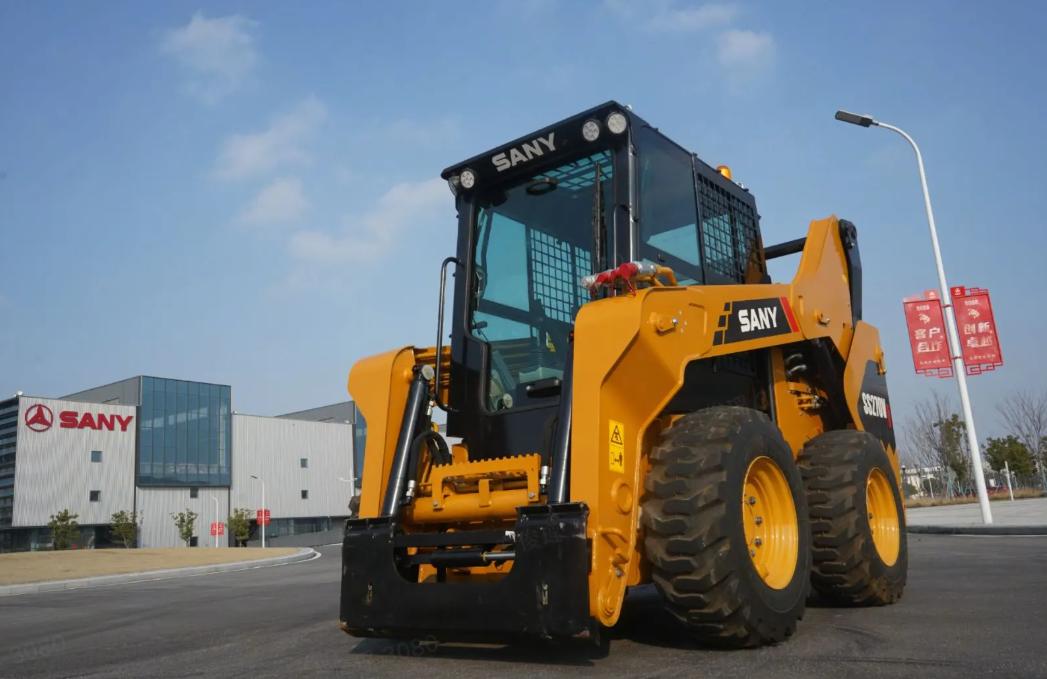
Skid Steer Loader Uses Guide: Helping You Work Efficiently
This article explains skid steer loader uses and provides specific selection recommendations.
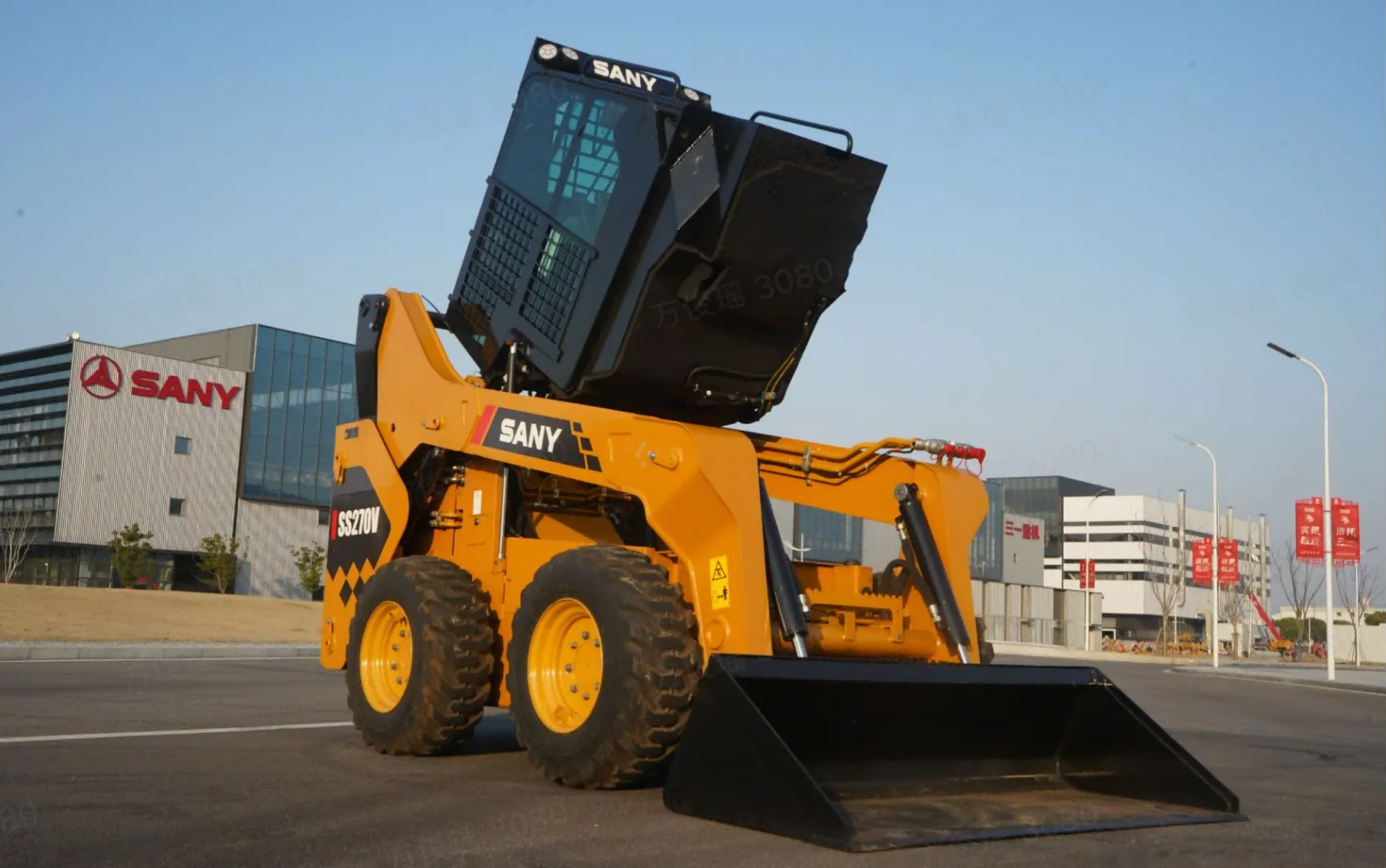
Skid Steer Loading Guide: Key Steps, Practical Tips & Pitfall Avoidance
This guide outlines skid steer loading and transport procedures, highlighting common errors and providing practical avoidance methods.