Practical and Hardcore Special Equipment! The Complete Guide to Side Loader Trucks
This guide details the definition, role, and core advantages of side loader trucks, helping you sort out the main application scenarios of a truck with side loader.
As cost-effective special equipment featuring a unique side-loading design, the side loader truck combines practical functions such as loading, unloading, and transportation. It not only effectively improves work efficiency but also adapts to diverse application scenarios including ports, logistics, railway transportation, and special operation scenarios, demonstrating indispensable value in different fields. This guide will provide a comprehensive interpretation of the side loader truck, helping you gain a deep understanding of this hardcore equipment.
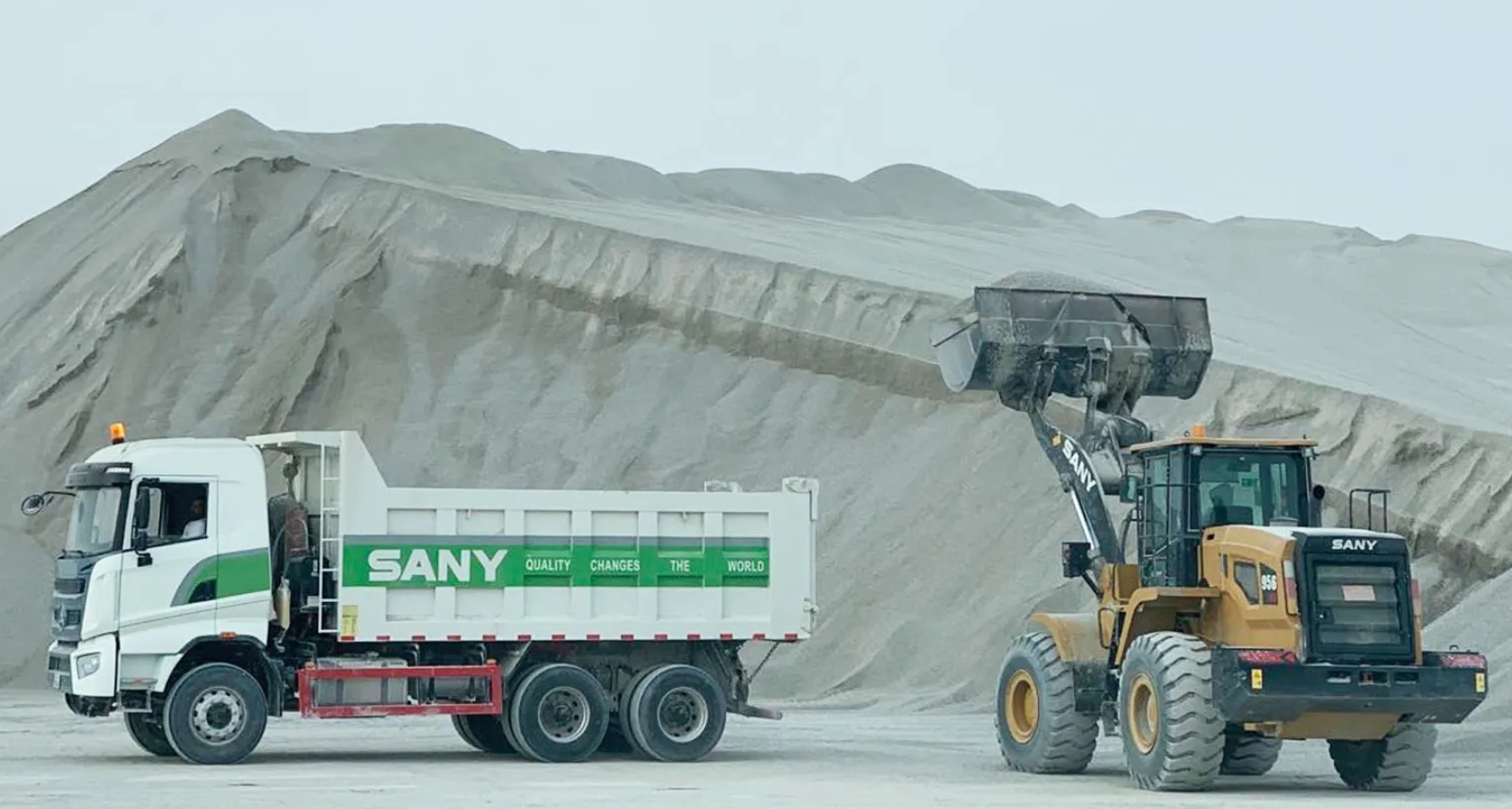
What Is a Side Loader Truck?
A side loader truck, or a truck with side loader, is a special freight vehicle integrated with a side-mounted lifting device. It enables integrated "self-loading/unloading + transportation" operations for materials, especially long and heavy goods such as containers, precast concrete components, and large cable reels. Its core components include the following parts:
1. Truck Chassis
As the power and transportation base for a side loader truck, it provides engine power for travel, supports the entire vehicle's weight, and meets the needs of different cargo weights and transport distances.
2. Side-Mounted Lifting System
This is the core functional unit of a truck with side loader. Composed of a hydraulic drive unit, a load-bearing structure, and grabbing components, it can efficiently and conveniently grab, lift, or secure various types of cargo from the ground, platforms, or other vehicles. Common forms include the following types:
- Fork Arms: Suitable for standardized cargo such as containers and pallets.
- Telescopic Arms: Suitable for non-standardized cargo such as accident vehicles and large equipment.
- Mast Frames: Suitable for heavy and ultra-wide cargo such as large transformers and precast concrete walls.
3. Operation Control System
Integrated in the cab, this system serves as the control center that converts the operator’s instructions into the movements of the side loader truck. For example, it adjusts the lifting, telescoping, and rotating actions of the lifting system.
4. Safety and Stability Devices
It mainly includes safety components such as a level adjustment system, anti-tipping supports, and load sensors, which can effectively prevent potential issues like rollovers and overloading. Some models of side loader trucks are also equipped with side-view cameras to eliminate blind spots and improve operational safety.
Types and Configurations of Side Loader Trucks
Based on differences in chassis configurations, lifting devices, and operational scenario requirements, side loader trucks can be categorized into different types, each with distinct configuration features and applicable scenarios.
1. Classification by Chassis Configuration
- Integrated Side Loader Truck: This type of truck with side loader features an integrated design of the truck chassis and the lifting device. It features a compact structure, strong stability, and no need for additional assembly. With a small turning radius and flexible operation, it is especially suitable for high-frequency handling of small and medium-sized cargo.
- Trailer-Mounted Side Loader Truck: Composed of a tractor and a side-loading trailer, it has the lifting device installed on the trailer. Different tractors or trailers can be flexibly replaced as needed, making it suitable for handling large cargo.
2. Classification by Lifting Device
- Fork-Arm Side Loader Truck: It uses liftable and telescopic fork arms as the lifting device. It is mainly used to handle palletized cargo, containers, or regular long items such as steel pipes and timber.
- Boom-Type Side Loader Truck: The lifting device is typically a hydraulic telescopic boom, which can be fitted with hooks, grabs, or special spreaders. It allows flexible rotation and luffing operations, making it suitable for handling irregular cargo—such as cable reels, large equipment, and cargo in narrow spaces.
- Mast-Type Side Loader Truck: It uses a vertically lifting mast as the lifting device. With strong load-bearing capacity, it is suitable for handling and lifting heavy and ultra-wide cargo, such as precast concrete walls and large transformers. However, this type of equipment has higher requirements for the width of the operation site.
3. Classification by Operational Scenario
- Stacking-Type Side Loader Truck: Equipped with a lifting device capable of double-layer stacking, it supports stacked storage of cargo (e.g., double-layer stacking of containers). It saves storage or transportation space and is applicable to operational scenarios that require cargo stacking, such as port yards and logistics parks.
- Off-Road Side Loader Truck: Typically equipped with off-road tires, high ground clearance, and a reinforced chassis, it has low ground pressure. It is suitable for operations in uneven outdoor sites, such as mines, oil fields, and remote infrastructure projects.
- Intelligent Side Loader Truck: This type of truck with side loader integrates GPS positioning, load sensors, camera monitoring, and wireless remote control functions. It supports remote operation and automated operations, making it suitable for unmanned loading and unloading in hazardous environments.
Key Advantages of Using Side Loader Trucks
As a special equipment with a unique design and wide applications, side loader trucks not only provide operational experiences that traditional trucks and trailers cannot achieve, but also can be used in conjunction with other equipment, such as a skid steer loader and a wheel loader, offering you multiple advantages:
1. High Operational Efficiency, Reducing Waiting Time
Side loader trucks can quickly load and unload containers anytime and anywhere. A single complete operation usually takes only 2-4 minutes. Even without on-site loading/unloading platforms or third-party equipment, they can achieve "load upon arrival, depart upon loading, and unload upon arrival," featuring high efficiency and short time consumption, which can significantly accelerate cargo turnover speed.
2. Lower Comprehensive Costs, Reducing Equipment Dependence
A truck with side loader integrates both loading/unloading and transportation functions, reducing reliance on external equipment such as cranes and forklifts, as well as additional transport vehicles, thereby simplifying workflows. This not only lowers equipment procurement, maintenance, and labor costs but also reduces the communication costs of personnel collaboration.
3. Effectively Ensuring Cargo and Operational Safety
Based on unique loading and unloading methods, such as 2+2 point horizontal lifting, side loader trucks can effectively prevent cargo from tilting, colliding, or falling, making them especially suitable for transporting dangerous goods, fragile items, or high-value cargo. Meanwhile, only one operator is needed for loading, unloading, and transportation processes, eliminating the need for multi-person collaboration, thus better ensuring safety.
4. Flexible Functions, Compatible with Different Equipment
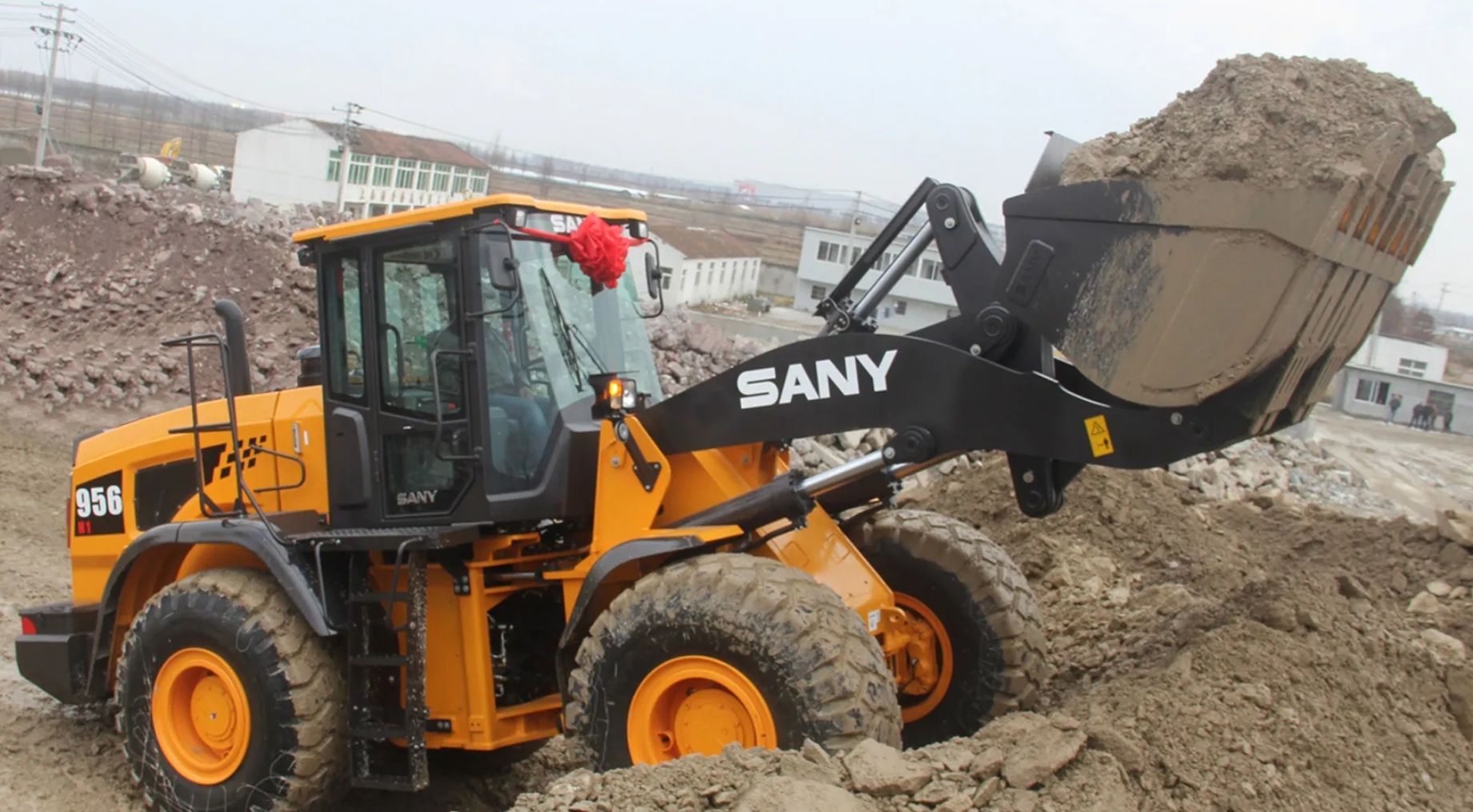
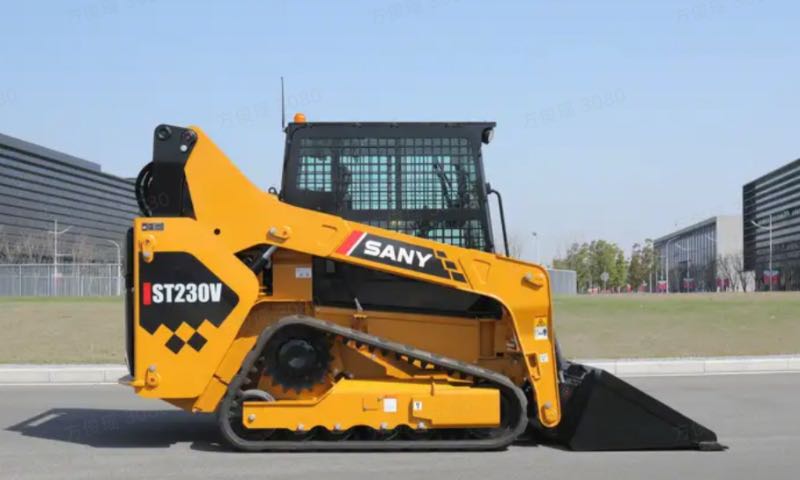
Beyond fulfilling the dual needs of transport vehicles and cranes, side loader trucks can flexibly adapt to different loading and unloading tasks by changing attachments—such as switching fork arms to hooks or grabs. Moreover, depending on the differences in operational scenarios, they can efficiently collaborate with other equipment, like a skid steer loader and a wheel loader.
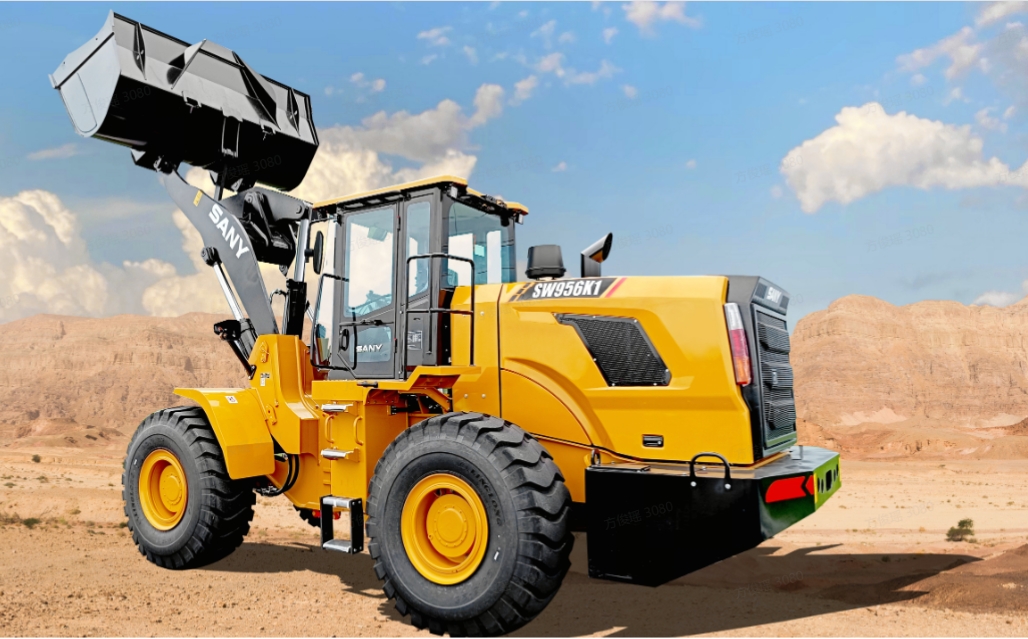
For example, on large construction sites, with the help of wheel loaders (such as the SANY wheel loader SW936K1), on-site operators can transport large quantities of construction materials like sand, gravel, and cement to designated locations for centralized stacking. Side loader trucks, on the other hand, can transport and load/unload large prefabricated components and equipment to the site. The two types of equipment perform their respective roles and cooperate with each other, effectively improving construction efficiency.
5. Strong Scenario Adaptability, Breaking Site Limitations
Traditional loading and unloading equipment imposes high demands on the worksites—for instance, cranes need open spaces, and forklifts need level ground. However, side loader trucks, with their unique design and rich types, can adapt to different operational environments. They can be used in remote sites without loading/unloading platforms, narrow spaces, or rough, muddy outdoor areas.
Practical Use Cases of Side Loader Trucks
Side loader trucks have a wide range of applications, which have expanded from the early wood industry to logistics, infrastructure, industry, rescue, and other fields. Typical application scenarios are as follows:
Application Field | Core Operational Content | Suitable Cargo Types | Core Advantages in Scenarios |
Logistics and Transportation |
| Standard containers, steel/aluminum profiles, large mechanical equipment parts, bulk industrial raw materials | Enables integrated transportation and loading/unloading without relying on fixed equipment; side operation reduces the risk of damage |
Infrastructure Engineering |
| Bridge prefabricated parts, wind power/photovoltaic equipment, steel bars/formwork, and small engineering machinery | Adapts to confined sites such as access roads; operable in closed/semi-closed environments (such as tunnels, subways), breaking through the limitations of operating space |
Industrial Production |
| Heavy industrial raw materials, large machine tools, motors, gearboxes, and other heavy equipment parts | Integrates into the production process, reducing transfer links; improves equipment maintenance efficiency and shortens factory downtime |
Emergency Rescue |
| Rescue tents, breaking tools, road repair materials, mobile medical cabins, and first-aid equipment boxes | Rapid response in complex environments (damaged roads, chaotic sites); no need for fixed operating sites, adapting to temporary rescue needs |
In addition to the above application scenarios, side loader trucks are also suitable for loading and unloading across trailers/railway freight cars, and can be transported by road in strict accordance with various regulations, playing a role in more scenarios.
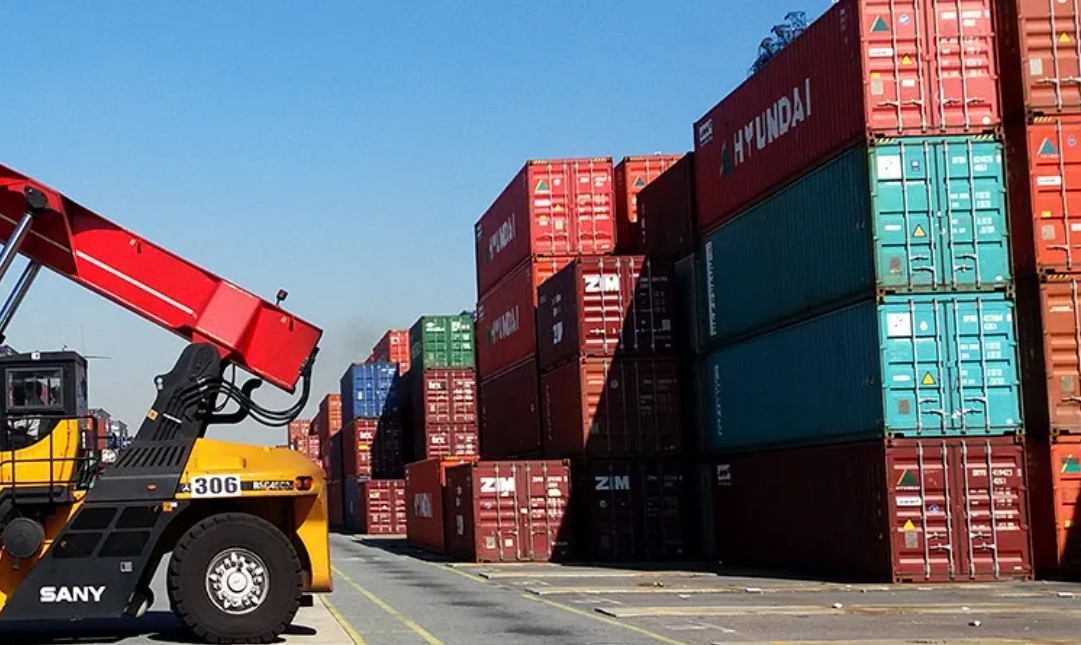
How Does a Side Loader Truck Operate?
The operation of a side loader truck primarily revolves around four stages: pre-operation preparation, cargo pickup, transportation and cargo unloading. The key operating points for each stage are as follows:
1. Pre-Operation Preparation
Before formal operation, a detailed site inspection is required. Confirm that the ground in the operation area is level, clear obstacles, and reserve sufficient space for lifting and turning. At the same time, check whether the hydraulic system oil level, pipeline tightness, and lifting device functions of the side loader truck are normal and comply with specifications.
2. Cargo Loading
Once the side loader truck is ready, the operator can perform actions like grabbing, lifting, and moving cargo using the control levers in the cab or a wireless remote control. Throughout the process, keep the operation at low speed and stable at all times to grab, move, and firmly clamp the cargo accurately.
3. Transportation and Transfer
After the cargo is secured, the operator must recheck the fixing status and confirm that the cab has a clear field of vision. Then drive in accordance with road rules to transfer the cargo to the unloading point. When transporting over-length or over-width cargo, corresponding warning signs must be displayed, and sudden acceleration, braking, or sharp turns should be avoided to prevent cargo shift.
4. Unloading Operation
Upon arriving at the target unloading point (such as the ground, other trailers, or warehouses), remove the fasteners between the cargo and the platform. After confirming there are no obstructions, the operator can start the lifting system to transfer and unload the cargo to the corresponding position. Once the cargo is confirmed stable, operate the control lever to retract the forks (or boom) and return to the loading point to start a new round of operations.
Conclusion
As special equipment integrating multiple functions of loading, unloading, and transportation, side loader trucks are widely used in various fields. They not only address the pain points of traditional loading and unloading equipment, such as reliance on external devices, low efficiency, and poor scenario adaptability but also demonstrate significant advantages in cost control and safety. Meanwhile, they can be used independently or efficiently collaborate with other equipment, meeting the operational needs of multiple scenarios and differentiated requirements.
FAQs
What Does a Side Loader Do?
Side loader trucks integrate a transportation module and a lifting device, enabling integrated "self-loading/unloading + transportation" operations for goods. Specifically, they include three main functions:
Cargo grabbing and lifting: Through side-mounted lifting devices such as fork arms, booms, or masts, they grab goods from the ground, other vehicles, or storage platforms and lift them vertically.
Cargo transfer and fixing: They can transfer the grabbed goods to their own carrying platform and lock them with fixing devices to prevent cargo displacement during transportation.
Cargo transportation and unloading: Combined with the truck chassis, they transport goods, and after reaching the destination, unload the goods to the designated location via the lifting device.
What Is the Difference between a Side Loader and a Standard Trailer?
There are many differences between the two, especially in terms of core functions, operational efficiency, and application scenarios. Functionally, a side loader truck combines cargo loading/unloading and transportation capabilities, requires no external loading/unloading equipment and can operate independently. In contrast, a standard trailer focuses on transportation and has no self-loading/unloading function, relying on external equipment such as cranes and forklifts. In terms of operational efficiency, the former takes approximately 2-5 minutes for a single loading/unloading operation, with high efficiency, while the latter may take around 30 minutes for a single loading/unloading (including waiting time). Additionally, a side loader truck can operate in non-platform, narrow, or outdoor sites, adapting to more scenarios than a standard trailer.
How Heavy a Container Can a Side Loader Truck Lift?
The lifting capacity of a side loader truck varies by model and configuration, typically ranging from several tons to dozens of tons. For example, small fork-arm side loader trucks used to transport palletized goods have a lifting capacity of less than 10 tons, while mast-type side loader trucks, which focus on handling heavy and ultra-wide goods, have excellent load-bearing and lifting capabilities, easily lifting large containers weighing dozens of tons.
Featured Products
Recommend Blogs
Skid Loader Lift Capacity Explained: ROC vs Tipping Load & Load Weight
Learn about skid loader lift capacity, tipping load, and ROC. Understand factors affecting lift and how to calculate load weight safely.
How to Operate a Skid Loader? Comprehensive Guide to Efficient and Safe Operations
This article focuses on core components of the skid loader, how to operate a skid loader, safety knowledge, and common operations, helping construction teams carry out projects efficiently and safely.
Skid Loader Weight Classification, Influencing Factors & Selection Guide
This article analyzes the importance, core indicators, model classifications, influencing factors and selection methods of skid loader weight, providing a reference for practitioners.