Road Construction Equipment and Its Uses: A Practical Guide for 2026
What equipment is needed for road construction? This article introduces the types and uses of road construction equipment to help you better conduct road construction.
At construction sites for urban road network upgrades and rural road repairs, the roar of machinery is a common sight. Road construction equipment, each with its own specific function, plays a crucial supporting role in road construction. From basic site leveling to pavement and compaction, different processes correspond to different types of equipment. What are these types? And what are their respective construction uses? This article will provide a clear overview of equipment knowledge and application references.
8 Core Road Construction Equipment Pieces
Choosing the right core road construction equipment is crucial for efficient road construction. From basic work to pavement shaping, each piece of equipment has different core functions and applications.
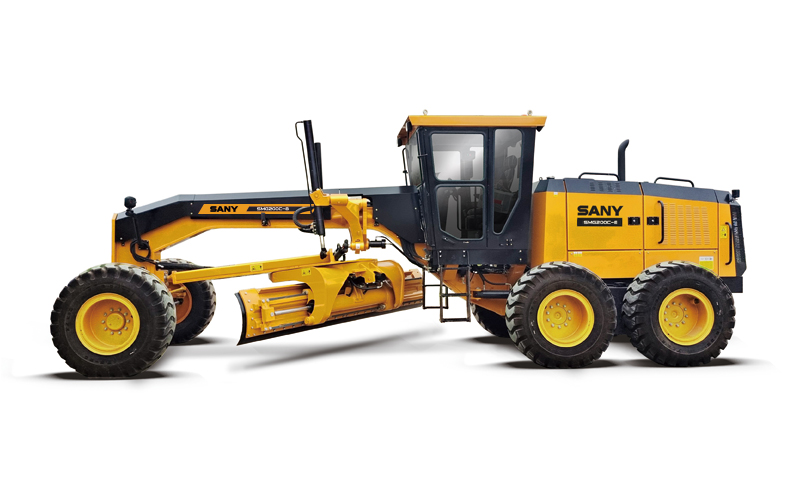
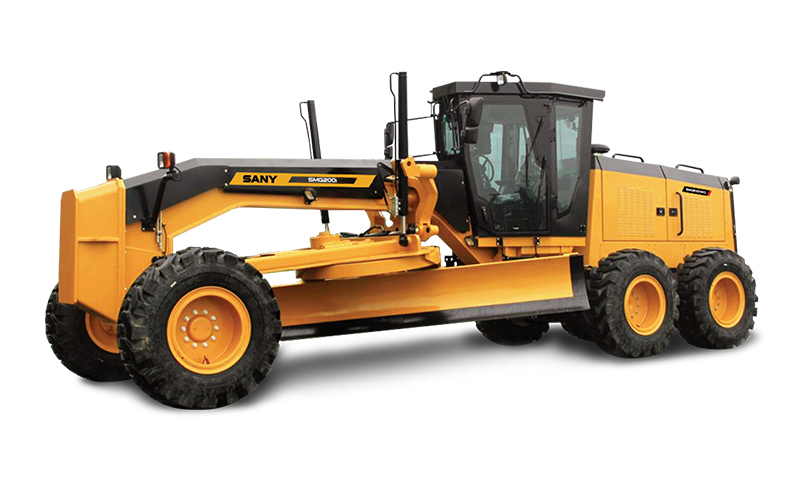
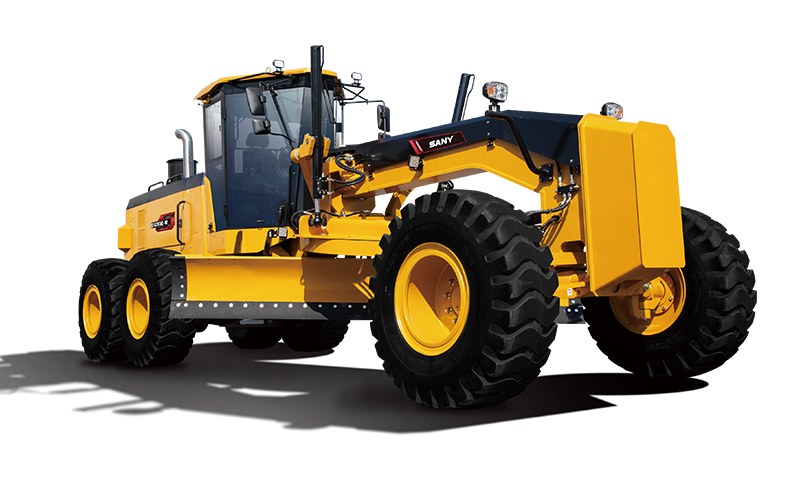
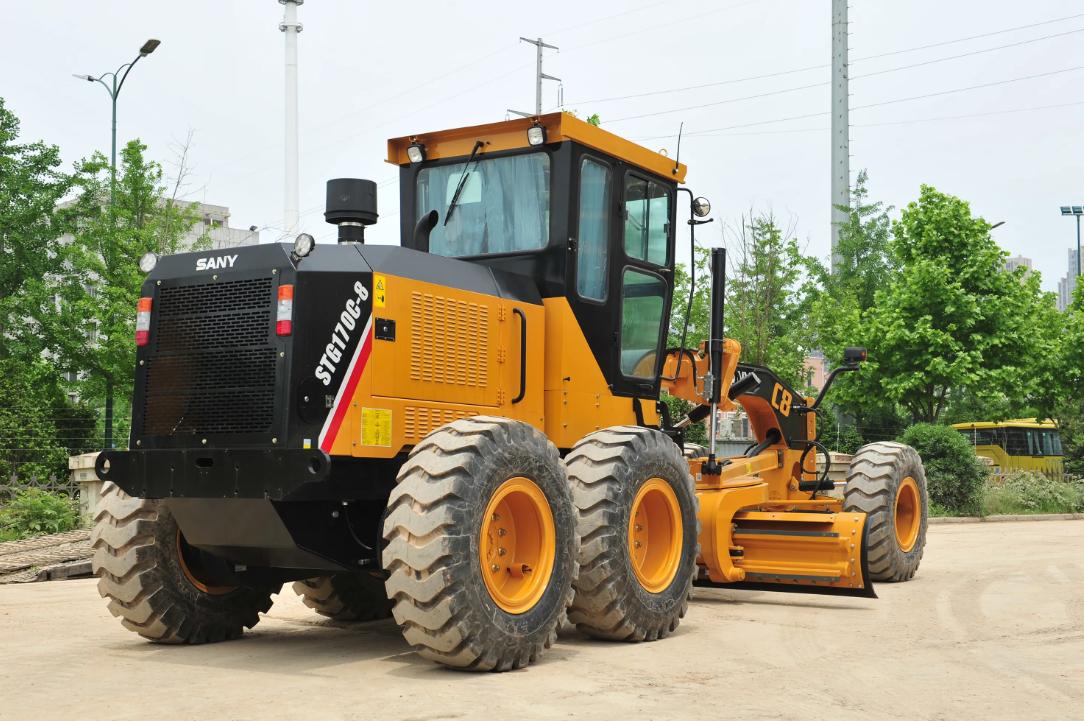
1. Construction Motor Grader
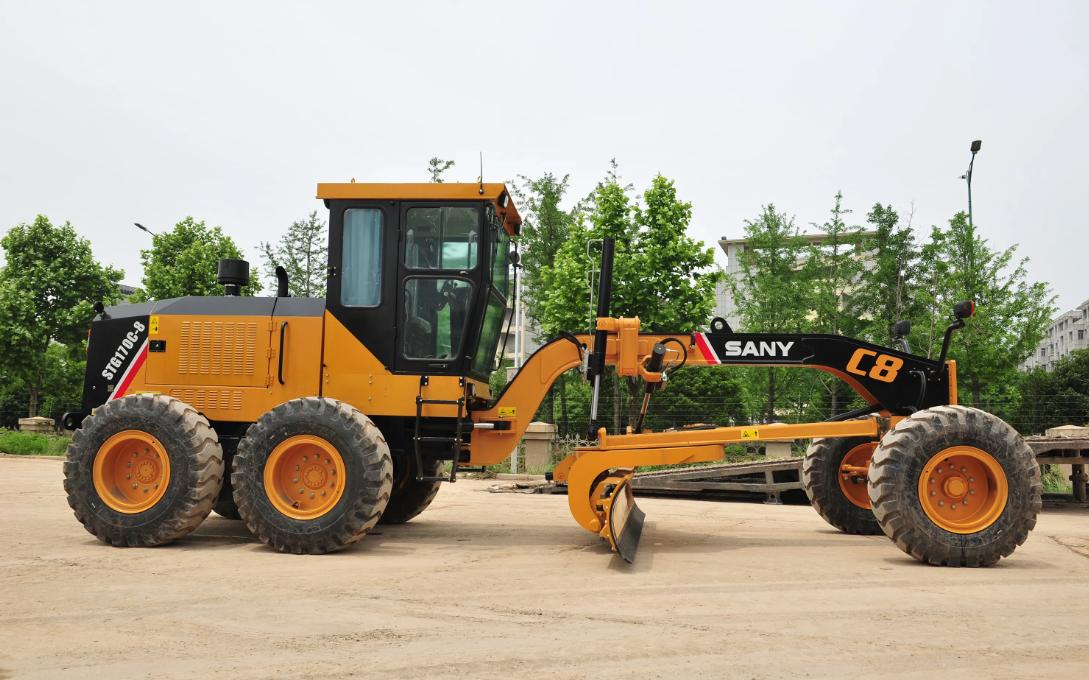
A motor grader, also known as a road grader, is a core piece of road construction equipment. Equipped with long blades spanning the machine's width, it boasts powerful performance and precise control. It often accompanies bulldozers to perform subsequent fine-tuning of the pavement, making it a key tool for ensuring road smoothness and construction efficiency.
For example, the SANY STG Series motor grader uses a high-power, heavy-duty engine that delivers strong output. Its VHP technology allows it to adapt to various working conditions, helping construction workers to better carry out road construction.
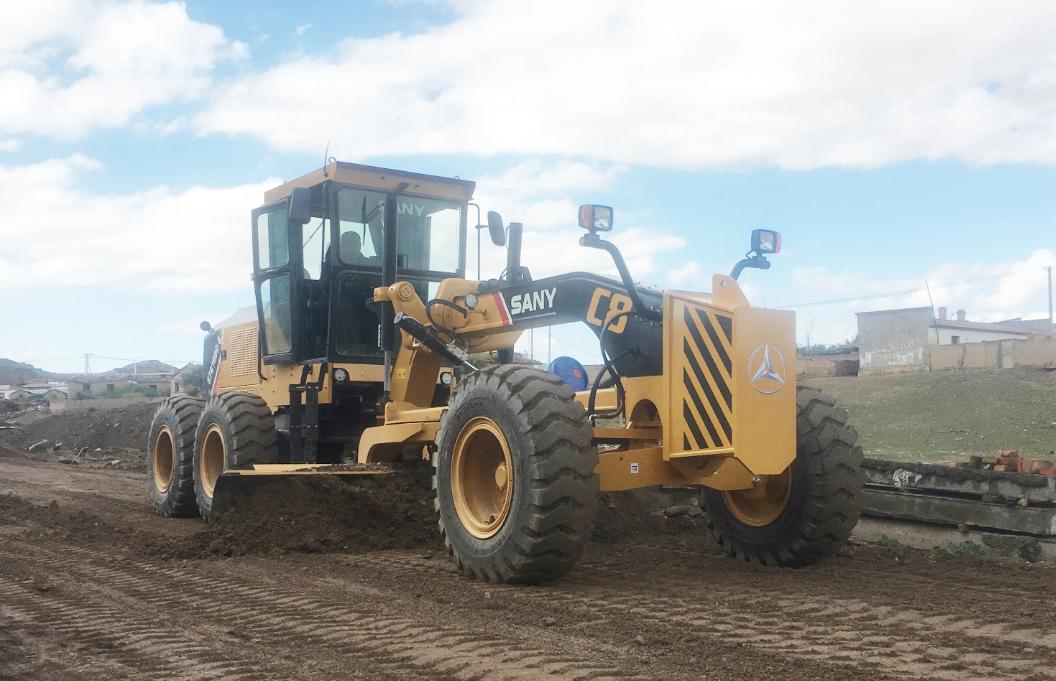
Motor grader uses
1. Precise leveling and smoothing of road surfaces, quickly handling rough and muddy roads, and accelerating construction progress.
2. Precisely shaping the road cross slope, evenly distributing materials to ensure a consistent slope, reducing water accumulation, and improving driving safety.
3. Creating a smooth final road surface, filling in depressions, removing excess material, eliminating road bumps, improving driving comfort, and extending the road's service life.
Motor Grader Classification
Motor graders can be classified into two main categories based on their frame structure:
- Rigid frame graders: As a standard configuration, it features high stability and robustness, and such motor grader applications are suitable for operation scenarios requiring precise control, such as pavement leveling and pavement trimming.
- Articulated frame graders: These have hinges between the front and rear axles, offering exceptional flexibility and allowing for efficient operation in confined spaces. They are ideal for urban road construction.
2. Road Rollers
Road rollers are the core compaction equipment in road construction and are also important road construction equipment. They eliminate voids in materials and increase density through roller compaction, ensuring the stability of the road foundation and the quality of the pavement.
Core Uses
Asphalt pavement compaction: Performed immediately after paving and with water applied to the rollers to ensure compaction effect and smoothness; Subgrade soil compaction: Performed after clearing the land to improve the density, strength, and bearing capacity of the subgrade.
Main Classifications
Based on the material being compacted, they are divided into asphalt rollers (suitable for asphalt) and soil compactors specifically designed for roadbeds. Based on the working principle, they are divided into static rollers that rely on their own weight and vibratory rollers with a vibrating mechanism for higher compaction efficiency.
3. Asphalt Mixing Plant
An asphalt mixing plant is a crucial piece of equipment in road construction, primarily used in large-scale road projects. It is typically located on the road construction site and is a specialized unit that mixes various road surface materials according to standardized proportions.
Applications of an Asphalt Mixing Plant
It is mainly used to uniformly mix asphalt, crushed stone, coated subgrade, and other road surface materials in the correct proportions to prepare asphalt mixtures that meet road construction standards. Once the mixture is ready, it is directly supplied to road paving operations, providing qualified core raw materials for road construction.
4. Asphalt Paver
Asphalt pavers are specialized road paving equipment used in road construction. Available in various sizes and configurations, including wheeled and tracked models, they are adaptable to different construction projects and site conditions. Composed of a hopper, conveying system, and screed, they feature precise control and automation.
Applications of Asphalt Pavers
The core function of asphalt pavers is to precisely and efficiently pave hot-mix asphalt concrete. By evenly spreading and leveling the asphalt mixture to the specified thickness and width, they create a smooth and even road surface, ensuring the flatness, compaction, and durability of paved surfaces such as roads, highways, and airport runways, producing high-quality pavements that meet industry standards.
5. Forklifts
Forklifts, also known as lifting trucks, were initially used for material handling in large manufacturing enterprises or factories. After mechanical structure improvements, their applications have continuously expanded. They are important pieces of handling equipment in road construction, equipped with extended platforms to lift and transfer heavy objects.
Forklift Uses
The core purpose of forklifts is for heavy material handling operations at road construction sites. With the help of extended platforms, they can lift objects from the ground or underground and smoothly transfer them to any location on the construction site, effectively reducing the burden of manual handling, accelerating the construction progress of road projects, and ensuring efficient material handling.
6. Tracked Excavators
Tracked excavators are heavy-duty construction equipment used in road construction. Equipped with a boom, bucket, and cab, they can have their front-end attachments changed to suit different work requirements. Their flexible structural design allows them to adapt to various road construction scenarios.
Applications of Tracked Excavators
Primarily used for excavation work in road construction, they can excavate materials such as paving rocks, clay, and earthwork, and load the excavated materials onto dump trucks. They also have a wide range of uses, including transporting rocks or soil from construction sites. With different front-end attachments, they can assist in various construction-related tasks, laying the foundation for road construction.
7. Truck Cranes
Truck cranes are road construction lifting equipment that mounts a lifting system on a heavy-duty truck chassis. They combine lifting capacity with flexible mobility, making them easier to relocate and install than stationary cranes, significantly simplifying on-site operations.
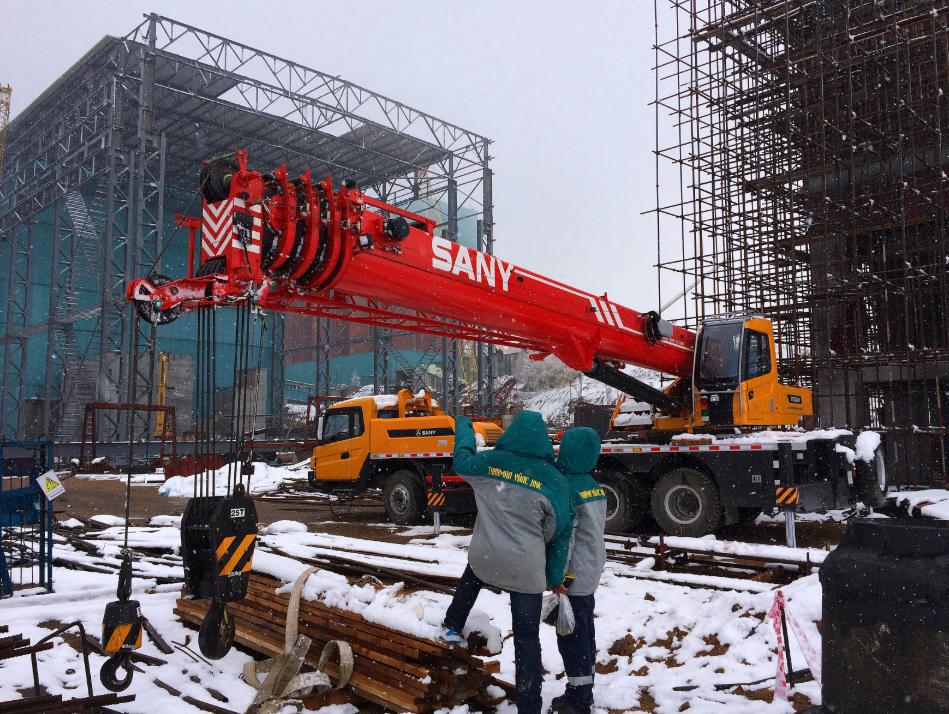
Truck Crane Applications
Truck cranes are primarily used for heavy lifting and loading/unloading operations at road construction and building sites. They can lift construction equipment, load and unload heavy industrial materials, and move heavy materials such as steel beams and containers, meeting various heavy lifting needs on construction sites. They are essential equipment for heavy material handling and equipment hoisting.
Main types of truck cranes
Truck-mounted truss boom crane: High lifting capacity, capable of handling ultra-heavy lifting operations;
Knuckle boom crane: Excellent flexibility, suitable for heavy lifting operations in confined spaces;
Telescopic boom crane: Lifting height can be flexibly adjusted, suitable for various construction lifting tasks.
8. Loaders
Loaders are core material handling and site preparation auxiliary equipment in road construction. They are essential road construction equipment, with various attachments available. They can work in conjunction with large machinery, adapting to multiple construction scenarios, and are indispensable equipment on construction sites.
Core Uses
Used for land clearing and material handling/loading. They can efficiently transfer materials such as clay and gravel to dump trucks. With different attachments, they can perform a variety of auxiliary tasks.
Main Classifications
Wheel Loaders: High efficiency, essential for routine construction;
Skidney Steer Loaders: Compact and flexible, suitable for narrow and hard terrain, high cost-effectiveness;
Compact Tracked Loaders: Suitable for rugged, soft, and complex terrain, with excellent performance in wet climates.
Road Construction Equipment: Other Key Auxiliary Equipment
In the entire road construction equipment system, auxiliary equipment is an indispensable and important component. Working in tandem with large main equipment, it supports key aspects of the entire road construction process, such as material handling and site preparation. Although these devices are mostly small to medium-sized machines, they can significantly improve construction efficiency and refine operational details.
Earthmoving Equipment
1. Bulldozers
Bulldozers are the core earthmoving equipment for road construction. With a robust structure, heavy-duty tracks, and a large front blade, they are powerful and adaptable to complex terrain, making them essential for site preparation in the initial stages of road construction.
Bulldozer Applications
Primarily used for site clearing and terrain leveling in the initial stages of road construction, bulldozers can move and transport large quantities of soil, rocks, and debris to create working surfaces for subsequent construction. They can also precisely shape the terrain, adjusting the blade angle and depth to create slopes and compaction to meet specifications, ensuring effective drainage and pavement stability, and preventing erosion and foundation hazards.
2. Scrapers
Designed for large-scale earthmoving and material transport, Scrapers are equipped with large buckets (bowl-shaped buckets), powerful engines, and articulated designs, allowing them to flexibly handle complex terrain at construction sites. They are essential and powerful equipment at all stages of road construction.
Applications of Scrapers
Earth Excavation: Highly efficient single-pass excavation and loading of soil, gravel, and other materials, suitable for embankment construction, pipeline trench excavation, and borrow pit excavation.
Material Transportation: Short-to-medium distance material transport within the construction site, precisely delivering materials to designated locations, reducing additional equipment and labor input.
Subgrade Shaping: Evenly spreads materials, shaping the subgrade to the specified slope and compaction, creating a stable foundation for the road surface. Also suitable for asphalt recycling and base course gravel paving.
Compaction Auxiliary Equipment-Cold Milling Machine
Equipped with a rotating drum and carbide cutters, it comes in various sizes to suit different project scales. Precise placement during operation is key to ensuring stable operation and preventing milling deviation.
Applications of Cold Milling Machines
Primarily used for road resurfacing and repair, professionally milling and removing old or damaged road surfaces and asphalt layers, making it a key piece of equipment in road maintenance and repair.
The asphalt debris generated during milling can be recycled and reused. After processing to separate aggregates and remove contaminants, it can be reused, effectively reducing project disposal costs and material expenses.
Transportation Equipment-Dump Trucks
Heavy-duty dump trucks are indispensable transportation equipment in road construction. They are mainly divided into two types: rigid and articulated. The former can travel on highways, while the latter is for off-highway use. They are the core vehicles for ensuring the transfer of road construction materials.
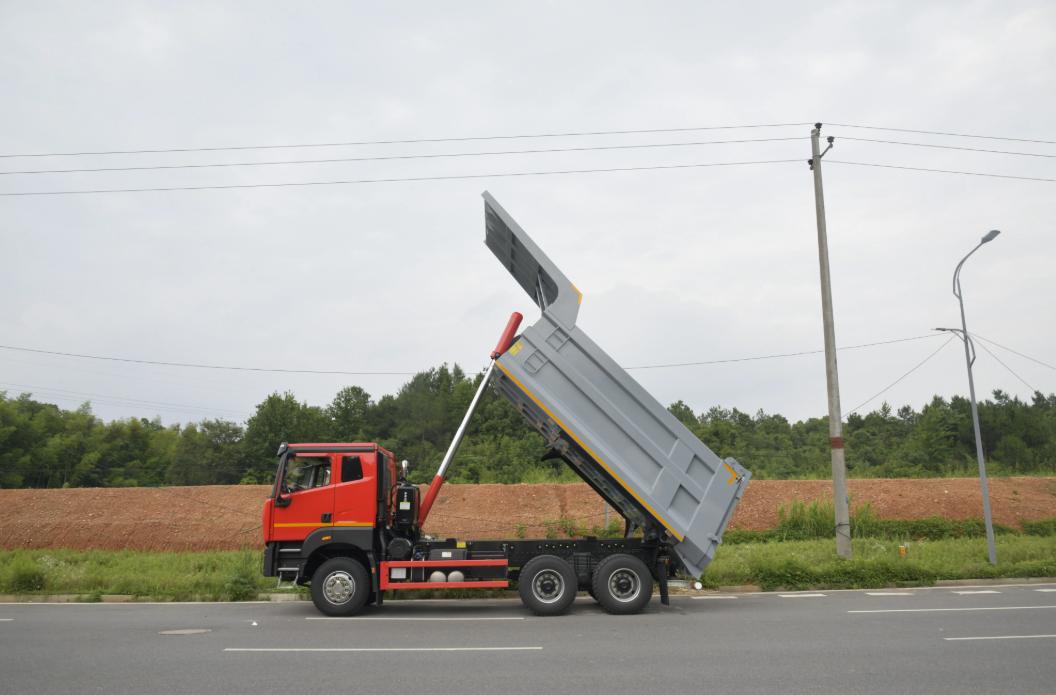
Applications of Heavy-Duty Dump Trucks
·Efficiently and safely transfer various construction materials, protecting them from contamination and damage during handling, ensuring the quality of transported materials;
·Significantly reduce the number of material transport trips, improve on-site operational and production efficiency, and accelerate construction progress;
·Precisely control material delivery time, ensuring the rhythm and planning of construction material supply, and facilitating the smooth progress of road construction projects.
How to Select Appropriate Road Construction Equipment Based on Road Type?
Road type determines the construction scenario and operational requirements, and selecting the right construction equipment is key to ensuring project quality and improving construction efficiency. Different roads have different requirements for equipment performance, specifications, and functions. The following will provide targeted selection strategies and practical references.
Urban Roads vs. Rural Roads
Urban Road Construction Equipment Selection
Urban road construction is characterized by dense populations, high traffic volume, complex public facilities, and limited construction space. Furthermore, it often occurs near residential/commercial areas. Therefore, the core requirements for equipment selection are compact structure, powerful engine, adaptability to confined working spaces, and advanced dust suppression and noise reduction functions. Modern equipment equipped with environmentally friendly engines and automated functions is preferred.
Suitable core equipment: Small dual-drum rollers, sensor pavers, cold milling machines.
Equipment Selection for Rural Road
Construction of rural roads is characterized by simple road structures, long distances, frequent encounters with rugged terrain, and often operation in remote areas with limited infrastructure. Therefore, the core requirements for equipment selection are robustness, durability, cost-effectiveness, high reliability, and excellent fuel efficiency, while also considering the need for large-scale operations and prioritizing durability and low maintenance costs.
Suitable core equipment: Graders, soil stabilizers, and roller rollers.
Highways vs. Internal Roads
Highway Construction Equipment Selection
As core transportation arteries, highways require high efficiency and large capacity during construction, and must meet deadlines and stringent official construction standards. Equipment selection prioritizes speed, precision, and durability, with priority given to equipment equipped with GPS monitoring, automatic control technology, and heavy-duty components.
Compatible Core Equipment: Intermittent asphalt mixing plants, tracked excavators, and static pressure pavers.
Equipment Selection for Internal Road Construction
Internal roads include those in residential areas, industrial parks, and school campuses. Due to numerous curves, dead ends, narrow entrances, and limited working space, equipment selection prioritizes compactness and flexibility, adapting to the needs of small-scale, precision operations.
Suitable core equipment: Compact backhoe loaders, pedestrian rollers, and small pavers.
Conclusion
The efficient progress and quality assurance of road construction rely heavily on the coordinated efforts of various road construction equipment. From core main equipment to key auxiliary equipment, from urban road networks to rural roads, from highways to internal streets and alleys, each piece of equipment is precisely adapted to construction needs and performs its specific function. Selecting and effectively utilizing road construction equipment can not only improve construction efficiency and reduce operating costs, but also solidify the foundation of road projects, ensuring the safety and durability of all types of roads.
FAQs
What Equipment is Used in Road Construction?
Road construction utilizes a variety of typical engineering equipment, including semi-trailer trucks, cranes, loaders, asphalt mixers, road rollers, graders, excavators, and forklifts. The equipment configuration depends on the project scale. Large projects require a complete fleet of equipment to ensure on-time completion, while small road projects may only require one grader, one road roller, and one excavator to complete the work.
What is the Most Common Construction Equipment?
Construction equipment is diverse, with excavators being a core and commonly used tool. Excavators can perform various tasks such as digging, trenching, truck loading, and demolition, making them suitable for a wide range of scenarios. In addition, skid steer loaders, compact track loaders, telescopic forklifts, wheel loaders, backhoe loaders, and bulldozers are also frequently used conventional construction equipment on construction sites, adaptable to different construction procedures and scenario requirements.
What are the Basic Components of a Road?
The basic components of a road include several core parts, such as lanes and sidewalks for traffic, the width of the road and roadbed that define the area, arched slopes (cross slopes), curbs, a central median strip that separates traffic flow, and shoulders on both sides of the road. Right-of-way (ROW) is also an indispensable basic component in road planning and construction.