Mobile Crane Types: A Practical Guide to Choosing Your Model in 2026
What are the mobile crane types? This article introduces 10 types of mobile cranes, and provides a selection guide to help you carry out projects efficiently.
While the large tower cranes towering over construction sites in city centers are more familiar to the general public, different types of mobile cranes are the core equipment in various projects across construction, logistics, and industry. They can move freely within construction sites, flexibly handle complex terrain, and efficiently advance various operations. Some are mounted on wheeled or tracked chassis, some can travel directly on public roads, and others require specialized trucks for transport. This article will focus on ten types of mobile cranes, covering both common and special mobile crane types, and provide a selection guide to meet the actual needs of various projects.

Common Mobile Crane Types
There are many types of mobile cranes; the following are some common types found on construction sites:
1. Carry Deck Crane
- Concept: A small, self-propelled machine with a rotating boom and a flatbed platform for material handling; it is a relatively small type of construction crane.
- Features: Compact design with an integrated flatbed trailer for easy on-site cargo transport. It features 360° rotation, high positioning accuracy and self-propelled mobility for flexible operation. Lifting capacity typically ranges from 8 to 18 tons.
- Applicable scenarios: Primarily used in indoor, confined working environments, suitable for precise hoisting and on-site transfer of small materials, enabling cargo movement without additional transportation equipment. Therefore, they are ideal for use in the later stages of construction when it is necessary to move objects to narrow areas, such as alleyways or passages.
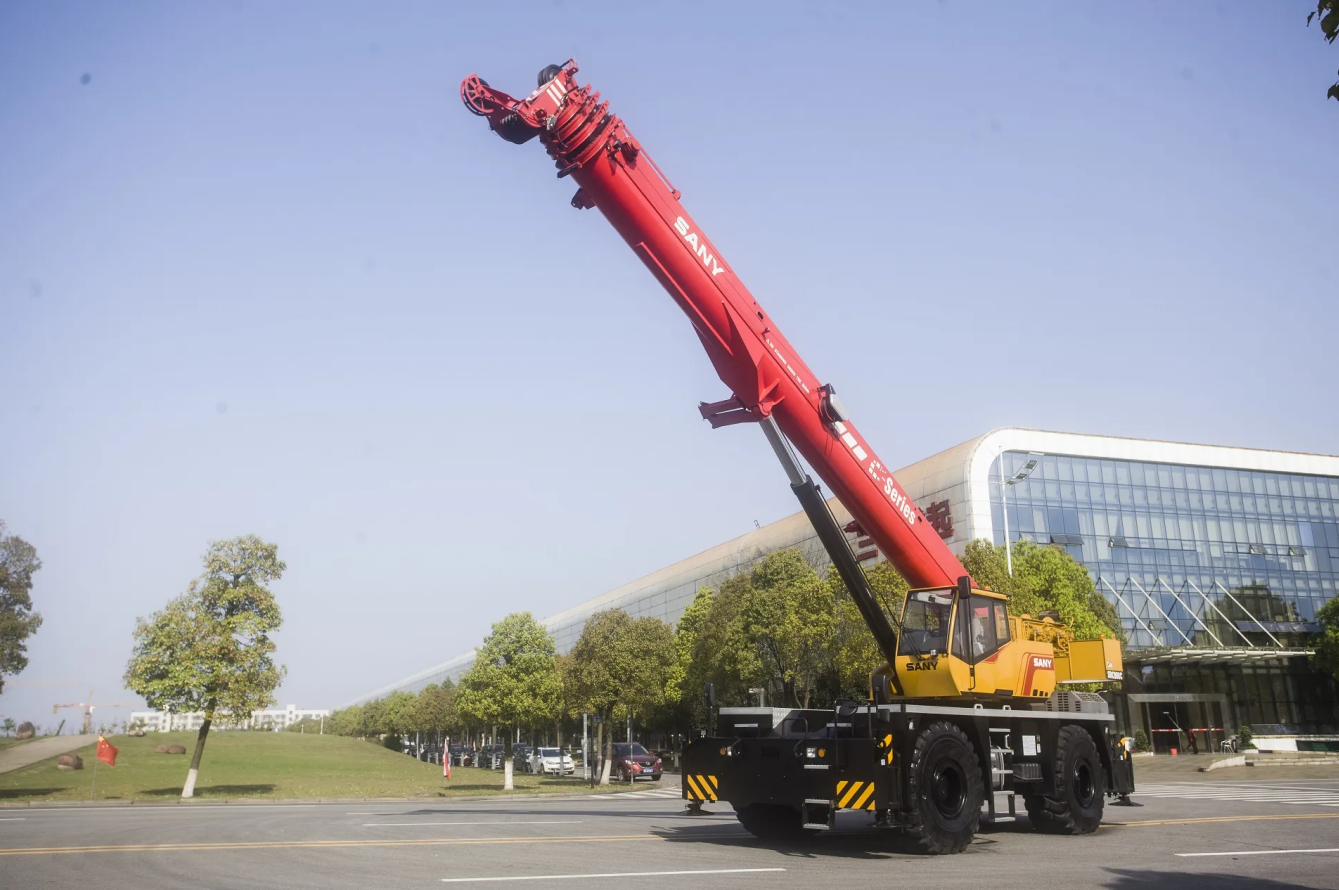
2. Rough Terrain Crane
- Concept: A rough terrain crane, typically equipped with four oversized wheels on a compact chassis, capable of handling obstacles such as rocks and complex terrain.
- Features: It can flexibly enter confined spaces and perform heavy lifting tasks that carry deck cranes cannot. It offers significantly higher lifting capacity without sacrificing floor space: typically between 25 and 110 tons.
For example, the SANY Rough Terrain Crane optimizes vehicle size through a compact design of three hinge points on the luffing mechanism, making it more suitable for both highway transportation and off-road driving scenarios. SANY also offers a variety of models: Below 50T Rough-terrain Crane (lifting capacity : 30-50 tons), 50-80T Rough-terrain Crane, and Over 80T Rough-terrain Crane.
- Applicable scenarios: Primarily suitable for heavy lifting operations in narrow areas and rugged, complex terrains of construction sites, especially suitable for scenarios that require balancing confined spaces and heavy lifting.
3. All-terrain Crane
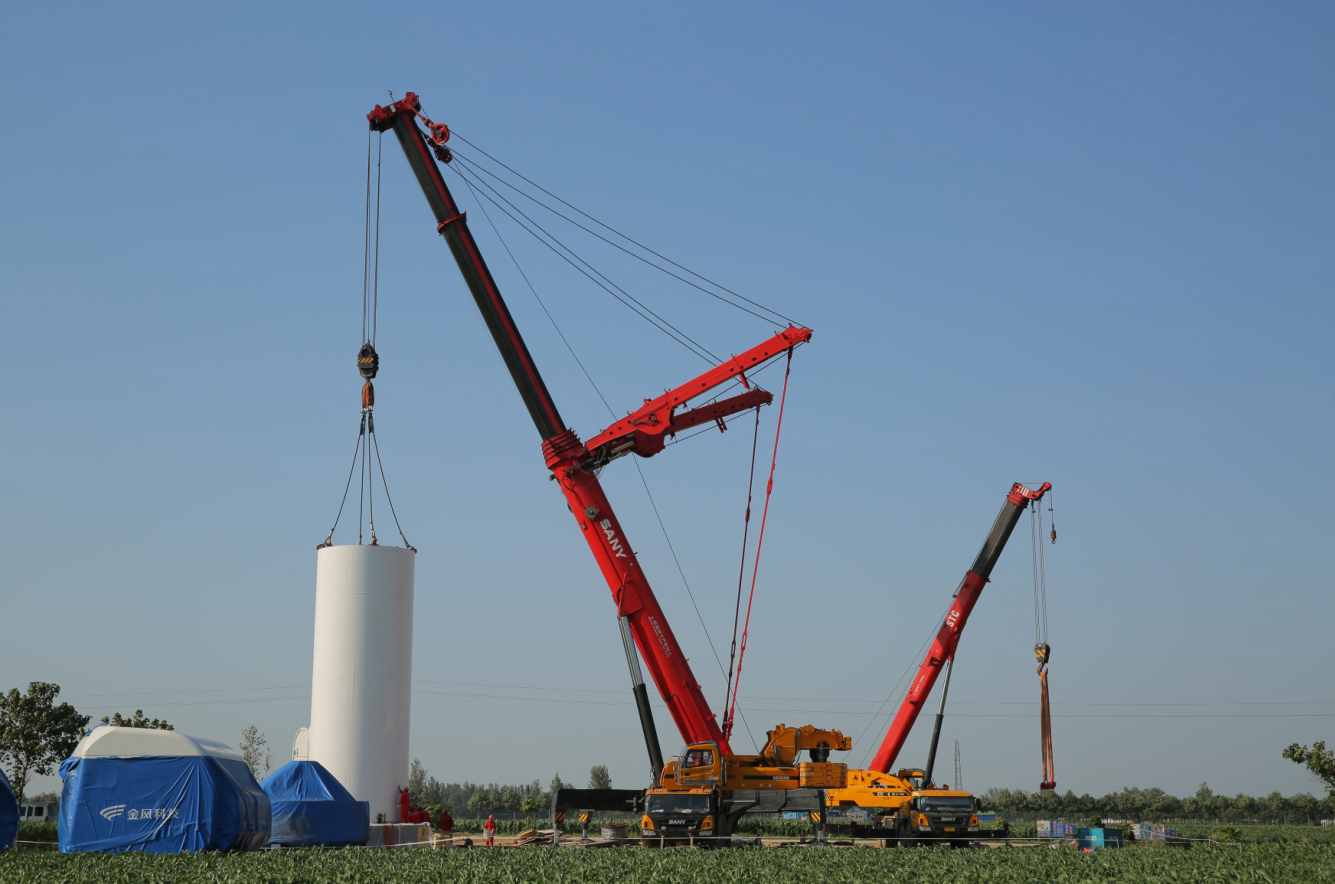
- Concept: An all-terrain crane is generally larger than a rough terrain crane and is equipped with a four-wheel drive system. It can be powered by one or two engines, with up to nine pairs of wheels. Because it can travel on public roads, seat belts must be installed in the control system area. Its lifting capacity exceeds 100 tons.
- Features: Capable of operating on both public roads and complex terrain, with flexible steering, a small turning radius, high maneuverability, and excellent lifting performance. For example, the minimum lifting capacity of the SANY All-terrain Crane is 60 tons, while larger models can exceed 300 tons.
- Applicable Scenarios: Primarily suitable for various operational tasks at construction sites, especially for hoisting scenarios requiring flexible switching between public roads and complex construction terrain.
4. Crawler Crane
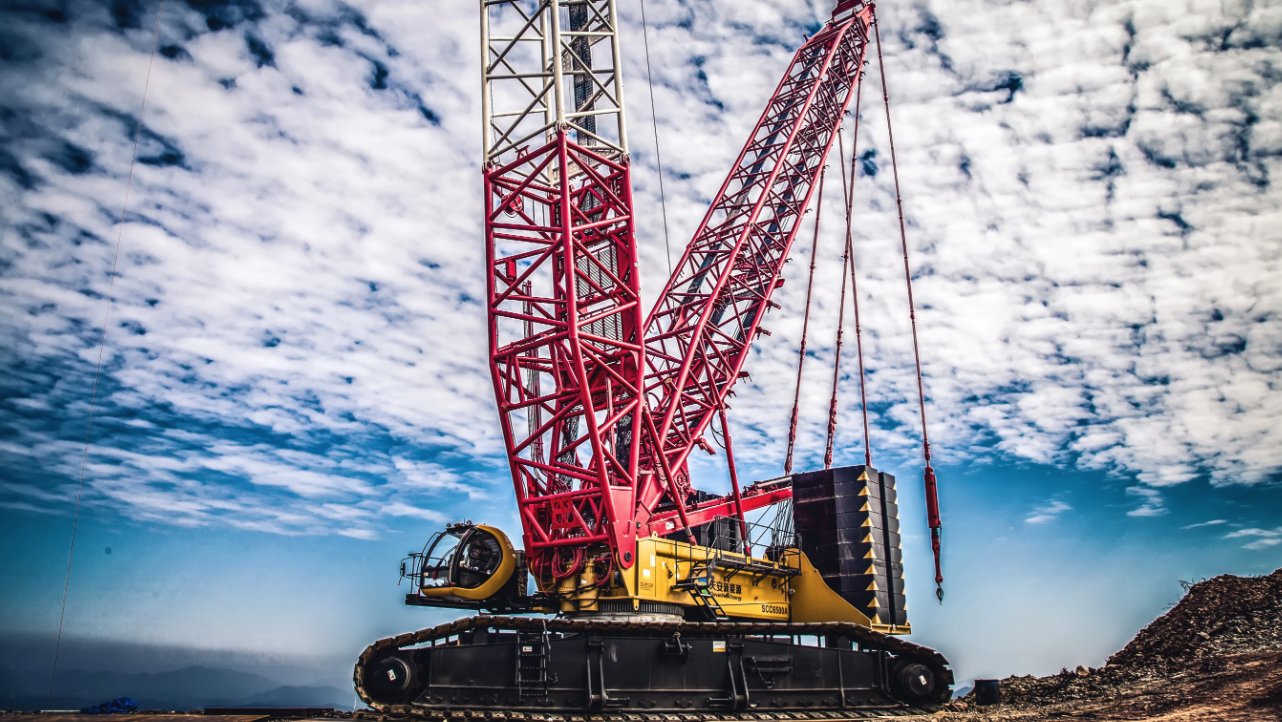
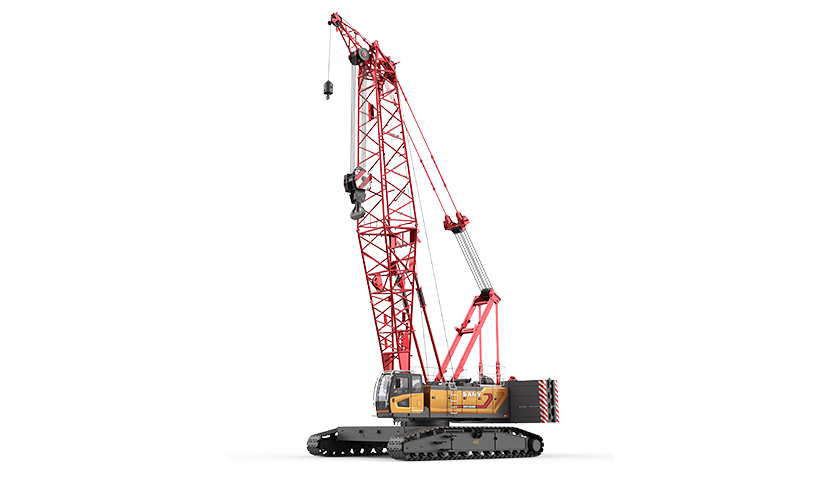
- Concept: Similar in layout to a carry deck crane, but using tracks instead of wheels. It shares similarities with hydraulic excavators, can rotate 360°, and is typically equipped with a truss boom. Its structural design is adapted for heavy-duty lifting needs.
- Features: Excellent all-terrain capability. The tracks distribute the machine's weight, making it less prone to instability and ground damage in soft, fragile soil and wet, swampy areas. It can perform heavier lifting operations within a relatively small footprint.
- The typical lifting capacity is 4.24-330 tons, while the SANY Crawler Crane offers even greater lifting capacity, including an Over 350T Lattice Boom Crawler Crane. It also boasts reliable stability and excellent adaptability, meeting even higher standards of heavy-duty lifting requirements.
- Applicable scenarios: Suitable for complex terrains such as soft soil and swamps, it can be widely used for lifting operations in high-rise buildings, heavy industrial equipment and large infrastructure projects, as well as construction and industrial related tasks that require heavy lifting to be completed in a small area.
5. Truck Crane
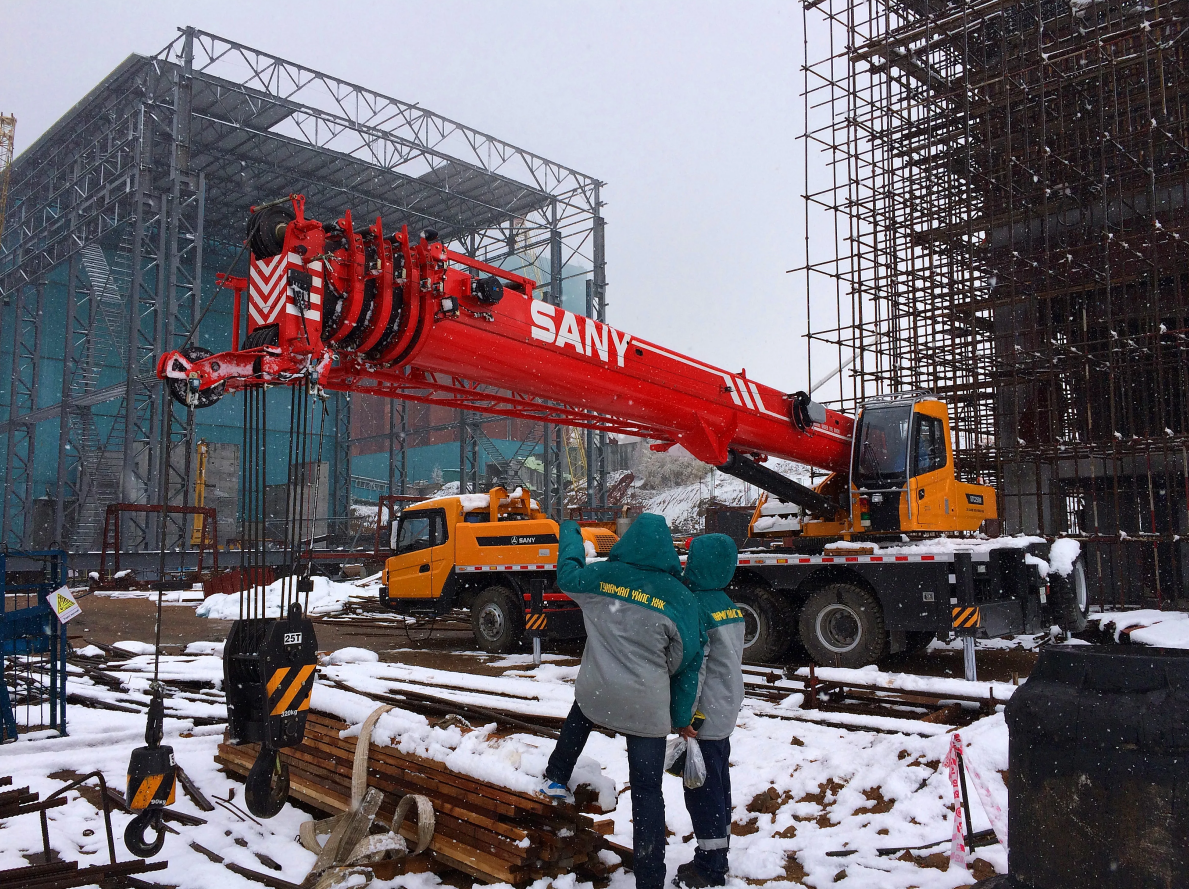
- Concept: Fixedly mounted on a truck chassis, it uses hydraulic and telescopic systems to lift, rotate, and hoist cargo. Also known as a crane truck, it is equipped with a folding or telescopic boom. The rigid boom can vertically lift materials and can lift within a certain angle range on both sides of the truck's rear.
- Features: It can lift heavy objects to high altitudes, integrating transportation and hoisting without the need for additional transportation equipment. It is easy to operate and can quickly complete material transfer and equipment hoisting. Common truck cranes have lifting capacities ranging from a dozen tons to 110 tons.
For example, SANY Truck Crane is classified by lifting capacity as Below 45T Truck Crane (lifting capacity: 16 - 45 tons), 50-90T Truck Crane, and Over 90T Truck Crane. They can enter various urban areas or small work sites, offering high flexibility and rapid relocation capabilities.
- Applicable scenarios: Material transfer between different floors of construction sites, hoisting of high-altitude equipment, suitable for high-altitude operations that require flexible movement of hoisting positions.
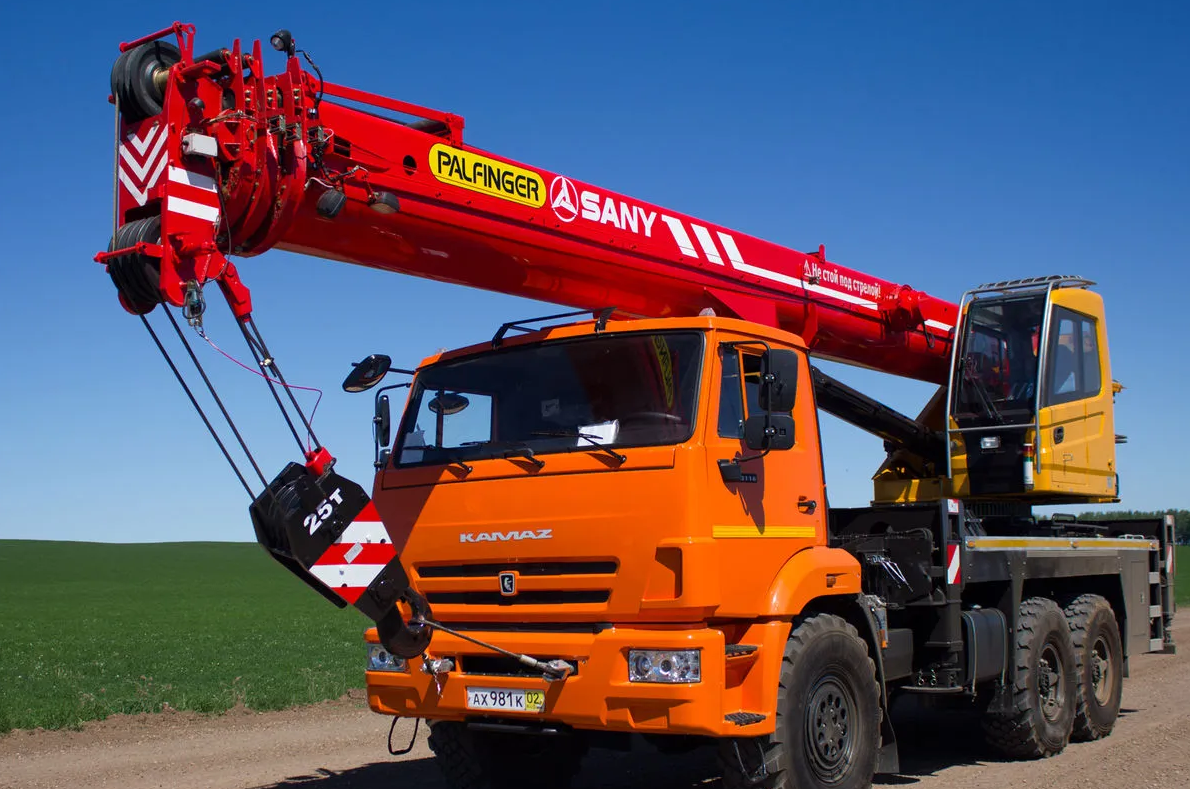
6. Truck-mounted Crane
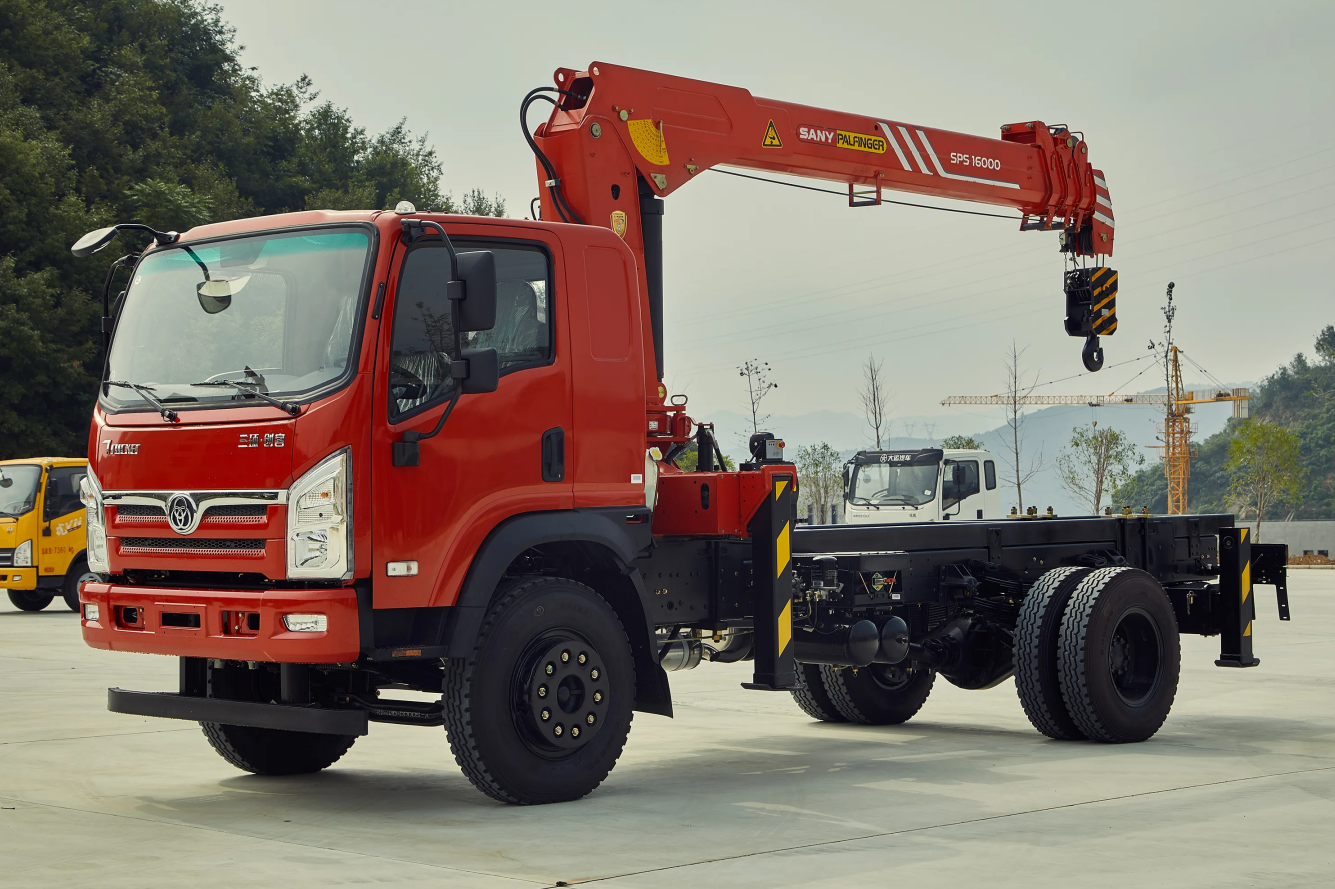
- Concept: Composed of a boom, turntable, frame, outriggers, etc., it achieves lifting operations through a combination of luffing, telescopic, rotating, and hoisting movements. It can be flexibly installed on various types of truck and car chassis.
- Features: High mobility; can be installed on various trucks that comply with road traffic regulations, facilitating transportation. Short setup time and easy operation; more cost-effective for multi-location projects. Compared to a truck crane, its load capacity is smaller.
Taking the SANY Truck-mounted Crane as an example, its superstructure combines powerful lifting capacity and a wide range of applications, easily installed on commercial chassis of various brands of vehicles. Based on lifting capacity, it can be divided into Below 35T Truck-mounted Crane (lifting capacity: 10 - 32 tons) and Over 35T Truck-mounted Crane, flexibly adaptable to the lifting needs of different projects.
- Applicable scenarios: Suitable for lifting operations across multiple locations, equipment loading and unloading, light and medium-sized hoisting near the ground, and small-scale material transfer in confined areas such as construction sites. It is suitable for operation scenarios with high flexibility requirements.
7. Loader Crane
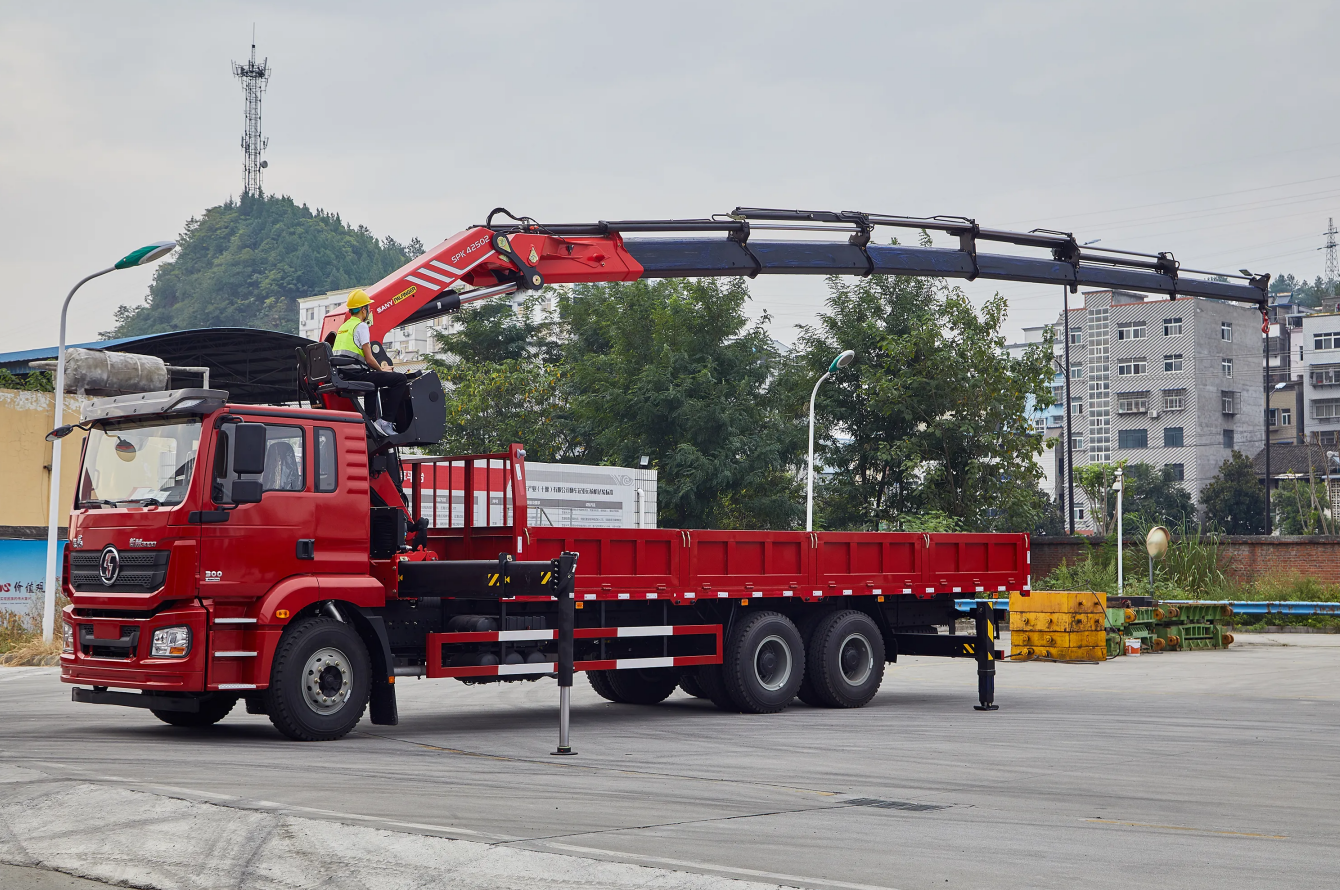
- Concept: A hydraulically powered crane with an articulated truck-mounted design, featuring a flexible folding or rigid boom, primarily used for loading and unloading materials directly from trucks.
- Features: Capable of independently handling truck loading and unloading operations without auxiliary equipment.
Taking the SANY Loader Crane as an example, it comes in two types: the Knuckle Boom Crane, with a lifting capacity of 3.3-21.5 tons, is lighter, has a stronger lifting capacity, and works faster, effectively shortening operation time; and the Stiff Boom Crane, with a lifting capacity of 3.2-22 tons, supports customized vehicle configurations, has a sensitive control system, and precise positioning, making it suitable for high-precision lifting operations.
- Applicable Scenarios: Truck cargo loading and unloading, delivery operations, and precise loading and unloading tasks in confined spaces where traditional truck cranes cannot operate effectively.
Special Mobile Crane Types
In addition to the types of mobile cranes widely used in daily construction scenarios, there are several categories of mobile cranes suitable for specific operational scenarios. These are usually associated with specific modes of transportation such as water transport, air transport, and rail transport, or are specifically used for moving heavy goods in areas with restricted public access, such as ports.
1. Aerial Crane
- Concept: A highly specialized crane, often a modified heavy-duty helicopter.
- Features: Fast response time, capable of lifting in special environments, adaptable to complex or extreme areas inaccessible to other cranes.
- Applicable Scenarios: Lifting on the top of high-rise buildings, military project operations, and the transfer of heavy equipment and materials at disaster relief sites.
2. Railway Crane
- Concept: Also known as a locomotive crane, it has flanged wheels and can move on railway tracks.
- Features: It can be stabilized on railway tracks and can be customized to meet specific task requirements.
- Applicable Scenarios: Railway vehicle maintenance, hoisting of railway-related facilities, and other railway-specific operations.
3. Floating Crane
- Concept: Also known as a mobile port crane, it can operate on water and is suitable for various aquatic environments.
- Features: It combines flexibility and versatility, can be quickly moved between port terminals, can handle various types of cargo such as containers and bulk cargo, has a wide operating field of vision, and offers high operational safety.
- Applicable Scenarios: Port cargo loading and unloading, bridge construction or offshore infrastructure projects, and heavy equipment movement and hoisting operations on oil drilling platforms.
How to Choose the Right Mobile Crane Types for Your Project?
To select the most suitable mobile crane type for your project, you need to comprehensively consider the project's core needs, load requirements, site conditions, and budget. Specifically, you can filter based on the following aspects:
1. Define the Project Type and Identify the Suitable Approach
Understanding the nature and type of the project is fundamental to selecting a mobile crane.
- Large construction sites require priority given to equipment with strong lifting capacity, such as crawler cranes, to handle heavy component lifting;
- Industrial facility installations can utilize highly flexible truck cranes for precise equipment lifting;
- Small maintenance operations are best suited to compact, easy-to-operate lightweight mobile cranes, avoiding waste of equipment resources.
2. Determine Load Capacity to Ensure Construction Safety
Load capacity is a core selection criterion. The maximum lifting weight of the project must be accurately calculated to avoid overloading that could lead to safety accidents, equipment failures, and project delays. Different mobile cranes have significantly different lifting capacities. It is necessary to select a crane that is suitable for the weight of the construction components and equipment, or even slightly exceeds its maximum load capacity. This should be combined with a comprehensive assessment of the lifting height and radius to ensure safe and stable operation.
3. Consider Site Conditions and Adapt to the Working Environment
Construction site conditions directly affect the operating efficiency and safety of cranes. It is crucial to assess terrain, space limitations, and mobility. Rugged terrain is best suited for off-road mobile cranes, which offer superior off-road performance. In confined spaces, compact and maneuverable equipment is preferred for easy adjustment of the working position. In open areas requiring frequent relocation, more mobile truck cranes can be used to improve construction efficiency.
4. Balance Budget Costs and Control Project Expenses
When selecting a mobile crane, both suitability and budget rationality must be considered. Mobile crane prices vary significantly depending on lifting capacity and performance. Short-term project leasing is more cost-effective, reducing purchase and maintenance expenses; for long-term or high-frequency projects, the cost-effectiveness of purchasing versus leasing must be weighed. At the same time, avoid selecting equipment with insufficient load capacity to save costs, preventing project delays and additional expenses.
Conclusion
In summary, the wide variety of mobile crane types covers all kinds of needs, from routine construction to special scenarios. By combining project type, load, site conditions, and budget, a suitable mobile crane can be found to efficiently advance operations, control costs, and make lifting operations safer and more efficient for all types of projects.
FAQs
What are the Three Types of Cranes?
Cranes are generally divided into three main categories: stationary cranes, mobile cranes, and special-purpose cranes. Stationary cranes are used in fixed work locations, such as tower cranes and bridge cranes; mobile cranes are highly mobile, including off-road, all-terrain, crawler, and truck cranes; special-purpose cranes are designed for special scenarios, such as floating, aerial, and rail cranes, to meet special lifting needs.
What is the 3-3-3 Rule for Cranes?
The 3-3-3 rule for crane operation training is an important principle of experience. It refers to three steps, each lasting 3 seconds:
- Test lift for 3 seconds, gently lifting the hook to check the load and balance;
- Smoothly lift for 3 seconds, raising at a low speed to avoid swaying;
- Hold steady for 3 seconds, pausing until the load is stable. It is not mandatory, but it improves operational stability and extends equipment life.
What are the Four Categories of Crane Lifts?
Crane lifts can significantly improve workplace efficiency, productivity, and safety. Cranes are mainly divided into four categories: gantry cranes, jib cranes, bridge cranes, and monorail cranes. These four types of cranes function under different working conditions, effectively meeting various lifting operation needs through their respective structural and operational characteristics, thereby significantly improving operational efficiency while ensuring safety.
Featured Products
Recommend Blogs
How Are Cranes Transported? A Complete Guide to Types, Transportation Methods and Steps
This article focuses on how are cranes transported and their different types, including the methods and steps involved, to help construction teams carry out projects more efficiently.
What Is a Jib Crane? Definition, Types, and Practical Applications
A comprehensive guide answering what is a jib crane, covering its working principles, key advantages, common types, application scenarios, and selection methods.

How to Read a Crane Load Chart: Key Elements, Interpretation Tips, and FAQs
Detailed guide to crane load charts: definition, five key elements, and a step-by-step walkthrough on how to read a crane load chart. Avoid common mistakes and keep frontline crews safe.