Material Handling Equipment: Types, Advantages and Selection Strategies
This article introduces five types of material handling equipment, and provides scientific selection strategies to help enterprises optimize warehousing costs.
In the supply chain links of industries such as warehousing and logistics, manufacturing and production, material handling equipment serves as the core carrier, ensuring efficient operation. It runs through the entire process of material receiving, storage, transportation, sorting and delivery, and directly determines the efficiency, cost and safety of enterprise operations. To meet the market’s growing demand for precision and efficiency in material handling, selecting the right equipment has become the key for enterprises to reduce costs and improve efficiency. This paper will introduce the types and application advantages of material handling equipment, and provide scientific selection suggestions as a professional reference for practical operations.
Core Classification of Material Handling Equipment
Material handling equipment is commonly grouped into four major categories based on operational function and application scenarios. These categories reflect how materials are stored, transported, and managed within industrial and logistics environments:
Storage and Handling Equipment
Centred on maximising warehouse space utilisation and ensuring convenient material access and retrieval, it includes pallet racks, mezzanine platforms, stacking racks, etc. Pallet racks realise vertical storage through steel frames, and mezzanine platforms can build a second-floor space, greatly increasing storage area, which is suitable for the storage of small, light and medium-sized materials.
Bulk Material Handling Equipment
Designed for large quantities of loose materials (liquids, ores, hardware accessories, etc.), the core equipment includes conveyors, bucket elevators, hoppers, etc. It realises continuous material transportation and vertical lifting, avoiding the inefficiency and loss of manual handling, and is widely used in the food and mining industries.
Industrial Handling Vehicles
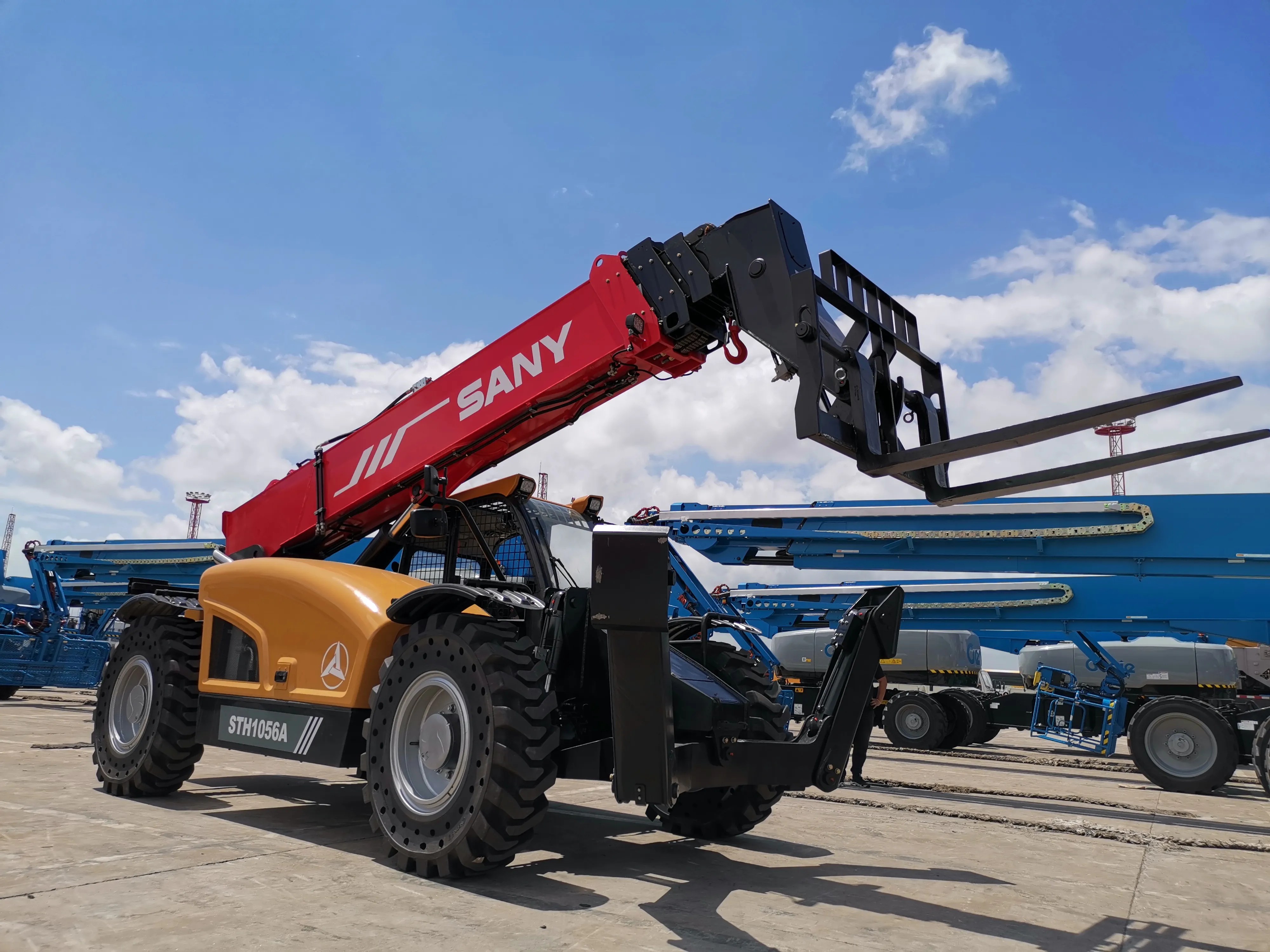
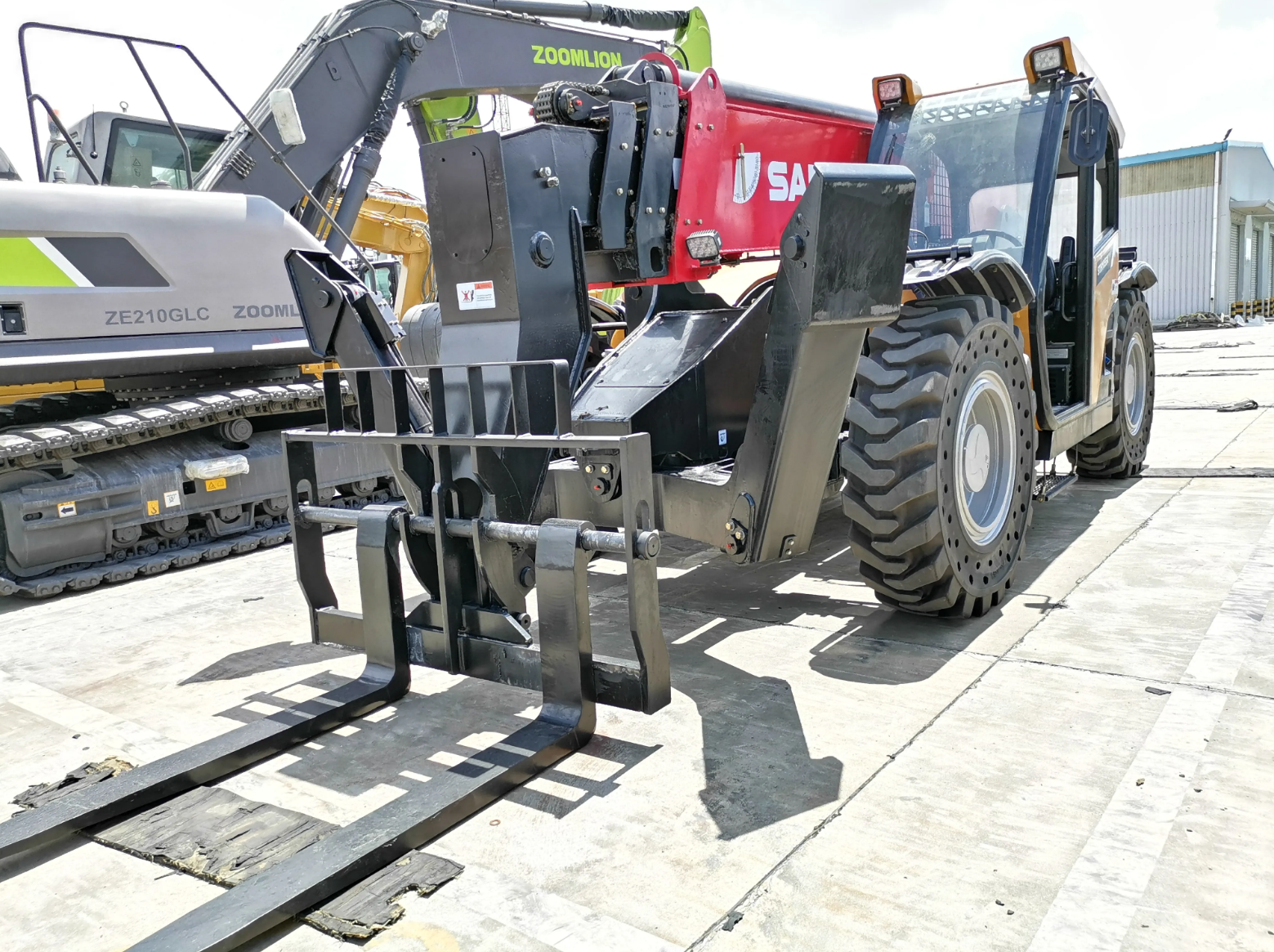
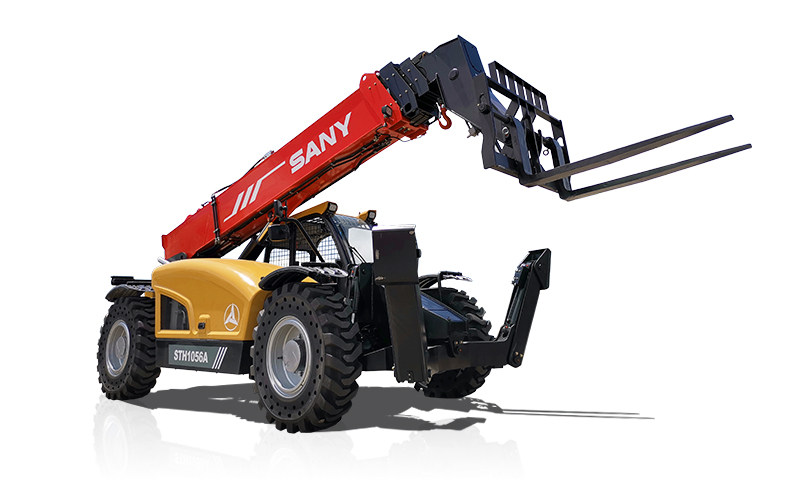
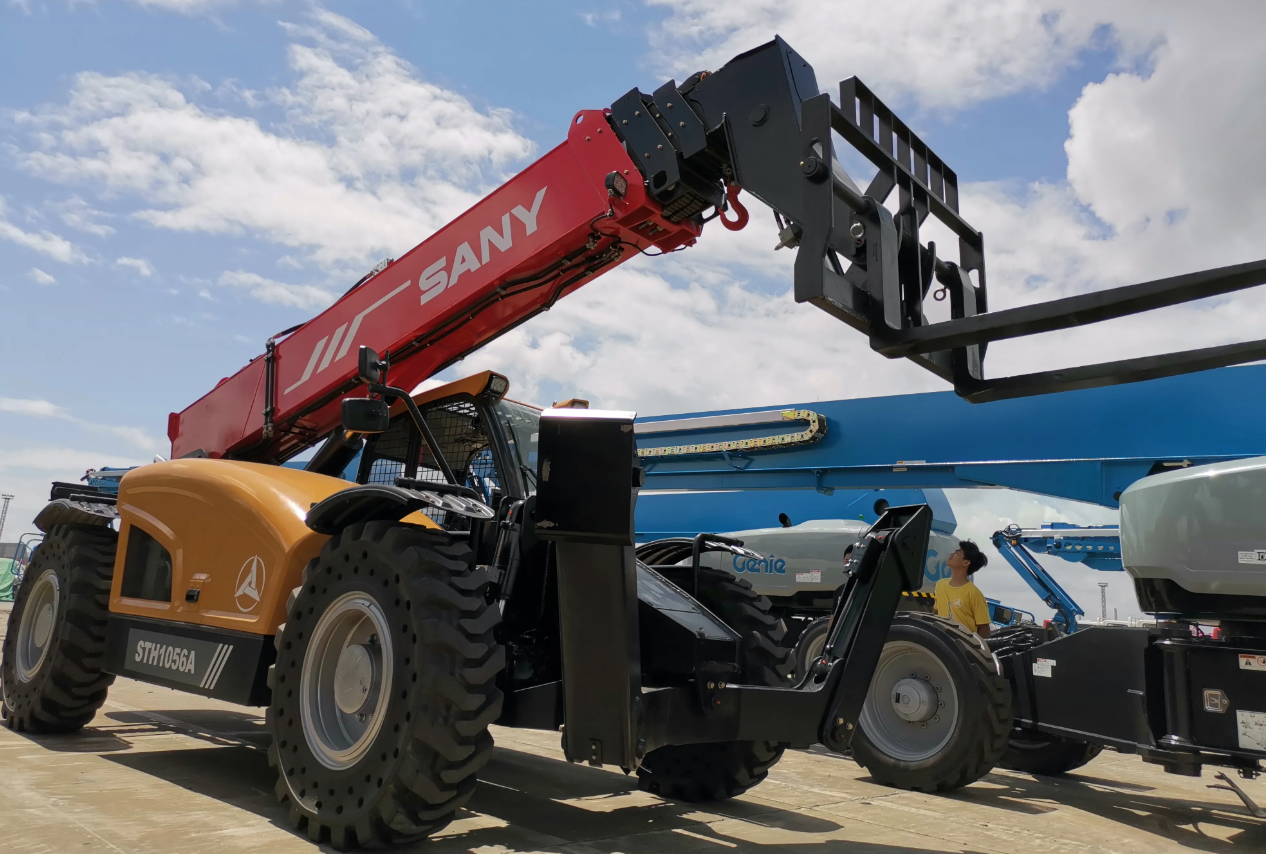
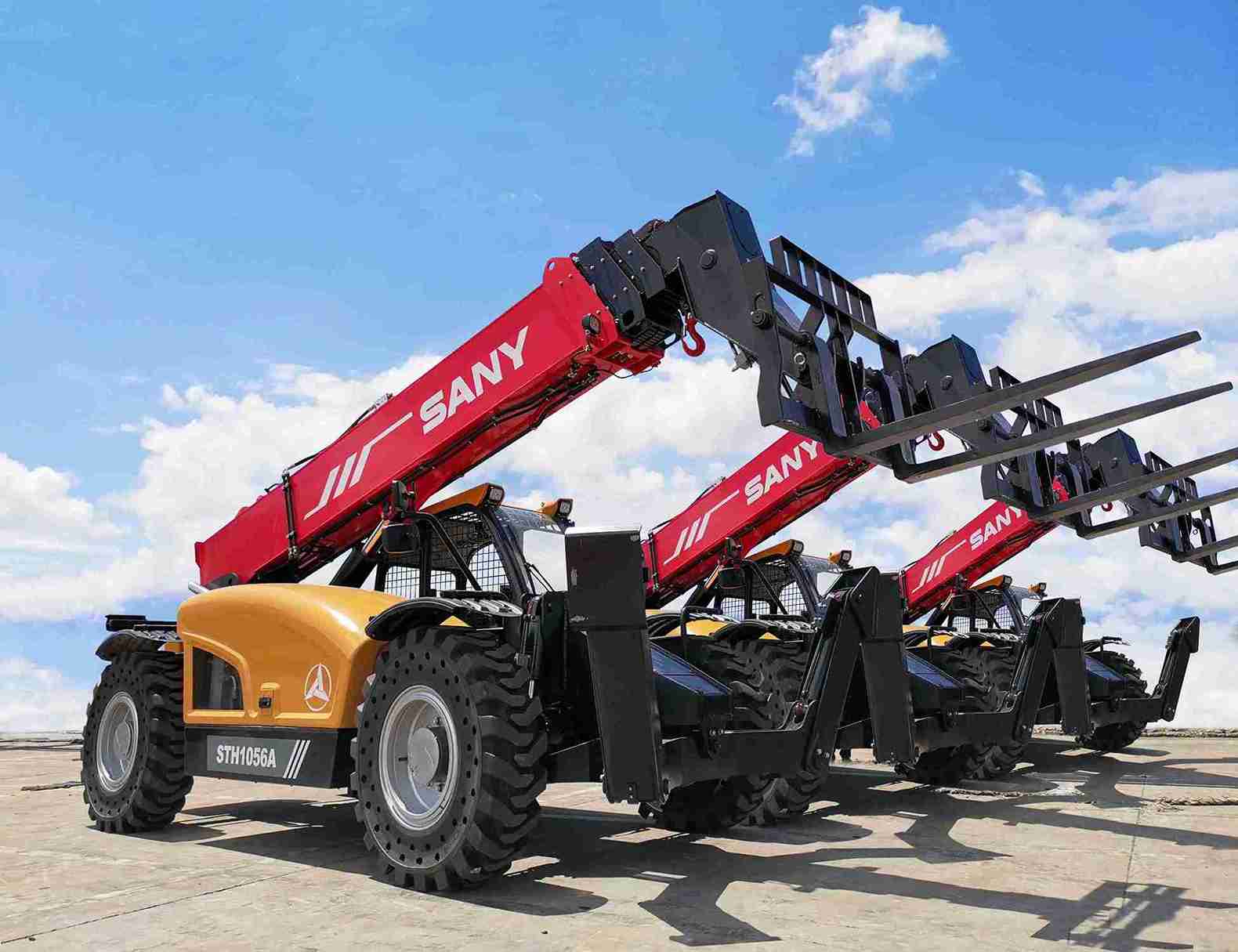
The core equipment for horizontal cargo transportation and heavy goods loading and unloading, covering forklifts, manual pallet trucks, side loaders, etc. For example, the high-performance SANY telehandlers have a maximum lifting height of 10–17.1m, a rated load capacity of 2.7–5.5 T, and a wheelbase of 3.14–3.49 m, adapting to complex scenarios such as high-altitude handling, outdoor operations and narrow aisles.
Engineered/Automated Systems
Modern equipment integrated with intelligent technologies, including AGVs (Automated Guided Vehicles), AS/RS (Automated Storage and Retrieval Systems), Autonomous Mobile Robots (AMRs), etc. It realises automated material handling operations, reduces manual intervention, and improves operation precision and efficiency.
Core Advantages of Using Material Handling Equipment
1. Reduce Safety Risks and Minimise Work-Related Accidents
Manual handling of heavy materials and high-altitude operations are the main causes of work-related injuries, and professional equipment can replace high-risk operations. For example, SANY telehandlers can complete high-altitude and heavy material handling, avoiding manual high-altitude work and heavy physical labour, fundamentally reducing accidents such as muscle strains and falls, and improving operational safety.
2. Improve Operation Efficiency and Optimise Production Flow
Material handling equipment enables batch cargo processing and continuous transportation, greatly reducing ineffective operation time. Unitised loading combined with equipment such as forklifts and conveyors is far more efficient than manual labour; automated systems can achieve a sorting speed of hundreds of lines per hour, effectively breaking through production bottlenecks and improving overall throughput.
3. Control Operating Costs and Achieve Cost Reduction & Efficiency Improvement
Although the use of material handling equipment requires initial equipment investment, it can reduce various costs in the long run: reducing labour demand and alleviating recruitment difficulties; stable operation lowers cargo damage rates; optimising warehouse space and avoiding expansion and rental costs; improving operation efficiency and reducing equipment idle and downtime.
4. Optimise Space Utilisation and Enhance Inventory Management
Storage equipment fully taps the vertical and horizontal space of the warehouse. For example, mezzanine platforms, high-rise racks combined with the high-altitude operation capability of telehandler and forklift, greatly improve storage density. Automated systems are linked with warehouse management systems to realise real-time inventory tracking and precise control, reducing overstock and loss.
5. Improve Service Quality and Strengthen Market Competitiveness
The efficient operation of material handling equipment can accelerate order processing and delivery speed, shorten delivery cycles, ensure cargo integrity, and enhance customer satisfaction. Enterprises can calmly cope with the demand for large-volume and fast-paced orders, gaining an advantage in market competition.
Scientific Selection Strategies for Material Handling Equipment
1. Clarify Operation Needs and Objectives
Sort out material types, load dimensions, average daily handling volume, and warehouse space conditions, and determine core objectives (such as improving efficiency, reducing risks, etc.) to avoid blind selection.
2. Match Equipment with Material Characteristics and Scenarios
Prioritise conveyors and bucket elevators for bulk materials; palletised goods are matched with racks and forklifts, and common forklift alternatives such as SANY telehandlers can be preferred for high-altitude and multi-scenario needs; narrow-aisle warehouses are adapted to side loaders; special hoisting equipment is selected for heavy materials to ensure high adaptability between equipment and scenarios.
3. Balance Standardisation and Flexibility
Select universal standardised equipment for easy maintenance and training; reserve adaptive space to cope with changes in material dimensions and handling volume, and improve equipment reusability.
4. Reasonably Consider the Degree of Automation
Introduce automated equipment such as AGVs and AS/RS for large-volume and standardised operation scenarios; small and medium-sized enterprises or flexible operation scenarios can choose manual or semi-automated equipment to balance input and return.
5. Fit Warehouse Space Conditions
Large-space and high-floor warehouses can be equipped with high-rise racks and telescopic forklifts to make full use of vertical space; small-area warehouses prioritise compact equipment to optimise aisle layout and avoid equipment interference.
6. Consider Total Life Cycle Cost
Not only focus on the purchase price, but comprehensively analyse installation, maintenance, repair costs and service life, select high-quality equipment with higher cost performance, and reduce long-term operating costs.
7. Pay Attention to Compatibility and Scalability
Ensure compatibility between equipment and integration with WMS and ERP systems; select modular and scalable equipment to adapt to the future scale expansion of enterprises and reduce repeated investment.
8. Attach Importance to After-Sales Service and Personnel Training
Select suppliers with complete after-sales service and sufficient spare parts supply; provide employees with systematic operation and safety training to ensure efficient and safe equipment operation.
Conclusion
Material handling equipment is the core support for the efficient operation of enterprise supply chains, with diverse types and significant advantages. Enterprises should scientifically select material handling equipment based on their own needs. For example, high-performance material handling equipment such as SANY telehandlers can adapt to complex operations in multiple scenarios and help improve comprehensive operational capabilities. With the development of intelligent technologies, such equipment will be upgraded towards higher efficiency and environmental protection, becoming an important driving force for enterprises’ digital transformation and helping them seize opportunities in market competition.
FAQs
What Equipment is Used for Material Handling?
There is a wide variety of specific equipment, and the common ones include:
Handling vehicles: Telehandler, forklift, AGV, and manual pallet truck.
Conveying equipment: Belt conveyors, roller conveyors, and chain conveyors.
Hoisting equipment: Bridge cranes, gantry cranes, jacks.
Storage and sorting equipment: Automated stereoscopic warehouses, pallet racks, sorting robots.
Telehandler vs Forklift: What are the Differences Between Them?
One of the key differences in a telehandler forklift comparison lies in their lifting capacity and aerial operation capability. Compared to a forklift, a telehandler excels at lifting materials to greater heights, with its telescopic boom extending upwards and forwards, typically reaching heights of 30 to 60 feet or even higher.
What is the 5S Rule in Warehousing?
The 5S principle in warehousing is a complete on-site management system, aiming to create and maintain an efficient, safe and orderly working environment through five steps. The five steps are as follows:
Seiri: Distinguish and remove unnecessary items.
Seiton: Arrange necessary items in fixed positions and quantities with clear markings.
Seisou: Keep the work area clean.
Seiketsu: Standardise and institutionalise the first three steps to maintain results.
Shitsuke: Cultivate employees’ good habits of abiding by rules and continuous improvement.
The core goal of this rule is to improve space utilisation, operation efficiency and safety while reducing waste, serving as the cornerstone of lean warehouse management.
Featured Products

_152702.png)
Recommend Blogs
What Is a Telehandler? Key Functions, Principles & Application Scenarios
This article explains what a telehandler is, outlining its components, functions, uses, and types. It also compares telehandlers with forklifts and cranes to help you choose the right equipment.
What Is a Telehandler? How It Works and Why It’s a Must-Have Machine
Learn what a telehandler is, how it works, and how to choose the right model for your job in this practical, easy-to-follow guide.