How Wide is a Skid Loader? Core Parameter Interpretation
The width of a skid loader is a key factor determining its passability and applicable scenarios. This guide will explain in detail how wide is a skid loader.
When you need a skid loader for your project, width may not be the first thing you consider — but it is a crucial factor that is most easily overlooked. Whether you need to navigate narrow greenhouse aisles, pass through standard courtyard gates, or stably lift heavy objects on spacious construction sites, the equipment’s width directly determines its ability to get the job done. Choosing the wrong width will not only delay the project schedule but may also result in the equipment getting stuck or requiring costly modifications. This guide will take you through a detailed explanation of how wide is a skid loader to help you make an informed decision.
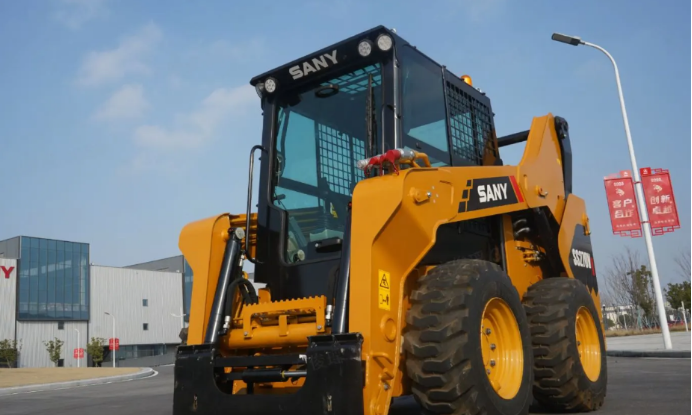
How Wide Is a Skid Loader? Common Ranges
Skid loader width is usually classified based on frame size, mainly divided into three categories: small, medium, and large.
1. Small Frame
Small-frame skid loaders are ideal for narrow-space operations. Typically featuring less than 50 horsepower and a width of up to 3 feet, they are compact in design, making them perfect for material handling and lightweight tasks in confined environments such as greenhouses, backyards, and indoor warehouses.
2. Medium Frame
Medium-frame skid loaders have a power range of 50 to 70 horsepower and a width between 5 and 5.5 feet. Striking the optimal balance between width and power, they are the most common all-purpose models. Capable of navigating relatively narrow passages while delivering substantial lifting capacity and versatility, they are suitable for most construction and agricultural applications.
3. Large Frame
Large-frame skid loaders boast over 70 horsepower and a width of approximately 6 feet, designed specifically for heavy-load operations. Their wider chassis provides unmatched stability and greater lifting capacity, but at the cost of reduced passability. They are primarily used in mines, large-scale farms, and heavy construction projects.
Factors Affecting Skid Loader Width in Practical Operations
The standard width provided by the manufacturer is the foundation, but in practical applications, the overall width of the skid loader is affected by various factors.
1. Differences Between “Over Tires” and “With Bucket” Width
It is crucial to distinguish between these two concepts. The "over tires" width refers to the minimum width of the skid loader’s body, determining whether it can pass through a narrow entrance. In contrast, the "with bucket" width includes the extended part of the standard bucket, representing the actual space occupied by the equipment during operation — typically several inches wider than the former.
For example, when working in narrow factory aisles, relying solely on the body width for selection may result in the bucket exceeding the body width, making it impossible to pass through the aisle. During transportation, however, if the bucket is removed for separate shipment, only the body width needs to be considered to ensure compatibility with the trailer. Therefore, the corresponding width parameter should be used as the basis for adaptation in different scenarios.
2. Attachments that Increase Total Width
The diversity of attachments is a core advantage of skid loaders, but some attachments can significantly increase the equipment’s actual width. Common wide attachments include large sweepers, dual-disk trenchers, and wide bulldozer blades — their widths often exceed the skid loader’s body to meet large-scale operation needs.
For example, in municipal road cleaning operations, a wide sweeper can increase the single cleaning area, but it also increases the total width of the equipment. In such cases, it is necessary to confirm the actual space of the working road in advance to avoid scratching roadside guardrails or obstacles.
In addition, although some heavy-duty attachments do not significantly increase the width, they change the equipment’s center of gravity distribution, indirectly placing higher requirements on width adaptation during operation.
3. Tire and Track Options That Affect Stance
The choice of tire and track types can also alter the actual width and operational stability of a skid loader.
For tires: Wide-base tires enhance the equipment’s traction on soft terrain but increase the body width; narrow tires, on the other hand, are better suited for scenarios with strict width requirements.
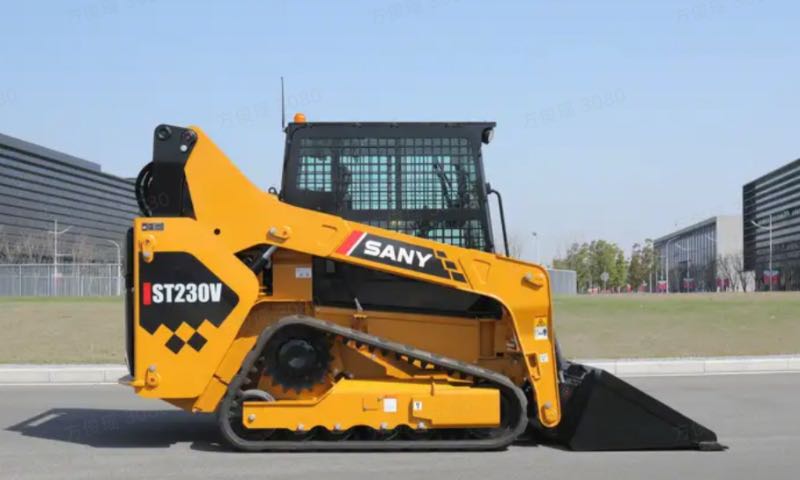
For tracks: Tracked skid loaders are typically wider than wheeled models of the same specification, as their track plates offer a larger coverage area to improve ground adaptability.
In addition, some models support wheelbase adjustment, allowing flexible modification based on site width. However, after adjustment, it is necessary to reconfirm the equipment’s actual width to avoid adaptation errors.
How to Choose the Right Skid Loader Width for Your Work
To select the appropriate skid loader width, you should follow the principles of "site priority, function matching, and reserved redundancy," and comprehensively consider the specific constraints and requirements of your work scenarios. This ensures the equipment not only meets operational needs but also flexibly adapts to site conditions.
1. Clarify the Core Constraints of the Worksite
First, conduct an on-site survey to determine the minimum passage space of the work area, including aisle width, door dimensions, and obstacle spacing. Using these constraint dimensions as the basis, reserve a certain margin for operational errors to serve as the maximum allowable width of the skid loader.
For example, during the renovation of old residential areas, measure the actual width of unit doors and inter-building passages, and select a model that can pass easily with a safety margin. For indoor operations, also consider the compatibility between ceiling height and equipment height to avoid situations where "the machine can enter but cannot move." For open outdoor worksites, although there are no strict width restrictions, the choice should be based on operational efficiency: prioritize wide-body models for large-area rough operations, and narrow-body flexible models for small-scale precision tasks.
2. Align with Operational Functions and Attachment Requirements
If only basic operations such as light loading and cleaning are required, a standard bucket is sufficient, and the basic body width of the machine should be the main reference. If special attachments like sweepers or breakers need to be installed, understand the width characteristics of the attachments in advance and calculate the total width of the equipment with the attachments.
For example, if planning to use a wide sweeper for road cleaning, ensure the total width after assembly is compatible with the work road and does not affect surrounding traffic. In addition, the complexity of the operating environment should be considered: on sloped or muddy terrain, wide-body models offer better stability, so width restrictions can be appropriately relaxed.
3. Consider Transportation and Relocation Needs
If the equipment needs to be frequently transported between different worksites, confirm the space capacity of commonly used trailers and the passage restrictions along the transportation route, such as width requirements for bridges, tunnels, and toll booths.
For wide-body models, some can have their buckets removed to reduce transportation width and improve relocation convenience. At the same time, consider the space of the equipment storage area to ensure it can be parked smoothly when not in use, avoiding excessive space occupation due to width issues.
Conclusion
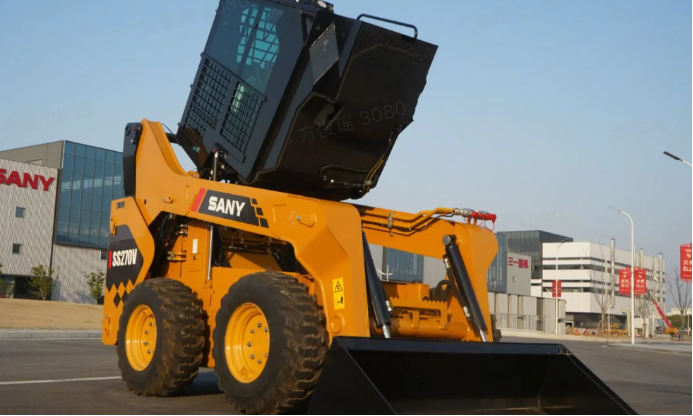
How wide is a skid loader? Based on the above analysis, we believe you now have a clear understanding. The width of a skid loader is a crucial specification parameter that directly relates to the equipment’s applicability, safety, and efficiency. By understanding the standard width range, considering variables in practical operations, and carefully evaluating your own work scenario requirements, you can fully select a skid loader that achieves the perfect balance between power, stability, and passability, thereby maximizing return on investment. For example, SANY Skid steer loader is an excellent choice — it operates efficiently and has a wide range of uses, allowing you to select the corresponding model based on your needs.
FAQs
How Wide is a Skid Steer Loader?
The width of a skid loader varies by model size and has no fixed value.
The common width ranges are as follows:
Small-sized models: Approximately 3 feet wide, suitable for narrow spaces such as greenhouses and warehouses.
Medium-sized models: About 5 to 5.5 feet wide, balancing passability and work efficiency, with the widest application.
Large-sized models: Around 6 feet wide, designed specifically for heavy-load operations, prioritizing stability.
Can a Skid Steer Fit Through a Gate?
Whether a skid loader can pass through a gate depends on the compatibility between the gate width and the total equipment width (body + bucket/attachments).
After measuring the net width of the gate, compare it with the actual total width of the equipment to ensure the equipment width is smaller than the gate width with sufficient operational space. If the gate is narrow, you can choose a small narrow-body model, or remove the bucket to transport the equipment and attachments separately, then reassemble them for use upon arriving at the worksite.
Will a Skid Steer Fit in a 12 Foot Dump Trailer?
Yes, most standard skid loaders can fit into a 12-foot dump trailer, but several key considerations need to be noted.
Although the trailer length is sufficient, the following points must be confirmed during actual loading:
1.Whether the internal width of the trailer is enough to accommodate the skid loader’s body.
2.Whether the skid loader is equipped with wide attachments (e.g., wide buckets, fork arms).
3.Whether the tire/track type increases the actual width.
Recommendation: It is best to conduct an on-site test before loading — drive the skid loader near the trailer to check the actual compatibility. This is the most reliable confirmation method. If the equipment is fitted with wide attachments, it may need to be removed before transportation.
Featured Products

Recommend Blogs
Skid Steer Loader Uses Guide: Helping You Work Efficiently
This article explains skid steer loader uses and provides specific selection recommendations.
Skid Steer Loading Guide: Key Steps, Practical Tips & Pitfall Avoidance
This guide outlines skid steer loading and transport procedures, highlighting common errors and providing practical avoidance methods.

A Comprehensive Analysis of Skid Steer vs Track Loader: From Basics to Practical Advice
This article discusses the definitions, uses, differences, and applicable operating scenarios of skid steer vs track loader to help practitioners choose appropriate equipment.