How to Mix Mortar in a Mixer? Step-by-Step Tips for Different Mixer Operations
This article explains how to mix mortar in a mixer and provides operating instructions for different mixers.
On many construction sites, scenes of mixers running at high speed, mixing mortar, cement, and concrete are commonplace. Efficiently mixing qualified mortar/cement/concrete is a crucial step in construction. Many construction workers often wonder: What is the difference between a mortar mixer and a concrete truck? Can mortar and concrete be mixed? How to mix mortar in a mixer? What are the correct operating points for using a masonry mortar mixer? These frequently encountered practical questions all affect construction quality and efficiency. This article will break down these core questions in detail, teaching you step-by-step the standardized methods and related practical skills for mortar mixing.
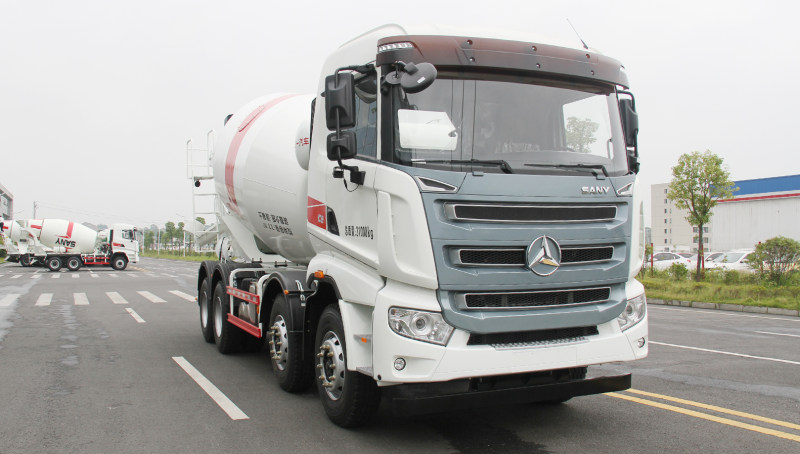
Mortar Mixer VS Concrete Truck: What's the Difference?
In construction scenarios, both mortar mixers and concrete trucks are indispensable mixing equipment, yet they are often used interchangeably. While both seem to focus on mixing materials, they actually differ fundamentally in their applicable materials, operating scenarios, equipment structure, and practical applications.
Different materials are processed
Mortar mixers are suitable for mortars and gypsum-based materials with high viscosity.
Concrete trucks are designed for concrete mixtures with higher fluidity and aggregate content.
Different mixing mechanisms
Mortar mixers use a fixed drum with rotating blades, suitable for mixing viscous materials.
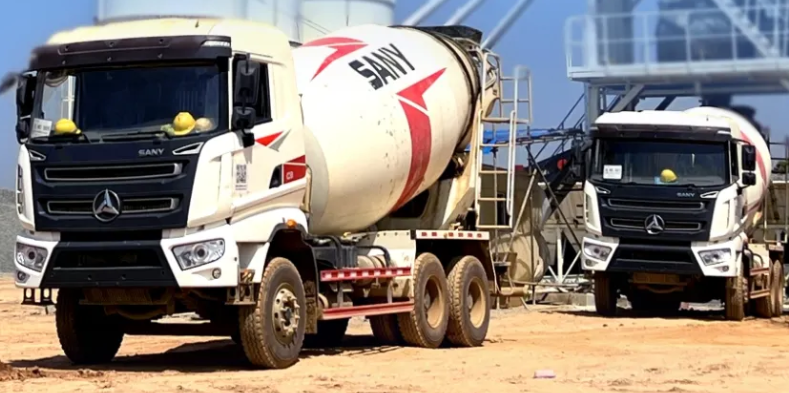
Concrete trucks use a rotating drum, relying on gravity to achieve uniform mixing of aggregates.
Size and Capacity Differences
Concrete trucks have larger capacities, meeting the needs of large-volume material applications.
Mortar mixers are smaller in size and capacity, suitable only for small-batch mixing operations.
Different Application Scenarios
Mortar mixers are used for bricklaying, plastering, and tile installation, where smooth, fine materials are required for finishing and masonry work.
Concrete mixers are designed for foundations, driveways, and large concrete slabs, where strong, durable materials are needed for structural construction projects.
SANY offers a variety of concrete trucks in different specifications and models. Among them, the 37m Truck-mounted Concrete Pump boasts high pumping efficiency, smoother flow, and less clogging. It can pump 48-160 cubic meters of concrete per hour, meeting the needs of long-term pumping. It also features various boom types and flexible working positions, helping construction teams to carry out operations more efficiently.
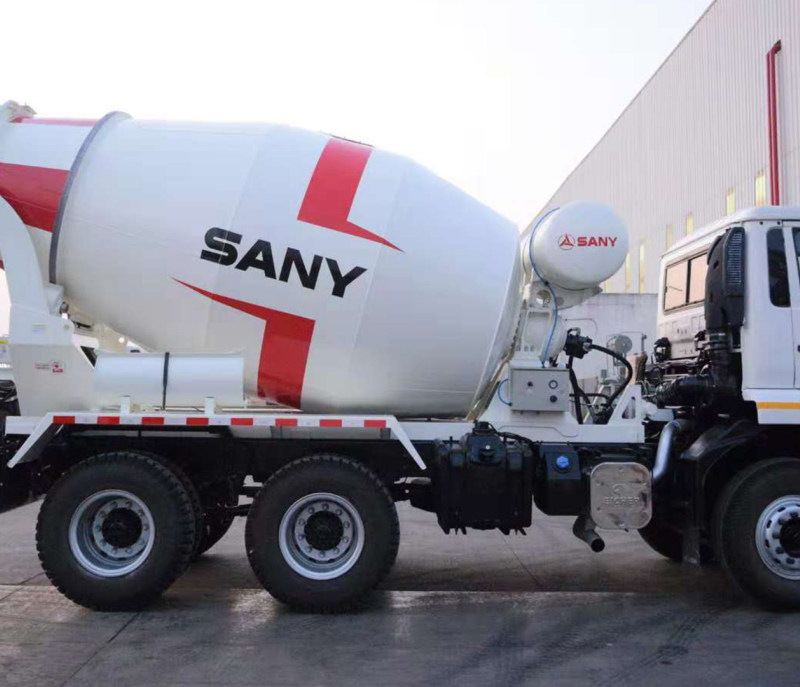
How to Properly Use a Mortar Mixer and a Concrete Truck?
In the material mixing stage of construction, mortar mixers and concrete trucks each have their own specific operating procedures and key points. Correctly mastering their usage not only ensures the quality of mortar and concrete mixing but also significantly improves construction efficiency and avoids equipment malfunctions and construction safety hazards. The following are the step-by-step instructions for using these two types of equipment.
How to Mix Mortar in a Mixer?
How to use a mortar mixer? You can refer to the following step-by-step mixing guidelines:
1. Setup and Safety: Place the mixer on a stable surface and wear safety goggles, gloves, and a dust mask.
2. Add Water: While the mixer is running, pour about half the volume of water into the mixing bowl, then add any liquid coloring.
3. Add Dry Materials: Gradually add the pre-weighed dry materials (sand, cement, lime). For lime mortar, it is recommended to mix the dry lime and sand for 5 minutes before adding water.
4.Add Remaining Water: Slowly add the remaining water as needed, paying attention to the consistency.
5. Mix thoroughly: Run the mixer for 3-5 minutes until a smooth, workable paste is formed, neither too wet nor too loose.
6. Let stand (optional): For lime mortar, let stand for 3-5 minutes to allow it to fully saturate.
7. Test for consistency: The mortar should adhere to a trowel held at a 90° angle (“hang test”).
8.Discharge: While keeping the roller rotating, tilt the roller and pour the mortar into a wheelbarrow.
Important tips:
Proportions: Use a consistent ratio (e.g., a standard mortar sand-to-cement ratio of 3:1 or 4:1) and measure by volume.
Do not add too much water: Adding too much water will weaken the mortar, so add water sparingly.
Keep mixing: Once you start adding materials, keep the mixer running.
How to Use a Concrete Truck For Mixing?
Key steps for mixing and using a concrete truck:
1. Pre-operation checks: Before any operation, check the liquid level, tires, and ensure that safety equipment is complete and functioning properly.
2. Loading: In the batching workshop, raw materials are loaded into the mixing drums. For "centralized mixing" processes, the raw materials are partially mixed first; for "dry mixing" processes, all raw materials are dry.
3. Transport and mixing: The drums rotate at a low speed (approximately 2-6 rpm) clockwise (or in the set direction) to mix the concrete and keep it liquid. This mixing prevents the concrete from hardening before it reaches the construction site.
4. At the work site: The operator uses a control device (foot pedal or remote control in the cab) to reverse the rotation direction of the drum.High-speed rotation (12-15 RPM) is used for thorough mixing during discharge.
5. Release: Reverse rotation pushes the concrete upwards through the chute. The water flow direction can be controlled by moving the chute. Depending on the site requirements, the operator can adjust the mix moisture (slump) by adding water or changing the drum speed.
6. Cleaning: After emptying, the drum is thoroughly rinsed to prevent the concrete from hardening inside; this is a crucial maintenance step.
Operating Tips:
Stirring/mixing speed during transport: Low speed (2-6 RPM).
Discharge speed: Higher speed when tilting (12-15 RPM).
Control method: Foot pedal (throttle/brake/drum control) or remote control to control drum direction (charging/discharging) and speed.
How to Choose the Right Mixer for Your Project?
In construction, the selection of a mixer directly affects construction efficiency, material quality, and project costs. Choosing the right equipment can make construction much more efficient, while the wrong equipment can lead to substandard material mixing and project delays. Although mortar mixers and concrete mixers are both mixing equipment, they are suitable for significantly different engineering scenarios and requirements, which often confuses construction workers when making selections. In fact, by focusing on the core construction needs of the project, the appropriate mixer type can be accurately matched.
When Should You Choose a Mortar Mix?
If the core construction work of a project involves bricklaying, stonemasonry, or fine finishing tasks such as plastering walls and floors, a mortar mixer is the optimal choice. These types of projects require materials with moderate viscosity and a smooth, uniform texture. Mortar mixers are specifically optimized to precisely mix mortar mixtures that meet the specific needs of bricklaying and plastering, directly ensuring the quality of these fine finishing tasks.
When Should You Choose a Concrete Truck?
For large-scale structural construction projects requiring large quantities of concrete, such as building foundation pouring, driveway paving, and terrace pouring, a concrete mixer is the ideal choice. These projects demand large quantities of concrete and require thorough mixing and sufficient strength. Concrete mixers have larger mixing capacity and more efficient mixing mechanisms, enabling them to quickly produce sufficient and uniform concrete, meeting the material supply needs of large-scale construction projects while ensuring the quality of the main structure.
Conclusion
Mastering how to mix mortar in a mixer and operating a concrete mixer truck correctly are crucial for ensuring the quality of building materials.While their operational logic and processes differ, both require strict adherence to standards and meticulous attention to detail to efficiently produce qualified materials. During construction, selecting the right equipment based on operational needs and operating it according to regulations will not only leverage the precision advantages of mortar mixers but also maximize the transport and mixing efficiency of concrete mixer trucks, preventing quality issues from the outset and facilitating the safe and efficient progress of various construction phases.
FAQs
Can You Mix Mortar and Concrete Together?
No, generally you should not mix pre-packaged mortar and concrete mixes because their compositions are different. Mortar contains lime, while concrete contains large aggregates/stones; their strengths and uses differ, so improper use can lead to structural failure, cracking, or performance degradation. Always choose the appropriate mix ratio based on project requirements—for example, mortar for bricklaying and concrete for slab pouring. Attempting to mix them, or using one material for another—such as using mortar to repair concrete—usually creates structural weaknesses.
What Is the Ratio of Water to Mortar Mix?
A typical water-to-mortar mix ratio is based on the water-to-cement (w/c) ratio, which strongly influences strength and workability. For mortar, a common range is about 0.4 to 0.6 by weight (i.e., 40–60 lbs of water per 100 lbs of cement), providing good workability without overly weakening the mix.
What Is a Masonry Mortar Mixer?
A masonry mortar mixer is a construction machine specifically designed for efficiently mixing cement, sand, water, and other additives to produce a uniform, appropriately viscous masonry mortar. It ensures the quality and efficiency of the mortar when laying bricks, tiles, or stone. Common types include drum mixers and roller mixers.
How Can I Tell If My Mortar Mix is Correct?
To check your mortar mix, test its consistency:
It should adhere to a tilted trowel without slipping, be smooth, neither too thin nor too crumbly, and hold its shape.
If it's too stiff or too wet, add a small amount of water to adjust; if it's too thin, add more sand/cement in the correct proportions.
The ideal mix ratio is 1 part cement to 3-4 parts sand, depending on the specific project, but consistency and workability are key indicators of a correct mix ratio.
Featured Products


Recommend Blogs
Cement Truck vs Concrete Truck: Key Differences and Selection Guide
Cement truck vs concrete truck: Are they the same? This article will provide a detailed answer to help you choose the right truck for your construction project.
How Does Concrete Mixer Truck Work? Essential Insights for Construction Workers
This guide explains how does concrete mixer truck work, offering solutions for equipment selection, usage, and maintenance based on your construction needs.