How to Drive Forklift Safely: A Global Step-by-Step Guide 2026
How to drive forklift safely? Follow this global guide with clear steps, equipment tips & emergency procedures for electric forklift operators.
Whether you are operating an electric or internal combustion forklift, knowing how to drive forklift safely by strictly following standardized procedures and safety inspections is key to ensuring workplace safety. This guide provides globally applicable step-by-step instructions, practical tips, and safety precautions to help operators boost efficiency while reinforcing safe operating awareness.

Step 1 – Pre-Operation Preparation & Inspection
Confirm Certification & Training
Ensure you hold a valid and up-to-date forklift operator certification and have completed formal safety training. Training should cover different forklift types, load handling principles, workplace hazards, and emergency response procedures. Operators should also stay informed about internal safety rules and be familiar with the specific forklift models they use to minimize operational risks.
Personal Protective Equipment (PPE)
Wear required personal protective equipment at all times, including a safety helmet, steel-toed safety shoes, high-visibility vest, and protective gloves. Ensure PPE fits properly and is in good condition. Avoid loose clothing, scarves, or jewelry that could become entangled in moving parts or controls during operation.
Forklift Pre-Use Inspection (Checklist)
1. Exterior: Check tires for wear, cracks, or proper inflation; inspect forks for bending, cracks, or loose retaining pins; ensure the mast, chains, and hydraulic components show no signs of damage or leakage.
2. Controls: Test the steering wheel, brakes, accelerator, lift/lower levers, tilt levers, and horn to confirm smooth and responsive operation. All controls should be clearly labeled and unobstructed.
3. Fluids & Battery: Verify hydraulic fluid and engine oil levels for internal combustion forklifts. For electric forklifts, confirm sufficient battery charge and inspect for corrosion or leakage.
4. Safety Devices: Inspect seatbelts, overhead guard, rearview mirrors, lights, and warning alarms to ensure all safety systems are intact and functional.
Work Area Survey
Conduct a thorough inspection of the work area before operation. Confirm the ground is level, stable, and free of debris; ensure aisles and turning spaces are adequate for forklift movement. Identify low overhead obstacles, ramps, wet or slippery surfaces, and active pedestrian zones. Plan the travel route in advance to avoid blind spots and high-risk areas.
Step 2 – Basic Operation & Maneuvering
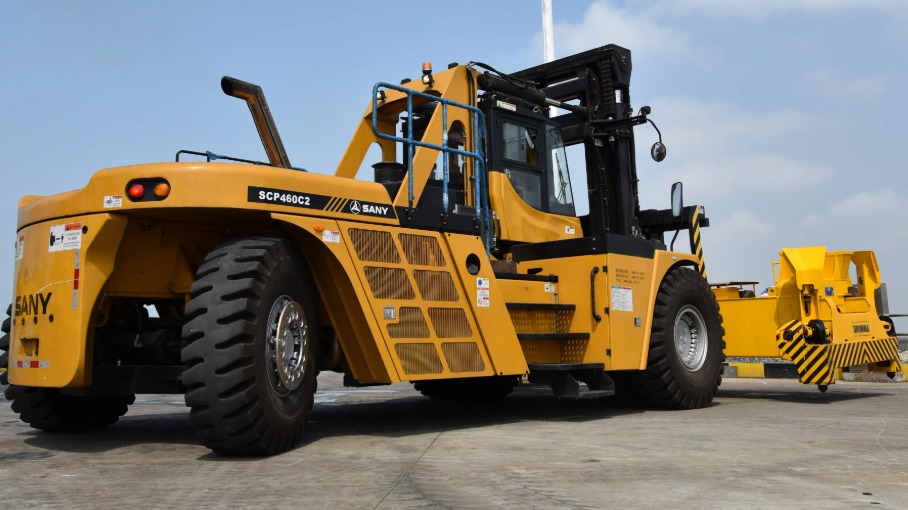
With pre-operation checks complete, it’s time for practical operation. This section breaks down core skills every operator must master, guiding you step by step on how to use a forklift—from startup and driving to load handling and shutdown. SANY Forklift Truck is renowned for its exceptional stability and safety performance, making it ideal for maintaining equipment stability, preventing accidents, and ensuring safe and efficient operation in daily work.
Starting Up Correctly
1. Safe Entry: Use the widely accepted three-point contact method (both hands on handholds and one foot firmly placed) when entering the operator’s seat. Sit properly and fasten the seatbelt to secure your position before starting.
2. Visibility Setup: Adjust the seat, steering wheel, and mirrors to ensure clear forward, side, and rear visibility. Eliminate blind spots to maintain full situational awareness during operation.
3. System Check After Startup: Once the forklift is powered on, test the brakes, steering, horn, lights, and emergency stop to confirm all controls respond smoothly and correctly.
4. Operational Readiness: Observe dashboard indicators, listen for unusual noises, and feel for abnormal vibrations. Only begin driving once the forklift is running smoothly and all systems appear normal.
Driving, Turning & Stopping (Without Load)
1. Smooth Takeoff: Apply the accelerator gradually to avoid sudden movement and maintain full control when driving a forklift. Before moving off, use the horn if necessary to alert nearby personnel and ensure the path is clear.
2. Understand Rear-Wheel Steering: Forklifts steer with the rear wheels, causing the rear end to swing wider than the front during turns. Anticipate this movement and allow sufficient clearance when maneuvering.
3. Controlled Turning: Reduce speed before turning and steer smoothly. Avoid sharp or fast turns, which can compromise stability and increase the risk of tipping.
4. Proper Braking Technique: Slow down by easing off the accelerator first, then apply the brakes gently. On wet, uneven, or slippery surfaces, increase stopping distance and proceed with extra caution.
5. Handling Challenging Terrain: When traveling on slopes, uneven ground, or through narrow passages, reduce speed further and stay fully focused. Follow standard slope practices and avoid turning while on inclines.
Handling Loads – Pick, Travel, Place
1. Accurate Fork Positioning: Approach the pallet slowly and stop at a safe distance. Adjust fork width to match the pallet and ensure the forks are fully inserted, with the load centered and balanced.
2. Safe Lifting Technique: Lift the load only high enough to clear the ground (approximately 10–15 cm). Tilt the mast slightly backward so the load rests securely against the backrest.
3. Stable Transportation: Drive at a steady, low speed with the load kept low and stable. Avoid sudden acceleration, braking, or turning, and never adjust fork height while moving.
4. Controlled Load Placement: Align the forklift carefully with the placement area, level the mast, and lower the load slowly until it is fully supported. Once stable, withdraw the forks smoothly to prevent contact with the load or surrounding structures.
Shutting Down & Parking
Safe Parking Position: Park the forklift in a designated, level area away from traffic routes. Fully lower the forks so they rest flat on the ground and apply the parking brake.
Proper Power-Off Procedure:
- Internal combustion forklifts: Turn off the engine and remove the key.
- Electric forklifts: Switch off the power and activate the emergency stop if required.
Post-Operation Check: Conduct a brief visual inspection of the forklift. Record any damage, irregularities, or performance issues in the equipment log and report them according to site procedures.
Step 3 – Advanced Safety Tips & Hazard Awareness
Stability & Load Management
1. Adhere to Load Capacity Limits: Always check the forklift’s nameplate for rated load capacity and load center. Never exceed the limits. Distribute heavy or irregular loads evenly to maintain balance and keep the center of gravity aligned with the forks.
2. Maintain Low Center of Gravity: Keep loads as low as possible during transport. Slightly tilt the mast backward to secure the load. Avoid lifting or adjusting loads while moving at speed to reduce tipping risk.
3. Handle Slopes Carefully: When traveling on inclines, keep the load uphill. Do not turn, reverse suddenly, or park on steep slopes without securing the forklift with wheel chocks.
4. Inspect Load Security: Confirm that loose items are properly secured using straps or brackets. For oversized or tall loads, use stabilizers and ensure clear visibility or assign a spotter to guide the operation. These practices are essential for anyone learning how to use forklift in warehouse safely.
Working Around Pedestrians & Complex Areas
1. Prioritize Pedestrian Safety: Always yield to pedestrians and maintain a recommended safe buffer zone. Use the horn, flashing lights, or audible alarms in blind spots, intersections, or crowded zones.
2. Follow Traffic Rules: Stick to designated forklift routes. Avoid pedestrian-only walkways and respect speed limits in congested or narrow areas.
3. Navigate Complex Environments Carefully: Reduce speed in tight spaces, high-racking warehouses, or areas with low overhead clearance. Use mirrors, cameras, or spotters to eliminate blind spots. Avoid sudden maneuvers near corners or stacked goods. Practicing these steps improves proficiency for those learning how to use a forklift in warehouse.
4. Coordinate with On-Site Personnel: Communicate clearly with coworkers using standardized or site-specific hand signals or verbal cues, especially when visibility is limited by large loads.
Equipment-Specific Tips (IC & Electric Forklifts)
Internal Combustion (IC) Forklifts
Ensure Ventilation: Operate in well-ventilated areas to avoid exhaust accumulation. Avoid prolonged use in enclosed spaces without proper airflow.
Refuel Safely: Turn off the engine and let it cool before refueling. Use approved containers and clean up spills immediately.
Manage Heat & Noise: Be aware of hot engine surfaces. Use visual alerts (e.g., flashing lights) to enhance safety in noisy environments.
Electric Forklifts
Battery Safety: Charge batteries only in designated areas with approved chargers. Avoid overcharging and keep the battery area free of conductive debris.
Handle Quiet Operation: Electric forklifts are quieter, which improves communication but reduces pedestrian awareness. Use audible reverse alarms and stay alert.
Protect Battery Life: Avoid exposing batteries to extreme heat or cold for long periods. Follow manufacturer guidelines for maintenance and storage.
Emergency Procedures & Quick Response Tips
1. Tipping Incident: If the forklift starts to tip, stay seated, hold the steering wheel, and lean away from the tipping direction. Never jump from the forklift.
2. Fire Response: Use the appropriate fire extinguisher (refer to local safety codes). Evacuate the area and alert emergency services if the fire cannot be controlled quickly.
3. Hydraulic or Mechanical Failure: Stop immediately if you notice leaks, unusual noises, or loss of control. Lower the load if possible, shut down the forklift, and report the issue before repair.
4. Collision or Injury: In the event of a collision, stop the forklift, provide first aid if trained, and report the incident immediately. Secure the area to prevent further accidents while reinforcing the knowledge of how to drive a forklift safely.
Conclusions
Understanding how to drive a forklift safely is essential for protecting people, equipment, and cargo. By following proper startup, maneuvering, load handling, and emergency procedures, operators can maintain stability and efficiency. Consistent practice reinforces safe habits and ensures a productive, secure work environment.
FAQs
How Easy Is It to Drive a Forklift?
Driving a forklift can be relatively easy to learn for basic operations, especially if you have prior experience with vehicles or machinery. However, mastering safe handling, load balance, and maneuvering in tight spaces takes practice and attention.
What Are the Basic Rules of Forklift Operation?
Always inspect the forklift before use, wear proper PPE, and use the seatbelt. Keep loads stable, travel at safe speeds, and never lift people on the forks. Be aware of pedestrians and obstacles in your path.
Is It Hard to Pass a Forklift Test?
Passing a forklift test depends on your preparation and familiarity with safety rules. With proper training, both written and practical exams are manageable. Practice and understanding workplace safety significantly increase your chances of passing.
Featured Products
Recommend Blogs
Forklift Truck Height Parameters Explained: Definitions, Selection & Calculations
This paper details the core parameters and calculation methods of forklift truck height, providing guidance for forklift selection and safe operations.
Forklift Truck Loading Safety Guide: Full Process and Risk Avoidance
This article details common scenarios, the entire process of forklift truck loading, and key safety points to help achieve safe and efficient operations.
2025 Forklift Truck Manufacturers: Industry Insights & Choices Guide
Analyze forklift truck manufacturers' core responsibilities, trends and selection points to help enterprises efficiently choose the right forklift truck suppliers.