How Much Does a Mini Excavator Weigh? Your Complete Guide
A mini excavator’s weight is key to transportation, performance, and practical applications. This article breaks down the question of how much a mini excavator weighs, helping readers understand these compact machines
Among engineering equipment suitable for tight spaces, mini excavators are versatile tools. These machines, smaller than standard excavators, excel at navigating narrow work sites and handling a variety of small-scale projects. However, beyond their applications, one key question is frequently raised: how much does a mini excavator weigh? Knowing this is essential for transportation planning, on-site performance, and is a fundamental consideration when operating these convenient machines.
What Is a Mini Excavator?
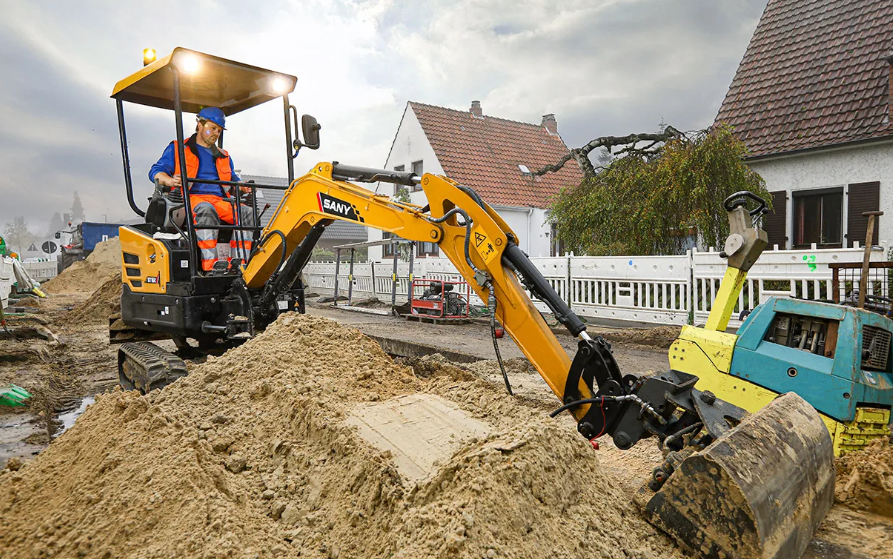
Mini excavators are a type of construction machinery that is compact in size, lightweight, and highly flexible. With their "small yet sophisticated" characteristics and versatile functions, they are widely used in small-scale earthworks, municipal maintenance, agricultural production, and other scenarios.
Main classifications
Mini excavators are primarily classified based on operating weight. The industry generally defines models with an operating weight of less than 10 tons (12 tons in some standards) as mini excavators, among which crawler-type models under 3 tons are often referred to as "micro-excavators."
The specific classifications are as follows:
By drive type:
- Internal combustion engine-driven (with continuous and stable power, suitable for long-term outdoor operations, such as SANY's 3-ton fuel models).
- Electrically driven (zero-emission and low-noise, suitable for indoor or environmentally sensitive scenarios; for example, SANY's electric mini excavators can achieve an 8-hour battery life).
By travel mode:
- Crawler-type (with a low ground pressure of 30- 50kPa, less likely to get stuck in muddy or soft ground, ensuring strong operational stability).
- The wheel-type (with a travel speed of 20-30km/h, efficient for short-distance transfers on hardened roads, offering better mobility).
By application:
- General-purpose (compatible with over 10 attachments such as buckets and breakers, meeting most basic operational needs).
- Special-purpose (e.g., orchard-specific models with narrow buckets <60cm> and anti-scratch guards to avoid damaging fruit trees; municipal models equipped with hydraulic clamps specifically for pipeline maintenance).
By transmission mode:
- Hydraulic (the mainstream type, achieving precise control through hydraulic systems, accounting for over 90% of the market).
- Mechanical (relying on mechanical transmission with lower operational precision, mostly used in simple working conditions).
By bucket operation mode:
- Backhoe (the most common type, with buckets flipping backward for excavation, suitable for trenching and foundation pits).
- Front shovel (buckets flipping forward, mainly used for loading).
- Dragline (buckets suspended at the end of the boom, suitable for long-distance soil extraction).
- Clamshell (bucket-shaped, like claws, specially designed for grabbing loose materials).
Structure and Core Features
Structural design: Composed of three core modules:
- Working device (boom, arm, and bucket, with attachments replaceable within 3 minutes via a quick-change device).
- Upper turntable (integrating the engine, hydraulic system, and cab; most adopt a tail-swing-free design with a small slewing radius (1-2 meters), where the turntable tail does not extend beyond the crawler edge, enabling 360° rotation in 1.5-meter-wide lanes).
- Travel mechanism (crawler-type equipped with a tensioning device to adapt to complex terrains; wheel-type with a hydraulic drive axle for more flexible transfers).
Core advantages:
- Flexibility and versatility: Standardly equipped with 0.1-0.3m³ buckets, they can switch to attachments such as breakers (capable of crushing C30 concrete), augers (drilling diameters ≤50cm), and grapples (with a lifting capacity of 1-3 tons), realizing "one machine replacing 5-8 workers."
- Lightweight and easy to transport: 3-ton models weigh approximately 2.5-3 tons, which can be towed by ordinary pickup trucks or 3-ton trucks, with a single transportation cost of only 200-500 yuan (60% lower than that of large excavators).
- Precise control: The hydraulic pilot control system has a response delay of ≤0.2 seconds, with an operational precision of ±2cm, capable of completing fine tasks such as 30cm-wide cable trenches and ground leveling with a 5cm error.
Typical Application Scenarios
- Municipal and small-scale projects: Maintenance of sewage pipes in residential areas (digging 1.5m deep and 0.6m wide narrow trenches), leveling the base before paving granite on sidewalks, and excavating septic tanks in old residential areas (3m×2m×2m foundation pits).
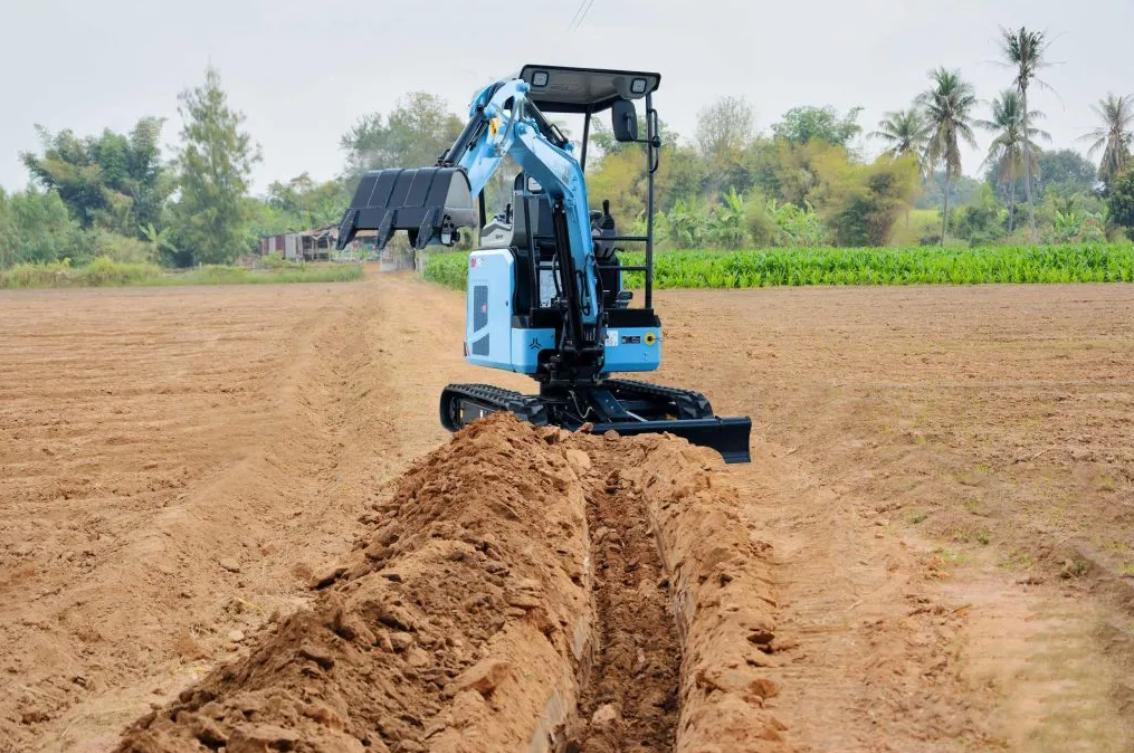
- Agricultural and rural construction: Digging circular fertilization ditches in orchards (0.4m deep and 0.3m wide, along the distribution of fruit tree roots), leveling greenhouse foundations (with an error ≤3cm to ensure the horizontal installation of shed frames), and dredging fish ponds (equipped with mud pumps, 10 times more efficient than manual work).
- Landscaping and indoor operations: Transplanting arbors (digging 1.2m in diameter and 1m deep planting pits to protect root balls), and removing earth in basements (tail-swing-free design avoids colliding with walls, operable in spaces with a floor height of 2.5m).
Advantages and Application Boundaries
Core advantages:
- Environmentally friendly: Crawler-type models exert a ground pressure equivalent to that of a walking adult (30-50kPa), with a 90% recovery rate after operating on lawns; electric models produce noise levels of ≤75 decibels, suitable for construction near hospitals and residential areas.
- Controllable costs: The purchase cost is approximately 100,000-300,000 yuan (only 1/5-1/3 of that of 20-ton excavators). A 3-ton model consumes 3-5L of fuel per hour (with a daily operating cost of about 150 yuan for 8 hours of work), and the investment payback period for small and medium-sized engineering teams is approximately 8-12 months.
Application boundaries:
- Limited operational capacity: The maximum digging depth is ≤5m (up to 6m for special models), and the maximum bucket capacity is 0.5m³, making them unsuitable for heavy-duty tasks such as mine stripping (requiring models over 20 tons) and deep foundation pits (over 10m).
- Terrain adaptation limitations: Wheel-type models are prone to slipping on slopes >15° or muddy ground; crawler-type models will accelerate track wear when traveling at high speeds (>5km/h) on concrete ground and require rubber track pads.
In summary, mini excavators are the optimal solution for "small spaces+light operations." Their core value lies in balancing "high precision+versatility+low cost" with a "small size," making them essential equipment for small-scale projects, agricultural modernization, and urban refined operation and maintenance.
How Much Does a Mini Excavator Weigh?
The weight of a mini excavator varies by brand and model. You can check the operator manual or specification sheet for exact figures, but generally, the weights fall within the following ranges:
- Standard Mini Excavators: Typically weigh between 4,000 and 12,000 pounds (approximately 2 to 6 tons). These versatile machines are suitable for tasks such as foundation digging, grading, and utility installation. Standard mini excavators provide more power than micro excavators while remaining relatively easy to transport and operate.
- Micro Excavators: Typically weigh between 2,000 and 4,000 pounds (approximately 0.9 to 1.8 tons). These are ideal for small projects such as residential landscaping, minor trenching, or indoor demolition tasks where larger machines cannot fit. Micro excavators have a small footprint, are easy to transport, and minimize damage to landscaping or finished surfaces.
- Large Mini Excavators: Usually weigh over 12,000 pounds (approximately 6 tons). They are suitable for larger projects requiring flexibility, such as light excavation, major landscaping, or construction tasks. Large mini excavators offer nearly the power of full-size excavators while remaining more agile for handling challenging jobs.
Factors Affecting Mini Excavator Weight
In addition to the machine itself, the following factors can influence a mini excavator’s weight:
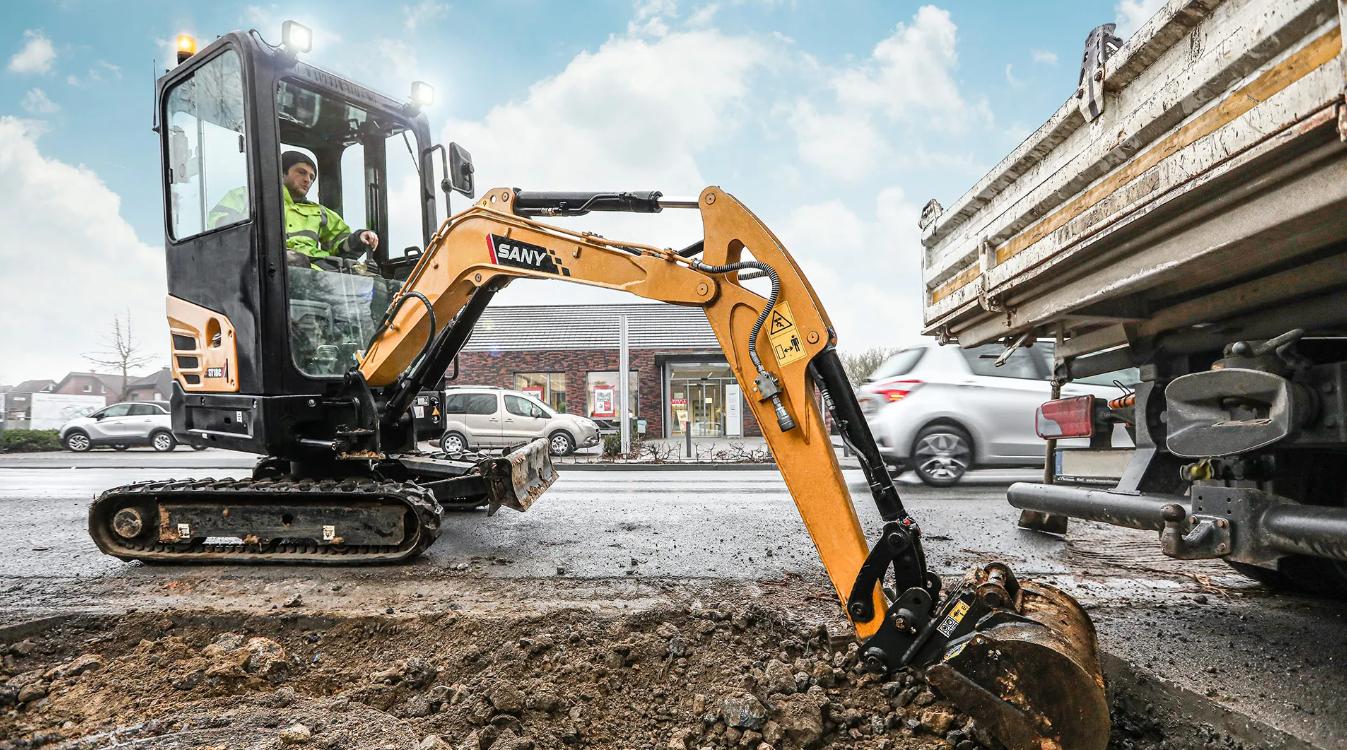
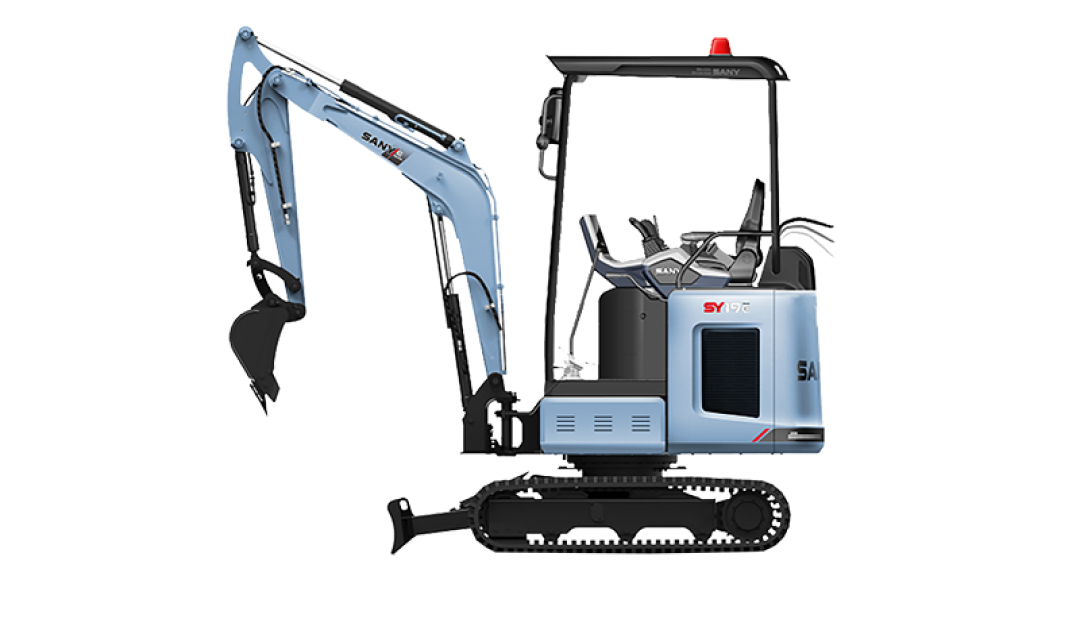
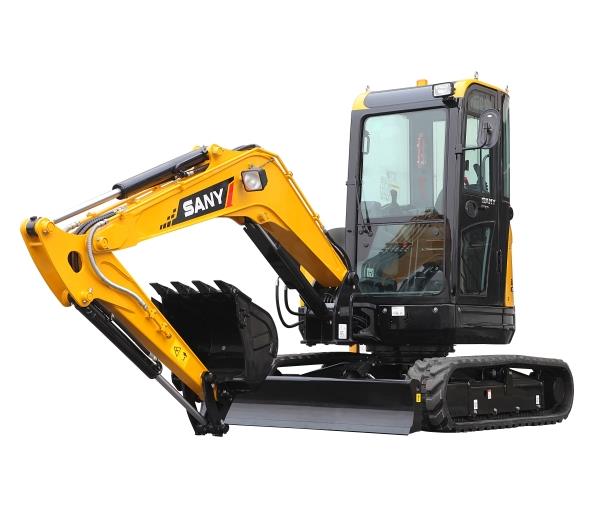
- Model and Brand: Different brands and models can vary significantly in weight. For example, the SANY mini excavator series ranges from 1.95 tons (electric mini excavator), under 2.5 tons (mini excavators below 5T), to 2.68–5.3 tons (2.5–5T mini excavators).
- Size: Size is a major determinant of weight—the larger the machine, the heavier it generally is.
- Attachments: Various attachments add considerable weight. For instance, a bucket may weigh 50–200 pounds, a typical auger attachment 200–500 pounds, and a grapple 100–400 pounds.
- Material Selection: The materials used in the mini excavator’s structure directly affect its weight, durability, and performance. Even hydraulic fluid and fuel contribute to the overall weight.
How Mini Excavator Weight Impacts Performance and Transport
1. Transport: Weight directly affects transportation. Knowing the excavator’s weight ensures the use of proper transport equipment and helps avoid potential logistics issues or trailer overload.
2. Performance and Efficiency: Weight influences performance, as an overloaded mini excavator may not operate at optimal levels, slowing project progress and accelerating equipment wear.
3. Site Restrictions and Safety: Many work sites, especially in urban or residential areas, have weight limits. Overweight machines can incur fines and pose safety risks. Additionally, an overweight excavator can damage yards or concrete surfaces, resulting in property loss.
Conclusion
Whether it concerns the functions and uses of mini excavators or the various factors affecting their weight, everything revolves around a core question: how much does a mini excavator weigh? Understanding this not only allows users to choose equipment more purposefully—avoiding transportation issues or operational limitations due to improper weight—but also plays a critical role in ensuring construction safety and improving work efficiency. After all, only by accurately grasping a machine’s weight characteristics can a mini excavator truly deliver its full value in different scenarios.
FAQs
How much does a mini excavator typically weigh?
Generally, the operating weight of a mini excavator ranges from 2,000 to 20,000 pounds, depending on the model. In comparison, standard excavators typically weigh between 22,000 and 99,000 pounds.
Does the weight affect the mini excavator’s stability?
Yes, the weight of the excavator affects its stability. Overloading or using attachments that are incompatible with the machine’s weight class can increase the risk of tipping. A balanced weight ensures safe operation, especially when digging at maximum depth or reach. Therefore, understanding weight limits is crucial to avoid potential hazards.
What are the transport requirements for different mini excavator weights?
- Trailer Requirements: The weight of a mini excavator determines the type of trailer needed. Lighter excavators can be towed using a standard multipurpose trailer, while heavier machines require specialized equipment trailers.
- Vehicle Capacity: Only certain trucks can tow specific mini excavators. Matching the excavator’s weight to the truck’s towing capacity is essential. Overloading can create safety risks and potential legal issues.
- Permit Considerations: In many regions, transporting heavy machinery may require a permit, especially when the combined weight of the truck, trailer, and excavator exceeds a certain limit.
Featured Products
Recommend Blogs
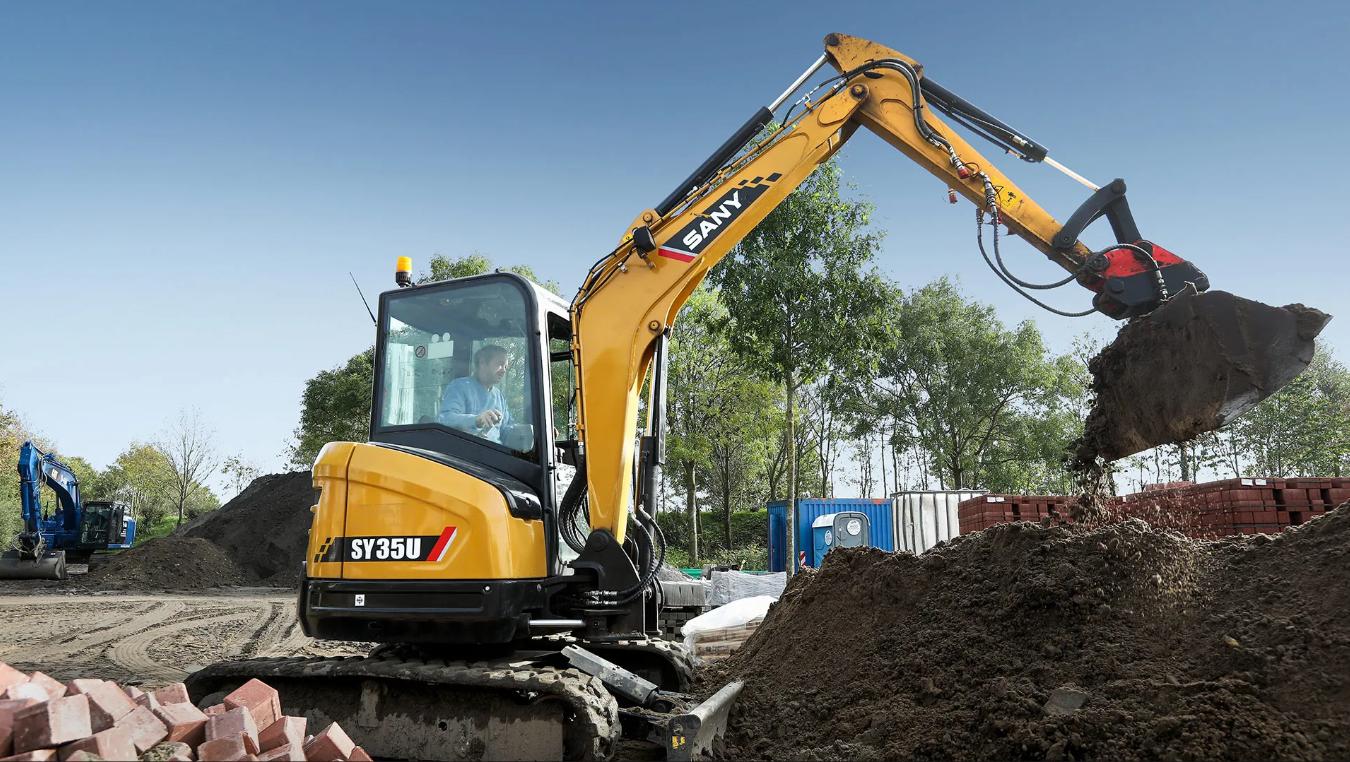
How to Operate a Mini Excavator: A Beginner’s Step by Step Safety Guide
This guide systematically breaks down the essential knowledge of how to operate a mini excavator, helping you work safely and complete tasks efficiently
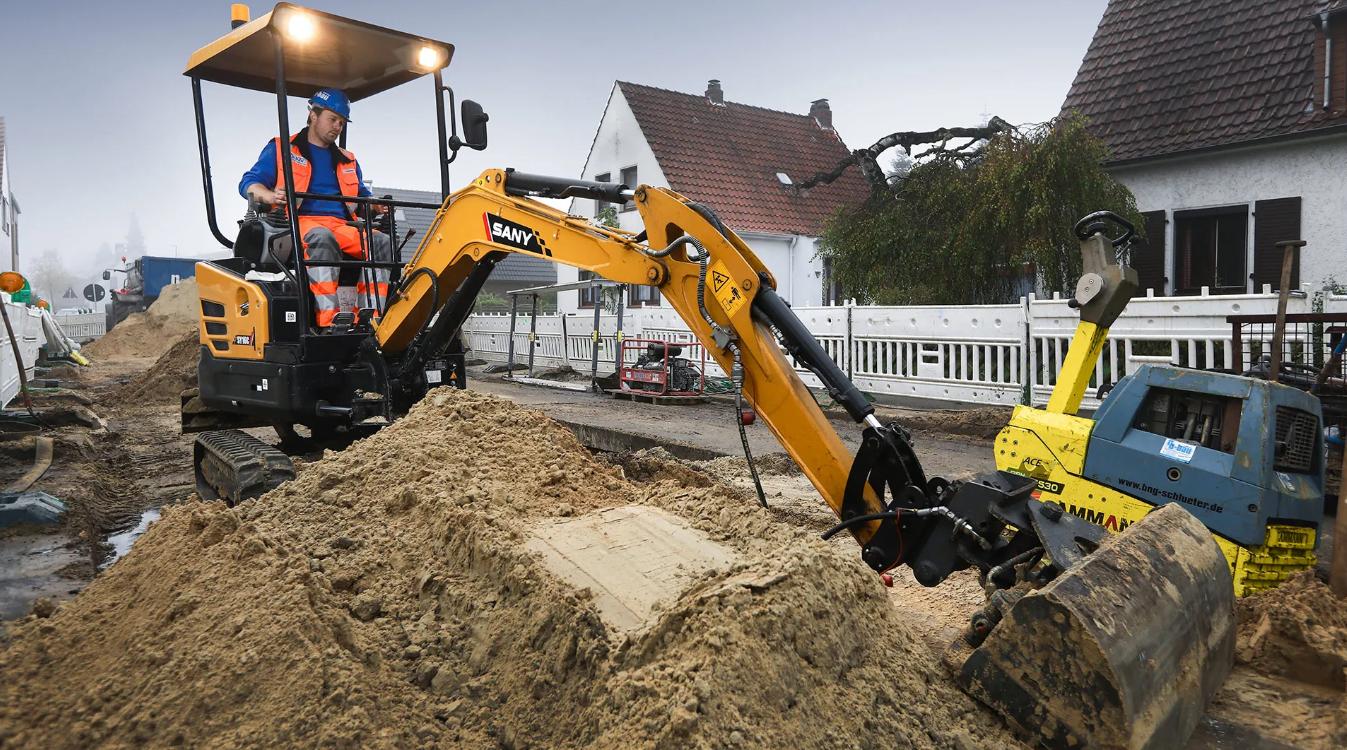
How to Pick the Best Mini Excavator: Key Features to Look for
This guide outlines mini excavators' definition, advantages, and tips for selecting the best mini excavator, acting as a reference for grasping this practical machinery.