How Much Does a Forklift Truck Weigh? A Quick & Practical Weight Data and Safety Guide
How much does a forklift truck weigh? Get typical weights, factors affecting them, and practical safety tips for operators.
In scenarios such as warehouse material handling, dock loading and unloading, and construction site material transport, forklifts are core equipment, yet their weight is often overlooked. The weight of a forklift can vary significantly depending on the application, and understanding how much does a forklift truck weigh is far from trivial—it is crucial for safe operation, compliant transportation, and protecting warehouse floors from overload damage.
In this quick and practical guide, we’ll explain why forklift weight matters, what affects it, and how to find the exact weight of your model—so you can operate safely and efficiently.
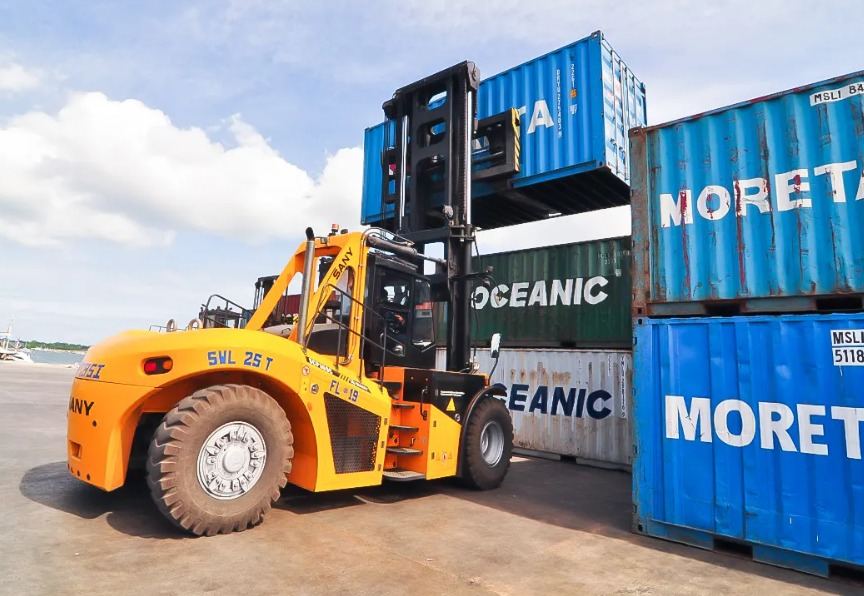
What Is a Forklift’s Weight? How Is It Different from Its Lifting Capacity?
The weight of a forklift generally refers to its own weight, meaning the weight of the forklift itself, not its rated load capacity. A forklift’s specific weight varies depending on the brand, model, type, and lifting capacity, typically ranging from a few tons to several dozen tons. However, a forklift’s weight and its lifting capacity are not the same concept. Below is a comparison between the two.
Forklift Weight: Machine’s Own Heft
Definition: This is the forklift’s empty weight—no cargo, no attachments, just the machine itself.
Why it matters: It directly impacts floor safety, transport limits, and stability. If you ignore it, you risk damaging infrastructure or overloading vehicles.
Scenario: A 9,000-lb electric forklift on a mezzanine rated for 10,000 lbs total load leaves only 1,000 lbs of wiggle room for cargo. Misjudging this could crack the floor, risking equipment damage, cargo spills, and worker injury.
Lifting Capacity: Cargo Limit
This is the maximum weight the forklift is designed to lift—you’ll find it listed on the manufacturer’s data plate (e.g., 5,000 lbs).
Why it matters: Exceeding this limit breaks the forklift’s safety design, making tipping or mechanical failure far more likely.
Scenario: A forklift rated for 5,000 lbs tries to lift a 6,000-lb pallet. Even though the forklift itself weighs 9,000 lbs, this overload can cause it to tip forward, endangering anyone nearby.
Practical Example: See the Difference in Action
Let’s use a common electric forklift to tie it all together:
Forklift weight: ~9,000 lbs (empty)
Lifting capacity: 5,000 lbs (max cargo)
Takeaway: The forklift’s own weight is nearly double its lifting capacity. Operators can’t “compensate” for heavy cargo with the forklift’s heft—both numbers need to be planned for separately.
Why Forklift Weight Matters in Daily Operations
A forklift’s weight isn’t just a number—it directly affects safety, operational efficiency, and equipment longevity. Here’s why knowing the exact weight matters:
Counterbalance Stability
Forklifts rely on their own weight to balance heavy loads. If the weight is miscalculated, especially when lifting near the maximum capacity, the forklift can tip forward or sideways, risking injury to operators and nearby workers.
Floor Load Limits
Forklifts rely on their own weight to balance heavy loads. If the weight is miscalculated, especially when lifting near the maximum capacity, the forklift can tip forward or sideways, risking injury to operators and nearby workers.
Transport Safety
Loading a forklift onto a trailer, elevator, or shipping platform without knowing its exact weight can exceed the transport vehicle’s capacity, leading to spills, accidents, or vehicle damage during transit.
Accident Prevention
Loading a forklift onto a trailer, elevator, or shipping platform without knowing its exact weight can exceed the transport vehicle’s capacity, leading to spills, accidents, or vehicle damage during transit.
Safety Tip: Do This 2-Step Check Every Time
Before operating or transporting a forklift, pause for 60 seconds to confirm two things:
- Forklift weight vs. limits: Make sure the empty weight doesn’t exceed floor or trailer ratings. For example, a 9,000-lb forklift on a 12,000-lb trailer leaves only 3,000 lbs of safe margin—don't eat that up with heavy attachments.
- Lifting capacity vs. cargo: Weigh pallets or use load labels to confirm cargo weight is under the forklift’s rated capacity. For instance, a 5,000-lb capacity forklift can safely lift a 4,800-lb pallet, but a 5,100-lb pallet exceeds the limit—stop.
How Much Does a Forklift Truck Weigh: Typical Weights by Type
When asked, “How much does a forklift truck weigh?” or “How heavy is a forklift truck?” the answer depends on the type of forklift and its intended use. Below is a detailed classification of four common types of forklift truck on the market, analyzing their weight, lifting capacity, sources of weight, and typical applications.
Electric Forklifts Weight
Typically weight: 7,000–9,000 lbs, with
Lifting capacity: 3,000–5,000 lbs.
Sources of weight: Their weight mostly comes from the large power source: lead-acid or lithium-ion batteries, which can add 1,000–3,000 lbs alone.
Typical applications: This moderate weight makes them ideal for indoor use, such as warehouses or retail stores, because they put less strain on concrete floors and produce no emissions.
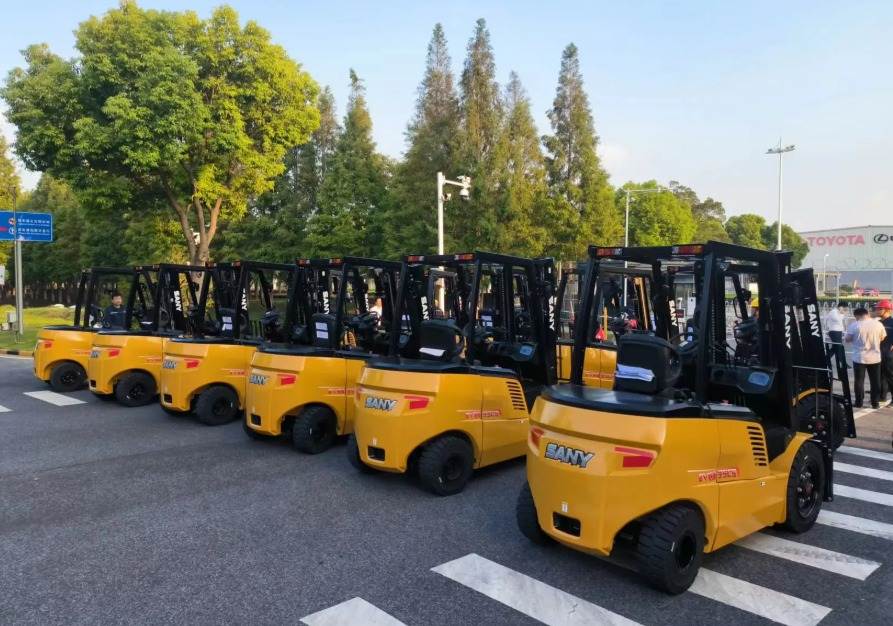
For example, the SANY Electric forklift uses high-voltage lithium batteries, enabling fast charging in 1 hour, 8 hours of operation, the ability to climb slopes over 20%, and highly efficient performance.
LPG/Petrol Forklifts Weight
Weight: 8,000–10,000 lbs
Lifting capacity: 4,000–6,000 lbs.
Sources of weight: The extra weight comes from their combustion engines and fuel tanks, which are heavier than electric batteries.
Typical applications: These forklifts are suitable for mixed indoor/outdoor use, like loading docks, because they refuel quickly and provide a balance of power without overly stressing indoor floors.
Diesel Forklifts Weight
Typically weight: 9,000–15,000 lbs
Lifting capacity: 5,000–12,000 lbs.
Source of weight: Their heaviness comes from rugged steel frames (for rough outdoor terrain) and larger counterweights (needed to balance heavier loads).
Typical Applications: These forklifts are designed for outdoor tasks, such as construction sites or lumberyards, where durability and torque are more important than floor strain.
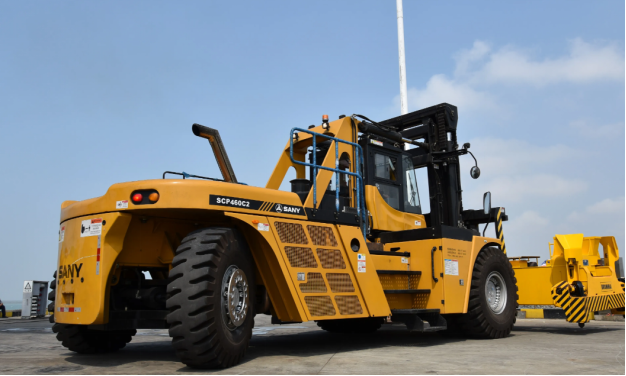
Heavy-Duty Industrial Forklifts Weight
Typical weight: 20,000–80,000+ lbs
Lifting capacity: 15,000–100,000+ lbs.
Source of weight: Their extreme weight comes from massive counterweights, reinforced frames for stability, and industrial-grade components like large tires for uneven surfaces.
Typical applications: These forklifts are used in specialized settings, including shipping yards, manufacturing plants, and ports, where lifting massive loads like steel beams or shipping containers is routine.
Factors That Influence a Forklift’s Weight
Not all forklifts weigh the same—several design choices determine a model’s total weight, which affects stability, lifting capacity, and suitability for different environments:
Power source
The type of energy the forklift uses—electric, LPG/petrol, or diesel—determines its base weight. Electric forklifts require batteries, while diesel models include heavy engines and fuel systems.
Battery or fuel capacity
Within the same power type, larger batteries or fuel tanks add extra pounds. For example, a high-capacity electric battery can weigh 3,000 lbs, compared to 1,000 lbs for a smaller one.
Counterweight
Forklifts need counterweights to balance their loads. Higher lifting capacities require bigger counterweights; a 10,000-lb capacity forklift will have a much heavier counterweight than a 3,000-lb model.
Build for environment
Outdoor forklifts, particularly diesel models, have thicker frames, reinforced structures, and rugged tires to handle rough terrain, adding several thousand pounds.
Attachments
Tools like clamps, side-shifters, extended forks, or specialty attachments can increase the forklift’s weight by 500–2,000 lbs.
Tire type & size
Pneumatic tires for outdoor use weigh more than cushion tires designed for indoor floors, contributing additional pounds.
How to Find or Estimate Your Forklift’s Weight
Knowing the exact weight of a forklift is crucial for safety, floor load capacity, and transportation planning. To obtain an accurate measurement or make a reasonable estimate of its own weight, follow these four simple steps to efficiently grasp the key information.
Check the Data Plate
Look near the operator’s seat. Most plates list the forklift’s empty weight, lifting capacity, and sometimes the weight with standard attachments.
Use the Operator’s Manual
Manuals contain detailed specifications, including base weight and recommended weight limits with common attachments.
Look Up by Serial Number
If the manual is unavailable, enter the forklift’s serial number on the manufacturer’s website (Toyota, Caterpillar, Hyster, etc.) to access official specs or PDF spec sheets.
Ask Your Dealer
For older, modified, or specialty forklifts, your local dealer can provide exact weights or certified documentation—especially important for shipping, mezzanine use, or heavy-duty applications.
Conclusion
How much does a forklift truck weigh? In summary, there is no single answer to this question. Forklift weights vary by type, ranging from 7,000–9,000 lbs for electric forklifts to over 80,000 lbs for heavy-duty industrial forklifts. However, by checking the nameplate or referring to the manual, you can obtain the exact weight. Knowing a forklift’s weight is crucial for safe operation, floor protection, and efficient material handling.
FAQs
How Heavy Is a Standard Electric Forklift Truck?
The weight of standard electric forklifts can vary widely. Counterbalanced 3- or 4-wheel electric forklifts typically weigh between 6,600 and 11,000 lbs, but the exact weight depends on the type, load capacity, and configuration—especially the battery. Lead-acid or lithium batteries also serve as counterweights when lifting loads.
For example, small warehouse electric forklifts weigh around 4,400 lbs, while high-capacity electric forklifts can exceed 13,000 lbs.
How Much Does an Unloaded 5,000-lb Forklift Weigh?
A forklift with a rated lifting capacity of 5,000 lbs typically weighs between 8,500 and 9,500 lbs (approximately 3.9–4.3 tons) when unloaded. The exact weight varies depending on the model, power type (electric or internal combustion), and other configurations such as the battery or counterweights.
Electric forklifts: Carrying heavy batteries increases the overall weight, around 9,000 lbs.
Internal combustion forklifts: Weight includes the fuel system and counterweights, approximately 8,000 lbs.
Other factors: The chassis material, lift height, and specific model also affect the total weight.
Is a Forklift Heavier or Lighter Than a Car?
Comparing the weight of forklifts and cars depends on their respective models, so there is no absolute answer. However, forklifts are designed to handle heavy loads, making their own weight significantly higher, usually heavier than a typical passenger car. For example, a standard forklift can weigh several tons, while a small car may weigh just over one ton.
Featured Products

Recommend Blogs
Right Forklift Companies Can Fully Assist the Forklift Team to Carry Out Operations Efficiently
This article highlights the importance of selecting high-quality forklift companies and their types, and provides a purchasing guide to help forklift teams operate more efficiently.
Complete Guide to the Differences: Forklift and Reach Truck
This guide explains what forklift and reach truck are and the differences between them, helping you choose the equipment that best suits your job requirements.