How Much Does a Crane Cost? A 2025 Full Breakdown by Crane Type
This article focuses on "how much does a crane cost in 2025", breaks down the costs of different crane types, offers buy or rent advice, and helps with making informed project decisions.
As a core piece of equipment in engineering and construction, the cost of crane is directly related to accurate project budgeting and the final profit margin. Whether it’s for small-scale municipal maintenance (such as streetlight replacement, emergency pipeline repairs), large-scale infrastructure projects (such as bridge construction, high-rise building construction), or factory workshop renovations (such as heavy equipment relocation, production line upgrades), choosing the right crane requires a clear understanding of the cost of crane.
This article will comprehensively break down the cost realities of the 2025 crane market, addressing core questions like "how much does a crane cost?", the key factors influencing the cost of crane, and offering advice on buying or renting decisions. It will help you avoid hidden cost traps and select optimal equipment solutions for different project needs.
What’s the Cost of Purchasing a Crane?
The purchase cost of cranes varies significantly depending on their functions, tonnage, and application scenarios. In 2025, driven by factors like stable-to-lower steel prices and the widespread adoption of smart equipment, the overall cost has fluctuated by 5%-8% compared to 2024. However, there is a distinct price gap between different types of cranes.
1. Mini Cranes (1-5 Tons)
Key Features: Ultra-compact size (the narrowest model is less than 1.5 meters wide), flexible operation for confined spaces, and low energy consumption.
Application Scenarios: Confined-space tasks such as interior decoration, courtyard renovation, and small-scale pipeline excavation. Some ultra-compact models can be transported into buildings via elevators.
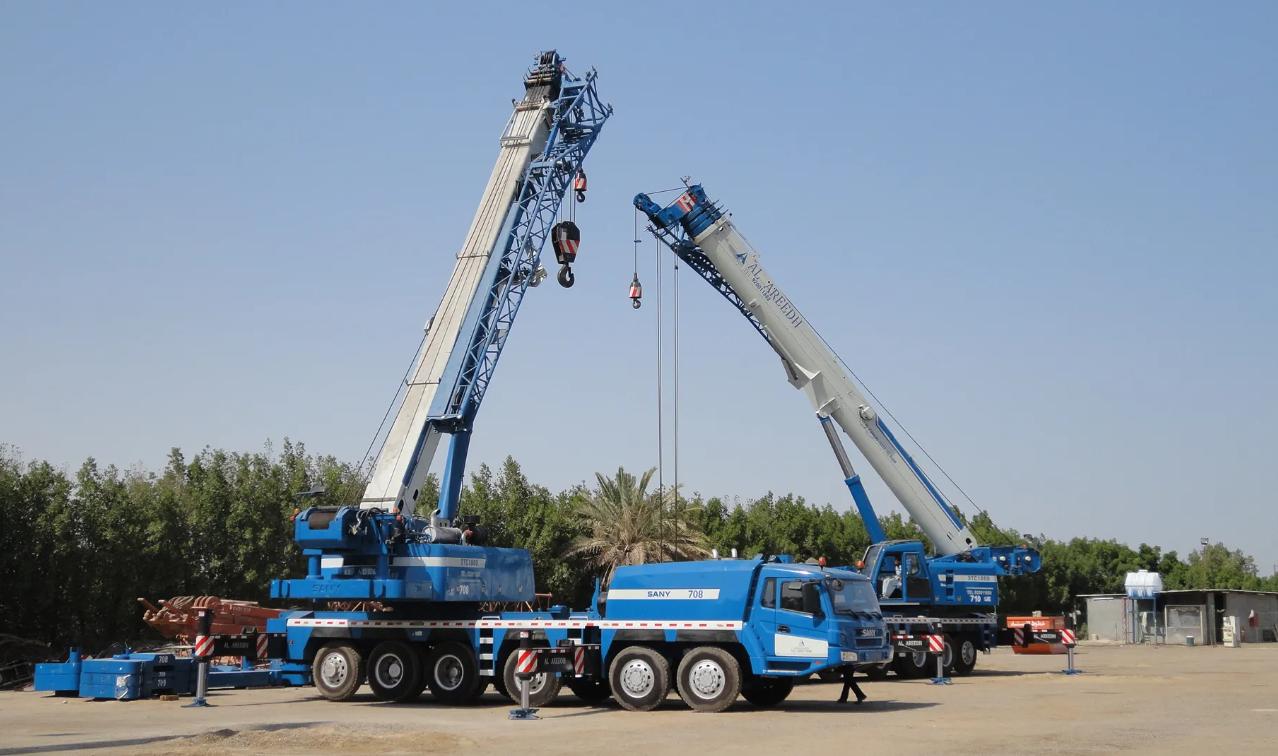
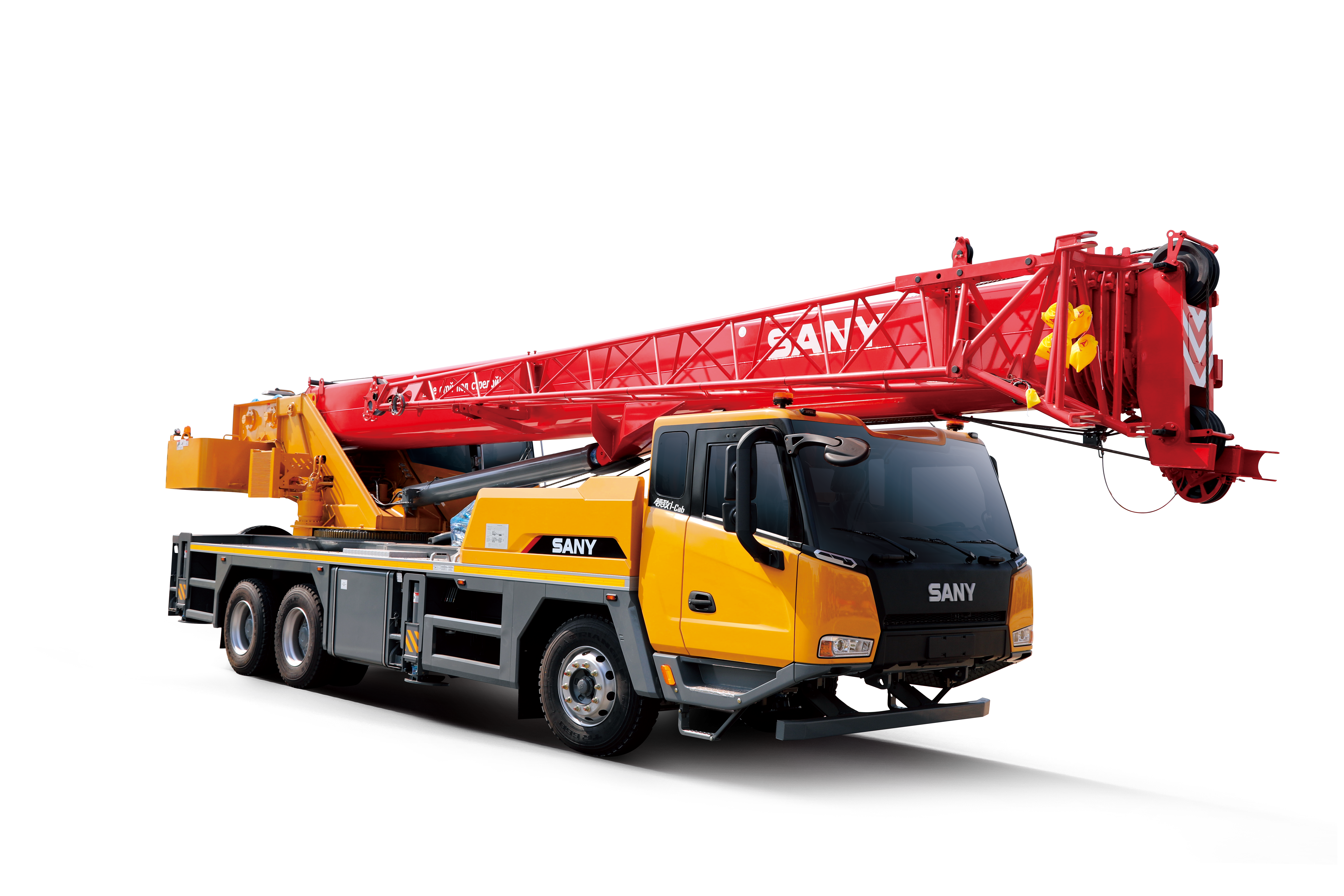
2. Truck Crane (8-90 Tons)
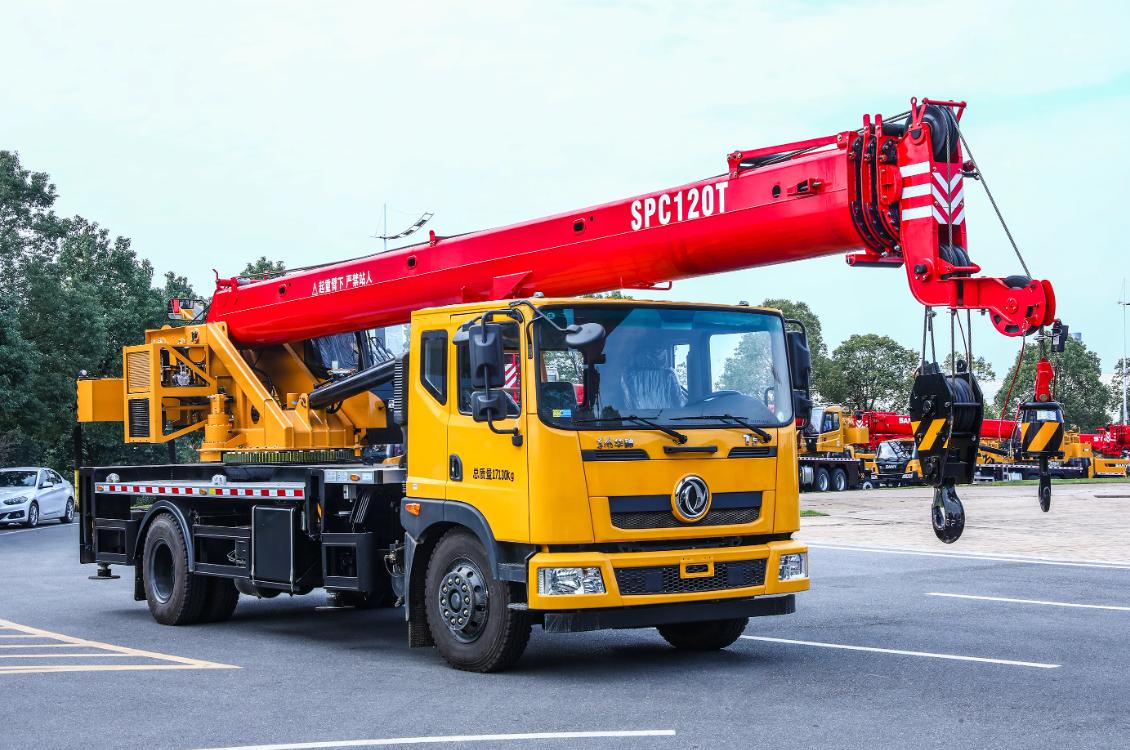
Key Features: Truck Cranes are mounted on a truck chassis for strong mobility, enabling quick relocation without fixed rails. Smart features are widely available (80% of models come with load monitoring and anti-sway systems).
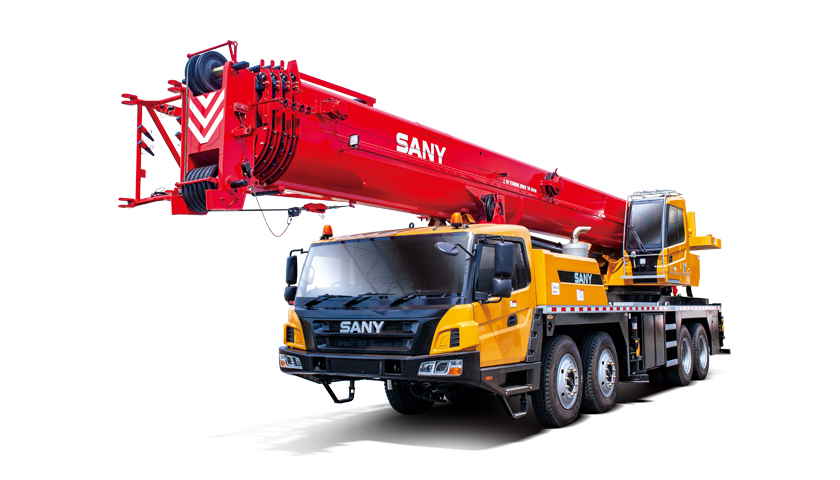
Application Scenarios: Road rescue, municipal engineering (e.g., cross-road pipeline hoisting), and small-to-medium construction projects. Among these, 8-50 ton models are suitable for steel structure installation and precast slab transportation. Brands like SANY also offer heavy-duty models over 90 tons, which, with robust specs—maximum rated lifting capacity over 100 tons, maximum boom length of 56 meters, and maximum lifting height of 77.5 meters—specialize in hoisting large heavy equipment, such as wind turbine tower installation and transportation of 10kV and above high-voltage transformers.
Tonnage & Price Breakdown:
- 8-12 Tons (Entry-level, Light Lifting): Mainly for short-distance urban emergency tasks (e.g., street lamp replacement);
- 20-25 Tons (Mainstream, Balancing Flexibility and Load Capacity): Accounting for over 60% of municipal project purchases;
- 40-50 Tons (Heavy-duty, Regular Large Equipment): Suitable for factory production line relocation;
- 90 Tons (Super Heavy-duty, Heavy Lifting): High-end models equipped with a super lift device, such as those suitable for wind power hoisting.
3. Tower Crane (60-200 Ton-meters)
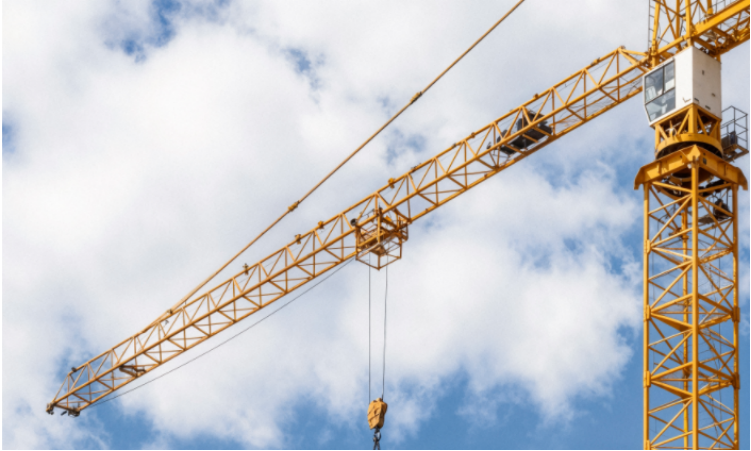
Key Features: High lifting height (up to 150 meters), large working radius (maximum coverage diameter over 50 meters); requires a fixed foundation for strong stability, ideal for long-term concentrated operations. Smart operation and maintenance systems are prevalent (enabling remote monitoring of jib stress and wire rope wear).
Application Scenarios: Long-term fixed operations such as construction of super high-rises with over 40 floors, main beam hoisting of long-span bridges, and integral steel structure installation in large workshops. It must be fixed to the ground or building’s main structure via embedded foundation parts to ensure safety during high-altitude operation.
Impact of Configurations:
Regular Fixed Tower Cranes (60-100 Ton-meters): Mainly for mid-to-high-rise residential construction (10-30 floors) with non-adjustable jibs, offering high cost-effectiveness;
Luffing Jib Tower Cranes (150-200 Ton-meters): The jib angle can be flexibly adjusted (0°-80°) to avoid obstacles from building core tubes, specializing in core tube construction of super high-rises and hoisting of heavy steel components.
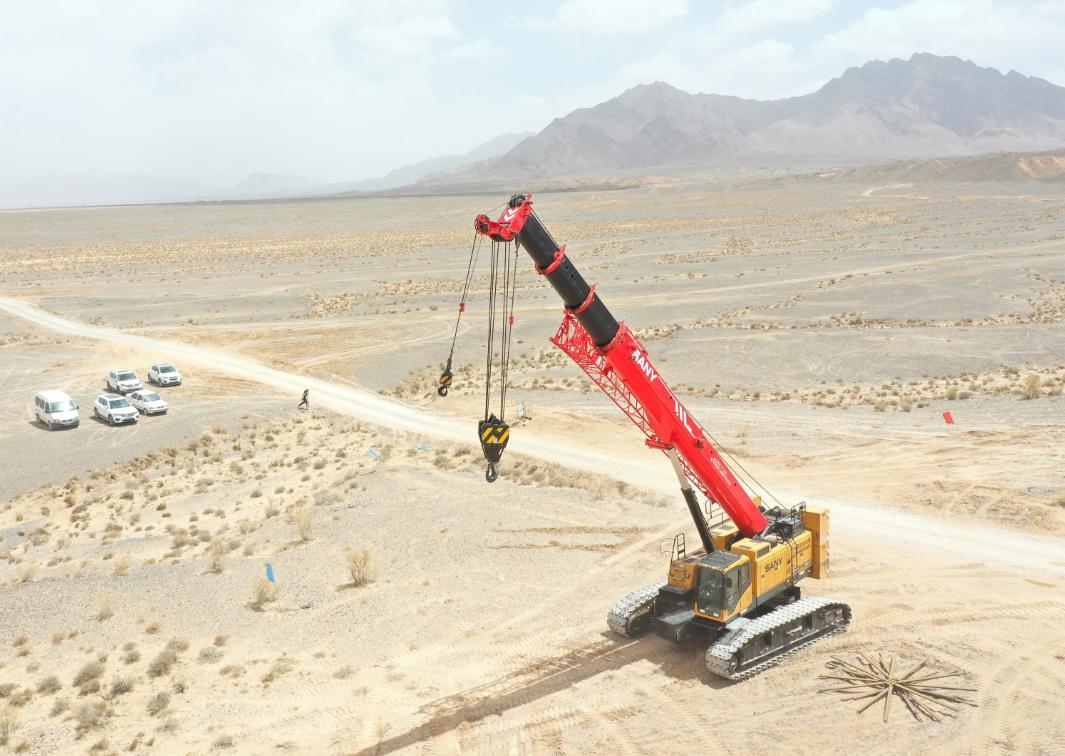
4. Crawler Crane (50-300 Tons)
Key Features: The crawler crane adopts a crawler chassis with a large ground contact area (ground contact pressure≤0.15MPa),which can adapt to complex terrains like muddy ground and slopes within 15° without additional roadbed padding; strong load-bearing capacity, and models with super-lift devices can improve heavy-load stability by 30%.
Application Scenarios: Operations in complex terrains such as mining, large-scale wind power installation, and main span hoisting of bridges.
Special Requirements: In 2025, due to growing demand for wind power projects (global wind power installed capacity is expected to increase by 15%), this type of crane is in short supply, and delivery lead time for some brands is 3 to 6 months.
5. Overhead Bridge Crane (10-50 Tons)
Key Features: Operates horizontally along rails, with high horizontal transfer efficiency (maximum operating speed of 60m/min); span and lifting height can be customized to fit different workshop sizes; electric models account for over 70%, meeting factory environmental protection requirements.
Application Scenarios: Operations in fixed areas such as factory workshops, warehouses, and ports, often used for horizontal transportation of machine tools, containers, and heavy equipment.
Impact of Key Parameters:
10-20 Tons (Light-duty): Suitable for daily component hoisting in workshops.
25-50 Tons (Heavy-duty): Used for transporting steel coils in steel mills and hull sections in shipyards.
For every 5-meter increase in span, the price rises by 10%-15%.
*Disclaimer: Considering that prices vary significantly across different brands and regions, please contact local dealers for price inquiries.
Factors That Affect the Crane Cost
When purchasing cranes in 2025, cost differences are influenced by five dimensions: technical parameters, market supply and demand, customized configurations, after-sales services, and policy trends.
Core Technical Parameters: The Fundamental Determinant of Cost
Technical parameters directly determine the "performance threshold" of cranes and serve as the core source of cost differences, specifically including the following four categories:
1. Tonnage
Tonnage is the fundamental factor determining cost and follows the principle of "stepwise price increase." This is because increasing tonnage requires not only a stronger steel structure but also upgrades to the hydraulic system and braking system to ensure safety.
Furthermore, the "rated tonnage" must match the "actual operating tonnage." If a project occasionally requires lifting within 10% of the rated tonnage, a model equipped with an "overload protection device" can be selected, but the cost will increase by 5%-8%.
2. Machine Model Positioning
Differences in machine functions further widen the cost gap. For instance, under the same tonnage, a "movable + intelligent configuration" truck crane has a significantly higher cost than a conventional overhead crane for "fixed operations". This is because the truck crane needs to be adapted to a truck chassis and a load monitoring system.
3. Key Indicators of Lifting Performance
In addition to tonnage, parameters such as lifting height, operating radius, and boom length directly affect the complexity of structural design, thereby increasing costs:
For tower cranes, a luffing-jib model with a lifting height of over 150 meters and an operating radius of over 50 meters (150-200 ton-meters) requires a variable-amplitude jib and high-strength steel. As a result, its cost is 2-3 times that of a conventional fixed tower crane.
The "super lift device" of crawler cranes can improve heavy-load stability by 30%. A 90-ton truck crane equipped with this device is approximately 25% more expensive than a conventional 90-ton model .
4. Chassis and Terrain Adaptability
Chassis design must match the operating scenario, and its complexity directly affects costs:
A crawler chassis (ground pressure ≤0.15 MPa) needs to adapt to muddy terrain and slopes of up to 15°, so its structure is heavier. Therefore, the cost of a 50-300 ton crawler crane is much higher than that of a truck crane of the same tonnage.
The "ultra-compact chassis" of mini cranes (width <1.5 meters) requires precise design. Although their tonnage is small, their cost per ton is still higher than that of conventional light truck cranes.
Market and Supply Chain: Dynamic Regulatory Factors of Cost
Market supply and demand, raw material prices, and supply chain stability can cause short-term fluctuations or long-term trend changes in crane costs—and the price characteristics of 2025 reflect such impacts:
1. Raw Material Prices
The core material for cranes is steel, which accounts for 30%-50% of production costs. In 2025, steel prices show a "stable with a downward trend" pattern, directly leading to an overall 5%-8% fluctuation and decrease in crane costs compared with 2024. If steel prices rise in the future, costs will climb simultaneously.
2. Market Demand Momentum
The surge in demand for segmented scenarios will drive up the cost of specific crane models: Global wind power installed capacity is expected to increase by 15% in 2025, which has led to a shortage of 300-ton crawler cranes equipped with super lift devices, further driving up implicit costs.
3. Core Component Supply Chain
Crane costs are significantly influenced by the supply chain stability and procurement channels of core components—including smart systems (load monitoring, remote operation and maintenance systems) as well as engines and hydraulic parts. Differences in component origins and trade environments (such as tariffs and transportation costs) across the globe are key factors driving cost differentiation.
Configuration and Customization: Incremental Adjustment Factors of Cost
"Additional configurations" or "customization requirements" beyond the base crane model significantly increase costs, specifically including the following:
1. Smart and Safety Configurations
Base models only include core lifting functions. Adding smart operation and maintenance systems (e.g., jib stress monitoring for tower cranes), anti-sway systems, or super-lift devices will increase costs by 15%-30%.
2. Customized Adaptation
Customizing parameters based on operating scenarios incurs additional design and production costs:
- For overhead bridge cranes, every 5-meter increase in span leads to a 10%-15% price rise (due to extended rails and main girders);
- Cranes customized for explosion-proof environments (e.g., chemical workshops) require special materials and sealing designs, with costs 25%-40% higher than standard models.
3. Energy Type Selection
Energy type affects both initial cost and long-term operating costs: Electric overhead bridge cranes are 8%-12% more expensive than diesel-powered models of the same tonnage, as they require motors and electronic control systems. However, they comply with environmental policies (e.g., factory emission reduction requirements) and have lower long-term operating costs. In 2025, electric overhead bridge cranes account for over 70% of the market, reflecting policy guidance on cost choices.
Additional Services and Hidden Costs
The "bare machine price" for purchasing a crane accounts for only 70%-80% of the total cost, and the following hidden expenses are easily overlooked:
Transportation and Installation: For a 30-ton crawler crane transported from the factory to the project site (within 100 kilometers), specialized transportation costs will be incurred; the installation of a tower crane requires the collaboration of a professional team and includes the foundation pouring process, with labor and material expenses for these related operations often being omitted.
Operator Training: If the team has no certified operators, it is necessary to choose a supporting "equipment + training" package. The training covers the certificate acquisition process to ensure operators possess compliant operation qualifications, and these supporting training expenses are frequently overlooked.
Service and After-Sales Support: Premium/Discount Factors of Cost
The after-sales service system plays a crucial role in determining price differences among crane models with similar parameters. Service packages that include long-term warranties, such as a 3-year full-machine warranty versus a 1-year warranty, as well as on-site maintenance and spare parts supply, can result in a price increase of 5%-10%.
Policy and Industry Trends: Long-Term Guiding Factors of Cost
Policy requirements and industry development directions impact costs bidirectionally from both the "production side" and "demand side":
1. Environmental Policies
Global emission reduction policies are driving cranes toward "electrification and low emissions." For example, the EU’s "Euro VI Emission Standard" mandates engine upgrades for diesel-powered cranes, leading to an 8%-15% increase in the cost of such models.
2. Industry Standardization and Scale
The "popularization of smart equipment" in 2025 is essentially a manifestation of industry scale: smart systems have shifted from "optional configuration" to "standard configuration." Mass production has reduced unit costs, which in turn curbs overall price increases. Conversely, for niche-demand models (e.g., special-tonnage explosion-proof cranes), costs remain high because mass production cannot be achieved.
How Much Does It Cost to Rent a Crane?
From a cost-effectiveness perspective, renting is more economical than buying if your project has a short timeline (less than 6 months) or requires low crane usage frequency (fewer than 10 hours per month). In 2025, the crane rental market has become more price-transparent, with real-time quotes available on major platforms such as EquipmentShare and CraneNetwork.com.
Crane Rental Considerations
1.Clarify What the Fee Includes: Some low-price quotes only cover equipment rental. It is necessary to confirm whether fuel, operators, and insurance (e.g., third-party liability insurance) are included to avoid additional charges later.
2.Agree on Equipment Failure Handling: The contract must specify responsibilities for failure repair (e.g., if downtime occurs due to equipment aging, the lessor must provide a backup device or reduce the rent).
3.Plan the Schedule in Advance: During the 2025 peak season (March–October, the busy period for engineering construction), rentals of cranes over 25 tons require booking 2–4 weeks in advance. Last-minute rentals may face a 20%–30% price increase.
Buy vs. Rent: Making the Right Choice for Your Project
There is no absolute "optimal solution" between buying and renting a crane—the decision requires a comprehensive evaluation based on the project timeline, usage frequency, and financial status. Below is a decision-making framework widely recognized in the industry in 2025, helping you avoid pitfalls such as "affording to buy but not to operate" or "long-term rentals being uneconomical":
1. 3 Scenarios for Prioritizing "Buying"
- Long project timelines (over 6 months) with high-frequency use: If the project duration exceeds 1 year and the monthly usage time exceeds 20 hours, buying offers lower long-term costs.
- Fixed long-term operational needs: For scenarios like logistics parks or factory workshops that require long-term use of overhead bridge cranes for cargo handling, buying eliminates the commissioning costs associated with frequent replacement of rental equipment. It also allows customization of configurations (e.g., adding smart weighing systems) to meet production needs.
- Sufficient budget and need for equipment control: If large construction companies have abundant funds, buying equipment enables independent arrangement of maintenance and scheduling, avoiding schedule conflicts caused by "shared rental equipment across multiple projects." This is particularly suitable for key projects with strict timeline requirements.
2. 3 Scenarios for Prioritizing "Renting"
- Short project timelines (under 6 months) or temporary needs: For example, if a municipal maintenance project only needs to use a truck crane for 2 weeks, leasing costs much less than purchasing, and it does not need to bear the risk of subsequent idleness;
- Low equipment usage frequency (fewer than 10 hours per month): If the crane is only used for emergency rescue or occasional hoisting, buying will result in long-term equipment idleness (during which maintenance and storage fees still apply). Renting, by contrast, offers greater flexibility.
- Scenarios with rapid technological iteration: Equipment like mini cranes and electric cranes undergo fast technological updates (e.g., the "AI-assisted hoisting" models launched in 2025). Renting avoids rapid depreciation of purchased equipment and allows access to the latest technology models at any time.
3. Compromise Option: Buying Used Cranes
If your budget is limited but long-term use is required, high-quality used cranes are a cost-effective choice in 2025:
Selection Criteria: Prioritize models "under 3 years old with fewer than 2,000 working hours," and ensure complete maintenance records are provided (e.g., hydraulic system inspection reports, steel structure flaw detection reports).
Cost Advantages: The price of used cranes is roughly lower than that of new ones, and one can apply for installment plans for used equipment (with a 20% down payment).
Risk Tips: Hire a professional third-party agency to inspect the equipment to avoid purchasing "refurbished machines" or "accident-damaged machines." It is recommended to buy from official platforms.
Conclusion
In 2025, when asking "how much does a crane cost?" or "how much is a crane?", the answer depends on multiple factors, including model type, tonnage, configuration, and brand.
Decision-making should go beyond the trap of "focusing solely on unit price" and instead incorporate project timeline, usage frequency, and technical requirements into a comprehensive assessment. When necessary, consult industry experts (e.g., SANY crane engineers) to evaluate options—sound cost planning not only reduces project budget pressure but also enhances operational efficiency and safety.
FAQs
What's the average price of a crane?
There is no uniform average price for cranes, as their costs vary greatly under the influence of multiple key factors. The core influencing dimensions are as follows:
1.Crane Type: It serves as the foundation of cost. Different types (such as mini-type, truck-mounted, crawler-type, and tower-type cranes) have entirely different cost starting points due to variations in their design purposes and structural complexity;
2.Tonnage Specification: It has an extremely wide range (from several tons to hundreds of tons). An increase in tonnage leads to significant differences in production materials and technical difficulty, resulting in a substantial change in cost;
3.Configuration Level: Whether a crane is equipped with super lift devices, intelligent control systems, and special accessories will further widen the cost gap;
4.Brand and Production Location: Differences in brand positioning (e.g., R&D investment and positioning level) and production location costs (e.g., raw materials and labor) lead to variations in the basic costs of cranes of the same type.
How much to hire a crane for 2 hours?
There is no fixed cost for renting a crane for 2 hours; it depends primarily on crane specifications and service scope. The characteristics of each crane type are as follows:
1.Mini cranes (1-5 tons): Include operators and on-site costs (transportation, site coordination), and are affected by work location and dispatch difficulty;
2.Truck cranes (20-25 tons): Include operators and on-site costs (short-distance transportation, work preparation), and are affected by equipment idle status and dispatch distance;
3.Tower cranes: Feature complex installation, so short-term rentals are relatively rare; emergency rentals require additional emergency installation costs, with both the process and cost higher than those of conventional cranes.
How much does a crane cost to build?
"Building a crane" typically refers to the "custom manufacturing of special-purpose cranes" (rather than purchasing finished products). Such costs are significantly higher than those of standardized models.
In 2025, they mainly fall into two categories:
1.Small and medium-sized special-purpose cranes:Customization costs cover three core links: the formulation of exclusive design schemes (adapted to special scenarios such as indoor use and explosion protection), the procurement of core materials (e.g., steel and hydraulic components), and targeted manufacturing. The overall customization cycle is relatively short, usually 3 to 6 months.
2.Large special-purpose cranes: Customization costs additionally include high-difficulty R&D and certification costs: these include the R&D and design of exclusive hydraulic systems, the processing of ultra-high-strength special steel structures, and the undergoing of specialized industry safety certifications for the cranes. Due to high technical complexity, the customization cycle is longer, typically 1 to 2 years.
How much does a 25 ton overhead crane cost?
The 25-ton overhead bridge crane is a "mainstream model" for factory workshops. In 2025, its cost is significantly influenced by three key factors: span, lifting height, and configuration.
Specific cost ranges are as follows:
Basic Model: 10-15m span, 6-9m lifting height, no intelligent configuration, suitable for basic lifting tasks.
Mid-Range Model: 15-20m span, 9-12m lifting height, equipped with load monitoring, which enhances operational safety.
High-End Model: 20-25m span, 12-15m lifting height, with electric drive + intelligent anti-sway, suitable for high-precision scenarios.
Rental: Monthly rental for medium-to-long-term needs; daily rental for short-term maintenance.
Featured Products
Recommend Blogs
Types of Cranes: Your 2025 Comprehensive Guide to Every Major Category
As 2025's latest authoritative guide to types of cranes, this article breaks down the four types' core traits and application differences, giving engineers and equipment purchasers key selection criteria
How Are Cranes Built? A Step-by-Step Guide to the Construction Process
Cranes help us build towering skyscrapers, yet few know how cranes are built. This guide takes you through an in-depth exploration of the process