How Much Can a Crane Lift? Key Factors and Safe Operating Guidelines
This guide explains how much can a crane lift, helping operators understand key factors affecting lifting capacity for safe and efficient crane selection and use.
Cranes are mechanical devices designed to lift and transport heavy loads, widely used in various work environments such as construction, manufacturing, logistics, ports, and off-road applications. They significantly improve work efficiency and reduce manual labor. So, why are cranes so powerful? How much can a crane lift? Understanding these factors is crucial, especially when you need to select or operate a crane. It's important to know the crane’s lifting limits to ensure both safety and efficiency in your operations. Let’s dive into this guide to explore more!
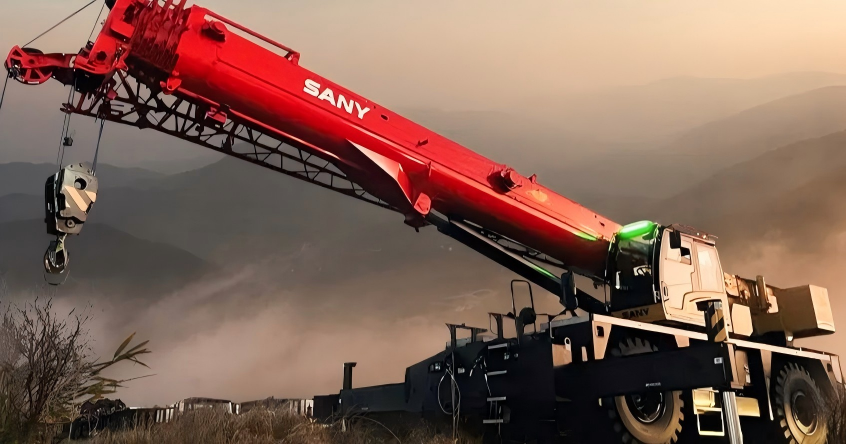
How Much Can a Crane Lift?
Cranes come in different types, with lifting capacities ranging from a few tons to hundreds of tons, depending on their structure and purpose. The most commonly used types of cranes are as follows, each with a unique lifting capacity range.
1.Tower Cranes
- Definition: Tower cranes are multi-story cranes assembled and fixed on construction sites.
- Lifting Capacity: Typically ranges from 20 tons to 100 tons.
- Applicable Scenarios: Mainly used in high-rise buildings, bridge construction, and large-scale engineering projects.
2.Mobile Cranes
- Definition: Known for their high flexibility, mobile cranes are easy to move between job sites.
- Lifting Capacity: Usually ranges from 10 tons to 60 tons.
- Applicable Scenarios: Suitable for municipal engineering, equipment installation, emergency rescue, and more.
3.Truck Cranes
- Definition: These cranes integrate the crane with a truck chassis, providing both transportation and lifting capabilities.
- Lifting Capacity: Varies by model, with some reaching up to 175 tons.
- Applicable Scenarios: Widely used in logistics, power, and landscaping fields.
4.Gantry Cranes
- Definition: Commonly known as "gantry cranes," these feature a gate-like frame and come in various types.
- Lifting Capacity: Lifting capacities can vary widely, with some special models like shipbuilding gantry cranes exceeding 1,000 tons.
- Applicable Scenarios: Used in ports, docks, steel plants, and similar environments.
What Factors Influence How Much a Crane Can Lift?
How much weight can a crane lift? The crane's actual lifting capacity is influenced by several factors, beyond just the type of equipment. Even the same crane may have different lifting capabilities depending on the working conditions. Here are the key factors:
1. Crane Arm Angle and Extension Length
The crane’s arm is the core component that transfers lifting force. Its angle and extension length directly affect the crane's leverage, and thus its lifting capacity. The longer the extension and the smaller the angle (more horizontal), the greater the lever arm but weaker the lifting capacity. Conversely, a shorter extension and larger angle provide higher lifting capacity.
2. Load Radius
The load radius refers to the horizontal distance from the crane’s center of rotation to the load’s center of gravity. The larger the load radius, the greater the “overturning moment” the crane must withstand. To avoid tipping and ensure safety, the load weight should be reduced when the radius is large.
3. Additional Attachments and Accessories
When using cranes, attachments like jib arms, grapples, or electromagnets may be added, increasing the total load the crane must lift and reducing its effective lifting capacity. For instance, when lifting steel with a 1-ton electromagnet, a crane with a 50-ton capacity can only lift up to 49 tons.
4. Operating Environment and Terrain
The weather conditions and terrain are also important factors in determining how much can a crane lift. For example, in strong winds, the crane’s stability decreases, making it difficult to safely carry heavy loads. If operating on soft or muddy ground, the crane’s base may sink, and the crane arm may tilt, further reducing lifting capacity.
5. Equipment Condition
The age, maintenance status, and wear of the crane’s components affect its lifting capacity. Older cranes or those with inadequate maintenance may experience a noticeable drop in lifting power, posing a higher safety risk.
How To Choose the Right Crane Capacity for Your Needs?
Choosing the correct crane capacity requires a comprehensive assessment of your operational needs, site conditions, and safety margins. Here’s how you can approach it:
1. Clarify Operational Requirements
You need to accurately determine key information about the load to be lifted, including actual weight, center of gravity, and dimensions. Additionally, review the lifting height and radius for your project to initially shortlist cranes that can meet these requirements.
2. Assess Site Conditions
Observe the construction site environment to assess whether the construction site is too narrow and whether the ground conditions can support the crane to pass smoothly and operate normally. The weather conditions during the construction period should also be taken into account.
3. Use Load Charts to Evaluate Equipment
Refer to the load charts provided for the selected crane model to understand how lifting capacity changes at different angles and distances. Ensure that the crane’s rated load capacity meets your needs and includes an appropriate safety margin.
4. Consider Crane Transportation
If the crane needs to be transported to the site from another location, plan the logistics in advance. Large cranes may require disassembling components for transport and then reassembling them onsite, while other cranes can usually drive directly to the work area or be transported fully assembled.
Tips: If you're unsure about how much can a crane lift or whether the selected crane's capacity meets your needs, it's a good idea to consult with professionals. They can help verify the feasibility of your plan and assist in optimizing or adjusting your selection.
Safety, Regulations & Best Practices for Crane Use
Crane operations are high-risk activities that require strict adherence to safety protocols and regulations. It is essential to choose reliable equipment with sufficient lifting capacity based on the factors that influence "how much can a crane lift," and to systematically optimize operational processes to ensure safety.
Selecting Cranes from Leading Manufacturers
In addition to determining the crane type and selecting the appropriate lifting capacity, it is important to prioritize cranes from reputable manufacturers like SANY. Renowned manufacturers ensure higher quality and service reliability.
For example, if you need a truck crane with a lifting capacity around 20 tons, consider the SANY Truck Crane STC250C5. It has a maximum lifting capacity of 25 tons, making it capable of easily and efficiently completing lifting tasks while offering sufficient safety margin to handle emergencies. As a crane mounted on a truck chassis, the SANY Truck Crane STC250C5 is highly mobile and can quickly be relocated to different job sites. It can transport materials such as steel pipes and lifting gear, making it suitable for various tasks.
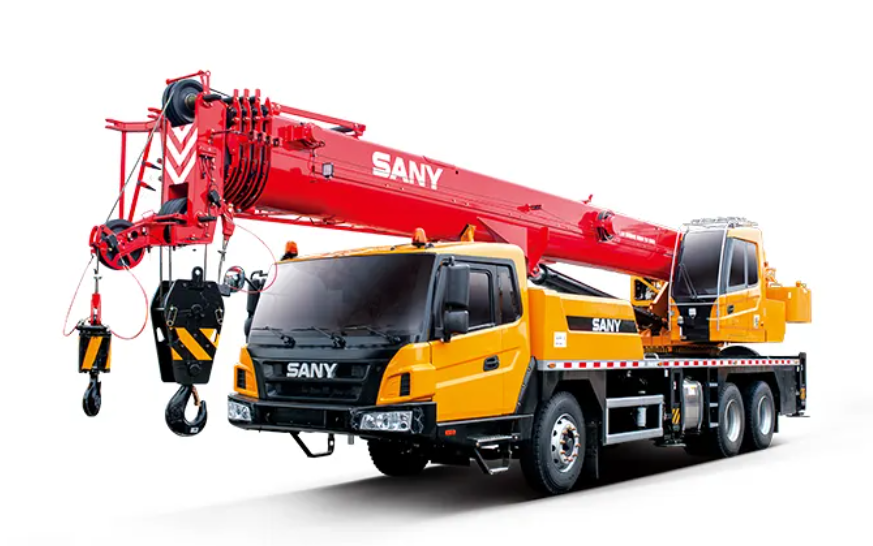
For higher lifting requirements or other types of cranes, such as crawler cranes or tower cranes, SANY also offers the right equipment options.
Operator Certification
Crane operators must hold certifications recognized by their region. In the U.S., operators need to be certified by the National Commission for the Certification of Crane Operators (NCCCO) and hold relevant state licenses. Operators must also obtain different levels of certification for operating different types and sizes of cranes. Taking New York as an example:
Crane Operator License Types | Crane Types Operated |
A | No Restrictions |
B | Hydraulic Cranes |
C | Boom Trucks |
D | Restricted Boom Trucks |
F | Line Trucks |
Compliance Construction
In addition to operator certification, laws in every country regulate aspects such as the crane's rated load, equipment inspections and maintenance, and operating procedures. It's crucial to thoroughly understand the relevant regulations to ensure compliance and legality throughout the entire operation.
Pre-Operation Checks and Preparation
Before conducting crane operations, you need to conduct weather assessments, site inspections, and equipment checks to ensure all conditions meet operational standards.
1. Weather Assessment: Confirm that weather conditions, including wind speed and visibility, are suitable for crane operations. If wind speeds exceed level 6, or in cases of storms, heavy rain, or fog, operations should be halted.
2. Site Inspection: Clear any obstacles such as power lines, trees, or debris. Ensure the ground has the required load-bearing capacity. If the ground doesn’t meet standards, use steel plates, base boxes, or other supplementary materials to distribute the pressure. Additionally, establish a warning area and place signage to prevent unauthorized personnel from entering.
3. Equipment Inspection: Check key components like the crane arm, wire ropes, hook, brake system, and hydraulic systems for wear, cracks, or leaks.
4. Prepare Safety Gear: Depending on the operational needs, prepare necessary equipment such as load limiters, moment limiters, anemometers, and communication devices.
Safe Operations During Lifting
1. Follow Load Charts Strictly: Clearly understand "how much can a crane lift" and ensure that the load weight does not exceed the rated lifting capacity or the allowable lifting capacity for the specific conditions. Avoid using the crane at an angle or in a slanted manner to prevent lateral force from causing arm deformation.
2. Ensure Smooth Operations: When raising, lowering, or rotating the crane arm, the speed should be gradual to avoid sudden starts or stops, which may cause the load to sway and destabilize the crane.
3. Real-Time Monitoring for Anomalies: Operators must closely monitor load status, crane arm angles, and instrument data. If abnormalities, such as unusual sounds from wire ropes or tilting of the crane arm, are noticed, stop operations immediately and troubleshoot the issue.
4. Post-Operation Maintenance and Parking: After completing operations, return the crane arm to a safe position, raise the hook to the highest point, turn off the equipment, and check for damage. Record maintenance activities. The crane should be parked on level and firm ground. For long-term storage, ensure rust and dust prevention and regularly operate the crane to check its performance.
5. Conduct Safety Training: To further optimize the operational process and ensure safety, comprehensive safety training should be conducted. Emergency plans should be in place for any potential unexpected situations.
Conclusion
How much can a crane lift? It's clear that this question doesn’t have a standard answer. While every crane has a rated lifting capacity, its actual lifting ability is influenced by various factors. In fact, the same crane may have significantly different lifting capacities under different working conditions. By understanding these factors and choosing a crane with suitable lifting capabilities and reliable quality, operators can ensure safe construction operations by following proper procedures.
FAQs
Can a crane lift 100 tons?
Yes, many types of cranes can lift up to 100 tons, such as 100-ton mobile truck cranes and all-terrain cranes. These cranes are commonly used in industries like construction, mining, and heavy equipment handling. The lifting capacity of a crane is typically listed as 100 tons, but its actual lifting ability depends on the specific load and the distance between the load and the crane's rotating center, known as the radius.
What is the heaviest a crane can lift?
According to the Guinness World Records, the heaviest object ever lifted by a crane is a barge filled with water, weighing 20,133 tons. This weight even surpasses that of the entire Brooklyn Bridge.
How much weight can a 500-ton crane lift?
The answer to this question depends on both the crane's maximum lifting capacity and the specific working conditions. A 500-ton crane, with a rated lifting capacity of 500 tons, can theoretically lift a load of 500 tons. However, during on-site operations, the crane’s lifting capacity may be affected by factors such as the angle of the crane arm, load radius, working environment, and weather conditions. For example, if wind speeds are too high, the suspended load may sway due to the wind, increasing the crane's load and reducing its lifting capacity.
Featured Products
Recommend Blogs
Which Two Cranes Typically Use a Lattice Boom? A Complete Guide to Crawler vs. Truck Cranes
This article details which two cranes typically use a lattice boom, compares crawler cranes and truck cranes, and provides practical purchasing advice.

How Do They Get Cranes on Top of Buildings: Detailed Operation Guide
This article will revolve around the question how do they get cranes on top of buildings, common crane climbing methods, dismantling procedures, and operational safety precautions.
When Were Cranes Invented: Tracing the Evolution of Lifting Technology Through the Ages
This article comprehensively explores every innovation of the crane, offering a deep understanding of when were cranes invented and how they evolved into their present form.