Detailed Analysis of How Many Yards of Concrete Are in a Cement Truck and 2026 Buying Guide
This article describes how many yards of concrete are in a cement truck, and introduces common types, factors affecting load capacity, and selection guidelines.
In the material transportation phase of concrete construction, questions like "How many yards of concrete are in a cement truck?" and "How many yards of concrete in a truck?" are unavoidable in project planning. To accurately answer these questions, it's crucial to understand a common misconception: people often mistakenly refer to concrete trucks as "cement trucks." While both are core pieces of equipment in engineering transportation, they have drastically different functional roles and loading logics.
This article will clarify the differences between concrete trucks and cement trucks, detail the actual loading capacity of mixer trucks, provide a vehicle selection guide and precise delivery methods, and offer a reference for engineering transportation planning.
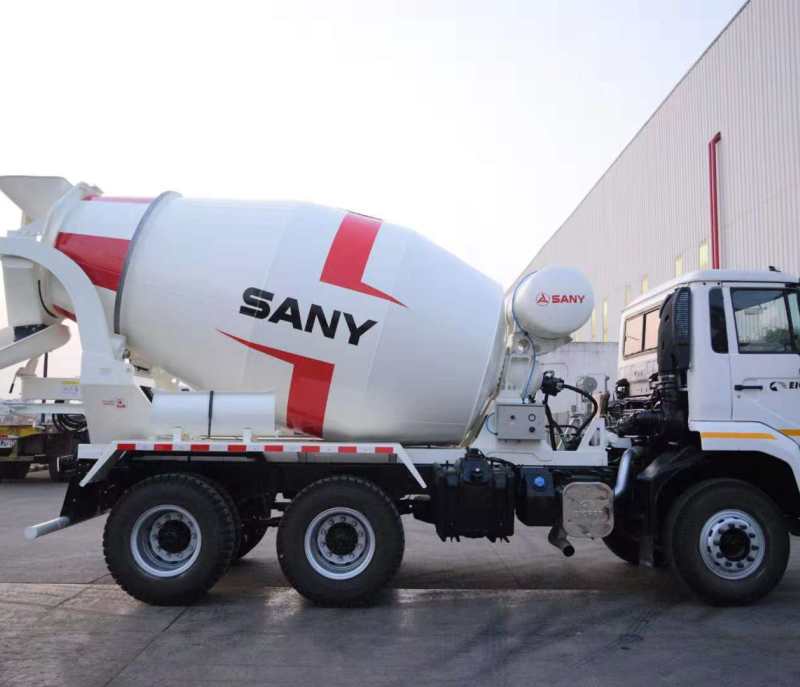
Clarifying the Difference Between a Cement Truck and a Concrete Truck
A cement truck only transports dry concrete raw materials such as cement powder and dry-mix mortar. It is responsible for the transfer of dry materials from the cement plant to the mixing plant or construction site. It does not have a dedicated water tank, and the mixing device only serves to maintain the uniformity of the dry powder. The load capacity is primarily based on the rated volume of the tank.
A concrete truck is the type of vehicle referred to in questions like "How many yards of concrete are in a cement truck?" or "How many yards of concrete in a truck?" It is specifically designed to transport ready-mix wet concrete, equipped with a water tank, and its engine simultaneously drives both the vehicle and the mixing drum. During transport, the rotating mixing drum continuously agitates the concrete to prevent solidification. When a construction project requires the direct use of ready-mix concrete, a concrete truck is the primary choice. The capacity of a concrete truck, however, is influenced by multiple factors.
Factors Affecting Concrete Truck Capacity
At first glance, the answer to the question of concrete truck capacity seems straightforward. After all, every concrete truck clearly displays the rated capacity of its drum (mixing tank). However, in reality, its capacity is influenced by multiple factors:
The Vehicle's Specifications
The dimensions and load-bearing capacity of a concrete truck determine the design dimensions and rated volume of the mixing drum, which is usually the peak amount of concrete it can hold.
Road Weight Regulations
The legal load limits on public roads in various regions directly limit the legal transport volume, which is the main constraint. Usually, the rated volume of the tank will exceed the compliant load limit.
Transportation Terrain
In complex terrains such as steep slopes and hills, the actual loading capacity of concrete trucks will be reduced accordingly to avoid material spillage and ensure driving safety.
Actual Project Needs
To match the specific concrete requirements of a construction project, the concrete truck capacity will be adjusted accordingly. The actual concrete mix ratio required for the project will also influence the carrying capacity.
Capacity and Types of Concrete Trucks
Concrete trucks can be classified into various types based on their purpose, structure, and load capacity. Their capacity specifications also vary significantly depending on the application. The following text will provide a detailed breakdown of the types of concrete trucks, their corresponding capacity ranges, and applicable scenarios, offering a reference for engineering project selection.
Standard Concrete Trucks
Standard concrete trucks are commonly seen on everyday roads and construction sites. A standard concrete mixer truck's tank can hold 11 to 15 cubic yards of concrete, with the actual legal transport capacity usually between 8 and 11 cubic yards. They are suitable for various large-scale engineering operations such as driveway pouring, foundation construction, and concrete slab paving.
Volumetric Concrete Trucks
These trucks typically "mix on-site," rather than transporting pre-mixed concrete. They store raw materials such as sand, Portland cement, and water in separate compartments and mix them as needed. They are suitable for small construction projects or work scenarios where the amount of concrete needed cannot be accurately estimated. Raw materials can be used as needed, avoiding extra costs from mismatches between pre-mixed and actual concrete volumes.
Small Concrete Trucks
For small-scale operations such as pouring fence posts and partial repairs of concrete foundations, where a full batch of concrete is not required, small concrete trucks are the preferred choice. Portable models can easily enter narrow construction spaces. These concrete trucks typically have a loading capacity of about 2 cubic yards.
Large Concrete Trucks
Designed for ultra-large projects such as large foundations and industrial site concrete pouring, some large models can carry around 12 cubic yards of concrete. However, due to road weight restrictions, these models are not commonly used in practice. If the project requires more than 10 cubic yards of concrete or local road weight limits apply, multiple transport methods are usually used, or a concrete pump truck is used to improve pouring efficiency.
For example, the SANY truck mixer offers over 10m³, ready to work at any condition.
_114454.png)
Understanding the Practical Implications of "How Many Yards of Concrete Are in a Cement Truck"
Knowing how many yards of concrete a cement truck and how many yards of concrete in a truck can carry is of significant practical guiding importance for engineering construction. It can effectively avoid or reduce the following problems:
Over-Ordering
When ordering concrete, the actual transportable volume under the legal load capacity of the concrete truck is the only core reference value. Even if the truck's mixing drum has a large capacity, it is impossible to request the supplier to deliver 14 cubic yards of concrete, which exceeds the regulatory limit.
Short-Distance Transportation Costs
Most suppliers have minimum order quantities for concrete, usually equivalent to the legal carrying capacity of a concrete truck. If the actual order quantity does not meet this standard, a short-distance transportation fee will be charged to compensate the supplier for operational inefficiencies caused by insufficient vehicle loading.
Delays in Large-Scale Pouring Projects
For large-scale pouring projects requiring multiple truck deliveries, it is essential to confirm the standard legal carrying capacity of the supplier's mixer trucks in advance. Only in this way can the vehicle delivery schedule be accurately planned, on-site pouring operations be efficiently coordinated, unexpected gaps in the construction process be effectively avoided, and project delays be prevented.
How to Ensure the Accurate Delivery of Concrete?
Calculate the Total Required Concrete
Using a concrete calculator is an efficient and convenient way to estimate the required amount of concrete. These tools can estimate the amount of concrete needed based on the actual scale of the project. Taking terrace pouring as an example, first calculate the terrace's square foot area, then multiply it by the pouring depth to get the total volume in cubic feet, and finally convert it to cubic yards to obtain a relatively accurate reference for the amount of concrete needed.
Develop a Sound Construction Plan
For large-scale and complex projects, it is necessary to plan the supporting construction equipment in advance and determine whether concrete pump trucks or other equipment are needed to assist in pouring based on actual needs. The proper allocation of such supporting equipment is particularly crucial for concrete pouring operations in special scenarios such as high-rise buildings and large-area sites, ensuring an efficient and smooth pouring process.
For example, the SANY 37m Truck-mounted Concrete Pump offers a 10% increase in pumping efficiency, smoother overall flow, and less clogging, meeting the long-term pumping needs of large projects. It also features multiple boom configurations for flexible working positions, reducing site restrictions and easily adapting to various project requirements. Furthermore, its wear parts have a long service life, making maintenance simple and convenient.
Choose a Reliable Supplier
Partnering with a reputable and reliable ready-mixed concrete supplier can avoid many practical problems. They can help plan delivery times, ensuring that fresh concrete arrives on-site just as it is ready for pouring. It is particularly important to note that the workable window for concrete is extremely short; precise control of delivery time can effectively prevent material spoilage and construction delays.
Prepare the Construction Site
Before the concrete transport vehicles arrive, ensure that all preparations for the construction site are completed: clear all obstacles from the site, check and confirm that the construction ground is level and meets the standards, and prepare all necessary tools for pouring in advance. Thorough site preparation can significantly reduce delays caused by vehicle waiting and construction coordination, as well as the waste of concrete materials.
Conclusion
In summary, understanding how many yards of concrete are in a cement truck and how many yards of concrete a truck can hold is crucial for selecting the right concrete mixer truck and ensuring efficient operation. Concrete truck capacity is not solely determined by the rated volume of the tank, but is also constrained by factors such as road regulations, terrain, and project requirements. Therefore, the compliant loading capacity varies for different types of concrete trucks. By mastering this core information, you can avoid problems such as over-ordering and short-distance transportation costs. Combined with accurate quantity calculations, scientific planning, and selecting reliable suppliers, this ensures precise concrete delivery, leading to improved construction efficiency, better cost control, and more reliable project schedule management.
FAQs
Concrete Mixer Truck Capacity m³?
The capacity of a concrete truck is typically affected by factors such as the type of truck, local road regulations, terrain, project requirements, and mix proportions. The specific loading capacities of different types of concrete trucks are as follows:
Standard concrete trucks: Typically carry around 8-11 cubic yards of concrete, suitable for conventional projects such as road construction.
Large commercial concrete trucks: These trucks have a loading capacity of up to 12 cubic yards and are primarily used for pouring concrete in large construction projects such as high-rise buildings (this exceeds the legal loading capacity of 10-11 cubic yards and is therefore not commonly used in practice).
Volumetric or small concrete trucks: Capacity is mostly 2-6 cubic yards, suitable for projects with limited space or small-scale projects.
How Many Yards of Concrete do I Need?
To determine the required amount of concrete in cubic yards, you can use a concrete calculator. First, calculate the area of the construction area in square feet based on the actual project size. Multiply this area by the pouring depth to get the total volume in cubic feet, and then convert it to cubic yards. This will provide an accurate estimate of the concrete needed, suitable for various pouring and construction projects.
What Types of Concrete Trucks Are There, and How Much Concrete Can Different Models Carry?
Concrete trucks are mainly divided into these types:
Standard concrete trucks: The actual legal load capacity is usually 8-11 cubic yards.
Large concrete trucks: Up to 12 cubic yards, with an actual legal loading capacity of 10-11 cubic yards.
Small and volumetric concrete trucks: These typically have a loading capacity of approximately 2-6 cubic yards.
Featured Products
_155548.png)
-OE_160931.jpg)
_160259.jpg)
Recommend Blogs
What Is Concrete Truck Volume? A detailed and practical guide to model selection
What is the concrete truck volume? The following article will detail the calculation method for concrete usage and efficient delivery techniques.
Cement Truck vs Concrete Truck: Key Differences and Selection Guide
Cement truck vs concrete truck: Are they the same? This article will provide a detailed answer to help you choose the right truck for your construction project.
How Does Concrete Mixer Truck Work? Essential Insights for Construction Workers
This guide explains how does concrete mixer truck work, offering solutions for equipment selection, usage, and maintenance based on your construction needs.