Knowing “How Many Tons Does a Dump Truck Hold” Helps Optimize Equipment Selection
This article focuses on how many tons a dump truck holds and provides specific purchasing recommendations for dump trucks.
In the dusty world of mines, dump trucks shoulder the heavy responsibility of ore transport; on construction sites, they efficiently transport sand, gravel, and building materials; in urban waste disposal, they silently carry waste and garbage. Understanding “how many tons does a dump truck hold” is essential for different scenarios, as its load capacity directly impacts transportation efficiency and costs. This article will address this key issue, breaking down the core factors influencing dump truck load capacity and their calculation methods. Combining this with the varying needs of different operational scenarios, it provides precise selection advice to help users choose the right dump truck and maximize operational efficiency.
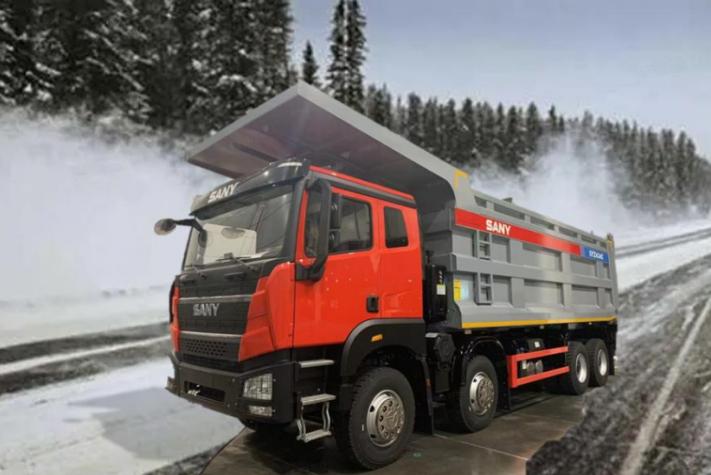
How Many Tons Can a Dump Truck Hold?
Choosing the right dump truck hinges on precisely matching its load capacity with actual operational needs. Insufficient load capacity reduces transportation efficiency and increases operating costs, while overloading leads to regulatory penalties and safety risks. Whether in mining or infrastructure construction, understanding how many tons a dump truck can haul is crucial.
What Is the Load Capacity of a Dump Truck?
The load capacity of a dump truck refers to the maximum weight of material (usually measured in tons) it can safely carry and transport under design standards, safety regulations, and legal requirements. The key is the "safe load limit," not simply the cargo box capacity limit.
Factors Affecting Dump Truck Load Capacity
How much weight can a dump truck haul? The actual load capacity of a dump truck is not a fixed value, but is affected by multiple factors such as vehicle specifications and material characteristics. Understanding these factors is key to choosing the right dump truck.
1. Size and Axle Configuration: The number of axles is a core configuration indicator, directly related to load capacity and maneuverability. Specifically:
• Two-axle vehicles have a small turning radius and high maneuverability, suitable for light cargo transportation and urban delivery, but have weaker load capacity;
• Three-axle and four-axle models offer increased load capacity, suitable for medium and heavy-duty transportation of building materials, ores, etc.;
• Six-axle models are designed specifically for heavy-duty transportation, offering the strongest load capacity and excellent stability over long distances.
Load Capacity Table of Dump Trucks with Different Wheelbase Sizes | |||
Dump Truck configuration type | Number of axles | Typical load capacity (tons) | Core applicable scenarios |
Dual axle truck | 2 axis | 10 - 20 | Light cargo transportation, short-distance urban delivery |
Three-axle trucks | 3 axis | 20 - 30 | Medium load transportation, building material transfer |
Four-axle trucks | 4 axis | 25 - 35 | Heavy cargo transportation, industrial raw material transportation |
six-axle trucks | 6 axis | 30 - 40 | Heavy cargo transportation, long-distance transportation |
2. Vehicle Body Design Characteristics: How much can a dump truck hold? Both materials and structure affect load capacity. Using lightweight, high-strength materials such as aluminum alloy and high-strength steel reduces the empty vehicle weight, indirectly increasing the effective load capacity. The rear-tilting body is suitable for conventional transportation, while the side-tilting design is suitable for unloading in confined spaces. This rational structural design ensures both durability and load safety.
3. Regulatory Weight Limits: The total weight (empty vehicle + cargo) is subject to local traffic regulations and must match the load-bearing standards of road infrastructure. Vehicle design must balance tare weight and cargo weight within regulatory limits. Compliant selection can avoid fines and protect roads, while maximizing load-bearing efficiency. This is also a key point in understanding “how much does a dump truck hold.”
4. Transport Load Type: Material density determines actual load requirements. High-density materials such as sand and gravel require higher load capacity; low-density materials such as agricultural products and waste require large-volume containers. By optimizing space, transportation efficiency can be indirectly improved. Load type directly affects load adaptability.
What Is the Difference Between Load Capacity and Volume of a Dump Truck?
When learning about how much weight can a dump truck haul, many people often confuse load capacity and volume of a dump truck. These are actually different dimensions that measure the loading and transporting capacity of a dump truck, differing in definition, units, limiting factors, and emphasis.
Dump Truck Load Capacity
Definition: The maximum weight a truck can safely carry.
Unit: Usually measured in tons, for example, a load capacity of 5 tons or 28 tons.
Limiting Factors: The truck's chassis, tires, suspension system, and the load limits allowed by road traffic regulations.
Focus: Primarily focused on the truck's safety and stability while driving, avoiding damage to the vehicle and roads caused by overloading.
Dump Truck Capacity
Definition: The volume of cargo that can be held inside the truck's cargo bed.
Unit: Usually measured in cubic meters (m³).
Tip: Capacity (m³) = Length (m) × Width (m) × Height (m)
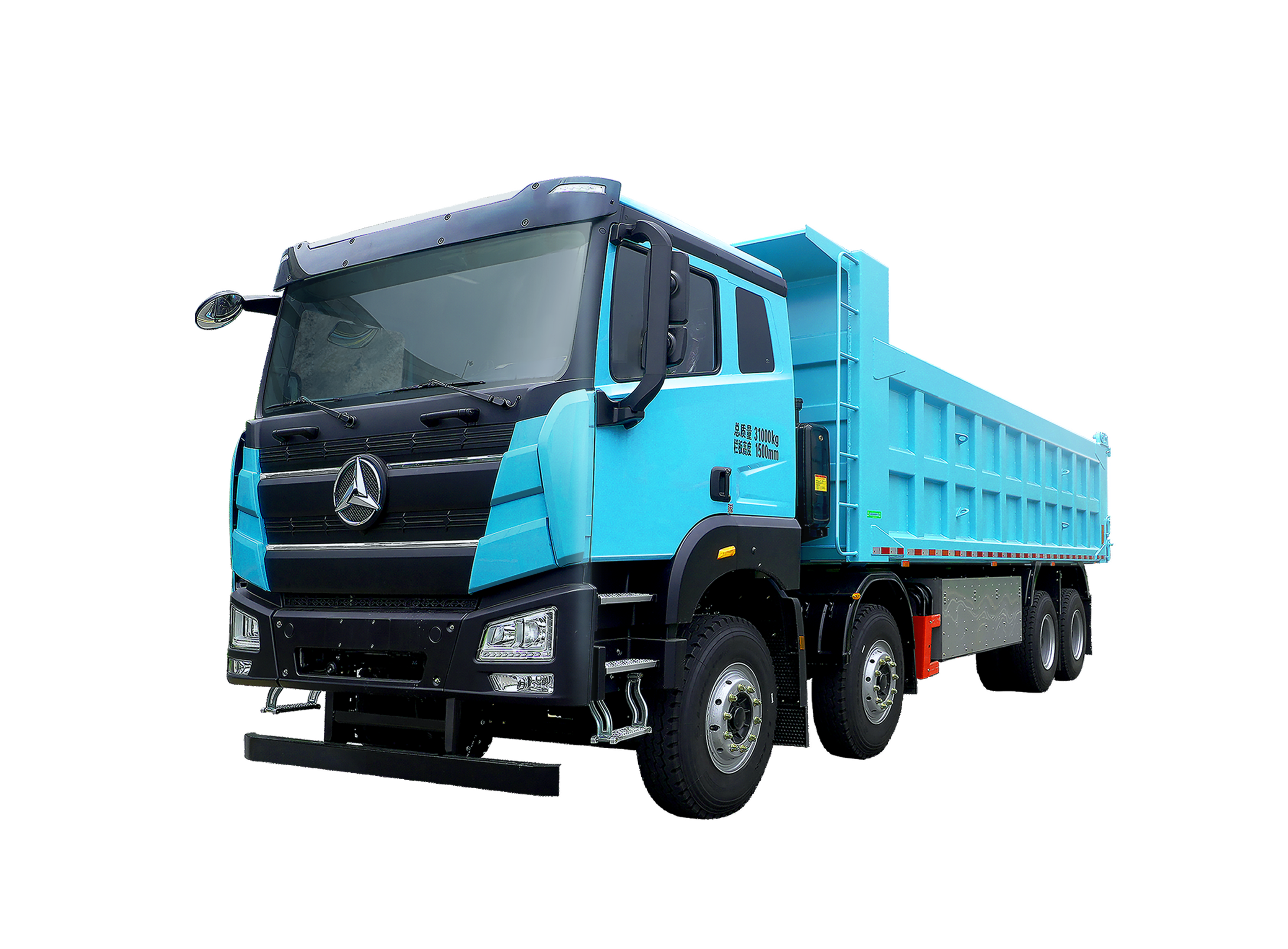
SANY offers Dump Truck with different capacities. The SYZ425C-8S(V) dump truck has a capacity of 25 cubic meters, while the SYZ448C-9S(R) dump truck has a capacity of up to 48 cubic meters.
Limiting Factors: Cargo bed dimensions (length, width, height).
Focus: Primarily focused on how much cargo the truck can carry when fully loaded, such as bulk sand, gravel, or earth.
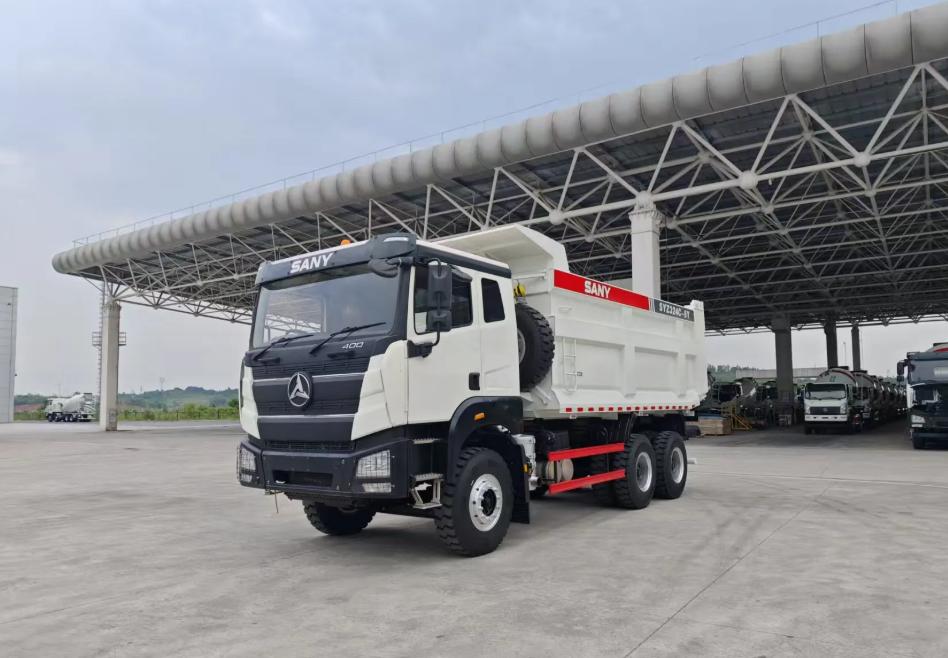
Relationship and Difference: Load capacity and volume are two related but distinct indicators. For example, a dump truck may have a large volume, but its load capacity may be limited, preventing it from being fully loaded. Conversely, the same applies.
When selecting or using a dump truck, both load capacity and volume must be considered to ensure that transportation needs are met and traffic regulations are complied with.
How to Calculate the Load Capacity of a Dump Truck?
The load capacity of a dump truck primarily depends on its maximum rated load capacity. This data is indicated on the vehicle's vehicle registration certificate (the large green book), but other factors usually need to be considered, such as actual road conditions, the nature of the cargo, and relevant laws and regulations.Main Calculation Steps:
1. Check the Vehicle's Rated Load Capacity
Method: Check the dump truck's "Motor Vehicle Registration Certificate," which will clearly indicate the vehicle's maximum load capacity (rated load capacity).
Explanation: This is the maximum load allowed by the vehicle's design.
2. Consider Vehicle Weight
Method: A vehicle's weight (curb weight) and payload capacity are distinct. A dump truck's weight is its own weight, while its payload capacity is the additional weight the vehicle can carry.
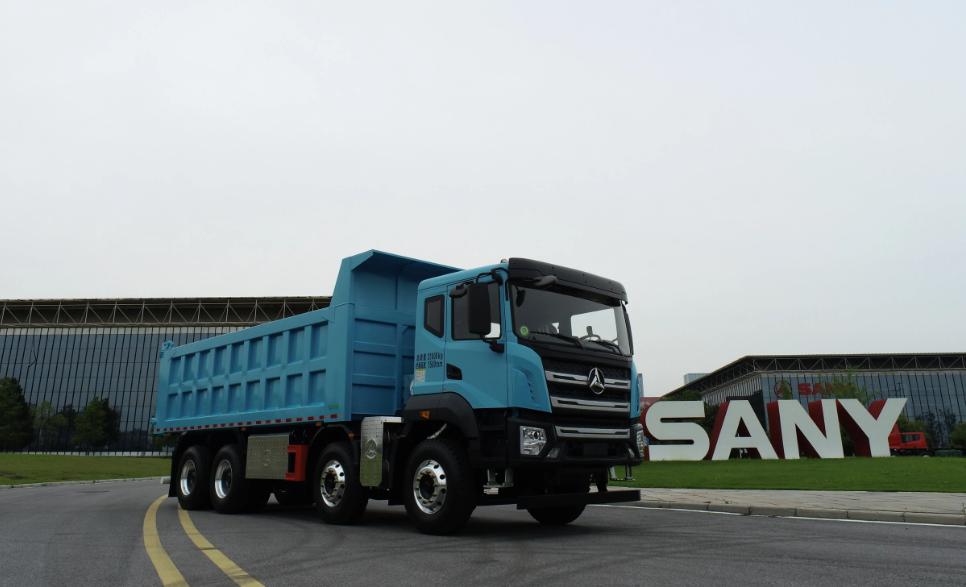
Explanation: Understanding the weight helps in estimating the gross vehicle weight. For example, if a SANY Electric Dump Truck has a curb weight of 22.7 tons and a payload capacity of 22.7 tons, its total weight (curb weight + payload) will be 45.4 tons. This total weight cannot exceed the maximum permissible gross vehicle weight limit for this vehicle type.
3. Pay Attention to Cargo and Road Conditions
Method: Actual load capacity is affected by cargo density, volume, road conditions, and weight limits.
Explanation: For example, when loading low-density but large-volume cargo, although theoretically many tons can be loaded, the vehicle's cargo bed volume will limit the actual load. Additionally, weight limits set by road administration departments (e.g., many regions have restrictions on the total weight of heavy trucks) will affect actual load capacity.
4. Comply with Laws and Regulations
Method: Strictly adhere to the tonnage limit (including gross vehicle weight limit) on the vehicle registration certificate and ensure the vehicle has a valid road permit.
Explanation: Overloading will result in fines, demerit points, and other penalties.
How to Choose a Dump Truck with the Right Load Capacity for Your Project?
To choose a dump truck with the appropriate load capacity for your project, follow these steps:
1. Define the Core Requirements of Your Project
Material type: First, determine the density of the material to be transported (e.g., sand and gravel have a density of approximately 2 tons/cubic meter, coal approximately 1 ton/cubic meter). Combine this with the volume of each trip to calculate the required "cargo box volume + load capacity" (e.g., transporting 10 cubic meters of sand and gravel requires a load capacity of ≥20 tons).
Operating scenarios: For short-distance urban delivery, choose 10-20 ton dual-axle vehicles (flexible); for medium-to-heavy-duty transport at construction sites/mines, choose 20-35 ton three/four-axle vehicles; for long-distance heavy-duty transport, choose 30-40 ton six-axle vehicles (stable).
Transportation frequency: For high-frequency transport, prioritize vehicles with a slightly higher load capacity than required to avoid multiple round trips and increased costs.
2. Match Vehicle Parameters
Refer to the vehicle's rated load capacity (must be ≤ legal limits), while also considering the cargo box volume (avoiding waste from "large volume, small load capacity" or "small volume, large load capacity").
3. Balance Compliance and Cost
Confirm local road regulations regarding load limits (e.g., for urban roads, the total weight of a two-axle vehicle must be ≤18 tons) to avoid selecting a non-compliant model.
Comprehensively consider purchase cost, fuel consumption, and maintenance costs: light-duty vehicles have lower costs but lower efficiency, while heavy-duty vehicles have higher efficiency but higher costs. "Ton-kilometer cost" needs to be calculated based on the project cycle.
Conclusion
In summary, there is no single answer to "how many tons does a dump truck hold"; it requires a comprehensive assessment based on project requirements and multiple factors. From clarifying core requirements such as material density and operating scenarios, to matching vehicle parameters such as axle count and body design, and finally balancing compliance and cost, every step revolves around the core issue of load capacity. Choosing the right dump truck with the appropriate load capacity can not only avoid the risk of overloading and comply with regulatory requirements, but also maximize the efficiency of a single transport trip and reduce operating costs. Only by accurately controlling the key load capacity can dump trucks become a reliable aid to the efficient operation of projects.
FAQs
What Is the Capacity of a Dump Truck?
The capacity of dump trucks varies greatly, ranging from tens to hundreds of cubic meters, and is usually related to the vehicle's size and tonnage. For example, a small single-axle dump truck may weigh between 3 and 8 tons, while a large "4x8" dump truck can reach around 38 tons. Furthermore, the carrying capacity is also affected by the density of the loaded material; less dense materials will occupy more volume.
Can A Dump Truck Carry 25 Tons?
Whether a dump truck can carry 25 tons depends on a comprehensive assessment of the vehicle's configuration, regulatory restrictions, and the characteristics of the materials. In terms of vehicle type, three-axle (20 - 30 tons) and four-axle (25 - 35 tons) models typically have rated load capacities covering the 25-ton range, which is sufficient. However, it's necessary to confirm local traffic regulations regarding the total weight limits for vehicles with the corresponding number of axles, and also consider the density of the materials to avoid insufficient cargo box volume or overloading. As long as the model is suitable and complies with regulations, a dump truck carrying 25 tons is feasible.
What Is the Maximum Load Capacity of a Dump Truck?
There is no fixed maximum load capacity for dump trucks: standard models typically carry 10 to 30 tons, while larger or specially reinforced models can carry even more. However, the actual maximum load capacity is not determined solely by the model; it also depends on the load-bearing capacity of the road conditions and local traffic regulations regarding vehicle weight limits. The load capacity must be appropriate within the limits of compliance and vehicle performance.
Featured Products

Recommend Blogs
2026 Type Dump Truck Analysis And Selection Guide
This article introduces type dump trucks and provides a selection guide to help your fleet work smoothly.
How Many Cubic Yards In A Dump Truck? Load Capacity & Buying Guide
This article explains how many cubic yards in a dump truck and provides specific selection guidelines.