How Many Cubic Yards In A Dump Truck? Load Capacity & Buying Guide
This article explains how many cubic yards in a dump truck and provides specific selection guidelines.
In scenarios such as gravel transportation at mining sites, earth backfilling at infrastructure construction sites, or soil removal during farmland renovation, dump trucks have always been core equipment with efficient transportation capacity.
This article will start with the definition and core advantages of dump trucks, provide a detailed analysis of diverse application scenarios including mining, infrastructure, and agriculture, answer the key question "how many cubic yards in a dump truck", and provide targeted buying guidelines covering core dimensions and practical selection tips.
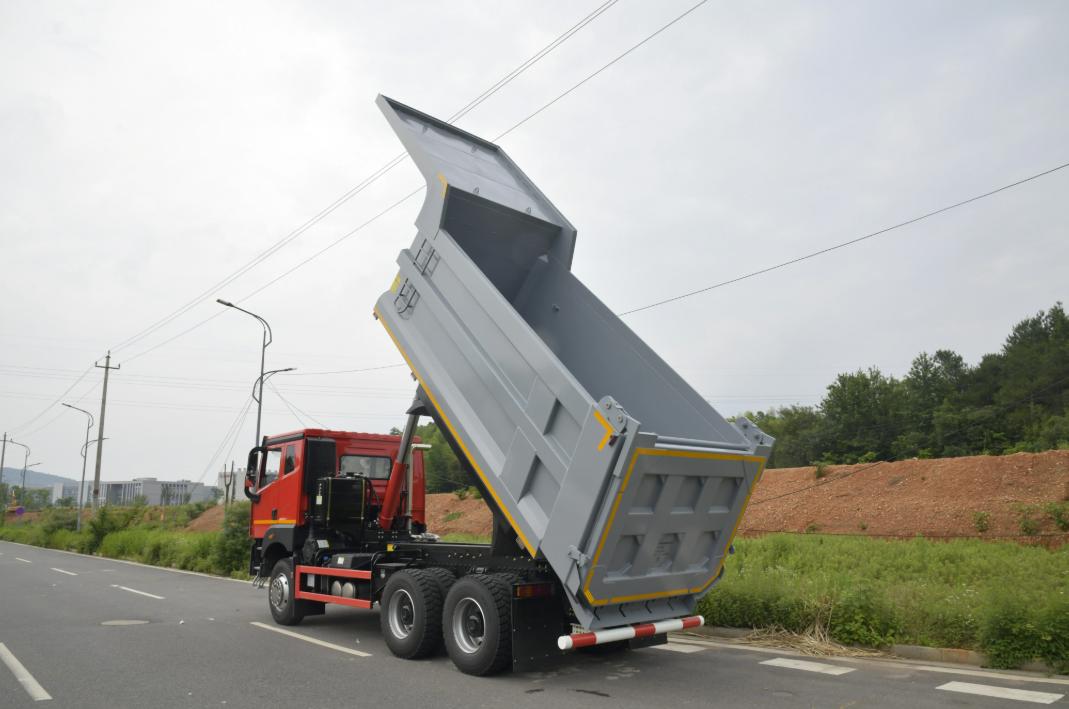
What Is A Dump Truck?
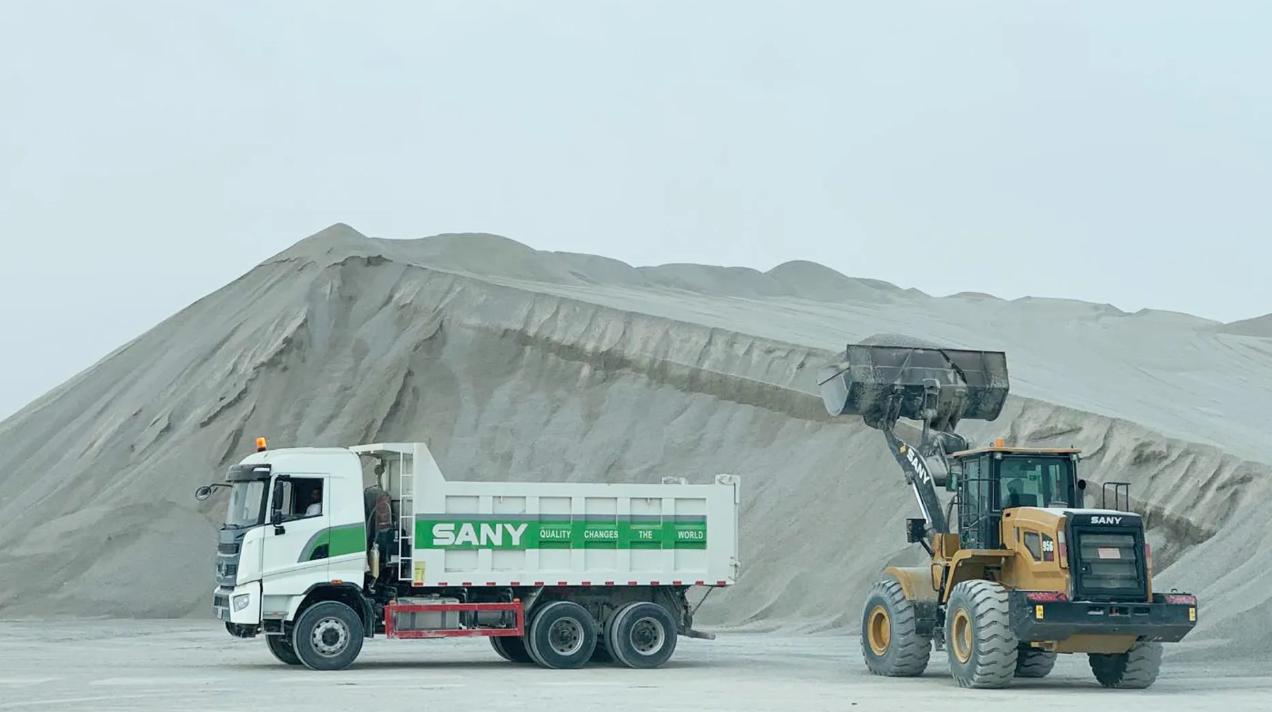
A Dump Truck, also known as a tipper truck or dumper, is a specialized vehicle designed to unload cargo via hydraulic or mechanical lifting devices. Composed of key components including an automotive chassis, hydraulic lifting mechanism, cargo box, and power take-off unit, it is mainly used for transporting and unloading bulk materials such as earth, sand, and gravel in scenarios like civil engineering and mining.
Working Principle
The cargo box of a Dump Truck is lifted by hydraulic cylinders, allowing the cargo inside to be automatically tilted and unloaded.
Advantages
Automatic Unloading: The cargo box can tilt and unload automatically without manual assistance, ensuring convenient operation;
Time-Saving & Efficient: Greatly shortens unloading time, reduces the total transportation cycle, and accelerates work rhythm;
Labor-Saving: Eliminates the need for additional labor in the unloading process, lowering labor cost input;
Cost Reduction & Efficiency Improvement: Indirectly reduces overall transportation and operation costs by shortening cycles and saving labor;
Strong Versatility: As a commonly used specialized transport vehicle, it is suitable for material transportation in multiple scenarios.
How Many Yards In A Dump Truck?
In operation scenarios such as mine transportation, infrastructure construction, and earth removal, "dump truck how many yards" is one of the most frequently asked questions by operators.Whether planning transportation schemes, calculating project costs, or selecting suitable equipment, understanding "how many yards of dirt in a dump truck" is a key prerequisite. Next, we will break down the calculation logic of "how many yards is a dump truck", the capacity range of different vehicle models, and the core reference factors for selection, helping operators accurately grasp their needs and carry out operations efficiently.
Loading Capacity Varies by Dump Truck Type
The loading capacity of a dump truck depends on its size, model, and the density of the material being transported, as detailed below:
Small dump trucks: Mostly modified from pickup truck chassis, they have a relatively small loading capacity, usually around 1.5 cubic yards.
Standard dump trucks: Typically can carry 10 to 16 cubic yards of material.
Large heavy-duty dump trucks: Their loading capacity can reach 16 cubic yards or more.
How to Determine the Actual Loading Capacity of a Dump Truck?
1. Check the Vehicle Manual
Generally, the loading capacity of a regular dump truck can be found in the owner's manual. However, it is important to note the different units of measurement marked in the manual—some use cubic meters, while others use cubic yards.
Tips: According to data from measurement conversion websites, 1 cubic meter ≈ 1.318 cubic yards, and 1 cubic yard ≈ 0.759 cubic meters.
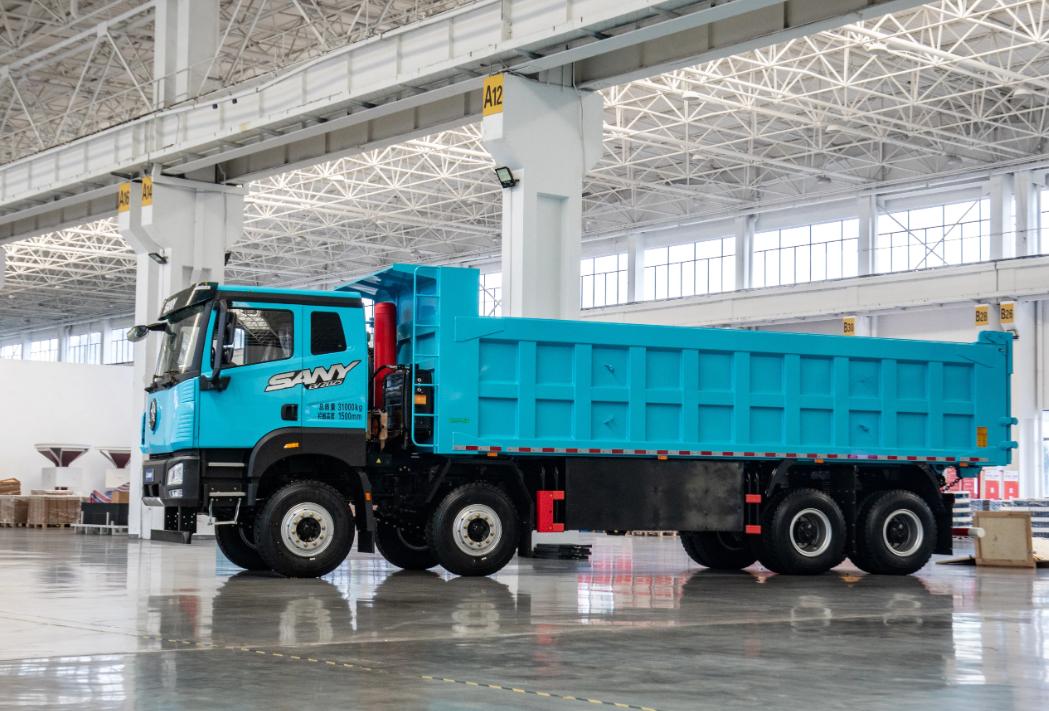
For example, the SANY Dump Truck SYZ448C-9S (R) has a cargo compartment capacity of 48 cubic meters. Using the conversion formula, its actual loading capacity can be calculated as 48 × 1.318 ≈ 63.3 cubic yards.

Similarly, the SANY Electric Dump Truck also boasts a powerful cargo transportation capacity. Among its models, the SYZ437C-8LRBEVSD has a loading capacity of 38 cubic meters, which converts to approximately 50 cubic yards when calculated as 38 × 1.318.
2. Manual Measurement
If the dump truck's capacity is not specified in the owner's manual, there’s no need to worry—you can easily calculate the accurate value with just a tape measure and a calculator.
Preparation: Prepare a tape measure (supporting feet/inch conversion) and a calculator.
Dimension Measurement (all take inner wall dimensions of the cargo box, convert results to feet):
Width: Measure the distance from the inner wall on one side of the cargo box to the inner wall on the other side (e.g., 63 inches = 5.25 feet);
Length: Follow the same measurement method as width and record the distance between the front and rear inner walls of the cargo box;
Height: Measure from the bottom of the cargo box to the top of the tailgate or the side, taking the lower value of the two.
Volume Calculation:
Step 1: Calculate cubic feet = Width (feet) * Length (feet) * Height (feet)Example: 15 * 6 * 6 = 540 cubic feet
Step 2: Convert to cubic yards = Cubic feet / 27 (since 1 cubic yard = 27 cubic feet)Example: 540/ 27 = 20 cubic yards
Factors Affecting Dump Truck Capacity
The answer to "how many yards does a dump truck hold?" is not a fixed value, but is jointly influenced by multiple core factors.
- Characteristics of Loaded MaterialsMaterial Density
Different materials vary significantly in weight per unit volume, directly determining the actual loading capacity (e.g., weight per cubic yard: specific materials 3,900-4,100 lbs, rocks (2-6 inches) 3,000-3,400 lbs, sand 2,600-3,000 lbs, asphalt 2,500-2,900 lbs, gravel 2,400-2,900 lbs, clay/salt 2,100-2,500 lbs, mud 2,000-2,700 lbs, water 1,600-1,800 lbs, snow 1,200-1,500 lbs).
- Vehicle Weight Restrictions and Load-Bearing Capacity
Gross Vehicle Weight Rating (GVWR): The maximum allowable total weight of a fully loaded vehicle, serving as the core indicator of load capacity limits;
Gross Vehicle Weight (GVW): The weight of the empty vehicle including all auxiliary equipment, providing a benchmark for calculating effective load;
Payload: The difference between GVWR and GVW, i.e., the maximum weight of goods the vehicle can actually carry.
- Vehicle Design and Configuration
Axle Configuration: Single-axle, dual-axle, tri-axle, or multi-axle vehicles (e.g., 18-wheel trucks). More axles result in stronger traction and load-bearing capacity;
- Cargo Box Design:
Size: Length ranges from 10 to 22 feet, and side height from 18 to 72 inches (directly affecting volume, such as the Maverick series with a volume of 3.9-34.6 cubic yards);
Shape: Rectangular cargo boxes have the largest capacity; rounded shapes facilitate unloading but offer smaller capacity; semi-elliptical shapes fall between the two;
Material: Iron cargo boxes are heavy, reducing effective material capacity; aluminum cargo boxes are lighter with larger volume but weaker load-bearing capacity.
- External Environmental and Regulatory Requirements
Regulatory Restrictions: Must comply with local regulations such as road weight limits;
Terrain Conditions: The terrain of the construction site affects vehicle performance, thereby influencing the adaptation of actual transportation capacity to capacity needs.
How to Choose the Right Dump Truck for Your Project?
When selecting a dump truck, you first need to clarify the vehicle’s purpose and your budget, then comprehensively consider factors such as vehicle model, brand, configuration, cargo box material, chassis, tires, and hydraulic system based on the type of goods to be transported, road conditions, and personal needs.
1. Clarify Purpose and Budget
Purpose: Determine the specific use of the dump truck—whether it’s for urban construction muck transportation, mine transportation, or other scenarios. Different purposes have different requirements for the vehicle’s load-bearing capacity, power, stability, and chassis strength.
Budget: Screen brands and models according to your budget. High-end models offer better comfort and power but come with a higher price tag, while some mainstream domestic brands provide cost-effectiveness and more reliable after-sales service.
2. Vehicle Model and Configuration Selection
Vehicle Model: Choose a suitable model based on the characteristics of the transported goods. For example, a bucket-type cargo box is ideal for transporting large items; for long-distance transportation or high load capacity, prioritize the vehicle’s stability and safety.
Lifting Method: Rear-tip dump trucks are suitable for regular transportation, while side-tip dump trucks have more advantages in narrow or special engineering operation scenarios.
Cargo Box: Consider the cargo box’s material, size, and lifting stability. For instance, if the cargo box length exceeds 5.4 meters, pay special attention to the center of gravity height and lifting stability. Do not use coal-specific trucks for transporting earth and rock, as their cargo box design is unsuitable.
Hydraulic System: The hydraulic ram is a core component of a dump truck; its quality and strength determine the efficiency and safety of unloading.
Other Configurations: Consider other configurations such as chassis, tires, engine, and transmission to meet the needs of specific working conditions.
3. Brand and After-Sales Service
Brand: Choose locally mainstream brands for easier access to after-sales service and maintenance support.
After-Sales Service: Ensure the brand has a sound service network in the local area to provide timely maintenance and spare parts.
For example, if you choose SANY, not only does it offer a wide range of dump truck models, but it also provides daily maintenance or customized maintenance packages and plans to ensure your equipment always maintains optimal performance, allowing your project to operate efficiently year-round.
4. Detailed Considerations
Stability: The dump truck should remain stable when lifted with a full load to avoid rollover.
Load-Bearing Capacity: The vehicle’s load-bearing capacity should meet transportation needs to avoid overloading.
Maintainability: Selecting an easy-to-maintain model can reduce operating costs.
Comfort: Long hours of driving require high comfort for the driver, so consider models with better configurations and designs.
Conclusion
In summary, "how many cubic yards in a dump truck" does not have a one-size-fits-all answer. Instead, it is a core question that requires comprehensive consideration of material characteristics, vehicle configuration, and operation scenarios. Mastering the capacity range of different vehicle models, manual calculation methods, and influencing factors helps you accurately grasp transportation needs. Meanwhile, a scientific selection guide enables dump trucks to strike a balance between productivity and cost, maximizing your team’s operational efficiency and providing solid support for project advancement.
FAQs
How Many Cubic Yards of Cargo Can a 20-ton Dump Truck Hold?
The actual loading capacity of a 20-ton dump truck mainly depends on the weight density of the transported material. For lightweight materials like mulch, the weight per cubic yard is usually between 500 and 600 pounds. Based on the rated loading limit of 20 tons (40,000 pounds), this type of dump truck can carry approximately 67 to 80 cubic yards of mulch.
How Many Cubic Yards Is a 7x14-foot Dump Truck?
To calculate the cubic yards of a dump truck, use the formula:Cubic Yards = Length (feet) × Width (feet) × Depth (feet) / 27Therefore, to determine the capacity of a 7x14-foot dump truck, you also need to know the sideboard height. If the sideboard height is 36 inches (3 feet), its capacity is 7 × 14 × 3 / 27 ≈ 10.9 cubic yards. However, it is important to note that the actual loading capacity may vary when transporting different materials—please refer to the actual situation.
Is a Dump Truck a Worthwhile Investment?
Whether a dump truck is a worthwhile investment depends primarily on the match between the operation scenario and your needs. For high-frequency bulk material transportation scenarios such as mine transfer, infrastructure construction, and earth removal, its advantages of automatic unloading, time-saving, and labor-saving can significantly improve operational efficiency and reduce long-term operating costs, making it a cost-effective investment. However, if it is only used for low-frequency, small-volume transportation, the purchase and maintenance costs may exceed the benefits.
Featured Products

Recommend Blogs
2026 Type Dump Truck Analysis And Selection Guide
This article introduces type dump trucks and provides a selection guide to help your fleet work smoothly.
Knowing “How Many Tons Does a Dump Truck Hold” Helps Optimize Equipment Selection
This article focuses on how many tons a dump truck holds and provides specific purchasing recommendations for dump trucks.