How Are Cranes Transported? A Complete Guide to Types, Transportation Methods and Steps
This article focuses on how are cranes transported and their different types, including the methods and steps involved, to help construction teams carry out projects more efficiently.
In construction projects like high-rise buildings, port cargo handling, or mountain wind turbine installation, moving cranes safely from one site to another is a crucial step. With their tall towers, long booms, and heavy components, cranes cannot travel long distances on their own. Specialized equipment, careful planning, and the right transport methods are essential to ensure they reach the site safely and on time.
So, how are cranes transported? In this article, we break down the methods used for different crane types, highlight the factors that affect transport efficiency and safety, and guide you through the full process — from preparation to on-site installation.
Different Types of Cranes and How They're Transported
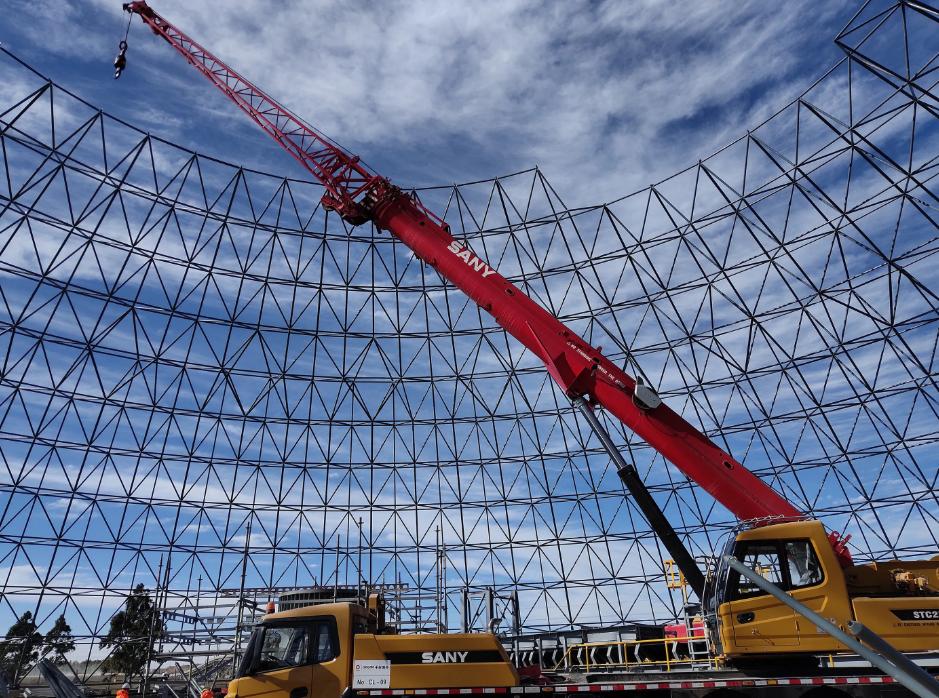
Cranes come in many types—tower cranes, truck cranes, and crawler cranes—each with different designs and strengths. Their size and weight mean they need different ways to be transported. Below, we’ll look at each crane type and how it’s moved.
Mobile Cranes
Mobile cranes are lifting equipment that can move freely on the ground and are used to lift heavy objects. Their transportation method mainly relies on their own mobility, moving between work sites, or using flatbed trucks for long-distance transportation, such as truck-mounted cranes, all-terrain cranes, and off-road cranes.
Truck Crane
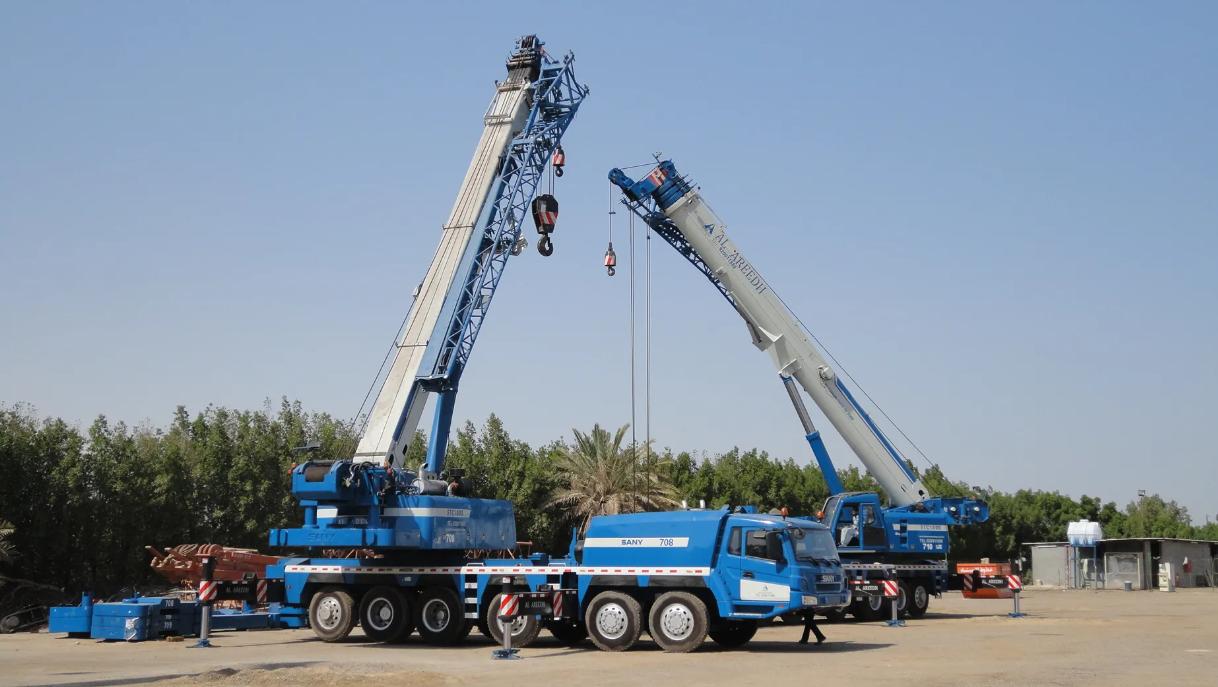
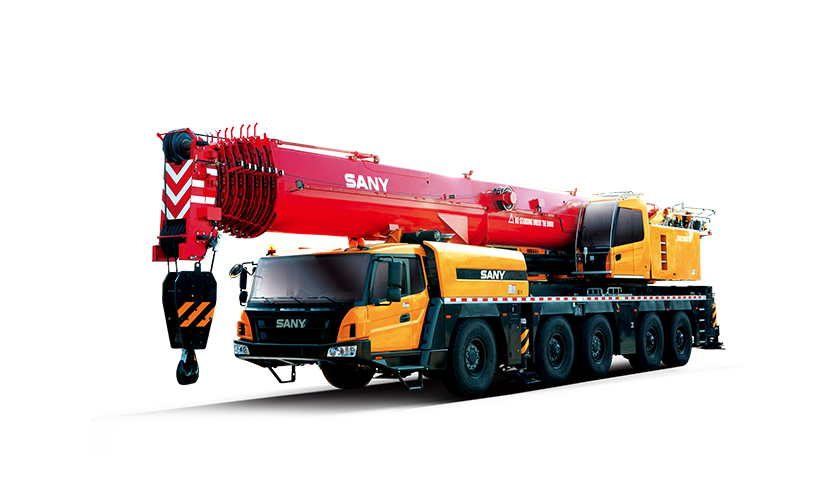
1.Definition:Truck crane is a lifting device mounted on a truck chassis. Its key feature is its ability to combine lifting and transport functions within a single vehicle, making it highly maneuverable and flexible. It can quickly reach various locations, lift, load, and transport heavy objects independently, and then travel to other locations. For example, SANY has a number of truck cranes, categorized by lifting capacity into categories such as below 45T truck cranes, 50-90T truck cranes, and over 90T truck cranes.
2.Applications
- Construction: Lifting heavy construction materials such as steel beams, concrete slabs, and glass curtain walls.
- Road Maintenance: Installing road signs, repairing lighting, and performing bridge construction.
- Industry and Logistics: Loading and unloading cargo and containers, equipment maintenance, and lifting tasks on production lines.
3.Transportation Methods
Truck-mounted cranes typically transport both loads and transports on a complete vehicle. They inherently perform both functions, eliminating the need for a separate transport vehicle.
All-Terrain Crane
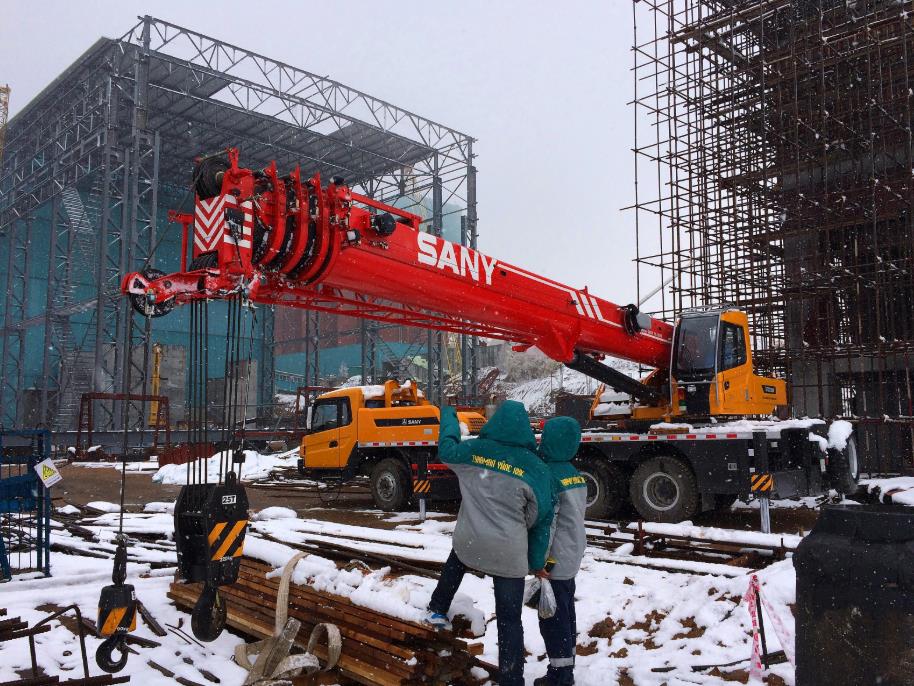
1.Definition: An all-terrain crane is a specialized lifting device designed for complex road conditions. Unlike standard vehicles, it features a larger number of wheels to optimize mobility and enhance stability, effectively preventing tipping over when operating on rough terrain. It can handle both rough terrain and paved roads, eliminating the need for a truck chassis like a truck-mounted crane, offering greater flexibility in adapting to different scenarios.
2.Applicable Scenarios
- Unpaved road operations: These applications involve working in rugged terrain, such as mining sites, off-site wind turbine installation sites, and infrastructure construction sites in mountainous areas. This allows for direct access to the work area and heavy-load lifting.
- Highway transfer and multi-scenario operations: This system enables short-distance cross-regional transfers via paved roads, making it suitable for projects requiring frequent site changes, such as large bridge segment construction and scattered heavy equipment installation at multiple locations.
3.Transportation Methods
The transportation method must be flexibly selected based on the actual size of the crane, primarily relying on three types of specialized trailers:
- RGN trailers (Removable Lowbed Trailers): Suitable for medium-sized all-terrain cranes, featuring a tiltable platform structure for easy loading and unloading.
- Extended-Length Trailers: For cranes with extra-long bodies or booms, the platform is extended to accommodate these excess dimensions, ensuring that components remain within the specified limits during transportation.
- Low-Floor Trailers: Designed to reduce the transport height, they are suitable for cranes approaching height restrictions, preventing them from contacting road height restrictions during transport.
Rough terrain cranes
1.Definition: A rough terrain crane is a mobile crane designed to travel over rough terrain and is equipped with rugged features such as tough tires, all-wheel drive capability, and an enhanced suspension system to adapt to and maintain stability on construction sites with poor ground conditions.
2.Applicable Scenarios
- Infrastructure construction sites: These include erecting bridges on mountain roads and railways, and installing high-voltage transmission towers, which require operations on rugged terrain such as mountains and ravines.
- Energy development projects: These include wind turbine installation for wind power projects (often located on outdoor hillsides) and equipment handling at oil field extraction sites, where the surface is often gravel or muddy.
- Emergency rescue scenarios: Debris clearing after earthquakes and floods, road repairs, and the transfer of heavy equipment during forest fires require rapid movement over damaged surfaces.
- Mining and factory operations: Ore loading and unloading within mines, large equipment maintenance, or the transfer of heavy components within large factories, where the surface may be potholes or gravel.
3.Transportation Methods
Depending on the transport distance, road conditions, and regulatory restrictions, rough terrain cranes can be transported in two core ways:
- Self-propelled: For short distances (typically within 50 kilometers), along unpaved roads or construction access roads, the crane utilizes its own all-wheel drive and sturdy tires, eliminating the need for additional transportation. However, it is important to maintain a low speed (typically below 30 km/h) to avoid excessive wear on tires and suspension caused by long-distance road travel.
- Professional trailer transport: For long-distance transport (inter-city or inter-provincial) involving highways or urban arterial roads, a heavy-duty low-bed trailer is required, with the crane secured to the trailer. This method complies with highway traffic regulations (avoiding the impact of overweight and overwidth on roads), reduces wear on the crane's components, and improves transportation efficiency.
Tower Cranes
1. Definition: A tower crane is a fully slewing jib crane with a tower-like frame, capable of handling large materials on construction sites and reaching exceptionally high heights. Unlike other cranes, it must be built adjacent to a building to ensure smooth lifting of heavy loads. It is constructed from multiple detachable components, which are secured to a solid concrete base with large bolts during assembly.
2.Application Scenarios
- Construction sites: This is the most common application for tower cranes, particularly in skyscraper construction, where they can quickly and safely lift and move various building materials, such as rebar and concrete slabs.
- High-rise buildings: Suitable for transporting cargo and materials between high floors.
- Ports: While mobile cranes are also used in ports, tower cranes also play a role in certain heavy lifting operations.
- Industrial buildings: They can also be used in the construction and maintenance of industrial plants.
3.Transportation Methods
Tower cranes can be transported in two ways:
- Complete Transportation:The crane is disassembled and transported intact, typically by truck or flatbed truck. During transportation, ensure that all components are securely fastened to prevent damage.
- Disassembled Transportation:The crane is disassembled into its various components (such as the counterweight, tower skirt, boom, and electronic control system) for transportation. This can be done by combined truck and ship transport. After disassembly, the components must be assembled and reassembled during installation.
Crawler Cranes
1. Definition: A crawler crane is a type of mechanical equipment that uses crawler tracks for movement and lifting. It consists of an engine, transmission, slewing mechanism, crawler tracks, a hoisting mechanism, and a working device. Its advantages lie in its flexibility, ability to operate on the ground, and its ability to carry heavy loads. However, due to its relatively low stability, it is not suitable for overloaded operation, and its slow speed can damage the road surface.
2. Application Scenarios
Crawler cranes have a wide range of applications and are suitable for lifting operations in a variety of working conditions.
- Infrastructure construction: large-scale projects such as roads, bridges, and urban development.
- Industrial construction: lifting operations such as single-story industrial plants.
- Ports and terminals: used for loading, unloading, and lifting cargo such as containers.
- Wind power generation: used for installing wind turbines.
3.Transportation Methods:
- Long-Distance Transport: Typically transported using a flatbed trailer.
- Modular Transport: For ease of transport, large crawler cranes are typically disassembled into multiple modules, such as the boom, counterweight (V-frame, hydraulically adjustable folding frame), and chassis.
Telescopic Boom Cranes
1.Definition: A telescopic crane is a crane equipped with a multi-hydraulic cylinder retractable boom, which can be adjusted similarly to a telescope. It is mostly mounted on a vehicle and can adjust the length of the boom as needed, making it suitable for various work scenarios that require different lifting heights and amplitudes.
2.Applicable Scenarios
- Simple Construction: Routine construction work that doesn't require an oversized or specialized crane. The boom length can be adjusted to suit different construction needs.
- Rescue Operations: In rescue operations, the flexible boom length and vehicle-mounted convenience allow for rapid participation in rescue operations.
3. Transportation Methods
Telescopic cranes are typically moved using three types of specialized trailers:
- Low-profile trailers: These are ideal for transporting telescopic cranes, ensuring stability and safety during transport.
- Detachable gooseneck trailers: These feature a removable gooseneck structure, making the crane easier to load and unload, enhancing transport convenience.
- Step-deck trailers: These utilize a stepped deck design to accommodate the structure of telescopic cranes, meeting their load-bearing and securing requirements during transport.
Self-erecting Cranes
1. Definition: Self-erecting cranes (also known as automatic tower cranes), can be folded and transported to the job site, then quickly erected using an internal hydraulic system. They require minimal setup space, reducing labor and time costs, and can be operated by one person via remote control.
2.Applicable Scenarios
- Temporary Construction Sites: Due to their ease of movement and relocation, they are ideal for short-term projects or multi-site operations.
- Residential and Low-Rise Construction: They are particularly suitable for material handling and assembly in projects such as low- to mid-rise residential buildings, villa complexes, and apartment buildings.
- Space-Constrained Sites: In urban development, where traditional cranes struggle to operate effectively due to limited space, self-elevating cranes offer a solution.
- Light Industrial Projects: They can be used for assembly and lifting work in industrial facilities to support production and maintenance activities.
3.Transportation Method:
Usually transported by truck, which enables efficient transportation and installation at the construction site.
Specialty Cranes
1.Definition: Special cranes are typically non-standard cranes designed for specific applications, with unique structures or functions. They may have special requirements due to their operating environment (such as high altitude, underwater, or toxic environments) or the lifting objects (such as large structural components or nuclear fuel rods).
2. Applicable Scenarios
- Marine Engineering: Used in shipbuilding, offshore platform installation, and maintenance.
- Nuclear Industry: Used for installation and maintenance of nuclear reactors, handling of nuclear fuel rods, and other applications requiring extremely high safety standards.
- Automotive Manufacturing: Gantry cranes are used for lifting large components within factories.
- Ports: Used for container loading and unloading, bulk cargo handling, and other applications. Different types of cranes, such as gantry cranes, can be selected based on cargo type and port conditions.
- Other Special Industries: Designed for specific process requirements in industries such as aerospace, metallurgy, and construction.
3. Transportation Methods
- Rail Transport: Suitable for large and heavy cranes, especially those composed of multiple components, which can be transported to the construction site in whole or in parts.
- Road Transport: Suitable for mobile cranes, which can be moved to the work site on their own or transported to a designated location by flatbed truck.
- Water Transport: For very large cranes, such as floating cranes used for offshore oil platform assembly, partial or complete transport may require water transport, using barges or containers.
- Special Container Transport: Some specialized crane components, such as booms and main beams, are transported in special containers to ensure safe and stable transportation.
Summary Table: Transportation Methods by Crane Type
Crane type | Main modes of transportation |
Mobile cranes: Truck-mounted cranes, all-terrain cranes, and rough terrain cranes | Self-driving capability, or transportation by flatbed truck or heavy truck |
Tower crane | Transported by truck or flatbed trailer, either fully assembled or in parts |
Crawler crane | Disassembled and transported on a flatbed trailer |
Telescopic boom crane | Transport with lowrider trailers, detachable gooseneck trailers, and step-deck trailers |
Self-loading crane | Transported by heavy-duty truck |
Specialty crane | The transportation method varies according to the crane function and the specific construction scenario |
Factors That Affect How Cranes Are Transported
How are tower cranes transported? Understanding these factors — including crane size, weight, route, and regulations — is essential before planning the actual transport. The following section breaks down the step-by-step logistics of moving a crane from one site to another.
Crane-Specific Factors
1. Size and Weight: Heavier or longer cranes require more complex logistics and may require disassembly into smaller loads or specialized trailers.
2. Crane Type: Different crane types have different transportation requirements. For example, small crawler cranes are more sensitive to muddy ground conditions, while tower cranes are highly sensitive to wind.
3. Disassembly Instructions: Disassembling the crane according to the manufacturer's instructions is crucial for safe transportation.
4. Securing Components: All loose components, doors, hatches, and windows must be secured before transport.
Logistics and Route Planning
1. Distance: Longer transport distances increase total costs for fuel, labor, and accommodation.
2. Route: The selected route must be appropriate for the size of the crane and avoid obstacles such as low bridges and narrow roads.
3. Destination Accessibility: The final location must be accessible to large vehicles and may require specialized equipment for unloading.
Regulatory and Legal Factors
1. Permits: Oversized or overweight loads require special permits, which vary by state and local jurisdiction.
2. Escort Vehicles: Cranes exceeding a certain width may require an escort vehicle.
3. Time Restrictions: Many areas only allow oversized loads to be delivered during certain times, such as daytime on weekdays.
Environmental and site conditions
1.Weather: Wind, rain, snow, and fog can affect visibility, road conditions, and transportation schedules.
2. Ground conditions: The ground at the loading and unloading point must be stable and level to prevent instability.
3. Terrain: The route must be assessed to determine if it can support the weight and size of the crane.
How to Transport a Crane: General Logistics and Steps
The logistics of transporting cranes is crucial for ensuring their smooth transition from production sites and storage warehouses to the job site. This requires not only considering the equipment's unique attributes, such as its large size and weight, but also strictly adhering to traffic regulations and safety standards. The precise execution of each step directly impacts transportation efficiency and equipment integrity. The general logistics process must revolve around the three core principles of "safety, efficiency, and compliance," and can be broken down into several key steps:
Pre-transportation Preparation Stage
This step requires completing equipment information confirmation and plan development:
1. Obtain Permits: Obtain all required transport permits, as they are essential for legal transportation.
2. Plan a Route: Plot a route that avoids low bridges, narrow roads, and weight-restricted areas.
3. Evaluate Dimensions: Determine whether the cargo requires special handling due to its height (over 13.5 feet) or width (over 12 feet), which would require an escort vehicle.
4. Monitor Weather: Schedule transportation flexibly and monitor weather forecasts, as strong winds or heavy rain may delay or complicate the transportation process.
5. Use Escort Vehicles: Arrange police or other vehicles to escort oversized cargo for safety.
Equipment Loading and Fixing
1.Disassemble the Crane: Safely and correctly disassemble the crane into smaller, more maneuverable components, such as the boom, counterweight, and outriggers.
2. Inspect Components: Perform a thorough pre-transport inspection to check for any structural issues, hydraulic system leaks, or tire or track damage.
3. Secure Components: Carefully secure all loose or fragile components to prevent movement during transport. Close and secure all hatches, doors, and windows.
4. Drain Fluids: Drain excess fluids to prevent leaks and environmental hazards.
5. Protect Fragile Components: Protect sensitive components from damage using protective pads, tape, or cardboard, especially glass facing the direction of travel.
In-transit Monitoring and Terminal Handover
1. Select the appropriate trailer: Use a heavy-duty trailer, such as a low-bed trailer or a removable gooseneck (RGN) trailer, for transporting heavy machinery.
2. Secure the load: Ensure each component is properly tied, chained, or secured to the trailer using designated tie-down points.
3. Follow the loading plan: Adhere to the loading sequence specified on the bill of lading (BOL) to avoid mix-ups and ensure all cargo is accounted for.
4. Brief the team: Clearly brief the driver and escort team on the cargo, route, and any specific instructions.
5.Unloading Components: Once the crane arrives at its destination, all components are safely removed from the trailer.
6. Reassembling the Crane: Reassembling the crane at the new job site according to the manufacturer's instructions ensures the crane is safe and operational.
This series of standardized logistics steps not only serves as the foundation for crane transportation safety, but also provides a common process framework for subsequent development of specialized transport solutions for different crane types (such as rough terrain cranes and telescopic cranes).
Conclusion
How are cranes transported? Whether serving urban construction or energy development, the cross-sector mobility of large cranes is crucial. Construction teams must adapt different crane types, match appropriate transport vehicles, plan obstacle-avoiding routes, obtain regulatory approvals, and manage weather conditions to ensure safe and efficient crane transportation and facilitate the smooth progress of project operations.
FAQs
How Do They Transport a Crane?
Crane transportation requires a plan tailored to its type, size, weight, and distance. For short distances, the crane can be transported autonomously if it's mobile enough. Longer distances require specialized tools like flatbed trailers and low-bed trailers, and some cranes may need to be disassembled and transported in modular units. This process requires planning obstacle-avoiding routes, obtaining overload permits, securing components, and monitoring weather conditions to ensure legal and safe transportation and a smooth arrival of the crane at the work site.
How Do They Move Those Big Cranes?
There are two main methods for moving large cranes:
- Disassembly and transportation: After disassembly, the crane is transported by other means of transportation, or moved and relocated on-site. Disassembly involves breaking the crane into smaller components and transporting them by truck, ship, or train. This is suitable for long-distance transport.
- On-site movement: Such as using rails, trailers, or the crane's own mobile system for short-distance movement, requires specialized crane structural design.
How Do They Get Large Cranes on Top of Buildings?
Large cranes typically reach the top of a building using three methods:
1. Internal Climbing: The crane is assembled at a lower level and uses a hydraulic climbing system to lift itself through the building’s core, inserting new tower sections as it rises..
2. External Climbing: A mobile crane is used to erect the tower crane next to the building. Once the building reaches a certain height, the crane is secured to the structure using steel collars. The crane is then raised using a special climbing section that raises the boom to allow the new tower section to be added from below.
3. Helicopter (rare): A heavy-lift helicopter is used to transport the crane's heavy components to the top of the construction site.
Featured Products

Recommend Blogs
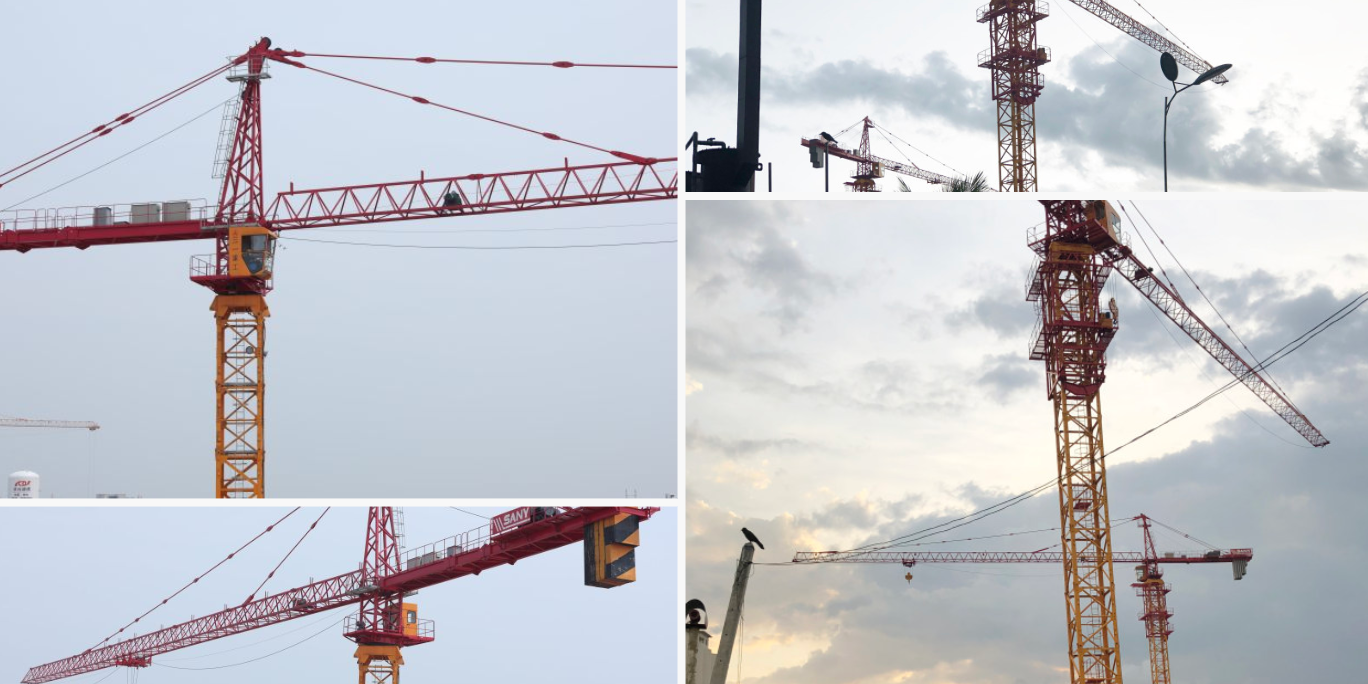
What Are Tower Cranes? Understanding Their Structure, Functionality, and Selection Tips
This article will comprehensively break down the knowledge system of what are tower cranes, providing clear and systematic reference for construction professionals and equipment enthusiasts.
What Is a Jib Crane? Definition, Types, and Practical Applications
A comprehensive guide answering what is a jib crane, covering its working principles, key advantages, common types, application scenarios, and selection methods.
How Much Can a Crane Lift? Key Factors and Safe Operating Guidelines
This guide explains how much can a crane lift, helping operators understand key factors affecting lifting capacity for safe and efficient crane selection and use.