Fulcrum Point Forklift: Key to Stable & Safe Lifting
This paper covers key knowledge and practical skills of fulcrum point forklift, ensuring operational safety and efficiency.
For practitioners in the forklift industry, the fulcrum point forklift is not only a fundamental component of the equipment structure but also a core factor determining operational safety and efficiency. Accurate understanding of the fulcrum is indispensable for daily cargo handling, load calculation, equipment maintenance, and risk avoidance. This paper will systematically dissect the key knowledge of fulcrum point forklift from five dimensions: basic definition, core principles, practical application, common misunderstandings, and safety specifications, helping practitioners improve professional skills and operational safety.
What Is a Fulcrum Point Forklift?
The fulcrum point forklift is a crucial pivot point. Centered on this point, the forklift uses the heavy counterweight at the rear to balance the weight of the cargo on the forks. Its working principle is similar to a seesaw, thereby maintaining the stability of the forklift body when lifting and handling heavy objects. Understanding this pivot principle helps operators control the center of gravity of the cargo at the balance point, thereby preventing forklift tipping and ensuring operational safety.
Where Is the Fulcrum of a Forklift?
The position of the forklift's fulcrum is easy to determine.It is usually located at the front axle and front wheel.The area where the front wheels contact the ground is the forklift's balance point, similar to a seesaw, where the load on the forks is offset by a counterweight (on the other end). This front axle/wheel area is a critical balance point that determines the stability of the forklift when lifting and handling goods. The center of gravity of the goods must be kept within the forklift's stability triangle and balanced by the counterweight.
The Relationship Between Forklift Fulcrum and Stability Triangle
The operation of a forklift relies on a balance system called the stability triangle, which is formed by the two front wheels and the center of the rear axle. The center of the front axle is the fulcrum on a forklift. When picking up cargo, the center of gravity shifts; only when the center of gravity remains within the triangle can the forklift operate stably.
If the cargo is too heavy or improperly placed, causing the center of gravity to move beyond the triangle, the forklift will tip over. The fulcrum is one of the key factors maintaining the operational balance of the forklift.
The Relationship Between Forklift Fulcrum and Load Center
The load center is directly related to the fulcrum of a forklift. It refers to the distance from the vertical plane of the forks to the center of gravity of the cargo. The standard load center of most forklifts is 24 inches. The farther the center of gravity of the cargo is from the fulcrum, the higher the risk of the forklift tipping forward.
Dangers of Improper Fulcrum Control in Forklift Operation
During forklift operation, improper fulcrum control can lead to major safety hazards such as forklift tipping, cargo falling, crushing injuries, and collision accidents. Behaviors such as overloaded transportation, uneven operating ground, sharp turns, or insufficiently secured cargo will all disrupt fulcrum balance, posing a serious threat to operators and personnel around the work site.
Forklift Tipping (Loss of Stability)
- Overloaded Operation: When the cargo weight exceeds the rated limit, the overall center of gravity will shift forward beyond the stability triangle.
- Excessive Operating Movements: Sharp turns, rapid acceleration, or sudden braking will cause the cargo's center of gravity to shift, leading to unstable vehicle body.
- Uneven Operating Ground: Soft ground, ramps, or slopes can cause the forklift to jolt, skid, or sink, ultimately resulting in tipping.
Cargo Falling
- Improper Stacking: Cargo that is not securely fixed, unevenly stacked, or stacked too high is prone to shifting or falling during transportation.
- Uneven Cargo Loading: Failure to place cargo centrally on the forks will disrupt the vehicle's balance, leading to cargo falling.
Crushing Injuries and Collision Accidents
- Risk of Loss of Control: Unstable loads can cause operators to lose control of the forklift, leading to collisions with buildings, other vehicles, or on-site pedestrians.
- Risk of Operator Ejection: When the forklift tips over, the operator may be thrown out of the vehicle, facing the danger of being crushed by the overhead guard or the forklift itself.
Damage to Equipment and Infrastructure
- Warehouse Shelf Damage: Unsecured or falling cargo can damage warehouse shelves.
- Forklift Component Wear: Illegal operations will accelerate the wear of tires, brakes, and hydraulic systems.
Fulcrum Control Techniques for Forklift Operation
To control the forklift fulcrum, it is necessary to maintain balance by keeping the cargo's center of gravity within the stability triangle. The specific operating techniques are as follows:
Proper Cargo Placement is Crucial
- Shorten the Load Center Distance: Keep the cargo's center of gravity as close to the mast (front wheel position) as possible to reduce lever force and maintain vehicle stability.
- Place the Heavy End Inward: Position the heaviest side of the cargo tightly against the mast or the front of the forks.
- Adjust Placement Direction Reasonably: When transporting wide cargo, place it along the width of the forks rather than the length to prevent excessive forward shift of the load center.
Control Cargo Height and Fork Tilt Angle
- Low-Level Horizontal Transportation: When transporting cargo, lower the fork height as much as possible. At the same time, use the mast tilt lever to tilt the mast slightly backward to keep the cargo tightly against the fork carriage and avoid slipping.
- Avoid Unnecessary Lifting: During driving, do not lift the cargo excessively unless necessary. Otherwise, it will raise the overall center of gravity and reduce forklift stability.
Strictly Comply with Load Limits
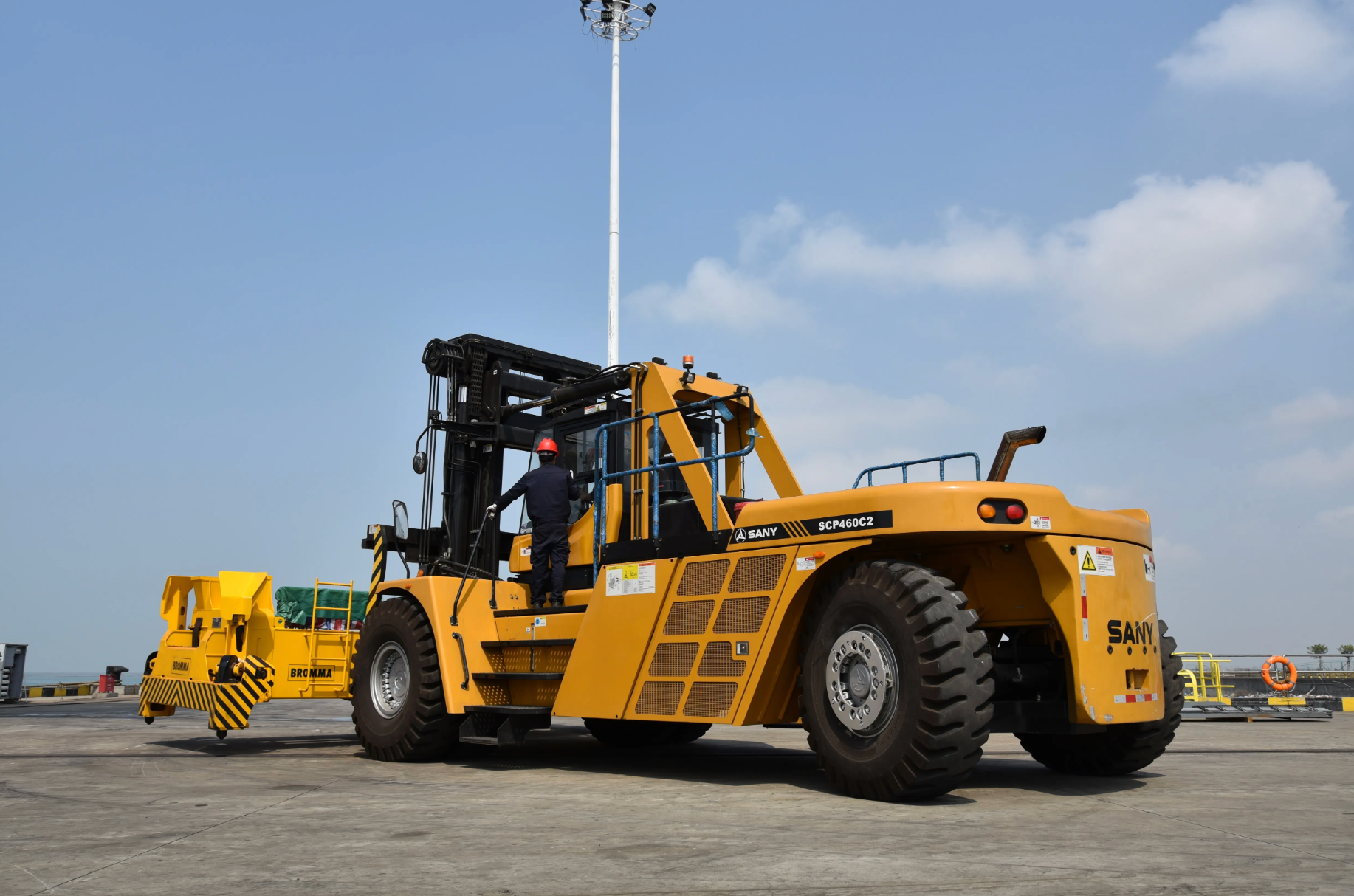
- Check the Load Capacity Plate: Be sure to be familiar with the forklift's rated load and standard load center distance parameters. For example, the rated capacity of SANY Forklift Trucks ranges from 10-16T, 18-25T, 28-35T, to 40-46T. It is essential to clarify this before operation.
- Prohibit Overloaded Operation: Overloaded transportation or load center distance exceeding the specified range is the main cause of forklift tipping.
Standard Use of Operating Controls
- Lever Operation: Control the lifting and lowering of cargo through the lift lever, and adjust the forward and backward tilt angles of the mast through the tilt lever.
- Stable Equipment Operation: Perform acceleration, turning, and braking actions smoothly to prevent sudden shifts in the cargo's center of gravity that disrupt fulcrum balance.
Conclusion
In summary, as the core hub of equipment balance, the mastery of knowledge related to the fulcrum point forklift is directly related to the bottom line of operational safety and efficiency. From the definition and position of the fulcrum, to its relationship with the stability triangle and load center, and then to the risks of improper control and practical operation skills, the understanding and practice of each dimension are important manifestations of the professional competence of forklift practitioners. Safety is no trivial matter. only by deeply implanting the fulcrum balance principle in the heart and strictly following standardized operations can potential safety hazards be fundamentally avoided, and the goal of efficient and safe operations be achieved.
FAQs
How to Maintain Fulcrum Balance When Operating on Slopes?
Core Operating Strategies for Slope Operation:
Uphill Driving
- Forward driving: Face the slope, forks toward the top.
- Cargo direction: Keep cargo facing the slope top to avoid forward shift.
- Low & backward tilt: Maintain low forks and slight mast backward tilt for low center of gravity.
Downhill Driving
- Reverse driving: Reverse downhill to keep cargo facing the top (behind operator) for stability.
- Steady speed: Maintain slow, smooth operation.
General Stability Guidelines
- Face slope directly; no turning on slopes.
- Low cargo height (15 - 25cm/6 -10in).
- Stable operation: Avoid sharp turns, rapid acceleration/braking.
- Observe load limits; reconfirm rated load after attaching accessories.
Do Different Tonnage Forklifts Have Different Fulcrum Positions?
Yes, design differences between forklifts affect the fulcrum. This impact is mainly achieved by adjusting the counterweight and the overall size and structure of the chassis. These adjustments can change the position of the balance point (i.e., the fulcrum), ensuring that the forklift can safely handle heavier cargo. For counterbalanced forklifts, although their fulcrums are usually near the front axle, large-tonnage forklifts require heavier and often larger counterweights installed further back. This design causes a corresponding displacement of the forklift's pivot point, ensuring that the forklift remains stable when lifting heavier cargo.
What Should Fulcrum Safety Training Cover?
Fulcrum-related safety training must cover the following core content: proper lifting techniques (straight back, leg power, holding close to the body), use of mechanical aids (trolleys, cranes, etc.), key points of risk assessment (cargo weight calculation, work path hazard inspection), standardized use of personal protective equipment (PPE) and operating equipment (harnesses, scaffolds, etc.), and site-specific operating procedures (emergency plans, data-driven risk assessment). The training should focus on practical exercises, combine the stability principles of equipment such as forklifts and scaffolds, focus on preventing sprains, falls, and handling accidents, and achieve precise risk management and control through data integration.
Featured Products
Recommend Blogs
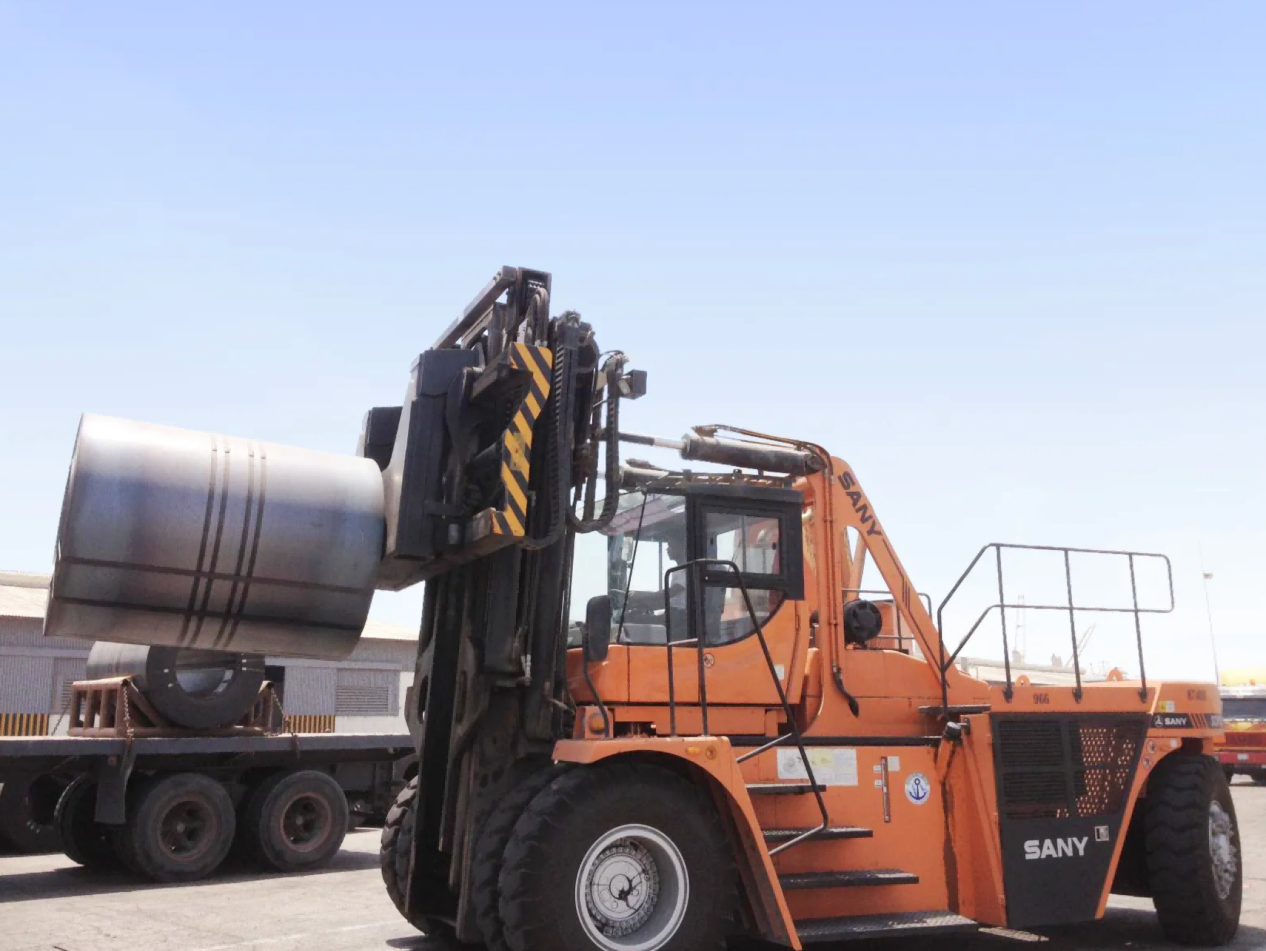
Crane Forklift Essentials: Definition, Functions, and Applications - A Complete Analysis
This text briefly presents the crane forklift’s features, uses and differences from standard forklifts, highlighting its efficiency in heavy material handling.
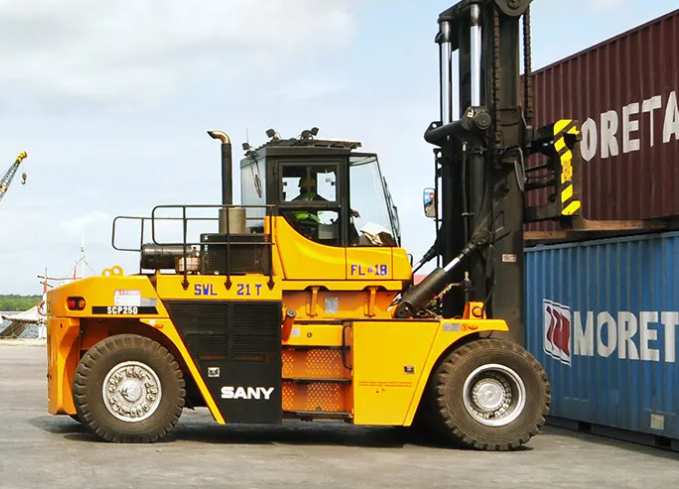
How to Operate a Forklift Truck? Step-by-Step Guide and Safety Tips
How to operate a forklift truck? This article helps both new and experienced operators understand forklift structure and operation steps in detail to reduce operational risks.
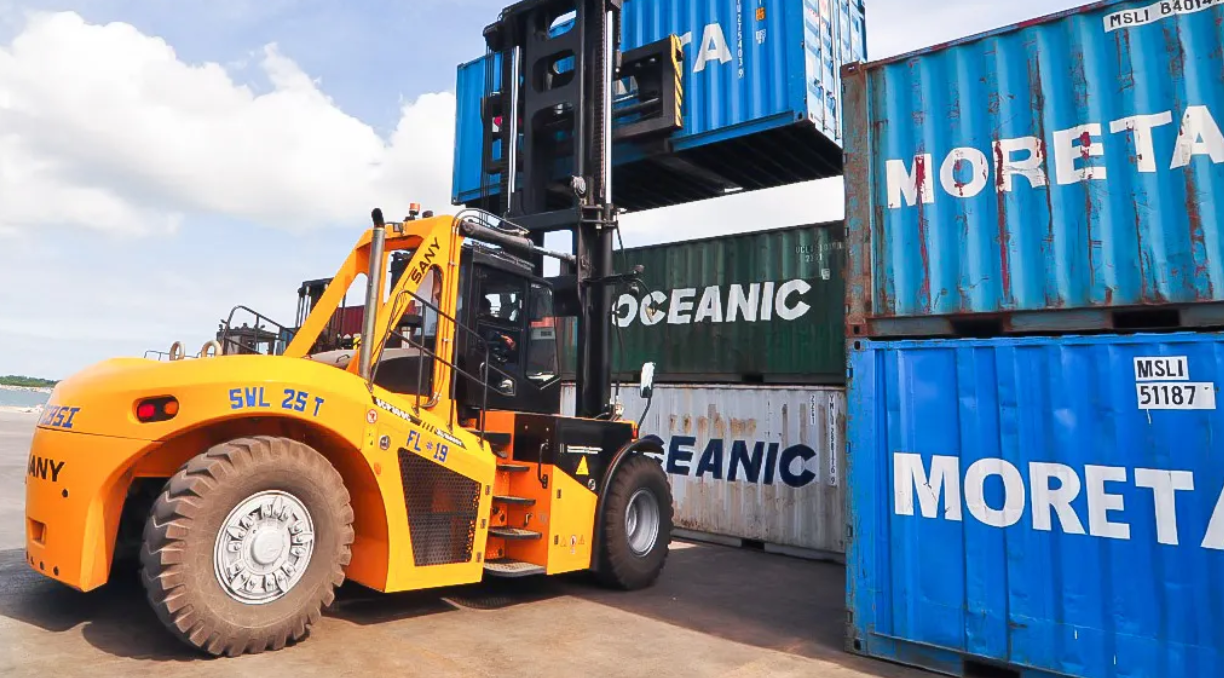
Learn About Forklift Truck from Scratch and Master Core Points of Classification and Configuration
This guide explains what a forklift truck is, outlining its main functions, classification types and provides practical tips on how to buy forklift truck fits your needs.