Forklift Truck Loading Safety Guide: Full Process and Risk Avoidance
This article details common scenarios, the entire process of forklift truck loading, and key safety points to help achieve safe and efficient operations.
In warehouses, logistics centers, and various industrial settings, forklift loading trucks are indispensable material handling tools. They can easily handle heavy materials that are difficult to process manually, significantly improving operational efficiency. However, forklift truck loading operations also carry inherent safety risks. Improper operation can lead to equipment damage, cargo destruction, or even personal injury. Therefore, mastering scientific and standardized operating procedures is crucial. This article breaks down the key points of the entire forklift truck loading process in detail, helping operators complete their work safely and efficiently.
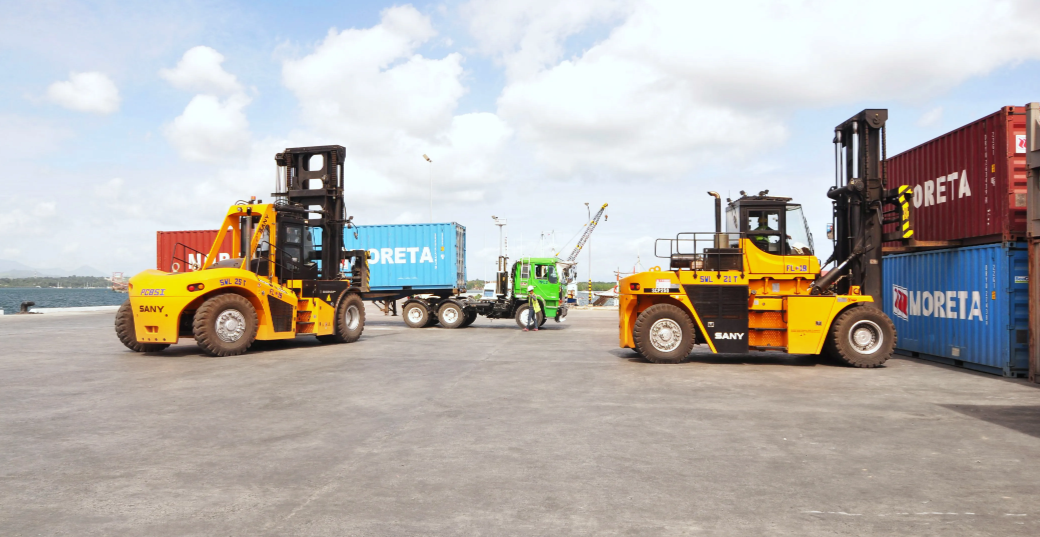
Common Scenarios When You Need to Load and Unload Materials Using Forklift Trucks
1. Warehouse inventory management
This is one of the core application scenarios for forklift trucks. Whether it's transferring purchased raw materials from the loading and unloading area to shelf storage, or retrieving finished products from the shelves to the shipping area, forklift trucks are indispensable.
2. Logistics and transportation connection
At freight yards, ports, and other hubs, forklift trucks play a crucial connecting role. They precisely load and unload goods from containers and trucks into temporary storage areas, or orderly load goods from temporary storage areas onto transport vehicles, ensuring the smooth flow of goods between different transport carriers.
3. Production workshop material distribution
In manufacturing plants, the supply of materials between production processes relies on forklift trucks for distribution. For example, delivering assembled parts to the finished product inspection area, the efficient operation of forklift trucks can prevent production interruptions due to material shortages.
4. Assisted relocation of large equipment
For production equipment and large molds that are heavy but relatively regular in size, forklift trucks can be used with special lifting tools or pallets to complete short-distance relocation, installation and positioning operations, which is more flexible and convenient than lifting equipment.
Before Loading: What You Should Do
1. Prepare the Area
Clear obstacles from the loading and unloading area, including scattered materials, tools, and discarded packaging, to ensure that forklift trucks can pass and turn smoothly, and that the ground is flat and free of depressions and oil stains. Set up warning signs around the area and, if necessary, assign personnel to guard it to prevent unauthorized personnel from entering. If working at night or in low-light conditions, check the lighting equipment to ensure sufficient brightness and no blind spots during operation.
2. Inspect the Transport Vehicle
The transport vehicle must be in a stable condition, including having the handbrake engaged and wheels secured; the floor of the cargo box must be flat and undamaged; if there are bulges or holes, steel plates or special pallets can be laid underneath; the vehicle and loading/unloading platform must be at the same height, and if there is a significant height difference, suitable transition devices should be prepared in advance. At the same time, the vehicle's load-bearing capacity must be checked to avoid overloading.
3. Check the Load Condition, Weight, and Balance
Inspect the cargo's appearance. If there is any damage to the packaging or leakage of materials, it must be repackaged and secured before loading and unloading. Next, confirm the weight of the cargo to ensure it does not exceed the forklift truck's rated load capacity. Simultaneously, determine the cargo's center of gravity and ensure it is aligned with the forklift truck's center during loading to avoid uneven loading.
4. Position and Secure the Dock Plate or Bridge
When a forklift truck needs to move back and forth between the loading platform and the transport vehicle, a transition passage must be constructed using a dock deck or bridge deck. During installation, one end of the dock deck must be tightly fitted to the loading platform, and the other end must rest on the vehicle's floor and be securely fixed. After installation, its stability must be manually checked to ensure there is no looseness before passage is permitted.
5. Inspect Your Forklift Truck
The condition of the forklift truck directly affects operational safety. A comprehensive inspection must be carried out before operation, including: an external inspection: check for any damage to the vehicle body, whether the fork teeth are deformed or cracked, and whether the tire pressure is normal; a functional inspection: test whether the brakes, steering, horn, and lights are effective, and whether the hydraulic system is normal; and a safety device inspection: confirm that the seat belts, limiters, and other devices are intact.
During Loading: Step-by-Step Forklift Truck Procedure
1. Approach the Load and Align
After starting the forklift truck, drive at low speed to the front of the cargo, keeping the forklift truck body aligned in a straight line with the cargo pallet. As you approach the cargo, lower the forks to their lowest position, ensuring the forks are directly aligned with the pallet inserts to prevent the forks from colliding with the cargo or pallet.
2. Position Forks Evenly
Adjust the distance between the two fork tines according to the width and center of gravity of the goods, ensuring that the fork tines are symmetrically distributed on both sides of the center of gravity of the goods, and that each fork tine is fully inserted into the pallet slot. If the goods are not on a pallet, insert the fork tines into the stable support points at the bottom of the goods.
3. Lift and Stabilize the Load
Operate the hydraulic control lever to slowly raise the forks, lifting the goods approximately 10 centimeters off the ground. During the lifting process, closely observe the stability of the goods. If tilting or swaying occurs, immediately stop lifting, slowly lower the goods, and readjust the fork positions. After the goods are off the ground, gently shake the forks to confirm that the goods are securely fixed.
4. Maintain Tilt Control before Moving
Before starting the forklift truck, you can operate the tilt control lever to tilt the forks backward at a certain angle, so that the goods are close to the forklift rack and prevent them from tipping forward or falling off during travel due to bumps or turns. However, be careful not to tilt too much, so as not to affect the balance of the goods.
5. Always Stay Within the Forklift’s Rated Capacity
No matter how urgent the task, overloading is strictly prohibited. If the weight of the cargo is close to or may exceed the rated load capacity, it must be confirmed by weighing, and loading can be done in batches if necessary. At the same time, avoid shifting the center of gravity of the cargo to one side, otherwise it may cause the Forklift Truck to overturn.
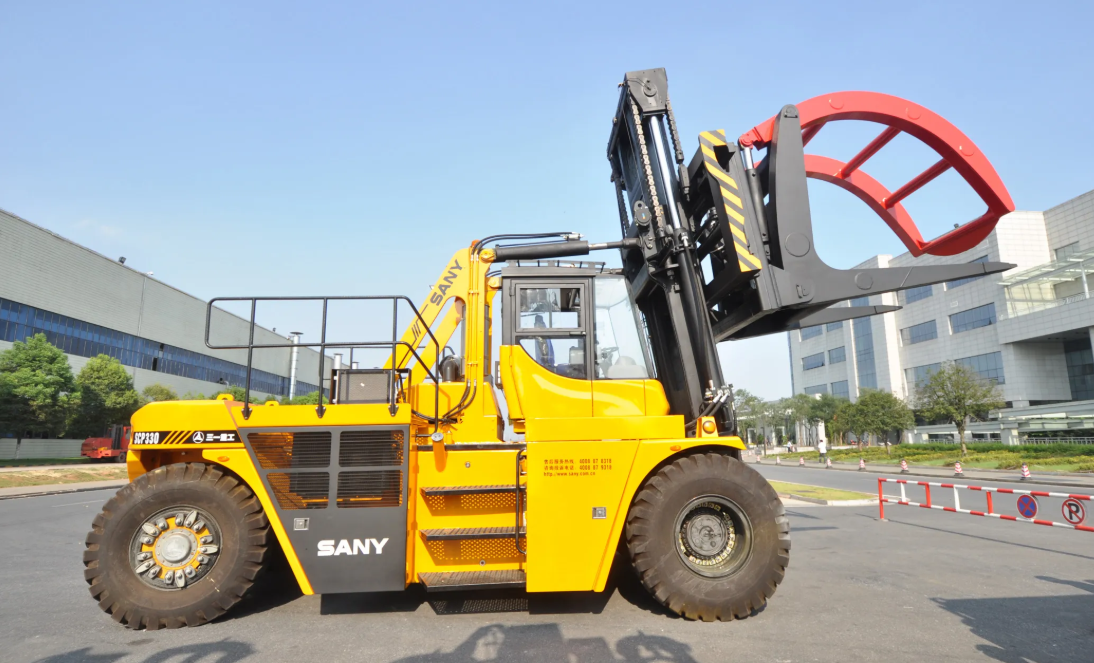
How to Carrying the Load Safely
1. Keep the Load Low
During transport, the cargo should always be kept at a low height to ensure unobstructed visibility. This lowers the forklift truck's center of gravity, improving stability and reducing the risk of cargo falling in unexpected situations. If it is necessary to pass over obstacles or uneven surfaces, the cargo can be temporarily raised slightly, but immediately lowered back to its lowest position after passing over them.
2. Use Caution on Turns, Inclines, and Ramps
When turning, slow down in advance, sound the horn as a warning, and increase the turning radius to avoid the cargo slipping due to excessive centrifugal force caused by sharp turns. When driving on slopes or ramps, follow the principle of cargo in front when going uphill and cargo behind when going downhill to prevent the forklift truck from tipping over due to a shift in the center of gravity.
3. Travel at Safe Speeds and Maintain Visibility
When moving loads, forklifts must control their speed and avoid high-speed driving or sudden braking. During operation, operators must maintain an upright posture, clear visibility, and a safe distance from people and equipment in front. When approaching intersections or corners, the horn must be sounded in advance.
Unloading a Forklift Truck Step-by-Step
1. Prepare and Clear the Unloading Area
Similar to the preparations before loading, the unloading area also needs to be cleared in advance before unloading. If the unloading point is a shelf, the load-bearing capacity and stability of the shelf must be checked, and it must be confirmed that the shelf panels are not damaged; if the goods are stacked on the ground, a moisture-proof mat or pallet must be laid on the ground, and the place of goods must be clearly marked.
2. Position the Forklift to the Drop Zone
Slowly drive the forklift truck to the unloading area and align the goods with the placement point. Adjust the fork height so that the bottom of the goods is slightly higher than the surface of the placement point; if placing on a rack, ensure that the forklift is parallel to the rack and that the fork tines are aligned with the rack shelf support.
3. Lower the Load Slowly
Operate the hydraulic control lever to slowly lower the fork tines, allowing the goods to smoothly contact the placement surface. Once the goods are completely and securely placed, operate the tilt control lever to slightly adjust the fork tines forward, ensuring that the fork tines do not fit tightly against the goods, facilitating subsequent removal of the fork tines.
4. Remove Forks and Back Away Safely
After confirming that the goods are securely placed, slowly pull out the forks. Once the forks are fully extended, lower them to their lowest position, then start the forklift truck and slowly reverse. During the reversing process, continuously observe the condition of the goods and the surrounding environment, and only leave the unloading area after ensuring that there are no abnormalities.
Potential Hazards of Forklift Truck Loading and Recommended Practices
Potential Danger
① Risk of personal injury: Forklift truck collisions, falling cargo causing injury, forklift truck overturning and crushing, etc.
② Risk of equipment damage: Overloading leading to hydraulic system damage, forklift tooth deformation, collisions with racks or transport vehicles causing vehicle damage, or improperly secured dock ramps causing falls, etc.
③ Risk of cargo damage: Forklift tooth collisions, cargo tilting and slipping, excessive impact during loading and unloading, etc.
Recommended Practices
① Personnel qualification requirements: Operators must undergo professional training and obtain a valid certificate, be familiar with the operation and safety rules of the forklift truck, and are strictly prohibited from operating without a certificate.
② Equipment maintenance standards: Establish a daily inspection and periodic maintenance system for the forklift truck. Operators must complete the inspection and record it before starting work each day. If any malfunction is found, immediately stop the machine and seek professional repair.
③ Work environment management: Clear warning signs and traffic markings should be set up in the loading and unloading area. The area should also be well-ventilated and adequately lit to avoid adverse environmental conditions affecting operations.
④ Load handling principles: Overloading and uneven loading are strictly prohibited. Operators are required to confirm the weight and center of gravity of the goods before loading. If necessary, securing tools should be used to fix the goods and prevent them from shifting.
Conclusion
Forklift truck loading is a systematic operation where safety depends on attention to detail. From pre-loading area preparation and equipment inspection to standardized operations during loading, and then to the entire process of handling and unloading, no step can be overlooked. Adhering to operating procedures and respecting safety rules can not only effectively avoid personal injury and equipment damage, but also improve operational efficiency, ensure the smooth operation of logistics and production, and make forklift trucks a reliable assistant in improving productivity.
FAQs
What Are the Procedures for Forklift Loading?
Forklift truck loading can be divided into three steps: 1. Preparation stage, including clearing the work area, inspecting the transport vehicle, and confirming the weight and balance of the cargo; 2. Operation stage: approaching and aligning the cargo, evenly placing the forks, lifting and stabilizing the cargo; 3. Confirmation stage: checking the stability of the cargo before moving to ensure low load and safe speed during the journey.
What Is the 3-Foot Rule for Forklifts?
The 3-foot rule for forklifts requires operators to maintain a safe distance of at least 3 feet from people, equipment, and shelves when driving a forklift truck. This rule allows for reaction time in case of emergencies and prevents collisions.
What Is the First Thing You Should Do after Lifting A Load in A Forklift?
After lifting the load, first confirm the stability of the goods by observing whether they are tilted or swaying. If any instability is found, immediately lower and readjust the load. Once stability is confirmed, operate the forklift to tilt the forks backward at a certain angle, shifting the center of gravity of the goods backward to keep them close to the rack. Then start moving the forklift to prevent the goods from slipping during travel.
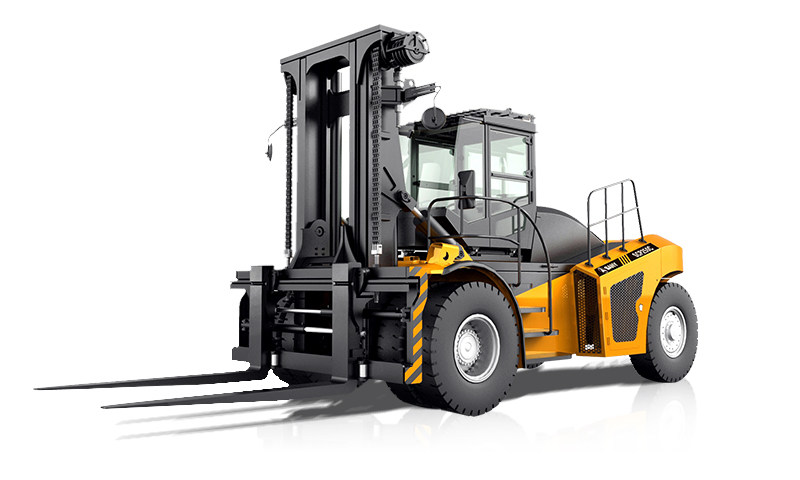
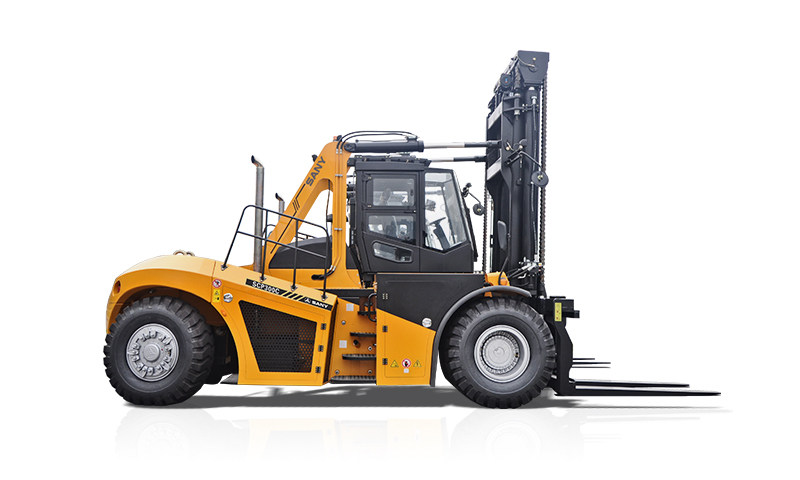
Featured Products
Recommend Blogs
2025 Forklift Truck Manufacturers: Industry Insights & Choices Guide
Analyze forklift truck manufacturers' core responsibilities, trends and selection points to help enterprises efficiently choose the right forklift truck suppliers.
How to Operate a Forklift Truck? Step-by-Step Guide and Safety Tips
How to operate a forklift truck? This article helps both new and experienced operators understand forklift structure and operation steps in detail to reduce operational risks.
Complete Guide to the Differences: Forklift and Reach Truck
This guide explains what forklift and reach truck are and the differences between them, helping you choose the equipment that best suits your job requirements.