A Complete Guide to Forklift Mast In 2026
Master all about forklift mast: definition, components, types, and how to choose the right mast for your work scenario by key parameters.
Among the core working components of a forklift truck, the forklift mast is undoubtedly the "backbone" that carries the core function of lifting and lowering materials. Whether it’s warehouse cargo stacking, workshop material transfer, or port loading and unloading operations, the performance of the forklift mast directly determines the operating efficiency and safety factor of a forklift truck. This article will present a comprehensive professional guide to the forklift mast, covering its definition, composition, types, and key selection points.
What Is a Forklift Mast?
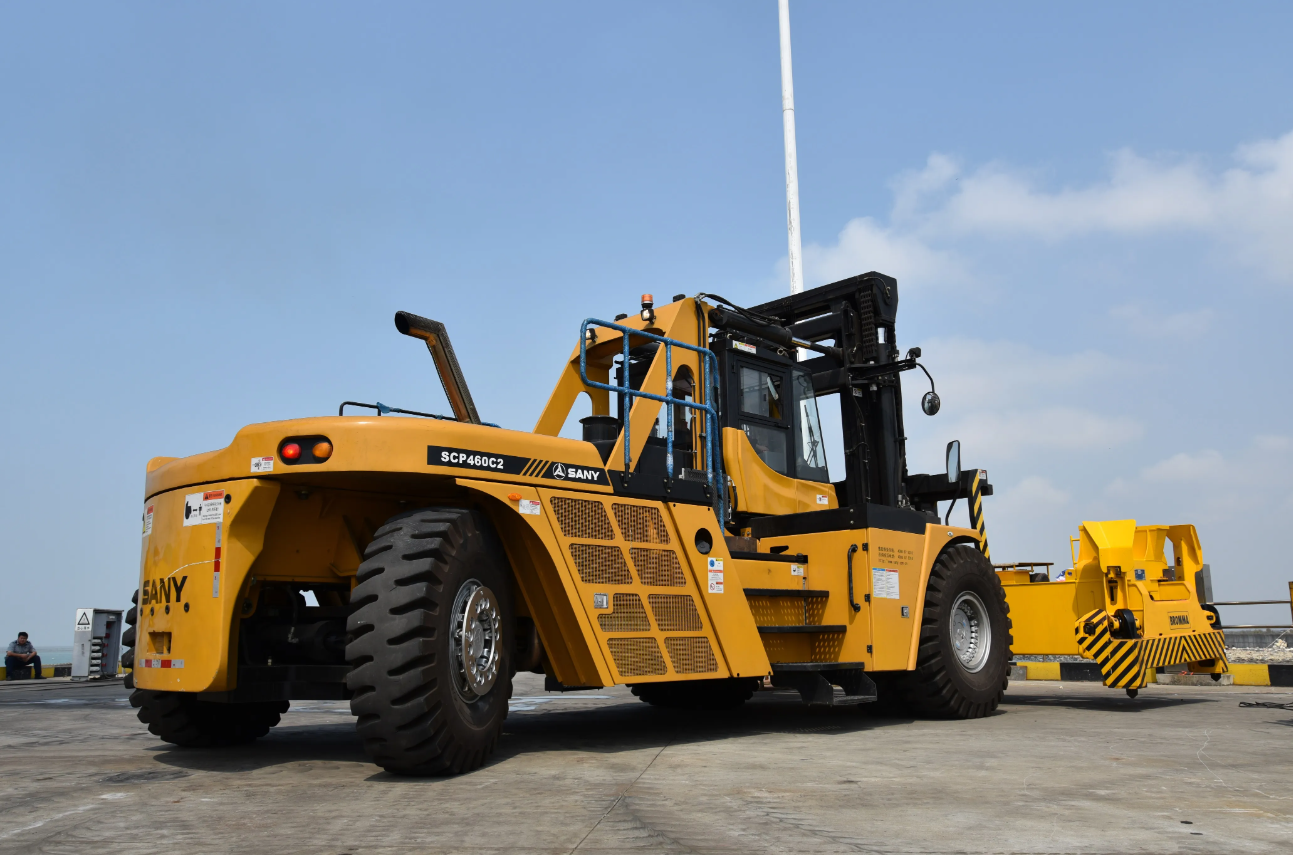
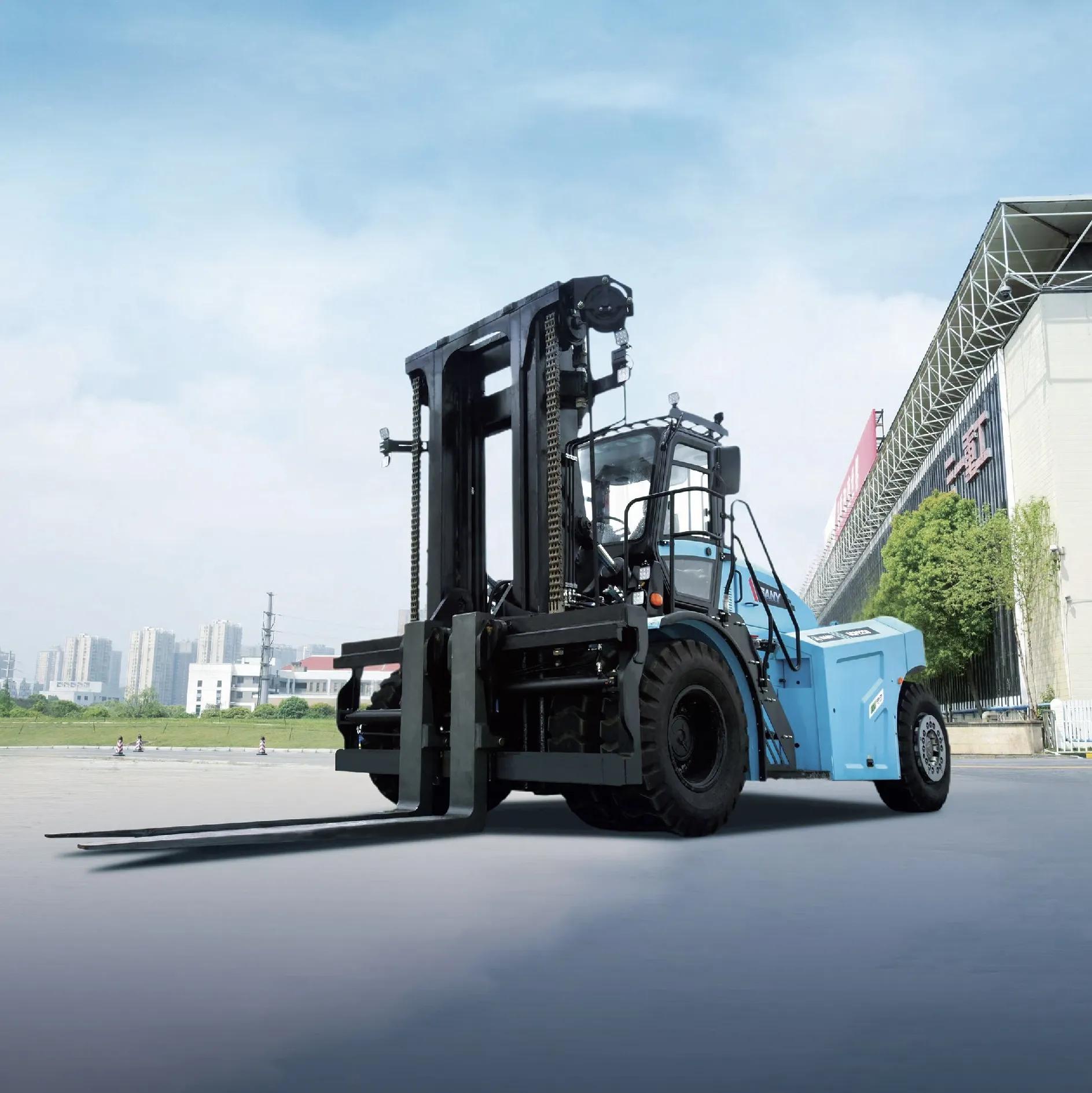
Mast for forklift, also known as the upright, is the key mechanical structure at the front of a forklift truck that undertakes the lifting, lowering and precise positioning of goods, and can be called the "core working unit" of a Forklift Truck.
Its core function is to realize the vertical lifting of goods through the power output of the hydraulic system, and complete the lowering action by virtue of gravity, enabling the forklift truck to flexibly handle material handling needs at different heights.
Simply put, it is the mast that upgrades the forklift truck from a "mobile tool" to a "liftable material handling equipment", realizing the efficient circulation of goods in vertical space.
Components of a Forklift Mast
A complete forklift mast system consists of the following key components working together:
1. Main Structural Components
Mast Rails: Composed of interconnected vertical beams (outer, inner, and sometimes multi-stage inner rails), their core function is to provide precise guidance for the carriage’s lifting and lowering, ensuring stability of vertical movement and preventing wobbling.
Carriage: A load-bearing component that slides up and down along the mast rails, with forks and a load backrest fixed to it. It serves as the key hub connecting the forks and the mast, directly bearing the weight of goods and transmitting lifting power.
Forks: Fork-shaped components that directly contact and lift goods. Available in different lengths and thicknesses based on operational needs, they are the final execution unit for carrying goods.
2. Lifting and Tilting Mechanism
Lifting Cylinder: The core power output component of the hydraulic system. It drives the piston rod to extend and retract through the pressure of hydraulic oil, providing strong power for the vertical movement of the carriage and goods.
Tilting Cylinder: Controls the forward and backward tilting angle of the entire mast assembly. Forward tilting facilitates the forks to insert into the bottom of goods, while backward tilting prevents goods from slipping during handling.
Lifting Chain: A heavy-duty chain connecting the carriage and the lifting cylinder, responsible for converting the linear power of the cylinder into the lifting movement of the carriage. Its load-bearing grade must match the rated load of the mast.
Pulley (Block): A guiding component installed on the top of the mast and the carriage, used to change the force direction of the lifting chain, reduce chain wear and improve lifting efficiency. Multi-stage masts are usually equipped with multiple sets of pulleys working together.
3. Support and Control Components
Mast Rollers and Bearings: Installed at the contact points between the carriage and rails, they convert sliding friction into rolling friction, significantly reducing movement resistance while ensuring smooth lifting and lowering of the carriage. These are key components for reducing mast wear.
Guide Rails and Gaskets: Filled in the gaps between mast sections to ensure the mast extends and retracts without jamming, while absorbing partial vibrations and improving operational stability.
Hydraulic Seals: Installed inside the cylinders to prevent hydraulic oil leakage and maintain stable hydraulic system pressure, acting as the "sealing barrier" that ensures the mast’s power output.
Common Types of Forklift Mast
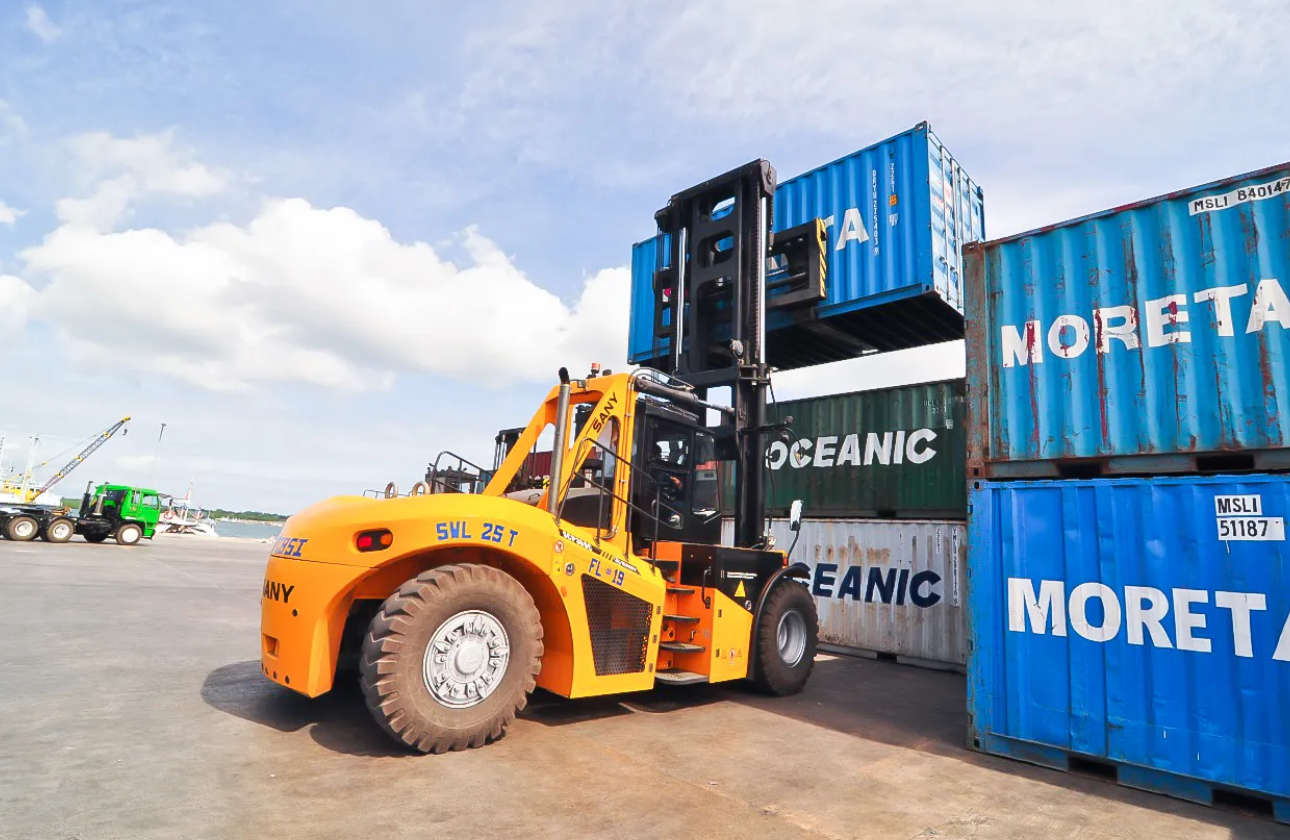
Mast forklift comes in various types to adapt to different operating environments and handling needs, with the most common ones being:
Single-Stage Mast (Single-Operation Mast)
Usually consisting of only one stage (outer mast), it has no free lift or limited lifting height, featuring a simple structure, high rigidity, and low manufacturing cost.
It is suitable for forklift truck operating in scenarios with very low lifting height requirements or specific conditions, such as basements, small warehouses, or for handling light-weight, low-stacking goods.
Two-Stage Mast (Duplex Mast)
Composed of an outer mast and one stage of inner mast, it has a certain free lift capacity, balancing lifting height and vehicle passability.
It is suitable for a wide range of regular operations, such as routine stacking in small and medium-sized warehouses.
Three-Stage Mast (Triplex Mast)
Consists of an outer mast and two stages of retractable inner masts, and usually features full free lift capacity.
It can lift goods to a relatively high position without raising the mast itself, making it ideal for stacking operations in low-headroom warehouses, containers, or trucks.
Four-Stage Mast (Quadruplex Mast)
Made up of an outer mast and three stages of inner masts, it has the most complex structure and requires extremely high manufacturing precision and material strength, enabling ultra-high full free lift and maximum lifting height.
It is mainly used for special material handling scenarios with ultra-high racking, such as large cold storage facilities and automated warehouses.
Mast on Forklift Selection Tips
When selecting a mast for a forklift, you need to comprehensively consider your specific operating environment and needs. The following key dimensional parameters are crucial:
1. Free Lift Height
Free lift height refers to the height the forks can be raised without extending the inner mast. In spaces with limited headroom such as doorways, ceilings, or inside containers, high free lift capacity is a top priority. Note that a central lifting mechanism may affect the operator’s line of sight, so you need to balance it with visibility requirements.
2. Lowered Height (Folded Height)
Lowered height (folded height) refers to the distance from the ground to the top of the mast when it is fully lowered. It directly determines whether a Forklift Truck can pass through narrow passages or low doorways, and must be closely matched for operations involving frequent passage through door frames or work inside containers.
3. Rated Load and Operational Intensity
The mast load must match the Forklift Truck. For heavy loads of over 5 tons, it is recommended to choose thickened rails and high-strength chains; for high-frequency operations, attention should be paid to the durability of seals and roller bearings to reduce failures.
4. Extended Height and Maximum Fork Height
Extended height is the distance from the ground to the top of the mast when it is fully extended, while maximum fork height is the distance from the ground to the tip of the fork tines. When selecting, it is recommended that the maximum fork height be 15-20 centimeters higher than the tallest shelf to reserve operational space.
5. Brand Selection
Last but not least, choose a forklift mast from a well-known and reliable brand. Premium brands such as SANY offer greater assurance in terms of materials, craftsmanship, hydraulic system reliability and safety design. They deliver longer service life, more stable performance and comprehensive after-sales service, making them a more cost-effective investment in the long run.
Conclusion
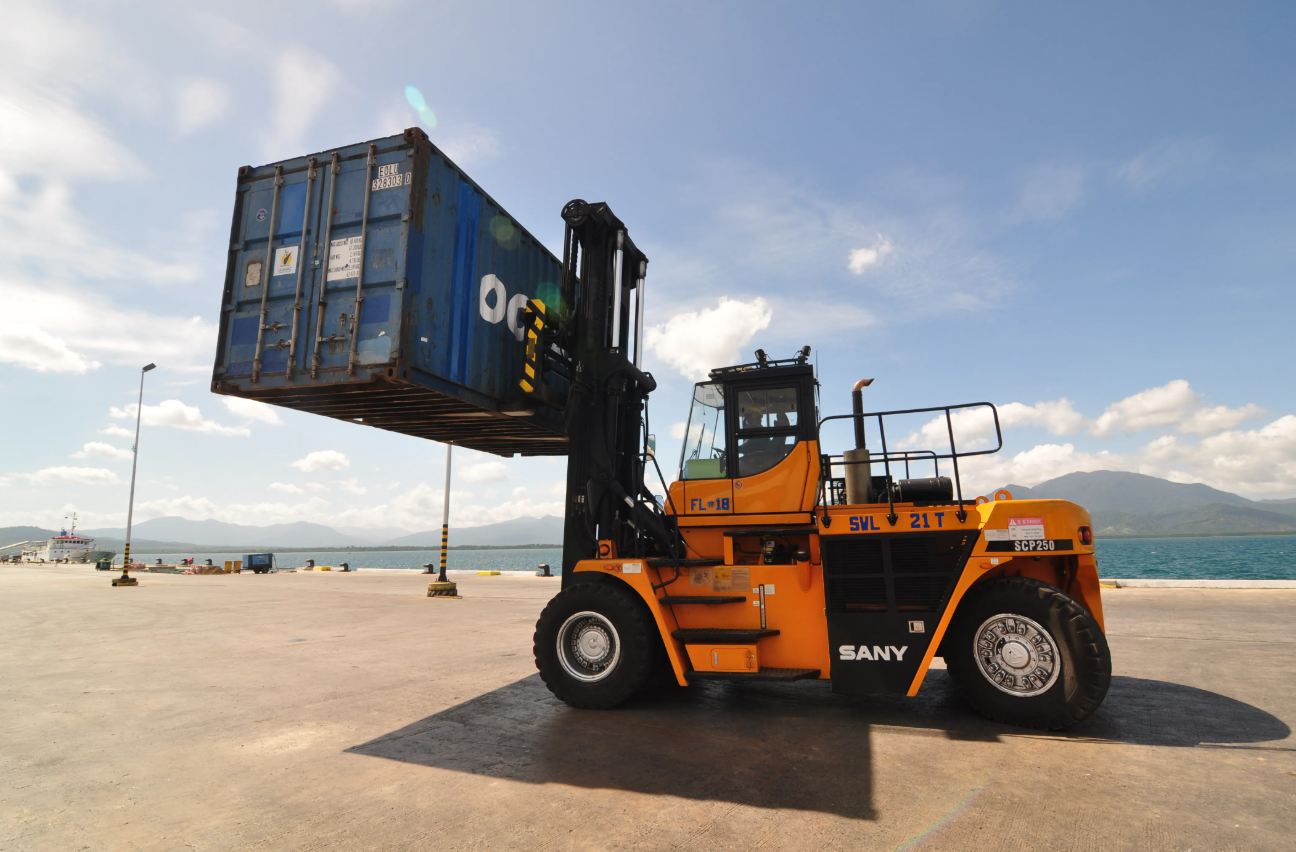
The forklift mast is the core component that determines the working capacity and applicable scenarios of a forklift truck. Understanding its definition, components, characteristics of different types, and key selection parameters is the foundation for ensuring that the forklift truck you purchase can safely and efficiently complete specific material handling tasks. Be sure to weigh various parameters according to the needs of the actual operating environment and choose a trustworthy brand to achieve optimal return on investment and operational efficiency.
FAQs
What Is a Mast on a Forklift?
The forklift mast is a vertical lifting system installed at the front of a forklift truck, also known as the upright, consisting of rails, cylinders, chains and other components. Driven by the hydraulic system, it realizes the lifting, tilting and cargo positioning of the forks, and is the core working mechanism for achieving the functions of cargo lifting, lowering and stacking.
What Are the Core Differences Between a Single-Stage Mast and a Three-Stage Mast?
The core differences between a single-stage mast and a three-stage mast lie in structure, lifting height, and applicable scenarios, as detailed below:
- Structure: A single-stage mast has only one set of fixed vertical beams with no telescopic structure, featuring a simple overall structure and high rigidity; a three-stage mast includes three sets of telescopically nested masts (outer, middle, and inner), with a relatively more complex structure.
- Lifting Height: The maximum lifting height of a single-stage mast does not exceed 2 meters; a three-stage mast, with its multi-section telescopic design, can reach a maximum lifting height of 8 to 12 meters, enabling high-level operations.
- Applicable Scenarios: A single-stage mast is suitable for low-clearance spaces such as basements and small warehouses, and for handling light-weight, low-stacking goods; a three-stage mast is adapted to scenarios with high shelves like large logistics centers, meeting the needs of high-level stacking.
Are the Lifting Height and Mast Extended Height of Forklift Masts the Same?
No. The lifting height (maximum fork height) is the distance from the ground to the fork surface, while the mast extended height is the distance from the ground to the top of the mast when fully extended. The former is a direct parameter for stacking operations, and the latter is a parameter for the total space required. Usually, the maximum fork height is slightly lower than the mast extended height.
What Else Should Be Considered When Selecting a Mast Forklift Besides Height Parameters?
You should also pay attention to the rigidity, lifting speed, visibility (some designs may block the line of sight), maintenance convenience of the mast forklift, as well as the manufacturer's brand reputation and after-sales service. A reliable mast that suits the working conditions can significantly improve operational safety and efficiency.
Featured Products
Recommend Blogs
Forklift Truck Loading Safety Guide: Full Process and Risk Avoidance
This article details common scenarios, the entire process of forklift truck loading, and key safety points to help achieve safe and efficient operations.
2025 Forklift Truck Manufacturers: Industry Insights & Choices Guide
Analyze forklift truck manufacturers' core responsibilities, trends and selection points to help enterprises efficiently choose the right forklift truck suppliers.
Components of a Forklift Truck Explained: A Complete Guide to Forklift Operation (2026)
This article focuses on the components of a forklift truck and forklift operation precautions, enabling you to load and transport goods more efficiently.