Industrial Forklifts: Capacity Basics and Intelligent Upgrades
This article comprehensively breaks down key forklift knowledge, covering forklift capacity, application scenarios, core parameters, industrial value, etc.
From precise sorting in e-commerce warehouses to heavy-duty transfer at ports and terminals, from process connection in manufacturing to low-temperature operations in the cold chain industry, forklifts can be seen everywhere in modern industry. As a core material handling equipment, it breaks down the barriers of the entire chain of "production - warehousing - transportation" with its efficient, flexible and safe characteristics, and has become the core backbone supporting the efficient operation of industrial logistics. To truly realize the value of forklifts, it is particularly important to understand core parameters such as forklift capacity and maximum lifting capacity, and clarify their application boundaries.
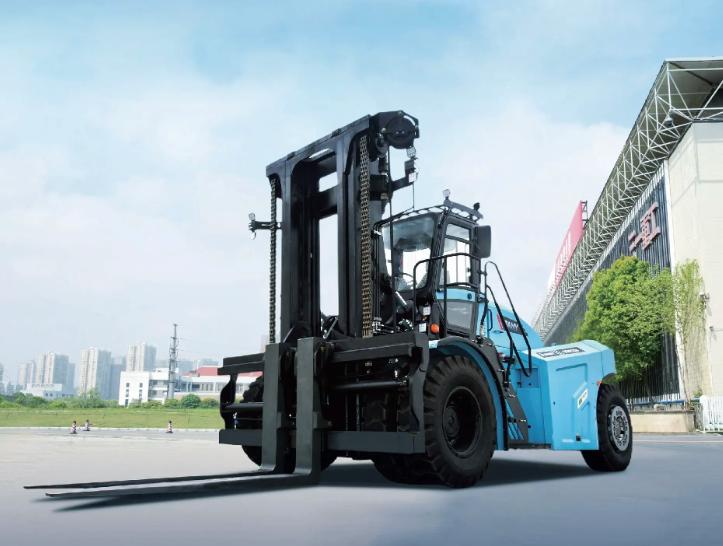
Ubiquitous Applications: Forklifts Support the Backbone of Industrial Logistics
Warehousing and Logistics Field
This is the primary application scenario of forklifts, where they undertake core tasks such as cargo warehousing and outbound handling, stacking, and sorting.
·Cargo Stacking and Storage: In automated warehouses and general warehouses, forklifts can lift palletized goods to shelves several meters high, greatly improving warehouse space utilization. They are especially suitable for industries with high storage density requirements such as e-commerce, retail, and cold chain.
·Loading and Unloading for Warehousing and Outbound: Cooperating with trucks and containers to complete cargo loading and unloading operations, forklifts replace manual handling, improve loading and unloading efficiency, and reduce labor costs and cargo damage rates.
·In-warehouse Sorting and Transfer: Models such as narrow-aisle forklifts and electric pallet trucks can flexibly navigate through narrow in-warehouse passages, complete cargo transfer between different areas, and meet the needs of refined warehousing and sorting.
Manufacturing Production Processes
Inside factories, forklifts serve as the core tools for the circulation of production materials, running through the entire process from the inbound of raw materials to the outbound of finished products:
·Raw Material Transfer: Transport raw materials such as steel, plastic pellets, and components from factory warehouses to designated workstations in production workshops, ensuring material supply for the production lines.
·Semi-finished and Finished Product Handling: Transfer semi-finished products between production processes; after production is completed, move the finished products to the warehousing area or loading zone.
·Special Scenario Adaptation: In industries such as automobile manufacturing and mechanical processing, special models like explosion-proof forklifts and electric forklifts are adopted to meet the requirements of special production environments such as explosion-proof areas and clean workshops.
Ports and Container Terminals
Ports are hubs for cargo distribution, where forklifts are responsible for the loading, unloading and short-distance transfer of containers and oversized cargo:
·Container Terminals: Cooperate with quay cranes and gantry cranes to complete the transfer of containers from ships to yards and from yards to trucks.
·Ports: Load, unload and conduct on-site short-distance transshipment of bulk and oversized cargo, ensuring the cargo turnover efficiency of the ports.
Retail and Wholesale Industry
In scenarios such as supermarket distribution centers, wholesale markets and building materials markets, forklifts are used for the rapid turnover of goods:
·Distribution Centers/Wholesale Markets: Forklifts take goods off the shelves, sort them and load them onto trucks for delivery to various stores.
·Building Materials Markets: Forklifts can handle heavy goods such as ceramic tiles, cement and steel, solving the problem of high difficulty in manual handling.
Special Industry Applications
To meet the special needs of different industries, a variety of special forklift models have been developed, expanding the scope of application:
·Cold Chain Industry: Cold storage-specific forklifts are characterized by low temperature resistance and skid resistance, and can operate normally in cold storage at tens of degrees below zero.
·Hazardous Goods Industry: Explosion-proof forklifts can be used in places where flammable, explosive and corrosive items are stored, avoiding sparks that may cause safety accidents.
·Agricultural Field: In grain storage and fruit and vegetable transfer, forklifts can handle grain bags and fruit and vegetable boxes, improving the efficiency of agricultural logistics.
Understanding Core Parameters: The Key to Choosing the Right Forklift
To select a forklift suitable for specific scenarios, the core lies in understanding its key performance parameters. These parameters directly determine the applicable scope and safety boundaries of a forklift, among which the most critical ones include forklift lifting capacity, how much can a forklift lift, load center distance and maximum lifting height.
Rated Lifting Capacity vs. Maximum Lifting Capacity
Many people tend to confuse these two parameters. Their core difference lies in whether they meet the standard working condition requirements for safe operation, with specific comparisons as follows:
Comparison Dimension | Rated Lifting Capacity | Maximum Lifting Capacity |
Core Definition | The maximum weight that can be handled long-term, safely and stably under standard working conditions | The maximum weight that can theoretically be lifted under extreme working conditions (no safety guarantee) |
Working Condition Requirements | Must meet standards such as standard load center distance, specified lifting height, flat and firm ground, no additional accessories, etc. | No safety boundaries were considered; only the limit value was tested in the laboratory |
Practical Application | The statutory load value marked on the nameplate; the only safety basis for daily operations | Only used for product design and performance testing; no practical operational value |
Safety Performance | Complies with national special equipment safety standards; long-term use will not damage the equipment | Approaching/exceeding it will cause instability and tipping, or permanent deformation of the frame and mast |
It should be noted in particular that the rated lifting capacity is not a fixed value: if the center of gravity of the cargo exceeds the standard load center distance or the lifting height increases significantly, the actual safe load will be lower than the rated value. Meanwhile, the "maximum lifting capacity" promoted by some manufacturers is mostly a marketing gimmick. Daily operations must strictly follow the rated lifting capacity limit, and the maximum lifting capacity must not be used as the basis for operations.
Load Center Distance
The load center distance refers to the horizontal distance from the center of gravity of the cargo to the front wall of the vertical section of the forklift forks. It is the core reference standard for manufacturers to calibrate the rated lifting capacity. There are clear specifications for the standard load center distance of forklifts with different load classes, as shown in the following table:
Forklift Load Class | Standard Load Center Distance | Notes |
Light-duty forklifts (0.5–1.8t) | Mostly 500mm | A few micro electric stackers are 400mm |
Medium-duty forklifts (2.0–3.5t) | Mainly 500mm | Some 3.5t forklifts are 600mm |
Heavy-duty forklifts (5.0–10t) | 600mm or 900mm | Suitable for large, heavy cargo |
Ultra-heavy-duty forklifts (over 10t) | 1200mm and above | Adjusted according to custom requirements; suitable for oversized cargo |
Regarding the load center distance, the following precautions also apply:
·If the actual center of gravity of the cargo exceeds the standard load center distance, the safe load capacity of the forklift will decrease, and it needs to be calculated according to the load curve diagram provided by the manufacturer.
·If the forklift is equipped with attachments such as side shifters or clamps, the actual position of the load center will change, and the safe load also needs to be recalculated.
Maximum Lifting Height
The maximum lifting height refers to the vertical distance from the upper surface of the forks to the ground when the forks are raised to the highest position while the forklift is on a flat and firm surface. Its value varies greatly depending on the forklift type and load capacity class. The common ranges and applicable scenarios of different types of forklifts are shown in the following table:
Forklift Type | Common Maximum Lifting Height Range | Typical Application Scenarios |
Electric Pallet Stacker | 2–6m | Shelf stacking in small and medium-sized warehouses, e-commerce picking warehouses |
Counterbalanced Internal Combustion Forklift | 3–7m | Manufacturing workshops, general warehouses, short-haul port transportation |
Counterbalanced Electric Forklift | 3–8m | Indoor clean warehouses, cold chain storage |
Narrow Aisle Forklift (3-Way Stacker) | 8–12m | High-rise automated warehouses, maximizing warehouse space utilization |
Reach Truck | 6–10m | Medium-sized automated warehouses, balancing flexibility and stacking capability |
Heavy/Ultra-Heavy Forklift | 2–5m | Ports, steel plants; prioritize heavy loading over stacking height |
Customized High-Level Forklift | 15–20m | Automated high-rise warehouses, compatible with ultra-tall shelves |
Here are a few key reminders:
·For the same type of forklift, the greater the load capacity, the lower the maximum lifting height usually is.
·If the forklift is raised to the maximum lifting height when fully loaded, the overall stability of the vehicle will be significantly reduced. Therefore, it is not recommended to reach the maximum lifting height when fully loaded.
·After a forklift is equipped with attachments, the actual usable lifting height will decrease slightly.
The Core Value of Forklifts: Efficiency and Safety Guarantee for Modern Industry
The reason why forklifts have become a "must-have equipment" for modern industry is that they bring multiple key values to industrial production and circulation:
Efficiency Improvement
Compared with manual handling, the efficiency is increased several times, which greatly shortens the material handling time and ensures the continuity of production and logistics. Whether it is the inter-process transfer in factory workshops or the inbound and outbound sorting in logistics warehouses, forklifts can connect all links with an efficient operation rhythm, reduce production stagnation caused by material retention, and significantly improve the overall operational efficiency.
Cost Reduction
Forklifts can not only reduce labor input and cargo damage rates but also improve warehouse space utilization, thereby indirectly lowering operational costs. Take SANY Forklift Truck (10–16T) as an example, it is equipped with Cargo Fall-off Protection Technology. This technology can automatically control the position of the attachment, preventing cargo from falling in emergencies such as sudden braking or turning, which significantly improves operational efficiency.
_153811.jpg)
Safety Guarantee
Taking SANY Forklift Truck as an example again, most forklifts are equipped with Intelligent Anti-rollover Protection, Cab Automatic Lock Technology and Efficient Control Technology, which can effectively avoid common safety accidents in manual handling such as heavy object crushing and muscle strain. In addition, the operation range of forklifts can be precisely controlled. Even in narrow warehouse aisles or complex production workshops, they can stably complete material transfer, reducing potential safety hazards to surrounding equipment, goods and personnel.
Expanding Operation Boundaries
Forklifts can easily meet the handling needs of heavy and bulky materials. Whether it is several tons of industrial components or stacked cargo pallets, they can be transferred in one go, breaking the weight and volume limitations of manual handling. Some special types of forklifts, such as reach trucks and rough-terrain forklifts, can also adapt to special operation scenarios such as high-level warehousing and outdoor rough terrain, satisfying the diversified needs of industrial production.
Conclusion
The development course of forklifts is a microcosm of the high-efficiency and intelligent upgrading of modern industry. Whether it is the precise matching of core parameters such as forklift capacity and load center distance, or the technological innovations and scenario-based practices brought by enterprises like SANY, all have continuously upgraded the industrial value of forklifts. Understanding forklifts is not only about getting to know industrial equipment, but also about gaining insight into the operation logic of modern industrial logistics—it is these "small yet sophisticated" devices that jointly build a solid foundation for the efficient operation of industry.
FAQs
What Is Forklift Weight Capacity?
The rated forklift weight capacity refers to the maximum weight that a forklift can safely handle under the conditions of a specified load center distance, standard lifting height, and flat, firm ground. It is marked on the nameplate and operation manual. There are three core related factors:
·Load center distance: If the center of gravity of the cargo exceeds this distance, the safe load capacity will decrease.
·Lifting height: When the lifting height exceeds the standard value, the load capacity must be reduced.
·Operating environment: On slopes, soft ground, or during sudden turns and braking, the load must be reduced. Overloading is an illegal operation that may easily cause safety accidents such as rollovers.
What Is Forklift Lift Capacity?
Forklift lift capacity refers to the maximum weight of goods that a forklift can safely handle at a specific lifting height. It is a dynamic parameter that changes with the lifting height based on the rated lifting capacity.
This parameter is usually marked on the forklift's load curve diagram, where the safe load capacity corresponding to different lifting heights is clearly shown. It must be strictly followed during operations to avoid the risk of overloading.
How to Correctly Interpret a Forklift Load Curve Chart?
1. Identify the Meaning of the Axes
The horizontal axis of a load curve chart generally represents the lifting height, and the vertical axis represents the maximum allowable load weight. Some charts will mark the corresponding load center distance, which is a prerequisite condition.
2. Confirm the Load Center Distance
For the same forklift, different load center distances correspond to different load curves.
3. Match Operating Parameters to Find the Value
Locate the target lifting height for the operation on the horizontal axis, find the corresponding point, and move vertically upward to the intersection with the curve. Then move horizontally leftward to the corresponding value on the vertical axis—this value is the maximum safe load at that height.
4. Determine if It Is Within the Safe Zone
The area below the load curve is the safe operation zone. If the point corresponding to the actual lifting height and load falls below the curve, the operation is safe; if it falls above the curve, it is considered overloading and must never be performed.
Featured Products
Recommend Blogs
2025 Forklift Truck Manufacturers: Industry Insights & Choices Guide
Analyze forklift truck manufacturers' core responsibilities, trends and selection points to help enterprises efficiently choose the right forklift truck suppliers.
Key Defense Line of Operational Safety: A Detailed Explanation of the Forklift Truck Checklist
This article explains the importance of a forklift truck checklist, details the key points of the full-process inspection, helping to improve the safety of forklift operations.
A Guide to the Forklift Industry: Types of Forklift Trucks, Selection Skills, and Future Trends
Starting from the system of types of forklift trucks, this article explains the scientific selection methods and provides a comprehensive insight into the past, present, and future of forklifts.