Complete Guide to the Differences: Forklift and Reach Truck
This guide explains what forklift and reach truck are and the differences between them, helping you choose the equipment that best suits your job requirements.
In warehousing and logistics, forklift and reach truck are two core pieces of material-handling equipment. While both lift and move loads, their designs, functions, and applications differ fundamentally.
Forklifts are versatile, suitable for a variety of indoor and outdoor environments, while reach trucks excels in high-density storage and narrow-aisle warehouses. Understanding their core differences is crucial for optimizing operational efficiency, safety, and overall return on investment.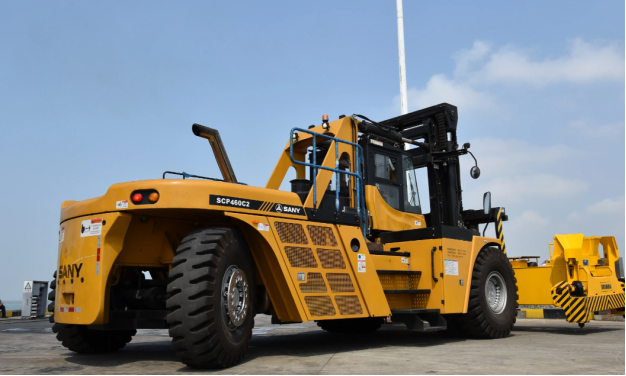
What Is a Forklift?
A forklift, also known as an industrial forklift or counterbalanced forklift, is a versatile and powerful material handling vehicle.
It typically features a vertical mast at the front for raising and lowering the forks, and a counterweight at the rear to balance the weight of the load. This classic design enables it to handle a wide range of tasks, from loading and unloading trucks to outdoor yard work to feeding production lines—making it the backbone of many factories, warehouses, and construction sites.
What Is a Reach Truck?
A reach truck is a specialized type of forklift designed for efficient utilization in warehouses.
Its mast can "reach" forward, allowing the forks to access shelves directly without the entire vehicle moving forward.
Additionally, outriggers positioned at the front distribute the load weight evenly. This unique design enables operation in extremely narrow aisles, significantly improving warehouse space utilization and storage density.
Forklift vs Reach Truck: Key Differences
To make the right choice, you need to understand the key differences between the two:
● Design and Core Function
Forklifts: Utilize a counterbalance design, where the load's center of gravity lies ahead of the fulcrum (front wheels) and is balanced by a a rear counterweight. Their masts and forks generally cannot move forward or backward.
Reach trucks: Use a cantilever design supported by front outriggers, keeping the load’s center of gravity within the wheelbase—no rear counterweight needed. Their masts and forks can extend and retract for high-density storage.
● Attachments and Versatility
Forklifts: Extremely versatile. By replacing attachments (such as paper roll clamps, push-pull devices, and rotators), they can handle a wide variety of loads across industrial applications.
Reach trucks: More specialized, primarily for palletized loads. They can use some attachments, but their strength lies in high-bay storage and retrieval, rather than multi-functional operations.
● Load Capacity and Lift Height
Forklifts: They offer high load capacities, capable of lifting over 158,000 pounds in heavy-duty models. Lift height is typically reaching up to 26 feet, ideal for ground-to-truck tasks.
Reach trucks: Their load capacity generally does not exceed 4,500 pounds, but with lift heights up to 46 feet, making them perfect for high-bay warehouses.
● Maneuverability
Forklifts: Due to their counterbalanced design, they require a wide turning radii, making them agile in open areas but less efficient in tight spaces.
Reach trucks: With their narrower frames and tighter turning radii, making them agile in open areas but less efficient in tight spaces.
● Power Source and Energy Efficiency
Forklifts: Common power sources include internal combustion engines (diesel, propane) and electric. Combustion models are powerful and suitable for outdoor and rugged use.
Reach trucks: Almost all are electric, offering quiet, zero-emission operation, making them ideal for indoor environments. They are energy-efficient, but require scheduled battery charging.
● Operating Environment: Indoor vs Outdoor
Forklifts: Suitable for both indoor and outdoor operations. Internal combustion types perform best outdoors or on rough terrain.
Reach Trucks: Purely "indoor specialists". Their polyurethane or solid tires are suitable only for smooth, solid warehouse floors.
● Stability and Balancing Mechanisms
Forklifts: Rely on a rear counterweight to balance loads, with stability depending on external counterbalancing. Operators must monitor to the load center and travel speed to prevent tipping.
Reach Trucks: Support load weight via front outriggers, maintaining stability within the chassis footprint—ensuring greater steadiness during lifting and travel.
● Operator Ergonomics
Forklifts: Operators face the direction of travel, seated or standing. In applications requiring frequent reverse driving (such as loading and unloading trucks), this can easily lead to neck fatigue.
Reach Trucks: Feature side-seated compartments, allowing operators to naturally face forward when moving in both directions, improving visibility and comfort.
● Comparison Table: Forklift vs Reach Truck at a Glance
Feature | Forklift | Reach Truck |
Core Design | Counterbalanced | Cantilever design with extendable mast |
Typical Applications | Loading/unloading trucks, outdoor operations, general material handling | Narrow-aisle, high-bay warehouse storage |
Aisle Width Requirement | Wider (10-12 ft) | Narrow (as narrow as 8 ft) |
Lift Height | Moderate (typically 26 ft) | High (up to 46 ft) |
Power Source | Internal combustion / Electric | Primarily electric |
Operating Environment | Suitable for both indoor and outdoor use | Primarily indoor |
Versatility | High (compatible with various attachments) | Lower (specialized for pallets) |
Stability | Relies on counterweight, load centered outside base | Load contained within wheelbase, more stable |
Reach Truck vs Forklift: Which Is Right for Your Operation?
The selection process should consider three key factors: the operating environment, cargo characteristics, and storage space. Specific considerations are as follows:
Choose a Reach Truck When:
The operating environment is an indoor, narrow-aisle warehouse, or when high-rise racking (up to 46 feet) is used;
Cargo is palletized and frequent stacking and picking are required (e.g., e-commerce sorting warehouses, pharmaceutical temperature-controlled warehouses);
Environmental requirements are high (zero pollution, low noise), or when continuous operation is needed for extended periods (e.g., 24-hour cold chain warehousing).
Choose a Forklift Truck When:
The operating environment is primarily outdoors (e.g., port loading and unloading, construction site handling), or when there are open indoor spaces;
Heavy loads need to be handled, or cargo is primarily non-palletized (e.g., bulk, large equipment);
Rack heights are 26 feet or lower (≤26 ft), and space utilization is not critical (e.g., traditional manufacturing warehouses).
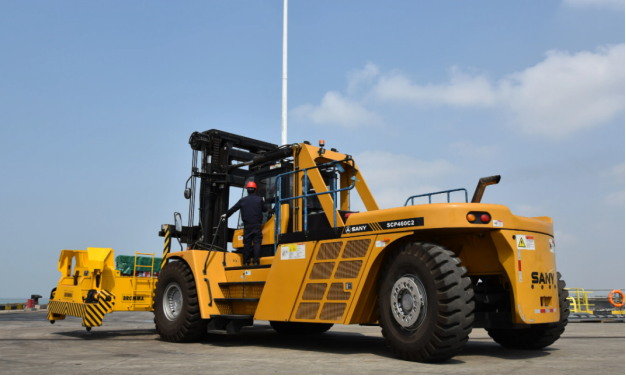
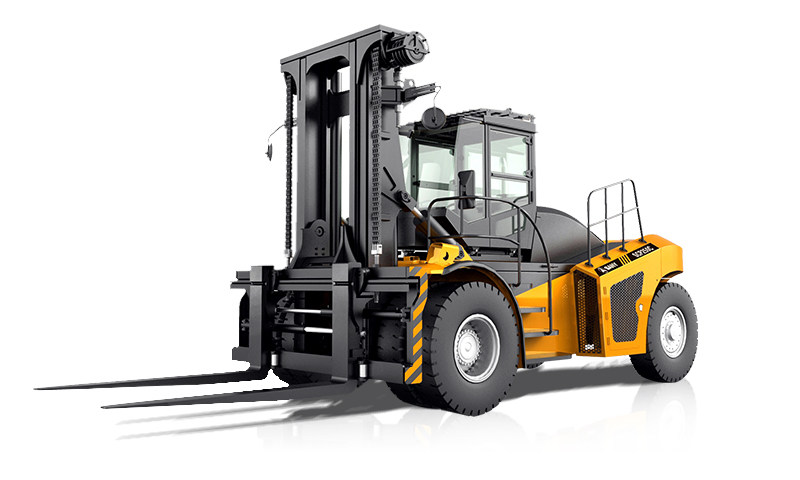
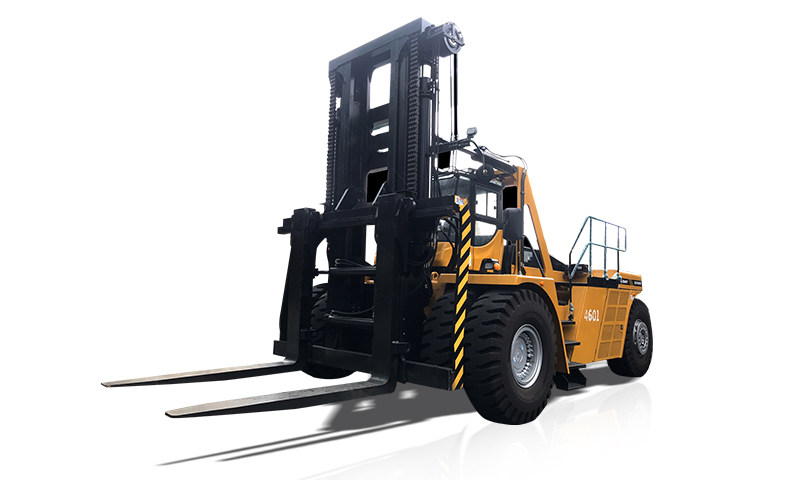
If you need a forklift truck , consider SANY. Its forklift truck offer impressive lift heights and rated capacities, as well as other outstanding performance features.
Conclusion
The above is a detailed introduction to forklift and reach trucks. A forklift is a powerful general-purpose machine, while a reach truck is a space-efficient specialist. Before making an investment decision, carefully evaluate your cargo type, warehouse layout (especially aisle widths and rack heights), operating environment, and long-term business growth goals. The right choice will directly lead to higher productivity, improved safety, and a lower total cost of ownership.
FAQs
What’s the Difference Between a Forklift and a Reach Truck?
The most fundamental distinctions lie in their design and application:
Forklifts employ a counterbalance design, relying on a rear counterweight and requiring wider aisles for operation. They are suitable for medium-to-low-height lifting and heavy-load handling.
Reach Trucks utilize a cantilever design with a forward-extending mast, specifically engineered for narrow aisles and high-level warehouse storage to maximize space utilization.
What Is the Difference Between a Narrow-Aisle Forklift and a Reach Truck?
The term “narrow-aisle forklift” encompasses a broader category, with the reach truck being the most prominent and widely used type. Other narrow-aisle forklifts may include turret trucks (where the entire mast moves) and order pickers (where the platform elevates with the forks). However, the reach truck has become the preferred solution for narrow-aisle applications due to its unique mast-extension functionality.
Is a Reach Truck Considered a Type of Forklift?
Yes. Broadly speaking, the reach truck belongs to a specialized branch of the forklift family. Both share the fundamental functions of lifting and moving goods. However, in everyday terminology, when people refer to a "forklift," they typically mean the counterbalance forklift, while the "reach truck" is discussed as a distinct, specialized category.
What Is a Truck with a Forklift Called?
This type of vehicle is commonly referred to as a truck-mounted forklift or lorry-mounted forklift.
It is a forklift installed on or integrated into the truck’s cargo area, primarily used for ast-mile logistics distribution. This setup enables the driver to load and unload goods independently without relying on external forklifts at the destination.
Featured Products
Recommend Blogs
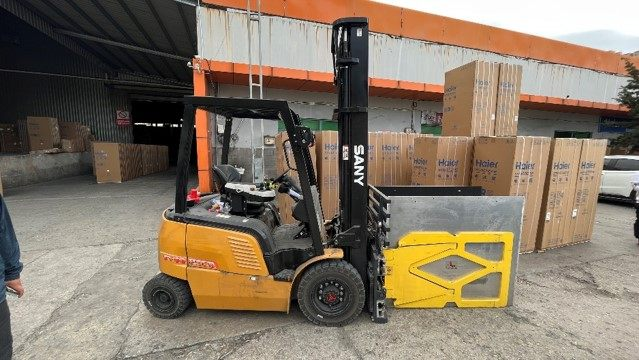
Can a Forklift Enter a 26 Ft Box Truck? Compatibility Matching & Best Practices Guide
This article addresses the question of can a forklift enter a 26 ft box trucks, provides practical advice and alternatives, and offers comprehensive guidance for practitioners.
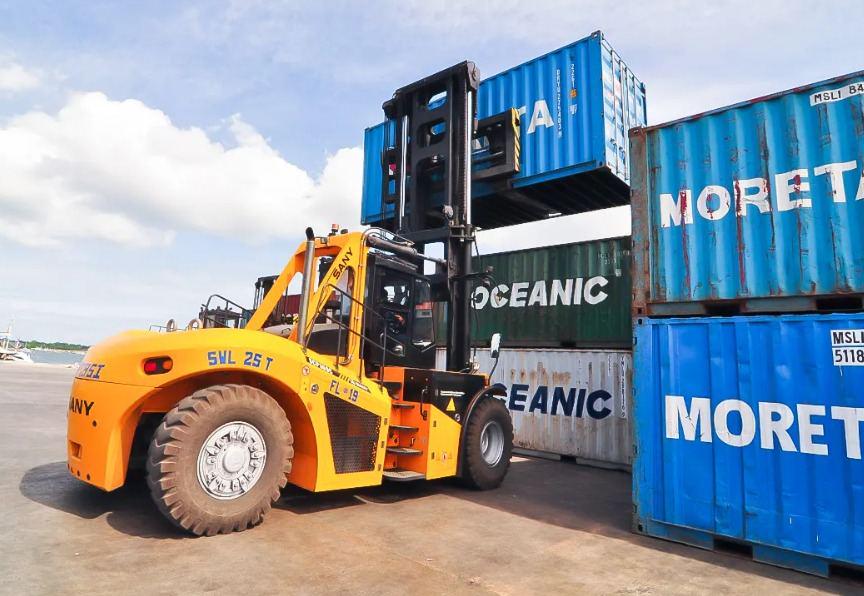
How Much Does a Forklift Truck Weigh? A Quick & Practical Weight Data and Safety Guide
How much does a forklift truck weigh? Get typical weights, factors affecting them, and practical safety tips for operators.
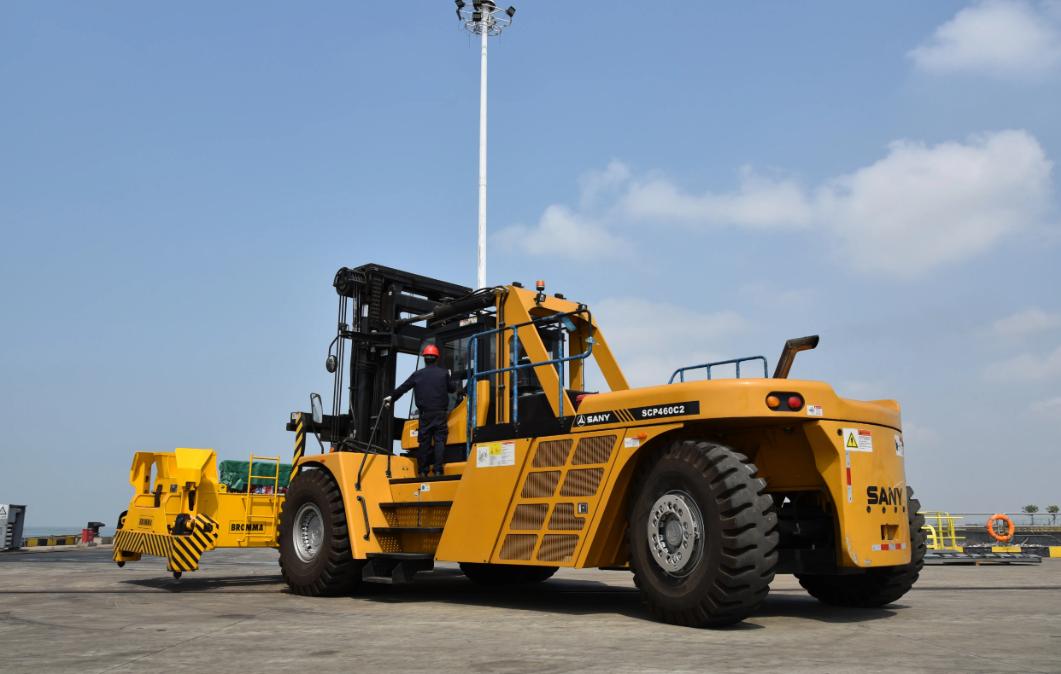
Right Forklift Companies Can Fully Assist the Forklift Team to Carry Out Operations Efficiently
This article highlights the importance of selecting high-quality forklift companies and their types, and provides a purchasing guide to help forklift teams operate more efficiently.