Evolution of the Forklift: A Comprehensive Quick Guide
This guide breaks down the evolution of the forklift and key details about its invention.
Have you ever wondered how the intelligent forklifts shuttling through warehouses today evolved from simple handling tools over a century ago? From the hydraulic technology spurred by wars, to the industry-defining standardized pallets; and then to electrification and automation achieved through innovative technologies, every key step in the evolution of the forklift has profoundly reshaped the landscape of logistics and production. Understanding the evolution of the forklift can not only satisfy our curiosity about the origins of this technology, but also help us comprehend the current situation and anticipate the future of logistics transformation.
When Was the Forklift Invented?
The invention of the forklift truck was not an achievement tied to a single point in time, but a gradual innovation process driven by industrial demands in the early 20th century. Centering on the key timeline from 1917 to 1924 and taking the technological exploration of Clark as the main thread, it ultimately achieved the crucial leap from "embryonic form" to "official finalization".
1917: Birth of the Modern Forklift Prototype, Laying the Foundation for Invention
That year, the first "Tructractor" was born. Although its structure differs from modern forklifts (it is equipped with a flatbed cargo box instead of a mast and forks), it was the world's first internal combustion engine-driven industrial vehicle, specifically designed for transporting heavy materials such as axles, drill bits, and wheels. It was the first to realize the "mechanization of material handling instead of human labor," laying the core technological foundation for the subsequent invention of forklifts.
1922: A Critical Step in Technological Transition, First Application of Hydraulic Systems
Subsequently, the "Truclift" model was developed. Strictly speaking, it was not a standard forklift, but an important transitional product in forklift innovation. Its core breakthrough was the first use of hydraulic systems instead of traditional mechanical gears for lifting loads, which significantly improved the stability and control precision of material lifting, providing key technical support for perfecting the core functions of later forklifts.
1924: Birth of the World’s First Forklift, Finalization of Functions
Later, based on the original internal combustion tractor, it was modified and equipped with a special lifting device, thus launching the world's first true forklift. This type of forklift can directly lift various materials such as timber and industrial goods, completely breaking through the previous limitation of Tructractor being only able to "transfer horizontally" and realizing the integration of the core functions of "transfer and lifting", marking the formal invention and finalization of the forklift.
1928: Technological Leap, Full Popularization of Hydraulic Systems
With the development of technology, the "Tructier" forklift, which uses a hydraulic system to lift goods instead of chains and steel cables, has emerged, taking the efficiency and stability of forklift operations to a new level. This marks a leap forward in forklift technology and lays the foundation for its subsequent large-scale application.
1930—Present: Large-Scale Production and Global Development
After the forklift was standardized, in the 1930s, the short-wheelbase Carloader was introduced to achieve mass production, and the Utilitruc filled the gap in heavy-duty vehicles. During World War II, these forklifts supplied nearly 90% of military needs, and innovative products such as electric motor models were launched simultaneously, initiating globalization. Forklift safety features have become increasingly standardized, and today, with a focus on sustainable development, environmentally friendly and intelligent electric forklifts have emerged.
The Continuous Diversification of Forklift Types
After the basic functions of forklifts were finalized, their evolution did not stop, but instead shifted to a major explosion of types focused on meeting diverse and professional needs. To date, this has resulted in a vast family of forklifts with clearly defined functions and highly targeted application scenarios.
Classification Dimension 1: Power Source
This is the fundamental classification that determines the application scenarios and cost structure. Forklifts are mainly divided into internal combustion forklifts and electric forklifts.
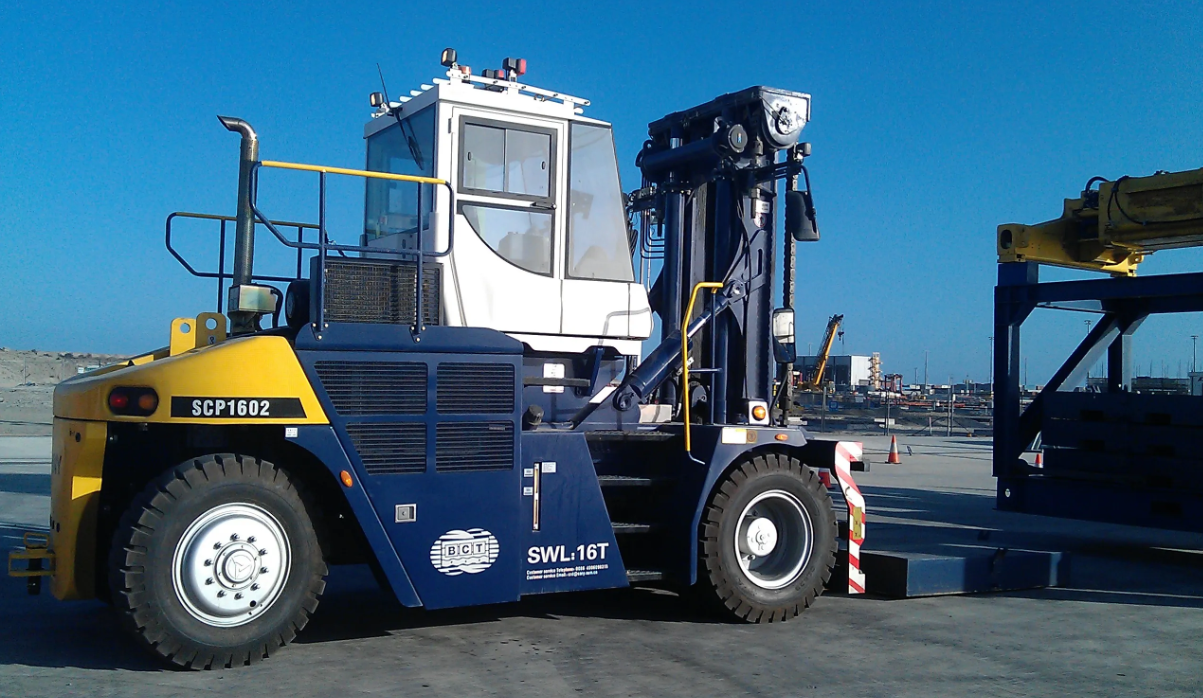
1. Internal Combustion Forklifts: Powered by diesel, gasoline, or liquefied petroleum gas, they feature strong power and long endurance. Ideal for outdoor operations, heavy-load handling, high-intensity continuous work, and complex road conditions.
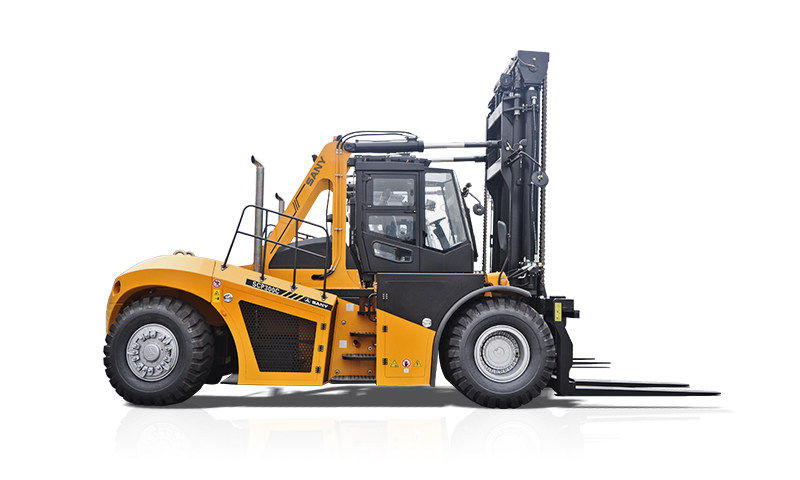
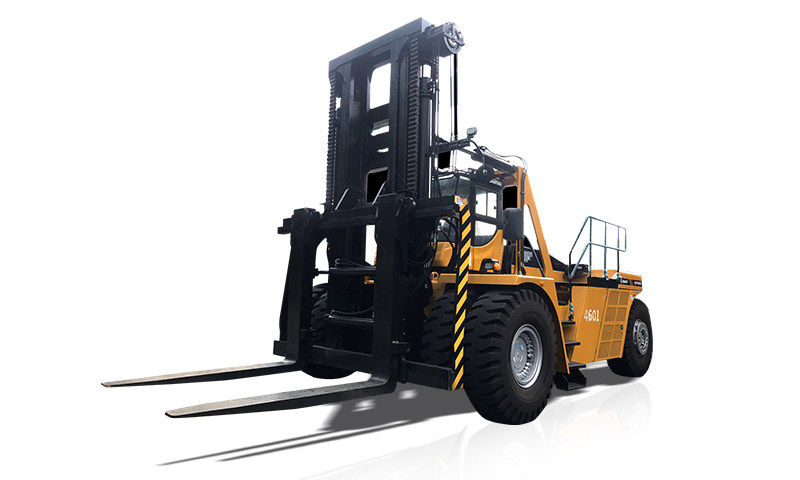
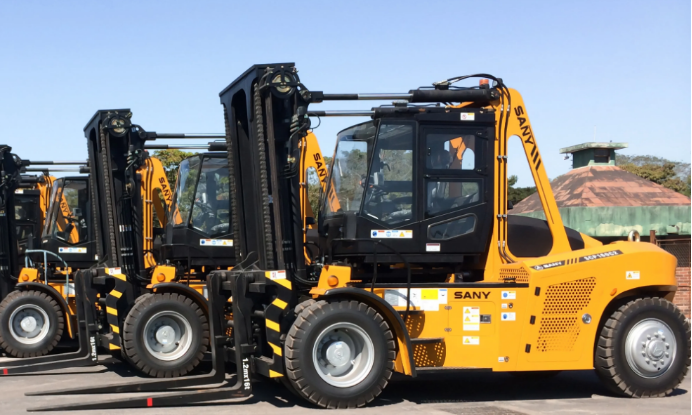
For example, SANY has the powerful Forklift Truck, which uses advanced power matching and control technology, giving the equipment excellent dynamic performance and making operations more efficient.
Electric Forklifts: Battery-powered, they boast zero emissions, low noise, and relatively easy maintenance. They are the go-to option for indoor operations, food and pharmaceutical sectors, cold-chain warehousing, and other scenarios with strict environmental and noise requirements.
Classification Dimension 2: Function and Structure
This is a specialized classification targeting specific operational pain points, which is key to achieving efficient material handling.
- Counterbalance Forklifts: The most common general-purpose type, equipped with rear counterweights. Suitable for loading and unloading in open spaces but not for narrow aisles.
- Warehouse Forklifts: Designed for high-density storage to maximize space utilization.
- Reach Trucks: The forks can extend forward, allowing the body to remain outside the racking during operation. They perfectly solve the pain point of "narrow aisles and high racks".
- Order Pickers: The operator platform lifts and lowers along with the forks, enabling "person-to-goods" picking. They are core equipment in e-commerce and retail warehouses.
- Three-way Stackers: Capable of lateral loading and unloading in extremely narrow aisles, achieving ultra-high storage density.
- Side Loader Forklifts: The mast is mounted on the side of the body, specially designed for safe and efficient handling of long goods such as lumber, pipes, and profiles.
- Rough-terrain Forklifts: Fitted with large pneumatic tires and reinforced chassis, they are dedicated to uneven, unimproved ground in construction sites, mines, and recycling yards.
Classification Dimension 3: Special Environment Adaptability
These are custom-designed models for extreme or hazardous working conditions, reflecting the in-depth customization capability of forklift technology.
- Explosion-proof Forklifts: Suitable for environments with flammable and explosive gases or dust. All electrical components undergo explosion-proof treatment.
- Cold-storage Forklifts: With special design and material treatment, they can operate reliably in cold storage environments as low as -30°C or even lower. Equipped with low-temperature-resistant hydraulic oil, batteries, and anti-condensation systems.
Outlook on the Future Development Trends of Forklifts
In the current era where digitalization and greenization go hand in hand, the development of forklifts will closely keep pace with the pulse of global industrial transformation, and forge ahead in depth toward the direction of greater intelligence, greener operation and enhanced collaboration.
Intelligence Dimension
Autonomous forklifts will integrate more advanced AI algorithms and multi-sensor technologies, achieving a leap from "automated execution" to "independent decision-making". Future forklifts will be capable of autonomous obstacle avoidance and path optimization in dynamic environments, as well as cluster collaboration with multiple devices, truly integrating into the full-process smart logistics system driven by digital twins and cloud-based control systems.
Green Dimension
Beyond the continuous upgrading of lithium batteries, hydrogen fuel cell forklifts will accelerate commercialization in high-intensity continuous operation scenarios. Meanwhile, the integration of energy recovery systems with distributed energy sources such as on-site photovoltaics will drive forklifts to evolve from "low-emission operation" to "zero-carbon operation" and even "energy-contributing nodes".
Collaboration Dimension
Forklifts will achieve seamless integration with warehouse management systems (WMS), smart shelves, logistics robots and other equipment, becoming key interconnected nodes in the entire supply chain system. They will realize automatic reception and feedback of task instructions, driving the entire logistics system to operate efficiently and transparently.
Conclusion
Looking at the evolution of the forklift, from the initial exploration of the Tructractor in 1917 to the functional finalization of the world’s first official forklift in 1924, and further to today’s landscape of large-scale production, global expansion and diversified model range—its evolution has always kept pace with the trends of industrial demands and technological innovation. Understanding this evolutionary journey not only helps you clarify the development context of the industry. It also enables you to accurately grasp the transformation direction of future industrial logistics.
FAQs
When Was Forklift Invented?
The forklift was invented in the early 1920s, with its landmark model coming into existence in 1924. More specifically, this was a gradual process:
1917:The "Tructractor" laid the foundation for power and vehicles.
1922:The "Truclift" first applied crucial hydraulic lifting technology.
1924:The first machine combining handling and lifting functions, widely recognized as the world's first true forklift, marked its official birth.
Who Invented the Forklift?
The forklift was invented by Eugene Bradley Clark.
In the early 1920s, to solve the problem of material handling within factories, Clark integrated internal combustion engines and hydraulic technology through a series of technological innovations, and in 1924 launched the first industrial vehicle that combined handling and lifting functions. This is widely recognized as the formal birth of the modern forklift.
Which Came First, the Pallet or the Forklift?
If we only refer to a "simple platform structure for supporting goods", tools similar to pallets, such as wooden skids, have existed for hundreds of years. However, the modern pallets we are familiar with today—those designed to match forklift operations—came into being after the invention of forklifts.
When the "Tructractor", the prototype of the forklift, was launched in 1917, people began to modify traditional skids to fit its fork-based operation. It was not until 1925, when Howard T. Hallowell obtained the patent for the "lift truck platform", that the prototype of the modern pallet emerged.
Featured Products
Recommend Blogs
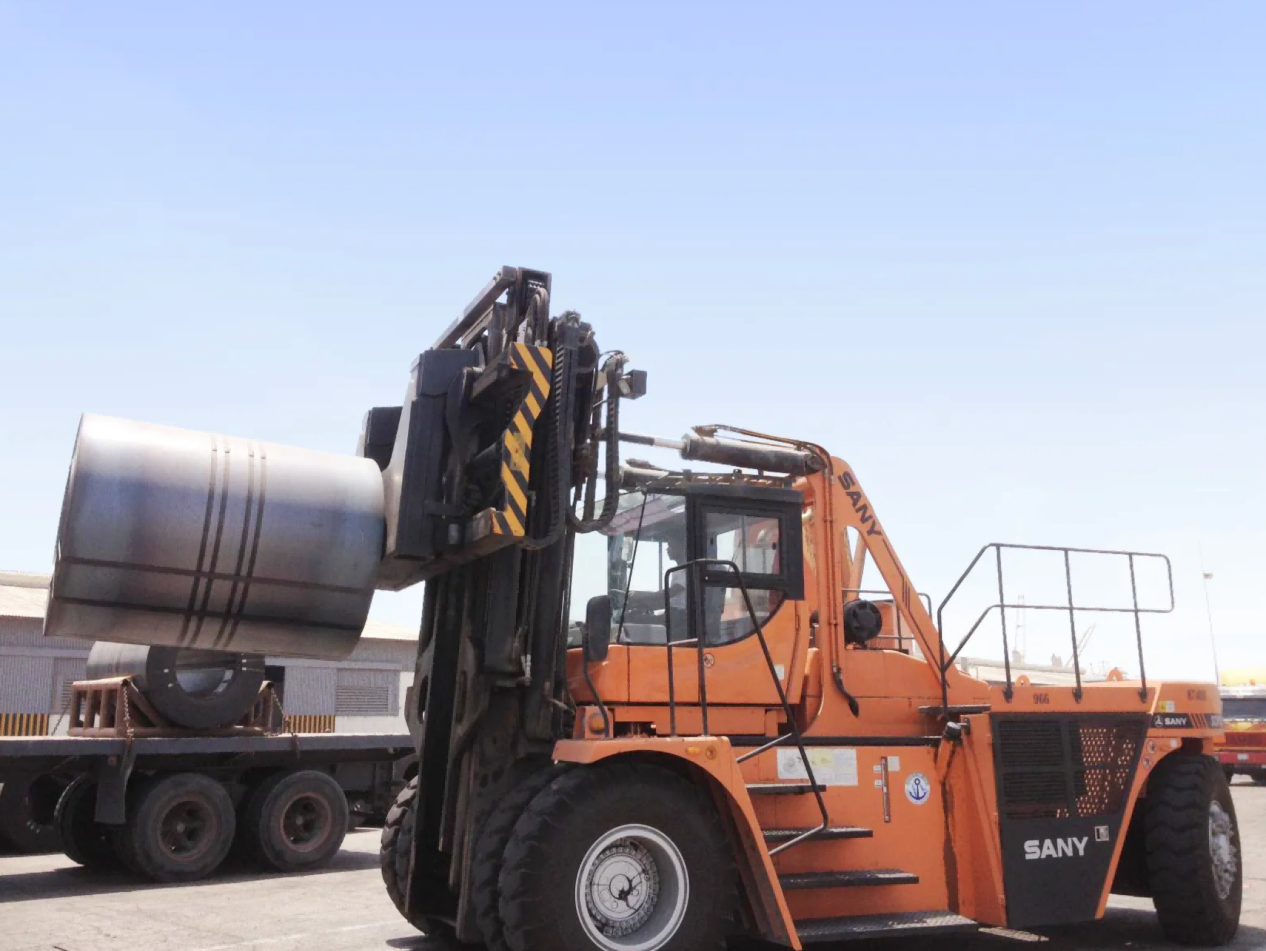
Crane Forklift Essentials: Definition, Functions, and Applications - A Complete Analysis
This text briefly presents the crane forklift’s features, uses and differences from standard forklifts, highlighting its efficiency in heavy material handling.
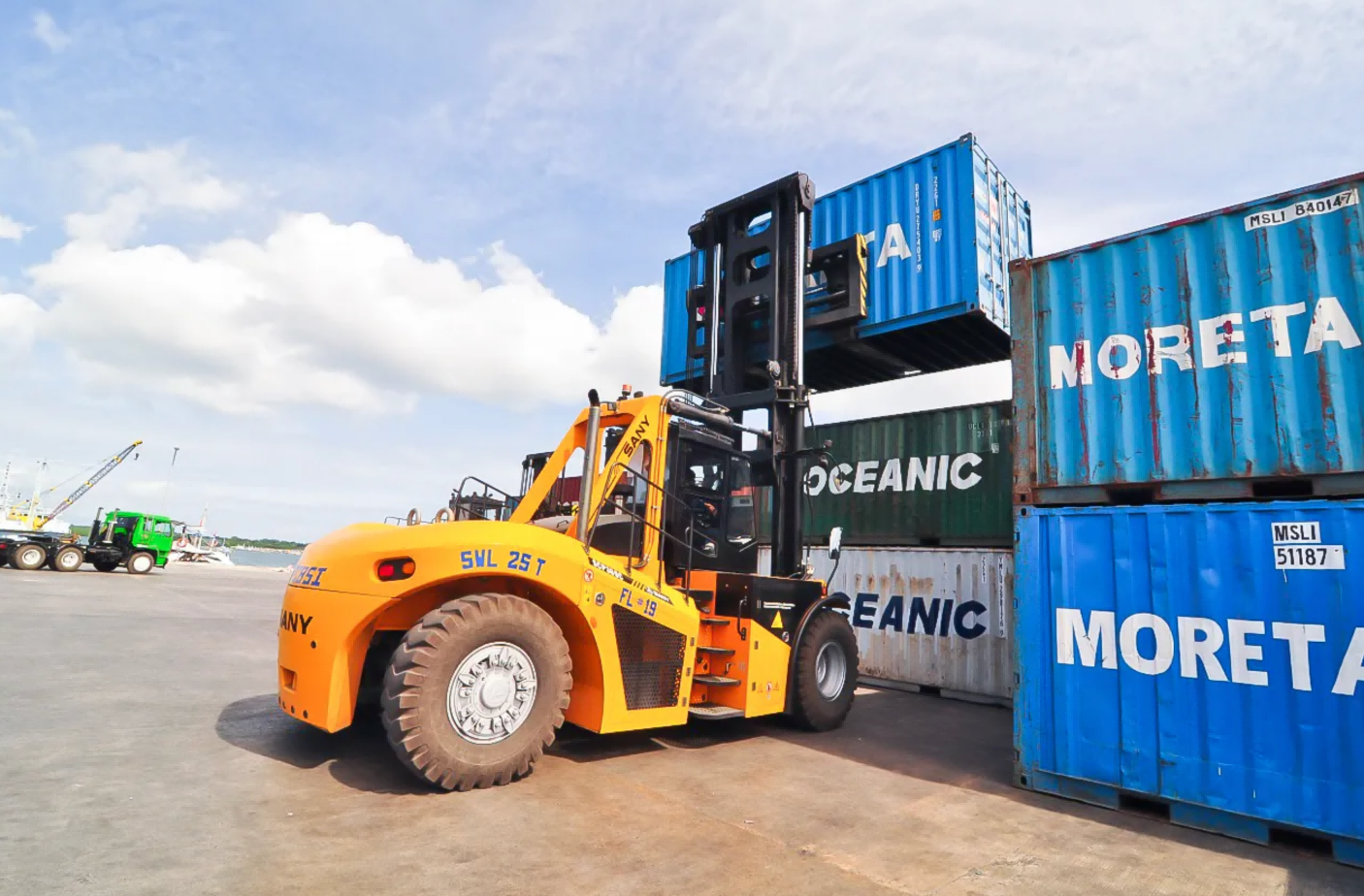
All About Class 4 Forklifts: Selection & Application
This article outlines class 4 forklift features, differences from other classes, and applicable scenarios, guiding practitioners in equipment selection.
What Is a Forklift Truck? Definition, Types and Working Principles
This guide will provide you with a comprehensive overview of forklift knowledge, giving you a clear understanding of what is a forklift truck.