Crane Forklift Essentials: Definition, Functions, and Applications - A Complete Analysis
This text briefly presents the crane forklift’s features, uses and differences from standard forklifts, highlighting its efficiency in heavy material handling.
In fields such as industrial production and logistics transportation, the performance of material handling equipment directly impacts operational efficiency and scope. As the industry's demand for flexibility and versatility in material handling continues to grow, a new type of handling equipment that combines the advantages of multiple devices has emerged — the crane forklift. It breaks through the functional limitations of traditional material handling equipment and plays an irreplaceable role in complex operational scenarios. Below, we will analyze this equipment in detail.
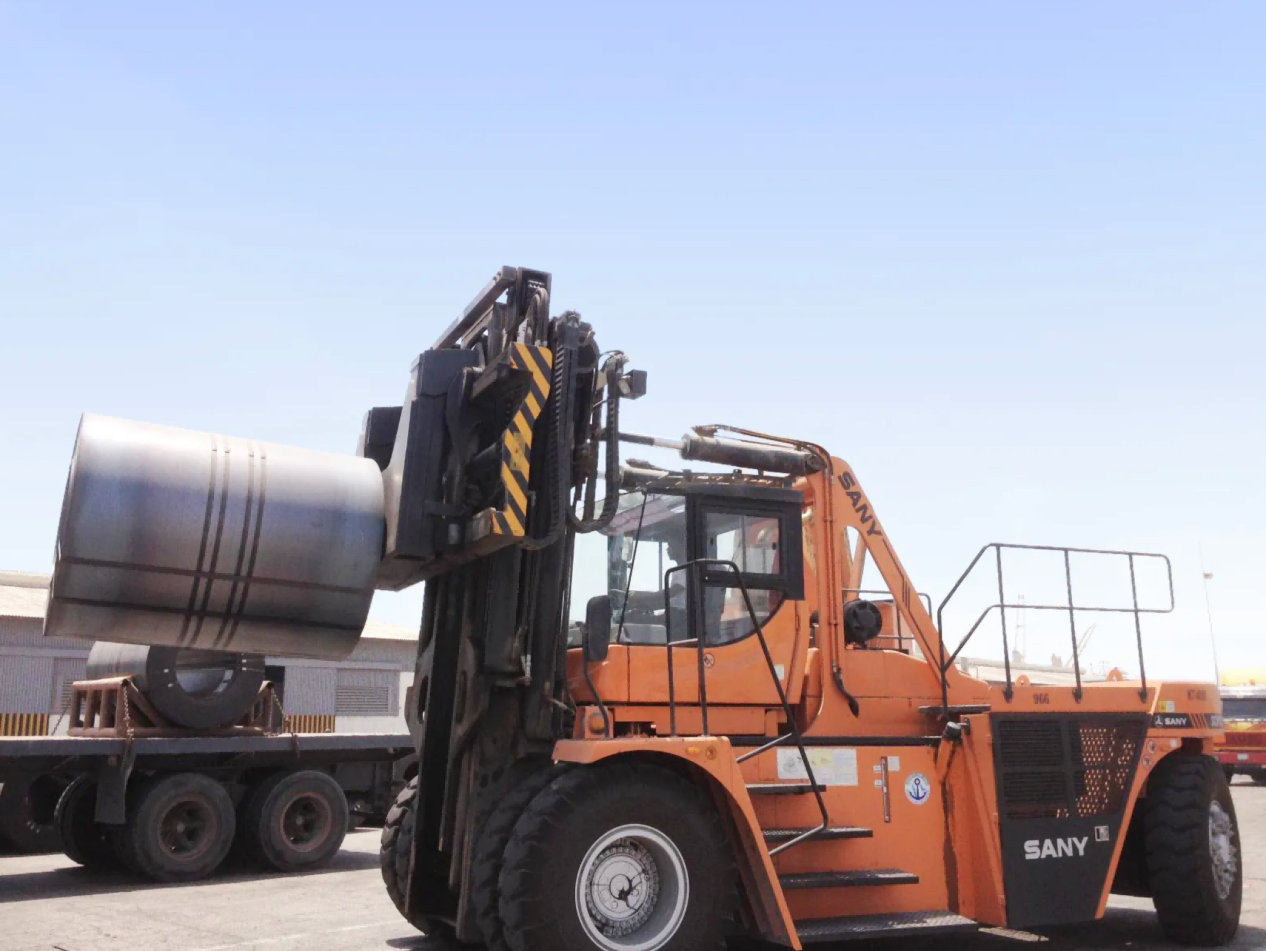
What Is a Crane Forklift?
A crane forklift usually refers to a forklift with a crane attachment (a jib or boom) for added reach. Sometimes, it can also refer to a mobile crane designed to move like a forklift, combining the forklift's maneuverability with a crane's lifting power for heavy, awkward loads in construction, manufacturing, and logistics. Essentially, it's a versatile hybrid that lets you lift from above and move loads, unlike standard forklifts that only lift from the bottom via forks.
Types & Functionality:
- Forklift with Jib/Boom Attachment: A standard forklift fitted with a removable crane arm, turning it into a temporary crane for tasks like loading trucks, placing materials, or maintenance where a full crane isn't needed.
- Telescopic Handler (Telehandler): A type of forklift with an extendable boom (like a crane arm) for greater reach, combining forklift mobility with crane-like lifting.
- Integrated Crane Forklift (Pick & Carry Crane): It is usually a wheeled vehicle, and some models are highly maneuverable, suitable for operation within factory premises or specific areas.
Differences Between a Crane Forklift and a Standard Forklift
A standard forklift is mainly used for horizontal transportation and stacking of palletized goods on the ground, lifting loads by inserting its forks under the pallets. The main differences between it and a forklift crane lie in the lifting method and functionality.
Standard Forklift
- Working Principle: It inserts its forks under the pallet from the bottom, then lifts the goods hydraulically and moves them forward.
- Main Functions: Warehouse handling, stacking, and truck loading/unloading.
- Advantages: Simple operation, high efficiency, and suitable for standardized unitized goods.
- Limitations: It can only lift loads from below and is unable to handle objects that require high-altitude or side lifting.
Crane Forklift
- Working Principle: A hydraulic lifting arm (similar to a small crane) is integrated on the forklift chassis, which can extend, rotate, and lift heavy objects.
- Main Functions: Hoisting equipment, construction materials, steel structures, etc., and assisting in handling with forks, realizing integrated "lifting, transporting, and loading" operations.
- Advantages: Versatile functions, capable of large-range, high-altitude vertical and horizontal lifting, with extremely high flexibility.
- Limitations: complex operation, and specific site requirements.
Summary of Core Differences
- Lifting Method: A standard forklift "lifts up" loads from below, while a crane forklift "hoists" loads from above.
- Function Expansion: A forklift with crane = forklift + crane, with more powerful functions.
- Applicable Scenarios: Standard forklifts are suitable for warehouse stacking; crane forklifts are suitable for construction sites, heavy equipment installation, etc.
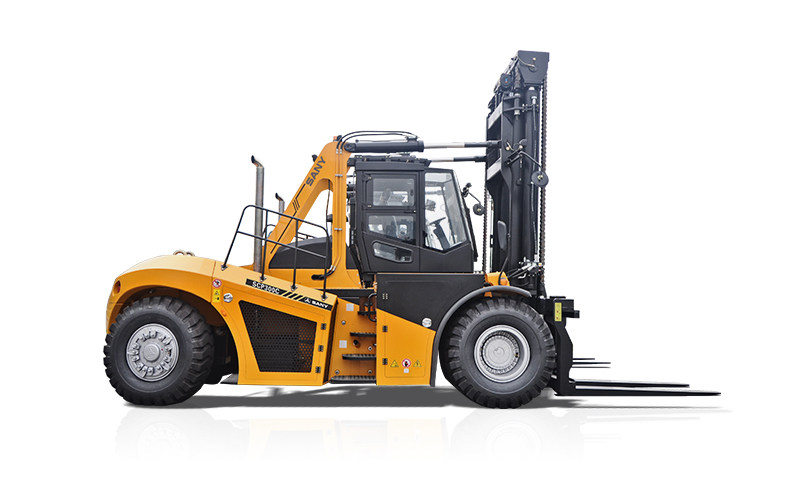
It is not difficult to see that both crane forklifts and standard forklifts have their own advantages. When making a choice, it is necessary to consider actual operational needs. For example, SANY Forklift Trucks come in a wide range of models with varied specifications. Their rated capacities range from 10 tons to 46 tons, and the maximum lifting height covers 3,700 to 4,000 millimeters. Equipped with multiple advanced technologies, these forklifts help operators complete tasks faster and safer, making them a top choice for professionals in need.
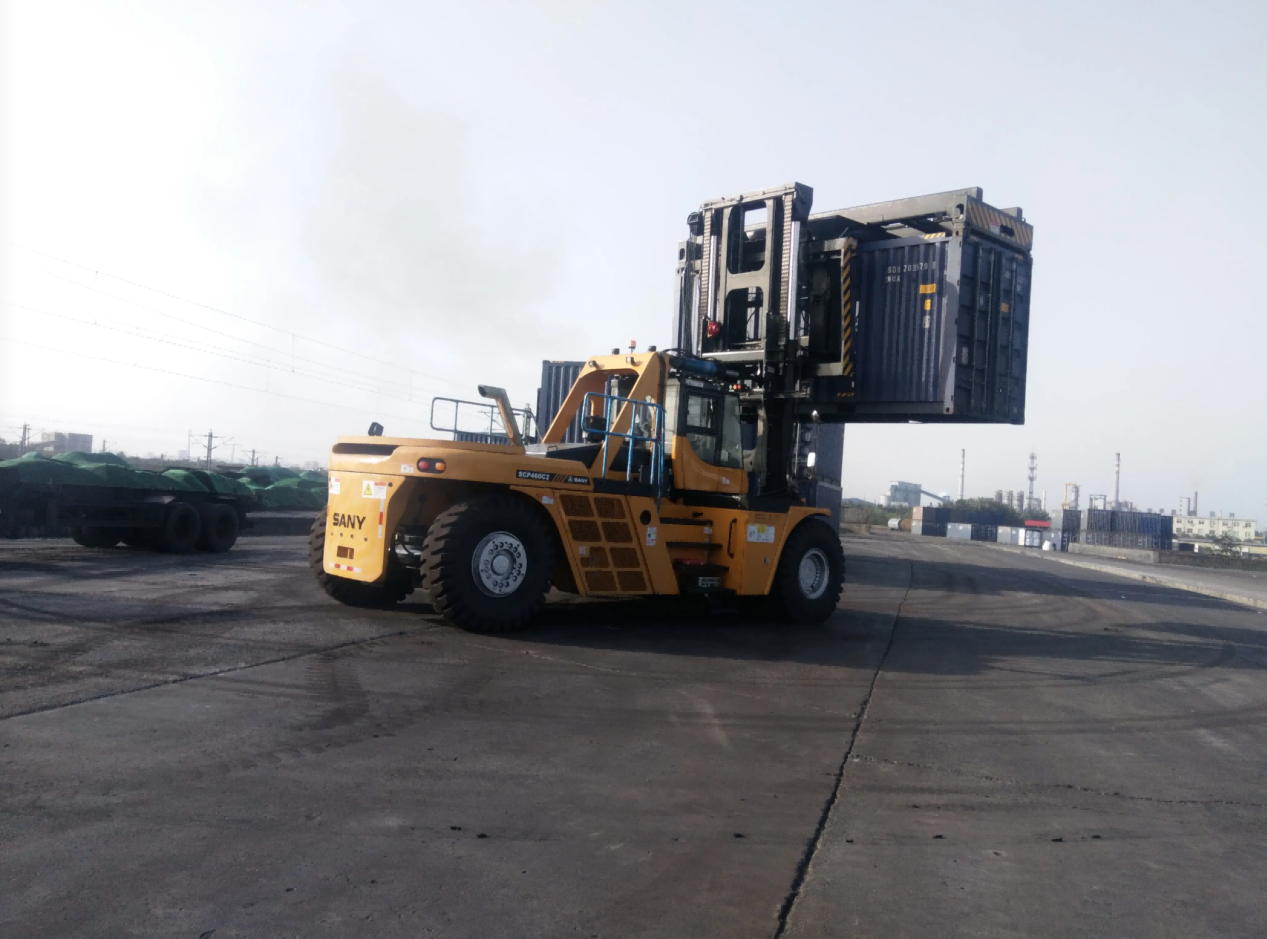
When to Use a Crane Forklift?
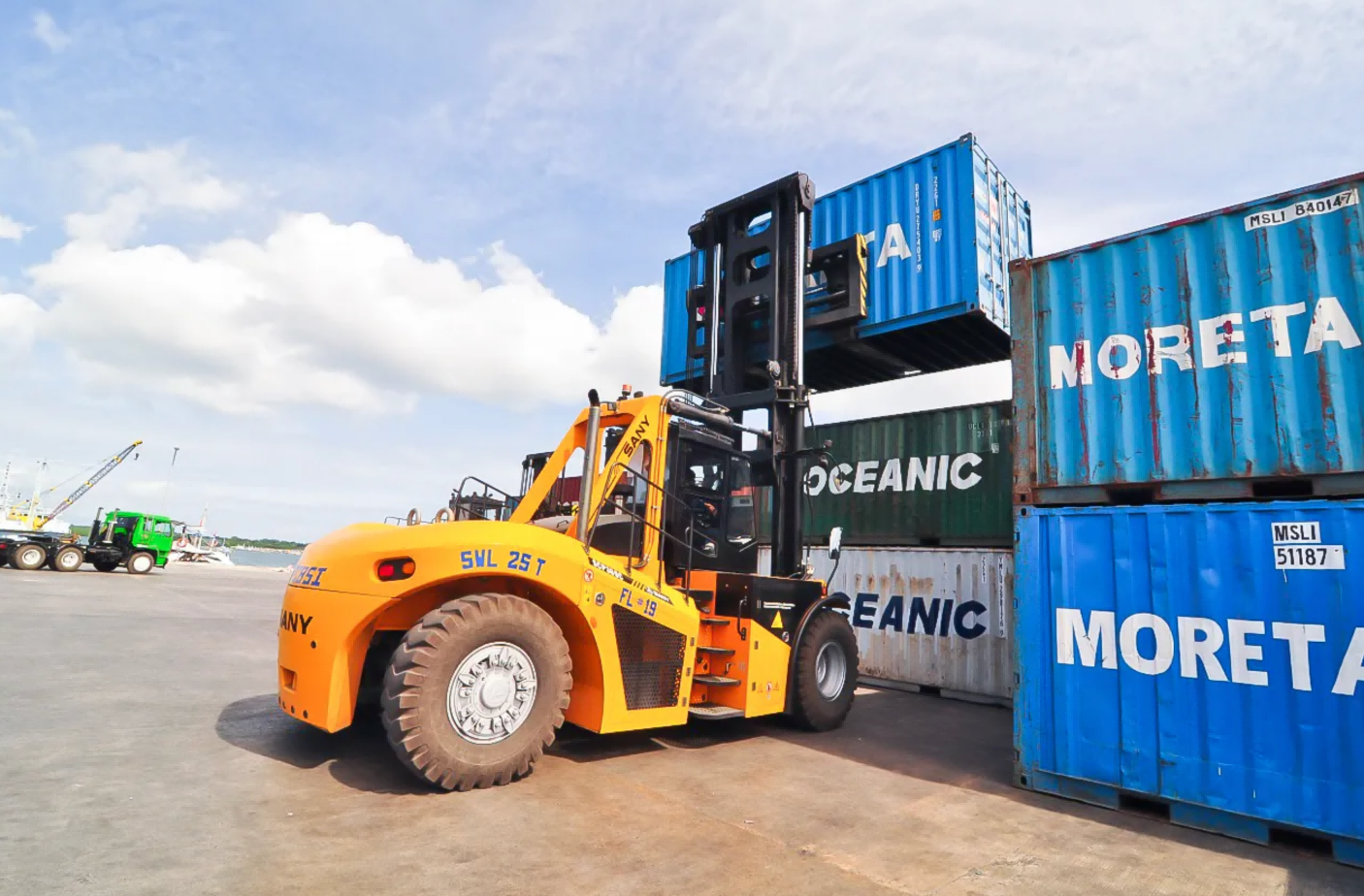
A crane forklift (or a forklift equipped with crane attachments/boom) should be used when there is a need to lift overweight or oversized items, reach high altitudes, or place loads accurately in complex positions (e.g., stacking containers, hoisting beams at construction sites, loading and unloading heavy machinery). Below are some core application scenarios of crane forklifts:
High-Altitude Operations and Precise Lifting
When materials need to be lifted to high platforms, upper floors of buildings, or narrow spaces inaccessible to standard forklifts.
Oversized and Overweight Load Scenarios
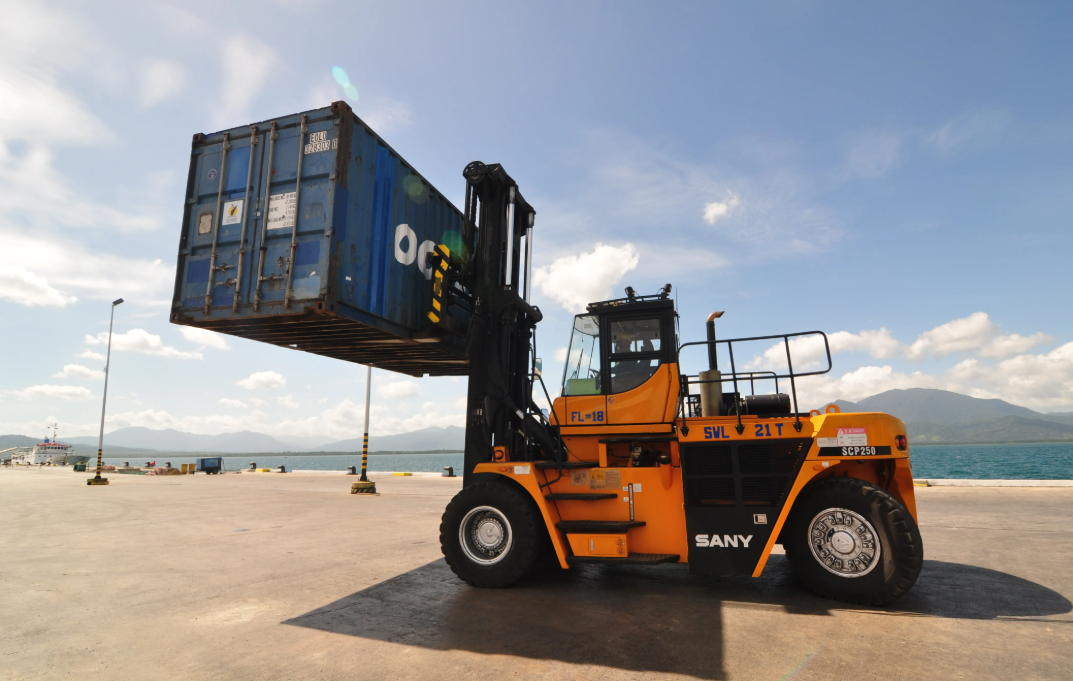
Ideal for transporting large items such as steel beams, heavy machinery (bulldozers, excavators), and even entire containers.
Construction and Industrial Site Scenarios
Indispensable for moving large construction materials, erecting structures (e.g., container houses), or placing heavy equipment on-site.
Multifunctional Material Handling
When a task requires both the flexibility of a forklift (horizontal movement of goods) and the lifting capacity of a crane (vertical lifting and precise placement).
Personnel Lifting Scenarios (Approved Attachments Required)
When using certified crane man baskets to safely reach ultra-high altitudes for maintenance or inspection work.
How to Choose a Crane Forklift for Your Project?
Choosing a Crane Forklift for your project involves evaluating lifting capacity, working height and range, site conditions, operating frequency, safety, and budget to ensure you select equipment that can safely and efficiently perform lifting and material handling tasks.
1. Define Project Requirements
- Lifting Capacity & Cargo Type: Determine the maximum lifting capacity and cargo size, which dictates the Crane Forklift's load capacity.
- Maximum Lifting Height & Working Range: Measure the highest point to be lifted and the working radius to select the appropriate boom length and lifting height.
- Operating Environment:
- Indoor/Outdoor: For indoor use, consider the turning radius and dimensions; for outdoor use, consider whether the terrain is flat or rugged.
- Ground: Use solid tires on hard ground and pneumatic tires on rough ground.
- Operating Frequency: Consider purchasing for frequent use and leasing for occasional use.
2. Key Functions and Safety Considerations
- Operability: Precise proportional control is required, enabling millimeter-level accuracy, especially for attachments.
- Safety:
- Anti-tipping protection: Intelligent system for real-time monitoring and protection.
- Obstacle detection: Laser scanning identifies personnel and obstacles, with automatic braking.
- Fire suppression system: Automatic fire suppression system ensures safety.
- Attachments: Quick switching of attachments such as forks and hooks to adapt to different working conditions.
- Power and reliability: Selection of reputable brand engines ensures strong power and durability.
3. Decide to Purchase or Lease
- Purchase: Long-term projects, high-frequency use.
- Lease: Short- to medium-term projects, limited budget, need for different types of equipment.
4. Recommendations
- Professional Consultation: If unsure, contact equipment suppliers for free consultation and quotes. They can recommend the most suitable model based on your specific needs.
- Operation Planning: Plan lifting operation routes and safety measures in advance to improve efficiency.
Conclusion
The emergence of the crane forklift is essentially a precise response to the demand for "efficiency and flexibility" in the material handling sector. It is not a simple combination of equipment, but an ingenious integration of the forklift's convenient mobility and the crane's lifting capacity. It not only addresses the shortcomings of standard forklifts in handling high-altitude and irregular heavy loads but also expands the application boundaries of heavy material handling. Understanding the functional differences between it and a standard forklift, and clarifying its applicable scenarios, can help you choose the right equipment, making material handling operations more efficient and safer.
FAQs
What Factors Affect the Boom Load-Bearing Capacity of a Crane Forklift?
The boom load-bearing capacity of a crane forklift depends on load factors (weight, rigging), geometric factors (boom length, angle, working radius), stability factors (ground conditions, outrigger settings, counterweight, levelness), and environmental/operational factors (wind force, rapid movement, equipment wear). All these factors dynamically affect the safe lifting capacity of the equipment. Notably, as the working radius increases or the boom angle decreases, the load-bearing capacity will drop significantly.
Can Crane Forklifts Be Modified for More Special Scenarios?
Yes, crane forklifts can be fully modified to adapt to special scenarios. Various attachments, such as clamps, forks, or booms, can be used to significantly enhance their versatility in tasks like handling oil drums, coils, or special-shaped materials. However, major modifications require manufacturer approval and professional engineering design to ensure safety and compliance with relevant regulations.
Is a Crane a Forklift?
No, a crane is not a forklift. Globally, cranes and forklifts serve different purposes: forklifts are designed for lifting and moving pallets or goods over short distances, typically in warehouses or factories, while cranes are meant for lifting heavy loads vertically and horizontally over longer distances, often on construction sites or industrial facilities. Some hybrid machines exist, but in standard operations, their functions and designs are distinct.
Featured Products
Recommend Blogs
All About Class 4 Forklifts: Selection & Application
This article outlines class 4 forklift features, differences from other classes, and applicable scenarios, guiding practitioners in equipment selection.
Forklift Truck Height Parameters Explained: Definitions, Selection & Calculations
This paper details the core parameters and calculation methods of forklift truck height, providing guidance for forklift selection and safe operations.
Forklift Truck Loading Safety Guide: Full Process and Risk Avoidance
This article details common scenarios, the entire process of forklift truck loading, and key safety points to help achieve safe and efficient operations.