Types of Cranes: Your 2025 Comprehensive Guide to Every Major Category
As 2025's latest authoritative guide to types of cranes, this article breaks down the four types' core traits and application differences, giving engineers and equipment purchasers key selection criteria
On construction sites, ports, and factories, cranes are indispensable “powerhouses”—they hoist tons of steel, move stacked containers, or precisely transfer heavy equipment in workshops, quietly underpinning the operation of modern industry and engineering. But have you noticed that cranes in different scenarios, though seemingly similar, each have their own unique capabilities? These differences stem from the diverse types of cranes, each engineered to meet specific demands: some need to stay steady as a rock on muddy ground, some must maneuver nimbly in narrow workshops, and others have to handle loads weighing hundreds of tons.
As the latest authoritative guide to types of cranes for 2025, this article will focus on the four core categories, delving into their structural features, applicable scenarios, and key differences. Whether you’re an engineer selecting equipment for construction sites or a decision-maker in charge of equipment procurement, you’ll find clear answers here that align with your needs.
What Is a Crane?
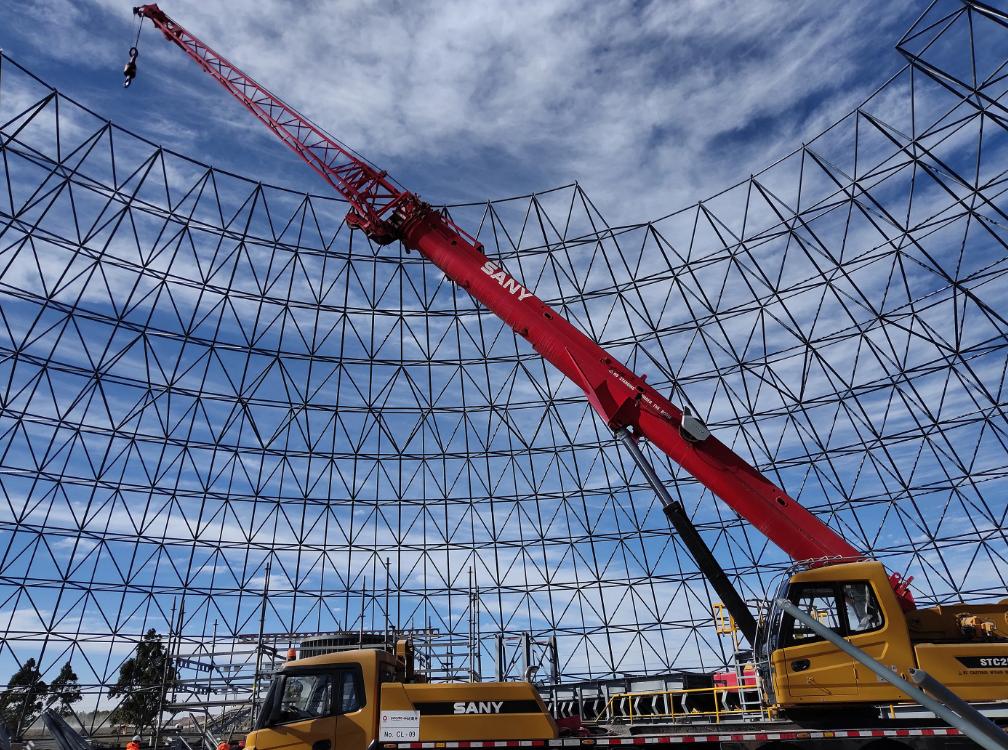
According to the crane definition, a crane is specialized equipment capable of lifting and moving heavy loads horizontally through mechanical structures and power systems. It is widely used in construction, port loading and unloading, factory handling, engineering rescue, and other scenarios, serving as the core equipment for efficient and precise handling of heavy objects in modern industry and engineering.
The Working Principle of Cranes
The core working logic of a crane is based on the combination of mechanical principles and mechanical transmission, and is primarily achieved through the collaboration of the following systems:
●Power system: Provides energy (such as electric motors, internal combustion engines, hydraulic pumps, and more) to drive the operation of various executive mechanisms;
●Hoisting mechanism: Amplifies force through pulley blocks and steel cables (or chains), and uses drums to retract or extend steel cables, enabling vertical lifting of heavy loads (the core is leveraging the “pulley force-saving principle” to reduce power demand);
●Traveling/rotating mechanism: Enables horizontal movement of the entire machine through traveling devices (such as tires, crawlers, rails) or allows boom rotation via a turntable structure, thereby facilitating horizontal transfer of heavy loads from one position to another;
●Control system: Adjusts power output and mechanism actions through control levers, hydraulic valves, sensors, etc., ensuring the accuracy and safety of lifting and moving heavy loads.
In short, cranes leverage principles such as leverage and pulleys, achieving precise control of heavy loads through the combined actions of “vertical lifting + horizontal movement.” With their precise mechanical structures and robust power systems, they can meet the demands of handling heavy loads of different weights and shapes, thereby significantly improving work efficiency and greatly reducing the intensity of manual labor.
4 Types of Cranes
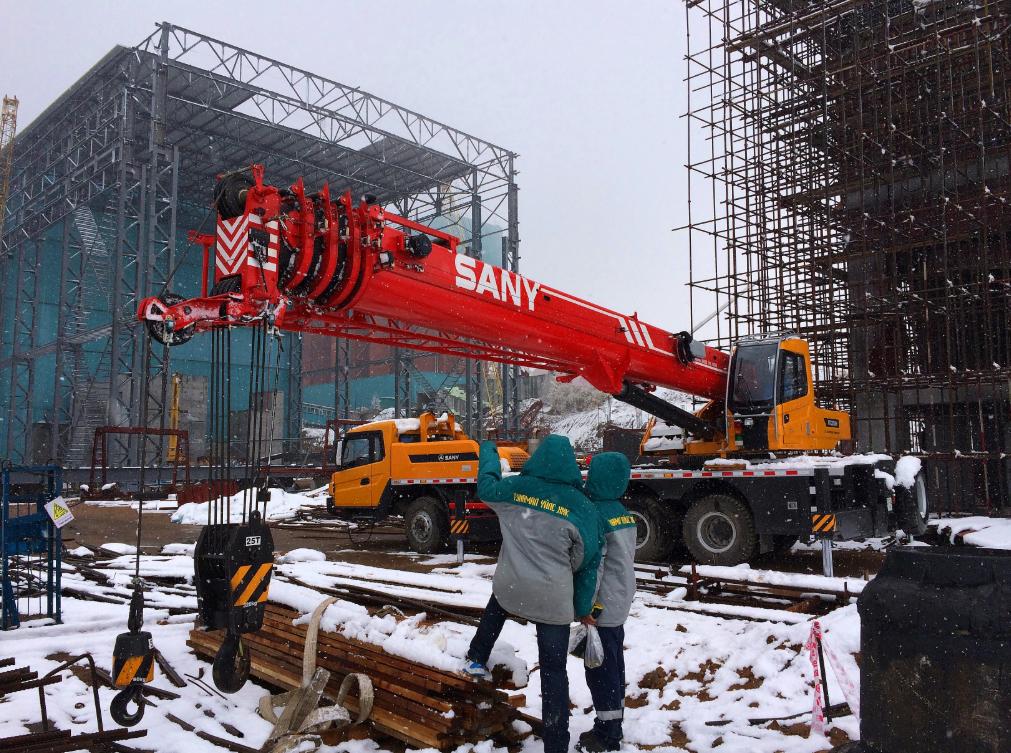
The mechanical structure of cranes varies based on their design purposes and corresponding types of lifting operations. The following sections will focus on four of these core types of cranes.
1. Static Cranes
Static cranes are a category of lifting equipment defined by their non-mobile nature, designed to operate in a fixed position once installed. They rely entirely on permanent foundations or structures for stability and cannot move independently during operation. The core characteristics of these cranes are strong structural stability and high lifting capacity, making them suitable for long-term or heavy lifting tasks in fixed locations.
Key Features:
●Mobility: No independent movement capability. Once installed (e.g., bolted to a concrete base or fixed to rails), they remain in the same location long-term. Relocation requires complete disassembly and reinstallation, which is time-consuming and costly.
●Operating Range: Limited by their structural design, such as the rotation radius of the boom or the length of fixed tracks. Their coverage is typically a fixed area (often circular or fan-shaped) centered on their installation point.
Typical Examples:
●Tower cranes (fixed on concrete foundations, common in high-rise construction).
●Mast cranes (stabilized by masts and cables, used in heavy industrial settings).
●Fixed port shore cranes (permanently installed along docks for container or bulk cargo handling).
Applications: Primarily used in scenarios requiring long-term, stationary lifting—such as high-rise construction sites (for prolonged material hoisting), fixed port terminals (for consistent container loading/unloading), or large storage yards (for stacking heavy goods at fixed points).
In summary, static cranes excel in providing stable, sustained lifting capacity in fixed locations, making them ideal for projects with long durations and minimal need for relocation.
2. Mobile Cranes
Mobile cranes are a category of lifting equipment defined by their mobility as the core feature—they are designed to move independently or be towed, enabling flexible operation across multiple locations. Unlike static or fixed cranes, their primary advantage lies in adaptability to changing work sites.
Key Features:
●Mobility: Equipped with specialized traveling systems to facilitate movement. Common types include:
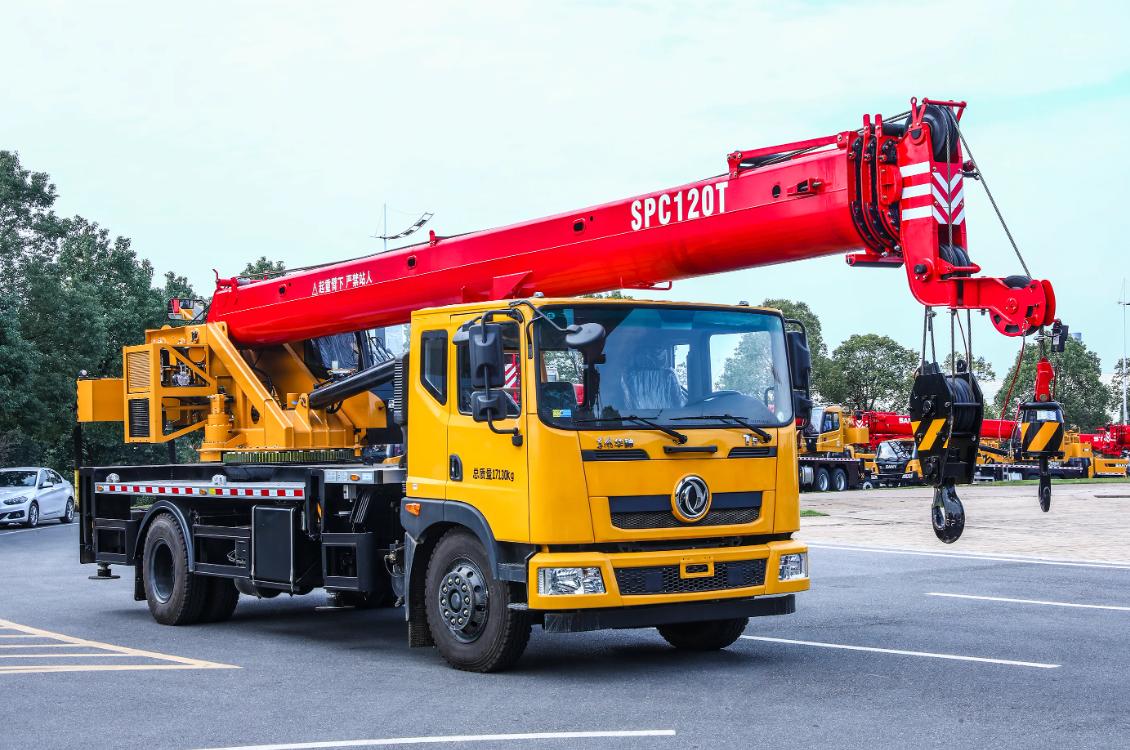
●Wheel-based: Such as truck cranes (mounted on a truck chassis, capable of road travel) and rubber-tired cranes (with rubber tires for maneuverability in industrial yards).
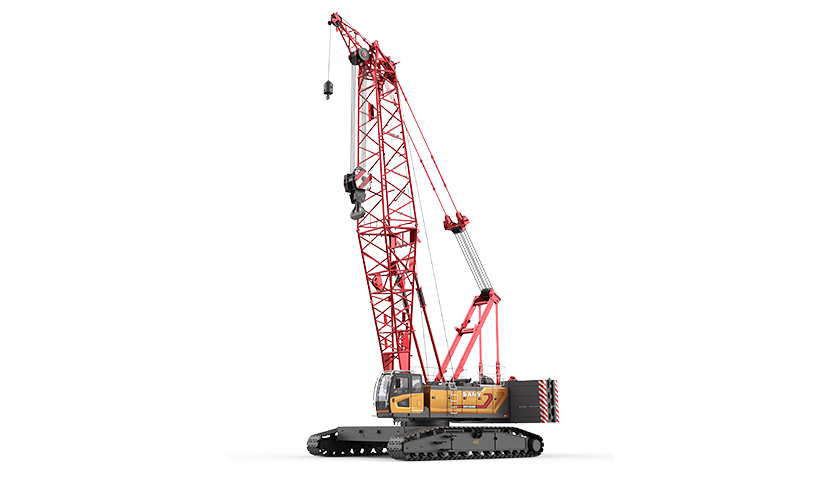
●Crawler-type: Crawler cranes, featuring tracked undercarriages that excel in rough terrains (e.g., construction sites, mines, or uneven ground). Most models can quickly transfer between sites; some require boom folding to meet road transportation size limits.
●Operating Range: After moving to a target location, they deploy outriggers or stabilize systems to ensure safety during lifting. Their coverage varies dynamically with boom length, extension, and rotation angle, offering high flexibility to adapt to different on-site needs.
Typical Examples:
●Truck cranes: Ideal for short-distance transfers on roads, widely used in urban construction or emergency rescue due to their rapid deployment.
●Crawler cranes: Suitable for heavy lifting in complex terrains (e.g., wind power plant construction, bridge installation) thanks to their strong terrain adaptability and load capacity.
●Truck-mounted cranes: Integrate transportation and lifting functions, commonly used for logistics delivery with occasional lifting needs (e.g., loading/unloading goods at warehouses).
Applications:
Primarily used in scenarios requiring frequent site changes, such as:
●Emergency rescue (e.g., lifting collapsed structures after disasters).
●Short-term construction site lifting (e.g., hoisting steel components during building framing).
●Outdoor equipment installation (e.g., erecting utility poles, billboards, or wind turbine parts).
In summary, mobile cranes stand out for their mobility and versatility, making them indispensable in scenarios where flexibility and adaptability to multiple work sites are prioritized.
3. Fixed and Industrial Cranes
Fixed and Industrial Cranes refer to a type of lifting equipment characterized by a fixed operating position, primarily serving scenarios such as industrial production and material handling. They are usually fixed via bases, tracks, or walls, distinguishing them from mobile equipment like truck cranes and crawler cranes. These cranes focus on efficiently completing repetitive or continuous lifting tasks within specific areas.
Key Features:
●Fixed operation attribute: The main body of the equipment is bolted to the ground, embedded in tracks (e.g., the steel rails of bridge cranes), or installed on walls/brackets (e.g., jib cranes). Its operating range is limited by fixed tracks or the rotating radius of the jib, and it cannot move independently.
●Adaptability to industrial scenarios: Designed specifically for industrial environments such as factory workshops, warehouses, production lines, and port yards, they focus on solving repetitive tasks such as material loading/unloading, equipment installation, and workpiece transfer. They emphasize operational efficiency, precision, and safety (e.g., they are equipped with limit devices and emergency braking systems).
Typical Examples:
- Bridge Cranes: They span across workshops/warehouses via tracks at both ends; the main beam can move longitudinally along the tracks, and the trolley (lifting device) moves horizontally along the main beam, covering a rectangular operating area. They are widely used in mechanical processing and warehousing.
- Gantry Cranes: Supported by legs on both sides, they can be fixed on ground tracks or tires (some are semi-fixed) and are suitable for open storage yards and container loading/unloading.
- Jib Cranes: One end of the jib is fixed to a column or wall, and the jib itself is capable of rotating or telescoping. They are suitable for handling small items in local areas within workshops (e.g., loading and unloading for machine tools).
In short, fixed and industrial cranes are core equipment for "fixed-point lifting" in industrial production. Through fixed installation, they achieve efficient coverage of specific areas, serving as key support for factory automation, logistics turnover, and heavy industrial production.
4. Specialized and Heavy-Duty Cranes
Specialized and Heavy-Duty Crane refers to a type of lifting equipment specifically designed for extreme loads, specialized environments, or specific industry needs. Its core feature is that it exceeds the load capacity and environmental adaptability of ordinary cranes, serving as a key piece of equipment in fields such as heavy engineering, energy development, and emergency rescue.
Key Features:
●Extreme load capacity: They are typically capable of lifting loads over 100 tons, with some ultra-large models reaching thousands or even tens of thousands of tons (e.g., modular cranes, floating cranes)—far exceeding the load limit of ordinary cranes (mostly in the tens of tons range).
●Adaptability to specialized environments: They can operate stably in harsh or complex scenarios, such as:
- Rough terrain (crawler and all-terrain cranes);
- Underwater or water surfaces (floating cranes);
- High-risk areas (e.g., explosion-proof cranes in nuclear power plants or chemical factories);
- Track-restricted areas (railway cranes), etc.
●Industry-specific design: They are optimized for the needs of specific fields, such as:
- All-terrain cranes designed for the wind power industry (used to hoist wind turbine blades and nacelles);
- Floating cranes customized for marine engineering (to install offshore platforms);
- Special cranes developed for emergency rescue (equipped with breaching tools for disaster sites).
Enhanced structure and performance: Through specially designed steel structures (e.g., truss booms, ultra-large counterweights), high-power systems, and precision control systems, they ensure stability, safety, and precision under heavy loads and complex working conditions.
In short, such cranes combine “heavy load capacity” and “scenario adaptability,” and exist specifically to handle "heavy, difficult, and dangerous" lifting tasks that ordinary equipment cannot manage. They are core supporting equipment for heavy industry and large-scale engineering projects.
Comparison and Selection Guide
To distinguish between static cranes, mobile cranes, fixed and industrial cranes, and specialized heavy-duty cranes, one should focus on their core characteristics (mobility, operating scenarios, and functional specificity). When making a selection, specific requirements (such as movement frequency, operating environment, and load characteristics) must be taken into account.
1. Core Differences
| Type | Core Characteristics | Mobility | Operating Range | Typical Equipment | Application Scenarios |
| Static Crane | Focused on non-mobility, relying completely on fixed foundations or installation structures, remaining stationary during operation, and unable to move independently. | It has no independent mobility; once installed, it remains fixed in the same position long-term (relocation requires disassembly and reinstallation). | Limited by its structure (e.g., boom rotation radius, track length), covering a fixed area (mostly circular or fan-shaped). | Tower cranes (fixed on concrete bases), mast cranes (secured by masts and cables), fixed port shore cranes, etc. | Construction sites (long-term lifting), port shores (container loading/unloading in fixed areas), large storage yards (heavy cargo stacking at fixed points), and other scenarios requiring long-term static operation. |
| Mobile Crane | Focused on mobility, it can move independently or be towed, adapting to multi-location operation needs. | It is equipped with wheel-based devices (truck cranes, rubber-tired cranes) or crawler-type (crawler cranes) traveling units, allowing quick transfer between sites (some require boom folding for transport). | It operates after moving to the target location; its coverage varies with boom length and rotation angle, offering high flexibility. | Truck cranes (road-traveling, suitable for short-distance transfer), crawler cranes (for complex terrains), truck-mounted cranes (integrating transport and lifting). | Emergency rescue, short-term lifting at construction sites, outdoor equipment installation (e.g., utility poles, billboards), and scenarios requiring frequent changes in operation locations. |
| Fixed and Industrial Crane | Focused on fixed installation and industrial scenario adaptation, it is specially designed for fixed industrial environments (e.g., factories, workshops) and serves repetitive, precision-based operations. | Its main body is fixed (installed via bolts, tracks, or walls); only lifting components (e.g., trolleys, booms) can move within a limited range (no overall movement). | Covers fixed industrial areas (e.g., rectangular workshop zones, local areas near production lines) with high precision (suitable for workpiece docking, equipment loading/unloading). | Overhead cranes (moving horizontally/longitudinally along tracks in workshops), jib cranes (rotating/telescoping locally), gantry cranes (fixed-track open-air industrial yards). | Production lines in factories (e.g., machine tool loading/unloading), warehouse material turnover, heavy equipment installation in workshops, and other repetitive operations in fixed areas. |
| Specialized Heavy-Duty Crane | Focused on targeted design and ultra-heavy loads, it is customized for extreme conditions (e.g., overweight, high temperature, corrosive environments) with single-function specialization. | Most are fixed-installed (a few with dedicated tracks); they have almost no independent mobility, and relocation costs are extremely high due to their specialized functions. | Its range strictly matches specific tasks (e.g., circular tracks covering reactors, large spans covering ship hulls); it has a fixed range but extremely strong load-bearing capacity (up to thousands of tons). | Shipyard gantry cranes (lifting hull sections), nuclear power plant ring cranes (lifting reactors), metallurgical casting cranes (transporting molten steel), wind-power specialized cranes (lifting turbine blades). | Heavy manufacturing (shipbuilding, metallurgy), energy industry (nuclear power, wind power), special engineering (bridge box girder lifting), and other ultra-heavy, high-risk, highly customized scenarios. |
2. How to Choose?
Selection should be based on the priority of operational needs, using the following core reference dimensions:
Step 1: Determine whether mobility is required
- Frequent changes of operational locations (e.g., temporary lifting at construction sites, emergency rescue) → choose mobile cranes (prioritize truck cranes or crawler cranes, selected based on terrain: truck cranes for road scenarios, crawler cranes for complex terrains like mines and mountains).
- Long-term operation in the same fixed area (e.g., factory workshops, warehouses, fixed port zones) → choose from fixed and industrial cranes or static cranes.
Step 2: Assess the operating environment
- Industrial production scenarios (enclosed/semi-enclosed industrial spaces such as workshops, industrial yards, or production lines) → choose fixed and industrial cranes (suitable for repetitive, high-precision operations, e.g., overhead cranes and jib cranes).
- Outdoor non-industrial scenarios (e.g., construction sites, port shores, large open-air storage yards) → choose static cranes (e.g., tower cranes, fixed shore cranes), which focus on long-term static load capacity.
- Extreme working conditions (special scenarios involving overweight loads, high temperatures, or corrosive environments) → choose specialized heavy-duty cranes (e.g., shipyard gantry cranes, nuclear power plant ring cranes). These have no alternatives.
Step 3: Match load and functional requirements
- Load ≤ 50 tons, with only standard precision required → prioritize fixed and industrial cranes (e.g., workshop overhead cranes) or small mobile cranes (e.g., 25-ton truck cranes).
- Load 50–500 tons, requiring mobile operation → choose large mobile cranes (e.g., 100-ton-class crawler cranes); for fixed operations → choose static cranes (e.g., large tower cranes).
- Load ≥ 500 tons, or with special environmental requirements (e.g., high temperature, radiation) → only specialized heavy-duty cranes are suitable.
Selection Mnemonic
- If you need flexible mobility → choose mobile cranes
- For fixed industrial scenarios with repetitive and precise operations → choose fixed and industrial cranes
- For fixed non-industrial scenarios with long-term static lifting → choose static cranes
- For extreme conditions involving ultra-heavy or customized tasks → choose specialized heavy-duty cranes
Following this logic, you can quickly narrow down the selection and then refine the choice based on specific parameters (e.g., boom length, operating radius, environmental tolerance).
Industry Standards & Duty Classification
The duty classification of cranes is a system that categorizes cranes based on their intended use and working conditions. Clarifying this classification helps:
- Extending equipment lifespan—preventing premature aging caused by overloading or excessive wear and tear
- Enhancing operational safety—reducing the risk of failures and accidents from equipment overuse
- Optimizing cost-effectiveness—ensuring alignment between cranes and operational needs, and avoiding using oversized equipment for minor tasks or undersized equipment for heavy loads
Currently, duty-classification standards are established by several organizations, including:
Hoist Manufacturers Institute (HMI)
- Federation of European Material Handling (FEM)
- American Society of Mechanical Engineers (ASME)
- Crane Manufacturers Association of America (CMAA)
The specific classifications are as follows:
1. Hoist Manufacturers Institute (HMI)
HMI provides standards for the design, manufacturing, and use of cranes in the United States, classifying crane duties into six categories, with the core criterion being the number of lifts per hour and per day:
| Class | Name | Core Description | Lifting Frequency (per hour / per day) |
| H1 | Infrequent or Standby | Low usage frequency; primarily for standby or emergency use | — / — |
| H2 | Light | Suitable for light-duty applications with low loads and infrequent use | ≤2 lifts / ≤10 lifts |
| H3 | Standard | Suitable for medium-load applications with moderate usage frequency | ≤5 lifts / ≤50 lifts |
| H4 | Heavy | Suitable for heavy-load applications with relatively frequent usage | ≤10 lifts / ≤100 lifts |
| H5 | Severe | Suitable for heavy-load applications with high-frequency handling of heavy loads | ≤20 lifts / ≤200 lifts |
| H6 | Continuous Heavy | Suitable for continuous heavy-load operations with high-frequency, full-load operations | >20 lifts / >200 lifts |
●Maximum starts and stops per hour
●Load capacity
●Hoisting speed
●Operating environment (temperature, humidity, corrosive conditions)
●Expected service life
2. Federation of European Material Handling (FEM)
FEM provides classification standards for cranes in Europe, defining nine load classes (from 1Am lightest to 7m heaviest). The classification is determined by total operating hours and load spectrum coefficient:
●Numbers (1, 2, 3, 4) indicate total operating hours over service life;
●Letters (Am, Bm, Cm) indicate the average load relative to the rated capacity (load spectrum coefficient).
The specific classes and their applications are as follows:
| Rating | Lifting Intensity | Load Spectrum | Total Operating Hours | Typical Application Scenarios |
| 1Am | L1 (Light) | 1 (Light) | 200 | Assembly workshops, power stations, theaters |
| 1Bm | L1 (Light) | 2 (Medium) | 400 | General workshops, stores |
| 1Cm | L2 (Medium) | 3 (Heavy) | 800 | General workshops, stores |
| 2m | L3 (Heavy) | 4 (Very Heavy) | 1,600 | Production workshops, warehouses |
| 3m | L4 (Very Heavy) | 4 (Very Heavy) | 3,200 | Production workshops, warehouses, foundries |
| 4m | L5 (Intensive) | 4 (Very Heavy) | 6,300 | Bulk material handling, scrap yards, shipyards |
| 5m | L6 (Severe) | 4 (Very Heavy) | 12,500 | Bulk material handling, heavy foundries, steel mills |
| 6m | L7 (Extreme) | 4 (Very Heavy) | 25,000 | Heavy bulk material handling, mining, quarrying |
| 7m | L8 (Special) | 4 (Very Heavy) | 50,000 | Specialized heavy-duty applications (custom equipment) |
3. American Society of Mechanical Engineers (ASME)
The term ASME primarily refers to HMI’s duty-classification standards and is widely used in the United States. Its core standard is ASME B30.16: Overhead Hoists (Underhung), which specifies operational scenarios for different classes:
- Class H1-H2 (Infrequent or Light Service): Suitable for infrequent or light-duty operational scenarios such as power plants, substations, and turbine rooms, where loads are randomly distributed and operating time is short.
- Class H3-H4 (Standard or Heavy Service): Suitable for medium- to heavy-duty operations in machine shops, steel warehouses, container yards, etc., with total operating time not exceeding 50% of the work cycle.
- Class H5-H6 (Severe or Continuous Severe Duty): Suitable for heavy-load scenarios such as heavy machinery shops, foundries, and steel warehouses, involving bulk material handling or near-continuous operation.
4. Crane Manufacturers Association of America (CMAA)
CMAA standards are widely used in North America, especially for overhead bridge cranes. They define six service classes based on intended use and operating conditions (similar to HMI classifications but with different terminology):
| Class | Name | Core Description | Lifting Frequency (per hour) |
| A | Standby or Infrequent Service | Occasionally handles light loads; has an extremely low frequency of use | — |
| B | Light Service | Suitable for light-duty applications with relatively light loads | 2–5 lifts |
| C | Medium Service | Suitable for medium-load applications with moderate frequency | 5–10 lifts |
| D | Heavy Service | Suitable for heavy-load applications with relatively frequent use | 10–20 lifts |
| E | Severe Duty | Suitable for high-frequency heavy-load applications; may operate in harsh environments | >20 lifts |
| F | Continuous Severe Duty | Suitable for high-frequency continuous operations; requires customized design | High frequency (no upper limit) |
Notes
- All three classification systems focus on "load intensity" and "frequency of use," with minor differences in terminology and detailed dimensions (e.g., FEM emphasizes "total operating hours," while HMI/CMAA focus more on "single-cycle frequency").
- When selecting a crane, it is necessary to align with the dominant standards in the target market (e.g., HMI/CMAA are widely used in North America, and FEM in Europe) to ensure precise matching with operational scenarios.
Conclusion
As core equipment in the fields of modern engineering construction and logistics transportation, cranes play an irreplaceable role in various sectors. Different types of cranes, with their unique performance, jointly form a comprehensive lifting equipment system, accurately meeting the needs of various complex lifting operations.
The correct selection and standardized use of cranes are key to improving operational efficiency, controlling costs, and ensuring safety. As a world-leading construction machinery manufacturer, SANY covers multiple fields, including construction and mining equipment, port machinery, oil drilling machinery, and renewable wind energy systems. With professional technical strength and a sound service system, it stands ready to provide you with suitable equipment solutions at any time, ensuring that each of your operations is supported by precisely matched lifting equipment.
FAQs
Which crane is best for heavy‑lifting on uneven terrain?
In rough terrain, crawler cranes, rough-terrain cranes, and all-terrain cranes are three core options. Due to their different design focuses, each has distinct applicable scenarios:
- If the terrain is extremely rough (such as undeveloped mountainous areas or deeply muddy mines) and there are heavy-load requirements, priority should be given to crawler cranes.
- If the terrain is moderately rough (such as wild dirt roads or gravel yards), mainly involves medium and small-tonnage operations, and requires frequent short-distance transfers, rough-terrain cranes are more suitable.
- If long-distance cross-regional operations are needed (requiring balanced road driving capability) and the terrain is complex but not extreme, all-terrain cranes are a better choice.
When making a selection, you should also consider specific terrain slopes, ground bearing capacity, operating radius, and transfer frequency.
Single girder vs double girder crane: cost and capacity differences?
Single- and double-girder cranes differ in cost and capacity due to their structural designs. In terms of cost, single-girder cranes are more affordable, with a simple structure (a single main girder plus simplified parts), lower material usage, and easier manufacturing, installation, and maintenance. By contrast, double-girder cranes cost more, featuring a complex structure (dual main girders, dual mechanisms, and balancing devices), greater material consumption, stricter requirements for manufacturing and installation precision, and higher maintenance costs. For capacity, single-girder cranes have a smaller load range—typically 0.5–20 tons, with custom models maxing out at 32 tons—and are limited by the single girder’s load-bearing capacity, making them unsuitable for heavy loads. Conversely, double-girder cranes offer larger capacities, generally 5–500 tons (with custom versions exceeding 1,000 tons); their two girders share the load, providing strong stability and making them ideal for heavy-load scenarios.
In summary, single-girder cranes suit light-load, budget-constrained needs, while double-girder cranes fit heavy-load requirements but come with higher costs.
How to choose a crane for industrial vs construction sites?
When selecting cranes for industrial and construction sites, you must make a comprehensive judgment based on specific operational needs, environmental conditions, and technical parameters. The core lies in balancing load capacity, operating scenarios, efficiency, and cost.
In industrial scenarios, which focus on fixed, high-frequency operations and spatial adaptability, you should prioritize track-mounted cranes (such as overhead and gantry cranes) based on load stability and workshop parameters (e.g., span and height). Construction sites, on the other hand, require mobile operations, load-fluctuation management, and adaptation to complex terrain, thus necessitating the selection of mobile cranes (such as truck cranes and crawler cranes) based on hoisting capacity and site conditions.