Construction Telehandler: Everything You Need To Know
This article details the Construction Telehandler, covering its applications, selection, and common issues for industry reference.
Telehandlers as a common type of mechanical equipment, are widely used in various fields, especially in the construction industry where high efficiency and flexibility are required. These telehandlers are also known as construction telehandlers. They effectively meet the needs of material handling and transportation, and provide assistance for high-altitude operations, playing an indispensable role on modern construction sites and being a crucial piece of equipment for construction teams.
_142408.png)
Telehandler Construction Applications
Construction telehandlers are widely used on construction sites, covering multiple stages of construction and offering flexible adaptability to different construction scenarios. Specifically, they are used in the following areas:
Material Handling & Loading/Unloading
As a core part of material handling construction, they efficiently transport various construction materials such as bricks, steel beams, timber, concrete blocks, and heavy-duty pipes. They easily complete material transfer within the site and loading/unloading operations for trucks. Particularly suited for job sites with complex terrain and limited space, they solve operational challenges that conventional machinery cannot handle in material handling and construction.
High-Altitude Material Delivery
Leveraging the high-lifting performance of their telescopic booms, telehandlers can precisely deliver heavy loads to high-rise platforms of multi-story buildings. They are key equipment for hoisting building materials like steel beams and concrete slabs in high-rise construction projects, compensating for the operational limitations of other lifting methods in confined high-altitude environments.
Structural Component Installation
Combining lifting capacity with operational precision, telehandlers can accurately hoist and place large components such as steel structural frames, roof trusses, and precast slabs. This reduces manual intervention and enhances both construction safety and frame erection efficiency.
High-Altitude Work Assistance
When equipped with safety cages or baskets, telehandlers can safely transport workers to high altitudes to perform tasks such as window installation, building maintenance, solar panel/power line/signage installation. They replace part of the scaffolding requirements and are ideal for temporary high-altitude construction scenarios.
Temporary Structure Erection and Dismantling
They enable the rapid erection and dismantling of temporary site structures like scaffolding and tents, improving the efficiency of temporary facility construction and adapting to the temporary operational needs of job sites.
Site Management and Cleanup
Fitted with attachments such as buckets and grapples, telehandlers efficiently remove construction waste and clear job site obstacles. They can also move guardrails and manage on-site traffic flow, contributing to site safety management and a clean working environment.
Multi-Scene General Operations
Telehandlers adapt to various construction environments, both indoor and outdoor, as well as rugged terrains. Their functionality can be expanded by swapping attachments like buckets and augers. They simultaneously meet the demands of different projects, including high-rise buildings, infrastructure, and warehousing & logistics. By accelerating construction progress and reducing labor costs, they are a cost-effective core piece of equipment for construction projects.
Advantages of Construction Telehandler
Using a construction telehandler during the construction process offers numerous benefits, including simplifying construction procedures and improving operational safety. These benefits mainly include the following aspects:
Enhanced Efficiency & Reduced Project Timelines
They enable seamless, one-time material handling, minimizing equipment repositioning, simplifying logistics, and accelerating project schedules. A single machine operated by one person can accomplish the workload of multiple machines and workers.
Versatility & Multi-Functionality
By swapping out various attachments such as forks, buckets, jibs, work platforms, and grapples, telehandlers achieve true multi-functionality. This reduces the need to purchase or lease multiple specialized machines, saving both costs and valuable jobsite space.
Improved Operational Safety
Handling heavy or irregularly shaped materials with a telehandler reduces the risk of work-related injuries associated with manual labor. Modern models are equipped with advanced safety features such as stability sensors, load management systems, and automatic stabilizers to ensure safe operations at height.
Cost-Effectiveness
Compared to multiple specialized machines, the versatility of a construction telehandler significantly cuts down on equipment rental, labor, and maintenance expenses.
How to Choose a Construction Telehandler?
When selecting a telehandler for a construction site, most buyers focus primarily on maximum lifting capacity and maximum lift height, as these two performance metrics vary significantly between models. For example, SANY telehandlers offer a relatively wide range of maximum lift heights, spanning from 10 to 17.1 meters. However, beyond these two core specifications, a comprehensive evaluation must also consider operational requirements, equipment characteristics, and site conditions to find the most suitable model. The key considerations are as follows:
_142652.png) Clarify Equipment Purpose and Application Scenarios
Clarify Equipment Purpose and Application Scenarios
Define the specific tasks the telehandler will perform, such as material handling, truck unloading, or high-rise material delivery. Additionally, prioritize analyzing the average weekly workload and all lifting operations on-site to avoid over-specification or wasted functionality.
Match Lifting Capacity and Operating Range with Load Charts
- Telehandler lifting capacity decreases significantly as the boom extends and elevates. The maximum rated load only applies to specific boom positions. Always refer to the load chart to confirm the safe load capacity at the target height and operating radius.
- Maintain a 20-25% safety margin to account for unexpected factors like material weight fluctuations or moisture absorption. Never rely solely on "maximum" figures for model selection.
Accurately Calculate Actual Operational Dimensional Requirements
- Beyond the nominal reach and lift height, account for ground slopes, site setbacks, and obstacles to calculate the effective working height and forward reach. Avoid situations where "paper specifications fit, but actual operations fall short."
- List all specific lifting tasks and test the machine's performance under the most unfavorable height and range conditions, rather than trusting catalog specifications blindly.
Emphasize the Impact of Attachments on Load Capacity
- Attachments such as forks, buckets, and grapples alter the machine's center of gravity and weight, reducing its safe lifting capacity. Always consult the specific load chart for the corresponding attachment.
- Use only certified, purpose-built attachments and avoid unauthorized modifications. For multi-site operations, standardize core attachment kits to simplify training and operation.
Select Equipment Type Based on Site Conditions
- For confined spaces or indoor work, choose compact models focusing on turning radius and body dimensions. For rough, soft, or muddy terrain, select rough-terrain models prioritizing high ground clearance, four-wheel drive, and stabilizer configurations.
- Conduct an on-site survey to measure critical parameters like gate width, slopes, and access paths to prevent equipment inoperability due to site constraints.
Adhere to Safety Standards and Improve Supporting Management
- The equipment must comply with relevant safety standards, and operators must receive formal training and certification.
- Develop a dedicated safety plan, conduct risk assessments based on site conditions and attachment types, implement daily equipment inspections and load chart verification, and never rely solely on the machine's safety features.
Choose the Right Engine and Drivetrain
- For standard operations, engines below 74 horsepower can be selected, eliminating the need for a Diesel Exhaust Fluid (DEF) system and reducing maintenance costs and complexity. For heavy-duty, continuous operations, choose high-horsepower engines with advanced drivetrains.
- Request actual fuel consumption and DEF usage data from suppliers, matching configurations to operational intensity to avoid extra costs from excess power.
Fully Calculate the Total Cost of Ownership (TCO)
- TCO includes purchase/lease, fuel, maintenance, repairs, insurance, transportation, and training—not just the initial price.
- In harsh environments, account for the high replacement costs of consumables like filters and hydraulic oil. For short-term projects, compare the economics of leasing versus purchasing to avoid overlooking hidden expenses.
Prioritize Brands with Easy Maintenance and Comprehensive After-Sales Support
- Prefer models with easy-maintenance features like debris-resistant radiators, easy-clean filters, protected hydraulic hoses, and centralized lubrication points to minimize downtime.
- Select brands with a robust dealer network, fast parts supply, and high resale value to ensure quick fault resolution and reduce long-term operating costs.
Conclusion
The versatility of construction telehandlers allows them to comprehensively cover all stages of construction, efficiently solving practical problems such as material handling and working at height. They can replace multiple specialized pieces of equipment, effectively saving manpower and resources and controlling construction costs. For professionals in the construction industry, scientific selection is key to maximizing their effectiveness. This requires precise matching of the equipment to the actual operational needs and site conditions, while also considering safety regulations and after-sales support. The rational use of this equipment can significantly improve construction efficiency and reduce operational risks, providing strong support for the efficient progress of various construction projects.
FAQs
How Much to Hire a Telehandler Per Day?
There is no single accurate answer to this question, as the rental cost of a telehandler varies considerably depending on factors such as lifting capacity, working radius, and rental location. For example, higher lifting capacity and longer working radius generally result in higher daily rental rates. Rental costs may also be higher or lower in urban areas or areas with high demand (depending on regional supply and demand). Specialized attachments may also increase the daily rental price. Furthermore, weekly or monthly rentals typically have significantly lower daily rates. If needed, it is recommended to contact local equipment rental companies directly for accurate quotes.
Are Telehandlers Street Legal?
Telehandlers are typically not legally permitted on public roads, but they may be allowed under specific limited conditions, such as short-distance transfers between construction sites, agricultural use, or when holding a special slow-moving vehicle permit. Such equipment usually requires headlights, rearview mirrors, and registration. It is strongly recommended to verify local regulations in advance. If road use is necessary, ensure the equipment is legally insured, registered, and meets all relevant requirements to avoid penalties.
What are the Common Problems with Telehandlers?
Common problems with telehandlers include hydraulic system leaks, wear and tear on the boom mechanism (hydraulic cylinders, chains, and hoses), and electrical issues such as low battery power and wiring faults. Other frequent problems include engine overheating, brake system malfunctions, and tire damage. Safety risks typically include rollovers caused by overloading, unsuitable terrain, or insufficient stability. It is recommended to inspect hydraulic hoses, seals, and electrical connections weekly, check tire pressure daily, perform regular maintenance, and provide training to operators to prevent accidents caused by operational errors.
Featured Products
Recommend Blogs
How to Choose a Telehandler? Pick the Perfect Model for Your Job
How to choose a telehandler? This guide covers definitions, types, applications, and key considerations to help you select the right model.
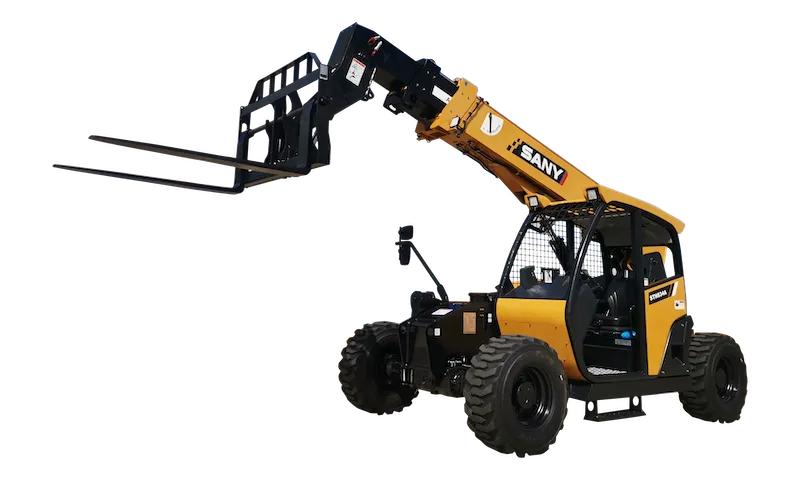
What Is a Mini Telehandler: Practical Selection and Rental Guide 2026
This article introduces the definition, applicable scenarios, and selection guidelines for mini telehandlers, helping you construct efficiently.
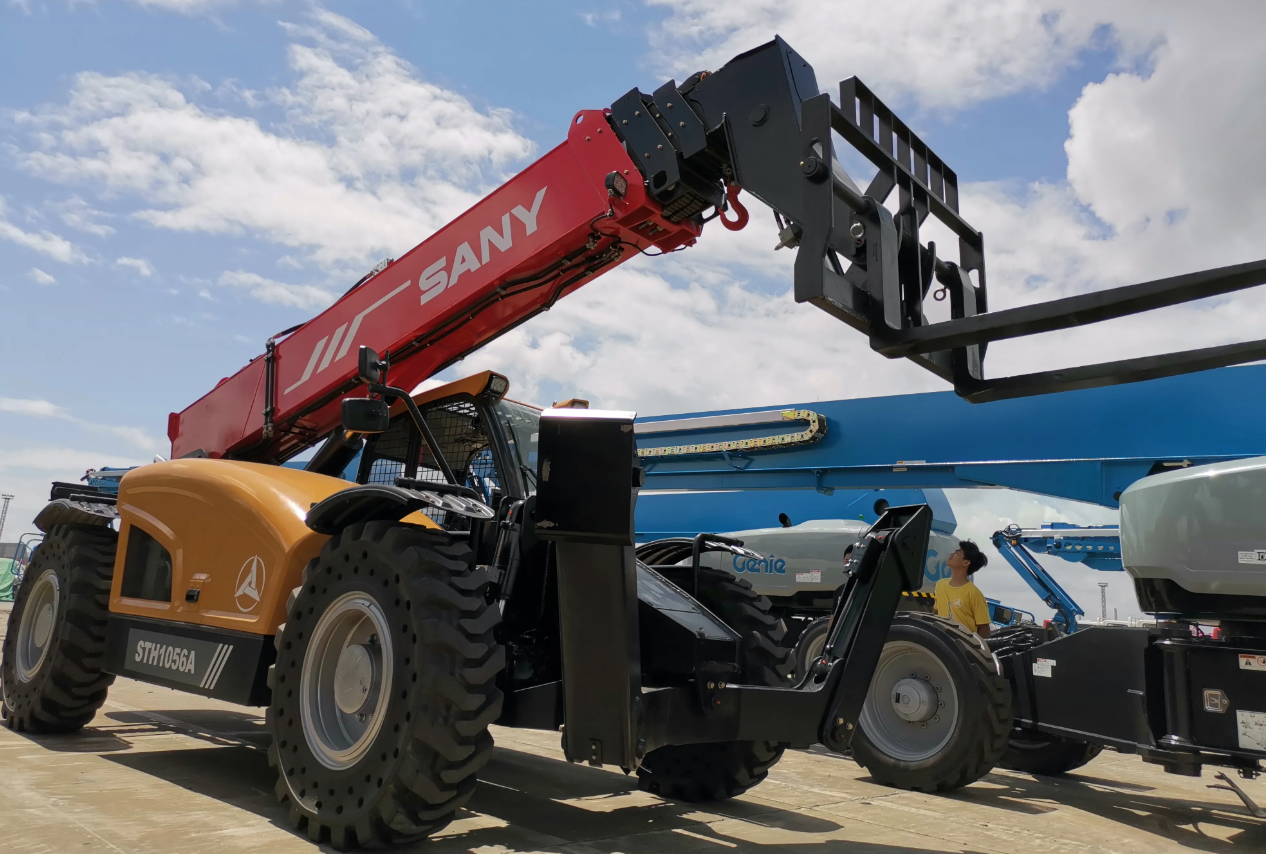
What Is a Telehandler? Key Functions, Principles & Application Scenarios
This article explains what a telehandler is, outlining its components, functions, uses, and types. It also compares telehandlers with forklifts and cranes to help you choose the right equipment.