Components of a Forklift Truck Explained: A Complete Guide to Forklift Operation (2026)
This article focuses on the components of a forklift truck and forklift operation precautions, enabling you to load and transport goods more efficiently.
In the logistics park at dawn, forklifts start up in the morning light. Drivers skillfully maneuver the equipment, steadily lifting pallets fully loaded with goods, nimbly navigating between shelves, precisely positioning themselves, and smoothly completing lifting, transferring, and unloading operations. The smooth operation of this highly efficient machine relies on the coordinated cooperation of its various components, and proper use is key to ensuring operational safety and efficiency. The following will introduce the components of a forklift truck, forklift truck parts names, and daily operating precautions to help operators complete loading, unloading, and transportation operations more efficiently.
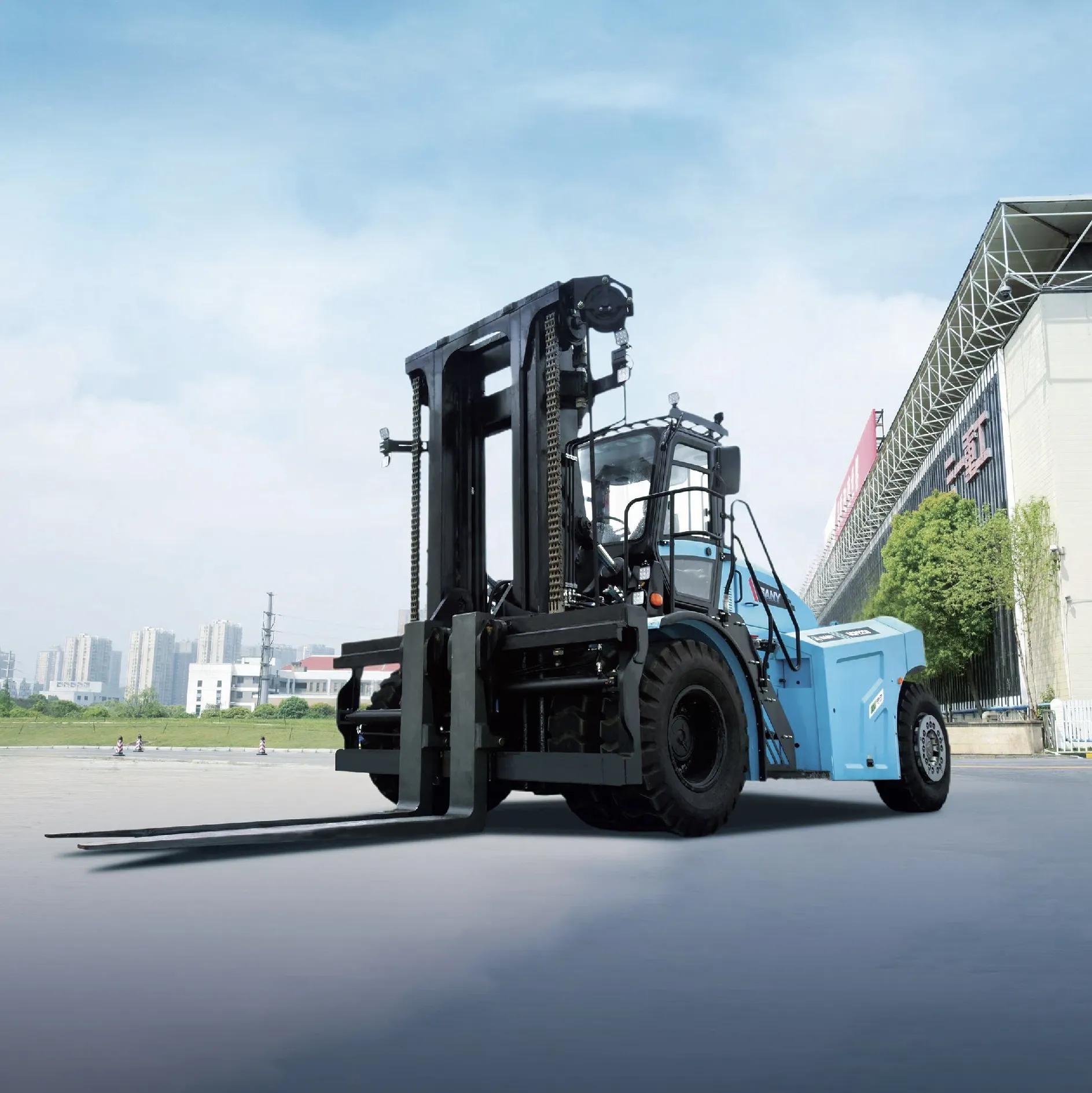
What Is a Forklift?
Forklifts are ubiquitous in our lives. They are not only highly maneuverable and capable of carrying heavy loads, but they also significantly reduce the physical labor required for manual handling, improving cargo turnover efficiency and making them an indispensable key piece of equipment in modern logistics and industrial production.
Definition
A forklift is a wheeled handling vehicle used in factories, warehouses, and other similar locations for loading, unloading, stacking, and short-distance transport of palletized goods. It uses a pair of adjustable forks at the front to move goods, reducing the physical labor of handling workers, improving loading and unloading efficiency, and lowering costs.
Functions
- Loading and Unloading: Loading or unloading goods from trucks, train carriages, and other transport vehicles.
- Stacking: Vertically stacking goods on shelves to maximize warehouse space.
- Transportation: Horizontal transport of goods over short distances within warehouses or factories.
Types
- Internal Combustion Forklifts: Use fuel engines, have a large load capacity, and are suitable for outdoor environments or locations with low emissions and noise requirements.
- Electric Forklifts: Use batteries as power, operate smoothly and are environmentally friendly, and are commonly used for indoor operations.
- Warehouse Forklifts: Includes various forklifts used for warehouse operations, such as stackers and pallet jacks (manual or electric pallet trucks).
What Are the Components of a Forklift Truck?
A forklift consists of many moving parts and components. The efficient operation of a forklift relies on the coordinated efforts parts of forklift truck. Each component performs its specific function while working closely together, and their performance and condition directly affect operational safety and efficiency. The following will break down the characteristics parts of a forklift truck in detail, providing a reference for practical operation.
Forklift Chassis
The chassis of a forklift, also known as the frame, is mainly made up of four main components: the engine compartment or battery compartment, the cab, the counterweight, and the wheels.
Engine Compartment or Battery Compartment
The engine compartment or battery compartment of a forklift is a key component housing the equipment's core power source. Its location and function vary depending on the type of forklift. Understanding their location and function is crucial for ensuring safe operation and regular maintenance of the forklift.
- Engine Compartment of a Sit-Down Internal Combustion Forklift: Located directly below the operator's seat, it houses the internal combustion engine, which uses propane, diesel, or natural gas as fuel. Propane-powered forklifts have an external gas tank for easy inspection and replacement.
- Battery Compartment of an Electric Forklift: Also located below the seat, it houses a large industrial battery that provides power for all forklift operations. Electric forklifts operate quietly and are well-suited for indoor environments.
The Forklift Cab
The forklift cab is the core space for the operator to control the vehicle. It is suitable for seated or standing operation and is available in both open and closed configurations. The cab integrates all the equipment needed to operate the forklift, including the steering wheel, brake pedal, accelerator pedal, micro-motion pedal, parking brake, and other operating components, as well as mast control devices, joysticks, instruments, lights, horn, and other control and auxiliary functions, providing comprehensive support for the operator to safely and accurately control the forklift.
Counterweight
The counterweight of a forklift is a key component ensuring the balance and stability of the equipment during operation. Its core function is to offset the weight of the goods lifted by the forks, preventing the forklift from tipping over when the weight distribution changes due to lifting, traveling, or fork movement.
The counterweight of an internal combustion forklift is installed at the rear of the forklift (opposite to the forks), while electric forklifts use their own large industrial batteries as counterweights. The maximum load capacity of a forklift is designed to rely on the counterweight to maintain balance. When using a forklift, always check the nameplate to confirm the rated load capacity to avoid overloading, which could affect stability.
Forklift Tires and Wheels
Forklift tires
Forklift tires are core components ensuring the equipment's movement, load-bearing capacity, and maneuverability. They are mainly divided into two categories: pneumatic tires and solid tires. Selection must be matched to the usage environment and purpose.
Solid Tires: Suitable for flat indoor roads, easy to maintain and lower in price. Their small turning radius makes them suitable for space-constrained scenarios such as warehouses, but their grip is relatively weak.
Pneumatic Tires: Includes both air-filled and solid-filled types. More similar to car tires, they offer strong grip and are suitable for rugged or varied outdoor surfaces, capable of handling unpaved terrain.
Wheel Hubs
Forklift wheels are divided into drive wheels and steering wheels, which work together to ensure vehicle movement and handling.
The drive wheels are the core power source, usually located on the front axle, and are driven by an engine or electric motor to propel the forklift forward. They are larger than the steering wheels and must bear a significant amount of weight during operation to ensure stable power transmission.
The steering wheels work in conjunction with the drive wheels to enable vehicle steering. Together, they allow the forklift to move flexibly in various scenarios.
Forklift System Components
The forklift system is the core mechanism for lifting and stacking goods. Its smooth operation relies on the precise coordination of several key components. The forklift truck parts names for this part are as follows:
Mast
The mast consists of an outer mast and an inner mast, and is the main load-bearing and guiding component of the lifting mechanism.
- Outer Mast: A fixed frame on which the inner mast moves up and down.
- Inner Mast: Moves up and down with the forks and serves as the guide rail for the fork carriage.
Forks
The forks are the most basic lifting device, used to engage and lift goods using horizontal fork tines. Forklift forks are divided into five grades, depending on the forklift's load capacity and working load center, as follows:
Grade | Bracket Height | Lifting Capacity |
Level 1 | 13-inch | Less than 2200 lbs |
Level 2 | 16-inch | 2200 lbs to 5500 lbs |
Level 3 | 20-inch | 5500 lbs to 10998 lbs |
Level 4 | 25-inch | 11000 lbs to 17600 lbs |
Level 5 | 28.66-inch | 17602 lbs to 24198 lbs |
To determine the class of your forklift forks, you need to measure the distance between the upper and lower edges of the fork shank, or contact a forklift company representative for assistance.
Fork Carriage
It is a component that carries forks or attachments, mounted on the inner guide rails of the mast. It is used to install forks or other attachments and, driven by chains, lifts and lowers the forks and cargo vertically. Its main functions are to transmit loads and move smoothly along the mast guide rails during lifting and lowering.
Fork Backrest
Also known as the load backrest or fork load guard, it is a vertical baffle installed behind the forks. It prevents cargo from sliding backward during transportation, stabilizing the load, protecting the operator, and enhancing safety.
Lifting Cylinder
As a core component in the forklift's hydraulic system, it is mounted on the mast. It is responsible for lifting and lowering the forks through the pressure of hydraulic oil, thereby enabling cargo stacking, loading, unloading, and handling. By changing the flow of hydraulic oil, it controls the movement of the piston, which in turn drives the forks up or down, making it a key component for the forklift's main operational functions.
Forklift Attachments
In addition to the core basic components of a forklift, forklift attachments—replaceable auxiliary operational parts—are often overlooked or not fully understood. These specialized accessories, tailored to different types of cargo, enable forklifts to break through the limitations of traditional forks and flexibly meet special operational needs. The following will detail the types, functions, and applicable scenarios of common forklift attachments, helping you fully recognize this "operational tool."
Side Shifters and Fork Positioners
Side shifters and fork positioners are two types of forklift attachments, both used to adjust the position of forks, but side shifters can also move forks left and right. A side shifter allows lateral left-right movement of the forks, while a fork positioner only adjusts the left-right spacing between the forks. Clamps (for Paper Rolls, Cartons, Oil Drums)
Rotators and Tilt Mechanisms
A forklift rotator is an attachment mounted on forklift forks that can rotate the clamped cargo 360 degrees. It is often used for handling and dumping barrels, containers, and similar items. The forklift tilt mechanism refers to the forklift's ability to lift and tilt the forks, usually controlled by a hydraulic system. It can raise, lower, tilt forward, or tilt backward the forks to facilitate loading, unloading, and stacking.
Boom Arms and Fork Extensions
Boom arms and fork extensions are two different attachments installed on forklifts for cargo handling. A forklift boom arm is a telescopic arm mounted on the forklift, used to lift heavy objects like a crane. Fork extensions are extendable arms added to the forklift's forks to increase their length, making it easier to handle wider or longer cargo, or place cargo on deeper shelves.
Forklift Cab and Control Components
The forklift cab is the core operating area, integrating various control components such as a steering wheel, pedals, and joysticks. The following will specifically introduce the functions and operating specifications of these components to support safe operations.
Operational Control Devices
- Steering wheel: Controls the forklift's direction.
- Joysticks: Used to control working devices such as lifting, lowering, tilting, and lateral shifting.
- Pedals: Divided into brake pedals and accelerator pedals. The brake pedal is for braking, including components like the master brake cylinder, wheel brake cylinder, and brake pads. The accelerator pedal controls the engine speed.
- Gear switch: Used to switch between forward, reverse, and neutral gears.
- Key switch: Used to start and shut down the forklift.
Safety and Comfort Components
- Seat belt: Ensures the operator does not slip during operation.
- Overhead guard: Also known as the Falling Object Protective Structure (FOPS), it protects the forklift operator from falling objects or debris from above and prevents the operator from being crushed in the event of a rollover.
- Seat: Provides a comfortable operating environment.
- Display screen and instrument panel: Shows various vehicle information such as speed and battery level.
- Horn: Used for audible warnings.
Forklift Nameplate
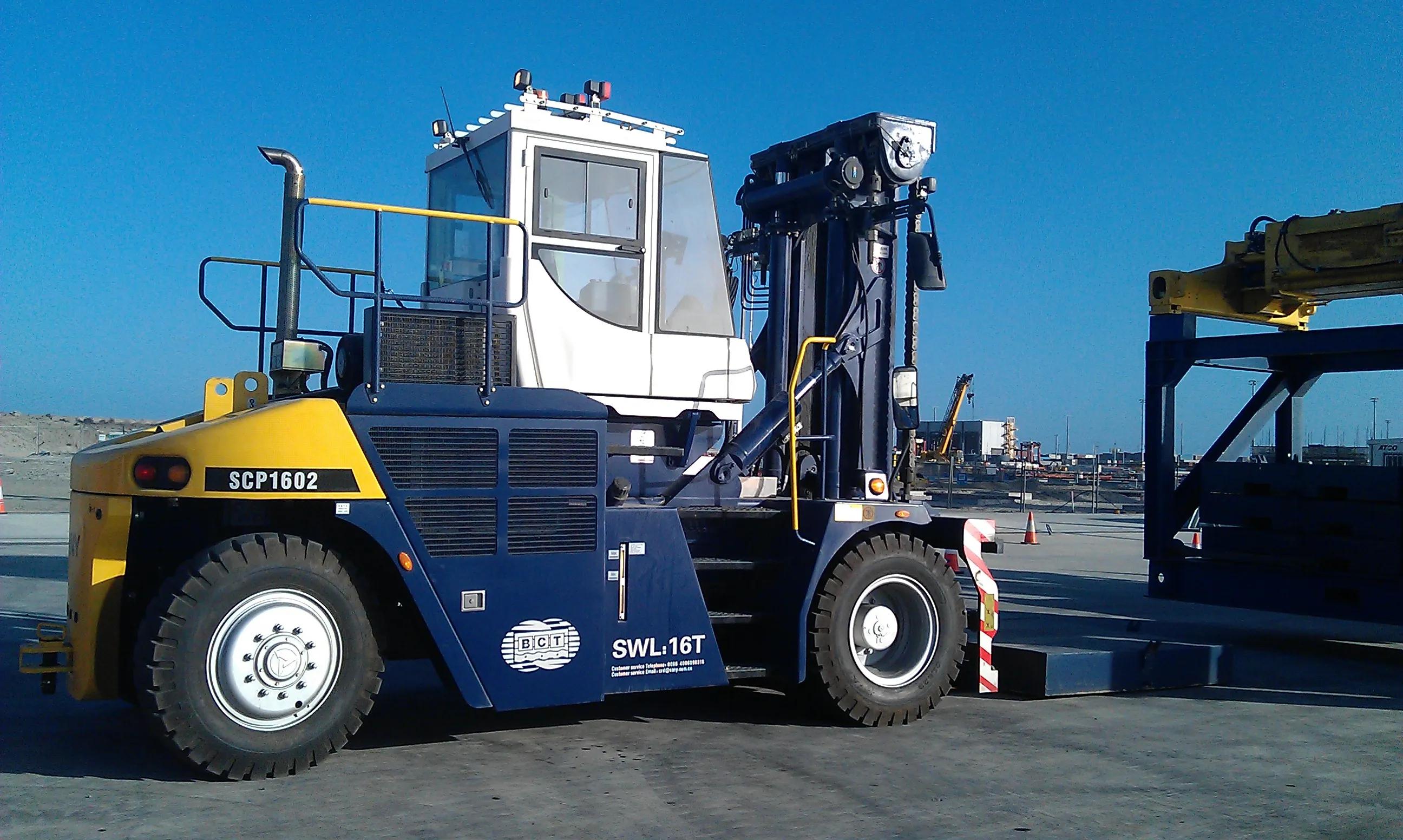
Also referred to as the data plate or capacity plate, it is a core label marking key vehicle information, including capacity, model, serial number, weight, mast height, load center, and other details. For example, SANY forklift truck are equipped with such information labels. Operators must master how to read the nameplate to understand the vehicle's performance and operational suitability, ensuring safe and efficient operations.
Electrical and Electronic Components
- Battery: Supplies electrical power.
- Controller: Governs the operation of the forklift.
- Sensors: Such as speed sensors, temperature sensors, etc.
- Lighting and warning signal devices: Such as headlights, turn signals, warning lights, etc.
Forklift Powertrain Components
The forklift powertrain is the core that ensures the equipment's driving, lifting, and braking functions. It consists of two types of power components (internal combustion and electric) and a hydraulic auxiliary system, with all parts collaborating to support the forklift's full-scenario operations. Key components are introduced by category below:
Internal Combustion Forklift Engine and Transmission Components
The engine serves as the power core of internal combustion forklifts. Common fuel types include propane, gasoline, or diesel. It outputs power through fuel combustion, providing energy for the forklift's driving and lifting operations. The transmission connects to the engine, regulating power transmission speed and torque to enable the forklift to move forward, reverse, and switch between different speeds, ensuring power output matches operational requirements.
Electric Forklift Motor and Battery Components
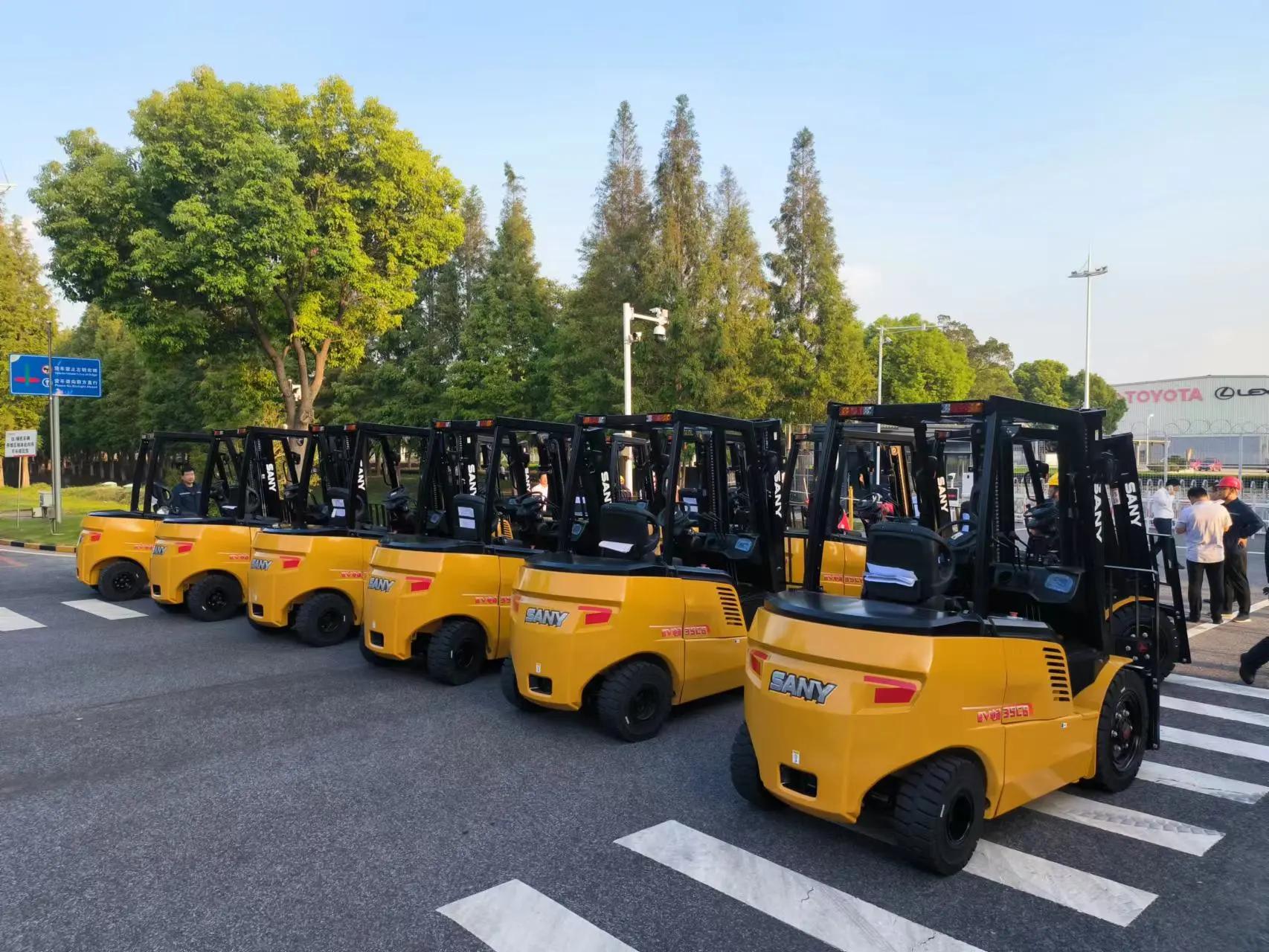
Electric forklifts derive power from the collaboration of motors and batteries. Large industrial batteries supply continuous electrical energy to the equipment and require regular charging to maintain range. The motor converts electrical energy from the battery into mechanical energy, driving the forklift's driving and lifting systems. Its quiet operation and zero-emission characteristics make electric forklifts more suitable for indoor work scenarios. For example, the Sany Electric Forklift not only has a rated load of 2,000-5,000 kilograms but also a driving speed of over 22 km/h, outperforming traditional fuel-powered vehicles. With 1 hour of charging, it can operate for 8 hours, making it highly popular.
Hydraulic Drive and Braking Systems
The hydraulic drive system is the power source for the forklift's lifting and tilting actions. It includes components such as hydraulic pumps, cylinders, and oil pipes, transmitting pressure through hydraulic oil to achieve smooth lifting of the forks and tilting of the mast. The braking system consists of brake pedals, brake discs, brake fluid, etc., responsible for controlling the forklift's deceleration or stopping. It is a key to ensuring operational safety, collaborating with the power system to realize the vehicle's controllable operation.
What Precautions Should Be Taken During Daily Forklift Operation?
Safety is paramount during daily forklift operation. Strictly follow operating procedures and conduct vehicle inspections before driving. When driving, maintain stability, adhere to speed limits, slow down when turning, and watch out for pedestrians and other obstacles. When loading and unloading goods, ensure balanced loads without exceeding weight limits and maintain cargo stability. After parking, lower the forks to the ground and engage the handbrake firmly.
Pre-Driving Inspections
Check vehicle performance: Before starting, verify that brakes, lights, horns, etc., are in good condition. Report faulty brakes immediately for repair; unauthorized disassembly and maintenance are strictly prohibited.
Inspect tires and forks: Ensure proper tire pressure and remove debris. Check that forks, fork carriages, and chains are secure.
Maintain good condition: Refuel with fuel, lubricating oil, and cooling water, and check for leaks in all pipelines.
Precautions While Driving
- Drive smoothly: Start, steer, and brake gently; avoid sudden acceleration or deceleration.
- Adhere to speed limits: Follow specified speed limits in factory areas and slow down on slippery roads.
- Pay attention to turning: Reduce speed significantly when turning, make slow turns, and be aware of the forklift's turning characteristics.
- Maintain fork height: Keep forks 300-400 millimeters above the ground while driving.
- Observe surroundings: Constantly monitor for pedestrians and obstacles, maintaining a safe distance.
- Reverse when necessary: Reverse when carrying large loads that block forward visibility.
- Operate on slopes: Drive forward when climbing slopes and reverse when descending; position cargo facing the uphill direction.
Precautions During Loading and Unloading
- Balance loads: Ensure balanced loads; overloading or uneven loading is strictly prohibited.
- Secure cargo: Do not handle unpackaged or loosely stacked goods; ensure cargo stability and reliability.
- Watch for nearby personnel: No one is allowed to stand or linger within a 1-meter radius of the forklift while forks are being lifted or lowered.
- Avoid single-fork use: Never operate with a single fork or use inertia to load/unload goods.
- Proper fork usage: Do not slide goods using brake inertia.
Precautions After Parking
- Lower forks: After the forklift is stationary, lower the forks to be flush with the ground.
- Engage handbrake: Firmly apply the parking brake.
- Turn off and remove key: Shut down the engine and remove the key to prevent unauthorized operation.
- Park in designated areas: Do not park in emergency exits, entrances, near fire-fighting equipment, or in areas that obstruct traffic.
Other Safety Regulations
- No unauthorized passengers: Do not carry irrelevant personnel, including allowing people to stand on forks or pallets.
- No drunk driving: Operating a forklift under the influence of alcohol is strictly prohibited.
- Stay focused: Do not get distracted, fool around, or eat/drink while working.
- No unauthorized maintenance: If mechanical issues are detected, shut down the forklift immediately and notify maintenance personnel. Unauthorized repairs by unqualified personnel are prohibited.
Conclusion
In busy warehouse shelves and port yards, forklifts frequently complete cargo loading, unloading, stacking, and short-distance transportation, serving as the core equipment for the efficient operation of modern logistics. Whether for precise indoor stacking or transportation on rough outdoor roads, the smooth operation of a forklift relies on the coordinated performance of all its components. Therefore, a thorough understanding of the components of a forklift truck is key to standardized operation, timely maintenance, and risk avoidance, and is crucial for the smooth conduct of loading, unloading, and transportation operations.
FAQs
What Are the Main Components of a Forklift?
The main components of a forklift can be divided into core system modules that work together to ensure operational performance:
The chassis serves as the foundation, including the engine compartment/battery compartment (housing the power source), the control center (driver's cab), counterweights, and drive/steering wheels.
The lifting system is the operational core, consisting of the mast, forks, fork carriage, lifting and tilting cylinders, etc., responsible for cargo lifting and stacking.
The powertrain includes the engine and transmission (for internal combustion forklifts) or the motor and battery (for electric forklifts), combined with hydraulic and braking systems to provide power and safety control.
Additional components include attachments such as side shifters, control parts like the steering wheel, and nameplates marking key parameters, together forming a complete operational equipment.
What Is the Forklift's "Boom" Called?
The "boom" of a forklift is usually called the mast. Composed of columns, this component is the key structure on a forklift used to lift the forks and transport cargo.
Which Six Components of a Forklift Must Be Inspected?
The six key components that must be inspected on a forklift include: the braking system, steering system, forks and lifting chains, tires, hydraulic system, and safety devices (such as lights, horns, and seat belts). These six main parts are the foundation for ensuring the safe and effective operation of the forklift.
Featured Products
Recommend Blogs
How to Operate a Forklift Truck? Step-by-Step Guide and Safety Tips
How to operate a forklift truck? This article helps both new and experienced operators understand forklift structure and operation steps in detail to reduce operational risks.
A Guide to the Forklift Industry: Types of Forklift Trucks, Selection Skills, and Future Trends
Starting from the system of types of forklift trucks, this article explains the scientific selection methods and provides a comprehensive insight into the past, present, and future of forklifts.
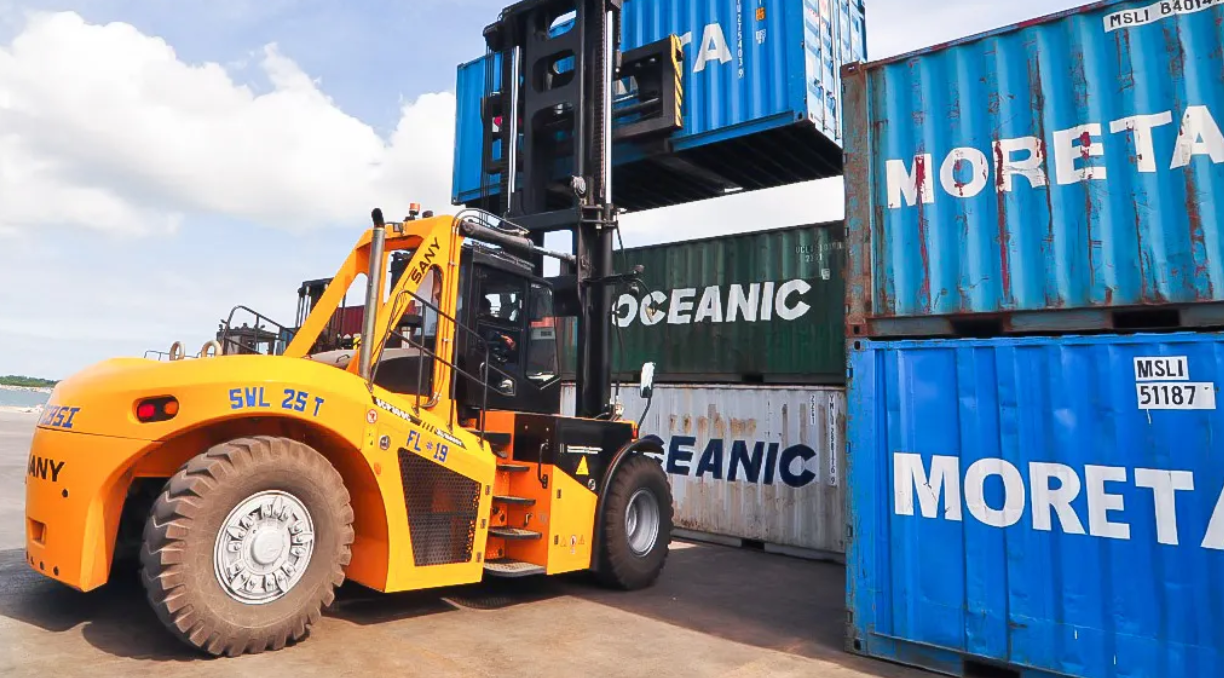
Learn About Forklift Truck from Scratch and Master Core Points of Classification and Configuration
This guide explains what a forklift truck is, outlining its main functions, classification types and provides practical tips on how to buy forklift truck fits your needs.