Learn About Forklift Truck from Scratch and Master Core Points of Classification and Configuration
This guide explains what a forklift truck is, outlining its main functions, classification types and provides practical tips on how to buy forklift truck fits your needs.
As a key piece of equipment in logistics and industrial production, a forklift truck can efficiently and flexibly lift, transport, and stack materials of various sizes. It not only reduces manual handling costs and improve production efficiency but also lowers the risk of workplace injuries and enhances operational safety.
There is a wide variety of forklift truck available on the market today. This guide explains the main functions and classifications of forklift trucks to help you buy forklift truck that meets your needs and make the most of this essential equipment.
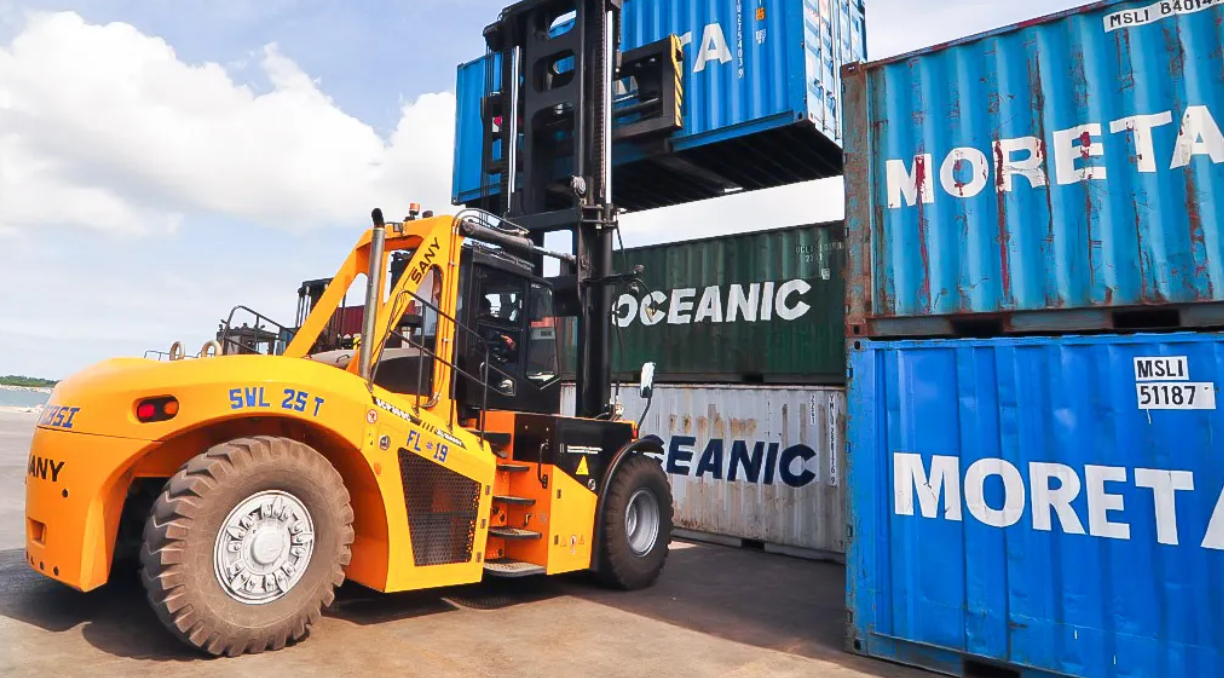
What Is a Forklift Truck and How Does It Work
Forklift Truck Definition
A forklift truck, also known as forklift or industrial lift truck, is a kind of industrial vehicle powered by energy sources such as electricity and fuel oil. It is equipped with metal forks at the front that can lift loads vertically and transport them horizontally. Forklift trucks effectively solve the problems of material handling, lifting, loading, unloading, and stacking in scenarios such as warehouses, factories, construction sites, and ports.
How a Forklift Truck Works
From the perspective of working principles, a forklift truck can complete a series of tasks through the efficient collaboration of its power system, hydraulic system, balance system, operating system, and the coordination of skilled operators. The details are as follows:
1.The Power System Provides Energy
It converts electrical, chemical or fuel energy into mechanical energy, supplying power for every movement and action of the forklift truck.
2.The Hydraulic System Controls Movements
Through the "pressurization → transmission → pressure relief" cycle of hydraulic oil, it precisely controls the front metal forks to perform actions such as lifting, lowering, and tilting.
3.The Balance System Ensures Safety
Designed with counterweights and stable triangular zones, it offsets forward-tilting forces and forms a triangular support area. This prevents the forklift truck from tilting forward, rolling over during operation.
4.The Operating System Connects the Operator and the Vehicle
It connects the power system and the hydraulic system through mechanical or electronic signals, converting operator's commands into the forklift's actions.
5.The Operator Oversees the Overall Operation
The operator controls the movement of the forklift truck using the steering wheel and hydraulic control levers, and carrying out tasks such as lifting, tilting, and transporting materials.
Core Components of Forklift Trucks
From the frame and chassis to the power source and hydraulic cylinders—and further to the carriage, mast, and forks—every component of a forklift truck must be carefully configured to balance operational needs, work efficiency, and safety.
1. Frame or Chassis
As the foundational structure of a forklift truck, the frame supports critical components including the mast, wheels, counterweight, engine or motor, and lifting mechanism. For a big forklift truck(with large dimensions and heavy loads), the requirements for material strength and structural stability are extremely high to ensure durability and safety.
2. Power Source
The power sources of a forklift truck mainly fall into two categories: electric power and fuel power, corresponding to two major types of forklifts: electric forklifts and fuel-powered forklifts.
(1) Electric Forklift
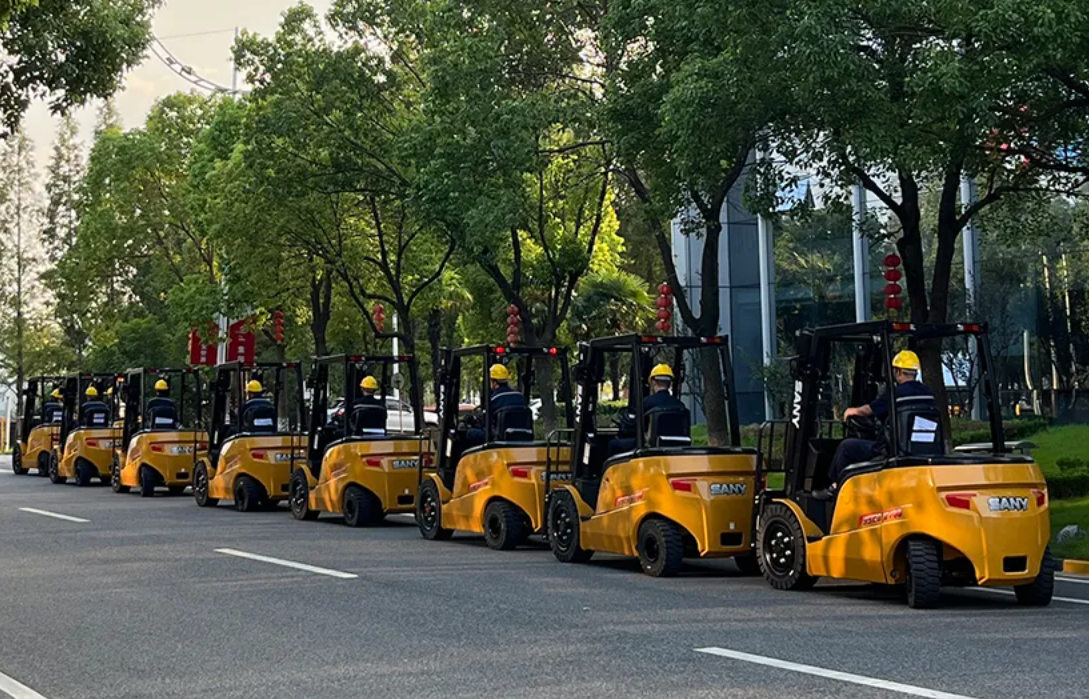
Equipped with an electric motor, it operates on batteries or fuel cells and can use either direct current (DC) or alternating current (AC). It offers several advantages including low total maintenance costs, flexible movement, and low noise. If you’re planing to buy a new forklift truck for sale, you usually find it falls under this category.
Take the SANY Electric Forklift SCP30C6 as an example: it combines the multiple advantages while delivering excellent work performance. With a rated load capacity of up to 3,000 kg, it easily meet the handling needs of most palletized goods such as food, daily necessities, and e-commerce parcels.
Beyond its strong lifting capacity, this forklift truck delivers sufficient power to quickly reach the work area. Its high charging efficiency also effectively improves productivity and reduce downtime for recharging.
(2) Internal Combustion (IC) Forklift
Equipped with an internal combustion engine, it uses fuels like diesel, liquefied petroleum gas (LPG), compressed natural gas (CNG), and gasoline as its power source. This type of forklift is widely used, featuring low initial configuration costs and high work efficiency. However, regular inspections are necessary—covering fuel levels, engine oil, wear parts, and potential mechanical faults.
3. Lifting Cylinder
As a key component of a forklift truck’s hydraulic system, the lifting cylinder is hydraulically driven. It provides power for the vertical movement of the mast, which in turn drives the carriage and forks to lift or lower loads.
4. Tilt Cylinder
Its primary function is to push or pull loads. There are usually two tilt cylinders installed on the fixed rails of the forklift mast to ensure smooth control of the mast’s movement and to reduce lateral (left-right) deviation.
5. Forklift Carriage
This component is mainly used to mount the forks. It is typically connected to the mast and can drive the forks to move up and down. Based on differences in lifting capacity and height (measured from the upper edge of the carriage to the lower edge of the fork bar), forklift carriages are roughly categorized into five grades.
Carriage Grade | Height Range | Lifting Capacity |
1 | 13 inches (approx. 33.02 cm) | Below 1.1 tons |
2 | 16 inches (approx. 40.64 cm) | 1.1 – 2.75 tons |
3 | 20 inches (approx. 50.8 cm) | 2.75 – 5.5 tons |
4 | 25 inches (approx. 63.5 cm) | 5.5 – 8.8 tons |
5 | 28.7 inches (approx. 72.90 cm) | 8.8 – 12 tons |
6. Forklift Mast
The forklift mast, also known as the "column," is a vertical structure responsible for lifting operations. It operates via a lifting mechanism that combines hydraulic cylinders and chain drives, allowing the mast to lift or lower goods through multiple telescoping sections. Based on the number of sections, masts are classified into different types: single-section, double-section, triple-section, and four-section masts.
7. Forks
As the component of a forklift truck that directly contacts heavy loads, forks are usually composed of a horizontal section and a vertical section. The horizontal section is where goods are fork-mounted; its front end is generally wedge-shaped to facilitate insertion into the bottom of goods. The vertical section serves as a support and connects to the carriage.
8. Counterweight
Located at the rear of the forklift, it is used to balance the weight of lifted goods. For example, counterbalanced forklifts are equipped with large counterweights to ensure safety and stability when lifting heavy goods.
9. Tires
Forklift trucks are equipped with different types of tires to meet various operational requirements, mainly falling into two categories:
- Solid tires: Made of solid rubber, they offer advantages such as low cost, easy maintenance, and good maneuverability in narrow spaces.
- Pneumatic tires: Filled with compressed air inside, they are suitable for uneven or rough terrain and provide better shock absorption.
Different Types of Forklift Trucks
Forklift trucks can be categorized into different types based on various criteria. For instance, when classified by rated lifting capacity and forklift truck sizes, they can be broadly divided into small, medium, and big forklift truck. When distinguished by application scenarios and design characteristics, a common forklift truck can fall into the following main categories:
1. Warehouse Forklifts
This type of forklift truck resembles a golf cart, with two forks extending from the front. It is well-suited for short-distance lifting and transporting various materials and is widely used in locations with large inventories (e.g., warehouses) as well as for moving goods between transport vehicles.
In addition to the standard model, warehouse forklifts have many subcategories tailored to specific operating scenarios and tasks, based on distinct design features:
- Side Loader Forklifts: A type of warehouse forklift equipped with a side-mounted operator cab and capable of traveling in narrow aisles. Commonly used in steel service centers and manufacturing plants, they can efficiently and flexibly transport heavy, long, and bulky items such as steel pipes and lumber.
- Counterbalance Forklifts: A forklift truck with forks mounted at the front and counterweights at the rear. Without a telescopic arm, it can effectively balance heavy loads, turn flexibly, and approach items directly. It is suitable for cargo stacking, transportation, loading, and unloading operations in warehouses, docks, and similar locations.
- Reach Trucks: A warehouse forklift often used for indoor operations, equipped with stabilizing outriggers and forks that can extend forward. The forks can extend beyond the operator cab and into the interior of warehouse racks, enabling fast and precise pallet picking. However, this type of forklift has a low ground clearance under the chassis and is not suitable for outdoor operations.
2. Rough-Terrain Forklifts
Designed specifically for complex outdoor terrains, this type of forklift truck is equipped with extra-large pneumatic tires and a reinforced chassis. It can adapt to harsh environments while maintaining operational efficiency and stability and is mostly used in uneven-surface work scenarios such as agriculture, construction, lumber, and mining sites.
Based on differences in design features, rough-terrain forklifts have the following subcategories:
- Telehandler Forklifts (Telescopic Handler): This type of forklift adopts a telescopic boom design, which provides an excellent vertical and horizontal reach range. It can easily lift and place palletized goods, construction materials, and supplies. Moreover, it has excellent off-road mobility, making it ideal for outdoor operations such as rooftop work, scaffolding installation, and agricultural tasks.
- Rotating Telehandler Forklifts: Featuring a 360-degree rotatable base, both the boom and the operator cab can rotate independently of the chassis. Thanks to its outstanding flexibility, this type of rough-terrain forklift can not only transport heavy items efficiently but also adapt to refined outdoor tasks, such as the installation of steel structures and modular buildings.
- Straight Mast Rough-Terrain Forklifts: A forklift truck equipped with a sturdy vertical lifting mast and large-sized pneumatic tires. Its distinctive feature include excellent off-road performance, ground clearance, and maneuverability, making it a professional choice for lifting ultra-heavy loads on rough terrain. It is mostly used in high-demand construction and logging operations.
Beyond the aforementioned subcategories, common forklift trucks also include turret truck, articulated forklift ,pallet jack, and walkie stacker, among others, which can meet diverse operational needs.
What Are OSHA's Classifications of Forklift Trucks?
Based on differences in fuel types and uses, the Occupational Safety and Health Administration (OSHA) classifies forklift trucks into seven major classes. Furthermore, when operating a forklift truck, operators must understand the safe operation specifications for each class of and obtain the corresponding class of operation qualification.
The specific classifications are shown in the table below:
Forklift Class | Type Name | Power Source | Core Features | Applications |
Class I | Electric Counterbalanced Forklifts (Rider-Type) | Rechargeable battery | Designed specifically for indoor operations, especially suitable for locations with air quality requirements | Indoor work scenarios such as warehouses and workshops |
Class II | Electric Narrow Aisle Forklifts | Rechargeable battery | Can move and operate in narrow spaces such as warehouse aisles | Transporting inventory items in narrow spaces |
Class III | Electric Hand-Operated Forklifts (Walkie-Type) | Rechargeable battery | No operator cab or driving control devices; requires manual pushing to move the forklift and manual control of fork lifting/lowering | Short-distance rapid unloading of transport vehicles, such as truck loading and unloading operations |
Class IV | Internal Combustion (IC) Engine Forklifts with Solid Tires | Gasoline or diesel | Emits exhaust gas into the environment; suitable for operations on flat surfaces | Warehouse environments with good ventilation and flat, dry ground |
Class V | Internal Combustion (IC) Engine Forklifts with Pneumatic Tires | Gasoline or diesel | Tires have excellent shock absorption and can adapt to rough roads | Indoor and outdoor scenarios with rough ground |
Class VI | Electric and Internal Combustion (IC) Engine Tuggers/Tractors | Battery, gasoline, or diesel | Excellent traction capacity; can efficiently transport heavy loads | Towing goods in indoor and outdoor scenarios, such as airports and warehouses |
Class VII | Rough-Terrain Forklifts | Gasoline or diesel | Equipped with special tires and counterweights; suitable for rough and uneven surfaces such as gravel roads and dirt roads | Construction sites, operations on uneven ground, and high-altitude lifting operations |
Where Are Forklift Trucks Commonly Used?
A forklift truck is mainly used in material handling, loading/unloading, and stacking processes across various industries, widely covering fields such as logistics and warehousing, manufacturing, construction and infrastructure, as well as ports and terminals.
1. Logistics and Warehousing Industry
This is a key field with high-frequency use of forklift trucks, covering almost the entire warehousing process. Different scenarios correspond to different types of forklifts.
- Loading and unloading: At warehouse entrances/exits and logistics parks, forklifts are used to load and unload palletized goods in coordination with trucks. Electric counterbalanced forklifts or internal combustion counterbalanced forklifts are commonly used here.
- Stacking: In areas like automated warehouses and racking zones, appropriate types of forklifts can easily lift goods to multi-layer racks for storage. For example, electric narrow-aisle forklifts excel in high-density warehousing environments.
- Sorting and handling: Inside warehouses, for short-distance transportation of goods from sorting areas to storage areas or outbound areas, forklift equipment such as electric pallet trucks and electric stackers are recommended.
2. Manufacturing Industry
For material supply to production lines and waste recycling, forklift trucks that are adapted to the workshop environment and production rhythm can be used in a targeted manner.
- Material Distribution for Production Lines: To transport raw materials (e.g., steel plates in automobile factories, components in electronics factories) directly from raw material warehouses to production line workstations, forklifts with high handling efficiency and flexible operation—such as side loader forklifts—are preferred.
- Finished Product Transfer: To move finished products (e.g., home appliances, mechanical parts) from production lines to finished product warehouses or temporary storage areas, electric counterbalanced forklifts are commonly used, as they are suitable for continuous operations across multiple shifts.
- Waste or Empty Container Recycling: To collect waste, empty pallets, and empty packaging boxes generated during production and transport them centrally to recycling areas, low-cost electric pallet trucks are often used, as they are simple and easy to operate.
3. Construction and Infrastructure
Forklift trucks here are used to transport construction materials (steel bars, cement pallets) and lift materials at height. They need to cope with uneven roads, heavy loads, and harsh environments, so outdoor-type forklift trucks are often the main choice.
- Construction site material handling: For transporting steel bars, cement, sand, gravel, and prefabricated components at construction sites, rough-terrain forklifts are commonly used. They can travel and operate on uneven surfaces such as muddy roads and gravel roads, and can also be equipped with buckets to transport bulk materials.
- Equipment lifting assistance: When coordinating with tower cranes, overhead cranes, etc., to transport small engineering equipment or adjust equipment positions, internal combustion counterbalanced forklifts with excellent load-bearing and lifting capabilities are often used.
4. Ports and Terminals
Forklift trucks in ports mainly undertake short-distance transfer of containers and bulk cargo, as well as loading and unloading of bulk goods such as coal, ore, and grain. This places high demands on the load capacity and durability of forklifts.
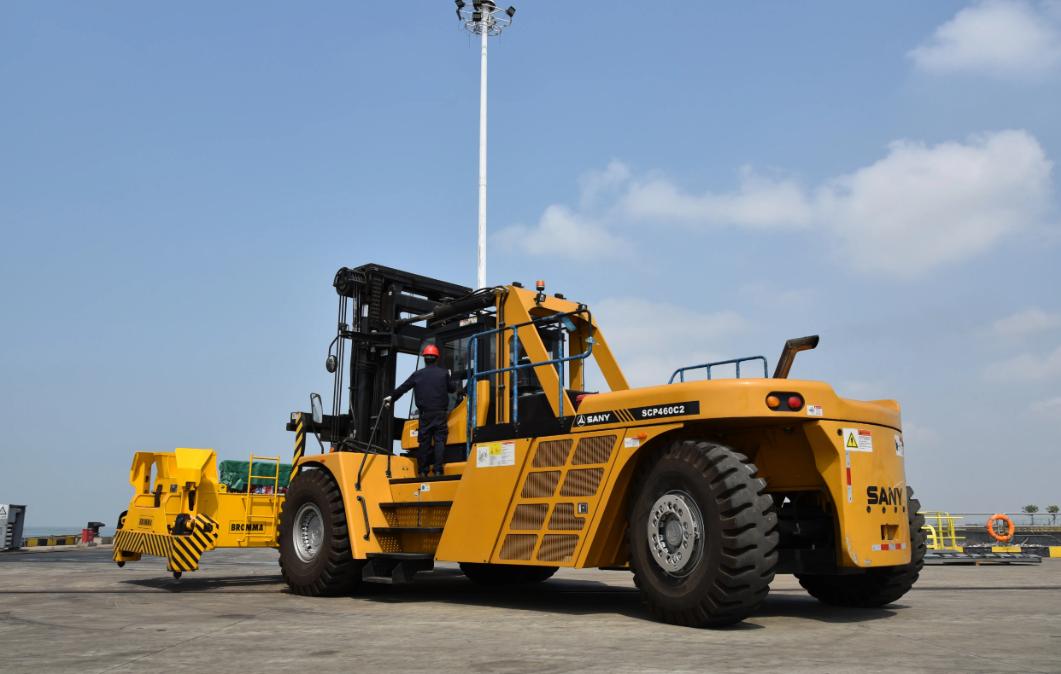
- Container auxiliary handling: To transfer containers from under quay cranes or gantry cranes to temporary storage areas, or for short-distance container movement, large-tonnage, high-load big forklift truck will be commonly used.
- Bulk cargo loading and unloading: When equipped with grab attachments to transfer bulk goods from trucks or cargo ships to warehouses, gas-powered forklifts with strong power and continuous operation capabilities are often used.
In addition to the above fields, a forklift truck is also widely used in the retail industry, agriculture and forestry, as well as industries such as pharmaceuticals, electronics, and chemicals. However, it is necessary to match the appropriate type of forklift specific operational requirements.
How to Choose the Right Forklift Truck for Your Operation
To select a suitable forklift truck, the key lies in screening the type and specifications of the forklift step by step based on different dimensions such as the operating environment, core requirements, operational convenience, and operation and maintenance costs. This ensures that the forklift not only meets functional requirements but also balances safety, efficiency, and cost expenditure.
1. Clarify the Operating Environment and Select the Right Power Source and Tire Type
Differences Between Indoor and Outdoor Environments
For indoor scenarios such as warehouses, workshops, and clean rooms, it is recommended to prioritize electric forklifts to avoid exhaust pollution from internal combustion forklifts. If the forklift is used for transportation in cold storage, a low-temperature resistant model should also be selected.
For outdoor scenarios such as construction sites, ports, and farmlands, internal combustion forklifts with strong power and durability can be prioritized.
Differences in Ground Conditions
For flat surfaces such as cement floors and tile floors, forklifts with solid tires can be configured.
If operating on uneven surfaces (e.g., gravel roads, muddy grounds, farmlands), rough-terrain forklifts with pneumatic tires should be prioritized.
2. Precisely Match Forklift Specifications Based on Core Operational Parameters
You should determine the parameter indicators of the forklift truck (such as rated capacity and maximum lifting height) according to the load requirements and stacking height needs of different operating scenarios. For example:
If you need to transport 3-ton pallets, you can choose a forklift with a rated capacity of 5 tons.
If the weight of the materials increases to 8 tons, a forklift with stronger load-bearing capacity will be required.
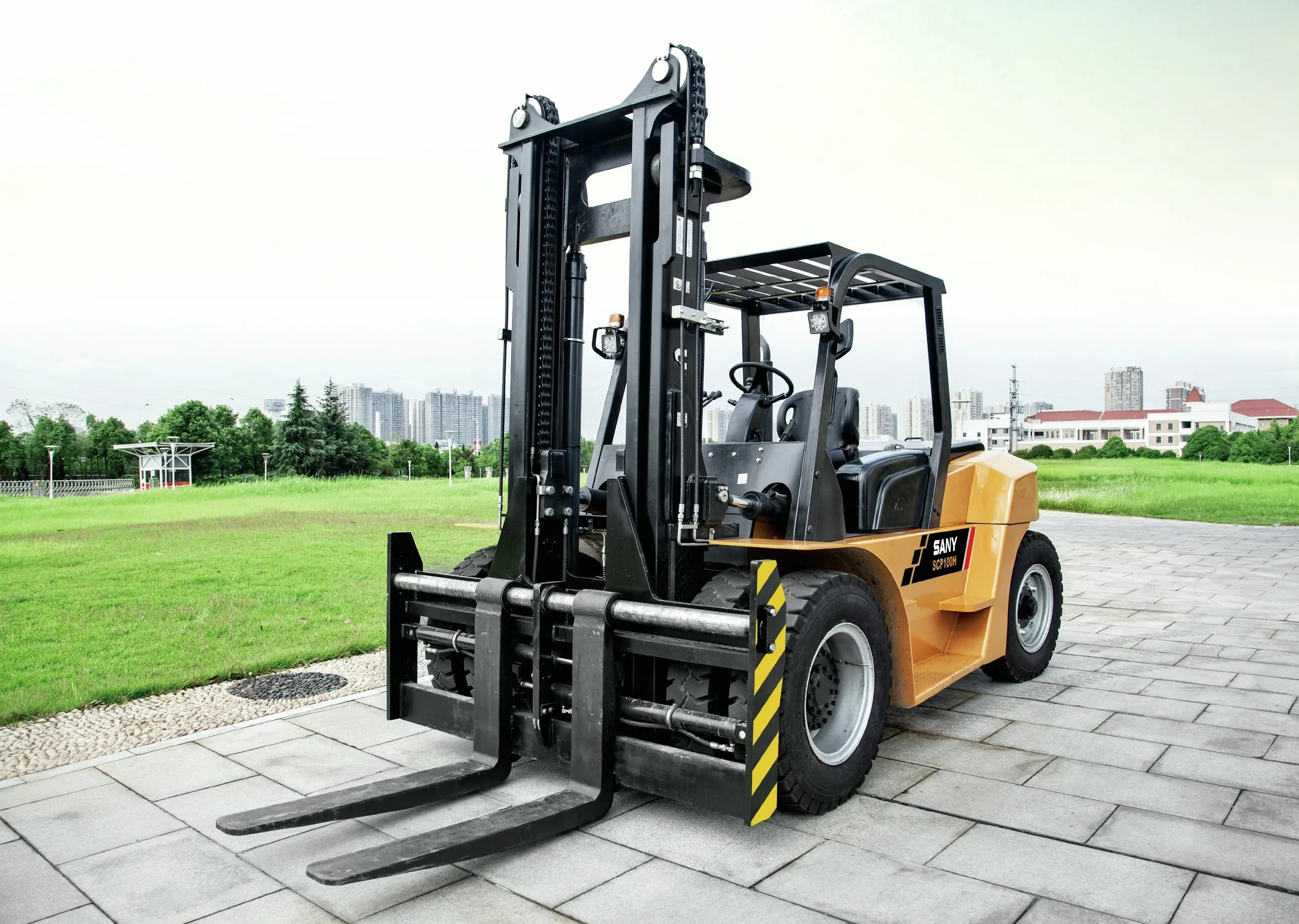
Take the SANY 10T Forklift Truck SCP100A as an example: as a forklift truck with a rated load of 10 tons, it can easily handle operational tasks involving loads below 10 tons. Moreover, its maximum lifting height is 3,761mm, which is sufficient to cover most lifting task requirements below 4 meters.
Meanwhile, this forklift truck features a reliable structural design and is equipped with advanced technologies such as roll-over protection, load falling protection, and automatic fire extinguishing, effectively ensuring operational safety.
3. Consider Operational Convenience to Adapt to Operators and Scene Details
The ease of use and operation difficulty of a forklift directly affect operational efficiency. Special attention should be paid to the adaptation between the operating space and the operator’s proficiency:
For narrow operating spaces such as high-density automated warehouses, narrow-aisle forklifts should be prioritized.
For conventional operating scenarios such as ordinary warehouses and outdoor areas, there is no need to worry too much about insufficient operating space.
In addition, some types of forklifts (e.g., electric hand-operated forklifts) require manual movement of the forklift and manual control of fork lifting/lowering, which places higher demands on the operator’s proficiency and may not be user-friendly for new operators.
4. Calculate Long-Term Costs to Balance Initial Investment and Post-Maintenance
If you plan to buy a forklift truck, you should balance the initial purchase cost with subsequent operation and maintenance costs:
Generally speaking, electric forklifts have a high initial cost but low electricity fees and simple maintenance, making them suitable for high-frequency use scenarios.
Internal combustion forklifts have a lower initial price but require regular maintenance, making them more suitable for scenarios with low usage frequency.
If you find that direct purchase is not cost-effective, you can also consider forklift rental.
Conclusion
As a professional piece of equipment capable of lifting and transporting materials of various sizes, a forklift truck comes in a wide range of types and product forms, and plays an indispensable role in diverse industries such as logistics and warehousing, manufacturing, construction, and agriculture and forestry. If you are unsure about the classification and configuration of forklift trucks, you can follow this guide to fully understand the main types of such equipment and the key considerations for purchasing one.
FAQs
What Is The Difference between a Forklift and a Forklift Truck?
In fact, there is no difference between the two. Both "forklift" and "forklift truck" refer to the same type of industrial material-handling vehicle; the difference lies only in naming conventions. "Forklift truck" is a more formal term that emphasizes the vehicle nature of this type of equipment, while "forklift" is a more colloquial expression that is simpler and more straightforward to use.
Do You Need Your CDL to Drive a Forklift ?
No, you generally don't need a CDL to operate a forklift, as you do with a forklift driver's license. The Occupational Safety and Health Administration (OSHA) mandates that forklift operators receive training and certification through their employer. This training and certification is specific to the workplace and equipment, unlike a CDL, which is a license to operate a commercial motor vehicle on public roads.
What Are The Three Main Types of Forklifts?
There is a wide variety of forklift trucks, and the three most common main types are counterbalanced forklifts, reach trucks, and rough-terrain forklifts. Among them:
Counterbalanced forklifts are equipped with forks at the front and counterweights at the rear. They can efficiently transport and lift heavy loads, and are widely used in warehouses, ports, and similar locations.
Reach trucks have forks that can extend forward and offer a high lifting height, making them suitable for precise picking operations in high-rise racks of warehouses.
Rough-terrain forklifts are designed for outdoor operating scenarios with uneven roads. They are usually equipped with pneumatic tires, which can effectively reduce vibration and ensure operational stability and reliability.
Featured Products
Recommend Blogs
Can a Forklift Enter a 26 Ft Box Truck? Compatibility Matching & Best Practices Guide
This article addresses the question of can a forklift enter a 26 ft box trucks, provides practical advice and alternatives, and offers comprehensive guidance for practitioners.
How Much Does a Forklift Truck Weigh? A Quick & Practical Weight Data and Safety Guide
How much does a forklift truck weigh? Get typical weights, factors affecting them, and practical safety tips for operators.
Right Forklift Companies Can Fully Assist the Forklift Team to Carry Out Operations Efficiently
This article highlights the importance of selecting high-quality forklift companies and their types, and provides a purchasing guide to help forklift teams operate more efficiently.