Cement Truck vs Concrete Truck: Key Differences and Selection Guide
Cement truck vs concrete truck: Are they the same? This article will provide a detailed answer to help you choose the right truck for your construction project.
Cement trucks and concrete trucks are frequently seen at construction sites and are essential for road paving, high-rise building projects, and bridge construction. However, many people confuse these two types of equipment, even equating them. Cement truck vs concrete truck: what are the core differences? This article will break down their essential differences from the perspectives of definition and usage scenarios, while providing targeted selection advice to help you make informed decisions regarding project procurement and construction.
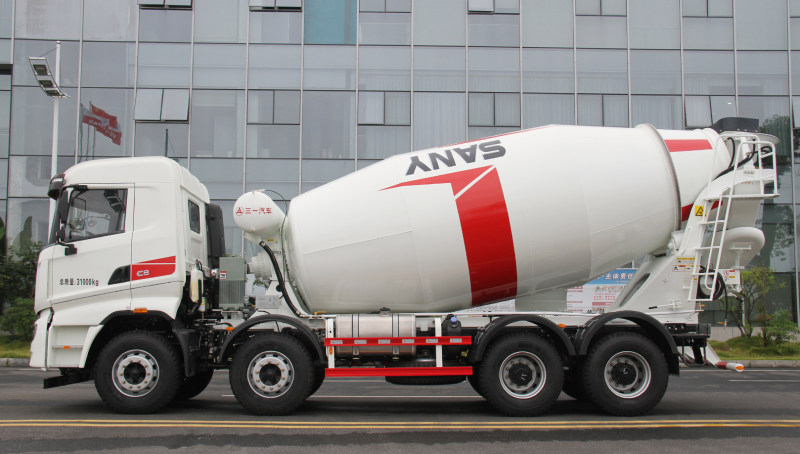
Cement Truck vs Concrete Truck: Key Differences
Definition
A cement truck is a vehicle primarily used to transport raw cement or dry powder mixtures. Cement is only one component of the concrete mixture.
A concrete mixer truck is a vehicle specifically designed to efficiently transport concrete from the production site to the construction site, continuously mixing the materials during transport to ensure the concrete remains uniform and usable upon arrival at the construction site.
Main components
Cement Truck vs Concrete Truck | ||
Part | Cement Truck | Concrete Truck |
Mixing Device | Equipped with a stirring drum (to keep the mixture homogeneous). | Equipped with a rotarydrum to keep concrete uniform during transport. |
Control System | Control the speed/direction of the stirring drum. | - |
Water Tank | - | Provide the water needed for stirring/cleaning |
When Should You Choose Cement Trucks?
Cement trucks are suitable when raw, unmixed cement needs to be transported instead of finished concrete. Its core design purpose is to transport raw materials such as cement powder and dry mixes, rather than handling pre-mixed materials.
Scenario 1: Transporting Raw Materials to a Concrete Batching Plant
If the batching plant needs to replenish bulk/bagged cement powder (as a fundamental component of concrete), a cement truck can directly transport the cement raw materials from the production plant to the batching plant, achieving centralized supply of raw materials.
Scenario 2: Separate Cement Storage at Construction Site
When a construction site needs to store cement separately (to be mixed with sand, gravel, and water as needed), cement trucks can transport dry cement powder (or dry mix) to the site, avoiding material solidification problems caused by pre-mixing.
Scenario 3: Transporting Dry-Mixed Mortar and Similar Materials
Besides cement, cement trucks are also suitable for transporting dry-mixed mortar and other dry building materials that have not been watered, adapting to the "transport raw materials first, mix on-site" construction process.
When should you choose Concrete Trucks?
When a project requires the direct use of pre-mixed concrete, a concrete truck is the ideal choice. It can handle long-distance transport and continuously mix the concrete en route, ensuring it arrives on site still homogeneous and ready for work.
Scenario 1: Direct Concrete Pouring at the Construction Site
In scenarios such as building foundations and wall pouring, where concrete needs to be used immediately upon arrival, a concrete truck can deliver pre-mixed concrete directly to the work site, avoiding the time and equipment costs associated with on-site mixing.
Scenario 2: Concrete Supply Over Long Distances
If the concrete plant is far from the construction site, the concrete truck's onboard mixing drum can maintain material uniformity during transportation, preventing the concrete from hardening and segregating en route.
Scenario 3: Continuous Concrete Supply for Large-Scale Projects
Large-scale construction projects such as bridges and roads require a continuous and stable supply of concrete. Concrete trucks can transport finished concrete to the site in batches and in an orderly manner, ensuring the construction schedule is maintained.
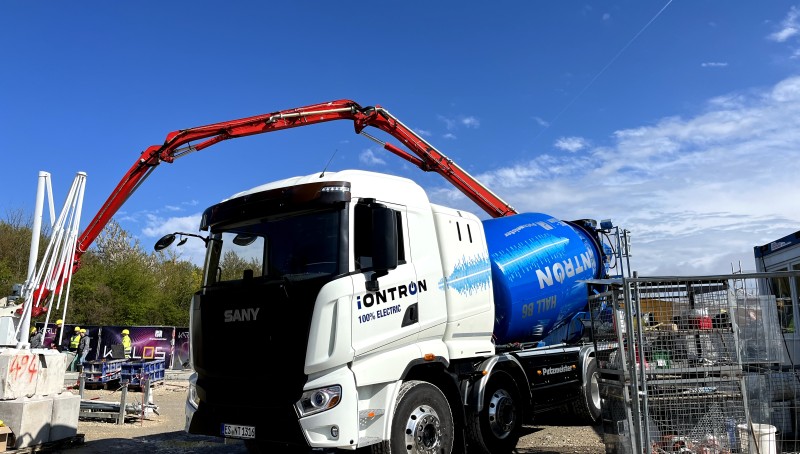
Cement Truck vs Concrete Truck: What Should You Consider When Purchasing?
When purchasing construction transport vehicles, the core requirements for cement trucks and concrete trucks differ significantly. Therefore, it's necessary to consider factors such as vehicle functionality and suitability for different scenarios.
Cement Truck Selection Considerations
It is recommended to focus on the core needs of "dry cement/raw material transportation," paying particular attention to sealing, load capacity, and unloading efficiency:
1.Focus on tank volume: Tank volume directly determines transportation volume and profitability. A reasonable selection should be made based on the payment method: For per-cubic-meter billing scenarios: Prioritize larger-capacity vehicles to increase single-trip transportation volume and profit margin.
2.Select the right rear axle configuration: The rear axle is the core load-bearing component, and the appropriate type must be selected based on road conditions to ensure passability and climbing ability:
- Flat roads: A single-stage reduction axle is sufficient to meet basic load-bearing and driving requirements;
- Complex roads (e.g., poor road surface, multiple inclines and declines): Wheel-side reduction axles are preferred. This type of rear axle is smaller, has higher ground clearance, better passability, and superior climbing ability compared to a single-stage reduction axle.
3.Pay attention to tire selection: Tires are key to driving safety and cost control. There are two main types.
- Prioritize steel-belted tires:They are recommended which have a long service life and low rolling resistance. Although they are more expensive, they are more durable and economical, and are the current mainstream choice.
- Nylon tires:They are cheaper, but have a shorter service life and higher rolling resistance, and are only suitable for short-term, light-use scenarios with a limited budget.
4. Check Tank Quality, Pay Attention to Steel Plate Thickness:The tank directly contacts concrete, and its quality determines its service life. The core focus is on steel plate thickness:
- Single-axle mixer trucks: A steel plate thickness of 5-6mm is recommended for the tank to match its load-bearing capacity.
- Double-axle and above mixer trucks: The steel plate thickness of the tank should reach approximately 8mm to ensure load-bearing capacity and wear resistance.
5. Choose Reputable Brands: These brands offer more stable equipment quality and a more comprehensive after-sales service network, reducing the risk of maintenance and malfunctions during subsequent use. Specific models can be matched according to actual load-bearing capacity and operating conditions.
Concrete Truck Selection Considerations
It is recommended to focus on the core requirement of "transporting finished concrete + mixing it en route," taking into account the specific scenario, cost, and durability:
1. Capacity and Size: Select the appropriate capacity based on the project's concrete usage. Large projects require large-capacity vehicles, while small projects should choose compact models.
2. Engine and Power: A powerful engine is required to adapt to different terrains and maintain the ideal drum speed, ensuring the concrete's condition during transport.
3. Mixing and Discharge Mechanism: Focus on the mixing and unloading systems. Prioritize vehicles that maintain material uniformity during transport and facilitate easy unloading. Upgrading equipment can improve efficiency.
4. Durability and Maintenance: Prioritize vehicles made of durable, anti-aging materials suitable for harsh environments; also select vehicles with readily available spare parts and reliable after-sales service to minimize downtime.
5. Brand and After-Sales Service: We recommend choosing well-known brands, as their equipment quality and after-sales service are more reliable.
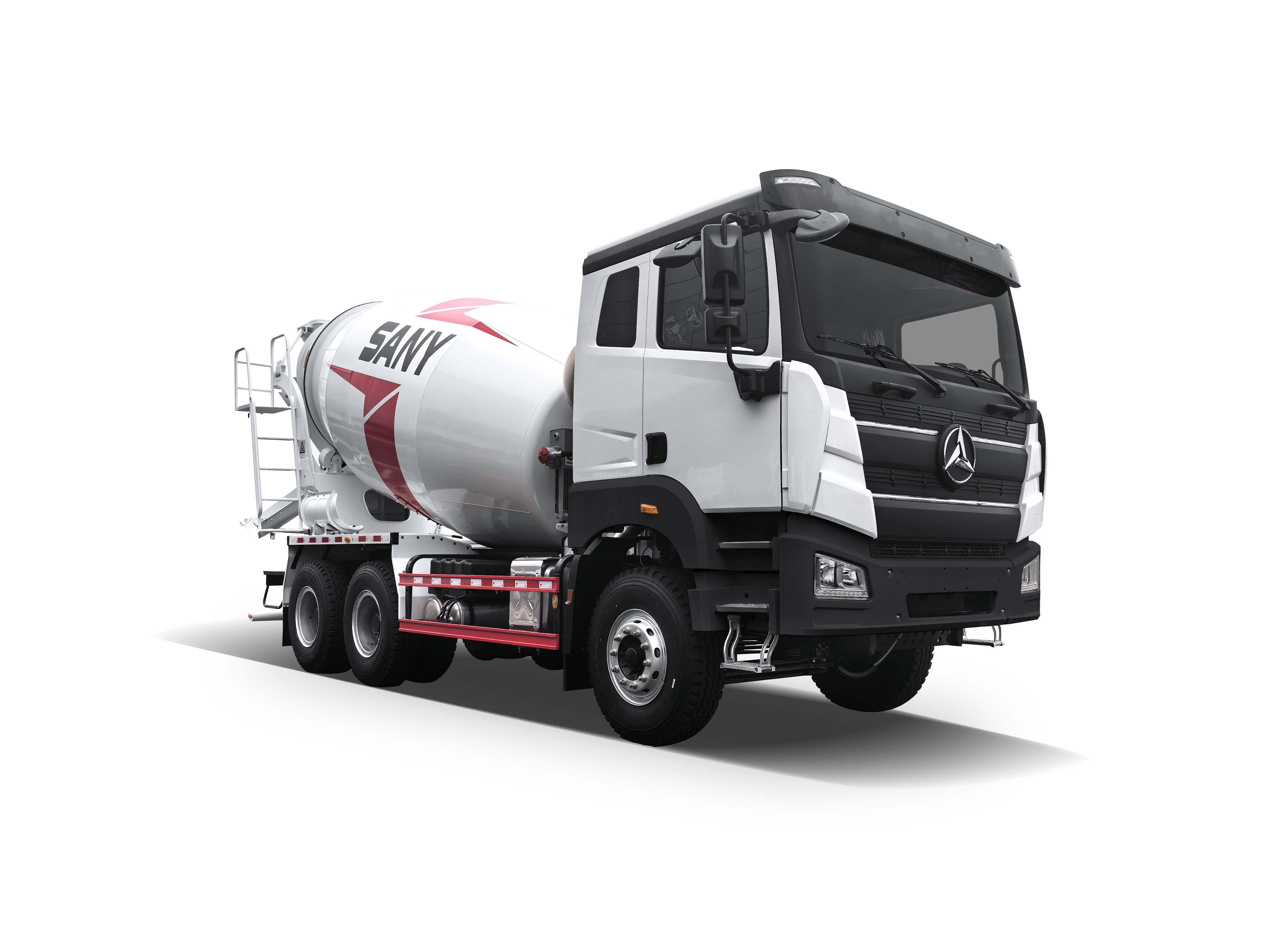
For example, SANY concrete trucks are a good choice. They are highly reliable, reaching 36.5 meters in length, and utilize ultra-high-strength steel to optimize key components, featuring an open hydraulic system and high-end configuration. Furthermore, they offer 10% higher pumping efficiency, smoother flow, and less clogging, meeting the demands of long-term concrete pumping. SANY after-sales service is also excellent; local SANY dealers provide a range of routine maintenance services or customized maintenance packages and solutions to meet your operational needs, ensuring the safety of your team and the efficiency of your SANY equipment.
Conclusion
In summary, cement truck vs concrete truck:the core difference between them lies in their functional positioning and applicable scenarios. The former focuses on transporting dry cement raw materials, while the latter specializes in mixing and supplying finished concrete on-site. When selecting a cement truck, you should accurately match it according to project requirements, transportation materials, working conditions, and costs, prioritizing equipment quality and after-sales support to improve construction efficiency, control operating costs, and lay a solid foundation for material transportation to ensure the smooth progress of the project.
FAQs
Cement vs Concrete: What's the Difference?
Cement and concrete are not the same thing. The core difference is:
Cement is a dry powder made from minerals such as limestone and clay, and is only a raw material;
Concrete, on the other hand, is a wet mixture made by mixing cement, sand, gravel, and water, which hardens into a solid material after drying.
When Is Cement Used Instead of Concrete?
Simply put, cement is a component of concrete; the former is dry, while the latter is wet and can be used directly in construction.
Cement is primarily used for smaller-scale projects. For example, when creating intricate decorations on walls at home, cement can be used to achieve precise designs. Furthermore, when existing concrete develops cracks and needs repair, cement is a more suitable material, precisely filling the damaged areas without requiring concrete, which is designed for large-scale projects.
Concrete vs Mortar Mixer: What's the Difference?
The main differences between a concrete mixer and a mortar mixer lie in their mixing methods and the materials they are designed for:
A concrete mixer typically uses a rotary drum to mix cement, sand, gravel, and water (including aggregates). It's suitable for mixing high-hardness concrete containing coarse aggregates.
A mortar mixer, on the other hand, usually has a fixed base with a mixing paddle/blade. The blades rotate and mix water, cement, and sand (excluding coarse aggregates), producing a more fluid and finer mortar. This is suitable for delicate tasks like bricklaying and plastering, where a higher degree of uniformity is required.
Featured Products

-OE_160931.jpg)
Recommend Blogs
How Does Concrete Mixer Truck Work? Essential Insights for Construction Workers
This guide explains how does concrete mixer truck work, offering solutions for equipment selection, usage, and maintenance based on your construction needs.

What Is Concrete Batching Plant? Everything You Should Know
Discover what is concrete batching plant, its types, how it works, and tips to choose the right one for your construction projects.