2026 Asphalt Millings for Driveway Complete Guide
This article explains the pros and cons, core processes (milling, paving, maintenance), and key considerations of using asphalt millings for driveways.
In the field of driveway paving, homeowners and contractors are increasingly looking for solutions that combine durability, cost-effectiveness, and environmental friendliness. Among the many options, asphalt millings for driveways stand out as a superior choice. This recycled paving material not only reduces costs but also minimizes environmental impact, making it a practical and eco-friendly paving solution for residential driveways. Below, we'll delve deeper into asphalt millings for driveways, including details on their production, installation, and maintenance.
What Are Asphalt Millings for Driveway?
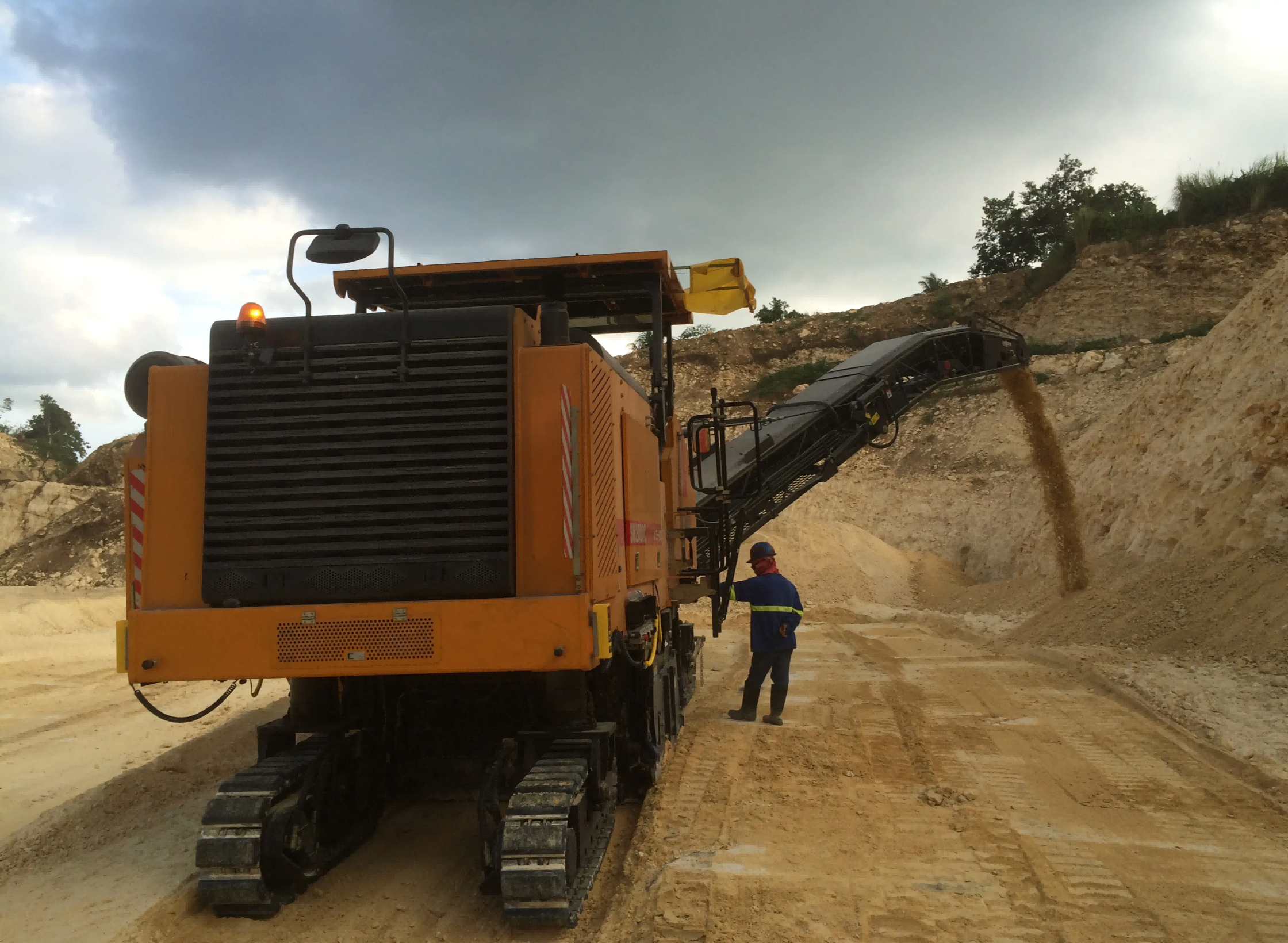
Asphalt millings for driveways are not obtained by completely remove asphalt driveway, but rather by using a cold cold planer or milling machine to remove and collect the existing asphalt surface. After collection, the asphalt millings are recycled. The collected asphalt is crushed into smaller aggregates, and contaminants such as dirt and debris are screened out. After screening, the milled material is mixed with a binder to improve durability.
Advantages of Asphalt Millings for Driveway
1. Cost-Effective: Compared with new asphalt, the use of recycled materials can significantly reduce costs and save the budget without sacrificing quality.
2. Durable and Strong: The original asphalt can bond crushed aggregates, forming a hard and stable surface after compaction. It is resistant to cracking and rutting, and can withstand heavy-load traffic.
3. Environmentally Friendly and Sustainable: By reusing existing pavement materials, it reduces landfill volume and conserves natural resources, making it a sustainable choice.
4. Low Maintenance Cost: Compared with gravel pavements, it has lower maintenance requirements, only needing occasional leveling or compaction. If constructed properly, the service life can reach 20-30 years.
5. Quick Construction: Faster than traditional hot-mix asphalt construction, usually hardening and forming within 24 hours.
6. Excellent Drainage Performance: Its drainage performance is superior to that of solid asphalt pavements when not fully sealed, which can reduce water accumulation problems.
Disadvantages of Asphalt Millings for Driveway
1. Unstable Quality: Quality is highly dependent on the source of raw materials; old, dry, or unscreened millings have poor performance.
2. Potential Contaminants: Asphalt millings may contain impurities such as stones and vegetation, or harmful substances (oil stains, lead) from the original pavement, posing health risks.
3. Rough Texture: Compared with smooth new asphalt, the surface paved with millings is rougher and uneven, which some people consider less aesthetically pleasing.
Specific Steps of Asphalt Milling Removal
Although asphalt millings for driveways offer numerous advantages, asphalt milling removal is not a simple task. It is a complex process that requires meticulous planning, precise equipment operation, and proper material handling. The following steps outline the standard operating procedure, from initial assessment to final surface preparation, to ensure efficient and reliable construction.
Evaluation and Planning
Professionals assess pavement damage (such as cracks and unevenness), determine the precise milling depth and scope, and ensure smooth drainage and reasonable elevation.
Equipment Debugging and Calibration
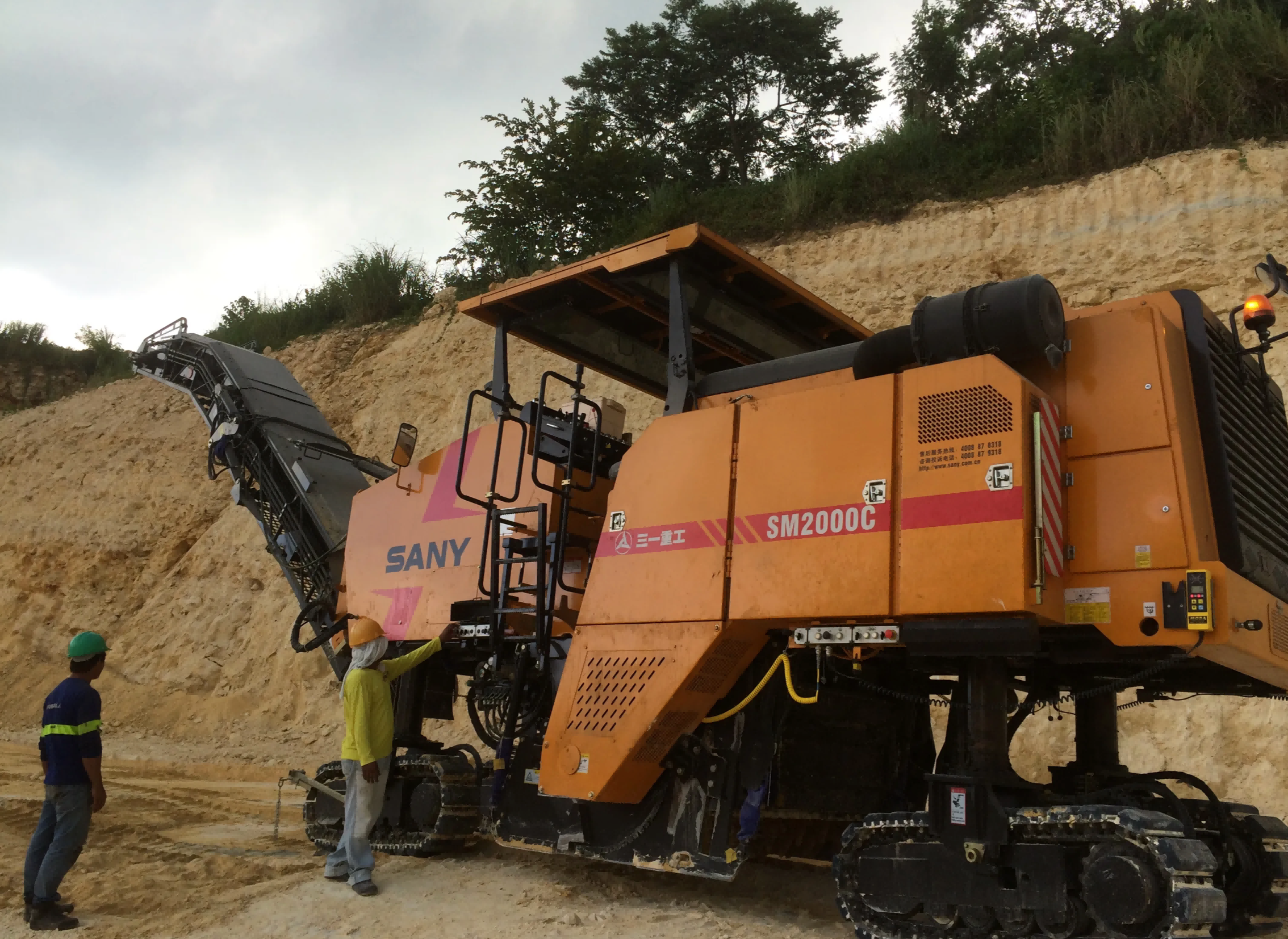
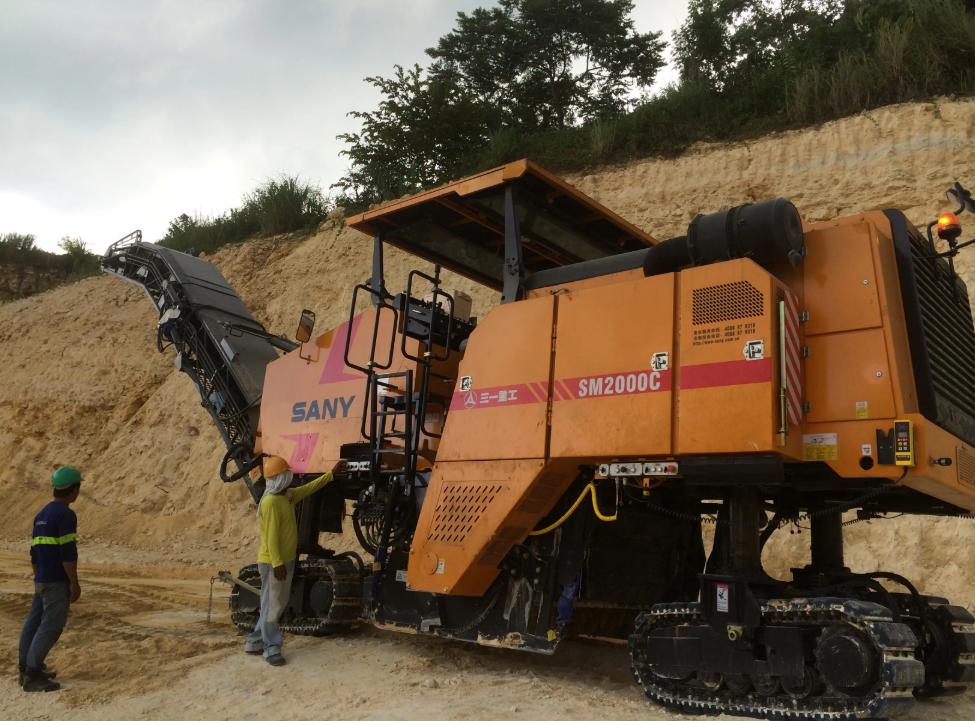
Select appropriate asphalt removal machines, such as asphalt milling machines or cold planers, and debug the equipment to make its cutting depth meet the required specific uniform standards. The depth is usually adjustable and controllable. SANY milling machine is a good choice, with a maximum milling depth of 0- 330mm and a maximum milling width of 1000- 2010 mm, which can meet different milling needs.
Milling Operation
Asphalt grinding equipment moves on the pavement, and its rotating drum with cemented carbide teeth grinds and crushes the asphalt into small, easy-to-handle particles (milling materials).
Material Collection and Transportation
The conveying system on the equipment transports the millings to the waiting dump trucks, keeping the operation area clean.
Cleaning
After milling, use road sweepers and vacuum cleaners to thoroughly clean the pavement, removing dust and loose debris to prepare for subsequent steps.
Surface Pretreatment
Workers may apply a bonding agent (tack coat) to the milled pavement to enhance adhesion and handle residual minor defects.
Recycling
The collected millings are usually recycled through screening, mixed with new asphalt binder, and reused in subsequent paving projects, making the entire process economical and sustainable.
Steps for Paving Asphalt Millings for Driveway
After obtaining asphalt millings for your driveway, proper construction steps are crucial to ensure durability and a smooth, long-lasting surface. The following process will guide you through the key steps, from site preparation and paving to compaction and optional sealing.
Site Preparation (Foundation Engineering)
1. Area Clearing: Remove all sod, weeds, stones and old pavement.
2. Subgrade Shaping and Compaction: Excavate to the required depth, ensure proper drainage, and thoroughly compact the undisturbed soil to form a solid foundation.
Paving Asphalt Millings
1. Uniform Paving: Distribute the millings evenly across the entire area with a target thickness of 3-4 inches.
2. Joint Treatment: Ensure a smooth transition (butt joint) between the newly paved surface and the existing pavement.
Compaction and Bonding (Key Steps)
1. Water Spraying: Lightly spray a small amount of water to facilitate better bonding of the millings.
2. Compaction: Use a heavy-duty plate compactor or road roller (steel wheel is optimal) to compact the material until the surface becomes firm and flat.
Sealing (Optional)
If a harder and dust-free surface is desired, apply asphalt-based tack coat or emulsified asphalt sealant after compaction to allow it to penetrate and harden.
Key Maintenance Tips for Asphalt Milled Driveways
After asphalt milling driveways are installed, scientific post-construction maintenance is necessary to ensure long-term stability and prevent premature damage and deformation. The following are key maintenance guidelines, proven through practical experience, covering essential aspects of routine maintenance and problem resolution.
Install Edge Restraints
Use landscape timbers, stone or metal strips to fix the millings, preventing them from spreading outward and causing the driveway width to narrow.
Weed Control
Regularly pull out weeds or spray herbicides to remove weeds that try to grow from the compacted surface and keep the driveway clean.
Ensure Drainage
Asphalt millings themselves are porous and allow water to penetrate, but a good slope still needs to be maintained to avoid erosion caused by water accumulation.
Regular Recompaction
Over time, vehicle traffic will loosen the surface. Regular recompaction of the millings can keep the driveway stable and flat. If minor wear such as small cracks or potholes occurs, new asphalt millings can be used to fill the gaps, and an asphalt patching machine can be used to compact the millings tightly to prevent further expansion of the damage.
Erosion Treatment
Fill low-lying areas or washed-out areas with new asphalt millings and recompact to prevent further damage.
Surface Cleaning
Regularly sweep or blow away debris to keep the driveway clean and avoid organic matter breeding weeds.
Condition Monitoring
Pay attention to signs of wear, displacement or obvious material loss, and handle them in a timely manner to extend the service life of the driveway.
Conclusion
Asphalt millings for driveways demonstrate significant application value in driveway paving due to their core advantages of cost-effectiveness, environmental sustainability, and durability.Although there are some minor drawbacks, such as potential inconsistencies in quality, these risks can be mitigated through proper raw material selection and process control. For homeowners seeking an economical, environmentally friendly, and practical driveway solution, asphalt millings are undoubtedly a top choice. They not only meet daily traffic needs but also contribute to the creation of a greener living environment.
FAQs
Are Asphalt Millings Good for Driveways?
Yes, reclaimed asphalt pavement (RAP) is suitable for driveway paving, offering a cost-effective, durable, and low-maintenance alternative to crushed stone or new asphalt. Especially when properly compacted, it forms a hard and stable surface that can withstand harsh weather and erosion. However, its surface texture is rougher and may require sealing or occasional maintenance.
How Thick Should you Lay Asphalt Millings?
The thickness of asphalt millings varies depending on the application, but generally, common thicknesses are as follows:
1. Residential driveways: Typically laid at 2–4 inches (2–3 inches after compaction), but a thickness of 3–4 inches is more durable if heavier vehicles will be using the driveway.
2. Commercial areas/high-traffic areas: A compacted thickness of 3–4 inches or more is recommended to extend lifespan and withstand continuous vehicle pressure.
3. Base layer/filling low spots: A thinner layer of 1–2 inches can be used as a base layer or to fill low spots.
How Much Area Will 1 Ton of Asphalt Millings Cover?
The area that one ton of asphalt millings can cover primarily depends on the paving thickness and compaction level.The density of compacted asphalt millings is typically around 140–145 pounds per cubic foot.
The following are typical coverage areas for one ton (2000 pounds) of asphalt millings at common driveway and sidewalk thicknesses:
2 inches thick: 1 ton typically covers approximately 80–90 square feet.
3 inches thick: 1 ton covers approximately 55-60 square feet. This is a common thickness for driveways.
4 inches thick: 1 ton covers approximately 40-45 square feet. This thickness is recommended for areas with heavier vehicle traffic.
Featured Products

Recommend Blogs

What Is Roadway Milling? Practical Guide & Construction Tips
What is roadway milling? This article provides a detailed answer to this question, focusing on the key steps and considerations of roadway milling.
What Is the Milling Machine? Everything You Need to Know
This article introduces what is the milling machine, its working principle, structure, functions, and key points for selecting one.